

uPVC Windows Guide (India): Why They Dominate New Homes, Cost and Cautions
What uPVC is, how a steel-reinforced multi-chamber profile is built, its thermal, acoustic and corrosion strengths, the heat-warp and UV cautions, glazing pairing, cost and lifespan.
If you have shopped for windows for a new Indian home in the last five years, one material kept coming up: uPVC. Builders quote it, neighbours swear by it, and showrooms push it hard. There is a good reason. For most Indian homes, uPVC hits a value sweet spot that no other frame quite matches: strong insulation, a sealed weatherproof body, near-zero maintenance, and a price that sits well below premium aluminium or teak.
But uPVC is not magic, and the gap between a good profile and a cheap one is enormous. This guide explains what uPVC actually is, how a quality profile is built, where it shines, where it struggles, and how to buy it without overpaying or under-specifying.
uPVC is the best all-round value frame in India today, but "uPVC" on a quote tells you almost nothing. The grade, the steel reinforcement, and the glazing decide whether you get 30 quiet years or a warped frame in five.
What uPVC actually is
uPVC stands for unplasticised polyvinyl chloride: a rigid, weather-stable plastic. The "unplasticised" part matters, because it means no softening additives that would let the frame sag or warp under normal conditions. It is the same rigid PVC family used for cold-water pipes, chosen here for its stability rather than flexibility.
A window frame is not a solid plastic bar, though. A quality uPVC profile is extruded into a multi-chamber hollow section and a galvanised steel section is slid inside the main chamber for structural strength. The plastic gives you insulation and weather resistance; the steel gives you stiffness so large windows do not bow.
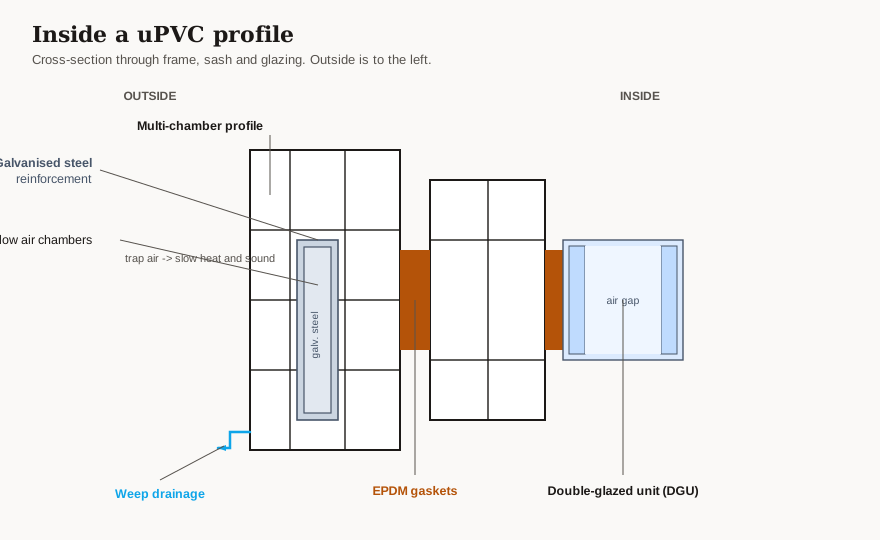
The hollow chambers are the secret to uPVC's performance. Each pocket of trapped air slows heat and sound transfer. The outer chambers handle weather and drainage (with weep channels to drain rainwater out), while the inner chambers and the steel insert carry structure. Multiple EPDM rubber gaskets compress against the glass and sash to create the airtight, watertight seal that gives uPVC its monsoon strength.
Why it dominates new homes
Thermal and acoustic insulation
Plastic conducts heat far less than metal, and the air chambers add to that. A uPVC frame keeps far more heat out (and air-conditioning in) than bare aluminium. Paired with a double-glazed unit it makes a genuinely quiet, energy-efficient window, which is why it does so well against the Eco-Niwas Samhita 2018 envelope targets, where windows are the biggest lever on the RETV (Residential Envelope Transmittance Value, capped at 15 W/m2 for most Indian zones).
Corrosion-proof and waterproof
This is uPVC's standout. It is non-metallic, so it cannot rust or corrode, and salt air does not react with it. Combined with its fully sealed, gasketed body, that makes it the favourite in coastal Goa and Kerala and across heavy-monsoon regions. It does not swell, warp from rain, or rot, and termites ignore it.
Low maintenance
No painting, no polishing, no sealing. A wipe with soapy water is the entire maintenance routine. Over a decade, that saving versus repainting timber is substantial.
| Property | uPVC behaviour |
|---|---|
| Thermal insulation | Excellent (low conductivity plus air chambers) |
| Acoustic insulation | Excellent, especially with laminated or DGU glass |
| Corrosion / rust | Immune (non-metallic) |
| Water and monsoon | Sealed, gasketed, waterproof; weep-drained |
| Termite / rot | Immune |
| Maintenance | Very low (wipe clean) |
| Sightlines | Bulkier than aluminium |
The cautions (read this before you buy)
uPVC's reputation has been dented by cheap profiles, so be specific about quality.
- Extreme-heat warp. In inland heat above 45 C, low-grade thin-walled profiles can expand and distort, especially in dark colours on west-facing walls. Insist on a heat-stabilised grade and adequate wall thickness.
- UV and salt surface degradation. Without proper UV stabilisers and a lead-free, modern formulation, the surface can yellow, chalk or become brittle over years of harsh sun or salt. Reputable brands engineer for this; the cheapest local extrusions often do not.
- Quality varies hugely by brand. Wall thickness, the presence (or absence) of the steel insert, gasket quality, and weld strength differ wildly. Ask explicitly: is there galvanised steel reinforcement in the frame and sash, and what is the profile wall thickness.
- Bulkier sightlines. uPVC frames are visibly thicker than slim aluminium, so for the very largest spans or the most minimal modern look, see the head-to-head linked below.
The single most useful question in a uPVC showroom: "Is there galvanised steel reinforcement inside this profile, and is it heat- and UV-stabilised?" A confident, specific answer separates the brands worth buying from the rest.
Finishes and glazing
Plain white is the budget default and ages well. Beyond that, foil laminates bond a printed film to the profile for woodgrain (oak, walnut, mahogany) or solid colours, giving a timber look without timber upkeep. Dark laminates look striking but absorb more heat, so they raise the warp risk in extreme sun, favour them on shaded elevations.
Frame choice and glass choice are separate decisions, and the glass often matters more for comfort:
| Glazing | What it adds | Best for |
|---|---|---|
| Single glazing | Cheapest, weak insulation | Budget, mild interiors |
| DGU / double glazing | Big jump in heat and sound insulation | Hot or noisy locations, energy code |
| Low-E coating on DGU | Reflects radiant heat, keeps daylight | Indian heat, west and south faces |
| Laminated | Best acoustics, security, UV cut | Roadside noise, ground floor |
For Indian heat, aim for low SHGC with adequate VLT: a DGU with a Low-E coating in a good uPVC frame is the comfort-and-compliance combination.
Cost and lifespan
Indicative June 2026 prices, confirm with itemised fabricator quotes:
| Tier | Cost (₹/sqft) | Typical spec |
|---|---|---|
| Budget white | 250 to 600 | Plain white, single or basic glazing |
| Mid-range | 600 to 900 | Laminate or DGU, good gaskets |
| Premium | 900 to 1,500+ | Custom DGU, Low-E, large spans |
Add roughly ₹200/sqft for installation and 18% GST. A specialty fitting (bay, French) runs higher.
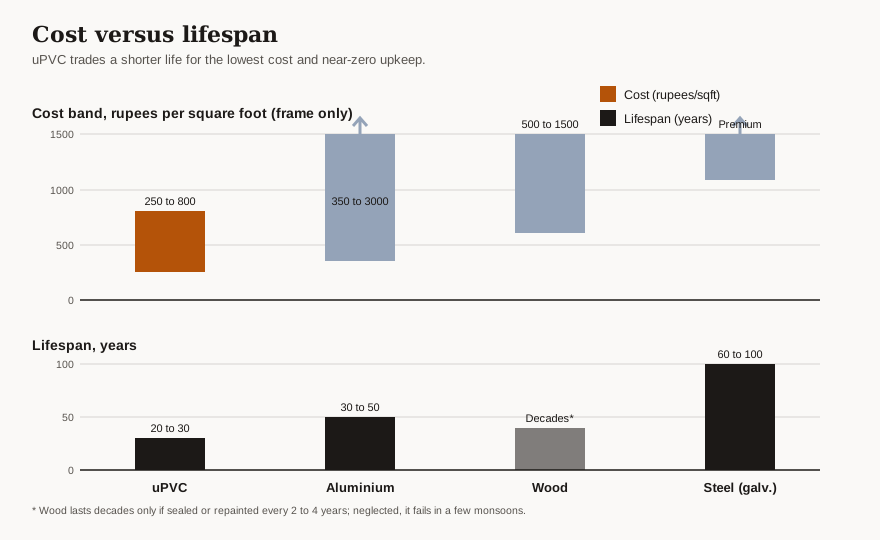
Lifespan is 20 to 30 years, at the lower end in extreme-heat or harsh-coastal exposure with a cheap grade, at the upper end for a quality UV-stabilised profile in a normal climate. That is shorter than aluminium (30 to 50 years) or galvanised steel, but the low maintenance and strong insulation make the total cost of ownership very attractive for most homes.
Climate fit
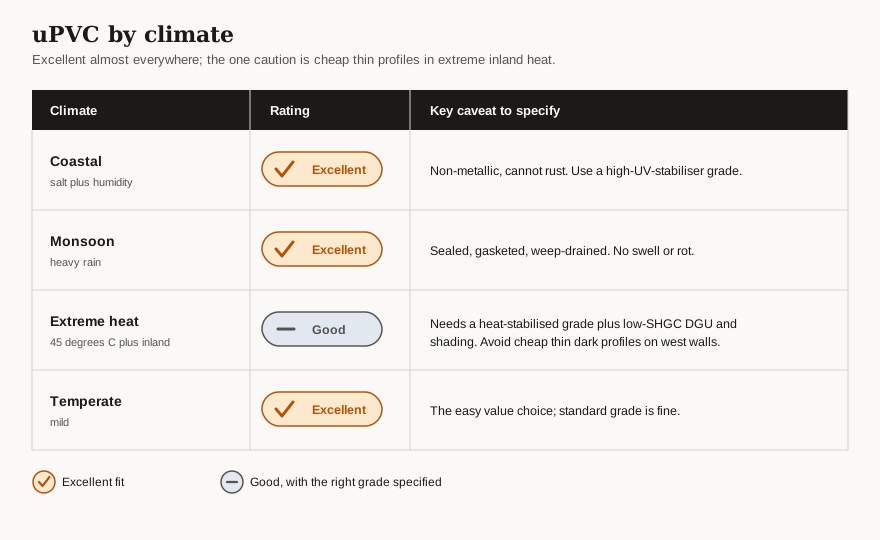
| Climate | uPVC verdict |
|---|---|
| Coastal (salt, humidity) | Excellent, corrosion-proof, use high-UV-stabiliser grade |
| Monsoon (heavy rain) | Excellent, sealed and waterproof, no swell or rust |
| Extreme heat (45 C+ inland) | Good with a heat-stabilised grade plus low-SHGC DGU and external shading; avoid cheap thin profiles in dark colours |
| Temperate / mild | Excellent, easy value choice |
Pros and cons
| Pros | Cons |
|---|---|
| Excellent thermal and acoustic insulation | Bulkier sightlines than aluminium |
| Corrosion-proof, waterproof, monsoon-strong | Low grades can warp in extreme heat |
| Termite and rot proof | Needs good UV stabilisers to resist sun and salt |
| Very low maintenance | Quality varies hugely by brand |
| Strong value: ₹250 to 800/sqft mainstream | Shorter life (20 to 30 yr) than metal |
Choose uPVC if
- You want the best all-round value with strong insulation.
- You are on the coast or in heavy monsoon and want a corrosion-proof frame.
- You value low maintenance and quiet, energy-efficient rooms.
- You are buying from a reputable, steel-reinforced, UV-stabilised brand.
Avoid (or rethink) uPVC if
- You need the slimmest possible sightlines or the very largest single spans (consider aluminium).
- You are in extreme inland heat and tempted by a cheap thin profile (spend up to a heat-stabilised grade, or reconsider).
- You want a genuine timber look and feel for a heritage or luxury home.
Brands to know: Fenesta, Weatherseal, AIS Windows, LG Hausys, Veka, Aluplast, Koemmerling.
Where to go next
- The material pillar: Window Frame Materials Compared sets uPVC against aluminium, wood, steel and composite side by side, start here if you are still choosing.
- The direct duel: uPVC vs Aluminium Windows settles the most common India face-off (insulation and value versus slim spans and strength) in detail, so this guide does not repeat it.
- The window-types pillar: Types of Home Windows covers which window shape (casement, sliding, awning and more) to choose. Material and type are two separate decisions: pick the shape for ventilation and space, then specify it in uPVC for value and weather resistance, for example a uPVC casement for a coastal bedroom.
References
Export this guide
Related Guides — Deep-dive reading
Wooden vs Aluminium Windows (India): Warmth and Tradition vs Strength and Low Upkeep
A direct duel between timber and aluminium, side-by-side on cost, warmth, thermal, spans, lifespan, maintenance and climate fit, with choose-if verdicts.
Windows & GlazingWindow Frame Materials in India (2026): uPVC vs Aluminium vs Wood vs Steel vs Composite
The buyer's decision guide for choosing a window frame material by budget, climate, thermal priority, look, maintenance and lifespan.
Windows & GlazingTypes of Home Windows in India (2026): Complete Comparison and How to Choose
Every window type compared on ventilation, cost and best use, plus a frame, glazing and climate framework to choose right.
Windows & GlazingRelated Tools — Try Free
Window Material Comparison Tool
Compare uPVC, aluminium, wood, steel and composite windows on cost, life, upkeep and insulation.
CompareCross-Ventilation Analyzer
Estimate airflow and air changes per hour (ACH) from room size, window areas, layout, and local wind — with NBC 2016 Part 8 compliance check.
Ventilation CalculatorWindow Maintenance Cost Calculator
Estimate annual window upkeep by frame material — yearly, per-window and 5-year cost.
Window Calculator