
uPVC vs Aluminium Windows (India 2026): The Honest Head-to-Head
A direct duel on cost, insulation, looks, spans, corrosion and lifespan, with clear by-budget and by-climate verdicts.
This is the one comparison almost every Indian homeowner ends up making. You have narrowed the field to the two materials that dominate new-build fenestration, and now it comes down to a duel: uPVC versus aluminium. The honest answer is that there is no universal winner. There is only the right winner for your budget, your climate and what you want your windows to look like.
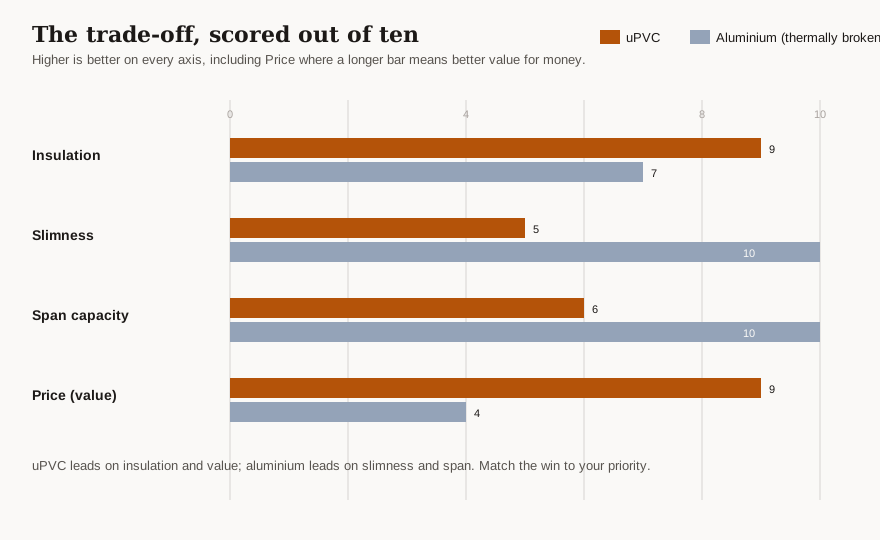
Here is the short version before we get into the detail. uPVC gives you better insulation, better value and total corrosion immunity. Aluminium gives you slimmer frames, bigger spans and a more premium modern look, but it needs a thermal break to behave well in heat. Everything below is the long, India-specific version of that sentence.
uPVC wins on comfort-per-rupee. Aluminium wins on glass-per-frame and on looks. Match the winner to your priorities, not to a brand's marketing.
The master head-to-head
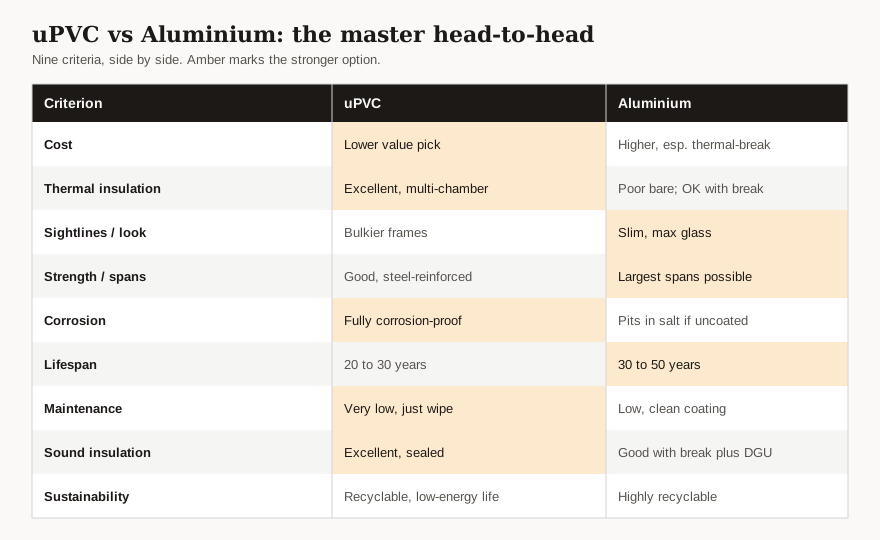
This is the table to screenshot. All prices are indicative for June 2026, before 18 percent GST, and exclude installation at roughly ₹200 per square foot. Confirm everything against itemised fabricator quotes.
| Criterion | uPVC | Aluminium |
|---|---|---|
| Cost per sqft | ₹250-800 (premium DGU ₹900-1,500+) | ₹350-3,000 (powder-coated ₹450-950; thermally-broken systems higher) |
| Thermal insulation | Excellent (multi-chamber, non-conductive) | Poor bare; good only with a thermal break |
| Sightlines / look | Bulkier frames, mostly white | Slim frames, max glass, premium modern |
| Strength / spans | Good (steel-reinforced inside) | Excellent; the largest spans possible |
| Corrosion | Corrosion-proof, fully non-metallic | Needs coating; bare metal pits in salt |
| Lifespan | 20-30 years | 30-50 years |
| Maintenance | Very low (just wipe) | Low (clean coating) |
| Sound insulation | Excellent (sealed, multi-chamber) | Good (better with thermal break plus DGU) |
| Sustainability | Recyclable; long, low-energy service life | Highly recyclable; longer life |
Where the differences actually come from
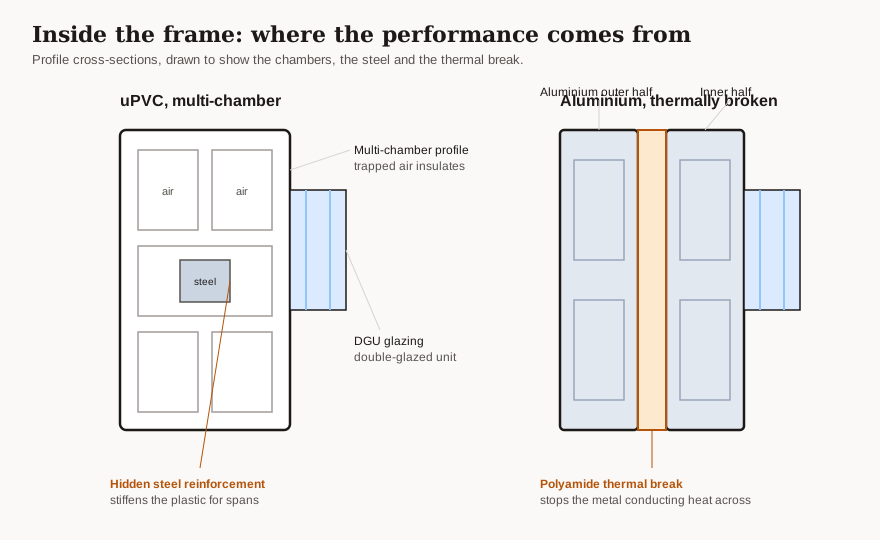
Insulation. uPVC is plastic, a natural insulator, built as a multi-chamber profile with trapped air pockets and steel reinforcement hidden inside for rigidity. That structure is why it keeps heat out and quiet in. Aluminium is a metal, so bare aluminium conducts heat and cold straight through the frame, sweats in monsoon humidity and undoes the work your air conditioner is doing. The fix is a thermal break: a polyamide strip that splits the inner and outer halves of the frame. Thermally-broken aluminium plus a double-glazed unit can match uPVC on comfort, but you are paying extra for the privilege.
Looks and sightlines. This is aluminium's home turf. Because the metal is strong, the frame can be thin, so you get more glass and a sharper, more contemporary line. uPVC frames are visibly chunkier and historically came in white, though woodgrain laminates and dark foils have closed the cosmetic gap. If your design language is large, minimal, gallery-like openings, aluminium looks the part.
Strength and spans. Aluminium carries large sliding and sliding-folding panels that uPVC cannot. uPVC handles normal residential openings comfortably thanks to its internal steel, but for a wall-sized opening or a heavy multi-track slider, aluminium is the structural choice.
Choose uPVC if...
- Your top priorities are thermal comfort, lower electricity bills and acoustic quiet.
- You want the best performance per rupee and a strong mid-budget result.
- You live on or near the coast and want a frame that simply cannot corrode.
- You want near-zero maintenance and do not care that the frame is a little thicker.
- You are doing a normal residential window or a standard slider, not a wall of glass.
Choose aluminium if...
- You want slim frames and the maximum glass area for a premium, modern look.
- You need very large spans such as full-wall sliders or sliding-folding doors.
- You are willing to specify a thermal break plus low-SHGC DGU so heat performance is not a weakness.
- You want the longest single-frame lifespan, 30-50 years, and a robust architectural system.
- Budget is flexible enough to absorb a thermally-broken system for big openings.
The verdict by budget
| Budget band | Sensible pick | Why |
|---|---|---|
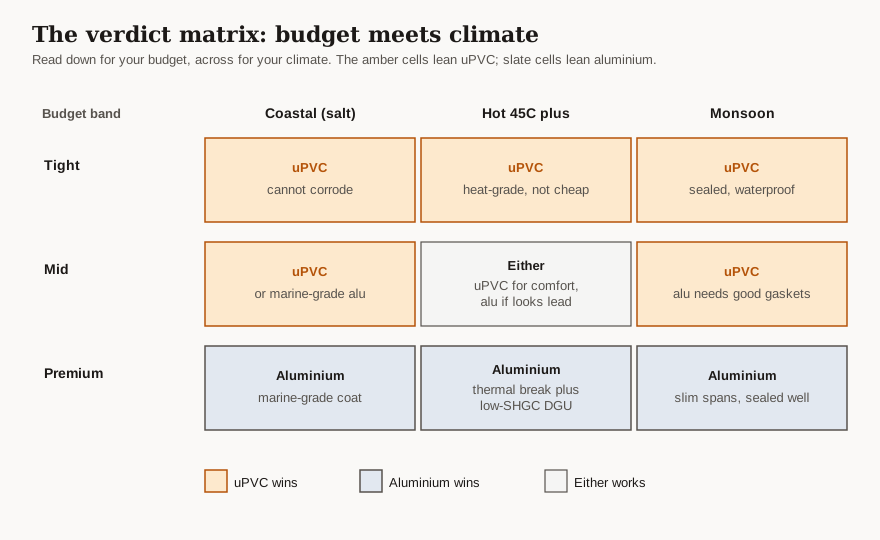
| Tight / value | uPVC (white casement or slider) | Best comfort and corrosion immunity per rupee |
| Mid-range | uPVC mid-grade DGU, or powder-coated aluminium | uPVC for comfort; aluminium if looks lead |
| Premium | Thermally-broken aluminium system + DGU | Slim spans plus performance, money no object |
For most Indian homeowners optimising cost and comfort, uPVC is the default and aluminium is the upgrade you pay for when the architecture demands it.
The verdict by climate
| Climate | Best of the two | Watch-outs |
|---|---|---|
| Coastal (salt, humidity) | uPVC, or marine-grade powder-coated / anodised aluminium | Avoid bare aluminium; use high-UV-stabiliser uPVC and coated hardware |
| Hot / extreme heat (45 C+) | Thermally-broken aluminium + low-SHGC DGU for big openings; heat-grade uPVC for mid-range | Cheap uPVC can warp; bare aluminium conducts heat; glazing SHGC matters as much as frame |
| Monsoon (heavy rain) | Either works | uPVC is sealed and waterproof; aluminium needs good gaskets, weep holes and a corrosion coat |
Under the Eco-Niwas Samhita 2018 residential energy code, your envelope must keep RETV at or below 15 W/m squared in composite, hot-dry, warm-humid and temperate zones, and windows are the single biggest lever on that number. The frame is only half the story: as your window-to-wall ratio rises, the code demands lower-SHGC glazing regardless of whether you chose uPVC or aluminium. Aluminium systems are tested under IS 1948:2024, which covers the design, materials, construction, performance and durability of aluminium windows.
The bottom line
Stop thinking of this as good versus bad. Think of it as value-and-comfort versus slimness-and-spans.
- If you want the most comfortable, quietest, lowest-maintenance window for your money, and especially if you are coastal, buy uPVC in a reputable heat-stabilised grade.
- If you want slim frames, big glass, very large openings and a premium look, buy aluminium and insist on a thermal break with low-SHGC double glazing.
Buy the grade, not the headline. A premium uPVC profile beats cheap aluminium on comfort, and a thermally-broken aluminium system beats cheap uPVC on everything except price. Whichever you pick, the glass specification carries as much of the comfort load as the frame, so get both right.
How this connects to your other choices
The frame material is one decision; the window shape is another. A casement seals better than a slider, a slider saves space in an apartment, and your material choice rides on top of that. See Types of home windows in India for the shape decision, and pair it with the material verdict here.
For the full single-material deep dives, including construction detail, finishes and brand notes, read uPVC windows in India and Aluminium windows in India rather than relying on this head-to-head alone. This guide is the duel; those two are the encyclopaedias.
To see how these two sit against wood, steel and composite, start at the pillar Window frame materials compared for India. And if your decision is being driven by where you live, go straight to Best window material for hot climates in India or Best window material for coastal Indian homes, which take the climate question further than the verdict table above.
References
- Building and Interiors, uPVC windows price per sq ft India 2026: https://buildingandinteriors.com/upvc-windows-price-per-sq-ft-india-2026-cost-guide/
- PlyPrice, window frame material comparison: https://www.plyprice.com/blog/window-frame-material-comparison
- Aparna Enterprises, uPVC windows versus aluminium for coastal homes: https://www.aparnaenterprisesltd.com/blog/upvc-windows-vs-aluminium-for-coastal-homes/
- Eternia, aluminium windows for coastal homes: https://www.eterniawindows.com/articles/aluminium-windows-for-coastal-homes/
- IS 1948 (aluminium doors, windows and ventilators, BIS): https://law.resource.org/pub/in/bis/S03/is.1948.1961.pdf
- Eco-Niwas Samhita 2018 (BEE/ECBC): https://ecbc.in/econiwas.html
Export this guide
Related Guides — Deep-dive reading
Aluminium Windows Guide (India): Slim, Strong, and the Thermal-Break Question
Why aluminium gives you the most glass and least frame, why bare metal conducts heat, and how a polyamide thermal break plus DGU fixes it.
Windows & GlazingWindow Frame Materials in India (2026): uPVC vs Aluminium vs Wood vs Steel vs Composite
The buyer's decision guide for choosing a window frame material by budget, climate, thermal priority, look, maintenance and lifespan.
Windows & GlazinguPVC Windows Guide (India): Why They Dominate New Homes, Cost and Cautions
What uPVC is, how a steel-reinforced multi-chamber profile is built, its thermal, acoustic and corrosion strengths, the heat-warp and UV cautions, glazing pairing, cost and lifespan.
Windows & GlazingRelated Tools — Try Free
Window Material Comparison Tool
Compare uPVC, aluminium, wood, steel and composite windows on cost, life, upkeep and insulation.
CompareGlass Selection Tool
Single vs double (DGU) vs triple glazing and the right glass type for your climate, priority and sun.
Window ToolWindow Maintenance Cost Calculator
Estimate annual window upkeep by frame material — yearly, per-window and 5-year cost.
Window Calculator