
Window Material Durability Comparison (India): Which Frame Lasts Longest?
Lifespan, maintenance and 20-year total cost of ownership across uPVC, aluminium, wood, steel and composite frames.
The cheapest window is almost never the cheapest window. A frame that costs ₹400/sqft today but needs replacing in 18 years can quietly cost you more than one that costs ₹900/sqft and lasts half a century. This guide ignores looks, view and slim sightlines entirely. It is about one thing: how long each frame material survives in Indian conditions, what it costs to keep it alive, and what you actually pay over 20 years.
For the full head-to-head on cost, looks, thermal comfort and finishes, see the pillar guide Window Frame Materials Compared (India). This page narrows hard to durability, lifespan and total cost of ownership so you can compare frames the way an accountant would, not a decorator.
The five materials, ranked by raw lifespan
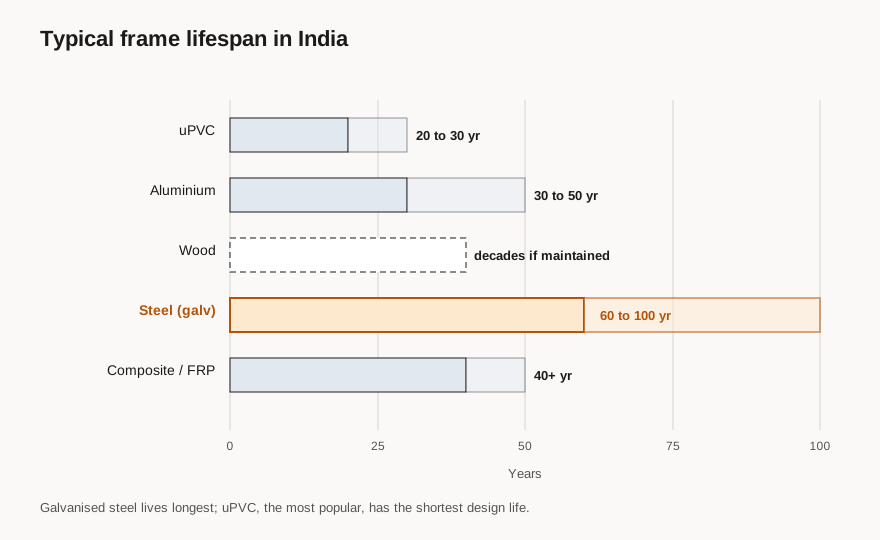
There is a comfortable myth that "expensive equals durable." It is half true. Here is the honest lifespan picture, before climate gets involved.
| Material | Typical lifespan | What that depends on |
|---|---|---|
| uPVC | 20–30 years | UV-stabiliser grade, lead-free formulation, heat exposure |
| Aluminium | 30–50 years | Coating quality (powder-coat / anodised), coastal exposure |
| Wood (timber) | Decades, if maintained | Species, sealing discipline, monsoon protection |
| Steel (galvanised) | 60–100 years | Hot-dip galvanising plus coating, upkeep of the coat |
| Composite / FRP | 40+ years | Largely set-and-forget; least dependent on you |
Notice the pattern: the longest-living frames (steel, composite) are not the most popular, and the most popular frame (uPVC) has the shortest design life. That is not a contradiction — it is a trade between upfront cost, maintenance appetite and how long you plan to own the home.
Maintenance: the hidden running cost
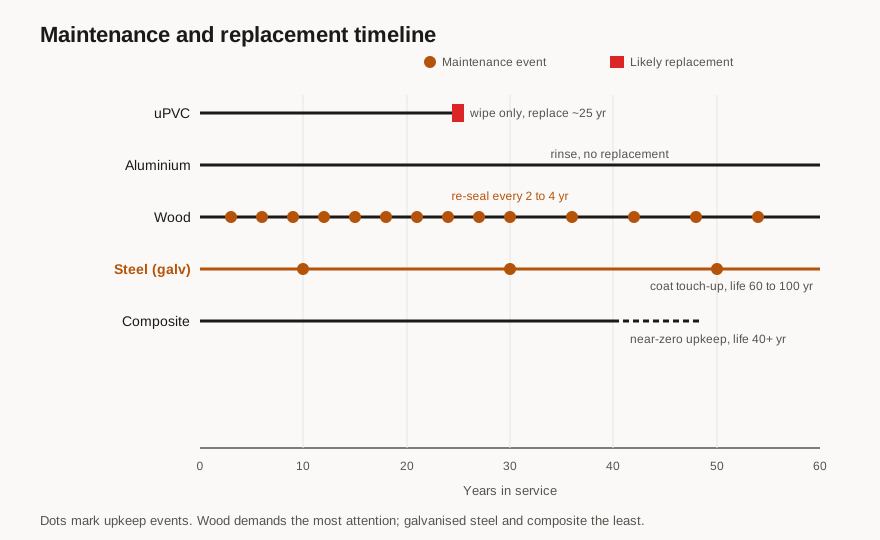
Lifespan is only half the story. A frame that lasts "decades if maintained" is making you do work. Here is the effort each material demands.
| Material | Maintenance cycle | Effort | Annual burden |
|---|---|---|---|
| uPVC | Wipe with mild soap | Very low | Near zero |
| Aluminium | Clean tracks, rinse coastal salt | Low | Near zero |
| Wood | Re-seal / polish / repaint every 2–4 years | High | ₹ + labour, recurring |
| Steel (galv) | Inspect coat, touch up rust spots | Low–medium | Occasional |
| Composite / FRP | Occasional wipe | Very low | Near zero |
Wood is the outlier. Its decades-long life is conditional on a re-sealing ritual every two to four years. Skip three cycles in a monsoon belt and even teak will swell, warp and grow fungal stain. The other four are essentially "fit and forget," which is exactly why they dominate new Indian builds.
What fails first
Knowing the failure mode tells you where to spend and what to inspect.
| Material | What fails first | Why |
|---|---|---|
| uPVC | Surface chalking / slight warp in extreme heat; gasket hardening | UV degradation, 45 C+ on low-grade profiles |
| Aluminium | Coating pitting, then corrosion at the metal | Salt attack on bare or cheap-coated alloy in coastal air |
| Wood | Swelling, warping, rot, termite attack | Water ingress and neglected sealing |
| Steel | Rust at coating breaks and weld points | Any gap in the galvanising or powder coat |
| Composite / FRP | Almost nothing structural; sealant lines age | Engineered stability; sealants are consumables |
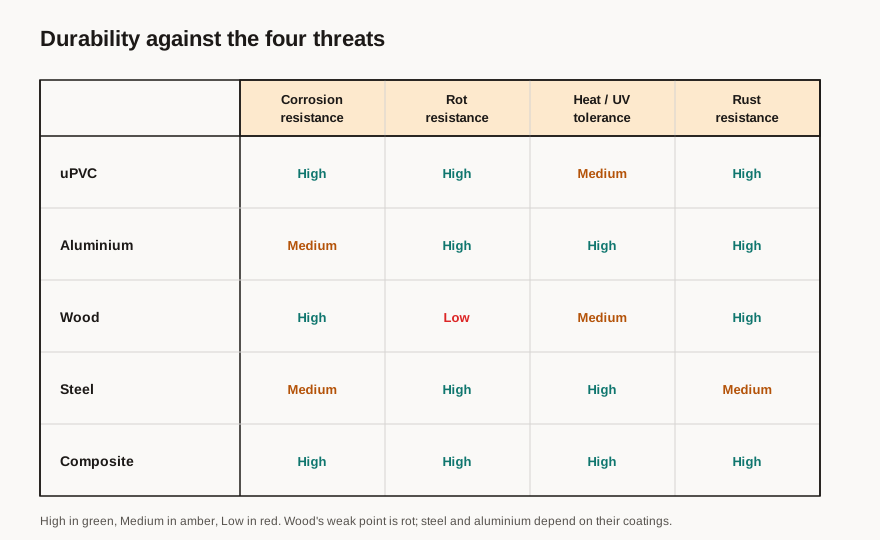
The honest read: uPVC, wood and steel each have one decisive enemy — heat/UV, water, and rust respectively. Aluminium and composite are the most forgiving, which is why they earn their longer lifespans.
Corrosion and rot resistance
This is where Indian geography rewrites the rankings.
- uPVC is non-metallic and corrosion-proof — it does not react with salt at all, which makes it a coastal favourite (Goa, Kerala, Chennai). Its weakness is UV and extreme heat, not corrosion.
- Aluminium does not rot or swell, but bare or cheaply coated aluminium pits in coastal salt. Specify marine-grade powder coat or anodising near the sea.
- Wood never rusts, but rots and feeds termites if water gets in.
- Steel is the most durable once protected, but rusts fast if the hot-dip galvanising plus powder coat is breached — fatal in coastal and heavy-monsoon zones unless maintained.
- Composite / FRP resists corrosion and rot the best of all, with no thermal break needed and almost no movement.
Warranty norms (and what they actually mean)
Warranty length is a useful proxy for a maker's own confidence — but read the fine print, because most cover the profile or coating, not the hardware (handles, rollers, gaskets) which wears far sooner.
| Material | Typical warranty | Usually covers | Usually excludes |
|---|---|---|---|
| uPVC | 10–15 years (profile) | Profile against warp/discolour | Hardware, gaskets, glass seals |
| Aluminium | 10–15 years (coating) | Powder-coat / anodised finish | Salt damage if non-marine grade |
| Wood | 1–5 years or none | Manufacturing defects | Weathering, rot, "natural movement" |
| Steel | Project / fabricator-specific | Galvanising integrity | Coat maintenance lapses |
| Composite / FRP | 15–25+ years | Profile and stability | Sealant, hardware |
A 25-year composite warranty and a "no warranty, but it'll outlive us" teak frame are two different bets. The composite is insured longevity; the teak is craftsmanship that depends on you.
The 20-year total-cost-of-ownership view
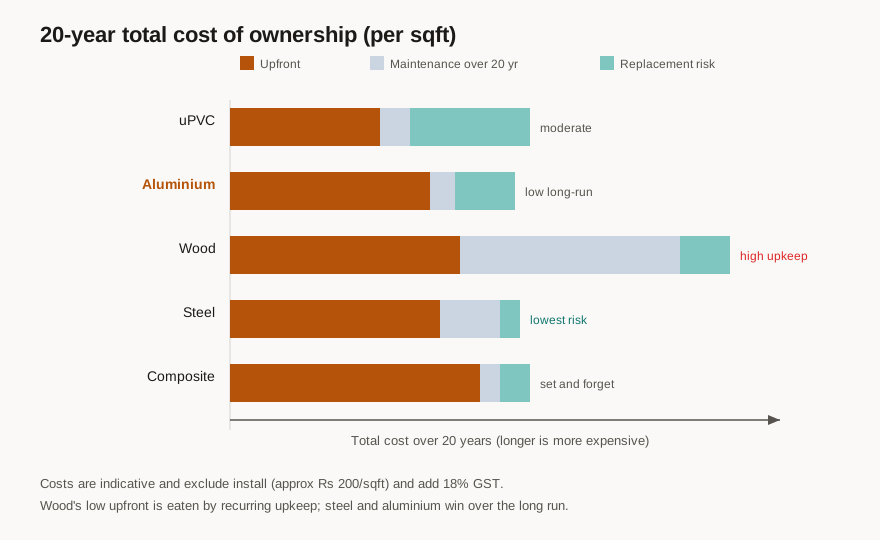
Now the number that matters. Take a mid-spec window, factor in +18% GST and install at roughly ₹200/sqft, and project running and replacement costs over 20 years. The figures below are indicative per square foot of frame, to compare materials honestly — confirm against itemised fabricator quotes.
| Material | Upfront ₹/sqft | Maintenance over 20 yr | Replacement risk in 20 yr | 20-year posture |
|---|---|---|---|---|
| uPVC | 250–800 | Negligible | Low (life 20–30 yr) | Cheap upfront, cheap to run, mild replacement risk at the tail |
| Aluminium | 350–950 (powder-coat) | Negligible | None (life 30–50 yr) | Mid upfront, very low run cost, no replacement — strong value |
| Wood | 500–1,500+ | High (repaint every 2–4 yr) | Low if maintained, high if not | Dear upfront and dear to run — 2.5–4× uPVC over a decade |
| Steel (galv) | Premium | Low–medium | None (life 60–100 yr) | Dear upfront, lowest lifetime cost per year of service |
| Composite / FRP | Highest | Very low | None (life 40+ yr) | Most expensive to buy, near-zero to run — buy-once economics |
The cheapest window upfront is rarely the cheapest over 20 years. Wood proves it the hard way: its repainting cycle can make a timber window cost 2.5 to 4 times a uPVC window over ten years once maintenance is counted.
The accountant's takeaway: uPVC wins the 0–20 year window on pure cash; aluminium wins on value (no replacement, no upkeep); steel and composite win the "I will own this for 40+ years" race. Wood only wins if you genuinely value the look enough to pay both premiums.
Climate slashes lifespan — read this before you decide
Every number above assumes fair conditions. Indian climate is rarely fair.
| Climate | Lifespan effect | Durability winners | Avoid |
|---|---|---|---|
| Coastal (salt + humidity) | Halves the life of unprotected metal | uPVC (corrosion-proof); marine-grade coated/anodised aluminium; composite/FRP | Bare aluminium, un-galvanised steel |
| Extreme heat (45 C+ inland) | Warps low-grade uPVC; stresses gaskets | Heat-stabilised uPVC; thermally-broken aluminium | Cheap, non-heat-stabilised uPVC |
| Heavy monsoon | Swells/rots untreated wood; rusts bare steel | uPVC (sealed, waterproof); coated aluminium | Untreated wood, un-galvanised steel |
A galvanised steel window rated for 60–100 years inland can rust through in a decade on a Goa seafront if a single coating gap is left. A teak frame that lasts generations in dry Rajasthan needs religious sealing in Kerala. Match the material to the micro-climate, then specify the right grade — heat-stabilised uPVC, marine powder-coat, hot-dip galvanising.
Which lasts longest for your situation — the verdict
- Budget new build, comfort priority, dry-to-moderate climate: uPVC. Cheapest to own over 20 years, zero upkeep, corrosion-proof. Just specify a high-UV-stabiliser, lead-free, heat-stabilised grade.
- Coastal home: uPVC or marine-grade coated/anodised aluminium. Both shrug off salt; uPVC if budget-led, aluminium if you want big spans. See the material deep-dives before committing.
- You will own this house 40+ years / performance-first: composite (FRP or aluclad) — longest life, lowest running cost, buy-once economics, if you can absorb the highest upfront price.
- Heritage, restoration, slim sightlines, willing to maintain: galvanised steel for 60–100 years, or teak if you embrace the every-2-to-4-year sealing ritual.
- Pure longevity per rupee over the full life of the building: steel (galvanised) and composite beat everything — they simply cost more on day one.
Where to read next
- The full comparison (cost, look, thermal, acoustic): Window Frame Materials Compared (India).
- Material choice complements window type — a casement seals tighter than a slider, which affects how long gaskets last. Pick your shape in Types of Home Windows (India), then the material here.
- Going deeper on a single material: uPVC windows, aluminium windows, wooden windows, steel windows and composite windows.
Standards worth quoting to a fabricator: IS 1948:2024 governs aluminium windows' materials, construction, performance and durability, while the Eco-Niwas Samhita 2018 sets the envelope-performance targets (RETV ≤ 15 W/m², plus SHGC and U-value rules) that a long-lived frame should help you meet for decades.
References
Export this guide
Related Guides — Deep-dive reading
Window Frame Materials in India (2026): uPVC vs Aluminium vs Wood vs Steel vs Composite
The buyer's decision guide for choosing a window frame material by budget, climate, thermal priority, look, maintenance and lifespan.
Windows & GlazingWooden vs Aluminium Windows (India): Warmth and Tradition vs Strength and Low Upkeep
A direct duel between timber and aluminium, side-by-side on cost, warmth, thermal, spans, lifespan, maintenance and climate fit, with choose-if verdicts.
Windows & GlazingAluminium Windows Guide (India): Slim, Strong, and the Thermal-Break Question
Why aluminium gives you the most glass and least frame, why bare metal conducts heat, and how a polyamide thermal break plus DGU fixes it.
Windows & GlazingRelated Tools — Try Free
Window Material Comparison Tool
Compare uPVC, aluminium, wood, steel and composite windows on cost, life, upkeep and insulation.
CompareWindow Maintenance Cost Calculator
Estimate annual window upkeep by frame material — yearly, per-window and 5-year cost.
Window CalculatorWindow Cost Calculator
Estimate window price plus installation by type, frame material, size, glass and quantity.
Window Calculator