

Best Window Material for Coastal Areas (India): Beating Salt and Humidity
Why uPVC and marine-grade aluminium win the salt-and-humidity fight in Goa, Mumbai, Chennai, Kerala and Vizag — and the hardware that matters as much as the frame
If your home is in Goa, Mumbai, Chennai, Kerala or Vizag, the air itself is working against your windows. Coastal air carries a fine mist of dissolved salt, and that salt is relentlessly corrosive to metal. Pair it with year-round humidity and you have the harshest fenestration environment in India. Inland, a window choice that is merely "fine" can last decades. On the coast, the wrong choice can pit, streak, seize and corrode within a few monsoon seasons.
This guide answers one question: which window frame material survives salt and humidity, and what hardware and glazing you must pair it with. It is distinct from our monsoon material guide (that one is about rain and water ingress) and our hot-climate guide (that one is about heat). Here the enemy is salt corrosion plus persistent humidity.
Short verdict: uPVC (corrosion-proof and non-metallic) and marine-grade powder-coated or anodised aluminium are the coastal winners. Composite/fibreglass is excellent but expensive. Avoid bare aluminium and un-galvanised steel. The hardware matters as much as the frame.
Why the coast destroys windows: the salt-spray mechanism
Sea breezes pick up microscopic salt-water droplets (aerosols) and deposit them on every surface within a few kilometres of the shoreline. When that salt film stays wet — which it does in 70–90% coastal humidity — it forms an electrolyte. On any bare or poorly protected metal, this electrolyte drives galvanic and pitting corrosion: tiny pits open in the surface, spread under coatings, and eat through the metal. Chloride ions are especially aggressive because they break down the protective oxide layer that metals like aluminium normally rely on.
The practical results you can see on a badly chosen coastal window:
- Bare/cheap aluminium develops white powdery pitting and the surface goes chalky and rough.
- Un-galvanised mild steel rusts, stains the wall below in orange streaks, and the sash eventually jams.
- Cheap zinc-plated or mild-steel hardware (hinges, handles, friction stays, screws) seizes and snaps — often before the frame itself fails.
- Untreated timber swells in the humidity, then warps and grows mould.
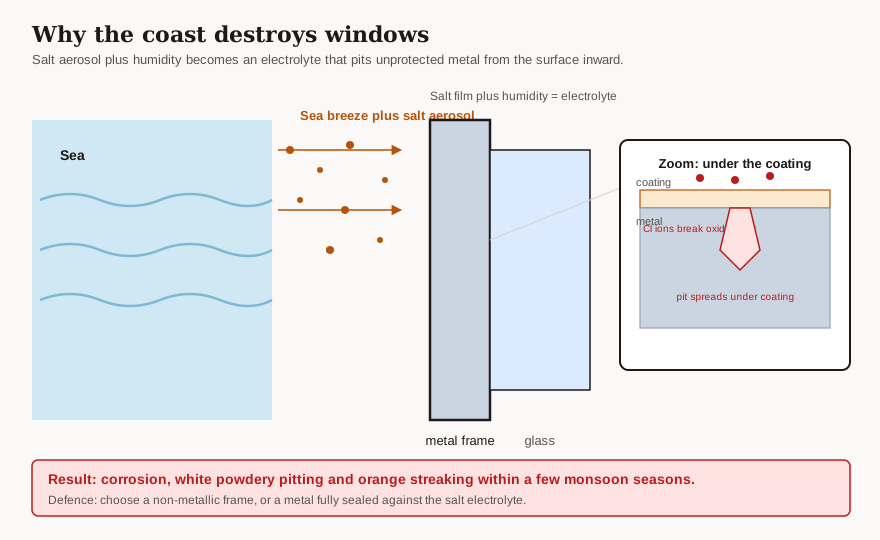
The lesson: on the coast you either choose a material that does not corrode at all (uPVC, fibreglass), or you choose metal that is fully sealed against the salt electrolyte (marine-grade anodised/powder-coated aluminium, hot-dip galvanised steel).
The salt-corrosion ranking
Here is how the five frame materials rank for a salt-and-humidity coastal environment specifically — not for heat or cost.
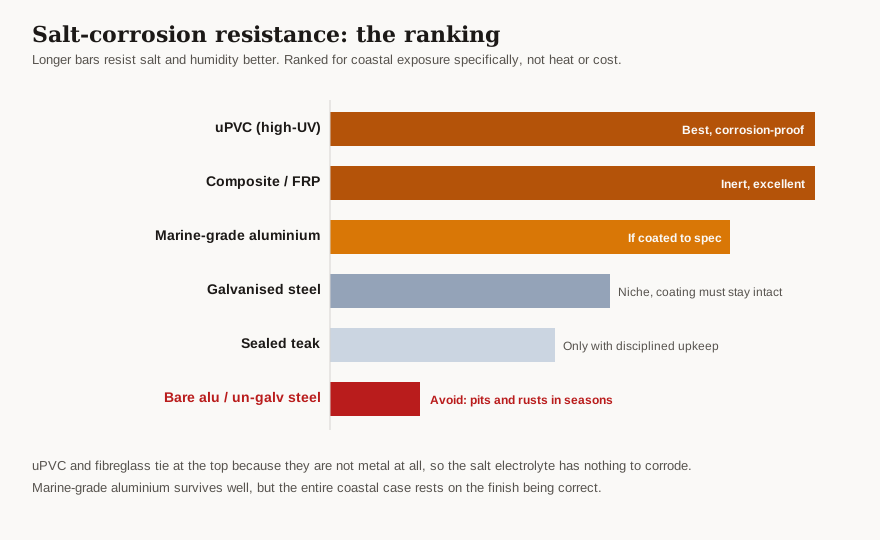
| Rank | Material | Coastal corrosion behaviour | Coastal verdict |
|---|---|---|---|
| 1 | uPVC (high-UV grade) | Non-metallic, does not react with salt; fully corrosion-proof | Best all-round coastal choice |
| 1 | Composite / fibreglass (FRP) | Inert, no rot, no corrosion, very stable | Excellent — but priciest |
| 3 | Aluminium (marine-grade anodised / powder-coat) | Survives well IF coated to marine spec | Excellent for big spans/modern look |
| 4 | Steel (hot-dip galvanised + powder-coat) | Survives if zinc coat is intact; coating breaches rust fast | Niche heritage only |
| 5 | Wood (teak, well-sealed) | Does not corrode but swells/rots in humidity without upkeep | Only with disciplined maintenance |
| 6 | Bare aluminium / un-galvanised steel | Pits and rusts within seasons | Avoid entirely |
uPVC and fibreglass tie at the top because they are not metal at all, so the salt electrolyte has nothing to corrode. For the engineering detail behind each material see our uPVC deep-dive and aluminium deep-dive.
uPVC: the coastal default
uPVC is a multi-chamber plastic profile, steel-reinforced inside for large spans. Because it is non-metallic, it simply does not react with salt — which is why it is the go-to in Goa and along most of the Indian coast. It is also waterproof, sealed against the monsoon, termite-proof and rust-proof, with good thermal and acoustic insulation.
The one coastal caveat: UV plus salt can surface-degrade lower-grade profiles. Insist on high-UV-stabiliser, lead-free formulation from a reputable brand (Fenesta, Weatherseal, AIS, Veka, Koemmerling, LG Hausys). The steel reinforcement is inside the sealed profile, so it never touches the salt air. Lifespan is 20–30 years (toward the lower end in harsh coastal exposure) at ₹250–800/sqft (premium DGU/custom ₹900–1,500+).
Marine-grade aluminium: when you want slim spans
Aluminium gives you the slimmest frames and largest glass area, the modern look, and structural strength that uPVC cannot match on very large openings. Bare aluminium pits in coastal salt — so the entire coastal case rests on the finish.
- Marine-grade powder coat — a thicker, sea-spec coating (often a two-stage pre-treatment plus powder) rated for coastal exposure. Confirm the fabricator quotes a marine/seaside-grade system.
- Anodised — an electro-chemically thickened oxide layer integral to the metal; excellent for salt air, often the preferred coastal finish.
Specified correctly, marine-grade aluminium lasts 30–50 years even on the coast. Cost is ₹350–3,000/sqft (powder-coated ₹450–950; thermally-broken system aluminium higher). For heat as well as salt, add a thermal break plus DGU — but for a pure salt decision, the finish is what matters.
Rule of thumb: on the coast, never accept "standard" powder-coated aluminium. Ask in writing for marine/seaside-grade powder coat or anodising.
Composite, steel and wood
Composite / fibreglass (FRP) is chemically inert — no rot, no corrosion, very stable, 40+ year life that beats uPVC. It is the technically best coastal frame, held back only by high cost and limited Indian availability. Choose it for a long-horizon, performance-first build.
Steel (galvanised) gives the slimmest "Crittall" heritage sightlines and can last 60–100 years — but only with hot-dip galvanising plus powder coat fully intact. Any coating breach in salt air starts rust. Coastal-niche, for restoration or industrial-chic only.
Wood does not corrode, but coastal humidity makes it swell, warp and grow mould unless sealed and re-polished every 2–4 years. Teak (natural oils, humid-tolerant) is the only species worth it on the coast — at premium cost and with disciplined upkeep.
The part everyone forgets: hardware, fasteners, gaskets and glazing
A corrosion-proof frame fitted with cheap steel hardware will still fail — the hinges and handles seize first. On the coast, the ironmongery and sealing system are as important as the frame.
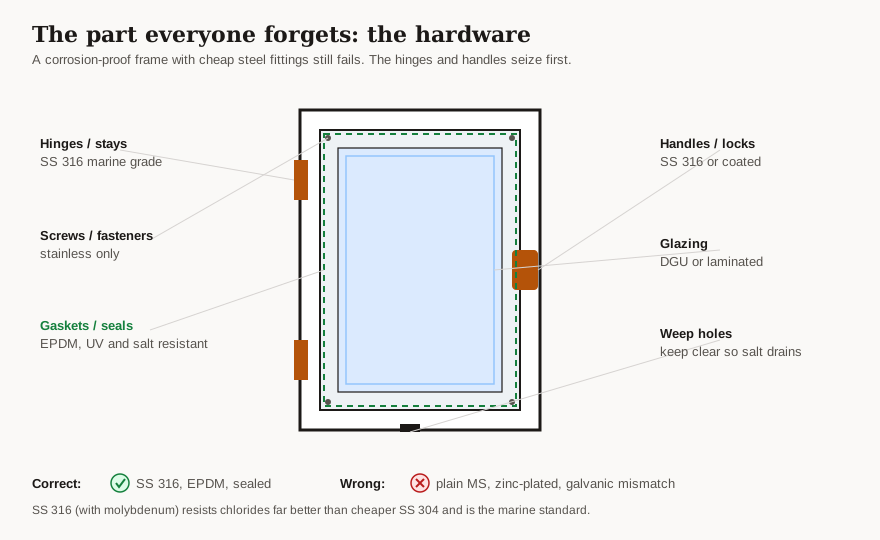
| Component | Coastal-correct specification |
|---|---|
| Hinges / friction stays | Stainless steel (SS 316 marine grade preferred) or coated; never plain MS or zinc-plated |
| Handles / locks | SS 316 or coated; check the internal mechanism, not just the visible finish |
| Screws / fasteners | Stainless steel only — galvanic mismatch with aluminium causes corrosion |
| Gaskets / weatherseals | EPDM gaskets (UV and salt resistant); ensure continuous, well-fitted seals |
| Glazing | DGU or laminated; laminated also adds UV-cut and acoustics. Coastal salt does not attack glass, but good edge sealing keeps the cavity dry |
| Drainage | Weep holes kept clear so salt-laden water drains, not pools |
Stainless SS 316 (with molybdenum) resists chlorides far better than the cheaper SS 304 and is the marine standard. The small premium on hardware is the best money you will spend on a coastal window.
Maintenance in salt air
Even the best coastal window benefits from a simple routine. Salt is hygroscopic — it holds moisture against the surface — so the single most effective step is rinsing the salt film off.
- Rinse frames and glass with fresh water every few weeks in heavy-exposure homes (more often facing the sea directly). A garden hose is enough.
- Wipe uPVC with mild soapy water; no abrasives.
- Inspect aluminium/steel coatings for chips; touch up promptly before salt gets under the coating.
- Lubricate stainless hardware lightly; clear weep holes of salt and grit.
- Re-seal/re-polish timber on schedule (every 2–4 years).
Ranked recommendation by budget
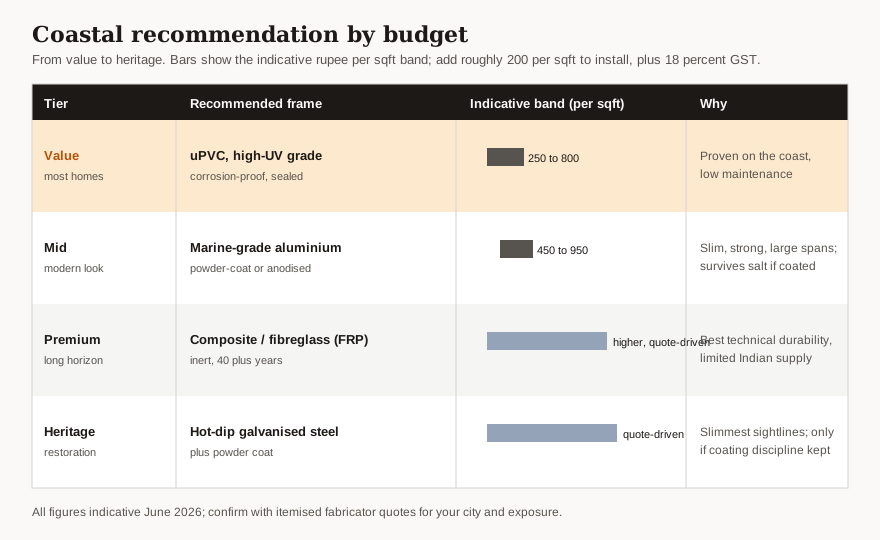
| Budget tier | Recommended frame | Indicative ₹/sqft | Why |
|---|---|---|---|
| Value / most homes | uPVC, high-UV grade | ₹250–800 | Corrosion-proof, sealed, low maintenance, proven on the coast |
| Mid / modern look | Marine-grade powder-coated or anodised aluminium | ₹450–950+ | Slim, strong, large spans; survives salt if coated to marine spec |
| Premium / long-horizon | Composite / fibreglass (FRP) | Higher, quote-driven | Inert, 40+ years, best technical durability |
| Heritage / restoration | Hot-dip galvanised + powder-coated steel | Quote-driven | Slimmest sightlines; only if coating discipline is accepted |
Add roughly ₹200/sqft for installation, and 18% GST on top. All figures are indicative June 2026 — confirm with itemised fabricator quotes for your city and exposure.
How material pairs with window type
Material choice is only half the decision; type (the window shape and operation) is the other half. On the coast, pair your salt-proof frame with types that suit humid, breezy, salt-laden air: louvered (jalousie) windows ventilate even in driving coastal rain, casement windows seal airtight when shut, and a traditional jali screen cools and filters incoming sea breeze. See the window-types pillar to choose the shape, then come back here for the material.
For the full side-by-side of all five materials across every climate, start at the window frame materials comparison pillar. Note that frame cladding on a façade is a different topic from the window frame itself.
References
Export this guide
Related Guides — Deep-dive reading
Best Window Material for Monsoon Regions (India): Beating Rain, Swell and Rust
For Kerala, the Konkan, the Northeast, the Western Ghats and Mumbai: which frame shrugs off driving rain, humidity, swelling and rust.
Windows & GlazingAluminium Windows Guide (India): Slim, Strong, and the Thermal-Break Question
Why aluminium gives you the most glass and least frame, why bare metal conducts heat, and how a polyamide thermal break plus DGU fixes it.
Windows & GlazingWindow Frame Materials in India (2026): uPVC vs Aluminium vs Wood vs Steel vs Composite
The buyer's decision guide for choosing a window frame material by budget, climate, thermal priority, look, maintenance and lifespan.
Windows & GlazingRelated Tools — Try Free
Window Material Comparison Tool
Compare uPVC, aluminium, wood, steel and composite windows on cost, life, upkeep and insulation.
CompareWindow Maintenance Cost Calculator
Estimate annual window upkeep by frame material — yearly, per-window and 5-year cost.
Window CalculatorDoor Material Comparison Tool
Compare 2–4 door materials on cost, durability, maintenance, security and moisture resistance.
Comparison Tool