
Aluminium Windows Guide (India): Slim, Strong, and the Thermal-Break Question
Why aluminium gives you the most glass and least frame, why bare metal conducts heat, and how a polyamide thermal break plus DGU fixes it.
Aluminium is the frame you reach for when you want a lot of glass and very little frame. It is strong enough to carry the largest spans, slim enough to almost disappear, and modern in a way that suits contemporary Indian homes. But aluminium has one honest weakness you must design around: bare metal conducts heat. Get the thermal-break question right and aluminium is a 30-to-50-year, near-maintenance-free window. Get it wrong and you have installed a heat bridge into your wall.
This guide is the deep dive on the aluminium frame itself. For aluminium versus its two main rivals, read the dedicated head-to-heads (linked below) rather than expecting a verdict here.
Aluminium wins on glass area and looks. The single decision that makes or breaks it in Indian heat is whether the frame has a polyamide thermal break.
What aluminium is, and how the frame is built
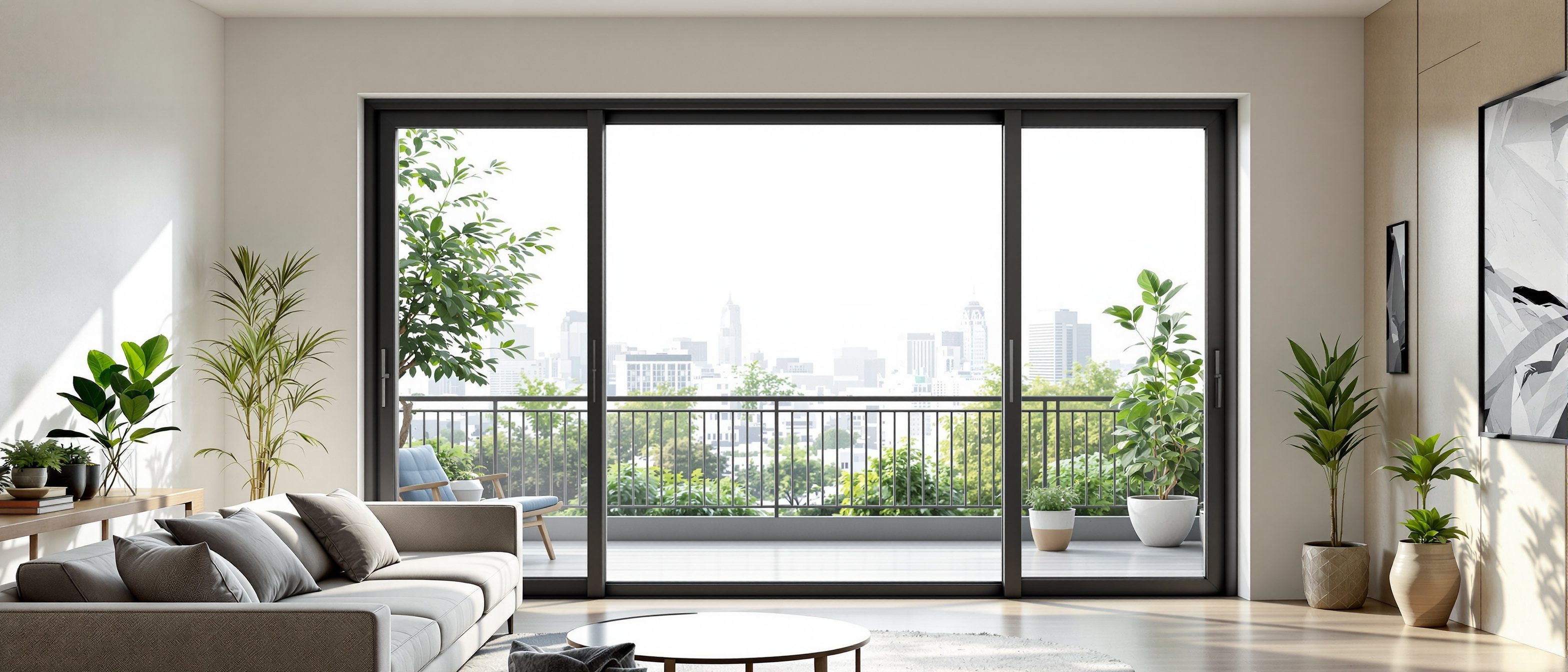
An aluminium window is made of extruded aluminium-alloy profiles cut and joined into a frame and sash. Because the metal is strong and rigid, the profile can be thin and still span large openings without sagging, which is why aluminium delivers the slimmest sightlines and the biggest uninterrupted sheets of glass of any common frame.
The critical construction detail is whether the profile is a single solid section of metal or a thermally broken section. A thermally broken profile is two aluminium shells joined by a non-conductive polyamide (nylon) strip running the length of the frame. That strip stops heat from travelling straight through the metal from the hot outside face to the cool inside face.
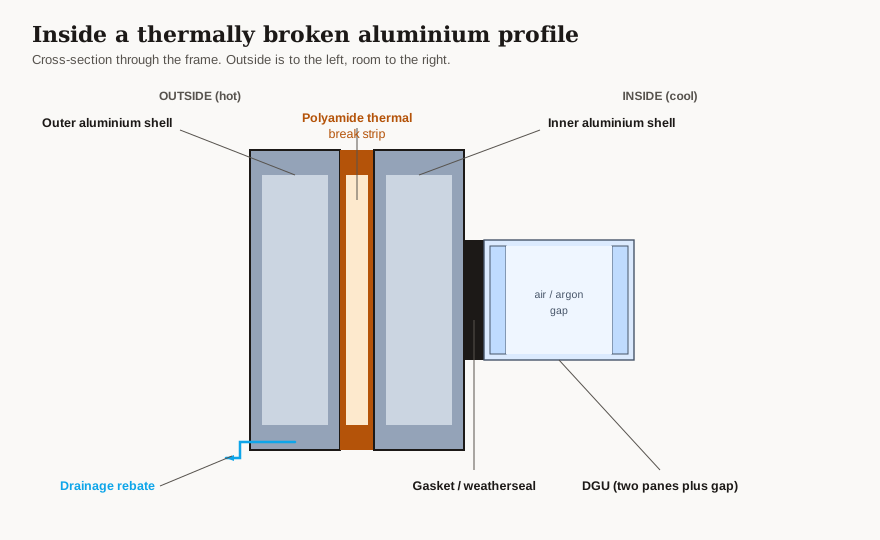
Pair the frame with the right glass. A DGU (double glazed unit) — two panes with an air or argon gap — plus a low-SHGC or Low-E coating is what turns a slim aluminium frame into an energy-sensible window for Indian conditions. The frame and the glass are separate decisions; a great frame around single glazing still leaks heat.
The thermal-break question (the heart of this guide)
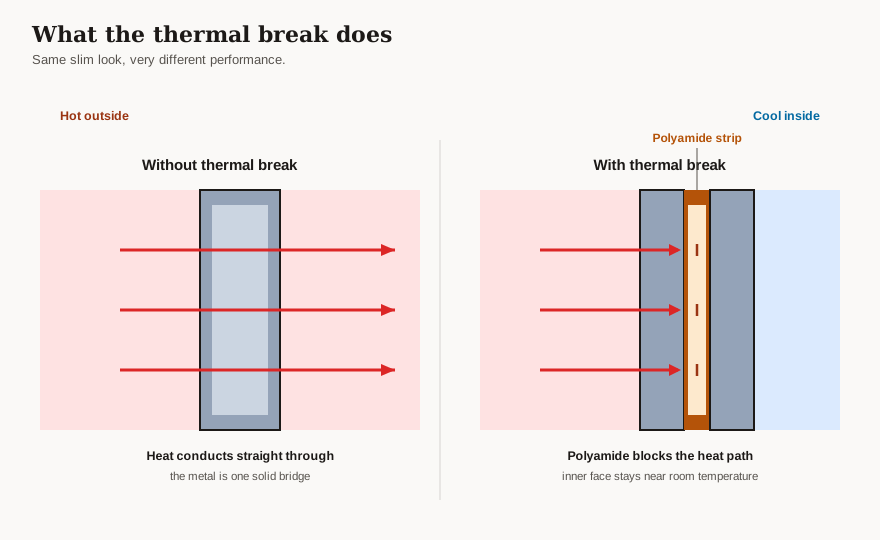
Bare ("non-thermal-break") aluminium has high thermal conductivity. In a 45-degree-Celsius inland summer, a solid aluminium frame pulls outdoor heat straight indoors, fights your air-conditioner, and can sweat with condensation when the AC runs hard. In a cold hill-station winter it does the reverse.
The fix is the polyamide thermal break. The two diagrams below show the difference: in a solid frame, heat flows uninterrupted across the metal; in a thermally broken frame, the polyamide strip interrupts that path so the inner face stays close to room temperature.
| Non-thermal-break (plain) aluminium | Thermally broken aluminium | |
|---|---|---|
| Heat conduction | High — frame is a heat bridge | Low — polyamide interrupts the path |
| Condensation risk | Higher on inner face in AC homes | Much lower |
| Best for | Verandahs, dry temperate spots, budget jobs | Hot inland, AC homes, energy-code work |
| Cost | Lower | Higher (system aluminium) |
For air-conditioned rooms and big openings in hot-dry or composite zones, specify thermally broken system aluminium with a low-SHGC DGU. This is also what helps a glass-heavy elevation stay within Eco-Niwas Samhita 2018 envelope targets — as your window-to-wall ratio rises, the code pushes you toward lower-SHGC glazing and a frame that does not undo the glass.
Finishes: powder-coat, anodised, and marine-grade
Aluminium does not rust, but it can pit and dull. The finish is your protection and your colour.
| Finish | What it is | Look and durability | Where it fits |
|---|---|---|---|
| Powder-coat | Baked polyester powder over the metal | Any RAL colour, matte or gloss; tough, repaintable feel | Most homes; the common choice |
| Anodised | Electrochemically grown oxide layer | Metallic, silver/champagne/bronze; very hard, fade-resistant | Premium modern looks |
| Marine-grade powder-coat / anodising | Thicker, salt-spray-rated finish | Best corrosion resistance | Coastal homes (within ~10 to 15 km of the sea) |
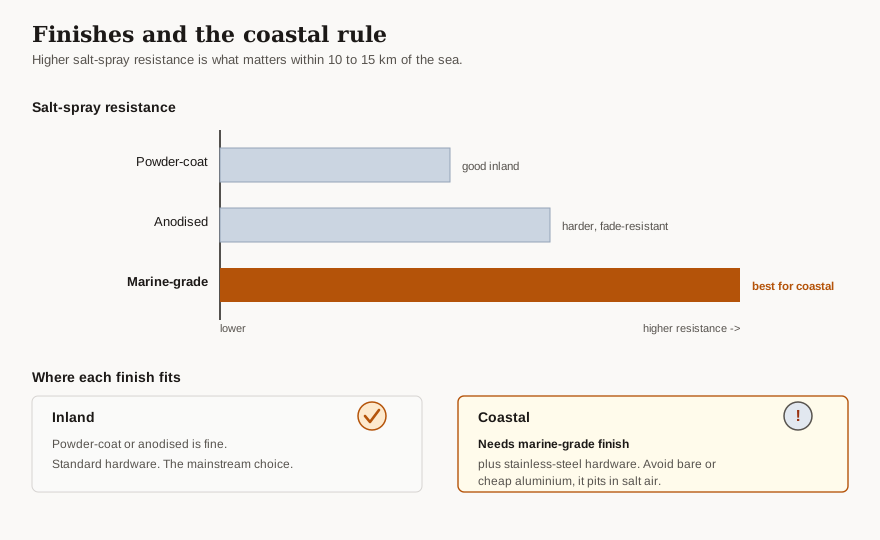
The coastal rule is simple. Salt air corrodes metal, so near the sea you must specify a marine-grade powder coat or marine-grade anodising, plus stainless-steel hardware. Avoid bare or cheap aluminium on the coast — it pits. Where budget allows, coastal homes also lean on corrosion-proof uPVC; that trade-off is covered in the coastal-focused comparison guide.
Durability and maintenance
This is where aluminium quietly earns its keep. It does not swell, warp, or rot, it shrugs off termites, and a coated frame asks for little more than an occasional wipe. Properly specified and coated, an aluminium window lasts 30 to 50 years, and the metal is fully recyclable at end of life.
| Attribute | Aluminium |
|---|---|
| Lifespan | 30 to 50 years |
| Maintenance | Low — wipe clean; re-lubricate hardware |
| Swell / warp / rot | None |
| Termite / rust | Immune (does not rust; coat against coastal pitting) |
| Corrosion in coastal salt | Needs marine-grade finish |
| End of life | Recyclable |
Cost in India
| Tier | Indicative ₹/sqft (frame, June 2026) | Notes |
|---|---|---|
| Plain / commercial aluminium | 350 to 450 | Non-thermal-break, basic glazing |
| Powder-coated residential | 450 to 950 | The mainstream band |
| System / thermally broken aluminium | 950 to 3,000+ | Polyamide break, DGU, premium hardware |
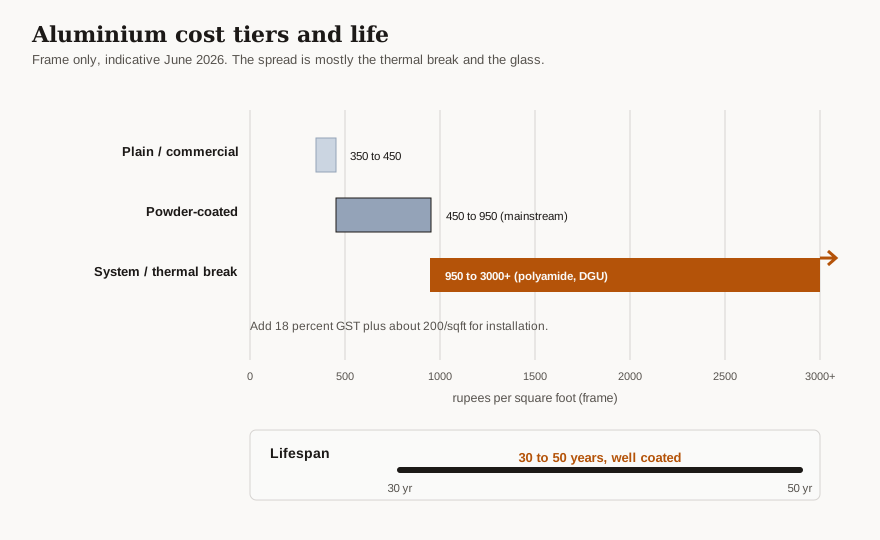
Add about 18 percent GST and roughly ₹200/sqft for installation (more for specialty units). These are indicative — always confirm with itemised quotes from fabricators, since price swings with profile system, glazing, and finish.
The big spread in aluminium pricing is almost entirely the thermal break and the glass. Two windows that look identical can perform a world apart.
Standards
Aluminium windows in India are governed by IS 1948:2024 (specification for aluminium doors, windows and ventilators — covering design, materials, construction, performance and durability). For fixing and glazing of metal windows, IS 1081 applies. For energy performance, the relevant benchmark is Eco-Niwas Samhita 2018, which sets envelope-transmittance (RETV at or below 15 W/m-squared for most zones) and minimum-VLT-by-WWR rules that your frame-plus-glass combination must satisfy.
Pros and cons
| Pros | Cons |
|---|---|
| Slimmest sightlines, largest glass spans | Bare metal conducts heat — needs a thermal break |
| Premium modern look, any colour | System / thermally broken aluminium costs more |
| No swell, warp, or rot; termite-proof | Cheap/bare aluminium pits in coastal salt |
| 30 to 50 year life; recyclable | Plain frames can sweat in AC homes |
| Structurally tolerant of temperature extremes | Acoustic and thermal insulation below uPVC unless DGU + break |
Choose aluminium if
- You want maximum glass and minimal frame — picture windows, sliders, corner glazing, big openings.
- You like a slim, modern, metallic aesthetic and any custom colour.
- You will specify a thermal break plus DGU for hot or air-conditioned rooms.
- You want a 30-to-50-year, low-maintenance frame and value recyclability.
Avoid (or rethink) aluminium if
- You want plain, cheap aluminium in a 45-degree inland or AC home — the heat bridge will cost you in comfort and electricity.
- You are on the coast and cannot stretch to marine-grade finish and stainless hardware.
- Acoustic insulation on a tight budget is the priority — uPVC may serve better rupee-for-rupee.
How this fits your other window choices
Choosing the material (this guide) is a different decision from choosing the window type or shape. A casement, a slider, and a corner window can each be made in aluminium — see the window-types pillar, Types of Home Windows in India, for which operation suits which room, then bring that back here for the frame.
- Start with the material overview: Window Frame Materials Compared (India).
- For the direct contests, read uPVC vs Aluminium Windows (India) and Wooden vs Aluminium Windows (India) — those carry the head-to-head verdicts so this guide does not.
Note that aluminium window frames are distinct from aluminium facade cladding (such as ACP panels): the same metal, but a different product and a different decision.
References
- IS 1948 (aluminium doors, windows and ventilators), BIS: https://law.resource.org/pub/in/bis/S03/is.1948.1961.pdf
- IS 1081 (fixing and glazing of metal doors and windows), BIS: https://law.resource.org/pub/in/bis/S03/is.1081.1960.pdf
- Eco-Niwas Samhita 2018 (BEE/ECBC): https://ecbc.in/econiwas.html
- Aluminium windows for coastal homes (Eternia): https://www.eterniawindows.com/articles/aluminium-windows-for-coastal-homes/
- System aluminium windows for Indian monsoons (Alcoi): https://alcoi.in/system-aluminium-windows-indian-monsoons/
- Wood vs uPVC vs aluminium frames (PlyPrice): https://www.plyprice.com/blog/window-frame-material-comparison
Export this guide
Related Guides — Deep-dive reading
Window Frame Materials in India (2026): uPVC vs Aluminium vs Wood vs Steel vs Composite
The buyer's decision guide for choosing a window frame material by budget, climate, thermal priority, look, maintenance and lifespan.
Windows & GlazinguPVC vs Aluminium Windows (India 2026): The Honest Head-to-Head
A direct duel on cost, insulation, looks, spans, corrosion and lifespan, with clear by-budget and by-climate verdicts.
Windows & GlazingAluminium Doors in India: Profiles, Glazing, Cost & uPVC vs Steel (2026)
Framed glazed aluminium doors — sliding, openable and French-style — for balconies, utility and modern facades: powder-coat vs anodised vs wood-finish profiles, IS 733/1285 sections, thermal-break options and ₹/sq ft costs.
Home Doors & EntrancesRelated Tools — Try Free
Window Material Comparison Tool
Compare uPVC, aluminium, wood, steel and composite windows on cost, life, upkeep and insulation.
CompareWindow Maintenance Cost Calculator
Estimate annual window upkeep by frame material — yearly, per-window and 5-year cost.
Window CalculatorGlass Selection Tool
Single vs double (DGU) vs triple glazing and the right glass type for your climate, priority and sun.
Window Tool