
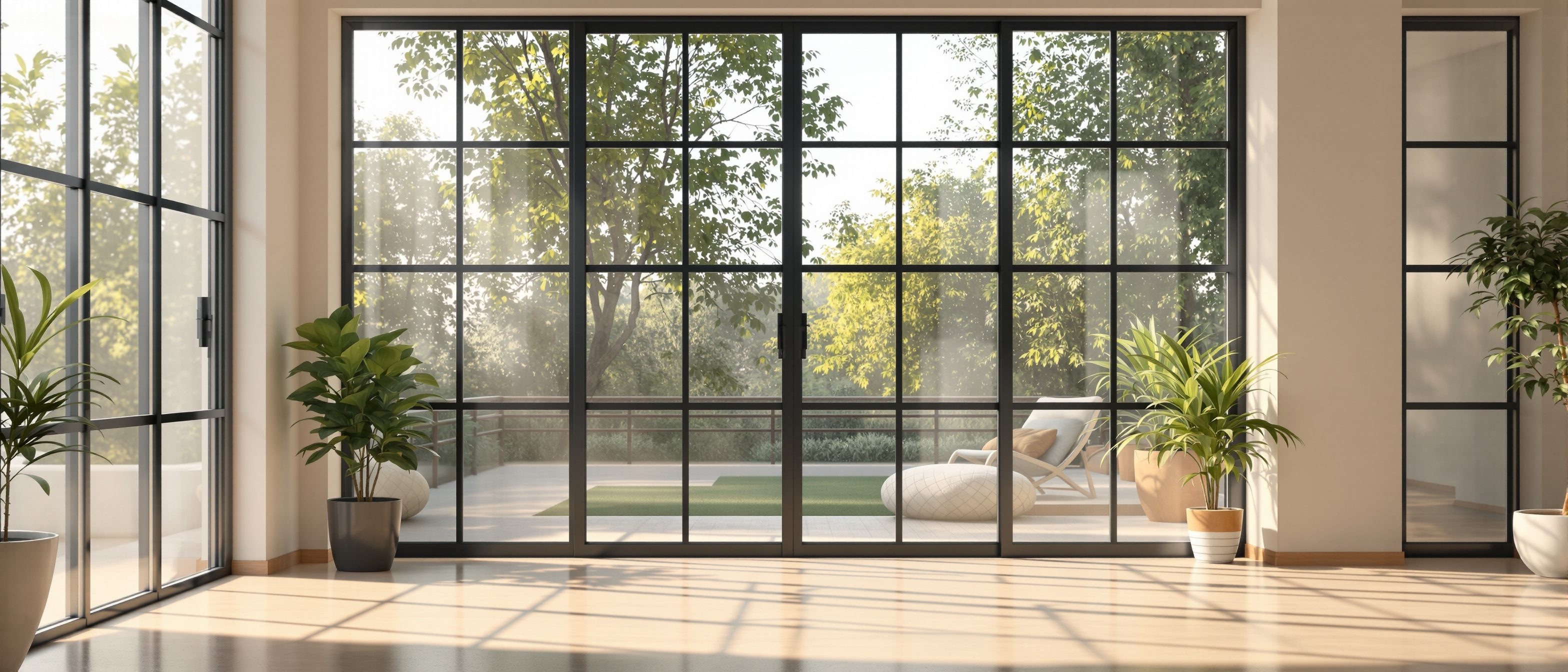
Steel Windows Guide (India): The Slimmest Sightlines and the Heritage Look
Mild-steel and galvanised frames give you the thinnest sightlines and the authentic Crittall look — if you galvanise and coat them against rust.
If you have ever stood in an old colonial bungalow, a converted mill or a sharp industrial-style cafe and noticed how the window frames almost disappear, leaving nothing but crisp black lines and glass, you have seen steel. No other window material gets this thin. Steel is the connoisseur's choice in India: a niche, premium frame that buys you the slimmest sightlines in the business and a heritage "Crittall" look that aluminium and uPVC can only imitate. It also comes with one non-negotiable rule, the thing every steel-window decision lives or dies by: it must be protected against rust, properly, or it will not last.
This guide is the deep dive on steel window frames. For the head-to-head across all five materials, start at the window frame materials comparison. To pick the window shape (casement, fixed, French) that you will then build in steel, see types of home windows in India. Steel here means the frame of the window itself, not metal cladding on the building face, which is a different product covered in metal and ACP facades.
What steel windows are, and why they go so thin
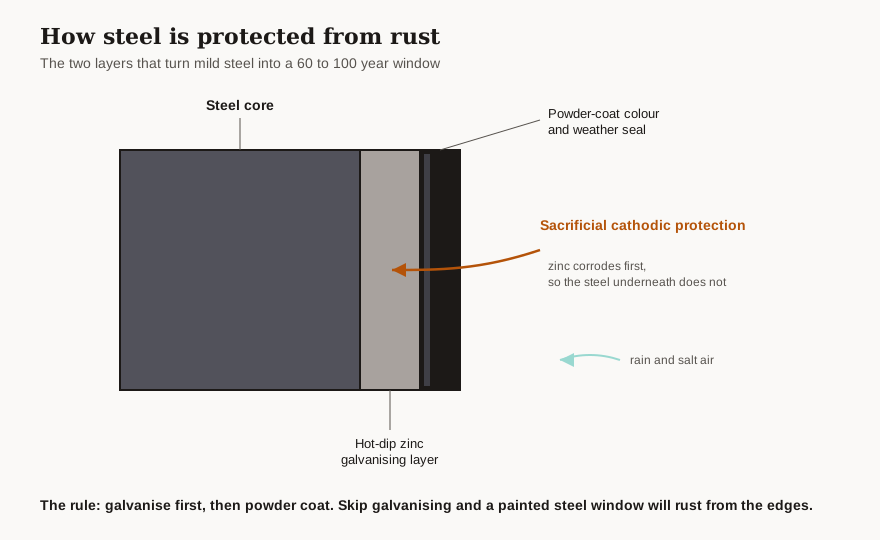
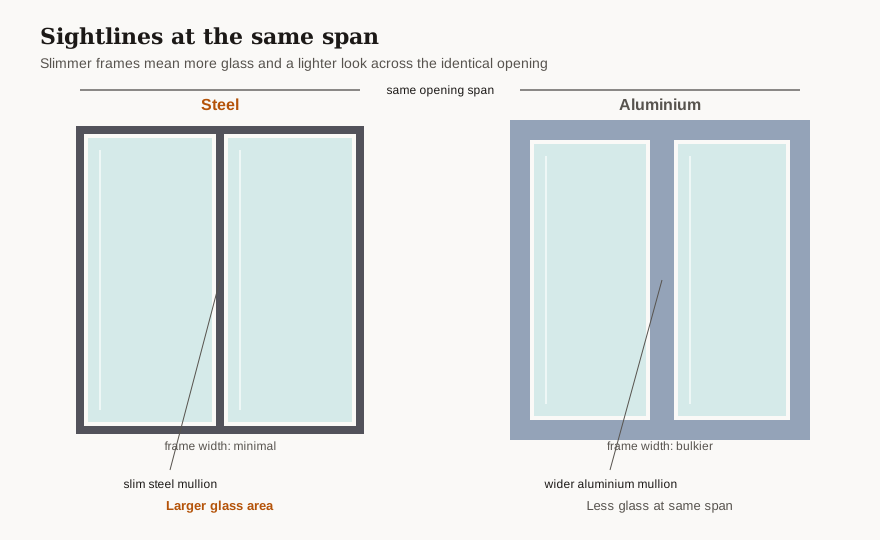
Steel windows are fabricated from mild-steel (MS) sections or galvanised steel profiles, welded into frames and glazed with putty or modern gaskets. Because steel is far stronger than aluminium, the same structural job can be done with a much smaller cross-section. That is the whole magic: a steel mullion can be a third of the width of an equivalent aluminium one and still carry the glass.
Steel gives you the maximum glass and the minimum frame. The view wins; the material gets out of the way.
That slimness is why steel defined an entire architectural era. The "Crittall" look (named after the British steel-window maker) is the black-grid, divided-light aesthetic now everywhere in industrial-chic interiors, restored heritage homes and high-end Indian renovations. If your design language is warehouse, art-deco, colonial restoration or modern-minimal-with-grids, steel is the authentic material, not a vinyl imitation of it.
The rust problem, and the only acceptable answer
Steel is iron, and bare iron rusts. In India's monsoon humidity and coastal salt, an unprotected steel window will streak, pit and eventually fail. This is the single most important fact on the page, so let us be blunt about the fix.
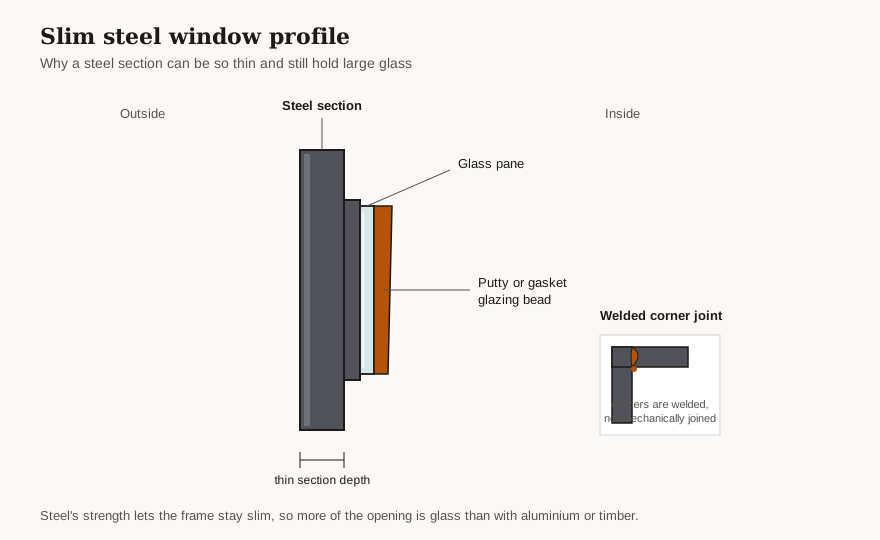
Protection is a layered system, applied in order:
1. Hot-dip galvanising — the fabricated frame is dipped in molten zinc. The zinc bonds metallurgically to the steel and, crucially, sacrifices itself first (cathodic protection), so even a scratch does not immediately start rusting the steel beneath. This is the foundation. Mere painting over bare steel is not galvanising and is not good enough for Indian conditions.
2. Powder coating — over the galvanised frame, a durable colour finish (most often that signature matte black) is electrostatically applied and oven-cured. This seals the zinc, adds UV and weather resistance, and gives the look.
Get both layers right and steel becomes one of the most durable window materials available, with a service life that comfortably reaches 60 to 100 years with light maintenance. Skip the galvanising to save money and you have bought a problem.
Thermal, acoustic and fire behaviour
Steel is a strong material with real engineering virtues and one honest weakness.
- Strength — it carries large, heavy glass over long spans with the thinnest frame, and resists impact and forced entry well.
- Fire resistance — steel does not burn and holds its shape far longer in a fire than aluminium or plastic; steel-framed glazing is genuinely used where fire performance matters.
- Acoustics — a rigid steel frame paired with laminated or DGU glass deadens sound well.
- Thermal conductivity (the weakness) — like all metals, steel conducts heat and cold. Unlike modern aluminium systems, slim steel sections rarely accommodate a polyamide thermal break, so the frame itself is a heat path. In a hot Indian climate the answer is to let the glass do the insulating work: pair steel frames with a low-SHGC Double Glazed Unit (DGU) and Low-E coating, and add external shading. The frame stays thin; the glass keeps the heat out.
| Property | Steel windows | Notes |
|---|---|---|
| Sightline (frame width) | Slimmest of all materials | Maximum glass, minimum frame |
| Strength / span | Very high | Carries large heavy panes |
| Corrosion resistance | Only if galvanised + coated | Bare steel rusts; coating is critical |
| Fire resistance | Excellent | Does not burn, holds shape |
| Thermal performance (frame) | Conducts heat | Compensate with low-SHGC DGU + shading |
| Weight | Heavy | Needs sturdy fixing and lintel |
| Lifespan | 60 to 100 years | Galvanised and maintained |
| Maintenance | Low to medium | Touch up coating, lubricate hinges |
Where steel wins on sightlines
The clearest way to understand steel is against its modern rival. Aluminium is the lighter, cheaper, contemporary slim frame; steel is the thinner, heavier, heritage one. They look similar from across a room, but the differences decide your choice.
| Factor | Steel | Aluminium |
|---|---|---|
| Sightline | Slimmest (heritage Crittall grids) | Slim, but wider than steel |
| Weight | Heavy | Light |
| Cost | Premium / niche | More affordable, mainstream |
| Look | Heritage, industrial, divided-light | Modern, minimal |
| Corrosion | Must galvanise + coat | Powder-coat / anodise; marine-grade at coast |
| Fabricators | Few, specialist | Widely available |
| Thermal break | Rare | Available (thermally-broken systems) |
If you want the authentic period or industrial look and accept the cost and weight, steel. If you want a modern slim frame that is lighter, cheaper and easier to source with a thermal break, read the full case for aluminium windows — it is the practical alternative for most contemporary homes.
Cost in India
Steel sits at the premium, niche end of the market. There is no cheap, mass-market steel window the way there is for uPVC; you are paying for specialist fabrication, hot-dip galvanising and powder coating, and heavier installation.
- Treat steel as a made-to-order, project-quoted product rather than a per-square-foot commodity. Expect it to land at the upper end of the window budget, broadly in line with or above premium aluminium systems, with the galvanising and coating a significant share of the price.
- Installation is heavier work than for aluminium (add to the ~₹200/sqft baseline) because steel frames are heavy and need sturdy fixing.
- Add 18% GST.
- Always insist on an itemised quote that names the galvanising process (hot-dip, not just primer paint) and the powder-coat spec. This is indicative; confirm with fabricator quotes.
Compared with the fact-base bands of uPVC (₹250 to 800/sqft, 20 to 30 years) and aluminium (₹350 to 3,000/sqft, 30 to 50 years), steel's headline cost is high but its 60 to 100 year life can make the lifetime cost competitive for a forever home or a restoration where the look is non-negotiable.
Climate fit
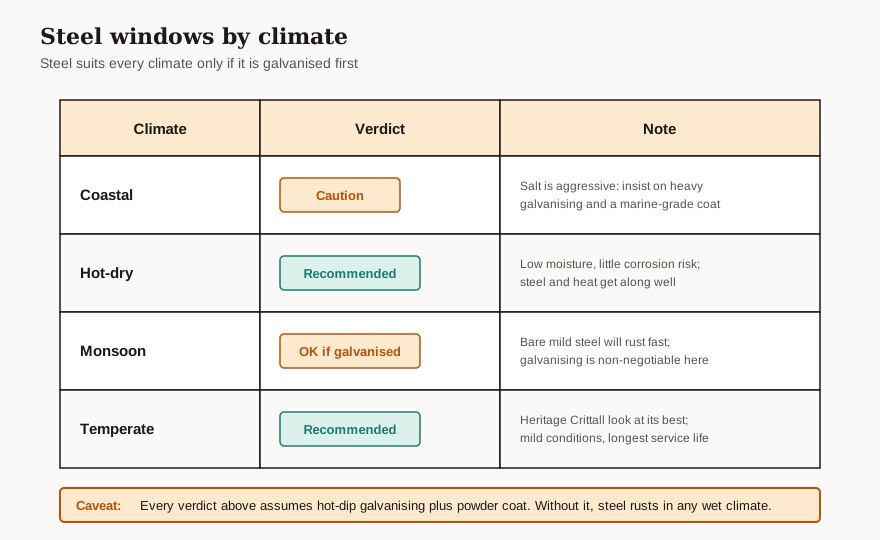
| Climate | Steel suitability | What to do |
|---|---|---|
| Coastal (salt + humidity) | Risky unless coating is perfect | Hot-dip galvanising is mandatory; inspect and touch up coating; uPVC or marine-grade aluminium are safer defaults |
| Hot / extreme heat | Structurally fine; frame conducts heat | Pair with low-SHGC DGU and Low-E; add external shading |
| Monsoon (heavy rain) | Good if galvanised; rusts if not | Galvanise, good gaskets, drip sills, weep holes; avoid bare MS |
| Temperate / inland dry | Excellent | Steel's most comfortable home |
In coastal and heavy-monsoon zones, the coating is everything. A perfectly galvanised and powder-coated steel window survives the coast; a corner cut on coating fails fast. If you cannot guarantee fabrication quality, the corrosion-proof non-metallic alternative is uPVC, and the metal alternative is marine-grade aluminium.
Pros and cons
| Pros | Cons |
|---|---|
| Slimmest sightlines of any material | Conducts heat (no easy thermal break) |
| Maximum glass, minimum frame | Heavy; needs sturdy fixing |
| Authentic heritage / industrial Crittall look | Must be galvanised and coated or it rusts |
| Very strong, large spans, secure | Premium cost, niche product |
| Fire-resistant | Few specialist fabricators |
| 60 to 100 year life if coated and maintained | Coating critical in coastal / monsoon |
Choose steel if
- You are restoring a heritage or colonial building and want the original material and divided-light grids.
- You want an authentic industrial-chic interior (black steel grids to partition or glaze a room).
- You want the slimmest possible steel-look frames with maximum glass and accept premium fabrication.
- You are building a forever home in a temperate or inland climate where the long life pays back.
Avoid steel if
- You are on a tight budget or want a mainstream, easy-to-source frame (choose uPVC or aluminium).
- You are in a harsh coastal location and cannot guarantee top-grade galvanising and coating.
- Thermal performance of the frame is your priority and you do not want to lean entirely on the glass.
- You need many windows fast from a widely available fabricator network.
Standards and glazing pairing
Steel windows are not the subject of the aluminium standard IS 1948:2024, but the principles of metal-window fixing and glazing in IS 1081 apply, and natural-ventilation rules under NBC 2016 (openable inlet area around 10% of floor area for habitable rooms) govern how much of your steel glazing must actually open. For energy compliance under Eco-Niwas Samhita 2018 — keeping the wall envelope RETV at or below 15 W/m squared and respecting minimum VLT for your window-to-wall ratio — remember that steel's thin frame lets you run more glass, which makes a low-SHGC, Low-E DGU essential rather than optional. The slimmer the frame, the harder the glass has to work.
The bottom line
Steel is the specialist's frame: the slimmest sightlines, the most glass, the truest heritage and industrial look, and a 60 to 100 year life — provided it is hot-dip galvanised and powder coated. It conducts heat, it is heavy, it costs a premium, and good fabricators are few, so it rewards a deliberate choice rather than a default one. Want the look without the weight, cost and coating anxiety? Compare it directly with the modern slim alternative in the aluminium windows guide, weigh all five materials in the window frame materials comparison, and match it to the right shape in types of home windows in India.
References
- IS 1081 — code of practice for fixing and glazing of metal doors and windows (BIS): https://law.resource.org/pub/in/bis/S03/is.1081.1960.pdf
- IS 1948 — aluminium doors, windows and ventilators (BIS): https://law.resource.org/pub/in/bis/S03/is.1948.1961.pdf
- BIS Guide for Using NBC 2016: https://www.bis.gov.in/wp-content/uploads/2022/08/Booklet-Guide-for-Using-NBC-2016.pdf
- Eco-Niwas Samhita 2018 (BEE/ECBC): https://ecbc.in/econiwas.html
- Window frame material comparison (PlyPrice): https://www.plyprice.com/blog/window-frame-material-comparison
Export this guide
Related Guides — Deep-dive reading
Aluminium Windows Guide (India): Slim, Strong, and the Thermal-Break Question
Why aluminium gives you the most glass and least frame, why bare metal conducts heat, and how a polyamide thermal break plus DGU fixes it.
Windows & GlazingAluminium Doors in India: Profiles, Glazing, Cost & uPVC vs Steel (2026)
Framed glazed aluminium doors — sliding, openable and French-style — for balconies, utility and modern facades: powder-coat vs anodised vs wood-finish profiles, IS 733/1285 sections, thermal-break options and ₹/sq ft costs.
Home Doors & EntrancesFloor-to-Ceiling Windows (India): Maximum Light, and the Heat Trade-Off
Full-height glazing for Indian homes — how to win the daylight and view without losing the energy code, comfort or safety.
Windows & GlazingRelated Tools — Try Free
Cross-Ventilation Analyzer
Estimate airflow and air changes per hour (ACH) from room size, window areas, layout, and local wind — with NBC 2016 Part 8 compliance check.
Ventilation CalculatorBrise-Soleil Visualizer
Interactive horizontal-louvre cut-off angle calculator — sun altitude, louvre depth, and spacing inputs with a live shadow preview. Computes θ = arctan(spacing/depth) for façade shading, ECBC envelope compliance, hospital daylight design, and tropical sun-control detailing.
Sun Shading ToolFuture Home Comfort Score
Score your home 0 to 100 on daylight, ventilation, thermal and acoustic comfort and find the weak link.
Window Tool