
Composite Windows Guide (India): Aluclad, Fibreglass and the Premium Long Game
Engineered frames that fuse wood, aluminium, uPVC and fibreglass for the longest life and best insulation money can buy in India.
Composite windows are the quiet aristocrats of the Indian fenestration market. You will not find them in every showroom, and most builders will never quote them. But if you are building once, building for decades, and you want the warmth of wood, the strength of aluminium, and the seal of uPVC all at once, this is where the conversation ends. Composites are engineered frames that bond two or more materials so each does the job it is best at. The result is the longest-lived, best-insulated, most stable window you can buy in India today, and also the priciest and hardest to source.
This guide is the deep dive on composite frames. For the full side-by-side against uPVC, aluminium, wood and steel, start at our window frame materials comparison. Composite borrows directly from two of those materials, so it is worth reading our aluminium windows guide (where the weatherproof skin comes from) and our wooden windows guide (where the warm interior comes from) alongside this one.
Composite is not one product. It is a family. The right question is not "should I buy composite?" but "which composite, and can I actually get it where I live?"
What "composite" actually means
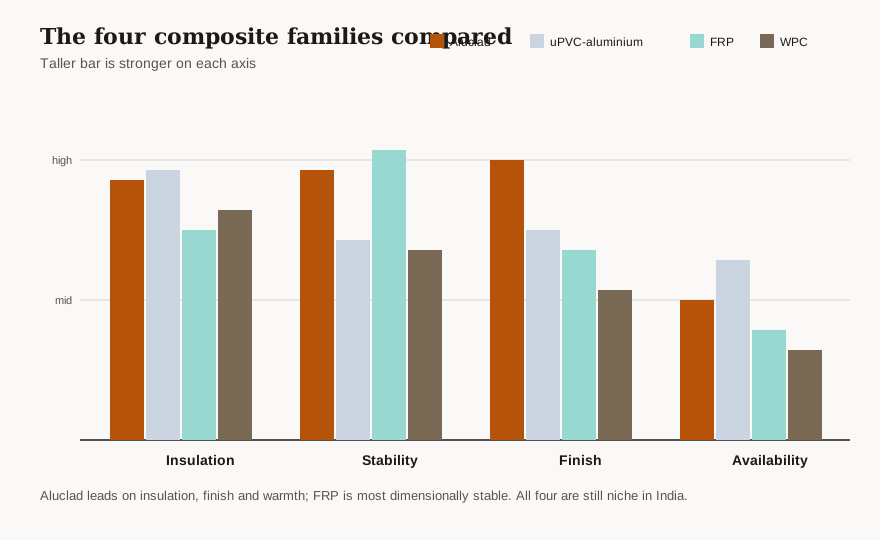
A composite window combines materials in a single profile so the frame is more than the sum of its parts. There are four families you will meet in India, in rough order of availability.
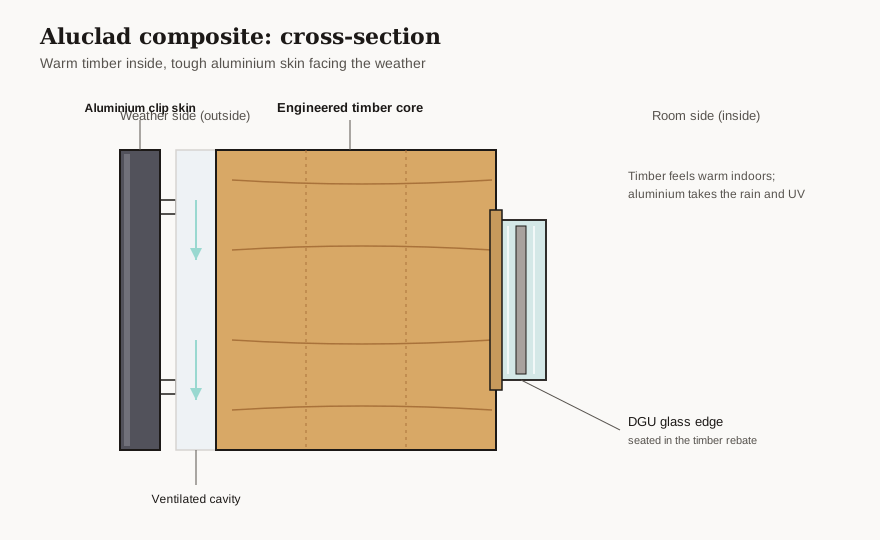
Timber-aluminium clad (aluclad)
The flagship. A solid engineered timber core forms the inner frame, while a separate, ventilated aluminium shell clips over the outside. Inside your room you see and touch real wood. Outside, the weather only ever meets powder-coated or anodised aluminium. The two are deliberately not glued face-to-face, the aluminium "floats" on clips so the timber can move with humidity without stressing the skin.
uPVC-aluminium
A multi-chamber uPVC core (the insulator) wrapped or faced with an aluminium exterior (the structure and finish). You get uPVC's sealing and thermal performance with aluminium's slimmer, harder, more colour-stable outer face. Common in European systems, slowly appearing in premium Indian projects.
Fibreglass / pultruded FRP
Glass fibres pulled through resin in a die (pultrusion) to make a rigid, dimensionally rock-stable profile. FRP expands and contracts at almost the same rate as the glass it holds, so seals last longer. It does not rot, warp, corrode or need a thermal break, and carries a 40-plus year life. The connoisseur's choice abroad; very few Indian fabricators yet.
WPC (wood-plastic composite)
Wood flour blended with polymer and extruded into profiles. Cheaper, more available than aluclad or FRP, with a wood-like look and no rot or termite risk. Performance sits below FRP and aluclad but above plain uPVC on stability.
How the families compare
| Family | Core / skin | Thermal break needed | Rot / corrosion | Indicative life | India availability |
|---|---|---|---|---|---|
| Aluclad (timber-alu) | Timber inside, aluminium outside | Built-in (wood is the break) | None outside, wood inside protected | 40-50 yr | Limited, premium |
| uPVC-aluminium | uPVC core, alu face | Built-in (uPVC core) | Corrosion-proof | 30-40 yr | Limited |
| Fibreglass / FRP | Pultruded glass-fibre + resin | Not needed | Excellent | 40-plus yr | Very limited |
| WPC | Wood flour + polymer | Partial | Excellent | 25-40 yr | Moderate |
Thermal, acoustic and corrosion behaviour
This is where composites justify themselves. Bare aluminium conducts heat and cold straight through the frame unless a polyamide thermal break is inserted; see the aluminium windows guide for how that detail works. Composites sidestep the problem. In aluclad and uPVC-aluminium the insulating core (wood or uPVC) is itself the thermal break, so there is no metal bridge from outside to inside. FRP has such low conductivity that no break is required at all.
Pair any composite frame with a DGU (double glazed unit), ideally Low-E and low-SHGC for Indian heat, and you have a window envelope that helps you hit Eco-Niwas Samhita 2018 targets, RETV at or below 15 W/m-squared and the minimum-VLT-by-WWR bands, with room to spare. Acoustically, the mass of a timber or FRP core plus laminated DGU makes composites among the quietest frames available. On corrosion, FRP, WPC and uPVC-cored composites are inert, while aluclad keeps salt and rain off the timber behind an aluminium shield, a genuine advantage over solid wood in coastal and monsoon zones.
Finishes and looks
Aluclad gives you a designer's dream split: any wood species and stain on the inside (oak, teak-look, walnut) and any RAL powder-coat or anodised colour on the outside, so the window matches your interiors and your facade independently. FRP takes durable factory paint finishes. WPC reads as wood from a short distance. uPVC-aluminium offers crisp, narrow sightlines outside with a clean interior face.
Cost: top of the range, honestly
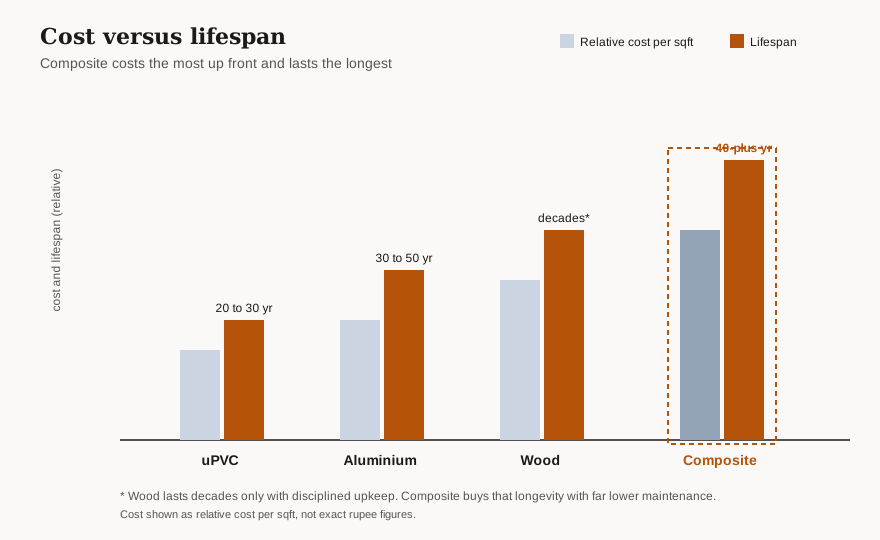
Composites sit at the top of the Indian price band, above premium uPVC and most powder-coated aluminium, often overlapping or exceeding thermally-broken system aluminium.
| Frame option | Indicative ₹/sqft (frame) | Where it sits |
|---|---|---|
| Mid uPVC (reference) | 600-900 | Value baseline |
| Powder-coated aluminium | 450-950 | Mainstream modern |
| Premium uPVC DGU / system aluminium | 900-1,500-plus | Upper mainstream |
| WPC composite | ~1,200-2,000 | Entry composite |
| Aluclad / FRP composite | ~2,000-3,500-plus | Top of range |
Add 18 percent GST and installation of roughly ₹200/sqft (more for specialty shapes). Because so few Indian fabricators stock composites, much is imported or made to order, which inflates both price and lead time. Treat every figure as indicative and confirm with itemised fabricator quotes.
Lifespan and maintenance
| Material | Lifespan | Maintenance |
|---|---|---|
| uPVC | 20-30 yr | Low, wipe down |
| Aluminium | 30-50 yr | Low, coat in coastal |
| Wood | Decades if maintained | High, seal/paint every 2-4 yr |
| Composite / FRP | 40-plus yr | Low |
The headline is simple: composites outlast uPVC by a wide margin and rival or beat aluminium, while needing far less upkeep than solid wood. The aluminium shell on an aluclad means you never repaint the exterior, the interior wood may want an occasional re-oil, but it is sheltered, so it ages gracefully rather than rotting. FRP and WPC are effectively wipe-clean for life.
Climate fit
- Coastal (salt and humidity): FRP and WPC are inert and excellent; aluclad protects its timber behind a marine-grade powder-coated or anodised skin. All beat solid wood here.
- Hot and extreme-heat inland: the insulating core plus low-SHGC DGU controls heat gain better than bare aluminium; FRP's matched expansion keeps seals tight at 45 degrees C.
- Monsoon: sealed, non-swelling, non-rotting, this is composite's home turf, with proper weep holes and drip sills.
Pros and cons
| Pros | Cons |
|---|---|
| Best-of-both: durability plus insulation | Highest cost in the market |
| Longest life (40-plus yr), beats uPVC | Few Indian fabricators, limited availability |
| Dimensionally very stable (FRP especially) | Heavier profiles |
| No rot, warp or corrosion | Long lead times, often imported |
| Warm wood interior with weatherproof exterior (aluclad) | Repairs need specialist support |
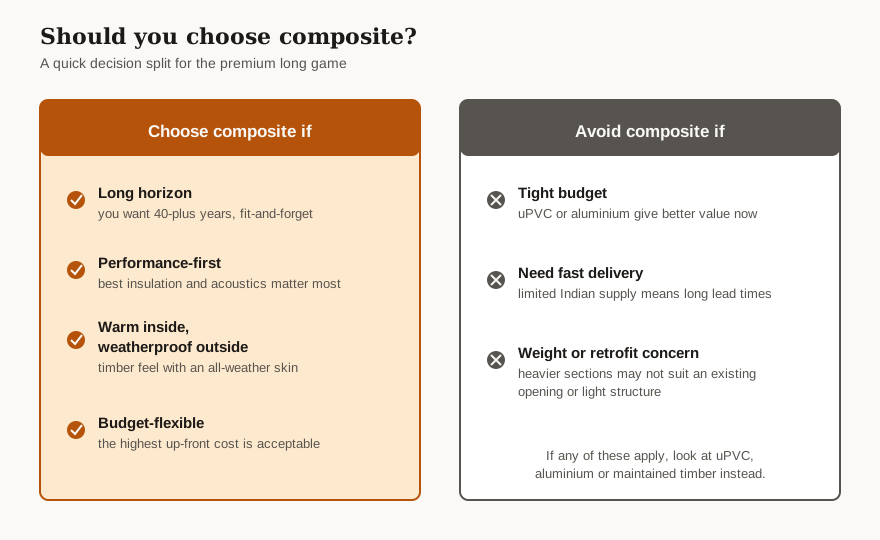
Choose composite if
- You are building for a 30-to-50-year horizon and want to fit windows once.
- Performance comes first: best thermal, acoustic and stability in one frame.
- You want real wood inside and a no-maintenance exterior (aluclad).
- Budget is not the binding constraint and you can wait for a made-to-order supply.
Avoid composite if
- Cost is tight, premium uPVC or powder-coated aluminium gives most of the benefit for far less.
- You need fast delivery or local service, availability and fabricator depth are thin in India.
- Weight or structural detailing is a concern on a light retrofit.
How material choice meets window type
Picking composite settles the frame question; you still choose a shape for each opening. A casement composite seals beautifully for bedrooms; a fixed picture unit in FRP frames a stable, low-maintenance view; sliders suit balconies. Our types of home windows guide walks through which shape ventilates, secures and suits each room, the perfect companion once you have decided composite is your material.
References
Export this guide
Related Guides — Deep-dive reading
Aluminium Windows Guide (India): Slim, Strong, and the Thermal-Break Question
Why aluminium gives you the most glass and least frame, why bare metal conducts heat, and how a polyamide thermal break plus DGU fixes it.
Windows & GlazingWindow Frame Materials in India (2026): uPVC vs Aluminium vs Wood vs Steel vs Composite
The buyer's decision guide for choosing a window frame material by budget, climate, thermal priority, look, maintenance and lifespan.
Windows & GlazingWooden vs Aluminium Windows (India): Warmth and Tradition vs Strength and Low Upkeep
A direct duel between timber and aluminium, side-by-side on cost, warmth, thermal, spans, lifespan, maintenance and climate fit, with choose-if verdicts.
Windows & GlazingRelated Tools — Try Free
Window Material Comparison Tool
Compare uPVC, aluminium, wood, steel and composite windows on cost, life, upkeep and insulation.
CompareDoor Material Comparison Tool
Compare 2–4 door materials on cost, durability, maintenance, security and moisture resistance.
Comparison ToolWindow Maintenance Cost Calculator
Estimate annual window upkeep by frame material — yearly, per-window and 5-year cost.
Window Calculator