
Why Landscape Architecture Matters More Than the Building
How the green around, above and beyond your home out-cools, out-drains and out-appreciates the structure itself — at every scale from balcony to city.
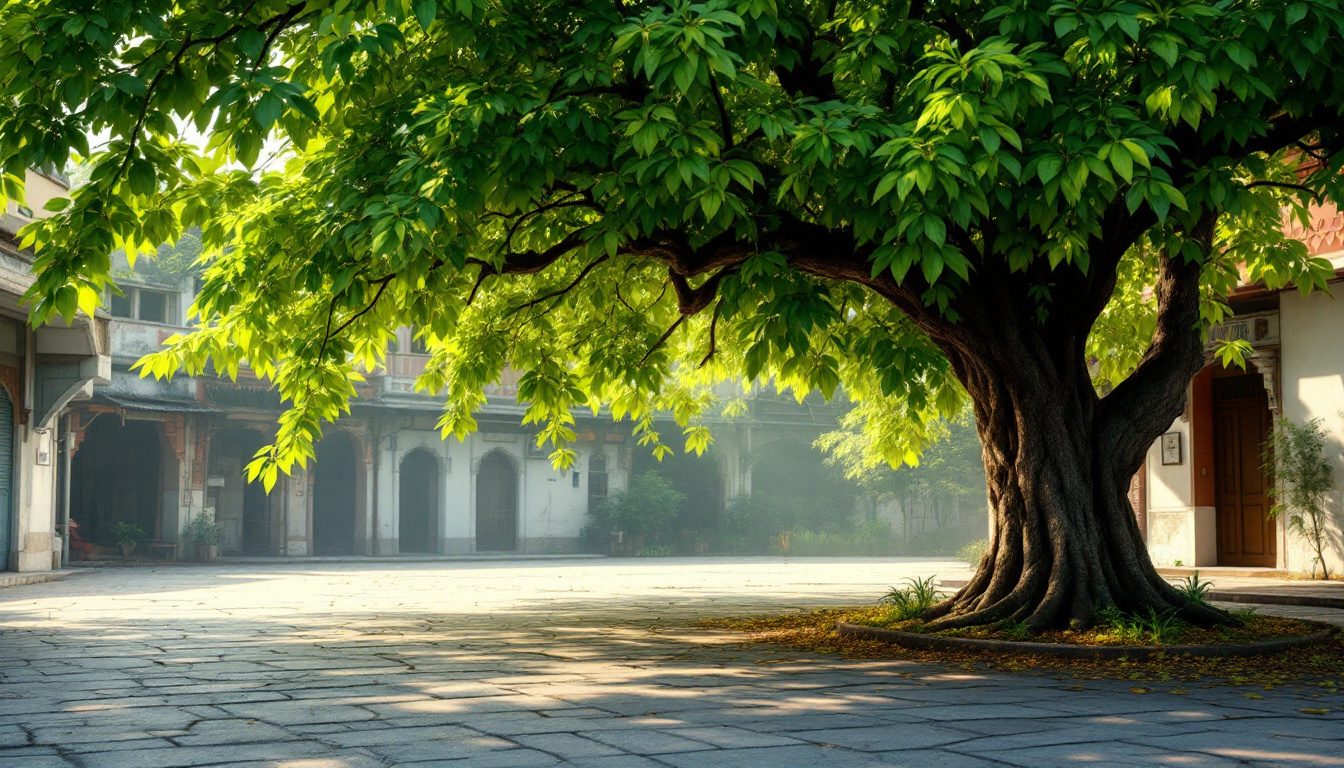
Stand on any Indian street at 3 pm in May and you can read the design failure with your skin. The asphalt radiates. The compound wall throws back the glare. The car shimmers. Then you step under a single old neem or rain tree and the air drops several degrees — not metaphorically, measurably — and your shoulders unclench. Nothing about the building changed. The landscape did the work.
We have inherited a strange hierarchy. The building gets the architect, the budget, the magazine spread and the housewarming. The landscape gets whatever money and attention is left over, usually some lawn, a boundary of areca palms and a row of pots. Yet across heat, water, air, biodiversity, social life and even resale value, the open ground around and above a building quietly outperforms the structure on almost every measure of human comfort and long-term worth.
This guide makes a deliberately provocative claim: for most Indian homes — from a 4-foot balcony to a gated layout to a city ward — the landscape often does more for your comfort, health, resilience and money than the building itself, and it does so while appreciating in value as the building depreciates. Landscape architecture is not the decoration applied after construction; in a country facing a compounding climate emergency, it is arguably the more important half of the project.
The building you can feel, the landscape you can survive
A building is a fixed object. Once cast, its walls, orientation and mass are largely frozen for fifty years. A landscape is a living system that responds to the day, the season and the decade. It cools when it is hot, drinks when it floods, breathes when the air thickens, and grows more valuable while paint peels and slabs crack.
This is the inversion most homeowners miss. The building is the part that ages downward. The landscape, designed and tended, is the part that ages upward. The Indian Society of Landscape Architects (ISOLA) has long argued that landscape architecture is an environmental discipline first and an aesthetic one second — that it manages microclimate, hydrology and ecology at scales the building never touches. The Council of Architecture (COA) and the National Building Code (NBC 2016) increasingly encode this through setbacks, tree mandates, rainwater harvesting rules and permeability requirements, but compliance still treats green as a checkbox. Treating it as the core system changes everything.
To see why, follow the landscape across every scale at which an Indian household actually lives.
| Scale | Typical landscape | What it can do | What it cannot do |
|---|---|---|---|
| Balcony / window (4–80 sqft) | Planters, vertical greens, a small tree in a pot | Shade glass, cool incoming air, screen dust, lift mood | Replace ward-level cooling |
| Terrace / rooftop (200–1,200 sqft) | Rooftop garden, green roof, pergola | Cut roof-surface heat sharply, harvest rain, grow food | Manage neighbourhood runoff |
| Plot / villa (1,000–10,000+ sqft) | Courtyard, lawn, trees, swales, harvesting | Cool the home, recharge groundwater, host life | Cool the street alone |
| Layout / society (1–20 acres) | Avenues, pocket parks, retention | Shade roads, slow floods, build community | Fix city-scale heat alone |
| Ward / city | Urban forest, lakes, parks, blue-green grid | Lower city temperatures, store stormwater | Be retrofitted cheaply once lost |
The lesson of the table is that landscape is the only design layer that scales continuously from a single pot to an entire city — and at every rung it is doing climate, water and health work the building cannot.
Trees versus air-conditioners: the cooling no machine can match
Start with heat, because India is now defining itself by it. Cities across the plains routinely cross 45°C, and the urban heat island effect adds several degrees more over concrete-heavy districts than over their green fringes. Studies of Indian cities suggest well-vegetated neighbourhoods can run noticeably cooler than bare, paved ones during peak afternoons — and dense tree canopy can drop the air temperature beneath it by a meaningful margin compared with adjacent sun-struck pavement.
The mechanism is twofold and worth understanding, because it explains why a tree beats a tin shade.
First, shade: a canopy intercepts solar radiation before it reaches the ground, so surfaces stay cool. A paved surface in full sun can reach scorching surface temperatures; the same surface under a tree stays far closer to air temperature. Second, and more powerfully, evapotranspiration: leaves release water vapour, and converting that water from liquid to vapour absorbs heat from the surrounding air — the same physics that makes a wet earthen matka cool. A mature tree moves hundreds of litres of water a day through this process on a hot day, acting, in effect, as a large solar-powered evaporative cooler that runs on rain.
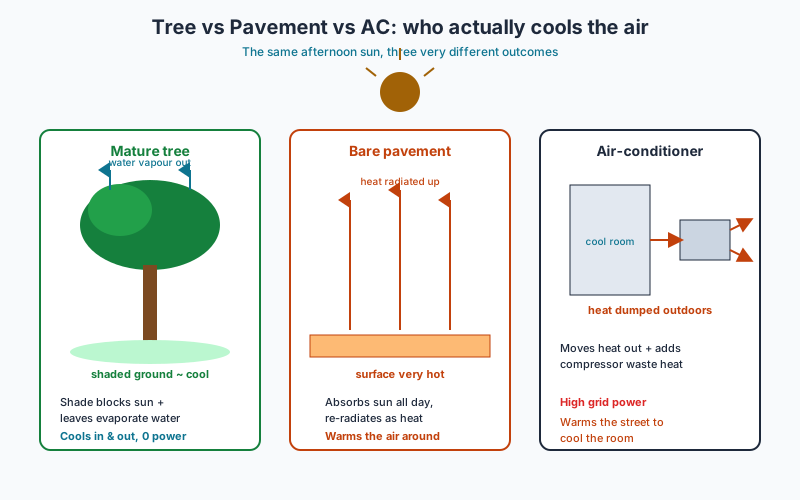
Compare that to an air-conditioner. An AC does not cool the world; it moves heat from inside to outside, and the compressor adds extra waste heat on top. Run a street full of ACs and you have warmed the street to cool the rooms — and spent electricity, much of it still coal-fired, to do it. A tree cools both the inside (by shading walls and windows) and the outside (by lowering ambient air), uses no grid power, and improves every year. The contrast is stark.
| Cooling approach | Energy use | Cools indoors | Cools outdoors | Trend over 10 years |
|---|---|---|---|---|
| Mature shade tree | None (solar/rain) | Yes (shades envelope) | Yes (ET + shade) | Improves as canopy grows |
| Rooftop / terrace garden | Minimal (irrigation) | Yes (insulates roof) | Slightly | Improves |
| Light-coloured / cool roof | None | Yes | Neutral | Degrades as it soils |
| Air-conditioner | High (grid) | Yes | No — adds heat | Degrades; efficiency falls |
None of this argues against air-conditioning. It argues that a well-shaded, well-planted home needs far less of it. Landscape architects working in Indian climates design exactly this: deciduous shade on the west and southwest, evergreen screens against hot winds, light paving, and ground that breathes. For the full toolkit see our guide to climate-responsive landscape design.
The sponge under your feet: water, floods and recharge
The second great service is hydrology, and India's cities now flip between two emergencies in the same calendar year: taps running dry in summer, streets drowning in the monsoon. Both are landscape failures dressed as weather.
When we pave a plot — driveway, parking, compound, plinth surrounds — rainwater that once soaked in now sheets off. The drains, sized for a gentler era, overflow within minutes. Meanwhile the aquifer beneath, never recharged, drops another metre. A landscape designed as a sponge reverses both problems at once. Permeable paving, rain gardens, swales, recharge pits and retained topsoil let water slow down, spread out and sink in. The water that does not flood the street in July is the water in your borewell in April.
| Surface / measure | Rough rain that soaks in | Effect in monsoon | Effect on groundwater |
|---|---|---|---|
| Plain concrete / tile | Very little | Fast runoff, local flooding | None |
| Permeable / grass paver | Moderate to high | Slows and absorbs | Recharges |
| Lawn / planted bed | High | Absorbs and detains | Recharges |
| Rain garden / swale | Very high | Stores and infiltrates | Strong recharge |
| Recharge pit / well | Targeted high volume | Diverts roof + paved water down | Strong recharge |
Many Indian states and cities — Bengaluru, Chennai, much of the NCR — already mandate rainwater harvesting above certain plot sizes, and IGBC and GRIHA green-rating systems award credits for on-site stormwater management and permeability. But a compliance pit dug to clear an occupancy certificate is not the same as a landscape designed to hold water. The difference is whole roads that stay dry and gardens that survive a failed monsoon. We go deep on this in sustainable water management for Indian landscapes.
Air, health and the quiet medicine of green
Heat and water are visible. The third service is invisible and arguably the most personal: the air you breathe and the nervous system you live in.
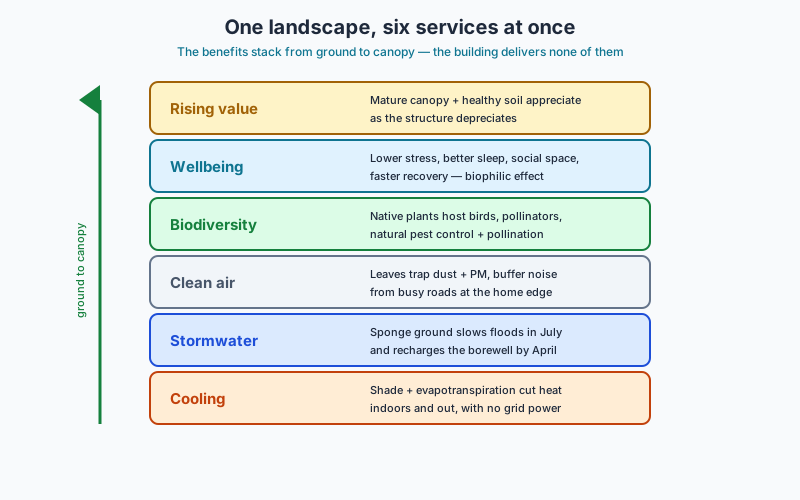
Vegetation filters particulate pollution, intercepting dust on leaf surfaces and helping settle the fine particles that make Indian winters dangerous. A planted buffer between a home and a busy road measurably reduces dust and noise reaching the windows. None of this replaces tackling pollution at the source, but at the scale of a single household, a green edge is a real, working filter.
Then there is the harder-to-measure but well-documented benefit to mental and physical health. A large body of research — from Roger Ulrich's classic hospital studies onward — finds that views of and time spent in green space lower stress hormones, reduce blood pressure, speed recovery and improve mood and concentration. This is the basis of biophilic design: the idea that humans are wired to respond to natural settings. It is why a hospital room facing a garden heals faster than one facing a wall, and why the most restful corner of any Indian home is usually the one that opens to green. We explore the feeling itself in why some gardens feel peaceful and the principles in biophilic landscape design.
Biodiversity: the house that hosts life
A building is, ecologically, dead space. A landscape can be a habitat. Even a modest Indian garden, planted with the right species, becomes a working ecosystem: native trees feed birds, flowering shrubs feed pollinators, a small water body draws dragonflies and frogs that in turn control mosquitoes. This is not sentiment; it is functioning pest control, pollination and resilience built into your plot for free.
The choice of plant matters enormously. Native and climate-adapted species support far more local fauna than exotic ornamentals, need less water, and survive the local extremes. A garden of imported turf and decorative palms is a green desert; a garden of neem, jamun, gulmohar, native flowering shrubs and grasses is alive.
| Plant choice | Biodiversity value | Water need | Resilience in Indian climate |
|---|---|---|---|
| Native trees (neem, jamun, peepal, arjun) | High — food and shelter | Low once established | Excellent |
| Native shrubs / flowering (hibiscus, ixora, lantana-alt) | High — pollinators | Low to moderate | Very good |
| Fruit trees (mango, guava, chikoo) | High — birds, people | Moderate | Good |
| Exotic lawn turf | Very low | High | Poor in heat |
| Decorative exotic palms | Low | Moderate | Variable |
For species selection tuned to Indian homes, see our guide to the best trees for Indian homes and the broader approach in tropical landscape design.
The social life of outdoor space
Buildings hold rooms; landscapes hold relationships. The most-used part of a well-designed Indian home is rarely the formal living room — it is the shaded verandah, the courtyard, the terrace at dusk, the building compound where children play and elders walk. At the layout scale, a single well-placed pocket park does more for a society's sense of community than any clubhouse, because it is free, daily and unprogrammed.
This social dimension is the part of landscape value that spreadsheets miss entirely. The traditional Indian courtyard — covered in depth in our courtyard landscape design guide — was never decoration; it was the climate-controlled social heart of the house, cooling the home by stack ventilation while hosting every important moment of family life. We built our way out of courtyards and into sealed boxes, and we are quietly poorer for it. On terraces, the same logic plays out vertically; see rooftop garden design.
Longevity: the asset that appreciates while the building falls
Here is the financial heart of the argument, and the one most homeowners find genuinely surprising. A building begins depreciating the day it is finished. A landscape, properly designed and tended, begins appreciating.
Concrete carbonates, paint fades, waterproofing fails, fittings date, and tax law itself treats the structure as a wasting asset. The land it sits on appreciates — but so, distinctly, does what grows on that land. A sapling planted today is worth little; in fifteen years it is an irreplaceable canopy that no amount of money can instantly buy, providing shade, cooling, privacy and beauty that a new-built mansion next door simply cannot match. Mature trees are routinely cited as adding meaningfully to residential property value and saleability — a premium you cannot retrofit overnight.
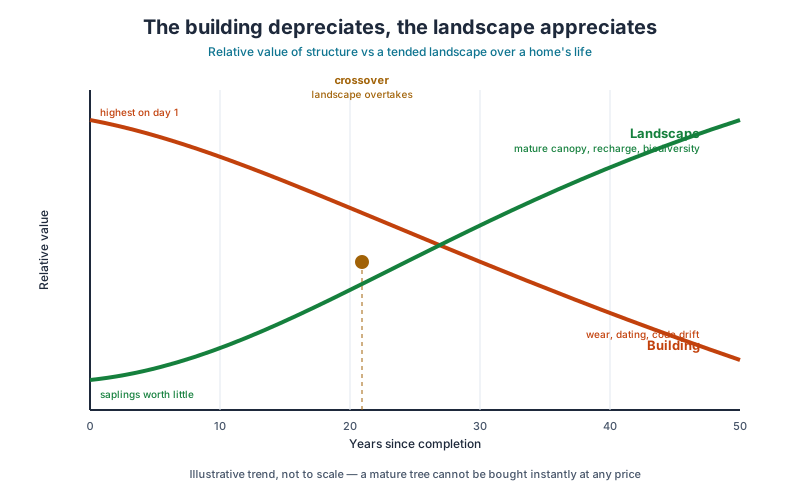
| Element | Day 1 value | At ~15 years | Why |
|---|---|---|---|
| RCC structure | Highest | Lower (depreciated) | Wear, dating, code drift |
| Finishes / fittings | High | Low | Fashion + wear |
| Mature canopy trees | Low (saplings) | High | Irreplaceable, grown not bought |
| Healthy soil + recharge | Low | High | Resilience + water security |
| Established planting | Low | High | Maturity + biodiversity |
The implication for how you spend is direct. A rupee put into a fast-fading finish is largely gone in a decade; a rupee put into the right tree in the right place is compounding. For the numbers, see our landscape cost guide, and for the resale dimension, landscape design and property value.
India's climate emergency makes this urgent, not optional
Everything above sharpens under India's specific conditions. We are warming faster than the global average in many regions, our cities are heat-island furnaces, our monsoons are turning erratic and violent, our groundwater is in serious decline, and our air ranks among the world's worst. In that context, the landscape stops being the nice-to-have and becomes the front line of resilience — the layer that keeps a home habitable when the grid strains, the drains overflow and the air turns toxic.
ISOLA and IGBC both now frame landscape as climate infrastructure rather than ornament, and the discipline of landscape architecture — distinct from gardening, as we explain in landscaping versus landscape architecture — exists precisely to design these living systems with the rigour we already give to structure. The masters of the field, profiled among our landscape architects, have spent careers proving the point.
The good news is that you do not need a villa to act. A shaded balcony, a planted terrace, a permeable driveway, three native trees in the right places — each is a working piece of climate infrastructure at the scale you can afford. The hierarchy can be inverted starting this season.
Where to begin
Treat the open ground around your home — and above it, and at its edges — as the most important design surface you own. Shade the west, soften the paving, choose native, hold the rain, and plant for the decade, not the photo. Browse the full landscape guide library to plan the specifics for your climate and plot. The building will keep you dry. The landscape, designed well, is what will keep you cool, healthy, solvent and sane through the decades India is heading into — and it is the rare part of a home that gets better every single year.
References
- Indian Society of Landscape Architects (ISOLA) — position statements on landscape as environmental and climate infrastructure.
- National Building Code of India (NBC) 2016 — provisions on setbacks, rainwater harvesting and site development.
- Council of Architecture (COA), India — scope of architectural and allied landscape practice.
- Indian Green Building Council (IGBC) and GRIHA — green-rating credits for stormwater management, heat-island reduction and on-site water.
- Ulrich, R. S. — research on the restorative effects of views of nature on health and recovery.
- Studies on urban heat island and tree-canopy cooling in Indian cities (peer-reviewed urban-climate literature); figures cited as ranges.
- TERI and IPCC regional assessments — India warming trends, monsoon variability and groundwater stress.
Export this guide
Related Guides — Deep-dive reading
How Buildings Can Give Back: Biodiversity and Environmental Health
How an Indian home and its plot can actively improve the ecology and environment around it, not just reduce harm
SustainabilityThe Best Trees for Indian Homes
A research-grade guide to choosing and placing trees around an Indian home — the real cooling and clean-air numbers, the right species for shade, flowers, fragrance and fruit, and the placement science that keeps roots out of your walls and drains.
LandscapeHomes That Improve Mental Wellbeing
The whole-home, indoor-biophilia approach to calm — how plants, light, air, quiet and the right balance of togetherness and retreat make an Indian home restorative.
Healthy HomesRelated Tools — Try Free
Cross-Ventilation Analyzer
Estimate airflow and air changes per hour (ACH) from room size, window areas, layout, and local wind — with NBC 2016 Part 8 compliance check.
Ventilation CalculatorRainwater Tank Sizer
How big should your rainwater tank be? Computes annual harvest, recommended tank capacity in litres, water-bill savings, and payback — for 10 Indian cities.
RWH CalculatorBrise-Soleil Visualizer
Interactive horizontal-louvre cut-off angle calculator — sun altitude, louvre depth, and spacing inputs with a live shadow preview. Computes θ = arctan(spacing/depth) for façade shading, ECBC envelope compliance, hospital daylight design, and tropical sun-control detailing.
Sun Shading Tool