
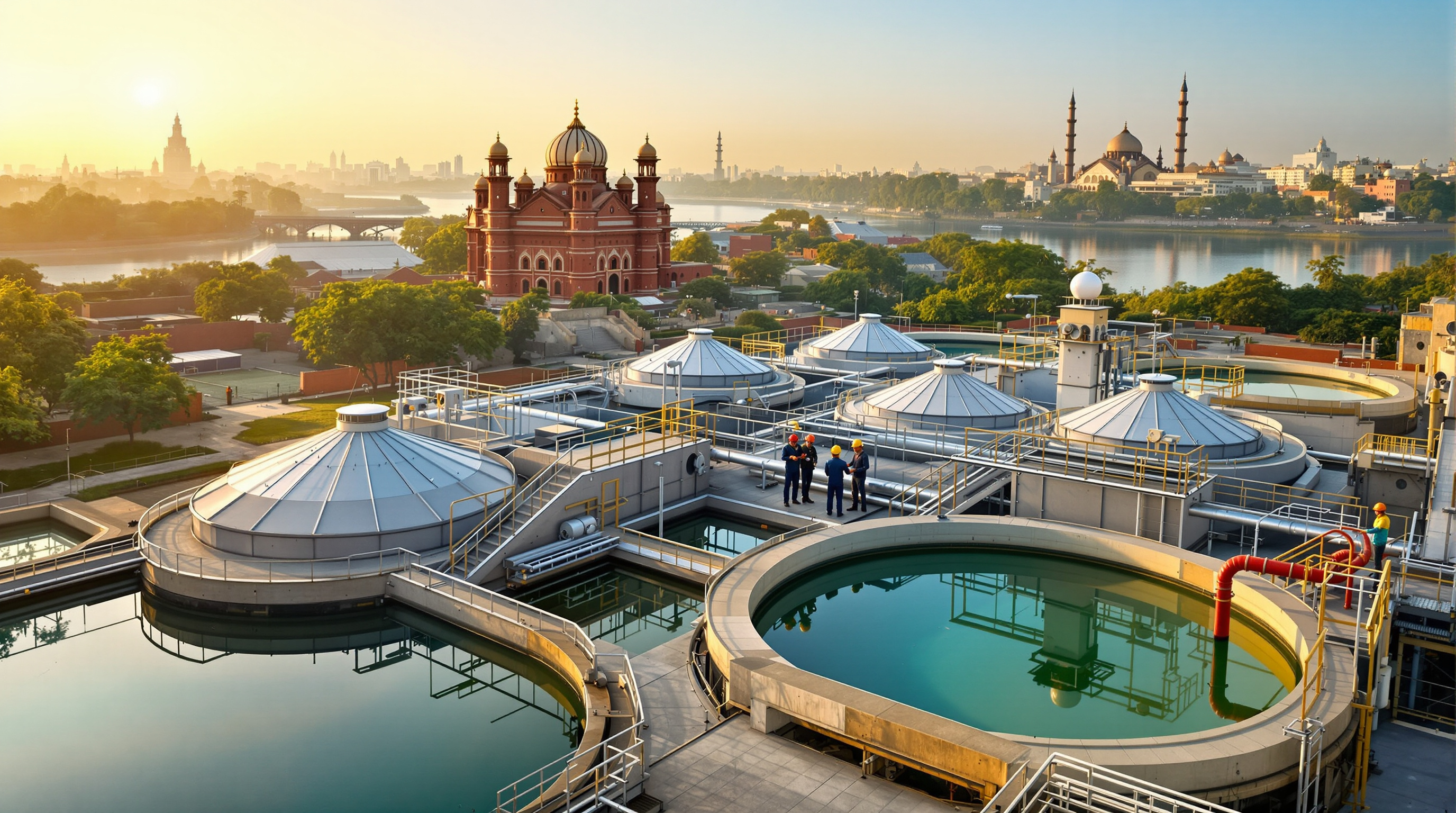
Uttar Pradesh STP Rules & UPPCB Norms: The Complete 2026 Compliance Guide
When a sewage treatment plant is mandatory in Uttar Pradesh, how the UPPCB consent process works, what discharge and reuse standards apply, and how owners and RWAs across Lucknow, Noida, Kanpur and the Ganga belt stay compliant.
Uttar Pradesh is India's most populous state and the heart of the Ganga basin — which makes how it handles sewage a matter of national significance, not just local compliance. If you are building or running an apartment complex, hotel, hospital, IT park or gated township anywhere from Noida to Varanasi, the question "do I need a sewage treatment plant, and what does the state expect of it?" has a real, enforceable answer. This guide sets out the STP regulatory position in Uttar Pradesh as administered by the Uttar Pradesh Pollution Control Board (UPPCB), in plain language, with the state-specific angles that generic national guides miss.
In Uttar Pradesh the pressure on wastewater rules is uniquely intense: the Ganga and Yamuna run through the state's biggest cities, and the National Green Tribunal has repeatedly hauled the UPPCB and district administrations to task over untreated sewage. Compliance here is not a paperwork formality — it is watched.
A quick but important caveat before we start: STP norms in India change often, and much of the detail sits in development-authority building byelaws that differ city to city. Treat this as an orientation, and confirm the current position for your project directly with the UPPCB and your local development authority before you commit designs or budgets.
Is an STP mandatory in Uttar Pradesh?
There is no single "STP law" in Uttar Pradesh. The obligation is created by two layers working together, and it is the combination that matters:
- The pollution-control layer (UPPCB). Under Section 25 of the Water (Prevention and Control of Pollution) Act, 1974, no one may establish or operate any "treatment and disposal system" that discharges sewage without the prior consent of the State Board. In practice, any project large enough to generate significant sewage must build an STP and get it consented before it discharges a drop. This is the national framework the UPPCB administers — the same one described in our overview of STP regulations in India and SPCB approvals for STPs.
- The building-byelaw layer (development authorities). Whether your specific building must have an STP is decided by the byelaws of your development authority — Lucknow (LDA), Noida and Greater Noida, Ghaziabad (GDA), Kanpur (KDA), Prayagraj, Agra or Meerut. The Uttar Pradesh Building Construction and Development Byelaws, 2025 (approved by the state cabinet in July 2025) is the model these authorities follow, and it makes on-site environmental infrastructure a condition of sanction and occupancy for larger projects. Our guide to building byelaws and STPs explains how this mechanism works nationally.
As a working rule: large group-housing projects, townships, and virtually all commercial, institutional and hospitality buildings in urban Uttar Pradesh are required to install and operate their own STP. Small individual homes are not. The exact plot-size, dwelling-unit or built-up-area threshold at which the requirement bites is set by your development authority's byelaws — the UP 2025 byelaws, for reference, make rainwater harvesting mandatory for plots above 300 sq m, and STP obligations follow a similar tiered logic for group housing and non-residential blocks. Because these thresholds vary and are periodically revised, verify yours rather than assuming a number.
The UPPCB consent process: CTE and CTO
Every STP in Uttar Pradesh passes through the two-stage consent that is the spine of Indian pollution regulation:
- Consent to Establish (CTE) — obtained before construction. You submit the project details and STP design, and UPPCB permits you to build. See our detailed walk-through of the Consent to Establish.
- Consent to Operate (CTO) — obtained before you start discharging, after the STP is built. UPPCB inspects, confirms the plant meets design and discharge norms, and licenses operation. See the Consent to Operate guide.
UPPCB classifies projects into the standard Red, Orange, Green and White categories by pollution potential, which drives the level of scrutiny, validity period and fees. Applications are filed online — through the state's Nivesh Mitra single-window portal and the UP Online Consent Management & Monitoring System (OCMMS). Your STP submission must include the design basis (sewage characteristics, hydraulic load), the treatment technology and unit-by-unit design criteria, layout and hydraulic-profile drawings, and the proposed mode of disposal or reuse of treated water.
A typical compliance path looks like this:
| Stage | What you do | Who is involved |
|---|---|---|
| Design | Size the STP to peak occupancy; fix technology (SBR, MBBR, MBR) | Consultant / vendor |
| CTE | Apply on Nivesh Mitra / OCMMS with STP design before building | UPPCB Regional Office |
| Construct | Build STP per approved design | Contractor |
| CTO | Apply after commissioning; UPPCB inspects | UPPCB Regional Office |
| Operate | Run, monitor, renew CTO, file returns | Owner / RWA / FM team |
For large projects, an Environmental Clearance under the EIA Notification may also apply — the STP is then a committed condition of that clearance too.
Discharge and reuse standards

Uttar Pradesh does not publish a materially different set of numbers from the national baseline — it applies the stringent CPCB-derived discharge standards that govern STPs across India (see CPCB guidelines for STPs and treated water quality standards). The norms UPPCB expects treated sewage to meet are broadly:
- pH — 6.5 to 8.5
- BOD — typically ≤ 10 mg/L (metro/urban) up to 30 mg/L depending on disposal route
- COD — ≤ 50 mg/L
- TSS — ≤ 10–20 mg/L
- Ammoniacal nitrogen — ≤ 5 mg/L
- Faecal coliform — ≤ 100 MPN/100 mL
Because the applicable BOD/TSS limit depends on whether treated water is reused, discharged to a drain, or released near a sensitive waterbody like the Ganga, confirm the exact figures on your CTO.
Reuse is expected, not optional. Treated water must be put to non-potable use — toilet flushing, landscaping, cooling and washing — which is why dual-plumbing is designed in from the start. In a water-stressed state where cities like Lucknow, Kanpur and Agra face falling groundwater tables, on-site reuse is both a regulatory expectation and a practical saving; a well-run STP recovers 80–85% of a building's water. Use the STP Capacity Calculator to convert your headcount into a design capacity in litres per day.
Monitoring and the Ganga context
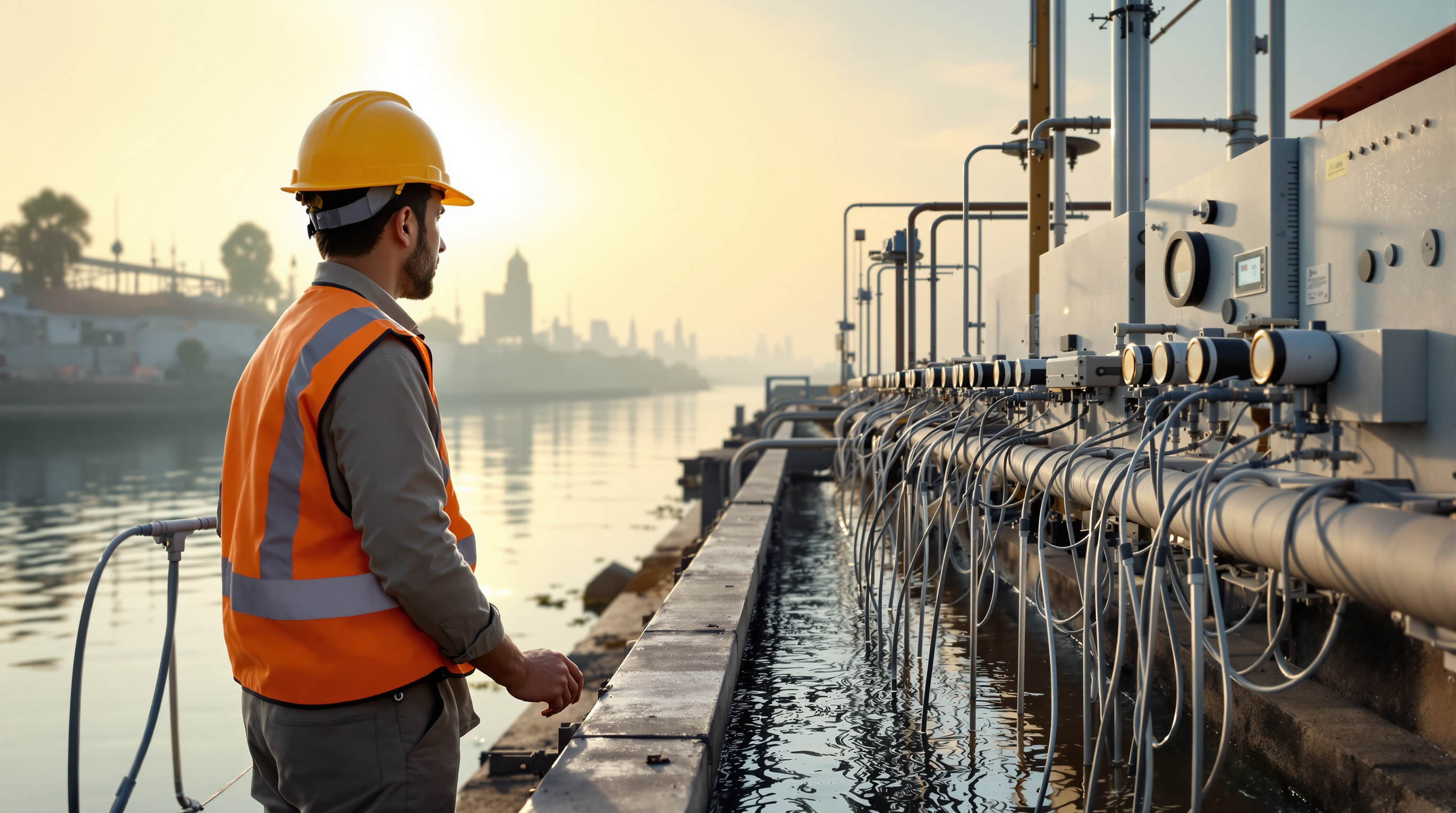
Large STPs in Uttar Pradesh are required to install online continuous monitoring — sensors for pH, BOD, COD, TSS and flow that transmit data automatically to UPPCB and CPCB servers. Smaller plants rely on periodic sampling and returns. The enforcement backdrop is unusually sharp here because of the Namami Gange programme and continuous NGT oversight of the Ganga and Yamuna. During the Maha Kumbh at Prayagraj in early 2025, the CPCB reported that river water at the Sangam failed bathing standards, and the NGT publicly rebuked the UPPCB — reporting that STPs were receiving sewage "far beyond their capacities." The tribunal has levied environmental compensation on projects operating without a valid Consent to Operate and fined state agencies over discharge into the Ganga Canal. The lesson for private owners: an STP that exists on paper but is under-run or bypassed is a liability, not a shield.
Practical compliance tips for owners and RWAs
- Size honestly for full occupancy. The commonest failure in UP housing societies is an STP designed for a fraction of the eventual load. An overloaded plant cannot meet norms — exactly the failure the NGT has punished at municipal scale.
- Keep CTO current. Consent has a validity period and must be renewed. Operating on a lapsed CTO is the single easiest violation to catch.
- Log and reuse. Maintain daily operation logs, test reports and sludge-disposal records; run treated water into flushing and landscaping and keep evidence of it.
- RWAs: take handover seriously. When a builder hands over an apartment project, the STP, its consents and its running obligations pass to the association. See apartment association STP compliance and work through the STP compliance checklist.
- Confirm your city's byelaw. Noida and Lucknow do not word their requirements identically. Check your development authority.
Where Uttar Pradesh sits nationally
UP's framework is recognisably the national model — CTE/CTO consent, CPCB-aligned discharge norms, byelaw-driven mandates — sharpened by Ganga-basin enforcement. To see how it compares with neighbours and other states, use the state-wise STP approval comparison, or read the parallel guides for Delhi, Haryana, Rajasthan, Madhya-Pradesh neighbours like Gujarat and southern states such as Karnataka, Maharashtra and Tamil Nadu. New to the topic? Start with what a sewage treatment plant is, then explore the full Sewage Treatment Plants guide library.
A final reminder: these rules are revised regularly, and city byelaws differ. Before you design, budget or sign off, confirm the current requirements for your project directly with the Uttar Pradesh Pollution Control Board (UPPCB) and your development authority.
Sources: UPPCB official website · UP Online Consent Management & Monitoring System · Nivesh Mitra single-window portal · UP Building Byelaws 2025 (Housing & Urban Planning Dept.) · Down To Earth — NGT remarks to UPPCB, Feb 2025 · Business Standard — Maha Kumbh Ganga water quality, CPCB report
Export this guide
Related Guides — Deep-dive reading
Building Bye-laws for STPs in India: What Your Occupancy Certificate Depends On
How municipal building bye-laws and India's Model Building Bye-Laws / NBC turn an on-site sewage treatment plant, dual plumbing and treated-water reuse into a legal condition for occupying a building above a plot or built-up-area threshold.
Sewage Treatment PlantsPunjab STP Rules & PPCB Norms: The Complete Compliance Guide (2026)
When an on-site sewage treatment plant is mandatory in Punjab, how the Punjab Pollution Control Board (PPCB) consent process works, what the building byelaws demand, and how owners and RWAs stay compliant amid the state's intense NGT-driven enforcement.
Sewage Treatment PlantsState-Wise STP Approval Process Comparison: How Consent Rules Differ Across India
Every Indian state runs the same national CTE/CTO consent framework under the Water Act — but the board names, portals, thresholds and effluent limits change as you cross state lines. Here is how the STP approval process actually compares, state by state, and how to find the rule that binds your project.
Sewage Treatment PlantsRelated Tools — Try Free
Rainwater Tank Sizer
How big should your rainwater tank be? Computes annual harvest, recommended tank capacity in litres, water-bill savings, and payback — for 10 Indian cities.
RWH CalculatorConstruction Approval Checklist — 24-Stage Tracker
Track every approval, permit, and NOC from land title to occupancy certificate across 24 stages.
ApprovalsCPCB Compliance Checklist for STPs
Tick off CPCB/SPCB outlet standards, monitoring duties and record-keeping to score your sewage treatment plant's compliance readiness.
Checklist