
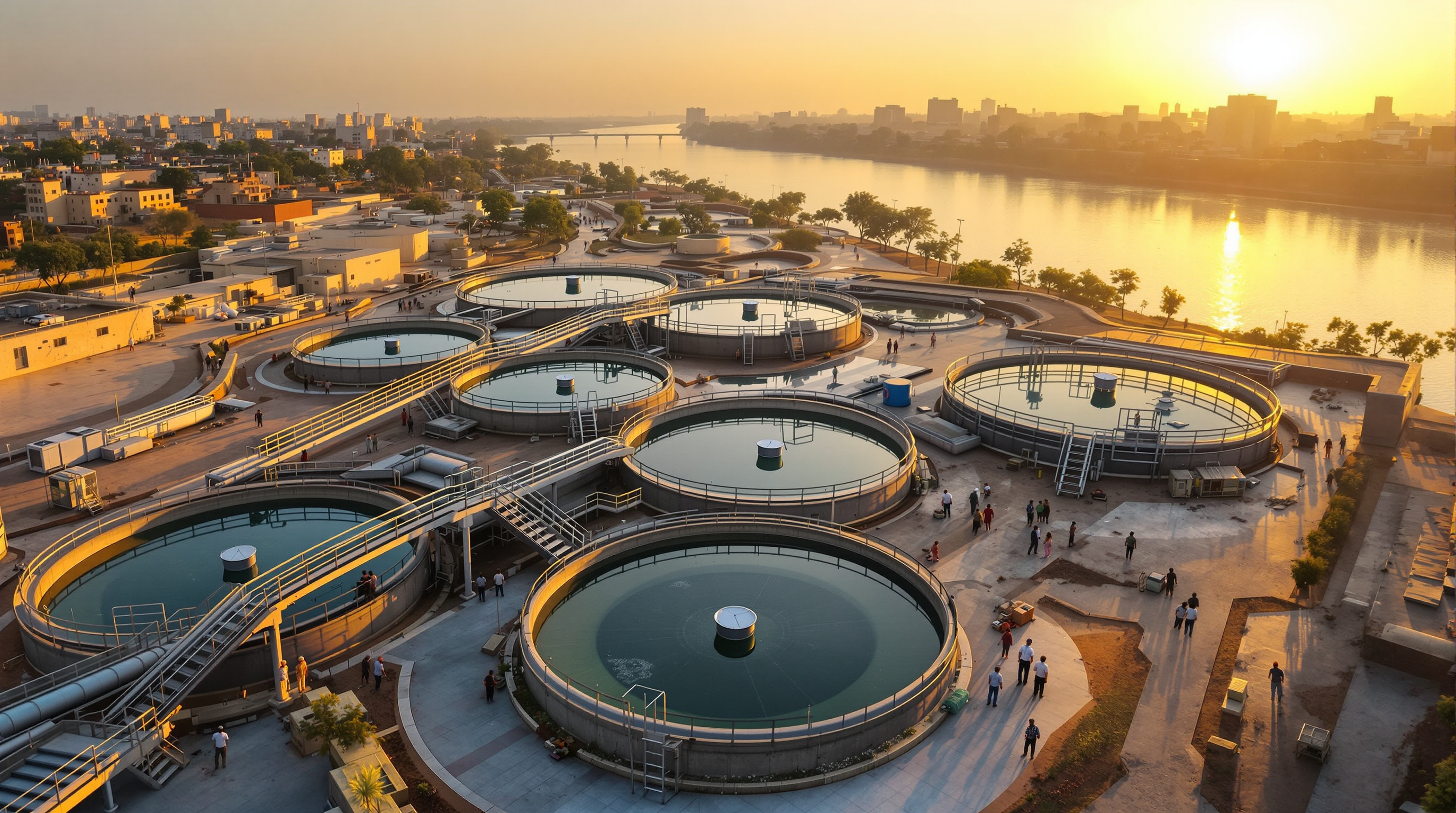
Gujarat STP Compliance & GPCB Norms: The Complete 2026 Guide
When an STP is mandatory in Gujarat, how the GPCB consent process (CTE/CTO) works, what discharge and reuse rules apply, and how apartment owners and RWAs in Ahmedabad, Surat, Vadodara and Rajkot stay on the right side of the law.
Gujarat is one of India's most industrialised and fastest-urbanising states — and one of its most water-stressed. Much of Saurashtra and Kutch is semi-arid, and cities like Ahmedabad, Surat, Vadodara and Rajkot lean heavily on the Narmada canal network for fresh water. In that context, treating and reusing sewage is not an abstract green ideal; it is state policy. For anyone building or running an apartment complex, hotel, hospital or IT park in Gujarat, an on-site Sewage Treatment Plant (STP) — and proof that it works — has become a routine condition of doing business.
This guide explains, in plain language, when an STP is mandatory in Gujarat, how the Gujarat Pollution Control Board (GPCB) consent process works, what discharge and reuse standards you must meet, and the practical steps owners and Resident Welfare Associations (RWAs) should take to stay compliant. If you are new to the machinery itself, start with what an STP is; if you want the all-India picture first, see our STP regulations in India overview.
Norms change frequently and are enforced locally. Treat this guide as an orientation, not legal advice — always confirm the current thresholds, fees and standards for your specific project with the Gujarat Pollution Control Board (GPCB) and your local development authority before you design or apply.
Is an STP mandatory in Gujarat?
There is no single "STP or no STP" line in Gujarat law. Instead, the requirement comes from three overlapping regimes, and if your project falls under any one of them, you need a plant.
- Environmental Clearance (EC) projects. Building and construction projects above the national built-up-area threshold (broadly 20,000 sq.m and above) require prior Environmental Clearance, and a functioning STP with treated-water reuse is a standard, non-negotiable condition of that clearance. See our environmental clearance for STP guide.
- GPCB consent projects. Independent of size, any establishment that generates sewage and discharges effluent falls under the Water Act, 1974, and needs GPCB consent — which in practice means an STP for anything beyond a small building on municipal sewerage.
- Building-permission conditions. Gujarat's unified building code, the Comprehensive General Development Control Regulations (CGDCR) 2017, and the development authorities that administer it (AUDA in Ahmedabad, SUDA in Surat, VUDA in Vadodara, RUDA in Rajkot) increasingly attach on-site sewage treatment, dual plumbing and waste-water reuse conditions to building-plan approval and the Building Use / Occupancy Certificate.
The practical takeaway: large residential, commercial and institutional projects in Gujarat's cities are effectively required to install an STP, and the Occupancy Certificate is often withheld until a working plant is demonstrated. Smaller projects may still be caught by GPCB consent or local conditions. Because the exact dwelling-unit and built-up-area triggers are set and revised locally, confirm your project's specific threshold with GPCB and your development authority rather than relying on a rule of thumb.
The GPCB consent process: CTE and CTO
The GPCB — constituted in 1974 and the state arm of the pollution-control framework — runs a two-stage consent process that mirrors the national State Pollution Control Board approval model. Both stages are filed online through the board's XGN e-governance portal.
| Stage | What it is | When you apply | What GPCB checks |
|---|---|---|---|
| Consent to Establish (CTE) | Permission to build the project and its STP | Before construction begins | Site suitability, category (Red/Orange/Green), STP capacity and technology, layout, EC status where applicable |
| Consent to Operate (CTO) | Permission to run the completed STP | Before commissioning / occupancy | That the STP is installed, functional, and producing effluent within discharge norms; usually a site inspection |
| CTO renewal | Periodic renewal of the operating consent | Before each expiry | Continued compliance, monitoring records, treated-water quality |
A few Gujarat-specific practicalities:
- Projects are slotted into Red, Orange or Green categories, which determine fee scale, documentation depth and CTO validity period. Residential and most commercial STPs typically sit in the lower-impact categories, but confirm yours.
- The CTE application wants your STP design capacity (in KLD), the treatment technology (MBBR, SBR, MBR and similar), a layout showing the plant's location, and — for EC-scale projects — the clearance conditions.
- The CTO stage is where a plant on paper must become a plant that works: GPCB commonly inspects before granting or renewing consent. For deeper detail on each stage, see our dedicated Consent to Establish and Consent to Operate guides.
Local building byelaws and authority rules
Beyond GPCB, the CGDCR 2017 is the building rulebook that most directly touches homeowners. It standardised development control across Gujarat's urban authorities, and its sanitation and water-conservation provisions push larger buildings toward on-site treatment, dual plumbing (a separate line carrying treated water for flushing and gardening), and rainwater harvesting. In several authorities these features are checked at plan-approval and again before the Building Use permission is issued.
If you are a builder or an RWA, the byelaw layer matters as much as the GPCB layer: it is usually the Occupancy / BU certificate — gated by the local authority — that gives the STP requirement its teeth. Our building byelaws and STP guide explains how these municipal conditions interlock with pollution-board consent.
Discharge and reuse expectations
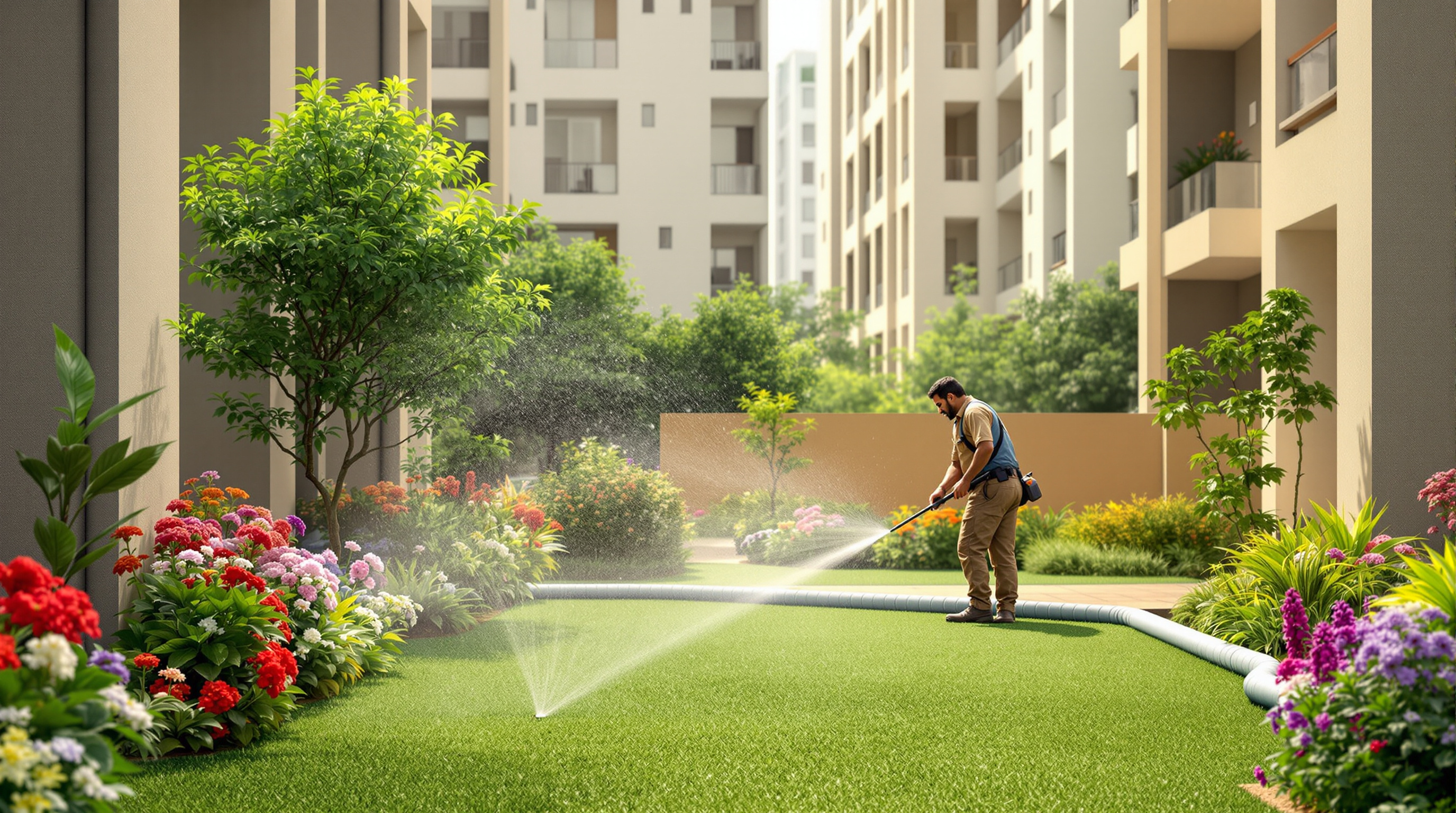
Gujarat broadly follows the Central Pollution Control Board (CPCB) baseline for treated-sewage quality — there is no lower Gujarat-specific bar. In practice, treated water meant for on-site reuse and safe discharge is expected to be brought down to reuse-grade quality: low BOD, low suspended solids, a near-neutral pH and disinfected to control coliform. For the exact numerical limits that apply to your consent, rely on the treated-water quality standards your CTO specifies and the CPCB guidelines for STPs — and confirm the current figures with GPCB, since these are periodically revised.
What makes Gujarat distinctive is the reuse side. The state's Policy for Reuse of Treated Waste Water (2018) is one of India's most ambitious, aiming to cut dependence on Narmada fresh water by:
- reusing at least 25% of a municipality's fresh-water equivalent from treated wastewater within a few years of adoption;
- scaling reuse to 70% by 2025 and 100% by 2030; and
- channelling treated municipal water to industry, thermal power plants, construction and gardening, backed by a large programme of new sewage treatment plants.
For a building owner, the message is clear: treated water is a resource the state actively wants recycled, not discharged. On-site reuse for flushing, landscaping and cooling towers is both compliant and economically sensible in a water-scarce state.
Monitoring and ongoing compliance

Getting the CTO is the start, not the finish. Ongoing obligations typically include:
- Daily operation logs — running hours, power, chemical and sludge records.
- Periodic treated-water testing from a NABL-accredited laboratory, kept on file for GPCB inspection.
- Online monitoring (OCEMS) for larger plants, with data streamed to the pollution-control network — the exact capacity trigger is set by CPCB/GPCB, so verify whether your plant qualifies.
- CTO renewal before expiry, with a clean compliance record.
Enforcement in Gujarat is real and increasingly active. The National Green Tribunal (NGT) has repeatedly pulled up authorities over untreated sewage reaching the Sabarmati and other rivers, and the Gujarat High Court has issued contempt notices to GPCB over sewage-discharge non-compliance in the Ahmedabad district. As recently as late 2025 the NGT ordered officials to stop river pollution and ensure sewage-management compliance in Gujarat. A dormant or under-performing STP is now a genuine liability, not a box already ticked.
Practical compliance tips for owners and RWAs
- Confirm your trigger early. Before finalising a building design, ask GPCB and your development authority whether your project needs an STP and at what capacity — do not guess from another project.
- Size the plant honestly. Undersized plants are the commonest cause of failed inspections. Our STP capacity calculator turns your occupancy into a design capacity in litres per day in about a minute.
- Keep the paperwork alive. Track CTO expiry, maintain daily logs, and file NABL test reports on schedule — most enforcement action follows a lapse in records, not a single bad reading.
- Run it, don't mothball it. Many RWAs switch the STP off to save power; a non-functional plant fails inspection and invites penalties. Budget for O&M in the maintenance fund.
- Reuse the water. Pipe treated water back for flushing, gardening and common-area washing — it is exactly what Gujarat's reuse policy wants and it cuts your water bill.
- Handover matters. If you are an RWA taking over from a builder, verify the STP is commissioned, consented and documented. See our apartment association STP compliance guide and the STP compliance checklist.
The bottom line
In Gujarat, an STP is less a formality than a working obligation, woven through GPCB consent, Environmental Clearance, the CGDCR building code and a state reuse policy with hard targets. The rules are enforced — by GPCB, the NGT and the High Court — and they are revised often. Install a plant sized for your building, keep it running and documented, reuse the water, and confirm every threshold and standard directly with the Gujarat Pollution Control Board and your local authority before you commit.
To see how Gujarat compares with other states, browse the state-wise STP approval comparison, the neighbouring Maharashtra STP regulations and Rajasthan STP guidelines, or return to the full Sewage Treatment Plants guide library.
Export this guide
Related Guides — Deep-dive reading
Apartment Association STP Compliance Guide: CTO, Monitoring, Records & Penalties
A practical, honest compliance playbook for RWAs and facility managers running a sewage treatment plant — how to keep your Consent to Operate valid, what to monitor and record, the notices that catch associations out, and how to stay on the right side of the CPCB, your SPCB and the NGT.
Sewage Treatment PlantsTamil Nadu STP Rules & TNPCB Norms: The 2026 Compliance Guide
When a sewage treatment plant is mandatory in Tamil Nadu, how the TNPCB consent process (CTE and CTO) works, the discharge and reuse standards your treated water must meet, and what apartment owners and RWAs in Chennai, Coimbatore and beyond must actually do to stay compliant.
Sewage Treatment PlantsKarnataka STP Regulations & KSPCB Norms: The Complete 2026 Compliance Guide
When an STP is mandatory in Karnataka, how the KSPCB consent process works, the discharge and reuse standards your treated water must meet, and what apartment owners and RWAs in Bengaluru must do to stay compliant — explained plainly.
Sewage Treatment PlantsRelated Tools — Try Free
Rainwater Tank Sizer
How big should your rainwater tank be? Computes annual harvest, recommended tank capacity in litres, water-bill savings, and payback — for 10 Indian cities.
RWH CalculatorCPCB Compliance Checklist for STPs
Tick off CPCB/SPCB outlet standards, monitoring duties and record-keeping to score your sewage treatment plant's compliance readiness.
ChecklistSTP Compliance Checklist Tool
Interactive self-audit that ticks off STP consents, discharge norms, reuse metering, online monitoring and O&M records to give a live compliance readiness score.
Checklist