

Rajasthan STP Guidelines & RSPCB Norms: The 2026 Compliance Guide
When a sewage treatment plant is mandatory in Rajasthan, how the RSPCB consent process (CTE and CTO) works, what the discharge and reuse rules demand, and how owners and RWAs in Jaipur, Jodhpur and Udaipur stay compliant in India's most water-scarce state.
Rajasthan is the largest state in India by area and among the driest — most of it sits in the Thar desert, and even its cities live on the edge of a permanent water deficit. In a place where every litre is fought for, treating and reusing wastewater is not an environmental nicety; it is survival economics. That is the backdrop against which the Rajasthan State Pollution Control Board (RSPCB) administers the rules on sewage treatment plants (STPs) for apartments, hotels, hospitals, IT parks and townships across Jaipur, Jodhpur, Udaipur, Kota, Ajmer and Bikaner.
This guide sets out, in plain language, the STP regulatory position in Rajasthan: when a plant is mandatory, how RSPCB consent works, what the local building authorities expect, and how owners and resident welfare associations (RWAs) stay on the right side of the law.
In Rajasthan the case for an STP writes itself: a plant recovers 80–85% of the water a building uses, turning yesterday's sewage into today's flushing and gardening water — in a state where the alternative is buying it in by tanker.
Is an STP mandatory in Rajasthan?
Yes — for most medium and large developments. Rajasthan does not run a wholly separate rulebook from the rest of India; it applies the national framework built on the Water (Prevention and Control of Pollution) Act, 1974, the Central Pollution Control Board (CPCB) discharge norms, and the National Green Tribunal's directions, and enforces them through the RSPCB. If you want the national picture first, our overview of STP regulations in India and the CPCB guidelines for STPs explain the baseline that Rajasthan builds on.
In practice, an on-site STP is required when a project:
- is a residential apartment complex, group housing or township above the size threshold at which environmental approvals kick in;
- is a commercial, institutional or hospitality building — malls, hotels, hospitals, hostels, IT parks, large offices — that generates significant sewage;
- cannot discharge into a functioning municipal sewer, which describes much of urban and peri-urban Rajasthan.
The trigger points come from three directions at once: the RSPCB consent regime, the Rajasthan building byelaws enforced by development authorities, and — for the largest projects — the environmental clearance process. Because the exact plot-size, dwelling-unit and built-up-area cut-offs are periodically revised and can differ between local bodies, confirm the current threshold for your specific project with the RSPCB and your development authority rather than relying on a number you read once. Our guide to environmental clearance for STPs explains where the largest projects also need EIA-stage approval.
The RSPCB consent process: CTE and CTO
Every STP in Rajasthan lives or dies on two permissions from the RSPCB. This is the same two-stage consent mechanism used across India, and it is worth understanding in detail — our dedicated guides to Consent to Establish (CTE) and Consent to Operate (CTO) go deeper, and SPCB approvals for STPs covers how state boards like the RSPCB handle the paperwork.
Consent to Establish (CTE) is the first approval, taken before construction begins. Under the Water Act, 1974 and the Air Act, 1981, you submit project details, the proposed STP design and its treatment capacity, and the RSPCB clears you to build. The board normally issues a CTE valid for a period of three to five years, and renewals should be sought at least four months before expiry.
Consent to Operate (CTO) is the second approval, taken once the STP is built and ready to run. It certifies that the plant can meet discharge standards and permits the building to actually operate. CTO validity in Rajasthan follows the pollution-category system:
| Category | Pollution load | Typical CTO validity |
|---|---|---|
| Red | High | 5 years |
| Orange | Medium | 10 years |
| Green | Low | 15 years |
| White | Minimal | Generally exempt from consent |
A complete, correctly documented CTE or CTO application to the RSPCB typically takes around 30 days to process. Applications are filed through the board's online portal, and a proposal for an STP of appropriate capacity is one of the core supporting documents. To size that plant before you apply, our STP Capacity Calculator converts a headcount into a required treatment capacity in litres per day in about a minute.
Local byelaws and development-authority rules
Alongside the RSPCB, Rajasthan's urban development machinery imposes its own STP conditions at the building-plan and occupancy stage. The Model Rajasthan Building Byelaws (the latest revision issued in 2025), administered by the Urban Development and Housing (UDH) Department, are the template that every local body follows — including the Jaipur Development Authority (JDA), Jodhpur, Ajmer, Udaipur and the other development authorities and municipal corporations.
Under these byelaws, larger buildings are expected to provide on-site sewage treatment, dual plumbing so treated water can be piped back for flushing, and rainwater harvesting — and the completion or occupancy certificate can be withheld until the STP is in place. Our guide to building byelaws and STPs explains how these plan-approval conditions interlock with pollution-board consent. Because JDA and other authorities issue their own standing orders on top of the model byelaws, always check the rule as adopted by your local body.
Rajasthan has also gone further than most states on the reuse side. The State Sewerage and Waste Water Policy — first framed in 2016 and updated in 2025 — sets out a clear hierarchy for putting treated water to work: irrigation and landscaping first, then fish farming, industry and non-potable domestic reuse, backed by storage tanks so "every drop" is captured. In a desert state, that policy turns the STP from a compliance cost into an asset.
Discharge and reuse expectations
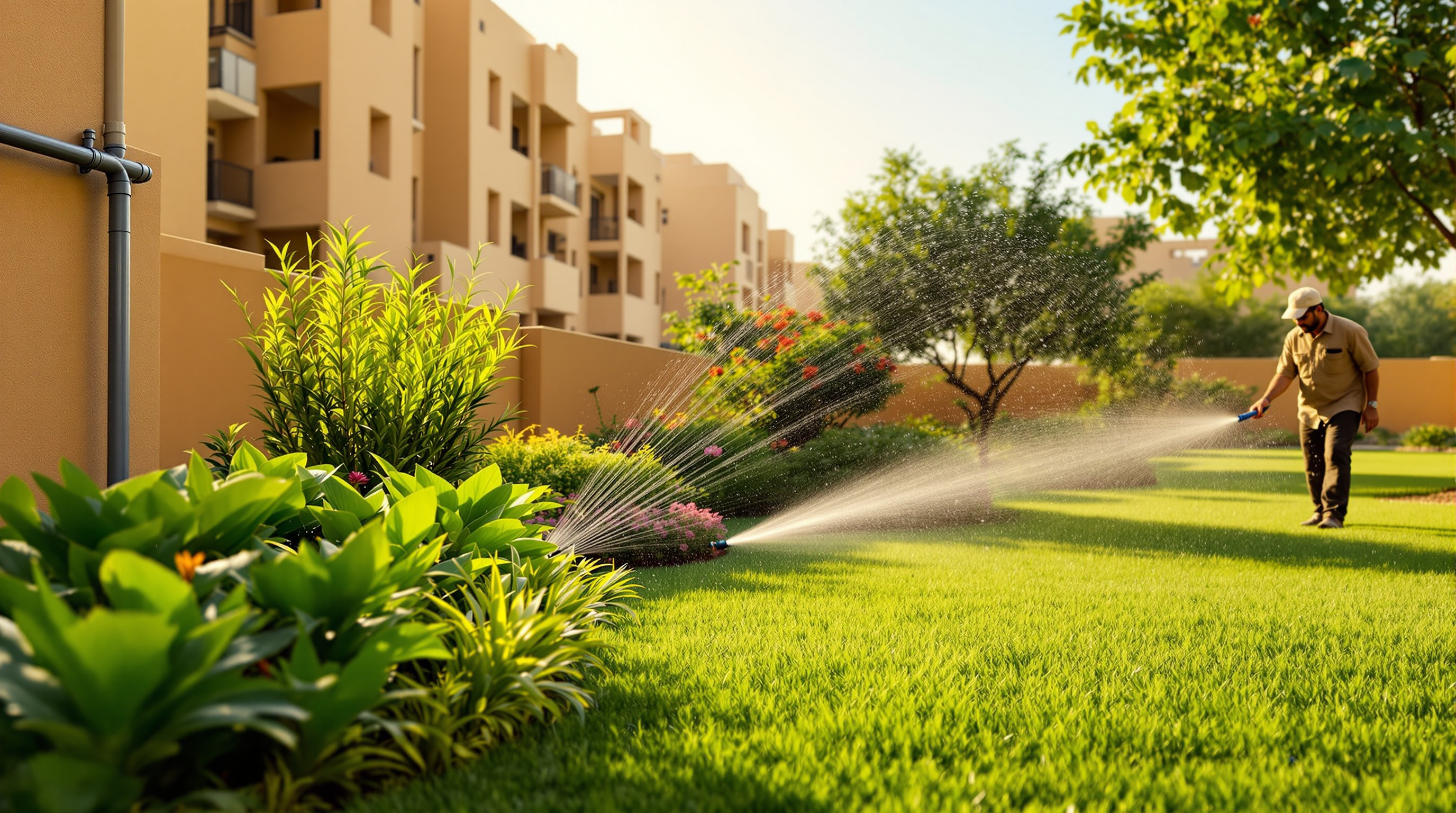
The treated water leaving your STP must meet the CPCB discharge standards that the RSPCB enforces. These are the same national numbers applied across India (see treated water quality standards for the full picture), and the tighter limits apply for discharge in and around sensitive water bodies:
| Parameter | Indicative limit | What it controls |
|---|---|---|
| pH | 6.5 – 9.0 | Acidity/alkalinity of the effluent |
| BOD | ≤ 10 mg/L | The organic strength — the headline number |
| COD | ≤ 50 mg/L | Total chemical oxygen demand |
| TSS | ≤ 10 mg/L | Cloudiness / suspended solids |
| Ammoniacal Nitrogen | ≤ 5 mg/L | Nutrient pollution |
| Faecal Coliform | ≤ 100 MPN/100 mL | Disease-causing bacteria |
Treat these as indicative: the exact limit that binds your plant depends on where the water goes and the RSPCB's current standard, so confirm the applicable figures with the board. What is not negotiable anywhere in Rajasthan is the reuse mandate — treated water is meant for flushing, landscaping, cooling and construction, not for dumping into a drain. This matters acutely in cities like Udaipur, whose lakes are a tourism lifeline, and Ajmer's Ana Sagar and Kota on the Chambal, where untreated sewage flowing into water bodies has repeatedly drawn regulatory heat.
Monitoring and enforcement

Compliance in Rajasthan is not a one-time certificate; it is an ongoing obligation:
- Self-monitoring of the treated-water parameters, with records kept for RSPCB inspection.
- Online continuous monitoring (OCEMS) feeding live data to the board for larger STPs.
- Periodic RSPCB inspection tied to CTO renewal.
Enforcement has real teeth. The National Green Tribunal actively supervises sewage management in Rajasthan — recent orders have included directing joint RSPCB–district inspections of proposed and disputed STP sites — and the Rajasthan High Court has taken suo motu cognisance of encroachment and pollution of the state's ponds, lakes and rivers. Non-compliance can bring environmental compensation fines, suspension or revocation of the CTO, and legal proceedings. For a housing society, losing your CTO can cascade into problems with occupancy and water supply.
Practical compliance tips for owners and RWAs
- Size the plant correctly from day one. An undersized STP fails its discharge tests; an oversized one wastes money and runs poorly at low load. Start from a real occupancy estimate — the capacity calculator is the fastest way in.
- Get the CTE before you break ground. Retrofitting a plant to satisfy the RSPCB after construction is far more expensive than designing it in.
- Run the plant, don't just build it. A dead or bypassed STP is the single most common finding in Rajasthan inspections. Budget for power, an operator and desludging.
- Actually reuse the water. In a water-scarce state, dual plumbing for flushing and landscape irrigation pays for itself and demonstrates compliance with the reuse policy.
- Keep your records and OCEMS live. Test reports and monitoring logs are what turn an RSPCB inspection from a crisis into a formality.
- For apartment complexes, fix responsibility. Whether the builder or the association runs the STP, someone must own it. Our guides to apartment association STP compliance and the STP compliance checklist walk RWAs through the handover and the ongoing duties.
Where Rajasthan fits nationally
Rajasthan's approach is broadly aligned with the national CPCB framework, but its water scarcity gives the reuse mandate unusual weight — arguably more than in wetter states. If you operate across state lines, compare the position with neighbours and peers such as Gujarat, Haryana, Uttar Pradesh, Delhi and Madhya Pradesh's peers, or use the state-wise STP approval comparison to see how the boards differ. For the foundational concepts, start with what a sewage treatment plant is, and browse the full Sewage Treatment Plants guide library.
A necessary caution
STP rules in Rajasthan change — thresholds, discharge limits, consent validity, byelaw provisions and reuse targets are all revised periodically, and different development authorities adopt them at different times. Treat this guide as an orientation, not a legal opinion, and confirm the current requirements for your specific project with the Rajasthan State Pollution Control Board (RSPCB) and your local development authority before you act.
Sources and further reading:
Export this guide
Related Guides — Deep-dive reading
Apartment Association STP Compliance Guide: CTO, Monitoring, Records & Penalties
A practical, honest compliance playbook for RWAs and facility managers running a sewage treatment plant — how to keep your Consent to Operate valid, what to monitor and record, the notices that catch associations out, and how to stay on the right side of the CPCB, your SPCB and the NGT.
Sewage Treatment PlantsPunjab STP Rules & PPCB Norms: The Complete Compliance Guide (2026)
When an on-site sewage treatment plant is mandatory in Punjab, how the Punjab Pollution Control Board (PPCB) consent process works, what the building byelaws demand, and how owners and RWAs stay compliant amid the state's intense NGT-driven enforcement.
Sewage Treatment PlantsState-Wise STP Approval Process Comparison: How Consent Rules Differ Across India
Every Indian state runs the same national CTE/CTO consent framework under the Water Act — but the board names, portals, thresholds and effluent limits change as you cross state lines. Here is how the STP approval process actually compares, state by state, and how to find the rule that binds your project.
Sewage Treatment PlantsRelated Tools — Try Free
Society Handover & NOC Checklist
Builder-to-RWA handover audit — 9 categories, 65+ checkpoints across legal docs, drawings, utilities, STP/WTP, fire safety, finances, warranties.
RWA HandoverCPCB Compliance Checklist for STPs
Tick off CPCB/SPCB outlet standards, monitoring duties and record-keeping to score your sewage treatment plant's compliance readiness.
ChecklistSTP Compliance Checklist Tool
Interactive self-audit that ticks off STP consents, discharge norms, reuse metering, online monitoring and O&M records to give a live compliance readiness score.
Checklist