

State-Wise STP Approval Process Comparison: How Consent Rules Differ Across India
Every Indian state runs the same national CTE/CTO consent framework under the Water Act — but the board names, portals, thresholds and effluent limits change as you cross state lines. Here is how the STP approval process actually compares, state by state, and how to find the rule that binds your project.
If you build in Bengaluru and then build the same project in Mumbai, Chennai or Delhi, you will meet four different pollution-control boards, four different online portals, and — in the fine print — four slightly different sets of numbers your treated water has to hit. Yet the skeleton of the approval is identical everywhere. This is the single most useful thing to understand before you start chasing signatures: STP approval in India is one national framework wearing regional clothes.
This guide lays out that shared framework, then compares how ten major states dress it up. It is written for developers, facility managers and consultants who need to know what actually changes when a project crosses a state line — and, just as importantly, what does not.
The national law tells you that you need consent and roughly what "clean" means. Your State Pollution Control Board tells you how to apply, what the local thresholds are, and whose signature you ultimately need. Get the second half wrong and the first half will not save you.
The one framework every state shares
Every STP consent in India — from Kerala to Punjab — rests on the Water (Prevention and Control of Pollution) Act, 1974. That Act created the Central Pollution Control Board (CPCB) and, under it, a State Pollution Control Board (SPCB) for each state. The CPCB sets national minimum standards; the SPCBs issue the actual permissions and can make them stricter.
Those permissions come in two stages, and the sequence never changes:
- Consent to Establish (CTE) — obtained before you build. You submit the STP design, capacity, technology, site layout, water balance and process flow, and the board clears you to construct. No CTE, no construction.
- Consent to Operate (CTO) — obtained after the plant is commissioned and before it runs. The board inspects the built STP, checks that treated-water samples meet the norms, and issues a time-bound licence to operate.
A third variant, Consent to Expand (or renewal), covers later changes. The applicability trigger is also broadly national: CPCB norms make an STP mandatory for residential and commercial projects above modest thresholds — commonly cited as generating 10 KLD or more of sewage, with formal SPCB consent required at higher volumes and for projects above roughly 20,000 sq m of built-up area. For the full national picture, see our guides to STP regulations in India, the CPCB guidelines for STPs, and how SPCB approvals for STPs actually work in sequence.
So the shared spine is: Water Act → CTE before building → CTO before operating → meet CPCB's baseline effluent standard or the state's stricter one, whichever is tougher.
Where states actually differ
If the spine is national, the variation lives in four places:
- Board name and structure. Most states have an "SPCB." Karnataka calls its consents CFE/CFO instead of CTE/CTO. Delhi, being a Union Territory, has a Committee (DPCC) rather than a board.
- Portal and process. Tamil Nadu runs a Single Window Portal; many states use the national OCMMS platform; Gujarat and Telangana run their own online systems (XGN, TSPCB portal). The document you upload in one may differ from the next.
- Size thresholds and category. States classify projects Red/Orange/Green by pollution potential, and the size at which an STP becomes mandatory — or at which consent (vs. simple authorisation) kicks in — is set locally.
- Effluent limits and consent validity. CPCB's general standard is the floor; states in sensitive river basins or coastal zones set lower BOD/TSS limits. Consent validity ranges from one year (Red category in some states) to five years (Karnataka STPs).
State-by-state comparison at a glance
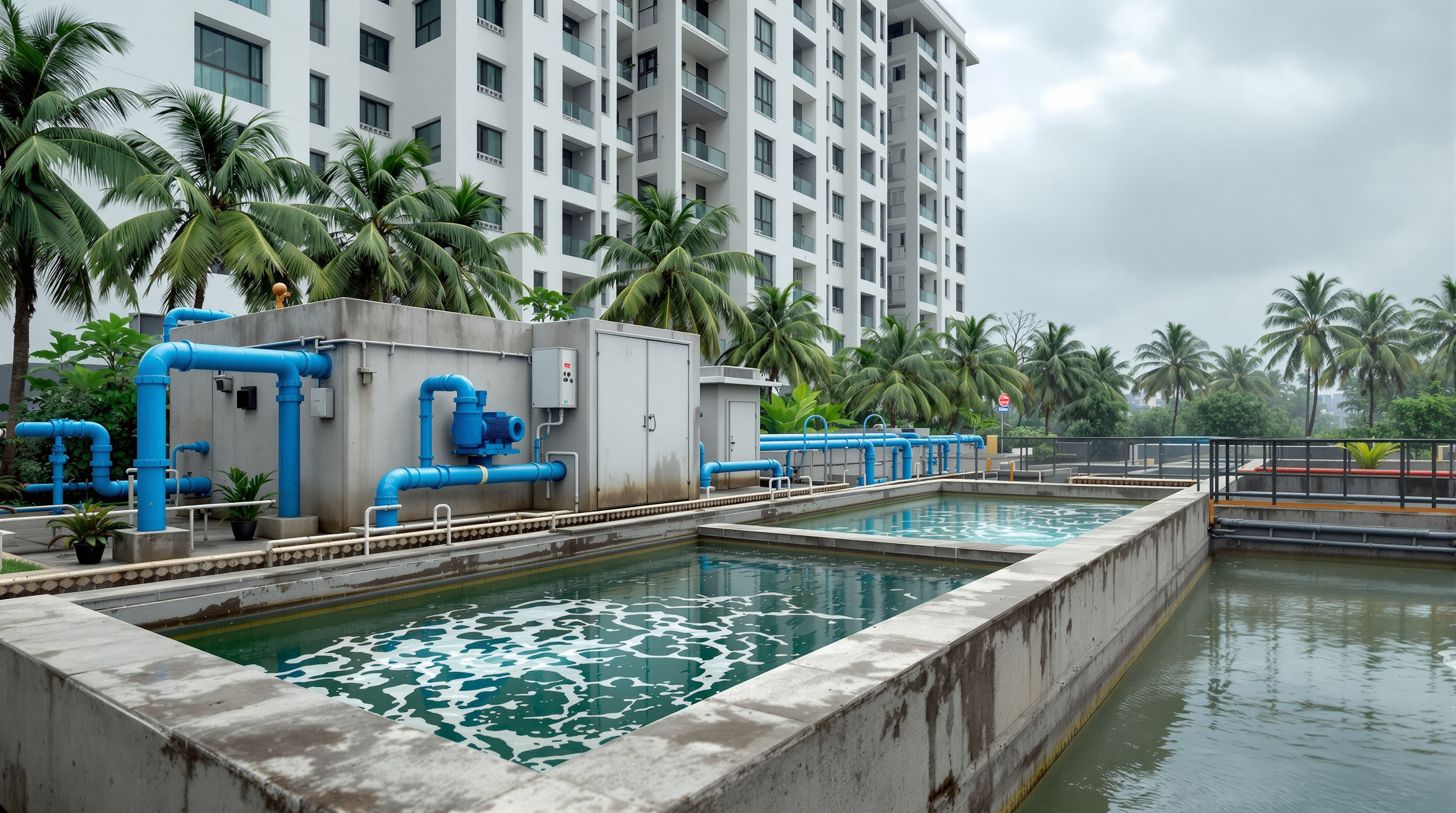
The table below compares ten major states. Treat the "notable local requirement" column as a flag to investigate, not a substitute for the current board circular — these rules are revised often.
| State | Board | Consent process | Notable local requirement |
|---|---|---|---|
| Karnataka | KSPCB | CFE then CFO (Consent for Establishment / Operation) via KSPCB portal | Uses CFE/CFO terminology; CFO validity extended to 5 years for apartment STPs; treated water target BOD ≤10, TSS ≤20 |
| Maharashtra | MPCB | CTE then CTO; Red/Orange/Green categorisation | Consent term tied to category (1/2/3 years); stricter COD/TDS limits imposed for specific industrial clusters |
| Tamil Nadu | TNPCB | CTE then CTO via Single Window Portal / OCMMS | Fully digital pre-application; ETP/STP must be installed and tested before CTO inspection |
| Delhi | DPCC | CTE then CTO (a Committee, not a Board — UT) | Among the strictest: STPs targeted to achieve BOD/TSS 10/10 mg/L; heavy NGT enforcement on non-compliant buildings |
| Telangana | TSPCB | CFE then CFO under Sec. 25 (Water) / Sec. 21 (Air) | State-run online portal; standardised design and inspection documentation |
| Gujarat | GPCB | CTE then CTO via XGN online system | Login credentials issued from GPCB offices; physical copies still filed at regional office |
| Rajasthan | RSPCB | Online CTE then CTO; size-threshold triggered | RSPCB actively reviews and approves STP designs for residential/commercial/institutional projects |
| West Bengal | WBPCB | CTE then CTO; approval mandatory before setup | Emphasis on treated-effluent compliance plus documented sludge management |
| Haryana | HSPCB | CTE then CTO; structured online checklist | Consent conditions closely track NCR/NGT directions given proximity to Delhi |
| Odisha | OSPCB | CTE then CTO under Water Act 1974 / Air Act 1981 | All new developmental and industrial projects need CTE before commencement |
Reading the table correctly
Three patterns are worth calling out. First, the terminology split: Karnataka and Telangana say "CFE/CFO"; most others say "CTE/CTO." They mean the same two-stage process — do not let the acronym confuse you. Second, the portal split: Tamil Nadu, Gujarat and Telangana run distinctive state systems, while many others funnel through the national OCMMS. Third, the stringency split: Delhi's 10/10 target is materially tighter than CPCB's general 20 mg/L BOD floor, and coastal or river-sensitive zones elsewhere follow suit.
The numbers that move — and the ones that do not
The effluent standard is where developers most often get caught out, because the "right" number depends on both the state and where the water goes. The national picture looks like this:
- CPCB general discharge standard — BOD around 20 mg/L, TSS ≤ 30 mg/L, pH 6.5–8.5 as a working baseline.
- Discharge to a river, lake or drain — much tighter, typically BOD ≤ 10, TSS ≤ 10, COD ≤ 50, faecal coliform ≤ 100 MPN/100 mL.
- Reuse for irrigation or gardening — looser BOD allowances apply.
The NGT's 2019 direction pushed sewage-treatment standards tighter nationwide, and states layer their own limits on top. The governing principle is simple and it is the same in every state: the applicable standard is whichever is more stringent — national or state. If DPCC says 10/10 and CPCB says 20/30, you build for 10/10.
To size the plant those numbers apply to, our STP capacity calculator converts occupancy into a design capacity in litres per day — the figure every consent application opens with.
How to find your state's actual rule

Because these rules change and because per-project thresholds are genuinely local, do not rely on a general article — including this one — for the binding number. Work through this sequence:
- Start with the board's own consent page. Search "[your state] pollution control board consent to establish/operate." The board site carries the current fee schedule, category list and application portal.
- Confirm the applicability threshold for your project type and size. The 10 KLD / 20,000 sq m figures are common reference points, not universal law.
- Check the effluent limits for your discharge route. Reuse, drain, river and coastal discharge each carry different numbers.
- Read the latest circular, not last year's PDF. Consent validity, categorisation and standards are all revised periodically.
- Then read the dedicated state guide. We maintain a detailed guide for each major state, kept aligned to the current board process.
Jump straight to your state: Karnataka, Maharashtra, Tamil Nadu, Kerala, Telangana, Andhra Pradesh, Delhi, Gujarat, Rajasthan, Uttar Pradesh, West Bengal, Punjab, Haryana and Odisha.
The bottom line
There is no such thing as a fundamentally different STP approval "system" from one Indian state to the next — every one of them runs Consent to Establish before you build and Consent to Operate before you run, under the same 1974 Water Act, against a CPCB baseline they are free to tighten. What changes as you cross a border is the packaging: the board's name, its portal, its size thresholds, its consent validity, and how strict its effluent numbers are. Learn the shared spine once, then treat each state as a set of local overrides to look up — starting at the board's own site and the matching state guide.
For the full national framework these state rules sit inside, continue with our guides to STP regulations in India and SPCB approvals for STPs, or return to the Sewage Treatment Plants guide library.
Sources: CPCB — General Standards · CPCB — Sewage Treatment Plant effluent standards (PDF) · CPCB — Effluent & Emission standards · KSPCB — consent procedure · MPCB — Consent under Water & Air Act · DPCC — STP Standards
Export this guide
Related Guides — Deep-dive reading
SPCB Approvals for STPs: The State Pollution Control Board Consent Regime Explained
How State Pollution Control Boards actually administer STP approvals in India — their role versus the CPCB, the Consent to Establish and Consent to Operate regime, inspections and monitoring, and why the rules differ from one state to the next.
Sewage Treatment PlantsTamil Nadu STP Rules & TNPCB Norms: The 2026 Compliance Guide
When a sewage treatment plant is mandatory in Tamil Nadu, how the TNPCB consent process (CTE and CTO) works, the discharge and reuse standards your treated water must meet, and what apartment owners and RWAs in Chennai, Coimbatore and beyond must actually do to stay compliant.
Sewage Treatment PlantsCPCB Guidelines for STPs Explained: Discharge Standards & the 2017/2019 History
What the Central Pollution Control Board actually prescribes for sewage treatment plants — the effluent parameters, the contested 2015–2017–2019 notification history, the NGT interventions, and which numbers your plant is really held to today.
Sewage Treatment PlantsRelated Tools — Try Free
STP Compliance Checklist Tool
Interactive self-audit that ticks off STP consents, discharge norms, reuse metering, online monitoring and O&M records to give a live compliance readiness score.
ChecklistApartment STP Planner
Plan an apartment complex sewage treatment plant from flats and occupancy — get population load, sewage flow, recommended STP capacity in KLD, treatment technology and approximate space.
PlannerSTP Design Checklist
An interactive checklist that scores your sewage treatment plant design readiness across basis of design, process units, reuse & hydraulics and compliance before you finalise drawings or apply for consent.
Checklist