

SPCB Approvals for STPs: The State Pollution Control Board Consent Regime Explained
How State Pollution Control Boards actually administer STP approvals in India — their role versus the CPCB, the Consent to Establish and Consent to Operate regime, inspections and monitoring, and why the rules differ from one state to the next.
If you are building, buying into, or running a project with a sewage treatment plant in India, one fact matters more than any brochure specification: the approval that actually lets your STP exist and run does not come from the Central Pollution Control Board (CPCB) in Delhi. It comes from your State Pollution Control Board (SPCB) — the Karnataka, Maharashtra, Tamil Nadu, Delhi or other state board with jurisdiction over your plot. The CPCB writes the playbook; the SPCB is the referee on the ground who inspects your plant, reads your discharge numbers, and holds the power to say yes, no, or "fix this first."
This guide explains how that division of labour works, what the SPCB consent regime asks of you, and why two identical STPs in two different states can face meaningfully different requirements.
The single most useful thing to understand about STP approvals in India: the CPCB sets national minimum standards and coordinates, but it is the State Board that issues your consent, sets the conditions in your specific approval letter, and enforces them. When people say "CPCB approval for an STP," they almost always mean an SPCB consent granted within the CPCB framework.
CPCB vs SPCB: who does what
Both boards are creatures of the Water (Prevention and Control of Pollution) Act, 1974. Section 3 of that Act establishes the CPCB; Section 4 establishes an SPCB in each state (CPCB — Water Pollution). Their roles are deliberately different.
- The CPCB advises the central government, coordinates the state boards, resolves disputes between them, runs national programmes, and lays down technical standards and guidelines — including the emission and effluent norms that STPs must meet (CPCB — Effluent/Emission Standards). It is a standard-setter and coordinator, not, for an ordinary building STP, the consenting authority.
- The SPCB is the operational regulator. It grants and refuses consent, categorises your facility, sets the site-specific conditions, inspects the plant, samples the effluent, and takes enforcement action — from directions to closure — when norms are breached.
For a deeper treatment of the two-tier system, see our companion pieces on CPCB guidelines for STPs, MoEF rules for STPs, and the overall STP regulations in India.
The legal trigger: why you need consent at all
The requirement is not a formality invented by builders — it is statutory. Under Section 25 of the Water Act, 1974, no person may establish any industry, operation, process, or treatment and disposal system likely to discharge sewage or trade effluent into a stream, well, sewer or onto land — nor bring into use any new or altered outlet for that discharge — without the previous consent of the State Board. An STP is precisely such a treatment and disposal system, which is why apartment complexes, hotels, hospitals, IT parks and townships all fall within the net. Parallel consent is required under the Air (Prevention and Control of Pollution) Act, 1981, because blowers, DG sets and associated equipment can be air-emitting sources.
If you are still deciding whether your project even needs an STP, start with what a sewage treatment plant is and size it roughly with the STP Capacity Calculator before you approach the board.
The two-stage consent regime: CTE and CTO
SPCB approval is granted in two sequential stages. Getting them in the right order is essential — you cannot legally build first and consent later.
| Stage | Common name | When you apply | What it authorises |
|---|---|---|---|
| Consent to Establish (CTE) | CFE / NOC in some states | Before construction begins | Permission to build the project and its STP as designed |
| Consent to Operate (CTO) | — | After construction, before commissioning | Permission to actually run the STP and discharge/reuse treated water |
The Consent to Establish is your entry ticket: the board reviews your project category, plot, water balance, proposed STP technology and capacity, and issues a CTE — typically valid for a defined period tied to your construction timeline (and, where applicable, to the validity of your Environmental Clearance). The Consent to Operate comes once the plant is built and can demonstrate it meets standards; it is the permission you renew for the life of the facility. We cover each stage in depth in Consent to Establish (CTE) and Consent to Operate (CTO).
Larger projects also cross into the Environmental Impact Assessment regime under the EIA Notification, needing prior Environmental Clearance (EC) from the MoEFCC or the State Environment Impact Assessment Authority before or alongside consent — see environmental clearance for STPs. And the STP has to fit local building byelaws, which many municipalities tie to occupancy certificates.
Red, Orange, Green — how categorisation drives everything
SPCBs classify projects by a Pollution Index into Red, Orange, Green (and White) categories. This category is not cosmetic — it determines your consent fee, the documentation depth, and crucially the renewal cycle of your CTO. As a widely used rule of thumb, Consent to Operate is renewed roughly every 5 years for Red, 10 years for Orange, and 15 years for Green category units, though the exact periods and fee slabs are fixed by each state board and change periodically. Confirm your category and its renewal cycle directly with your SPCB.
What the SPCB checks: standards and the contested numbers

The heart of any STP consent is the effluent standard — the quality your treated water must meet before it is reused or discharged. Here the honest answer is that the exact enforceable numbers have a genuinely contested history, and you must verify the current figure for your state rather than trust any single table.
The trajectory:
- 2015 — CPCB circulated a draft set of relatively strict STP standards.
- October 2017 — the MoEFCC issued a notification that relaxed them, notably setting BOD around 20 mg/l for metros and state capitals and 30 mg/l for other areas (CPCB — STP standards notification, S.O. 3305(E)).
- April 2019 — the National Green Tribunal quashed the 2017 notification, rejected the metro-versus-rest distinction as scientifically unjustified, and directed reversion to stricter, uniform norms for all new and existing STPs (Down To Earth — NGT scraps 2017 note; Business Standard — NGT orders stricter norms).
Because of this litigation, the values that SPCBs write into consent conditions today commonly cluster around the stricter side. The figures most frequently cited for discharge to a water body are below — but treat them as indicative, not gospel:
| Parameter | Frequently cited limit* | Note |
|---|---|---|
| BOD | ≤ 10 mg/l | NGT-era stricter norm; some consents still reflect 20/30 legacy values |
| COD | ≤ 50 mg/l | Sometimes tighter (≈20) in stricter consents |
| TSS | ≤ 10 mg/l | — |
| pH | 6.5 – 8.5 | Widely consistent |
| Ammoniacal Nitrogen | ≤ 5 mg/l | Where specified |
| Fecal Coliform | ≤ 100 MPN/100 ml | Critical where reuse or river discharge applies |
*Indicative values only. The legally binding figures are those written in your SPCB consent order, which may differ by state, by discharge route (river, land, sewer, reuse), and by the year your consent was issued. Standards for treated water quality are worth reading alongside your actual consent conditions.
Inspections, monitoring and enforcement
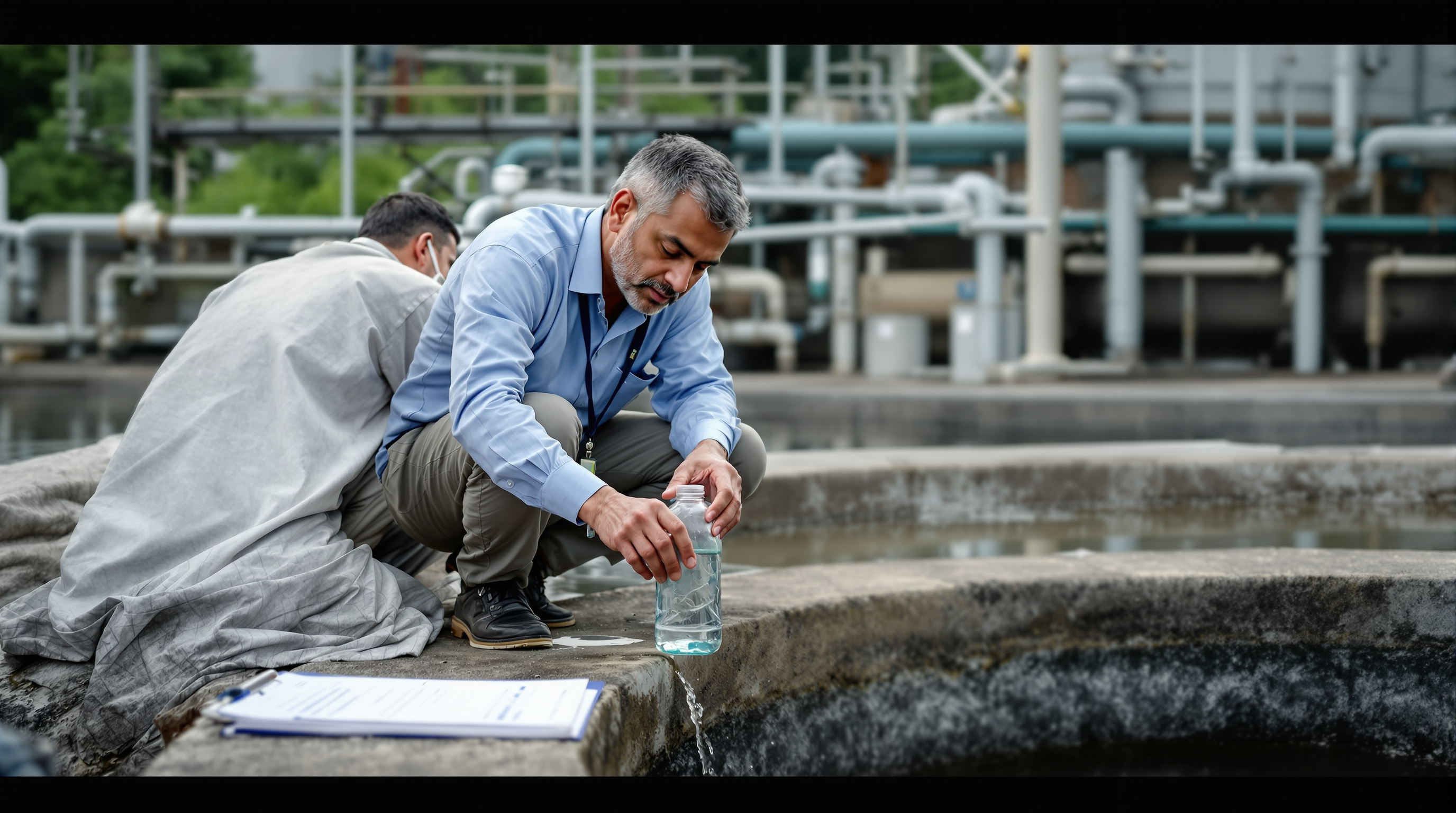
A consent is a living obligation, not a one-time certificate. SPCBs enforce through:
- Site inspections — scheduled and surprise visits to check the plant is built and running as consented.
- Effluent sampling — board officers draw samples and test them against your consent limits; a failing result can trigger directions or penalties.
- Online / continuous monitoring — many boards mandate real-time effluent quality monitoring (OCEMS) with data telemetered to the SPCB/CPCB servers for larger STPs, so compliance is watched continuously rather than at annual snapshots.
- Periodic returns and audits — self-monitoring reports and, increasingly, third-party STP audits and environmental monitoring.
- Enforcement — under the Water and Air Acts and the Environment (Protection) Act, 1986, the board can issue directions, withhold or revoke consent, disconnect utilities, or order closure; the NGT can impose environmental compensation.
A practical STP compliance checklist helps facility managers and RWAs stay ahead of these visits rather than scrambling during one.
Why it varies from state to state
Although the CPCB framework is national, the lived experience of approval is unmistakably state-specific. Each SPCB translates the central norms into its own procedures, forms, fee schedules, capacity thresholds at which an STP becomes mandatory, and sometimes tighter local parameters. A Delhi (DPCC), Karnataka (KSPCB), Maharashtra (MPCB) or Tamil Nadu (TNPCB) applicant will meet different portals, timelines, documentation and, occasionally, different numeric conditions. This is by design: boards tailor requirements to local water stress, receiving-water sensitivity and urbanisation pressure.
The takeaways for anyone navigating SPCB approvals for an STP:
- Consent — not "CPCB approval" — is what you actually need, in two stages (CTE then CTO), from your state board.
- Your category (Red/Orange/Green) drives fees and renewal cycles; confirm both with the SPCB.
- The binding effluent numbers are in your consent order, and the underlying standards have a contested, evolving history — never design to a number you read in a blog table, including this one.
A necessary caveat: pollution-control norms, fee slabs, categorisation, standard values and procedures in India change frequently through fresh notifications, court and NGT orders, and state amendments. Everything here is a general guide to how the system works, not legal advice. Before you commit design or budget, verify the current requirements directly with the CPCB and your relevant State Pollution Control Board. For the wider regulatory picture, continue with the Sewage Treatment Plants guide library.
Export this guide
Related Guides — Deep-dive reading
CPCB Guidelines for STPs Explained: Discharge Standards & the 2017/2019 History
What the Central Pollution Control Board actually prescribes for sewage treatment plants — the effluent parameters, the contested 2015–2017–2019 notification history, the NGT interventions, and which numbers your plant is really held to today.
Sewage Treatment PlantsApartment Association STP Compliance Guide: CTO, Monitoring, Records & Penalties
A practical, honest compliance playbook for RWAs and facility managers running a sewage treatment plant — how to keep your Consent to Operate valid, what to monitor and record, the notices that catch associations out, and how to stay on the right side of the CPCB, your SPCB and the NGT.
Sewage Treatment PlantsState-Wise STP Approval Process Comparison: How Consent Rules Differ Across India
Every Indian state runs the same national CTE/CTO consent framework under the Water Act — but the board names, portals, thresholds and effluent limits change as you cross state lines. Here is how the STP approval process actually compares, state by state, and how to find the rule that binds your project.
Sewage Treatment PlantsRelated Tools — Try Free
STP Compliance Checklist Tool
Interactive self-audit that ticks off STP consents, discharge norms, reuse metering, online monitoring and O&M records to give a live compliance readiness score.
ChecklistSTP Building Approval Checklist
An interactive checklist that tracks every sewage-treatment-plant requirement from building-plan sanction through Consent to Establish/Operate to occupancy, showing live completion and readiness.
ChecklistConstruction Approval Checklist — 24-Stage Tracker
Track every approval, permit, and NOC from land title to occupancy certificate across 24 stages.
Approvals