

Haryana STP Guidelines & HSPCB Norms: The 2026 Compliance Guide
When a sewage treatment plant is mandatory in Haryana, how the HSPCB consent process works, the discharge and reuse norms your treated water must meet, and the practical steps owners and RWAs in Gurugram, Faridabad and beyond need to stay compliant.
Haryana is where the water problem is impossible to ignore. Gurugram and Faridabad — the state's two biggest urban engines — are both officially classified as "over-exploited" for groundwater by the Central Ground Water Board, with the water table in parts of southern Haryana falling by roughly a metre a year. In that context, every litre of sewage a building cleans and reuses is a litre it does not have to pump out of a collapsing aquifer or buy from a tanker. This is why the Haryana Sewage Treatment Plant (STP) guidelines, enforced by the Haryana State Pollution Control Board (HSPCB), matter to any builder, homeowner or Resident Welfare Association in the state.
This guide explains, in plain language, when an STP is mandatory in Haryana, how the HSPCB consent process works, what quality your treated water must meet, and the practical steps that keep a building on the right side of the law.
In Haryana an STP is not a "green" extra bolted onto a project — in the state's water-stressed cities it is treated as core infrastructure, and a plant that sits idle can cost a housing society more than the plant itself. In late 2024 the HSPCB imposed a penalty of over ₹1.55 crore on a single Gurugram society for an STP found non-functional.
Is an STP mandatory in Haryana?
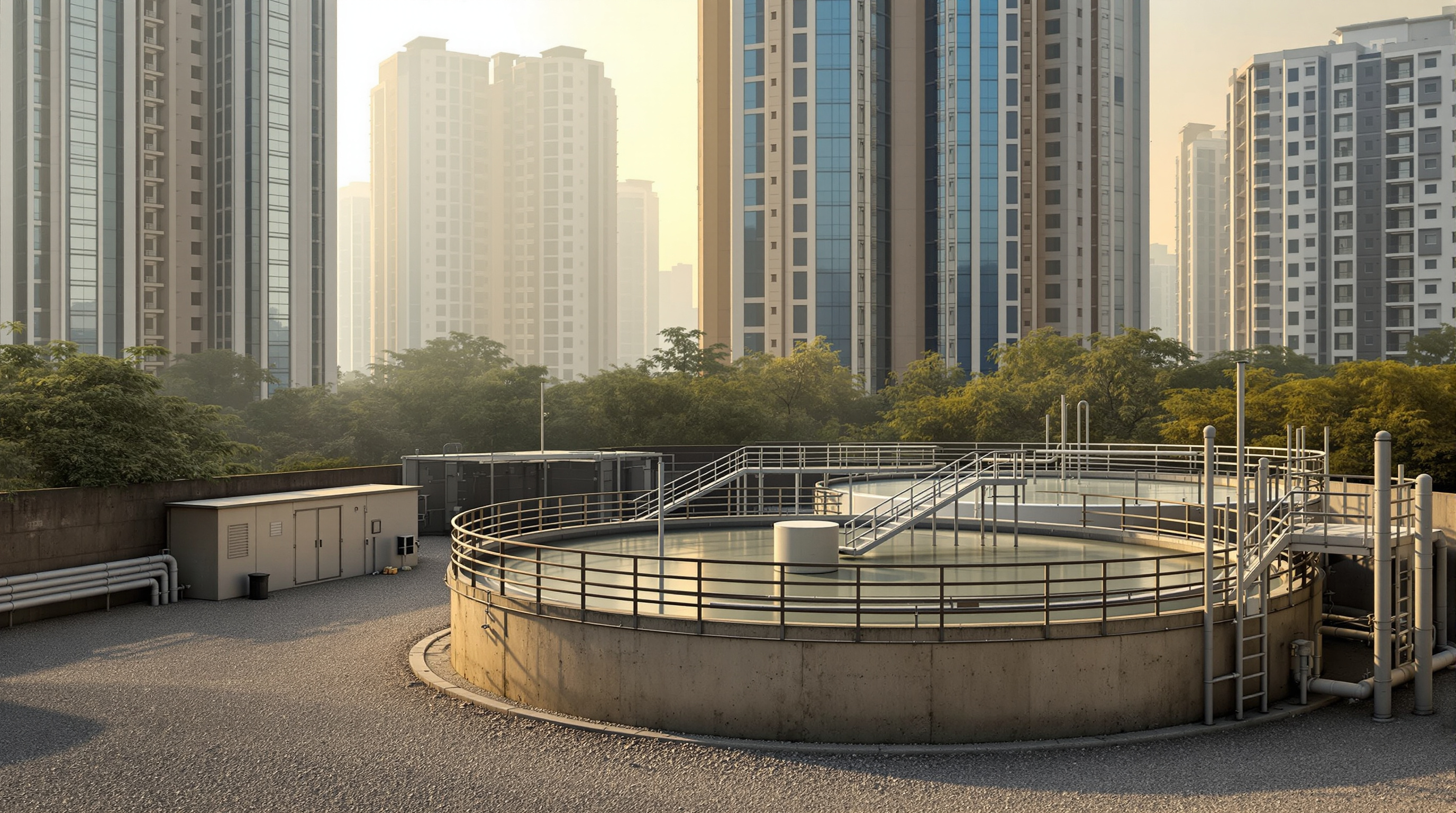
Haryana does not run a single standalone "STP Act." Instead the requirement is stitched together from three layers of law that all point the same way — and if your project touches any one of them, an STP is effectively compulsory.
- Central pollution law (via the HSPCB). Under the Water (Prevention and Control of Pollution) Act, 1974, no project may discharge sewage without the State Board's consent. The HSPCB administers this in Haryana, and for any project generating meaningful sewage that consent is conditional on an on-site STP. See the national picture in our STP regulations in India overview.
- The Haryana Building Code, 2017 and development-authority rules. The state's building and town-planning framework (administered by the Department of Town and Country Planning and development agencies such as HSVP) requires group-housing colonies and large developments to provide on-site sewage treatment, dual plumbing for recycled water, and groundwater recharge. Notably, the code even excludes the STP structure itself from covered-area (FAR) calculations, so building one costs you no saleable floor space.
- Environmental Clearance for big projects. Building and construction projects at or above 20,000 sq m of built-up area fall under the national EIA notification and need prior Environmental Clearance — for which a functioning STP and treated-water reuse plan are non-negotiable conditions. See environmental clearance for STPs.
As a rule of thumb: any group housing society, apartment complex, commercial tower, hotel, hospital, school or IT park in Haryana that is not connected to an adequate municipal sewer will need its own STP and the HSPCB consents that go with it. A single independent house on a small plot typically does not — though even there, the building code makes groundwater recharge mandatory for plots above roughly 500 sq m, and dual piping for treated water is expected on plots of about 3,000 sq m and above.
A note on thresholds: Haryana's exact size and dwelling-unit triggers are set by the building code and development-authority sanction conditions, and they change with amendments. Treat the figures above as indicative and confirm the current numbers for your specific plot with the HSPCB and your development authority before you design or buy.
The HSPCB consent process: CTE and CTO
Every STP in Haryana lives or dies by two approvals from the HSPCB, headquartered at C-11, Sector 6, Panchkula. Both flow from the Water and Air Acts and are handled online through the Board's consent portal.
| Stage | What it is | When you need it |
|---|---|---|
| Consent to Establish (CTE) | Permission to build the project and its STP, granted before construction | At the design/sanction stage, before you break ground |
| Consent to Operate (CTO) | Permission to run the plant and discharge treated water, granted after the STP is built and inspected | Before occupancy and before any treated water is discharged or reused |
The HSPCB slots every project into a colour category — red, orange, green or white — based on its pollution potential, and this drives the fee, the validity period and the depth of scrutiny. The practical sequence looks like this:
1. Apply for CTE early — well before construction, submitting project details, the STP design and its rated capacity. Read our deep-dive on the Consent to Establish (CTE).
2. Build the STP as approved, matching the technology and capacity in the CTE.
3. Apply for CTO once the plant is ready. For a first CTO the HSPCB will typically inspect the site to confirm the STP is actually installed and working as promised. See Consent to Operate (CTO).
4. Renew the CTO before it lapses — consents are time-bound, and Haryana has been aggressive about renewals.
That last point carries teeth. The HSPCB has publicly moved to deny CTO and CTE renewals to units that have not paid pending environmental compensation for past violations — so a lapsed plant does not just risk a fine, it can freeze your ability to operate legally. For the wider mechanics, see SPCB approvals for STPs.
Discharge and reuse: the quality your water must hit
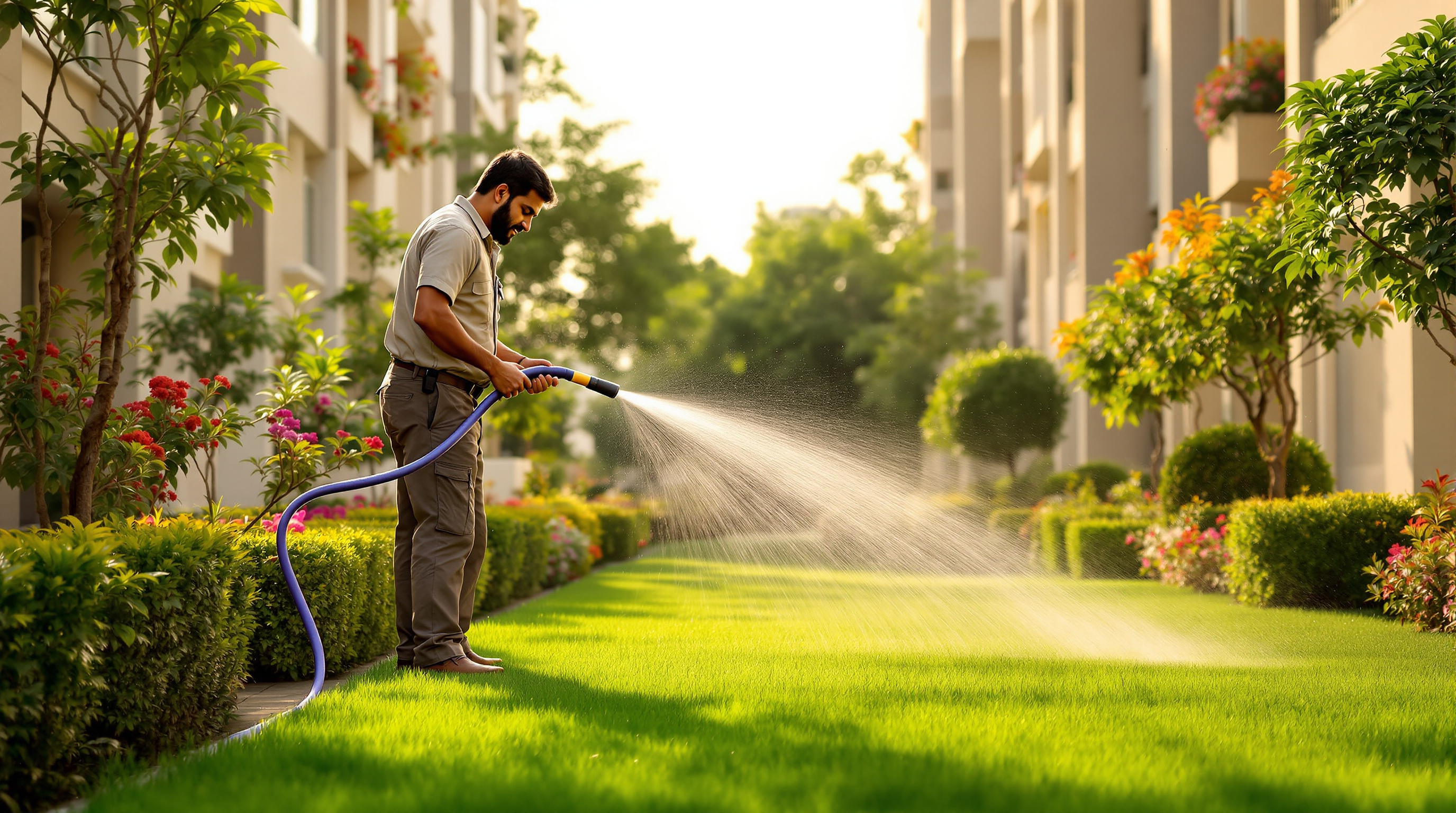
Haryana broadly follows the national CPCB discharge and reuse standards rather than publishing a wildly different state table, so the numbers your treated water must meet mirror the strict norms applied across India for treated sewage — with tighter limits where the water recharges groundwater.
| Parameter | Typical treated-water expectation | Why it matters |
|---|---|---|
| BOD (Biochemical Oxygen Demand) | ≤ 10 mg/L | The headline strength of the water; low BOD means well-treated |
| COD (Chemical Oxygen Demand) | ≤ 50 mg/L | Flags harder-to-digest and residual load |
| TSS (Total Suspended Solids) | ~10–20 mg/L (tighter for sensitive reuse) | Governs clarity and reuse suitability |
| Faecal coliform | Low count (tightest for groundwater recharge) | The public-health safeguard |
For the full national baseline and how these numbers are derived, see our guides on CPCB guidelines for STPs and treated water quality standards.
Reuse is the whole point in Haryana. Given the groundwater crisis, the state expects treated water to be recycled on site — for toilet flushing, landscape and garden irrigation, cooling towers, road and vehicle washing, and groundwater recharge — with the development authority requiring dual plumbing (separate lines for potable and recycled water) in the layout plans of larger plots. Discharging good treated water into a drain when it could be reused is both wasteful and, increasingly, frowned upon by regulators.
Monitoring and the enforcement reality
Owning an STP is not the finish line — Haryana enforces on whether it actually runs.
- Online monitoring. Larger STPs (commonly those above 1 MLD) are expected to carry continuous online monitoring — real-time sensors for flow, BOD, TSS and residual chlorine that report to the Board's servers. Smaller plants rely on periodic sampling and self-monitoring records.
- Records and logs. Keep the CTE/CTO certificates, daily operation logs, energy and chemical records, and third-party water-test reports ready for inspection.
- The Gurugram cautionary tale. In November 2024 the HSPCB imposed environmental compensation of over ₹1.55 crore on a Gurugram high-rise society after inspectors found its STP non-functional. On appeal in December 2025 the National Green Tribunal reduced the penalty — accepting that severe 2022 floods had damaged the plant and that non-compliance ran for 182 days, not 415 — but it did not erase the liability. The lesson for every Haryana RWA is blunt: a plant that stops working is a live financial risk, and "it broke" is not a defence unless you can prove prompt repair.
Practical compliance tips for owners and RWAs
- Size it honestly. Design capacity to real occupancy, not a paper minimum. Our STP capacity calculator converts headcount into litres-per-day in about a minute.
- Never let the CTO lapse. Diarise the renewal date and clear any pending environmental compensation early — an unpaid dues can block your renewal.
- Budget for operation, not just construction. Power, a trained operator, blowers, membranes and desludging are the recurring costs that keep the plant — and your compliance — alive. Idle plants are the ones that get penalised.
- Reuse aggressively. Plumb the treated water back for flushing and landscaping; in a water-scarce district it slashes your tanker bill and demonstrates compliance in one move.
- RWAs: know your inherited liability. When a builder hands over, the association inherits the STP and its compliance record. See apartment association STP compliance and run the STP compliance checklist.
- Cross-check the byelaws. Confirm dual-piping and recharge obligations against the building byelaws for STPs and your development-authority sanction.
The bottom line
In Haryana the logic is simple: cities like Gurugram and Faridabad are running out of groundwater, so the state uses the HSPCB's CTE and CTO process, the Haryana Building Code, 2017, and national CPCB norms to make on-site treatment and reuse effectively mandatory for any serious development — and it enforces with real money. Build the right-sized plant, keep both consents current, hit the discharge numbers, reuse the water, and log everything.
Norms, thresholds and fees change with every amendment and Board circular. Before you design, buy or sign off, confirm the current requirements directly with the Haryana State Pollution Control Board (HSPCB) and your development authority. For orientation, start with what an STP is, compare states in our state-wise STP approval comparison and neighbouring Delhi and Punjab rules, or browse the full Sewage Treatment Plants guide library.
Sources & further reading: HSPCB consent policy · HSPCB public notices · The Haryana Building Code, 2017 (TCP Haryana) · NGT slashes penalty on Gurugram housing society (ANI, Dec 2025) · Pollution board served NGT notice over Gurugram society penalty (The Tribune) · HSPCB cracks down on polluters over unpaid environmental compensation (The Tribune)
Export this guide
Related Guides — Deep-dive reading
State-Wise STP Approval Process Comparison: How Consent Rules Differ Across India
Every Indian state runs the same national CTE/CTO consent framework under the Water Act — but the board names, portals, thresholds and effluent limits change as you cross state lines. Here is how the STP approval process actually compares, state by state, and how to find the rule that binds your project.
Sewage Treatment PlantsPunjab STP Rules & PPCB Norms: The Complete Compliance Guide (2026)
When an on-site sewage treatment plant is mandatory in Punjab, how the Punjab Pollution Control Board (PPCB) consent process works, what the building byelaws demand, and how owners and RWAs stay compliant amid the state's intense NGT-driven enforcement.
Sewage Treatment PlantsApartment Association STP Compliance Guide: CTO, Monitoring, Records & Penalties
A practical, honest compliance playbook for RWAs and facility managers running a sewage treatment plant — how to keep your Consent to Operate valid, what to monitor and record, the notices that catch associations out, and how to stay on the right side of the CPCB, your SPCB and the NGT.
Sewage Treatment PlantsRelated Tools — Try Free
Before vs After — Cost Reality Check
Compare what you expected to pay vs what you actually paid, category by category.
Reality CheckCPCB Compliance Checklist for STPs
Tick off CPCB/SPCB outlet standards, monitoring duties and record-keeping to score your sewage treatment plant's compliance readiness.
ChecklistLandscape Cost Calculator
Estimate a garden's cost — hardscape, softscape, lawn, irrigation, lighting and annual upkeep — by area, tier and city.
Budget Calculator