

Punjab STP Rules & PPCB Norms: The Complete Compliance Guide (2026)
When an on-site sewage treatment plant is mandatory in Punjab, how the Punjab Pollution Control Board (PPCB) consent process works, what the building byelaws demand, and how owners and RWAs stay compliant amid the state's intense NGT-driven enforcement.
Punjab is a state defined by water — the "land of five rivers" that feeds the country's grain bowl. Yet those same rivers, the Sutlej and Beas above all, now carry the visible cost of decades of untreated sewage. In Ludhiana, the Buddha Nullah runs black before it joins the Sutlej, and the National Green Tribunal has kept the state under close watch for years. That pressure is exactly why sewage treatment has moved from an afterthought to a hard condition of building and operating in Punjab.
This guide explains where the Punjab STP rules actually stand: when an on-site sewage treatment plant is mandatory, how the Punjab Pollution Control Board (PPCB) consent process works, what the building byelaws and development authorities demand, and what owners, builders and Resident Welfare Associations (RWAs) must do to stay compliant.
Punjab does not run a wholly separate rulebook from the rest of India. It applies the national Water Act consent regime and the CPCB discharge standards, layered with the state's own building rules and an unusually active NGT-driven enforcement climate. The result is a system where the paperwork is national but the scrutiny is very local.
Is an STP mandatory in Punjab?
Yes — for most medium and large developments, though the trigger comes from two different directions rather than a single "STP Act."
Through the pollution-control law. No project that generates significant wastewater can be established or operated in Punjab without consent from the PPCB under the Water (Prevention & Control of Pollution) Act, 1974. If your building discharges sewage, the Board expects you to treat it to standard — and in practice that means an STP for apartment complexes, hotels, hospitals, malls, IT parks and institutions. This mirrors the national framework covered in our guide to STP regulations in India.
Through the building rules. The Punjab Urban Planning and Development Building Rules, 2021 and the municipal building byelaws layer on wastewater-management conditions that a project must satisfy to get its plans sanctioned and its completion/occupancy certificate. Key thresholds that appear in Punjab's rules:
| Trigger | Requirement |
|---|---|
| Discharge of 10,000 litres/day or more | Must incorporate a wastewater recycling system; recycled water used for horticulture and non-potable uses |
| Group housing with 100+ units, or construction over 10,000 sq m | Dual-plumbing arrangement — potable water for drinking/cooking/bathing, treated/recycled water for the rest |
| Low-density and plotted colonies | Each plot holder to provide an individual STP, or the promoter provides a common STP for the colony |
| Large projects (built-up area >20,000 sq m / >10 KLD) | On-site STP plus environmental clearance under EIA norms |
Note that thresholds and definitions vary between the PUDA rules, the individual Municipal Corporation byelaws (Ludhiana, Amritsar, Jalandhar, Patiala) and the special development authorities (GMADA for Mohali, ADA for Amritsar). Punjab is also moving toward a consolidated Unified Building Rules framework, so confirm the current text with your sanctioning authority before you design.
The PPCB consent process: CTE and CTO
Punjab follows the standard two-stage consent model administered by every State Pollution Control Board. Understanding it is the single most important step for a builder or association — see our overview of SPCB approvals for STPs for the national picture.
Consent to Establish (CTE)
Before construction, you apply for Consent to Establish — the Board's sign-off that your proposed project, including its planned STP capacity and technology, is acceptable at that location. The CTE is typically valid for a defined window (commonly one year, extendable) and is a prerequisite for starting work on a project that will discharge effluent.
Consent to Operate (CTO)
Once the plant is built and commissioned, you apply for Consent to Operate. The PPCB inspects and confirms the STP can consistently meet the prescribed effluent standards before the building is allowed to function. The CTO carries operating conditions — regular running of the STP, monitoring, and reporting — and must be periodically renewed.
Both applications are filed through the PPCB's Online Consent Management & Monitoring System (pbocmms.nic.in), which handles submission, fees and tracking. Projects are slotted into the national red / orange / green / white categories by pollution potential, and the consent fee and scrutiny scale accordingly. Larger developments (built-up area above 20,000 sq m) also need environmental clearance under the EIA Notification before the PPCB consent is finalised.
Discharge and reuse expectations

Punjab has not published a distinct set of numeric effluent limits that supersedes the national ones; it broadly applies the Central Pollution Control Board standards. For the detailed parameters, see our guides to CPCB STP guidelines and treated water quality standards. In summary, treated sewage discharged to land or a waterbody is expected to meet limits in this range:
| Parameter | Typical expected limit |
|---|---|
| BOD | ≤ 10–20 mg/L (≤ 10 for sensitive/urban discharge) |
| COD | ≤ 50–250 mg/L |
| TSS | ≤ 10–30 mg/L |
| pH | 6.5 – 8.5 |
| Fecal Coliform | ≤ 100–1,000 MPN/100 mL |
| Ammonical Nitrogen | ≤ 5 mg/L |
Reuse is not optional in Punjab — it is policy. Given the state's acute groundwater depletion (large parts of central Punjab are over-exploited "dark zones"), the government actively pushes reuse of treated municipal wastewater for irrigation, industry and thermal-power cooling. At the building level, the byelaws require recycled water to be used for gardening, flushing and washing rather than drawn from fresh supply — which is why dual plumbing is mandated for larger group housing. Treating and reusing your STP output is both a compliance requirement and a direct saving on water bills.
Monitoring and enforcement
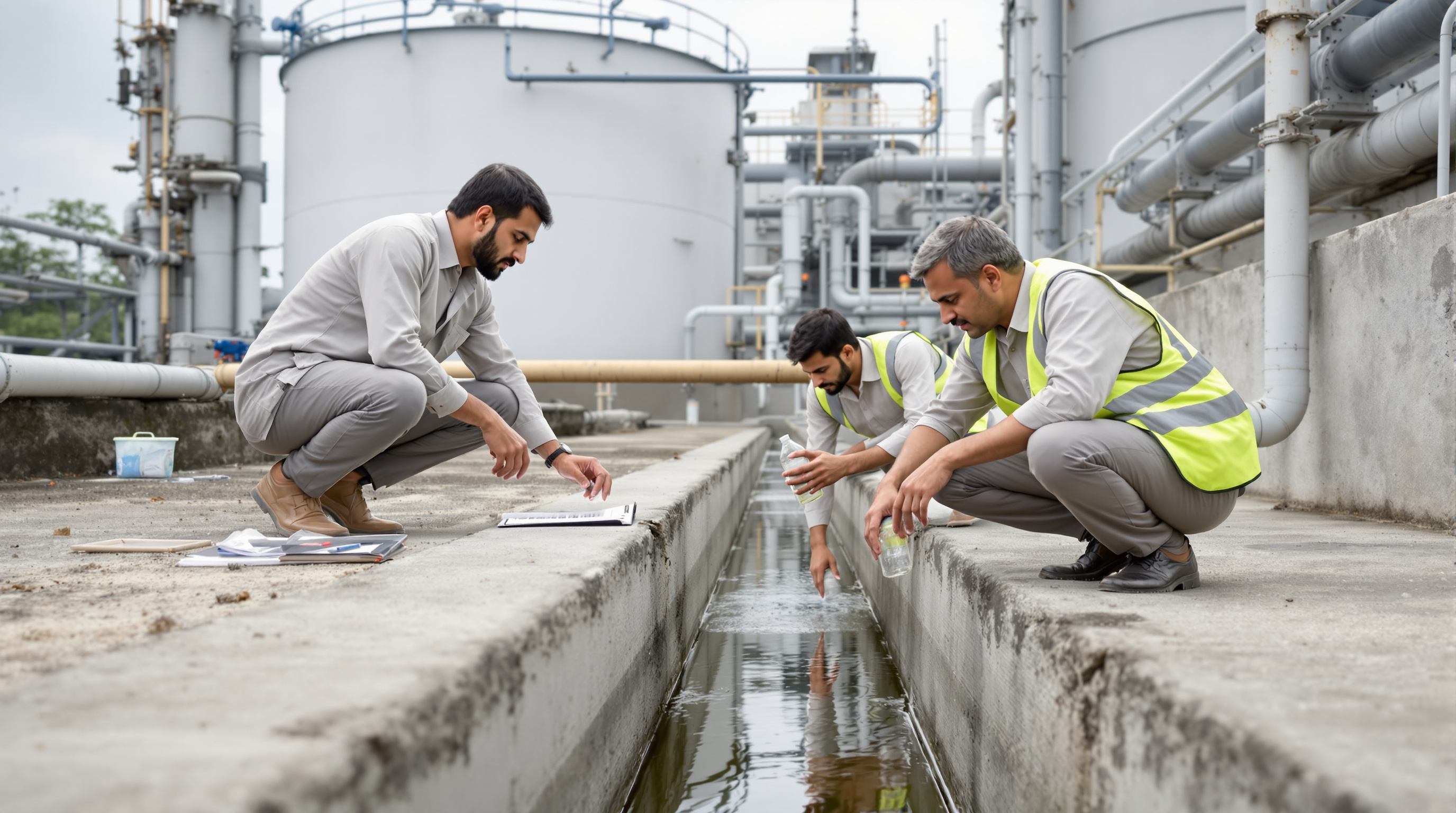
This is where Punjab differs most sharply from a quieter state: enforcement here is driven by sustained judicial and tribunal pressure.
- Online monitoring. Larger STPs are expected to install online continuous effluent monitoring linked to the PPCB and CPCB servers, so the Board can watch discharge quality remotely.
- NGT oversight. The catastrophic pollution of the Buddha Nullah and the Sutlej has kept Punjab under continuous NGT scrutiny. Reporting has found that against roughly 700 MLD of sewage generated by Ludhiana, only about 484 MLD was being treated, with the rest flowing raw into the nullah — and that no STP in the city fully complied with norms. The Tribunal has directed quarterly compliance reporting on the Sutlej and Beas and imposed environmental-compensation liabilities.
- Consequence for private projects. This climate means the PPCB cannot afford to be lax with new developments. A non-functional or bypassed STP in an apartment complex or hotel is an easy target for closure notices, penalties and consent revocation.
Practical compliance tips for owners and RWAs
If you run or are buying into a project in Ludhiana, Amritsar, Jalandhar, Mohali, Patiala or Bathinda, a short checklist:
- Verify the consents exist. Ask for the project's valid PPCB CTE and, crucially, the Consent to Operate — not just a promise that an STP is "installed." A plant without a live CTO is a compliance gap you will inherit.
- Confirm the STP is sized and running. Use the STP Capacity Calculator to sanity-check whether the installed capacity actually matches your occupancy. Many complaints trace back to undersized or switched-off plants run only during inspections.
- Keep records. Maintain daily operation logs, effluent test reports from a NABL-accredited lab, and sludge-disposal records. These are the first documents the Board asks for.
- Wire up reuse. Make sure the dual-plumbing and recycled-water lines are genuinely connected for flushing and gardening — not capped off after the completion certificate.
- For associations, budget for professional O&M. An RWA that takes over a builder's STP without an operator contract, spares and a testing routine will drift out of compliance within months. Our guide to apartment association STP compliance walks through the handover.
The bottom line
Punjab's STP regime is national law enforced under intense local pressure. The consent process (CTE then CTO) is standard; the building byelaws add dual-plumbing and recycling duties; the discharge standards follow CPCB; and the enforcement, thanks to the Sutlej and Buddha Nullah, is anything but relaxed. For any owner, builder or RWA, treating your own sewage properly is now the price of doing business in the state.
To compare Punjab with its neighbours, see our guides to Haryana, Delhi and Rajasthan, or the full state-wise STP approval comparison. New to the topic? Start with what an STP is, then work through the STP compliance checklist and the wider Sewage Treatment Plants guide library.
Regulations, thresholds and fees change, and byelaws differ between Punjab's municipal corporations and development authorities. This guide is for orientation only — always confirm the current requirements directly with the Punjab Pollution Control Board and your local sanctioning authority before you design, buy or build.
Export this guide
Related Guides — Deep-dive reading
Apartment Association STP Compliance Guide: CTO, Monitoring, Records & Penalties
A practical, honest compliance playbook for RWAs and facility managers running a sewage treatment plant — how to keep your Consent to Operate valid, what to monitor and record, the notices that catch associations out, and how to stay on the right side of the CPCB, your SPCB and the NGT.
Sewage Treatment PlantsSPCB Approvals for STPs: The State Pollution Control Board Consent Regime Explained
How State Pollution Control Boards actually administer STP approvals in India — their role versus the CPCB, the Consent to Establish and Consent to Operate regime, inspections and monitoring, and why the rules differ from one state to the next.
Sewage Treatment PlantsState-Wise STP Approval Process Comparison: How Consent Rules Differ Across India
Every Indian state runs the same national CTE/CTO consent framework under the Water Act — but the board names, portals, thresholds and effluent limits change as you cross state lines. Here is how the STP approval process actually compares, state by state, and how to find the rule that binds your project.
Sewage Treatment PlantsRelated Tools — Try Free
Society Handover & NOC Checklist
Builder-to-RWA handover audit — 9 categories, 65+ checkpoints across legal docs, drawings, utilities, STP/WTP, fire safety, finances, warranties.
RWA HandoverCPCB Compliance Checklist for STPs
Tick off CPCB/SPCB outlet standards, monitoring duties and record-keeping to score your sewage treatment plant's compliance readiness.
ChecklistSTP Compliance Checklist Tool
Interactive self-audit that ticks off STP consents, discharge norms, reuse metering, online monitoring and O&M records to give a live compliance readiness score.
Checklist