

Window Hardware Maintenance: Servicing Hinges, Stays, Rollers and Locks in India
Clean, lubricate, adjust and de-rust the moving parts of every window — a 6-monthly servicing routine for Indian conditions
A window that sticks, drops, rattles or refuses to lock is almost never a "bad window". Nine times out of ten it is the moving parts — the hinges, friction stays, handles, rollers and locks — that have dried out, clogged with dust, worked loose or started to rust. In Indian conditions, where monsoon humidity, coastal salt and ever-present dust gang up on metal fittings, hardware is the first thing to fail and the cheapest thing to save. A tube of silicone spray and twenty minutes twice a year keeps a window operating like new for decades.
This guide is the servicing how-to for the hardware you already own — how to clean it, lubricate it correctly, adjust it, de-rust it and tighten it. If instead you are choosing which locks and fittings to buy, read our companion Window Locks and Hardware guide, which covers security grades, multipoint locks and what to specify. This guide assumes the hardware is bought and fitted; here we keep it alive.
The single biggest mistake we see in Indian homes: greasing hardware with thick automotive or petroleum grease. Grease catches dust, turns into a black grinding paste, and accelerates wear. Use a dry-ish silicone spray or light machine oil instead.
Know your moving parts
Different windows have different hardware, so the service routine changes by type. Match your window to the parts before you start.
| Window type | Key moving parts | Most common failure |
|---|---|---|
| Casement (side-hung) | Friction stay / hinge, handle, espagnolette or multipoint lock gear | Stay stiffens, sash drops, handle goes loose |
| Awning / top-hung | Friction stay, handle, locking peg | Stay seizes, won't stay open |
| Sliding (aluminium / uPVC) | Bottom rollers, track, latch / lock | Rollers jam on grit, track clogged, hard to slide |
| Tilt-and-turn (uPVC) | Multipoint espagnolette gear, hinges, handle | Gear stiff, handle won't turn fully |
| Pivot / louvre | Pivot pins, operator crank | Pins rust, crank slips |
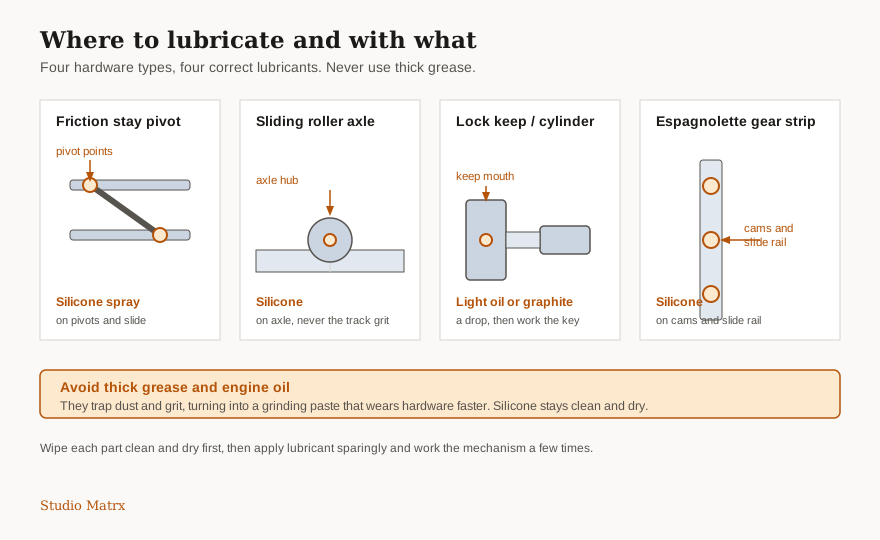
The right lubricant for the job
The lubricant matters more than the brand. Here is the simple rule set for Indian homes.
| Lubricant | Use it on | Avoid it on |
|---|---|---|
| Silicone spray (dry-film) | Friction stays, hinges, uPVC gaskets, rubber seals, espagnolette gears | — best all-rounder; safe on plastic and rubber |
| Light machine oil (sewing-machine / 3-in-1 type) | Lock cylinders, metal pivot pins, handle spindles | Anything touching rubber gaskets (oil swells EPDM) |
| Graphite powder (dry) | Lock cylinders that jam in dust | Friction stays (too dry for load-bearing pivots) |
| PTFE / silicone on the track (wiped, not sprayed in) | Sliding-window tracks after cleaning | — apply sparingly so it doesn't attract grit |
| Never: thick grease, butter, cooking oil, WD-40 as a long-term lubricant | — | everything; these gum up and collect dust |
A note on WD-40: it is a fine penetrant to free a seized or rusted part, but it evaporates and leaves little lasting film. After freeing a part with it, wipe clean and then apply silicone spray or light oil as the actual lubricant.
Step by step: servicing each window type
Casement and awning windows (friction stays and hinges)
1. Open the window fully and wipe the friction stay arm and channel with a dry cloth, then a barely-damp one with mild detergent. Never use a wire brush or abrasive on the channel.
2. Spray silicone along the stay's sliding arm and into the pivot points. Work the window open and shut five or six times to spread it.
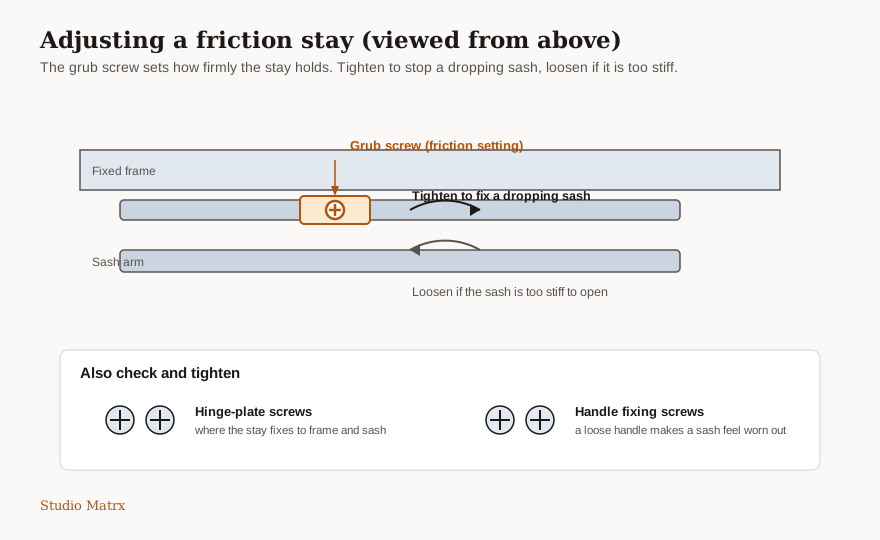
3. Check the small grub screw on the stay — this sets the friction. If the sash drops or swings shut on its own, tighten it a quarter-turn; if it is too stiff to open, loosen it slightly.
4. Tighten every visible fixing screw on the hinge plates and handle. Loose screws are the number-one cause of a "drooping" casement.
Sliding windows (rollers and tracks)
Sliders fail almost entirely because of the track, not the sash. Grit, dust and dead insects pack the bottom channel and chew the rollers.
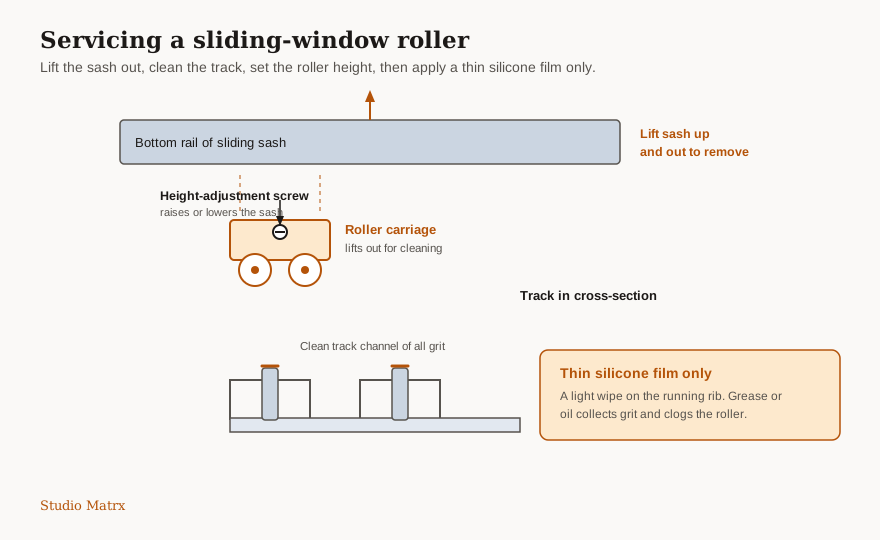
1. Vacuum the track, then brush out the corners with an old toothbrush. Wipe with a damp cloth and dry it.
2. Look at the bottom edge of the sash for the roller adjustment screws (usually at each end). Turning them raises or lowers the sash — use this to level a sash that scrapes on one side or to lift it clear of a worn track.
3. If a roller is cracked, flat-spotted or seized, replace it. Rollers are a cheap, standardised part and most local hardware shops stock them; lift the sash out, unclip the old roller carriage, clip in the new one.
4. Wipe a thin film of silicone or PTFE along the clean track. Do not flood it — excess lubricant on a track is a dust magnet.
uPVC tilt-and-turn (espagnolette / multipoint gear)
The espagnolette is the strip of steel inside the sash edge that drives several locking points at once when you turn the handle. It is robust but needs lubrication at the moving cams and keeps.
1. Open the sash and wipe the visible gearing strip along the edge.
2. Apply silicone spray to each locking cam (the mushroom-shaped studs) and into the keeps on the frame they engage.
3. Operate the handle through its full range several times. A handle that needs force usually means a dry gear, not a broken one — lubricate before you assume replacement.
4. If the handle still won't turn fully, the gear may be misaligned; this is a job for the window fitter, not a forced handle (forcing it snaps the gearbox).
De-rusting and tightening
In humid and coastal India, surface rust on steel stays, screws and lock bodies is routine. Light rust is easily reversed.
- Rub light surface rust with a fine nylon abrasive pad or 0000-grade steel wool with a drop of oil, then wipe clean and re-lubricate.
- Replace any screw that is rusted thin or has a stripped head — galvanised or stainless replacements last far longer near the coast.
- If a friction stay is deeply pitted or an arm is bent, replace the whole stay. A failed stay can drop a heavy sash and is a safety risk, not a cosmetic one.
- Coastal homes: rinse exterior hardware with fresh water during the dry season to wash off salt, then re-lubricate. Salt is the real enemy, not the sea air alone.
A 6-monthly servicing routine
Twice a year is the sweet spot for Indian conditions — once before the monsoon (to seal and protect) and once after (to clear out moisture and grit). Mark it to the calendar, not to "when it sticks".
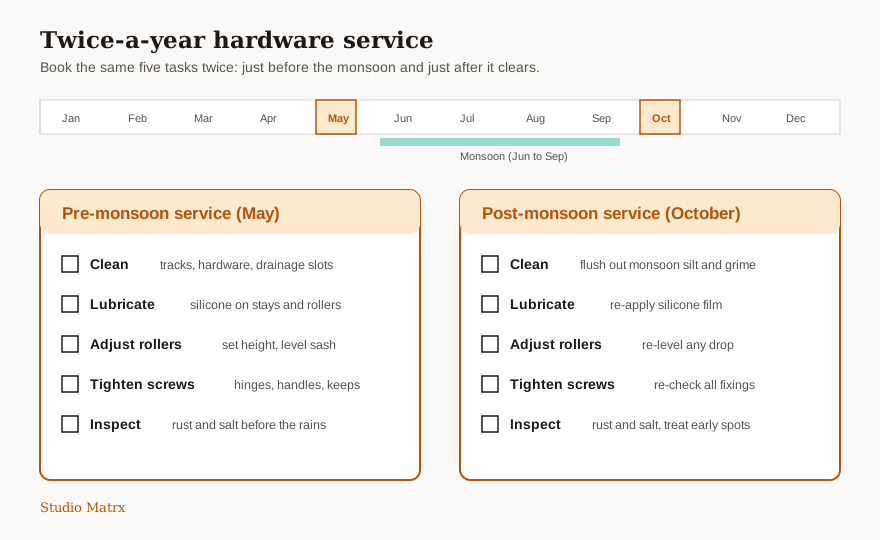
| Task | Pre-monsoon (May) | Post-monsoon (Oct) | Tool |
|---|---|---|---|
| Clean stays, tracks, gears | Yes | Yes | Brush, mild detergent, cloth |
| Lubricate hinges and stays | Yes | Yes | Silicone spray |
| Lubricate lock cylinders | Yes | Yes | Light oil or graphite |
| Tighten all fixing screws | Yes | Yes | Screwdriver |
| Inspect for rust / salt | — | Yes | Visual; abrasive pad |
| Check roller height and wear | Yes | Yes | Screwdriver |
| Test every lock and handle | Yes | Yes | By hand |
Symptom, cause and fix
| Symptom | Likely cause | Fix | DIY or pro |
|---|---|---|---|
| Casement sash drops or swings shut | Loose friction-stay grub screw or loose hinge screws | Tighten grub screw a quarter-turn; tighten hinge screws | DIY |
| Slider hard to push | Grit in track, worn rollers | Clean track, adjust or replace rollers | DIY |
| Handle stiff to turn | Dry espagnolette gear | Lubricate cams and keeps | DIY |
| Handle spins loose | Worn spindle or stripped fixing | Tighten or replace handle | DIY |
| Lock won't engage | Misaligned keep or seized cylinder | Adjust keep; oil cylinder | DIY (alignment may need pro) |
| Squeal that returns in days | Wrong lubricant (grease) trapping dust | Clean off, re-do with silicone | DIY |
| Bent or deeply pitted stay | Corrosion or impact | Replace the stay | DIY-ish / pro |
| Multipoint gear jammed or grinding | Internal gearbox failure | Replace gear | Pro |
When to replace the part, not service it
Service first — most hardware comes back to life with a clean and a spray. Replace when:
- A friction stay is bent, deeply pitted, or the sash it carries is heavy and the stay feels loose at the pivot. A dropped sash can shatter glass or injure someone.
- Rollers are cracked or flat-spotted (a fresh set is cheap and transforms a slider).
- A handle's internal spindle is worn so it spins without driving the lock.
- A multipoint espagnolette grinds or jams even after lubrication — the gearbox is internally worn; replace the strip.
- A lock no longer holds securely. Security is not something to nurse along; for choosing a stronger replacement, see the Window Locks and Hardware guide.
Keep hardware in the wider routine: the Home Window Maintenance Guide is the season-by-season umbrella, the Aluminium Window Maintenance guide covers frame and finish care for the most common Indian metal windows, and the Types of Home Windows in India guide helps you identify exactly which fittings your windows use.
References
- Bureau of Indian Standards (window and building hardware specifications): https://www.bis.gov.in/
- VEKA (uPVC hardware care and maintenance): https://www.veka.co.uk/homeowners/maintaining-your-windows/
- The Window Company (friction stay and hardware maintenance): https://www.windowcompany.co.uk/advice-centre/
- Yale India (window and door lock care): https://www.yaleindia.in/
Export this guide
Related Guides — Deep-dive reading
Aluminium Window Maintenance
How to clean, lubricate and protect aluminium windows in India — track care, hinge servicing, finish care and the coastal salt rinse
Windows & GlazingDoor Maintenance Guide India: A Seasonal Care Routine to Keep Doors Smooth for Decades
Oil the hinges, tighten the screws, lube the lock, check the seals and re-coat the finish — a simple seasonal calendar that stops Indian doors from binding in the monsoon, sagging, tarnishing on the coast or falling to termites.
Home Doors & EntrancesSliding Door Track Cleaning: Easy DIY Fix (India 2026)
Why Indian sliding doors get stiff — dust, grime and hard-water scale in the track — and the step-by-step clean-dry-lubricate routine that fixes it.
Home Doors & EntrancesRelated Tools — Try Free
Window Hardware Cost Calculator
Estimate window hardware cost — hinges, handles, locks, rollers and multipoint gears.
Window CalculatorWindow Maintenance Cost Calculator
Estimate annual window upkeep by frame material — yearly, per-window and 5-year cost.
Window CalculatorWindow Cost Calculator
Estimate window price plus installation by type, frame material, size, glass and quantity.
Window Calculator