
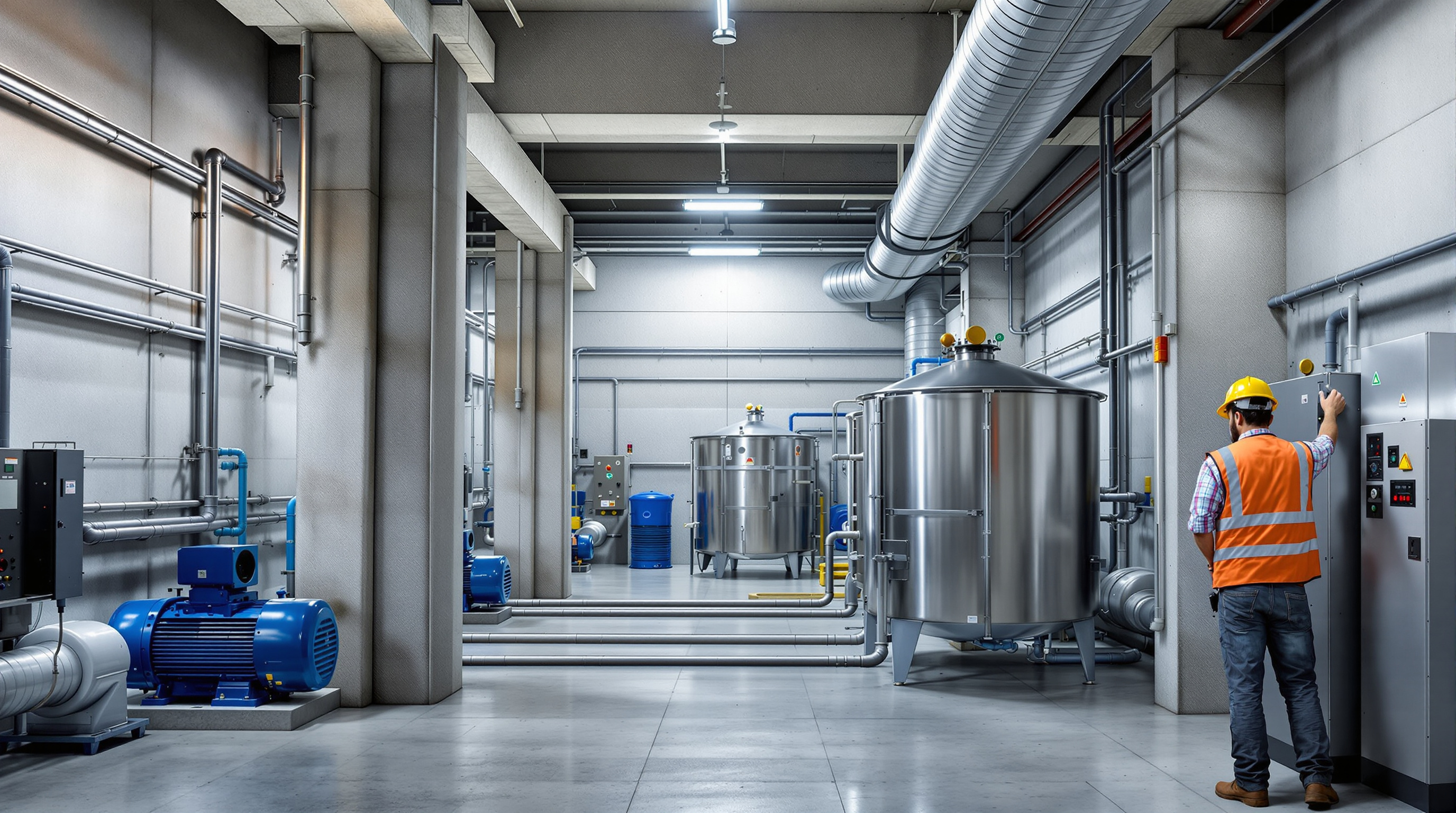
STP for High-Rise Buildings: Solving the Vertical Challenges
Why an STP in a tower is a different animal from one in a low-rise block — sharp peak flows, a basement site starved of air and light, treated water that has to be pumped forty floors up, and odour and fire clearances that decide whether the plant gets signed off at all.
A sewage treatment plant that works perfectly behind a four-storey apartment block can quietly fail behind a forty-storey tower. The biology is identical, the treatment stages are the same — but the building around it changes everything. In a high-rise the sewage arrives in sharper, taller waves, the plant is buried in a basement with no natural air or light, the treated water has to be pushed back up dozens of floors to reach the flush cisterns, and the whole installation sits within metres of hundreds of homes that will notice the faintest smell. Getting an STP for high-rise buildings right is less about the treatment technology and more about mastering these vertical, spatial and regulatory constraints.
A high-rise concentrates people onto a small footprint. The STP inherits that concentration: more sewage per square metre of plot, sharper peaks, tighter space, and a demanding audience living directly above the tanks.
If you are new to how an STP works at all, start with what a sewage treatment plant is and the stage-by-stage process flow; this guide assumes those basics and focuses on what the tower changes.
The high-rise wastewater profile
The raw sewage from a residential tower is ordinary domestic wastewater — medium-strength, biodegradable, nothing exotic. What is unusual is how it arrives.
- Sharp, tall peaks. A tower of 300–500 flats runs on a synchronised clock: everyone showers, flushes and cooks within the same narrow morning and evening windows. Peak flow can hit 2.5 to 3 times the average, far spikier than a spread-out layout, because there is no diversity of routine to smooth it out.
- High volume on a small footprint. The same headcount that a housing layout spreads over acres is stacked onto one plot, so the litres-per-day-per-square-metre of available STP space is punishing.
- Kitchen load. Hundreds of home kitchens push oil, grease and food solids into the line — a real fats-oil-grease burden that will choke a plant with an undersized oil and grease trap.
- Slug loads from below. Sewage from the upper floors arrives with velocity down tall stacks, and stack-vent surges can dump air and flow unevenly into the collection tank.
For a full explanation of the numbers that describe this — BOD, COD, TSS and pH — see wastewater characteristics. The design consequence is simple: the equalisation tank is not optional in a tower — it is the single most important component. A generously sized equalisation tank absorbs the morning surge and feeds the biological stage a steady flow, letting you size the treatment train for the average rather than the terrifying peak.
Sizing: design for the peak, treat at the average
The starting number is still occupancy-driven. Estimate sewage generation at roughly 80–85% of water consumption, using an Indian residential figure in the region of 100–135 LPCD, then add a design margin. Two of our tools do this in a minute: the sewage generation calculator and the STP capacity calculator, with the water consumption calculator to anchor the per-head demand.
Where high-rise sizing diverges from a low-rise plant:
| Design factor | Low-rise block | High-rise tower |
|---|---|---|
| Peak factor | ~2.0× average | 2.5–3.0× average |
| Equalisation capacity | Modest | Large — governs the whole design |
| Space per KLD | Comfortable | Tight; footprint is premium basement area |
| Preferred technology | ASP / MBBR | MBBR or MBR (compact, high-rate) |
| Redundancy | Often single stream | Dual-stream / standby critical |
Because basement area is so valuable, high-rises lean toward compact, high-rate processes. MBBR is the workhorse — a small footprint, tolerant of load swings, and easy to retrofit. Where treated-water quality must be reuse-grade in the smallest possible space, MBR packs the biology and a membrane filter into one tank and produces water clean enough to pump straight back up for flushing. A traditional activated sludge plant works but needs land a tower rarely has to spare. And because a single-stream plant that trips leaves a full tower with nowhere for its sewage to go, build in redundancy — twin blowers, standby pumps, and ideally two treatment streams so maintenance never means shutdown.
The basement problem: air, light and access
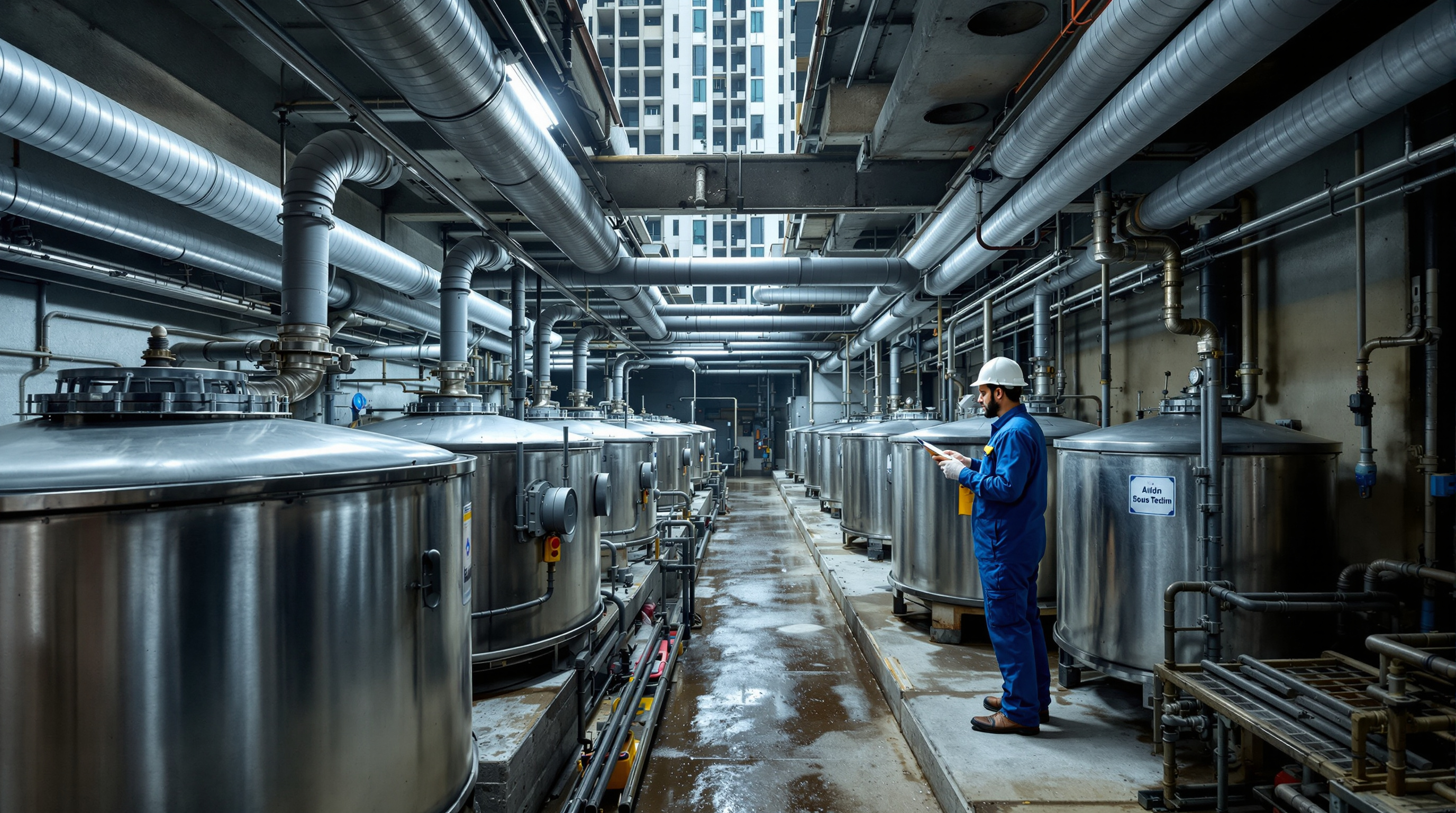
Nearly every high-rise STP lands in the basement, and a basement is a hostile home for a biological plant.
- Ventilation is life-or-death — literally. The biology needs oxygen, and the process releases hydrogen sulphide and methane, both of which are toxic and, in the case of methane, explosive. A basement STP room needs forced mechanical ventilation giving frequent air changes, with the exhaust ducted well away from habitation, plus gas detection and interlocked fans. This is a confined-space environment; casual entry kills operators every year.
- No natural light or drainage. Everything runs on pumps because gravity flow out of a basement is impossible. Sludge, scum and washdown all have to be lifted out.
- Access and headroom. Membranes, diffusers and blowers wear out and must come out. Design the room with equipment-removal routes, hatch sizes and lifting points before the slab is poured — retrofitting access into a live basement is brutal.
- Waterproofing and flotation. A buried wet tank in a high water-table city needs tanking and anti-flotation design so it does not crack or float when empty.
Pumping treated water back up
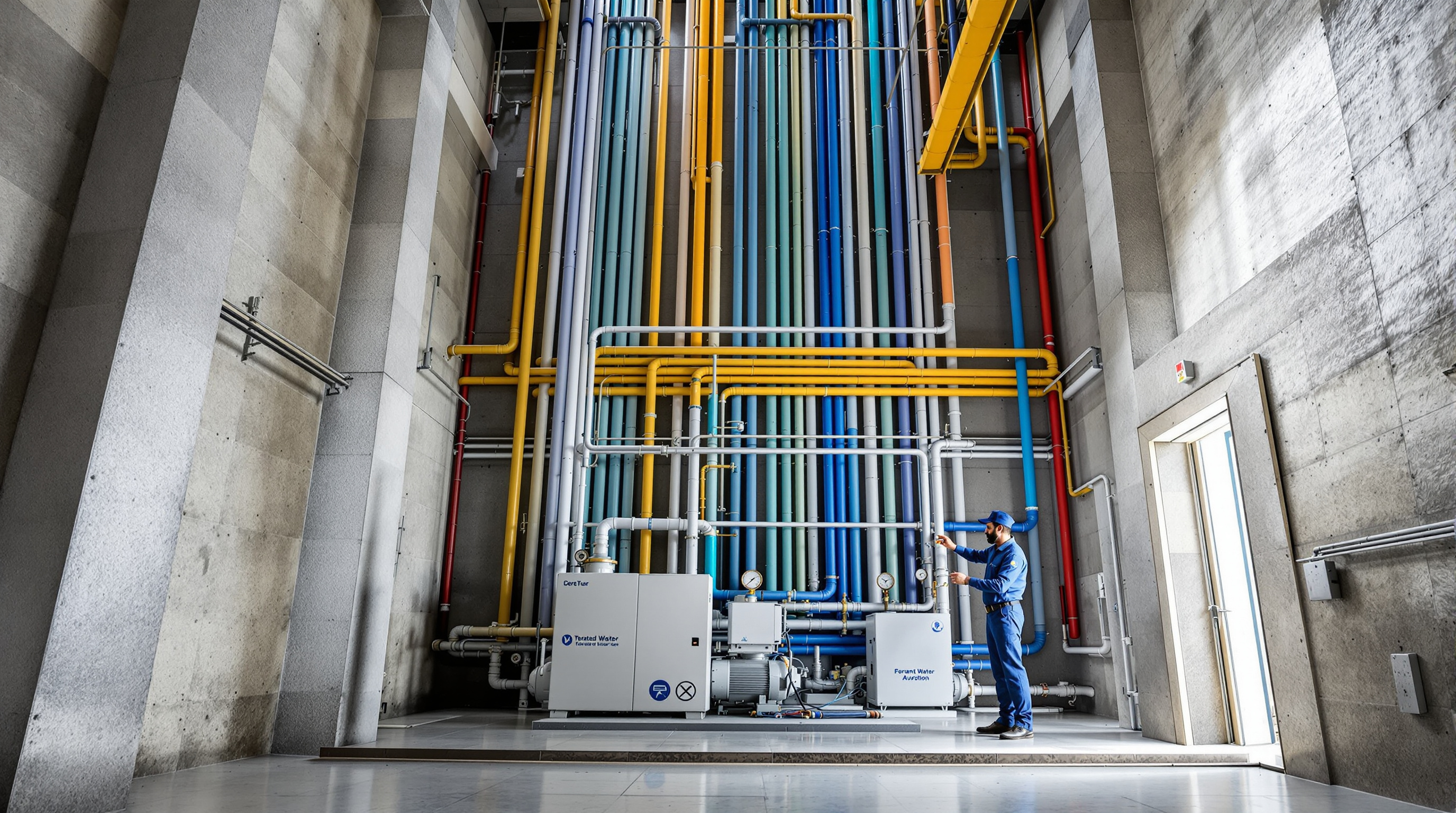
In a low-rise you might reuse treated water at grade with a small pump. In a tower, the treated water has to climb — potentially 30, 40 or 50 floors — to reach the flush cisterns through a dual-plumbing system (a separate flush riser kept entirely apart from the potable line). This has real consequences:
- A treated-water transfer pump set feeds an overhead or intermediate tank, and the flush distribution is often zoned by height — pressure-reducing valves or separate tanks for lower floors — exactly as the domestic water supply is zoned, so ground-floor cisterns are not blasted at high pressure.
- The flush line must be visibly distinguished (colour-coded, labelled) and cross-connection with potable water strictly prevented — a plumbing error here is a public-health failure.
- Treated water for flushing must be polished and disinfected reliably — good filtration plus UV or chlorination — because it is going into homes, not just gardens. Reuse also covers landscape irrigation, the car-wash bay, common-area cleaning and cooling towers where present, with any surplus going to groundwater recharge.
Done well, a tower recovers 80–85% of its water for non-potable use — a large, recurring saving on tanker and municipal supply. For deeper reuse plumbing, see rooftop water recycling integration.
Odour, fire and the NOC
Two soft constraints decide whether a technically sound plant actually gets occupied.
Odour control near homes. With flats sitting directly above the plant, odour is the complaint that never stops. Design it out: keep the process fully aerobic (a stinking plant is usually an under-aerated or overloaded one), cover and vent the collection and equalisation tanks, route foul air through an activated-carbon or bio-scrubber odour-control unit, and discharge the exhaust high and away from balconies and podium gardens. Odour is the number-one reason residents turn against a basement STP after handover.
Fire safety and the NOC. A basement STP room interacts directly with the fire strategy: methane and H₂S make it a hazardous space needing flame-proof electricals, gas detection, ventilation interlocks and correct fire compartmentation. Coordinate the STP room with the fire consultant early so it does not derail the building's fire NOC, and align the whole installation with the pollution-control board's Consent to Establish and Consent to Operate so the STP does not hold up the occupancy certificate.
The common high-rise mistakes
- Undersized equalisation — the plant that cannot swallow the morning peak and throws untreated water into the reuse tank.
- Starving the basement of ventilation — the single most dangerous and most common error.
- Forgetting the vertical pumping and zoning for treated flush water, so upper floors run dry.
- Ignoring odour control until residents move in and revolt.
- A single, non-redundant stream that shuts the whole tower's sewage system when it trips.
- Leaving fire and pollution-board coordination to the end, stalling the occupancy certificate.
A high-rise STP is not a bigger version of an apartment plant — it is a tightly integrated basement system where sizing, ventilation, pumping, odour and clearances all have to be solved together. Get the equalisation, the air and the vertical reuse right, and the biology takes care of itself.
Continue through the Sewage Treatment Plants guide library for the technology deep-dives, or start sizing your own tower with the STP capacity calculator.
Export this guide
Related Guides — Deep-dive reading
STP for Hotels: High Per-Guest Loads, FOG & Water Reuse Explained
Why hotel wastewater is heavier and swingier than an apartment's, which STP technology (MBBR vs MBR) actually fits, how to size for peak occupancy, and where the treated water pays for itself — in laundry, cooling and landscape.
Sewage Treatment PlantsSTP for IT Parks & Campuses: Central-Plant Design, Reuse & Redundancy Guide
How to plan a campus-scale sewage treatment plant for a multi-building IT park in India — the daytime flow pattern, the right technology, sizing for a central plant, and a reuse network feeding landscape, flushing and cooling towers.
Sewage Treatment PlantsHigh-Rise Plumbing Systems (India): Pressure Zoning, Boosters & Tall Stacks
A professional, India-first deep dive into plumbing for towers and multi-storey buildings — the pressure problem, vertical pressure zoning, break-pressure tanks, hydro-pneumatic and booster pumps, pressure-reducing valves, and tall soil, waste and vent stacks with offsets.
PlumbingRelated Tools — Try Free
Rainwater Tank Sizer
How big should your rainwater tank be? Computes annual harvest, recommended tank capacity in litres, water-bill savings, and payback — for 10 Indian cities.
RWH CalculatorSewage Generation Calculator
Estimate the daily sewage a building generates and its peak flow in KLD from occupancy, LPCD, sewage return factor and peak factor.
STP CalculatorCross-Ventilation Analyzer
Estimate airflow and air changes per hour (ACH) from room size, window areas, layout, and local wind — with NBC 2016 Part 8 compliance check.
Ventilation Calculator