

Solar Panels vs Solar Tiles: Which Should You Put on an Indian Roof?
Standard rack-mounted rooftop panels versus roof-integrated solar tiles and shingles. A balanced, India-grounded comparison across watts per rupee, cost, looks, install, repair, availability and warranties, with a clear choose-panels-if / choose-tiles-if verdict.
Rooftop solar has gone mainstream in India, and with it a new question has arrived: should you bolt standard solar panels onto your existing roof, or replace the roof covering itself with solar tiles? Both turn your roof into a power station. But they are very different products, at very different price points, aimed at very different homeowners. Getting the choice right saves you a great deal of money and regret.
This guide is the head-to-head on the Roofing Knowledge Hub and a companion to the broader Solar Roof Guide for India and The Ultimate Guide to Roofing Systems. It compares the two honestly across the criteria that actually decide it — watts per rupee, upfront cost, looks, what you install them with, repairability, availability in India, structural load and warranties — and ends with a plain "choose panels if… / choose tiles if…" verdict. There is no universal winner here; the right answer depends on your roof, your budget and how much you care about how the roof looks.
Scope & safety. This guide helps you understand, weigh and choose between two rooftop-solar approaches, and do safe ground-level checks. Every rooftop solar system involves structural load, work at height and live electrical work — all qualified professional jobs. Have a structural engineer confirm your roof can carry the array (see roof structural safety & compliance), and have a licensed solar installer and electrician design, mount and wire it. Never work on a roof or on wiring yourself. Solar prices, products and subsidy rules change fast — treat every number here as an indicative 2026 range and get current local quotes.
The short answer
For most Indian homes today, standard rack-mounted solar panels win — they cost far less per kilowatt, generate more energy per rupee spent, sit over almost any sound roof, and have a mature, subsidised installer network behind them. Solar tiles win in a narrower case: a new build or a full re-roof, on a design-led or heritage-sensitive home, where the owner is willing to pay a real premium to make the solar nearly invisible. Both need a structural check and both can qualify for subsidy and net metering. Decide on your roof situation and how much looks matter to you.
What each one actually is
Be precise about what you are comparing, because the two products solve the same problem in opposite ways.
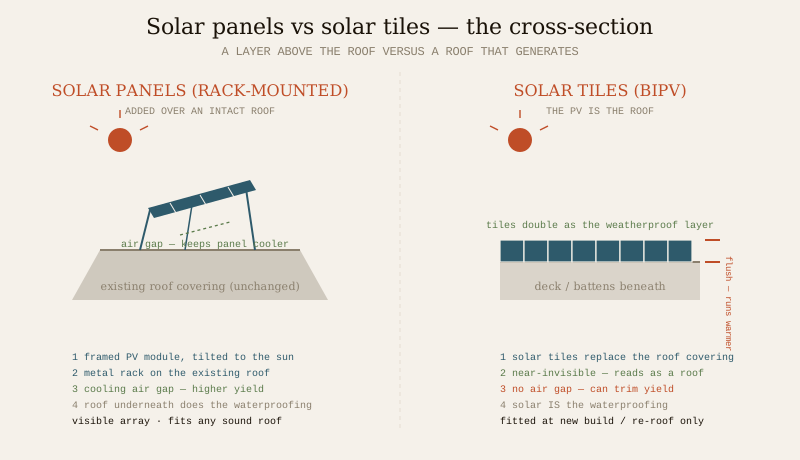
- Solar panels (rack-mounted). These are the familiar framed PV modules — a sheet of silicon cells behind glass in an aluminium frame — mounted on a metal rack that sits above your existing roof. The roof underneath stays exactly as it is; the panels are an add-on layer tilted to catch the sun. This is what the vast majority of Indian rooftop solar looks like. See the Solar Roof Guide and Rooftop Solar Approvals & Net Metering.
- Solar tiles / solar shingles (building-integrated PV, or BIPV). Here the PV is the roof. Instead of covering the roof and then adding panels, you lay small solar tiles or shingles that both keep the rain out and generate power — replacing clay, concrete or metal covering entirely. They are designed to look like a normal roof from the street. Because they double as the weatherproof layer, you fit them when you are re-roofing or building new, not as a bolt-on to a good existing roof.
The single difference — a layer added over the roof versus a covering that replaces the roof — drives almost every trade-off below.
The head-to-head — the criteria that decide it
Here is the whole comparison in one table. Read down the column that matters most to you; neither option wins every row, which is exactly why the choice depends on your situation.
| Criterion | Solar panels (rack-mounted) | Solar tiles / shingles (BIPV) |
|---|---|---|
| Cost per kW | Lower — the mainstream, mass-made option; strongest watts per rupee today | Higher — a premium, niche product in India; often a large multiple of panel cost |
| Efficiency / yield | Higher usable yield — standard modules plus an air gap that keeps them cooler and more productive | Usually a little lower per unit area, and running warmer against the roof can trim output |
| Aesthetics | Visible — a distinct array raised above the roofline | Near-invisible — integrated into the roof, ideal for design-led or heritage-sensitive homes |
| Install with what | Over almost any sound existing roof, without touching the covering | As the roof — fitted only during a new build or a full re-roof |
| Repairability | Easy — a faulty module unbolts and swaps; a wide market of spares | Harder — a failed tile is part of the waterproof roof; fewer spares, more specialised work |
| Availability in India | Mature — many brands, installers and subsidy channels nationwide | Limited — few suppliers and trained fitters; verify support before committing |
| Structural load & wind | Adds array plus rack weight and wind uplift — needs a structural check | Replaces the covering — weight may be similar, but fixing and uplift still need engineering sign-off |
| Best for | Value, maximum generation, an existing sound roof — most homes today | New build / re-roof, design-led homes, owners paying a premium for looks |
Indicative, for typical Indian homes in 2026. A structural engineer confirms loads and a licensed solar installer confirms yield, cost and product for your specific roof, orientation, shading and budget. Get current local quotes.
Reading the matrix — where each option genuinely wins
The table is easy to skim but easy to misread, so here is the honest weighting.
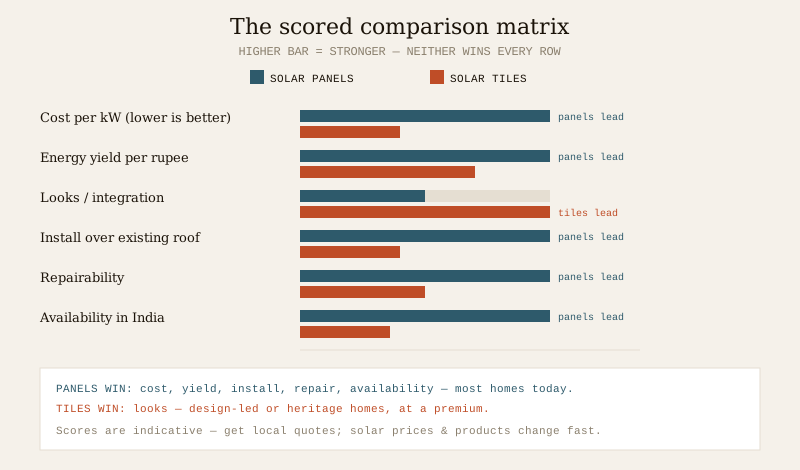
Where standard panels clearly win is money and generation. Because they are mass-produced and fiercely competitive, panels give you the most watts per rupee by a wide margin today, and the air gap under a rack-mounted module keeps the cells cooler — and cooler silicon is more efficient — so a raised array often out-yields the same capacity pressed flat against a hot roof. For a homeowner whose main goal is to cut the electricity bill as fast as possible, panels are usually the rational choice.
Where solar tiles clearly win is looks. From the street, a good solar-tile roof reads as a roof, not as an array of raised panels. For a design-led home where the roofline is part of the architecture, or a heritage-sensitive setting where a bolt-on array would jar, that near-invisibility can be worth a real premium. Tiles also make sense when you are re-roofing anyway: if the old covering is coming off regardless, letting the new roof generate power avoids a separate rack later.
The rest of the matrix follows from the "added layer versus the roof itself" split: panels are easier to install over what you have and easier to repair; tiles integrate cleanly but tie the solar to the waterproofing, which raises the stakes on repairs and demands a more specialised, less common installer.
Cost and payback — framed honestly, and hedged
Solar economics move quickly, so treat the following as framing, not a quote. The pattern is stable even as the exact numbers drift: panels cost markedly less per kilowatt to install than solar tiles in India today, so for the same generation, panels reach payback sooner.
| Framing (indicative 2026, per typical home) | Solar panels (rack-mounted) | Solar tiles / shingles |
|---|---|---|
| Relative upfront cost per kW | Baseline — the cheapest way to add capacity | A premium — commonly a significant multiple of panel cost |
| What the price also buys | Power only; the roof underneath is unchanged | Power and the roof covering in one, if you were re-roofing anyway |
| Payback direction | Shorter, all else equal — lower cost, higher yield | Longer — the aesthetic premium and any yield gap push payback out |
| When the gap narrows | — | If you are already paying to re-roof, part of the tile cost offsets covering you would have bought regardless |
| Subsidy & net metering | Widely supported; check current rules | May apply; support is thinner — confirm eligibility before buying |
Do not budget from this table. Solar prices, module wattages and scheme rules change every year. Get itemised local quotes, ask exactly what is included, and check the current subsidy and net-metering rules for your state and utility — see Rooftop Solar Approvals & Net Metering. The roof cost calculator and roof area calculator help you size the roof and frame the spend.
The honest takeaway: choose on total value, not sticker appeal. If the goal is the cheapest, fastest bill reduction, panels almost always win the maths. If you place real value on a clean roofline, or you are re-roofing anyway, part of the tile premium buys something panels cannot — and that can be worth it to you even when the spreadsheet leans the other way.
The India and monsoon angle
A few things matter more here than in cooler, drier markets.
- Heat. India runs hot, and PV loses efficiency as it heats up. The ventilated air gap under rack-mounted panels is a genuine advantage — it lets the modules shed heat and run cooler than tiles bonded to the roof. This overlaps with cool-roof thinking: keeping the roof and the PV cooler helps both.
- Monsoon and waterproofing. With panels, your existing waterproofing stays in charge of keeping the rain out; the array just needs sound mounting and flashing where brackets penetrate. With solar tiles, the solar is the waterproofing, so every joint must be detailed to survive a heavy Indian monsoon — a real reason to insist on an experienced BIPV installer.
- Availability. Panels have a deep, mature, nationwide market of brands, installers and spares. Solar tiles are still niche in India, with fewer suppliers and trained fitters — so before choosing tiles, confirm local supply, installation and long-term spares, or a future repair could strand you.
- Dust and cleaning. Both need periodic cleaning to keep yield up; a raised panel array is generally easier to reach and clean than an integrated tile surface.
Structural load, install and repair
Both approaches put load on the roof and both are professional work at height.
- Load and wind. Rack-mounted panels add the modules plus the rack, and a tilted array catches wind — uplift is a real design case. Solar tiles replace the old covering, so the net weight change can be modest, but the fixing and uplift resistance still need engineering sign-off. Either way, get a structural safety check before you commit — especially on an older roof or one you might build over later.
- Install. Panels go over almost any sound roof — RCC slab, metal sheet or clay tile — without disturbing the covering, which is why they suit existing homes. Solar tiles are the covering, so they are fitted during a new build or a full roof renovation / replacement; retrofitting them means re-roofing.
- Repair. A dead panel unbolts and swaps in an afternoon, from a large market of modules. A failed solar tile is embedded in the weatherproof roof, so replacing it is more specialised and depends on spares still being available — a live risk given how few suppliers exist in India today.
The honest cons of each
- Solar panels: visible — a raised array changes the roofline, which some owners dislike; brackets penetrate the roof and need proper flashing; the array can complicate roof maintenance and future re-roofing beneath it.
- Solar tiles: expensive and niche in India; usually a little lower yield per area and warmer running; ties the solar to the waterproofing so repairs are higher-stakes; a thin installer and spares ecosystem, so support and warranty backing must be checked hard before you buy.
Warranties and durability
Quality panels typically carry long product and performance warranties — but a warranty is only as good as the company still being around to honour it, which matters more for niche solar tiles than for mainstream panels. For either option, read the fine print: product warranty versus performance (output) warranty, workmanship warranty on the install, and — critically for tiles — the waterproofing warranty, since the tiles are your roof. Prefer suppliers and installers with a real local track record and confirmed spares support. Check the current BIS catalogue for the relevant solar-PV and roofing standards rather than relying on marketing claims.
Which should you choose — the verdict
No hedging on the decision itself. The figure below turns it into a flow you can follow.
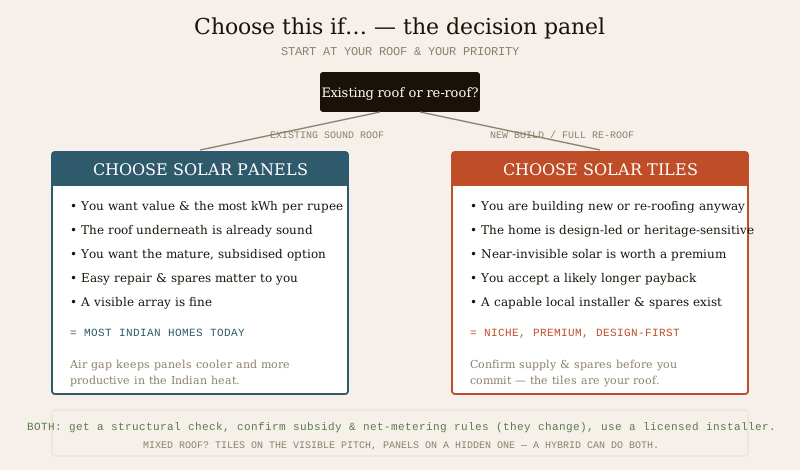
Choose SOLAR PANELS if…
- You have an existing sound roof and do not want to re-roof just to go solar.
- Your priority is value and maximum generation — the fastest cut to your electricity bill.
- You want the mature, subsidised, easy-to-service option with brands and spares everywhere.
- You are comfortable with a visible array on the roof.
- This is most Indian homes, today.
Choose SOLAR TILES if…
- You are building new or fully re-roofing, so the covering is being fitted or replaced anyway.
- Your home is design-led or heritage-sensitive and a near-invisible roof matters to you.
- You are willing to pay a premium for looks, accepting a likely longer payback.
- You have confirmed a capable local supplier, installer and spares — do not choose tiles without this.
| Your situation | Leaning |
|---|---|
| Existing good roof, want lowest cost | Panels |
| Maximum kWh per rupee | Panels |
| New build, roofline is part of the design | Solar tiles |
| Full re-roof due anyway, looks matter | Solar tiles (weigh the premium) |
| Heritage or design-sensitive elevation | Solar tiles |
| No proven local tile installer / spares | Panels |
| Fast, simple, subsidised, serviceable | Panels |
Can you combine them?
Sometimes, yes. On a home with a mix of surfaces, some owners put integrated solar tiles on the visible, street-facing pitch for looks and standard rack-mounted panels on a hidden rear pitch or flat terrace for cheap bulk generation — letting each part of the roof do the job it is best at. It costs more to coordinate two systems, but it can square the circle of wanting both a clean elevation and strong, affordable output. Ask your designer and installer to price a hybrid before assuming it is one or the other.
An owner-safe note
You can safely do the ground-level thinking — work out your roof orientation and shading, size the roof with the roof area calculator, narrow the system with the roof system selector, read your bills, and gather quotes. Leave the roof itself to professionals: a structural engineer to confirm the load, and a licensed solar installer and electrician to mount and wire the system. Rooftops and live wiring are dangerous — never DIY either.
Where to go next
- The broader picture: Solar Roof Guide for India.
- Approvals and money: Rooftop Solar Approvals & Net Metering.
- Make sure the roof can carry it: Roof Structural Safety & Compliance.
- Keep the roof cool too: Cool Roof Guide.
- The coverings tiles would replace: Metal Roofing Guide · Clay Roof Tiles Guide.
- When to re-roof: Roof Renovation & Replacement.
- Find the right pro: Roofing Contractor Guide.
- Still choosing a roof at all: How to Choose a Roof.
- Tools: Roof System Selector · Roof Area Calculator.
- The whole library: Roofing Knowledge Hub · The Ultimate Guide to Roofing Systems.
References
- Ministry of New and Renewable Energy (MNRE) and your state DISCOM — current rooftop-solar subsidy and net-metering rules; these change frequently, so verify the live rules before you budget.
- Bureau of Indian Standards (BIS) — solar-PV module and rooftop-installation standards, and roofing-covering standards; verify the current editions via the BIS catalogue: https://www.services.bis.gov.in/
- National Building Code of India (SP 7) — structural design and building requirements relevant to rooftop arrays and re-roofing; verify the current edition via the BIS catalogue.
- IS 875 (Part 3): wind loads for buildings and structures — relevant to array uplift design; verify current status via the BIS catalogue.
This is an educational overview. Solar prices, products, warranties and subsidy rules change quickly — treat all numbers as indicative and get current local quotes. Structural load calculation, work at height and electrical work are qualified professional jobs; engage a structural engineer and a licensed solar installer and electrician, and verify any standard or scheme rule before relying on it.
Export this guide
Related Guides — Deep-dive reading
How to Choose a Security System (2026): The Master Buying Guide for Indian Homes and Buildings
The mental model that ties the whole buying decision together: start from your own risk, not a product; build the layers your situation actually needs; make the big architecture choices (wired vs wireless, local vs cloud, DIY vs professional); tell real product quality from marketing; and choose a vendor you can trust.
SecurityThe Solar Roof Guide
Putting rooftop solar on an Indian home, made clear — the system types (grid-connected, off-grid and hybrid, plus BIPV and solar tiles), how to judge whether your roof is ready (area, orientation, tilt, shading, structure and age), how panels are mounted and waterproofed, the electrical and fire-safety essentials, cleaning and access, indicative cost and payback, and the permissions, net-metering and subsidy path. Plain language, India-grounded.
RoofingSecurity Comparison Guide (2026): How to Weigh Any X vs Y Security Choice in India
The master decision framework for comparing security options in India — how to weigh any head-to-head choice across need, cost, performance, reliability, privacy, ease, scalability, maintenance and code, so your context decides the winner rather than a salesperson.
SecurityRelated Tools — Try Free
Brise-Soleil Visualizer
Interactive horizontal-louvre cut-off angle calculator — sun altitude, louvre depth, and spacing inputs with a live shadow preview. Computes θ = arctan(spacing/depth) for façade shading, ECBC envelope compliance, hospital daylight design, and tropical sun-control detailing.
Sun Shading ToolRenovation vs New Build Calculator
Compare renovating vs building new interiors city-wise across 13 work scopes with GST and per-sqft rates.
Cost ComparisonCross-Ventilation Analyzer
Estimate airflow and air changes per hour (ACH) from room size, window areas, layout, and local wind — with NBC 2016 Part 8 compliance check.
Ventilation Calculator