
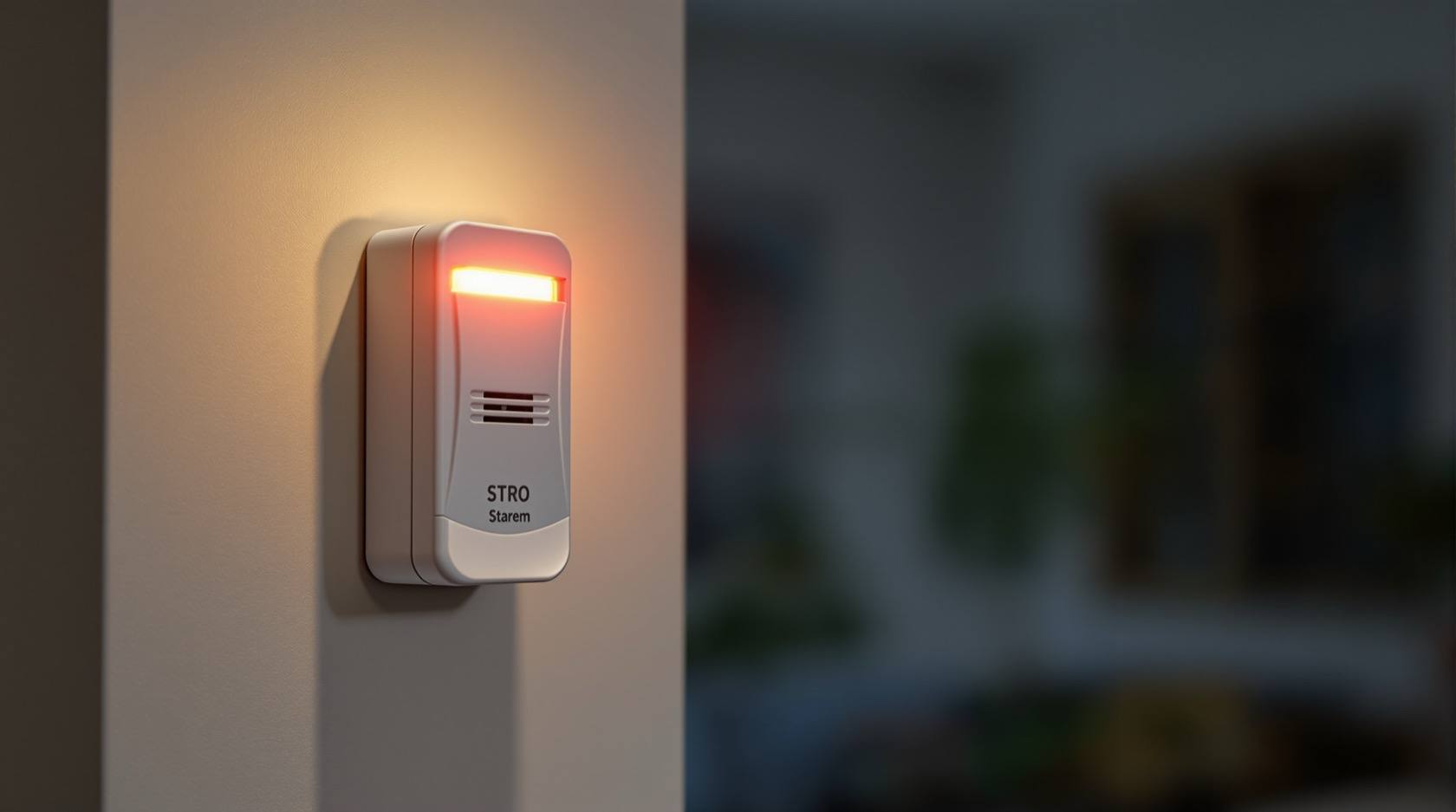
Smart Sirens for Home Security in India (2026): The Loud Alert Your App Notification Cannot Replace
What makes an alarm siren smart, why a system that only pings your phone lets a burglar work undisturbed, and how to plan indoor and outdoor sirens with strobes, battery backup and tamper protection so they still sound when the Wi-Fi and mains are gone.
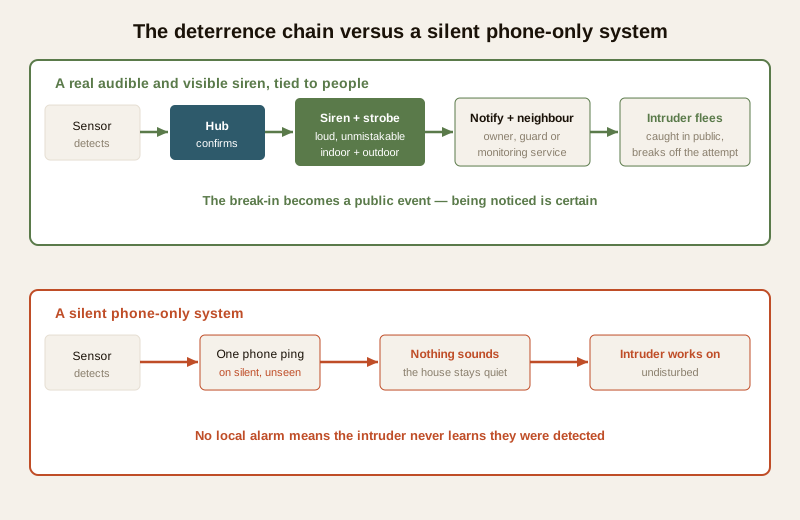
Picture the failure that a phone-only smart security system quietly sets you up for. A sensor trips at 3 a.m. The system does exactly what it was sold to do: it sends a notification to your phone. But your phone is on silent, or charging in the next room, or you are travelling and the roaming data is slow. The notification lands, unseen. And because nothing in the house made a sound, the intruder has no idea they have been detected — so they keep working, calmly, for as long as they like. A silent alert to a sleeping or absent owner is not a response. It is a record of a break-in you will read about later.
This is why the humble smart sirens in a connected security system still earn their place. The siren is the one part of the system that acts locally and loudly, in the room, without needing you to look at anything. It does two jobs a notification cannot: it tells the intruder you are caught, leave now, and it wakes and alerts everyone in the house so they can get to safety and call for help. This guide is part of the Studio Matrx smart home security library and sits under the complete guide to smart home security in India. For the fundamentals of siren loudness, weatherproofing and placement, read the companion guide to audible sirens; here we focus on what makes a siren smart and how to use it well.
Scope & safety. Smart is convenience, not a guarantee. A Wi-Fi-only siren goes silent in a power or internet cut, both of which are everyday India realities and both of which a burglar can cause on purpose — so any siren that matters must degrade gracefully with its own battery and a local trigger from the hub. A security siren is a deterrent and an alert, not a barrier, and it is not a fire alarm: a certified fire system has its own distinct, standards-compliant sounder. Alert and access logs are personal data under the Digital Personal Data Protection Act, 2023. Mains-powered siren and strobe wiring is a licensed electrician's job. This is educational guidance, not legal advice.
What makes a siren "smart"
A traditional siren is a dumb, loud output: the alarm panel sends it power, it screams. A smart siren is the same loud output made controllable, aware and connected — it takes its orders from a smart security hub or an app instead of a hard-wired panel alone. That connection adds four things that genuinely change how you live with it.
- Hub and app triggering. The siren sounds because the hub decided the alarm condition is real — a door contact plus a motion sensor, say — not just because one wire went live. You can also trigger it manually from the app as an on-demand deterrent, or silence it from the app when you know it is a false alarm, without walking to a keypad.
- Arming with scenes and geofencing. The single biggest quality-of-life gain. The siren only sounds when the system is armed. Scenes ("Good night", "Away") and geofencing can arm it automatically when the last phone leaves the house and disarm it when you return, so it protects you when you are out and stays quiet when you are home and moving around.
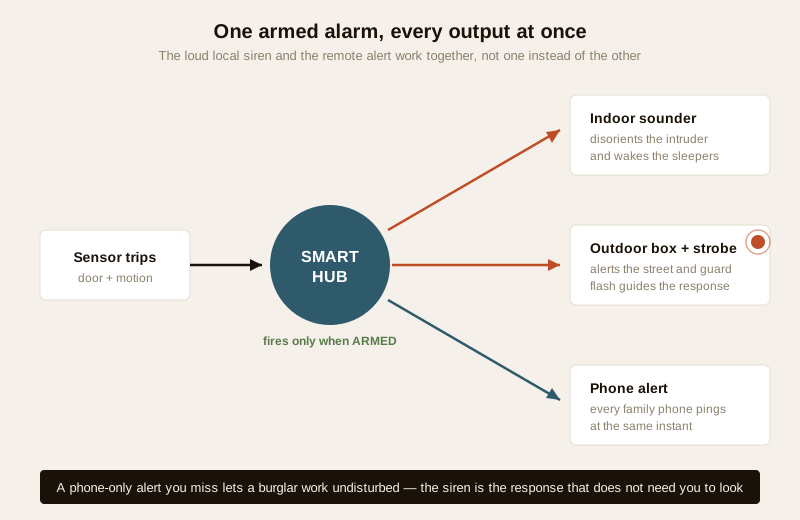
- Coordinated multi-device response. One trip can fire an indoor sounder, an outdoor box, a strobe and push a notification to every family phone at the same instant — the loud local alarm and the remote alert working together instead of instead of each other.
- Status and health awareness. A smart siren can report low battery, loss of connection or a tamper event back to the app, so you learn it is failing before the night you need it, not after.
Indoor versus outdoor smart sirens
A well-planned system uses both, because they have different audiences and different jobs.
Indoor smart siren
The indoor sounder lives inside — a central hallway, a landing, near the main entry. Its job is to be unbearable at close range: a sharp, disorienting blast that makes an intruder want to be somewhere else, and that wakes sleeping residents so they can get to safety and account for the family. Being smart, it can be told to sound instantly on a confirmed break-in, or to chirp softly as an arming or entry-delay reminder, or to stay silent in a "Home" scene while you move around at night. Choose a placement and tone that alerts your household without needlessly distressing a child or an elderly resident.
Outdoor smart siren
The outdoor siren is the public one — a sealed, weatherproof box mounted high on an external wall, usually with a bright strobe built in, facing the street or gate. It has two audiences: the intruder, who sees a visible alarm box and thinks twice before starting, and the neighbourhood, which hears it and comes to look. In a dense Indian street, colony or apartment block the outdoor siren converts a private break-in into a public event and summons your real first responders — a neighbour or the society guard. Because it lives outside in Indian weather it must be genuinely weatherproof, and because it is the loudest, most visible part of the system, it is the one that most needs its own battery and tamper protection (below).
The strobe: light alongside sound
Every smart siren plan should include a strobe — a bright, flashing light that fires with the siren. It matters for two reasons. First, accessibility: a hearing-impaired resident, or anyone in a very noisy street, may miss the sound but cannot miss the flash. Second, guidance: at night a strobe points a responding neighbour, guard or patrol straight to the correct house among a row of identical gates. Sound plus light is far more effective than either alone, and pairing the strobe with your motion-activated security lighting floods the approach at the same moment.
| Siren role | Where it goes | Main job | Smart addition |
|---|---|---|---|
| Indoor sounder | Central, near entry, inside | Disorient intruder, wake the household | Sounds only when armed; scene-aware; app silence |
| Outdoor siren box | High on an outer wall, visible | Deter on sight, alert the street and guard | Hub-triggered with strobe; reports its own health |
| Strobe | With the outdoor box, and optionally indoors | Reach the hearing-impaired, guide responders | Fires together with the siren via the hub |
| Both, coordinated | Indoor and outdoor together | Layered local response plus remote alert | One trip fires all outputs and every phone at once |
The honest limits — and how to plan around them
A smart siren is useful, not magic. Three caveats matter enough that ignoring them defeats the point.
It only works if people still believe it
A siren that cries wolf trains your neighbours and the society guard to ignore it — and once the whole colony has learned to tune out "that alarm that goes off for nothing", your real emergency gets ignored too. Siren fatigue is a genuine failure mode, not a nuisance footnote. The fix is not a quieter siren; it is false-alarm discipline. Tune sensor sensitivity so pets, ceiling fans, curtains and passing headlights do not set things off, use entry and exit delays, and require sensor confirmation (two sensors, or a sensor plus a camera) before the siren fires on an away-armed system. Getting the smart sensors right is what earns the neighbourhood's trust — and their attention on the night it counts.
A Wi-Fi-only siren dies with the internet and the power
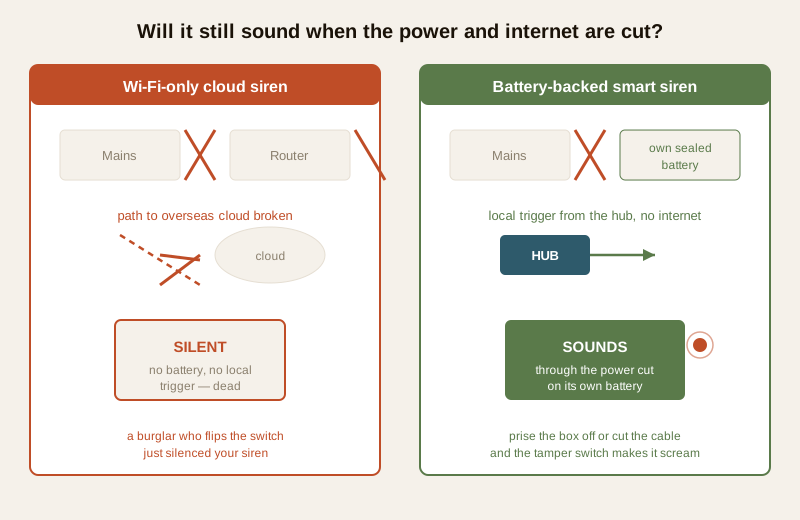
This is the India-real trap. A siren that depends on your home Wi-Fi and the cloud to be told to sound has two single points of failure that are ordinary here and easy for an intruder to cause: a power cut kills the router, and cutting the router or the broadband kills the trigger path. A determined burglar who flips your main switch has just silenced a cloud-dependent siren. So prefer a siren that degrades gracefully: its own rechargeable battery inside the box, and a local trigger from the hub over a home-network protocol such as Zigbee, Z-Wave, Thread or a direct RF link — not only a round-trip to an overseas server. Then a break-in during load-shedding still gets a full-volume response. Treat "does it still sound with the mains off and the internet down?" as a basic acceptance test before you rely on any smart siren.
Self-powered tamper: it should scream if attacked
A good outdoor siren is self-powered and tamper-aware. Its sealed battery means the one thing you never want — a siren a cut wire, a tripped MCB or a flipped switch can quietly silence — cannot happen. Better still, a tamper-protected box detects being prised off the wall or having its cable cut and sounds on its own battery in response. So the very act of trying to disable your loudest deterrent triggers it. When choosing an outdoor smart siren, look for both a backup battery and a tamper switch on the maker's datasheet, and confirm it reports the tamper event to your app.
It is a deterrent and an alert, not a barrier
Finally, keep the siren in perspective. It does not stop anyone physically; it makes staying costly and being noticed certain. It works because of what it is connected to — locks, sensors, lights, alerts and people. Plan it as one layer, never the whole plan.
Coordinating with monitoring and neighbours
The siren handles the people on the spot; you and your contacts handle everything else. A smart system lets you wire that response deliberately.
- Pair the siren with notifications, not instead of them. When the siren sounds, a push alert to every family phone means you know too, wherever you are — the loud local response and the remote alert reinforcing each other. The siren is what protects you in the seconds before you can look at your phone.
- Loop in a monitored service where it fits. If you want a response beyond your own household, an alarm monitoring service can watch the system and follow an agreed call-list. Confirm in writing who responds and how fast, because automatic police dispatch is not guaranteed in India.
- Brief the neighbours and the guard. In a gated community, the outdoor siren and strobe are only as useful as the plan behind them. Agree a simple protocol with your gated community's security — what a sounding siren from your unit means and who checks — and clear any external siren with the RWA first.
- Give people a way to raise the alarm too. A siren responds to sensors; a panic button lets a person trigger the same loud, coordinated response on purpose. Run your setup through the home security risk scorecard to see where the gaps are.
Noise courtesy and local rules
A smart siren should be loud enough to do its job at your boundary, not loud enough to rattle windows three houses away. Indian ambient-noise norms set day and night limits for residential areas, with stricter night-time limits, and a permanently over-loud or frequently false-triggering siren can become a genuine nuisance-law problem. Two settings keep you a good neighbour: a sensible auto-cutoff so the siren sounds for a set time — a few minutes — and then stops rather than screaming all night after a fault, and tight false-alarm discipline so it rarely fires by mistake. In an apartment or society, clear external sirens with the RWA and set them within society and local noise norms before you fit them.
Do not confuse a security siren with a fire alarm
This matters enough to say plainly. A burglar-alarm siren is not a fire alarm sounder, and the two must never be treated as interchangeable. A certified fire system has its own distinct, standards-compliant alarm designed to be recognised as fire and to drive evacuation — that is life-safety equipment governed by the National Building Code of India (SP 7) and installed by qualified people. A smart security siren is a helpful add-on that can also alert you to a smart smoke detector, but it is not a substitute for a proper addressable fire-alarm system or, in larger buildings, a voice-evacuation system. Keep the two systems and their sounds distinct so no one mistakes a break-in siren for a fire cue, or worse, ignores a real fire alarm because "the security thing goes off all the time".
Key takeaways
- A phone notification alone is not a response. If you miss it, the burglar works undisturbed. A smart siren is the loud local deterrent that says you are caught and wakes the house — it works with the notification, not instead of it.
- Smart adds arming, coordination and awareness — hub and app triggering, scenes and geofencing so it only sounds when armed, one trip firing indoor, outdoor, strobe and every phone together, and health and tamper reporting.
- Use indoor and outdoor sirens with a strobe — indoor to disorient and wake, outdoor to deter and summon the street and guard, strobe to reach the hearing-impaired and guide responders.
- Insist on graceful degradation — a battery inside the box and a local hub trigger, so it still sounds when the power and internet are cut; and self-powered tamper protection so cutting it makes it scream.
- Earn trust and stay courteous — cut false alarms so no one ignores your siren, set an auto-cutoff and respect noise norms, and never confuse a security siren with a certified fire alarm.
Where to go next
- Complete guide to smart home security in India — the pillar that ties sirens to hubs, sensors, locks and cameras.
- Audible sirens for home alarms — the fundamentals of loudness, weatherproofing and placement.
- Smart security hubs and smart sensors — the brain and the triggers that decide when the siren sounds.
- Alarm monitoring services and gated community security — who answers when the siren sounds.
- Motion-activated security lighting and panic buttons — light and human triggers to pair with the siren.
- Tool: home security risk scorecard — find the gaps in your current setup.
References
- Manufacturer specifications — verify a smart siren's decibel rating at one metre, its IP weather rating, whether it has a self-powered backup battery and a tamper switch, and which local protocol (Zigbee, Z-Wave, Thread, Wi-Fi or RF) the hub uses to trigger it, on the maker's own datasheet before buying.
- Connectivity standards — Matter, Zigbee, Z-Wave, Thread and Wi-Fi are connected-home protocols; confirm current versions and interoperability with your hub, and prefer a siren that keeps a local trigger path when the internet is down.
- Central Pollution Control Board / Noise Pollution (Regulation and Control) Rules, India — residential day and night ambient-noise limits that a permanently loud or frequently false-triggering external siren must respect; set an auto-cutoff and clear external sirens with your RWA.
- Digital Personal Data Protection Act, 2023 — alarm, alert and access logs recording who triggered a siren and when are personal data; keep them controlled and any monitoring-service access agreed in writing.
- National Building Code of India (SP 7), Bureau of Indian Standards — for the distinct life-safety requirements of certified fire-alarm sounders (never substituted by a security siren) and for the electrical and escape-route aspects of any mains siren or strobe wiring; verify the current edition via the BIS catalogue: https://www.services.bis.gov.in/
This is an educational overview, not legal advice. A security siren is a deterrent and an alert, not a barrier, and never a substitute for a certified fire-alarm system. Mains siren and strobe wiring is qualified electrical work — engage a licensed electrician, clear external sirens with your RWA and local noise norms, and verify any standard's current status via the BIS catalogue before relying on it.
Export this guide
Related Guides — Deep-dive reading
Security Fire Alarm Integration in India (2026): Smart Alerts, Certified Systems, Fail-Safe Egress
The most important sentence a smart-home designer can say about fire is also the least profitable: a smart-home smoke sensor or fire notification is a helpful add-on, not a substitute for a certified fire-alarm system. This guide draws the line hard — life-safety detection and alarm belongs to the NBC-governed certified system — and then covers the genuinely useful, correctly-scoped automations the smart layer can add on a verified fire signal: unlock for egress, open the gate for the fire tender, light the escape path, stop the away-scene, and notify everyone loudly. All of it fail-safe. None of it in the way of the system that actually saves lives.
SecurityGeofencing Home Security in India (2026): Convenience Without the Trap
A geofence is a virtual boundary around your home; your phone crossing it can arm the alarm as the last person leaves and light the place up as you arrive. This guide explains the genuinely useful security uses, and the honest caveats: never let a phone's location alone unlock your door, never make a geofence the only thing that arms your home, and treat continuous family tracking as sensitive data.
SecurityAlarm Siren Not Working (2026): Why It Triggers but Stays Silent in India
Your burglar alarm detects and the panel reacts, but the siren does not sound, or sounds weak and thin. A calm, ordered diagnostic for Indian homes: the settings, power, backup battery, wiring and hardware faults that leave an alarm that cannot be heard, what you can safely check yourself, and when to call your installer.
SecurityRelated Tools — Try Free
Apartment Video Door System Planner
Enter flats, entrances, floors and guard desk for a first-pass building intercom plan — door stations, indoor monitors, guard station, the right architecture and an indicative cost band.
Building PlannerElectrical Safety & Load Audit
Home electrical audit — 10 categories, 65+ checkpoints across earthing, RCCB, MCB, wiring, switchboards, appliance circuits, DG/inverter backup.
Safety AuditHome Security Risk Scorecard
Score your home across six security layers — perimeter, entry points, lighting, detection, alarm and habits — and get a prioritised action plan.
Security Scorecard