
Alarm Siren Not Working (2026): Why It Triggers but Stays Silent in India
Your burglar alarm detects and the panel reacts, but the siren does not sound, or sounds weak and thin. A calm, ordered diagnostic for Indian homes: the settings, power, backup battery, wiring and hardware faults that leave an alarm that cannot be heard, what you can safely check yourself, and when to call your installer.
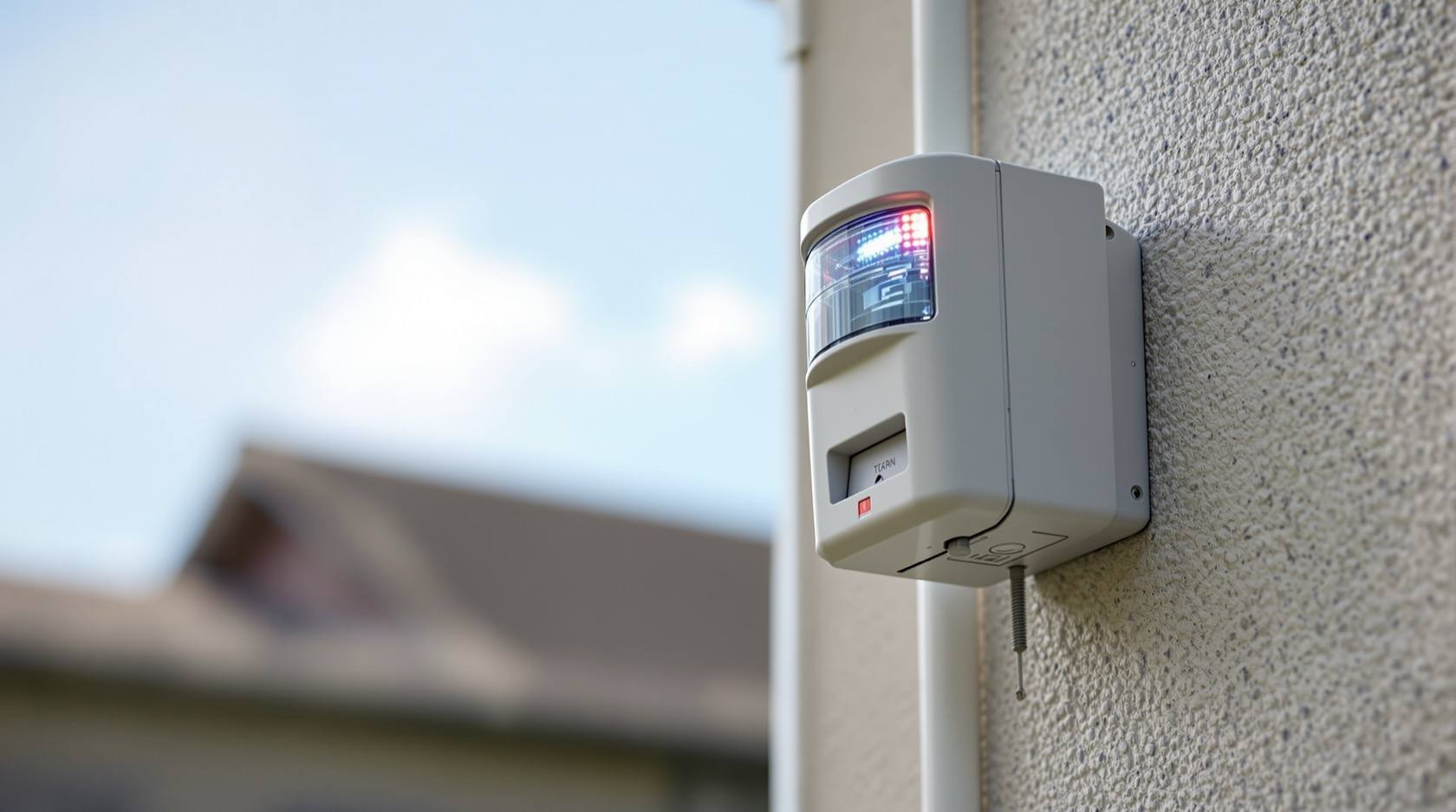
An alarm that detects but does not announce is worse than no alarm, because it lets you believe you are protected while it quietly fails at the one job that matters. The sensor sees the intruder, the panel registers the event, perhaps a light blinks or your phone even pings, and yet the siren, the loud outdoor bell-box that is supposed to scare the intruder off and wake the street, stays silent or gives only a weak, apologetic whine. The good news is that this is almost always a simple, findable fault, and the most common cause of all is a setting, not a broken machine.
This guide walks you through it in order, from the cheap and obvious to the rare and hardware-deep. Most people fix this in the first two checks. The single most important hidden failure to rule out, and the one this guide keeps returning to, is a dead backup battery inside the outdoor siren: it sounds perfectly on the bench and on mains, then falls silent at the exact moment a burglar cuts the power. We will test for that specifically.
Scope and safety. This is a diagnostic guide for a homeowner with an intruder (burglar) alarm, not an installation manual and not a price or buying guide. The safe do-it-yourself checks here are limited to settings, an app or keypad, a panel siren test, swapping an accessible battery and reseating a loose plug-in terminal. Anything involving mains electrical work, opening a sealed outdoor bell-box, working at height on a ladder, or a suspected panel fault belongs to a qualified alarm technician or your annual maintenance (AMC) contractor. When "repair versus replace" comes up, defer the numbers to a cost or lifecycle guide. Nothing here is a fire-alarm instruction; a fire sounder fault must be fixed by a competent person, never simply muted.
First, be a good neighbour before you make noise
A siren is loud on purpose. Before you run any test that could sound the outdoor bell-box, tell the people around you and, if you have monitoring, tell your monitoring station or put the account on test. A five-second test at a sensible hour is courteous; a full-volume bell-box at 11 at night, unannounced, is not. Keep every test brief. For the full etiquette and method of proving a siren without alarming the colony, see the security siren testing guide.
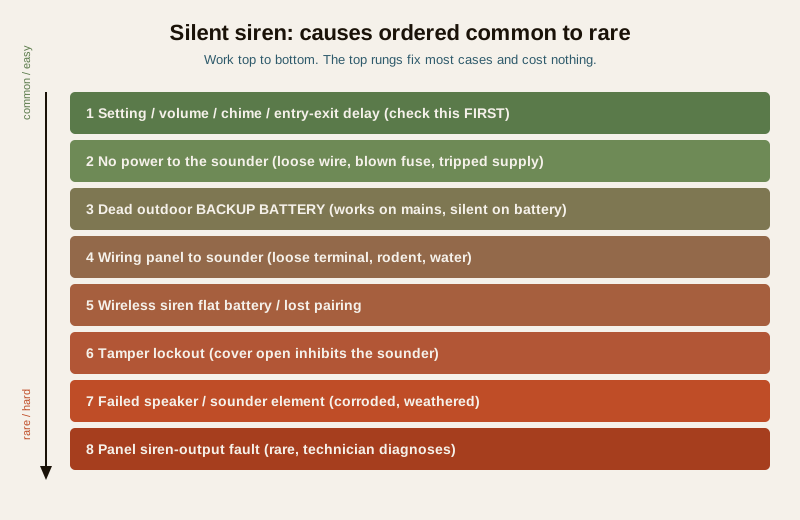
The likely causes, ordered common to rare
Work top to bottom. The top three fix the large majority of silent-siren cases and cost nothing.
| Likely cause | Why it silences the siren | The fix |
|---|---|---|
| Silenced, test, chime-only or low-volume setting | The alarm is in a mode that suppresses or lowers the sounder, or an entry-exit delay is masking it | Check the mode and volume in the app or keypad first |
| No power to the sounder | A loose or cut wire, a tripped supply or a blown fuse means the panel commands a siren that has no power | Check the supply and the visible connection |
| Dead outdoor backup battery | The bell-box has its own battery; when it fails the siren works on mains but goes silent when mains is cut | Test on battery; replace the bell-box battery on schedule (usually professional) |
| Wiring between panel and sounder | A loose terminal, a rodent-chewed cable or water ingress breaks the run | Reseat an accessible terminal; in-wall wiring is professional |
| Wireless siren flat battery or lost pairing | A battery-powered siren whose cell is flat, or that has lost its radio link to the panel | Replace the battery; re-pair per the manual |
| Tamper lockout | An open tamper switch can inhibit the sounder until it is cleared | Close the cover and reset; if it recurs, call the installer |
| Failed speaker or sounder | The piezo or speaker element itself has corroded or failed, often from weather | Replace the unit (professional for an outdoor bell-box) |
| Panel siren output fault | The panel's bell or siren terminal has failed | Diagnose and repair by a technician |
The step-by-step diagnostic path
Follow this as a decision tree. Each step tells you where to go next.
Step 1 — Run the panel siren test
Almost every alarm has a built-in siren or bell test in its engineer or user menu, or a test button in the app. Use it. This is the cleanest single question you can ask the system, because it commands the siren directly without needing an intruder.
- If nothing sounds at all — the problem is power, wiring, a dead sounder or the panel output. Go to Step 2.
- If it sounds but is weak, muffled or thin — suspect a failing sounder, a corroded speaker, a partly failed battery driving it, or water in the unit. Go to Step 4.
- If it sounds fine on test — the siren hardware is healthy, so your problem is a setting or a masking delay. Go to Step 5.
Step 2 — Which sounder is silent, indoor or outdoor?
Most Indian home systems have an indoor sounder (often inside the panel or a small internal speaker) and an outdoor bell-box high on the wall. Listen carefully during the test.
- If the indoor one sounds but the outdoor bell-box does not — the fault is specifically the outdoor unit: its power feed, its wiring run up the wall, its own battery, or the bell-box itself. That unit is at height and often sealed, so most of this is professional.
- If neither sounds — suspect the shared power feed, a blown sounder fuse, or the panel's siren output. Check the obvious supply and any accessible, clearly labelled fuse per your manual before concluding.
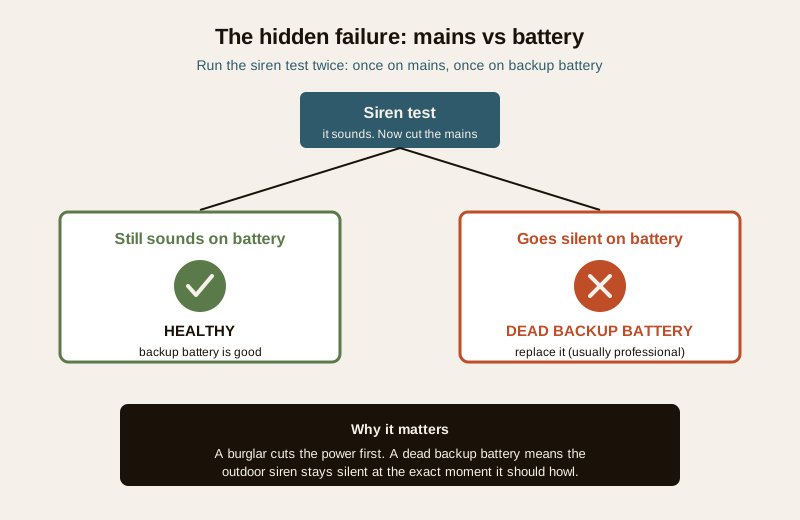
Step 3 — Does it sound on mains but go silent on battery?
This is the crucial hidden-failure test, and the reason a "working" siren still fails a real break-in. A burglar's first move is often to cut the power; a healthy outdoor siren is designed to keep howling on its own internal battery for exactly that reason. If that battery is dead, everything looks fine until the night it matters.
With the system armed to test and the siren proven to sound, have a competent person briefly remove the alarm's mains supply (at the plug or the dedicated supply, never by opening anything) and see whether the siren still sounds on battery. If it dies the instant mains is removed, the backup battery is dead and must be replaced. Because the battery usually lives inside a sealed bell-box mounted high on the wall, treat the replacement itself as a professional job.
Step 4 — A weak or wireless siren
If the siren sounds but is feeble, and the unit is a wireless (battery-powered) siren, replace its battery first; a flat or failing cell is the commonest cause of a weak wireless sounder, and many will chirp or show a low-battery fault. If a wireless siren has gone completely silent, it may also have lost its radio pairing with the panel, especially after a battery change; re-pair it following the manufacturer's manual. If a wired sounder is weak even on a fresh battery, suspect a corroded speaker element or water ingress, which is a unit replacement.
Step 5 — The setting was hiding it all along
If the hardware tests fine, the alarm was simply not being told to sound. Check, in the app or on the keypad:
- Silenced, silent-alarm or test mode left switched on.
- A chime-only or low-volume mode, common on systems that double as a door chime.
- The volume turned down.
- An entry or exit delay long enough that you disarmed before the siren ever fired, making you think it never worked. Trigger a genuine full alarm (briefly, neighbours warned) rather than only watching the delay.
Safe do-it-yourself versus call a professional
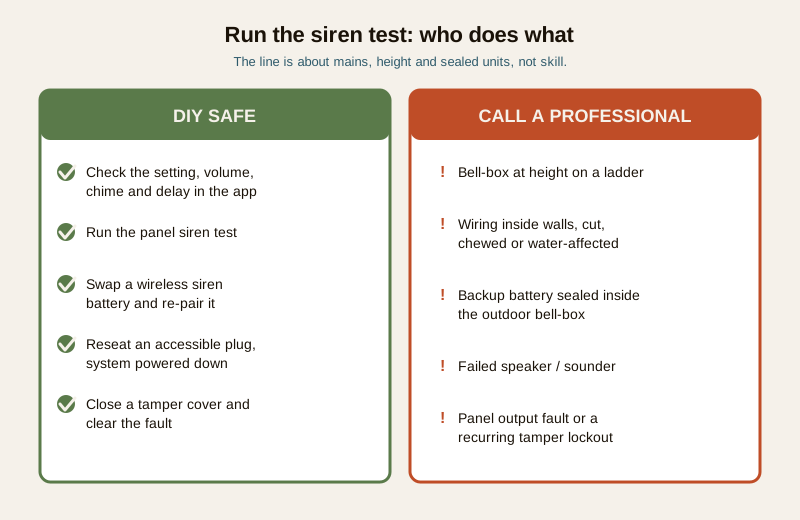
Keep firmly to your side of this line. The split is not about capability; it is about mains voltage, height and sealed equipment.
Safe to do yourself
- Check and correct the mode, volume, chime and delay settings in the app or keypad.
- Run the built-in panel siren or bell test.
- Replace the battery in an accessible wireless siren and re-pair it per the manual.
- Reseat a loose plug-in terminal or connector you can reach without tools or a ladder, with the system powered down first.
- Close a tamper cover and clear the resulting fault.
Call a qualified technician or your AMC
- A dead or silent outdoor bell-box that is mounted at height.
- Any wiring inside walls, cut, rodent-chewed or water-affected runs.
- Replacing the backup battery sealed inside an outdoor bell-box.
- A failed speaker or sounder element.
- A suspected panel siren-output fault, or a tamper lockout that keeps returning.
- Anything requiring a ladder, opening a sealed unit, or touching the mains supply.
Prevention so it does not happen again
A silent siren is nearly always a battery or a setting that drifted while no one was listening. The cure is a short, regular habit.
- Test the siren monthly, briefly and with neighbours or monitoring warned, using the panel test. A siren you never test is a siren you only discover is dead during a burglary. The method is in the security siren testing guide.
- Include the on-battery test in that routine at least a few times a year, so a dead backup battery cannot hide.
- Replace the outdoor bell-box backup battery on schedule, before it fails, as part of your servicing rather than after a silent night. This and the wider service rhythm sit in the burglar alarm maintenance guide.
- Confirm the mode after any change to the app, keypad or a power cut; settings can revert or be left in chime or silent mode.
- Know your siren. How loud a compliant audible sounder should be, and how indoor and outdoor units are meant to work together, is covered in the audible sirens guide.
A short checklist
- [ ] Warn neighbours or monitoring, then run the panel siren test.
- [ ] Nothing at all? Check power, the sounder fuse and connections; indoor versus outdoor.
- [ ] Sounds on mains but not on battery? Dead backup battery, replace it (usually professional).
- [ ] Weak or wireless? Replace the battery and re-pair; a weak wired unit is likely a failed speaker.
- [ ] Sounds fine on test? It was a setting: mode, volume, chime or delay.
- [ ] Height, walls, sealed units or mains? Call your installer or AMC.
Silence is not the same as safety. A siren that has been proven, on mains and on battery, is one of the cheapest and most effective deterrents a home has. For alarms that sound when they should not rather than staying silent, and for the wider family of alarm faults, start from the security system troubleshooting pillar or the security troubleshooting hub. For the complete home-security picture, see the security guides home.
Export this guide
Related Guides — Deep-dive reading
Security Siren Testing in India (2026): Make Sure the Alarm Can Actually Be Heard
The panel can detect a break-in perfectly and the whole system still fails if the siren does not sound. A homeowner's routine for testing indoor sounders, the outdoor bell-box, its backup battery and tamper, wireless sirens and the strobe — loudly, safely and without upsetting the neighbours.
SecurityBoom Barrier Not Operating (2026): Diagnose a Stuck or Dead Parking Gate Arm
A calm, ordered diagnostic path for a facility or security team when an apartment, office or parking boom barrier will not raise or lower, is stuck up or down, or will not respond — starting with the manual release so a jammed arm never traps a vehicle or blocks a fire lane, then power, trigger, safety loop and mechanical causes, and a clear line between safe checks and technician-only work.
SecurityDoor Sensor Not Responding (2026): Fix a Contact That Won't Report in India
Your door or window contact sensor stops telling the alarm when it opens and closes, or shows offline, open-fault or tamper. A calm, ordered diagnostic for Indian homes: a magnetic reed contact is a simple device, so the causes are simple. The flat battery, the misaligned halves, the lost pairing, the loose wire and the zone setting, what you can safely fix yourself, and when to call your installer.
SecurityRelated Tools — Try Free
Security System Cost Estimator
Estimate the all-in capex with GST, annual running cost and 5-year total cost of ownership of a home or building security system.
Cost EstimatorAccess-Control Battery-Backup Calculator
Size the standby battery so an access system keeps running through a power cut, with an egress life-safety note.
Battery BackupBurglar Alarm System Selector
Answer a few questions about your property, cabling, coverage, monitoring and power and get the right burglar alarm — wired / wireless / hybrid, self or professionally monitored — with the design non-negotiables.
Alarm Selector