
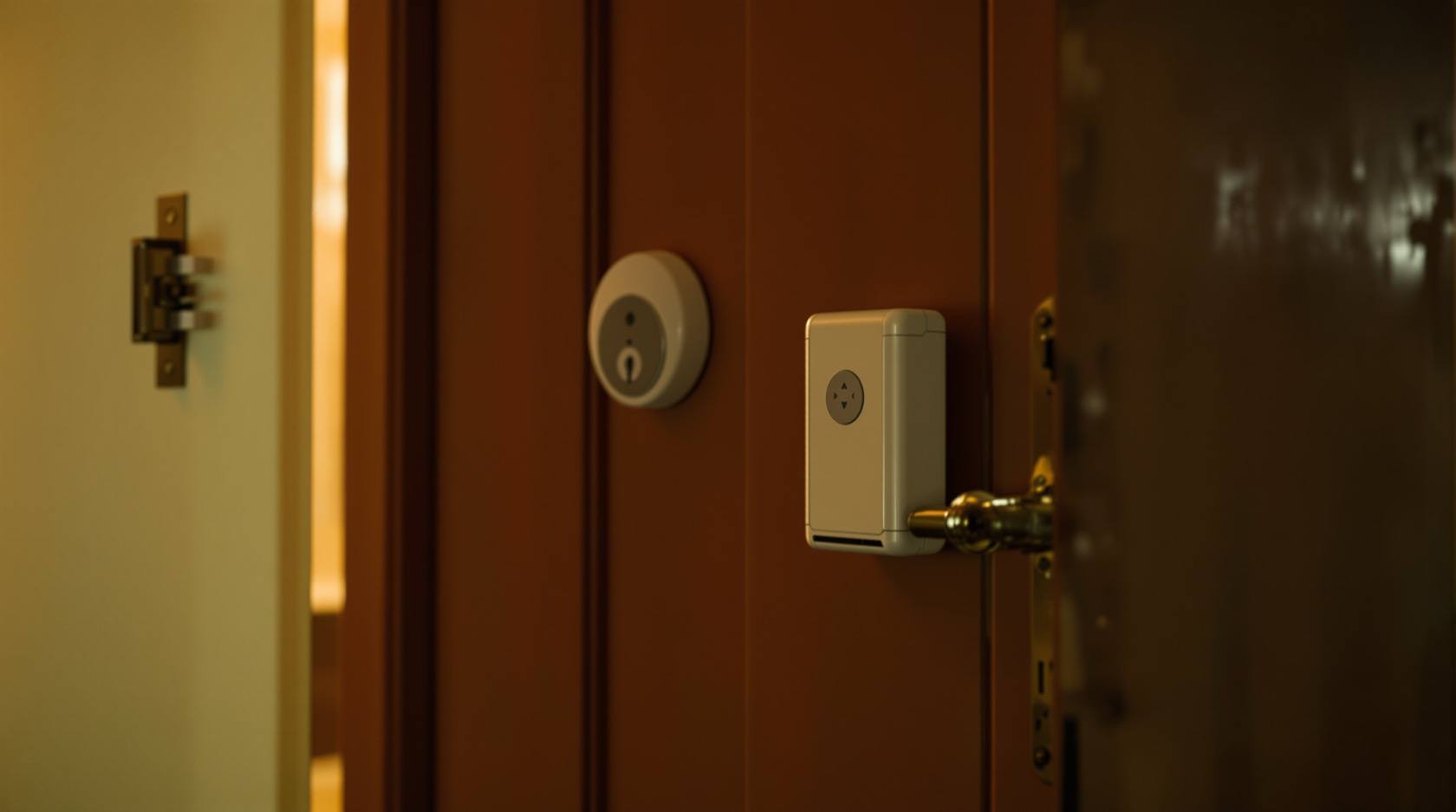
Security for Tenants in India (2026): Protect Your Rented Home and Your Privacy Without Losing the Deposit
Renting is home too. This guide covers a tenant's twin needs - securing a rented home with reversible, take-it-with-you measures the lease allows, and standing on your privacy rights so a landlord cannot surveil you inside your own walls. Practical, India-real, and firmly on the renter's side.
Renting is home. The flat may not be yours to own, but it is entirely yours to feel safe in - and to keep private. Millions of people in India rent: the young professional in a new city, the family between houses, the couple saving for their own place, the student sharing a two-bedroom. Renting brings one thing owning does not: you have to secure a home you are not allowed to alter freely, and you have to do it under the eye of a landlord who is not always on your side. This guide holds both halves at once. It shows you how to protect a rented home with measures that are reversible and portable - things you add without damaging the property or breaking the lease, and take with you when you move - and it stands firmly on your privacy rights as a tenant, because your rented home is your private space, not the landlord's to watch.
It sits under the security for specific users pillar and the for-users sub-hub, and it is the companion of the security for landlords guide written for the other side of the same relationship. Reading both is the fairest way to understand where the line falls.
Scope and safety. This is security for you as a renter, on your own terms - never a device that traps you and never surveillance done to you. Life-safety wins over locks: any lock you add must let you out fast in a fire or a medical emergency, and you must never chain or block your own escape route. Cameras, video doorbells and smart locks capture personal data under the Digital Personal Data Protection Act, 2023 - keep your own devices pointed at your own space, and know that a landlord watching you inside your rented home is a privacy violation, not a landlord's right. For anything fixed to the building, get the owner's written permission first. This is educational guidance, not legal advice; where a tenancy dispute, a lease clause or a police matter arises, take proper legal advice and follow your local tenancy and rent-control law.
The two things a tenant is really balancing
Every decision in this guide comes back to two facts that sit in tension.
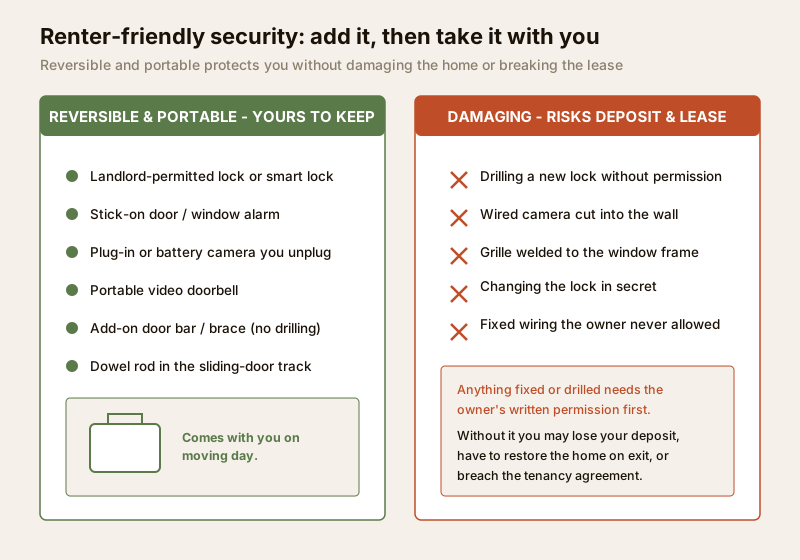
First, it is not your building. You cannot drill new locks, cut in wired cameras, weld a grille or replace the door leaf without the owner's say-so - and doing it in secret risks your deposit, a demand to restore the home on exit, or a breach of your agreement. So your security has to be reversible and portable: it protects while you live there and leaves no mark when you go.
Second, it is still your home. The law and ordinary decency treat your rented space as private. A landlord does not get to enter whenever they like, cannot put a camera inside your walls, and cannot demand the footage from your own camera. Owning the building is not the same as owning your privacy.
Hold those two together and the whole guide follows: add protection lightly, and defend your privacy firmly.
1. Renter-friendly security you can add - and take with you
The trick is to choose measures that stand alone, stick on, plug in or slot in - not ones that cut into the building. Everything here protects a rented home and comes off cleanly when you leave.
- A better lock, the reversible way. If the existing lock is weak, the best upgrade is often a like-for-like swap the owner agrees to - a stronger cylinder or a good deadbolt fitted into the existing holes, or a smart lock that many models let you install over the current one and reverse later. The important word is permitted: ask the owner, get it in writing, and keep the original lock to refit on exit. The complete guide to smart locks and the door and window security library cover the choices and how a renter can add one without altering the door.
- Portable and stick-on alarms. A stick-on door or window contact alarm, or a small standalone motion alarm on a shelf, screams when a door or window opens - no wiring, no drilling, peel-off adhesive, and it drops in your bag on moving day. This is the single easiest layer a tenant can add.
- A camera or video doorbell you own and remove. A plug-in or battery camera set on a shelf or a stick-on mount, or a portable video doorbell that clips on rather than screwing into the frame, gives you eyes on your own door and living space - and unplugs in a minute when you leave. Keep it pointed at your own space, never a neighbour's door or a shared corridor into other homes. The smart home security library covers building a light, renter-friendly kit that is all yours.
- Door reinforcement that does not alter the structure. An add-on door bar, a portable door brace, or a jammer that props under the handle strengthens a weak door from the inside without a single screw. Just make sure whatever you use can be released instantly from inside so it never blocks your own escape.
- Block a sliding door. The classic renter fix: a dowel rod or a cut broomstick laid in the track stops a sliding door or window being forced open, costs almost nothing, and leaves when you do. A track lock that clamps on without drilling does the same.
The rule of thumb: if it needs a drill, a weld or a permanent wire, it needs the owner's written permission. If it sticks, plugs, slots or stands on its own, it is yours to add and yours to take.
| You want to... | Renter-friendly way (reversible / portable) | Needs written landlord permission |
|---|---|---|
| Strengthen the front-door lock | Add-on smart lock over the existing one; keep the original to refit | Drilling in a new deadbolt or replacing the lock body |
| Get an alarm | Stick-on contact alarm, standalone motion alarm | Wired, fixed alarm panel and sensors |
| Add a camera or doorbell | Plug-in / battery camera, clip-on video doorbell | Camera cut into the wall, wired to mains |
| Reinforce the door | Portable door bar or brace (releasable from inside) | Steel plates or a security door fixed to the frame |
| Secure a sliding door / window | Dowel rod in the track, clamp-on track lock | Grille welded or bolted to the frame |
2. Moving in: assume old keys and codes exist
On the day you get the keys, one uncomfortable truth applies to almost every rental: you are probably not the only person who can get in. The landlord keeps a set. The previous tenant may not have returned every copy. A broker, a cleaner or a helper may have had one cut. If the door has a smart lock, an old code may still work. None of this means anyone intends you harm - but a home is only as secure as the number of people who can open it, and on day one that number is unknown.
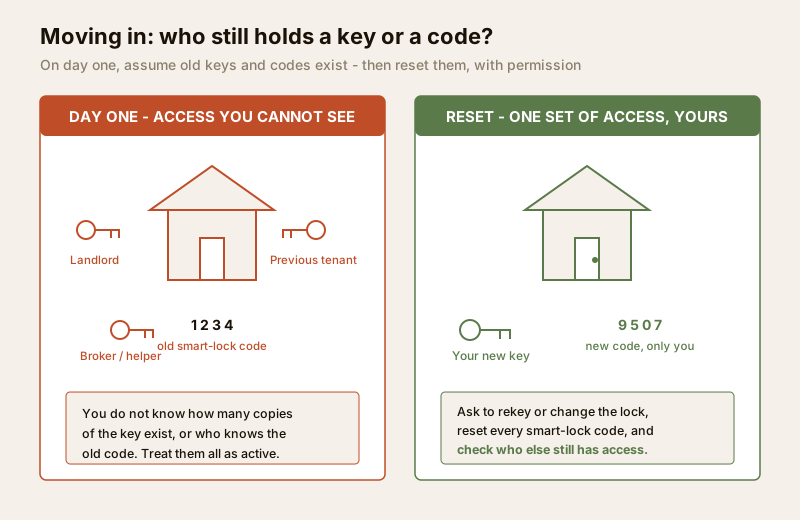
So the first security task of a new tenancy is to reset access - politely, and with the owner's agreement.
- Ask to rekey or change the lock. The cleanest fix is to have the lock rekeyed (the cylinder re-pinned so old keys stop working) or the lock changed, with the landlord's permission and, where agreed, keeping a copy for the owner. Rekeying is cheaper than replacing and usually reversible. Put in writing who then holds keys.
- Change every smart-lock code. If there is a smart or keypad lock, delete all existing codes and set your own on day one, including any installer or default master code. The complete guide to smart locks explains how to clear old users and audit who has digital access.
- Ask who else has access - and get the answer in writing. How many keys exist, who holds them, whether a society office or guard keeps a spare, whether the owner will keep one and on what terms. It is a fair question and a reasonable landlord will answer it.
Doing this in the first week, with permission, is the highest-value security move a tenant makes - it closes a door you cannot see.
3. Your privacy rights as a tenant
This is the half of the guide the renter most needs and hears least about. Read it slowly, because it is where tenants are most often wronged.
A landlord may not enter your rented home whenever they wish. Entry requires proper advance notice and a genuine reason, at a reasonable time - not at will, not in secret, and not by keeping a key to let themselves in. A landlord may not install cameras inside your rented home - not in the living room, not in a bedroom, not in a bathroom, not anywhere within the space you rent. A landlord cannot demand the footage from your own camera or your video doorbell; that is your personal data. Surveillance of a tenant inside their home is a privacy violation under the Digital Personal Data Protection Act, 2023 and under ordinary tenancy norms - the fact that they own the building does not give them the right to watch you live in it.
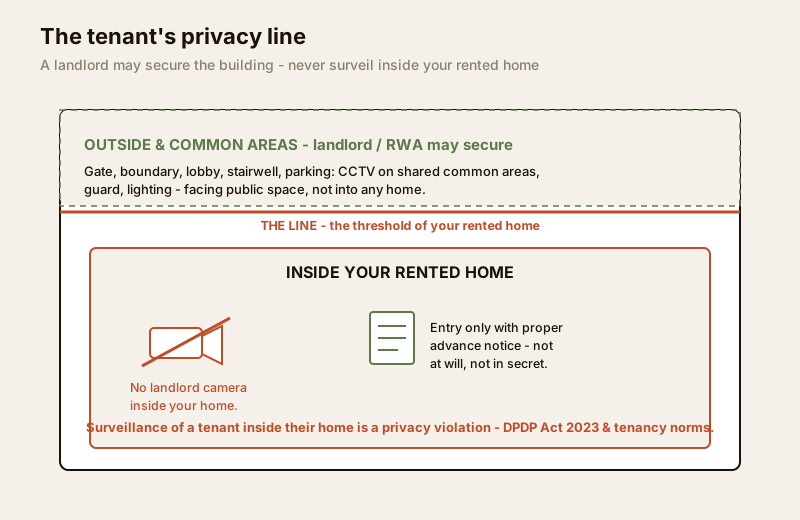
Where does that leave the landlord's legitimate interest? On the outside. An owner or the residents' association may reasonably secure the building's shared parts - a camera at the gate or in the lobby facing common space, a guard, good lighting - because those protect everyone. The line is the threshold of your home. Beyond it, the space is yours and unwatched. If a landlord has placed a camera that sees into your rented space, or into a shared area in a way that fixes on your door and your comings and goings, that is over-surveillance, and you are entitled to raise it.
To go deeper on the principles and the law: smart security privacy sets out how the DPDP Act applies to home cameras and data; video door phone privacy covers doorbell and door-camera views and where they may and may not point; and the security for landlords guide sets out the same boundary from the owner's side, so both parties can see the fair middle.
If you install your own camera as a tenant, hold yourself to the same standard you expect of the landlord: your own space only, never a neighbour's door or window, and mind the DPDP duties that come with recording anyone at your threshold.
4. The rental agreement: settle the security terms in writing
Most tenant-landlord security disputes come from things that were never written down. The agreement is where you prevent them. Whether you are signing a fresh lease or renewing, get these points stated clearly - referencing your local tenancy and rent framework, and the model tenancy approach many states follow.
- Permitted security changes. Spell out what you may add and remove - a smart lock over the existing one, portable alarms and cameras, a rekey - and confirm you will restore the original on exit. Written permission for anything fixed protects your deposit.
- Who holds keys, and how many. Record how many keys exist, who keeps them (including whether the owner retains one and on what terms), and that the lock will be rekeyed or codes reset for you at handover.
- Notice for entry. Put the notice period and reasonable-time rule for any landlord entry in the agreement - inspection, repairs, showing the flat to a new tenant - so it is agreed, not improvised.
- Responsibility for building security. Clarify who is responsible for the security of the building fabric and common parts - the door, grilles, the gate, common-area lighting and any shared CCTV - so a broken lock or a dead corridor light has a clear owner.
- Restoring on exit. Agree that reversible additions come off and the original fittings go back, and that doing so returns the deposit in full. Photograph the state at move-in so "restored" is not a matter of memory.
A short, clear clause on each of these turns a vague relationship into a fair one, and gives you something to point to if a dispute ever arises.
5. Shared-building security: your rights and the RWA
If you rent in an apartment or a gated society, a whole layer of security is provided around you - a guard, a gate, boundary lighting, common-area CCTV - and as a resident you benefit from it and have a stake in it, even as a tenant. A few things are worth knowing.
- You are a resident, not an outsider. Living there, you are entitled to the security the society provides its residents - the guard's help, the gate, the lighting - and to raise a genuine safety concern (a dead camera at the gate, a broken lock on the stairwell door, poor lighting in the parking) with the managing committee or the owner, who can take it to the residents' association.
- Common-area CCTV is for common areas. A society may run cameras on shared space - the gate, lobby, parking, corridors - facing public parts of the building. Those cameras should not fix into any home, and the same DPDP-minded limits apply to the RWA as to anyone else.
- Work through your landlord where the society requires it. Some societies deal formally only with owners. If a building-security matter needs the committee, your landlord may need to raise or back it - one more reason the agreement should make clear that building security is the owner's responsibility.
The gated communities security guide covers how the guard, the gate, the RWA and shared CCTV are meant to work, and how a resident - owner or tenant - gets the most from them.
6. Deposit and handover: leave no mark, keep your money
The reversible approach pays off at the end. When you move out, the goal is a home that looks exactly as it did when you arrived, so the deposit comes back whole.
- Restore every reversible change. Refit the original lock, remove the stick-on alarms, unplug and pack the cameras and doorbell, take out the door bar and the dowel rod. Peel adhesive cleanly. Nothing you added should remain.
- Document the condition - at both ends. Photograph or video the flat at move-in and at move-out, dated, so the state is a record, not an argument. This single habit settles most deposit disputes before they start.
- Hand back keys and confirm access is closed. Return every key, and if you set smart-lock codes, hand over or clear them as agreed so the next arrangement is clean. Get written acknowledgement that the home was returned in order and the deposit is due.
Because everything you installed was portable, none of it is lost - it moves to the next home with you.
7. If you live alone as a tenant
Many renters live by themselves, and a rented home adds a couple of wrinkles to living-alone security - a landlord with a key, a building you did not choose the locks for. The reset-access step in section 2 matters most of all here: rekey or change codes on day one so you are genuinely the only one who can walk in. Beyond that, the calm habits of living alone apply fully - verify before you open, keep help within reach, a daily check-in with someone who would notice you go quiet. The security for people living alone guide covers them in depth, and security for women living alone goes further for that situation, including the discretion and the deflections that keep a lone renter's circumstances private.
8. Notifications to your own phone
Because your security kit is portable and yours, make it report to you. A plug-in camera, a video doorbell or a stick-on sensor that pings your phone means that wherever you are - at work, travelling, or simply out - you learn at once if your door opens or someone is at it, and you keep the footage under your own control. This is doubly useful for a tenant: it is your evidence, in your hands, not the landlord's. The remote security monitoring guide covers keeping an eye on a rented home from afar, and smart security notifications covers routing alerts to your phone and, if you wish, a trusted friend. Keep every account and its data yours - it moves with you to the next flat.
A tenant security and rights checklist
Two lists in one - the securing half and the rights half. Walk your own tenancy through it.
| Area | Check | Done |
|---|---|---|
| Reversible upgrades | Portable alarms, plug-in camera or doorbell, add-on lock over the existing one | |
| Written permission | Owner's written OK for anything fixed or drilled; original fittings kept to refit | |
| Sliding door / window | Dowel rod or clamp-on lock in the track; no drilling | |
| Escape | Every lock and door bar releases instantly from inside - nothing blocks your exit | |
| Reset access | Lock rekeyed or changed with permission; all smart-lock codes reset day one | |
| Who has keys | You know how many keys exist and who holds them, in writing | |
| Entry notice | Agreement states advance notice and reasonable time for any landlord entry | |
| No inside cameras | No landlord camera anywhere inside your rented home; footage from your camera is yours | |
| Your own camera | Points at your space only, never a neighbour or shared corridor; DPDP-minded | |
| Agreement clauses | Permitted changes, key-holding, entry notice, building-security responsibility, restore-on-exit | |
| Shared building | You know the guard and society; common-area CCTV faces common areas only | |
| Handover | Reversible changes restored; move-in and move-out documented; deposit confirmed due |
Test the home itself against the security layers with the home security risk scorecard.
Key takeaways
- Renting means securing a home you cannot alter freely - so choose reversible and portable. Stick-on alarms, plug-in cameras, a portable video doorbell, an add-on lock over the existing one, a dowel rod in the sliding track: protection you add without damage and take with you.
- Anything fixed, drilled or wired needs the owner's written permission - do it in secret and you risk your deposit, a demand to restore the home, or a breach of the lease.
- On day one, assume old keys and codes exist. Ask to rekey or change the lock with permission, reset every smart-lock code, and find out in writing who else has access.
- Your privacy is not the landlord's to take. A landlord may not enter without proper notice, may not install cameras inside your rented home, and cannot demand your camera footage - surveilling a tenant inside their home is a privacy violation under the DPDP Act 2023 and tenancy norms.
- Settle it in the agreement: permitted security changes, who holds keys, notice for entry, who is responsible for building security, and restoring the home on exit.
- Use the shared building - the guard, the gate, common-area CCTV facing common areas - and raise genuine safety gaps through the owner or the RWA.
- Leave no mark at handover: restore every reversible change, document the condition at both ends, and your deposit comes back whole while your kit moves on with you.
Where to go next
- Security for specific users - the pillar that frames home security around who lives in the home.
- Security for landlords - the same relationship from the owner's side, so both parties can see the fair line.
- Complete guide to smart locks and the door and window security library - adding a lock a renter can reverse, and resetting access on move-in.
- Smart home security - a light, portable kit that is all yours and moves with you.
- Smart security privacy and video door phone privacy - how the DPDP Act applies to home cameras and where a doorbell may and may not point.
- Gated communities security guide - your rights around the guard, the gate, the RWA and shared CCTV as a resident.
- Security for people living alone and security for women living alone - deeper habits for a lone renter.
- Remote security monitoring and smart security notifications - keeping an eye on a rented home and routing alerts to your own phone.
- Home security risk scorecard - test the home against these layers.
References
- Digital Personal Data Protection Act, 2023 - the framework under which cameras, video doorbells and smart locks handle personal data; it underpins a tenant's protection from being surveilled inside their rented home and a renter's own duty to keep their devices minimal, consented and pointed at their own space. Verify the current text and any rules before relying on it.
- Model Tenancy Act and state tenancy / rent-control law - the framing many Indian states follow for entry notice, deposits, and the balance of landlord and tenant rights; confirm the specific law and any registration requirement that applies where you rent.
- National Building Code of India (SP 7), Bureau of Indian Standards - fail-safe egress and life-safety provisions that any lock, door bar or security addition in a rented home must respect so a tenant is never trapped inside; verify the current edition via the BIS catalogue: https://www.services.bis.gov.in/
- Manufacturer specifications - confirm on the maker's own datasheet that a device suits a renter: a lock that fits over the existing one and reverses cleanly, a camera or doorbell that mounts and removes without damage, an alarm that sticks on, and any code-reset and account controls that keep the data yours.
This is an educational overview, not legal advice. A tenant's rights on entry, deposits, cameras and permitted changes are governed by the Digital Personal Data Protection Act, 2023 and your local tenancy and rent-control law; confirm what applies where you rent, put security terms in the agreement in writing, and take proper legal advice for any dispute. Verify any standard's current status via the BIS catalogue before you rely on it.
Export this guide
Related Guides — Deep-dive reading
Security for Landlords in India (2026): Protect the Property, Respect the Tenant's Privacy
How an Indian landlord can lawfully secure a rented property - the exterior, boundary, entrance, common and shared areas - while never crossing the hard line into a tenant's private home. Verification done respectfully, agreement clauses that hold, rekeying between tenants, and common-area CCTV run within the DPDP Act.
SecuritySecurity Systems in Rented Buildings in India (2026): Tenant, Landlord and the Fixtures
You want your rented home or shop to feel secure, but you do not own the walls. Here is how tenants and landlords in India can add cameras, locks and alarms fairly — reversibly, respectfully, and always in writing.
SecuritySecurity for People Living Alone in India (2026): Calm, Practical Habits When There Is No Second Person to Notice
Living alone is an ordinary and growing part of Indian life - the student in a new city, the working single, the elder whose children are abroad, the person after a separation. It does not call for fear. It calls for a few deliberate habits, because there is no second person in the home to notice trouble, raise the alarm, or catch an accident. This is calm self-reliance, layer by layer.
SecurityRelated Tools — Try Free
Apartment Video Door System Planner
Enter flats, entrances, floors and guard desk for a first-pass building intercom plan — door stations, indoor monitors, guard station, the right architecture and an indicative cost band.
Building PlannerHome Security Risk Scorecard
Score your home across six security layers — perimeter, entry points, lighting, detection, alarm and habits — and get a prioritised action plan.
Security ScorecardPre-Possession Inspection Checklist
Inspect your flat before registration — 10 categories, 70+ checkpoints across legal, carpet area, structure, finishes, and deviations.
Homebuyer Checklist