
Urban Residential Layout DesignVolume 1 · Issue 4 · September 2026
Designing the Residential Layout
Between a single plot and the whole city sits the layout — the subdivision that becomes a neighbourhood. This is the 10-guide library on designing one well: the full process, then the principles, plotting, streets, density, walkability, open space, utilities and resilience that decide whether a layout becomes a place worth living in — written for India.
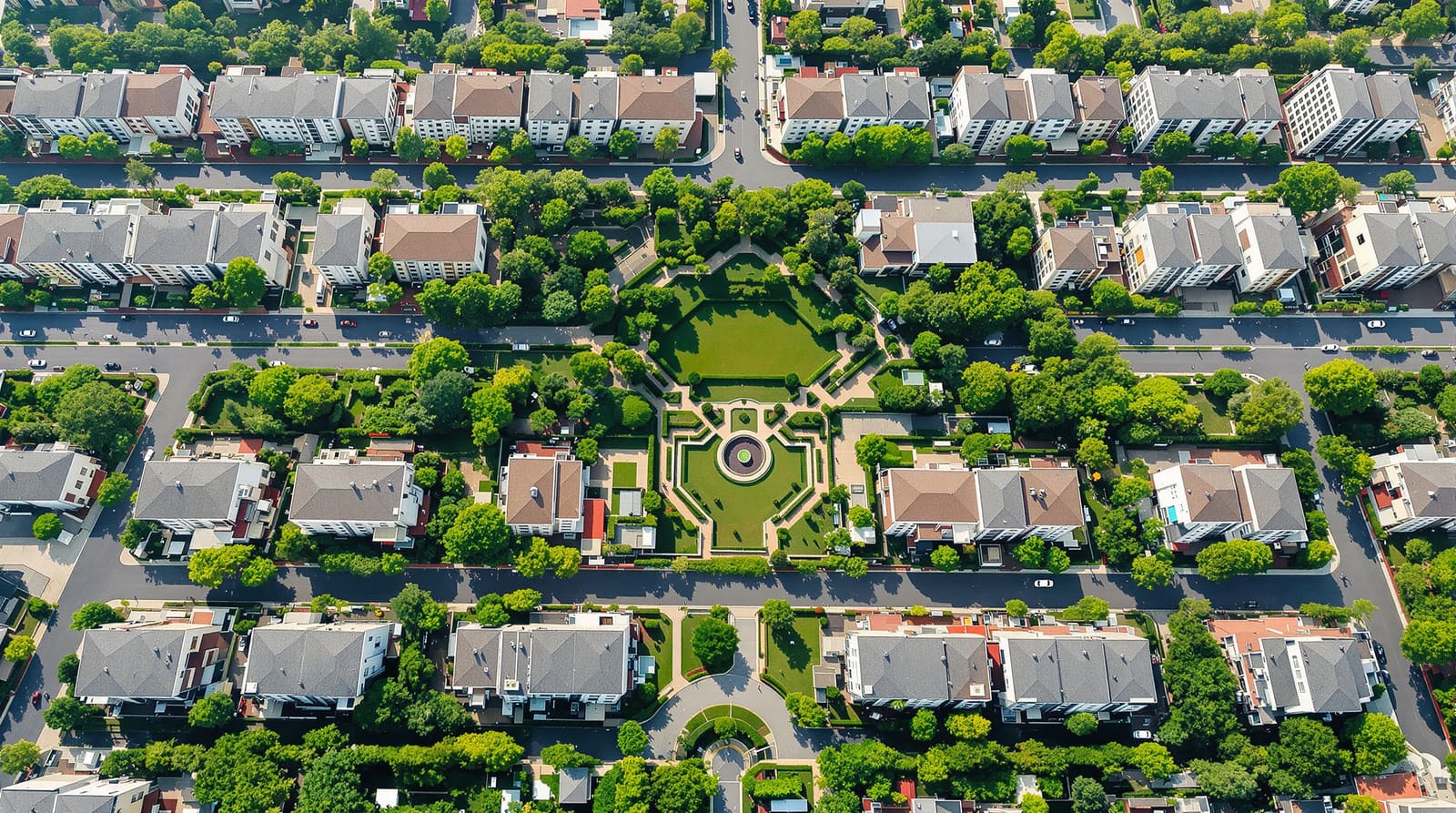
How to Design a Residential Layout
The complete process of designing a residential layout in India — reading the site and master plan, the road and circulation skeleton, plotting the land, open space and amenities, utilities, the approval and RERA path, and phased delivery — with links to deep-dives on each step.
Read itPrinciples & place
What good looks like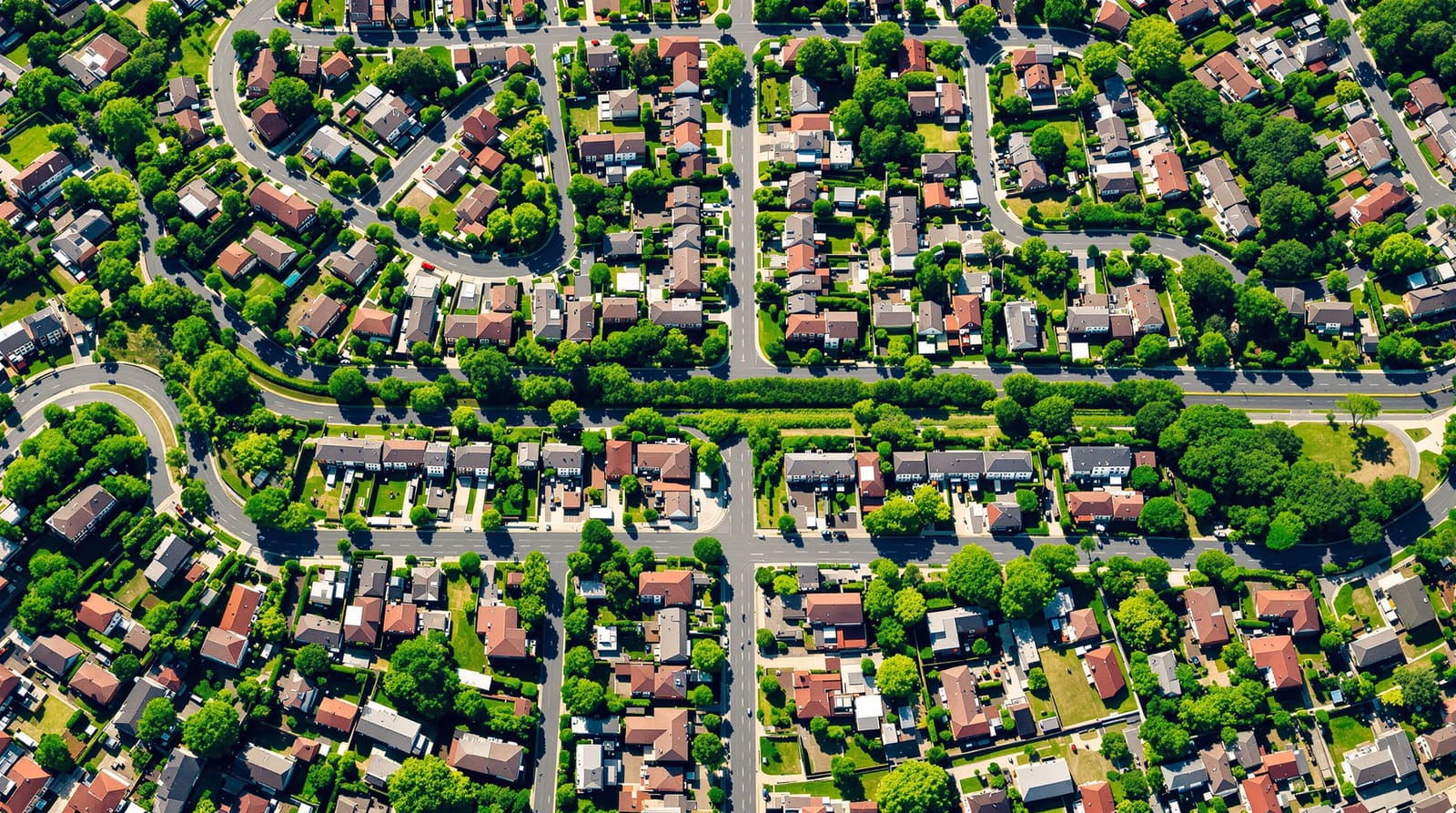 Principles01
Layout Planning Principles
The enduring principles behind a good residential layout — connectivity and permeability, a clear road hierarchy, legibility, a density gradient, mixed uses and plot sizes, a green network, climate orientation and good edges — and the three classic layout patterns compared, for Indian conditions.
 Placemaking02
Anatomy of a Good Neighborhood
What turns a residential layout into a place people love — Clarence Perry's neighbourhood unit, Jane Jacobs's eyes on the street and mixed uses, human scale, social infrastructure, identity and Kevin Lynch's legibility — and why old Indian mohallas often feel more alive than new gated layouts.
 Walkability03
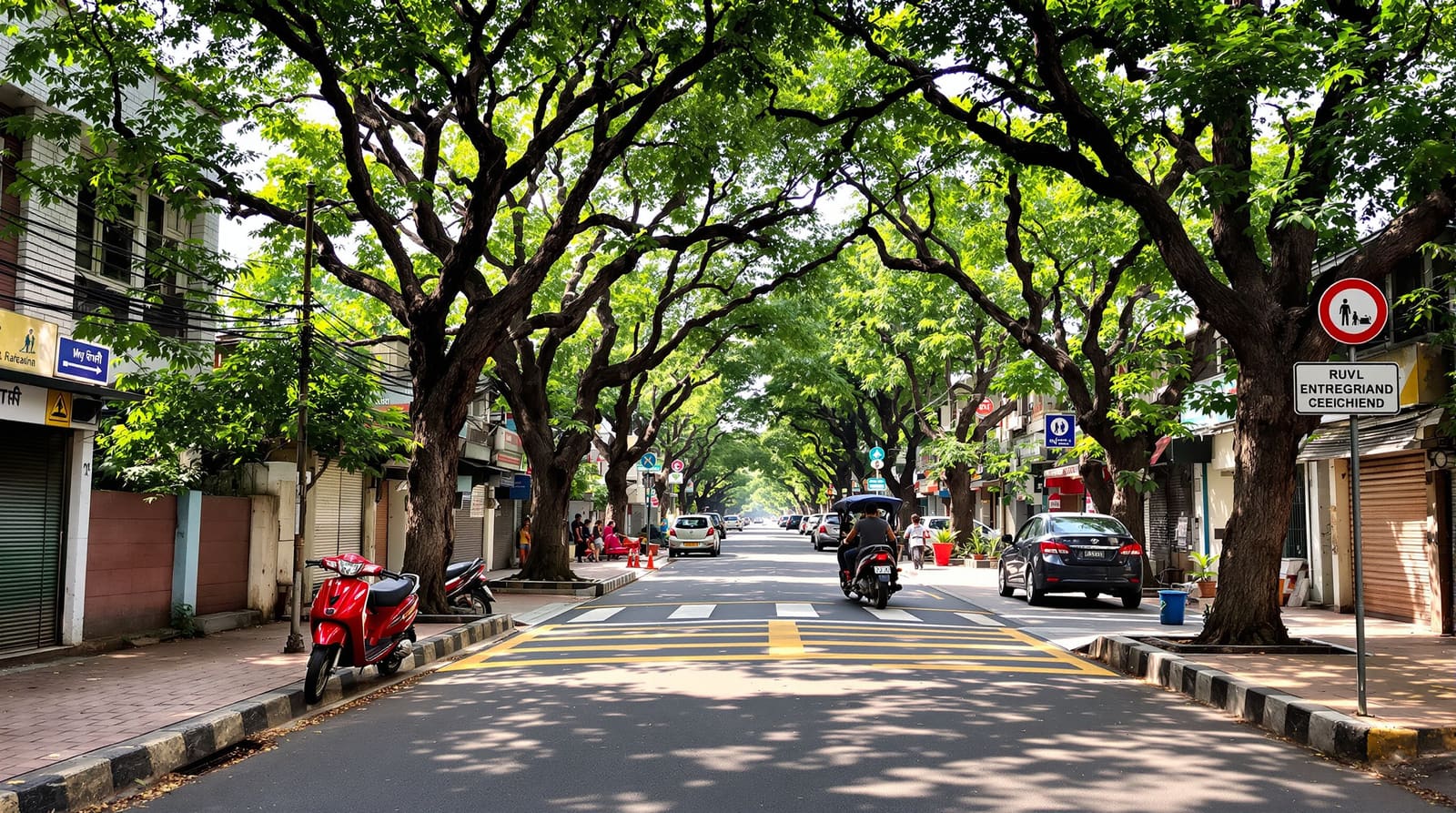
Walkable Neighborhood Design
How to design a residential neighbourhood people can and want to walk in — the 15-minute neighbourhood, Jeff Speck's four conditions for walkability, a continuous shaded pedestrian network, safe crossings, traffic calming, and designing shade for the Indian climate.
The bones of the layout
Plots, streets, density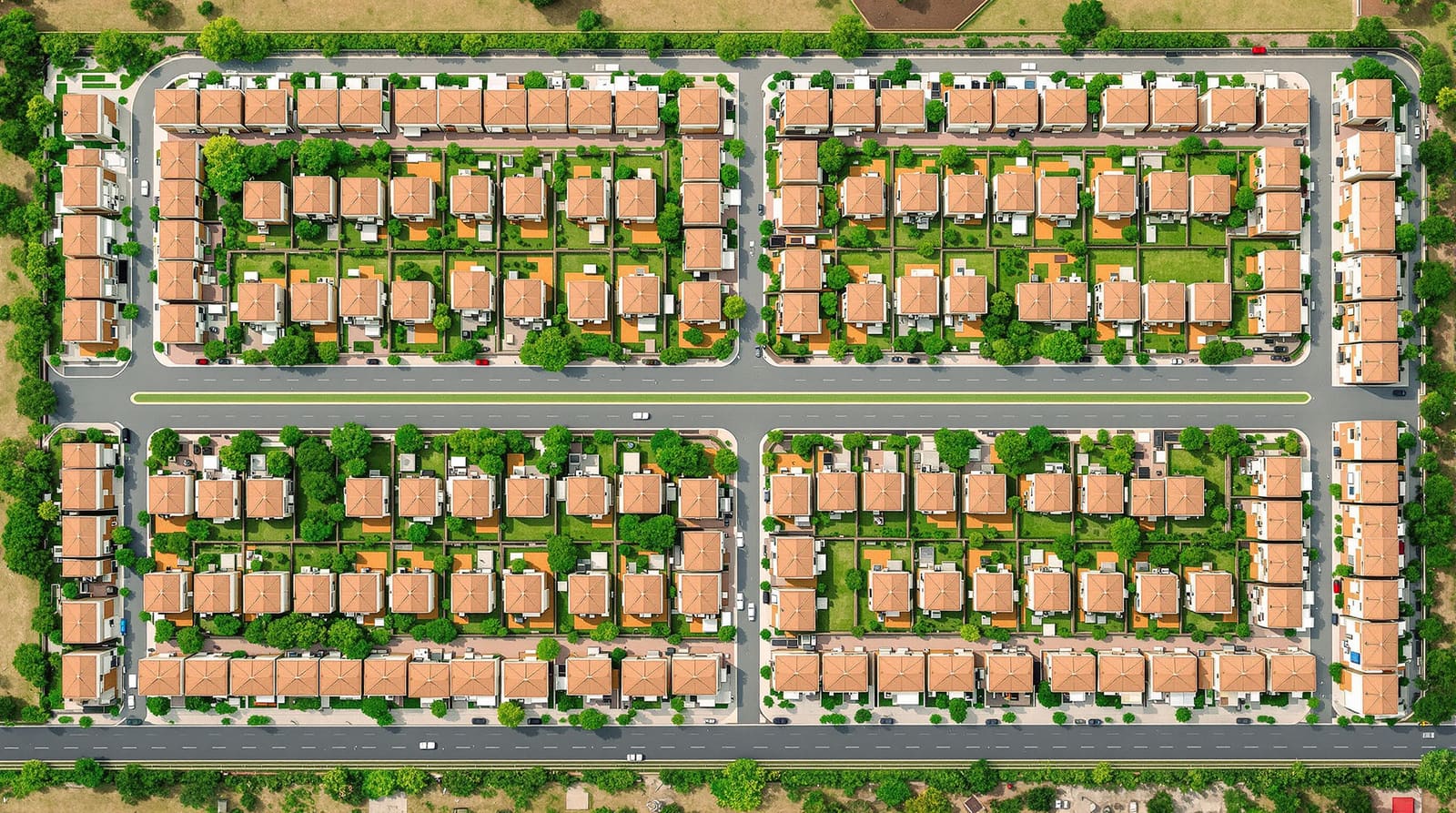 Plotting04
Residential Plot Distribution Strategies
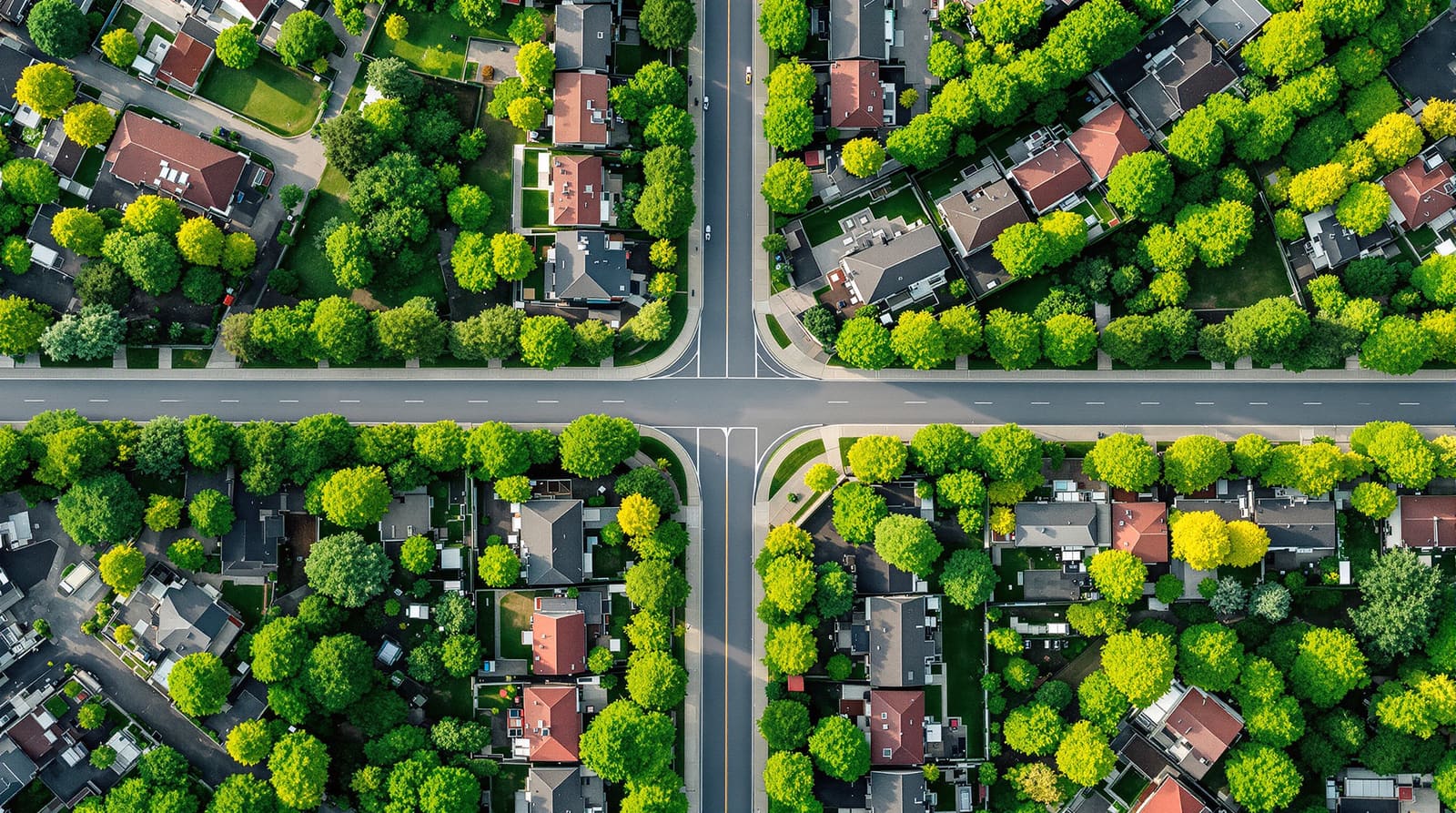
How developable land is divided into plots — the plot-size mix, frontage-to-depth proportions, single versus double-loaded streets, corner plots, the frontage-efficiency trade-off and the land budget of saleable plots versus roads, open space and amenities, for Indian layouts.
 Streets05
Street Hierarchy Explained
The hierarchy of streets in a residential layout — arterial, sub-arterial, collector, local street and access lane — explained with their function, typical right-of-way width, cross-sections, connectivity patterns and junction types, and the movement-versus-access trade-off, for Indian conditions.
 Density06
Residential Density Planning
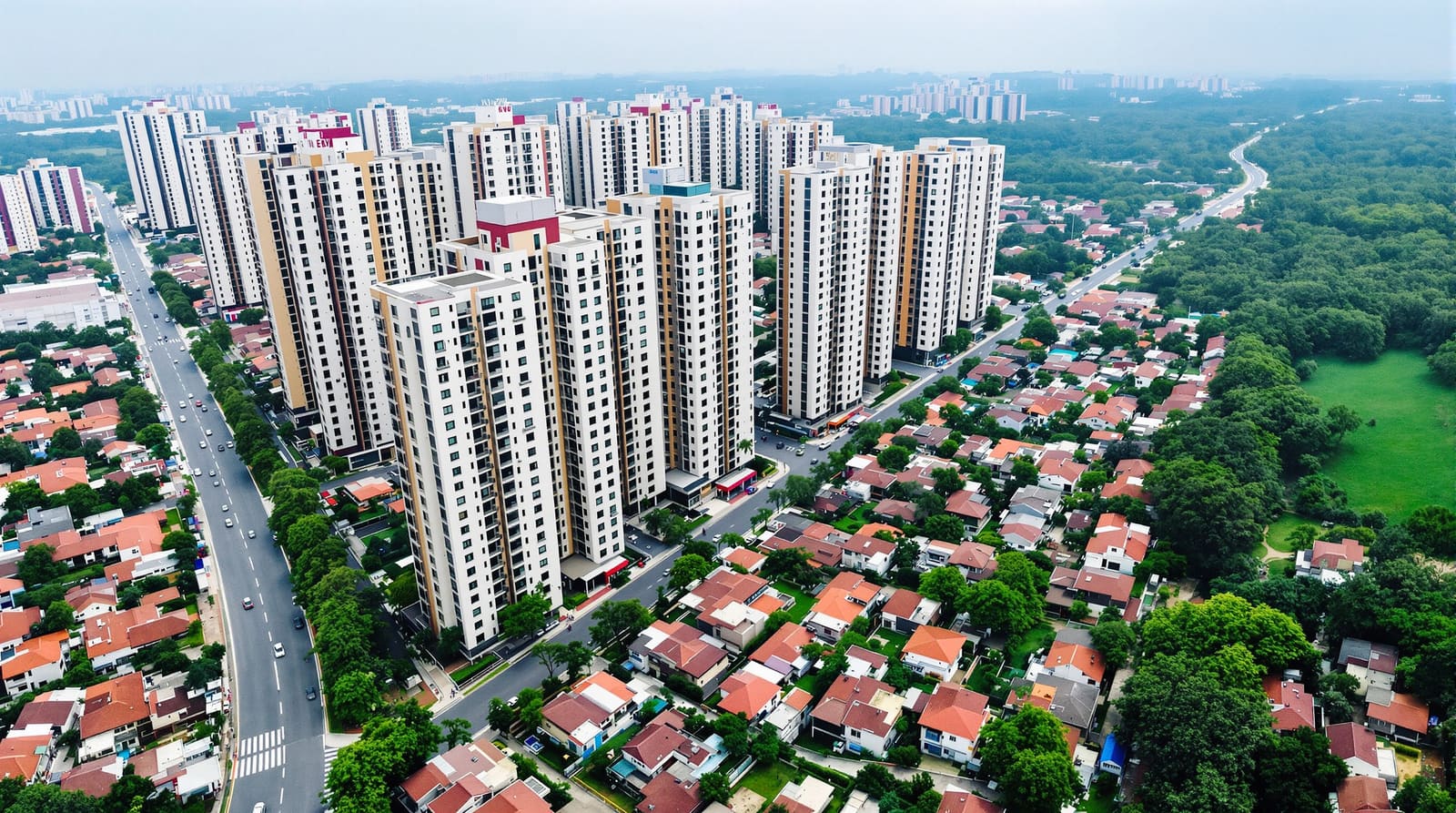
Residential density made clear — dwelling units per hectare, FSI/FAR and ground coverage and how they differ, the density gradient across a layout, the trade-off between too low and too high, and why the same FSI can produce a tower or low-rise housing, for Indian planning.
Greens, services & the future
The livable, lasting layer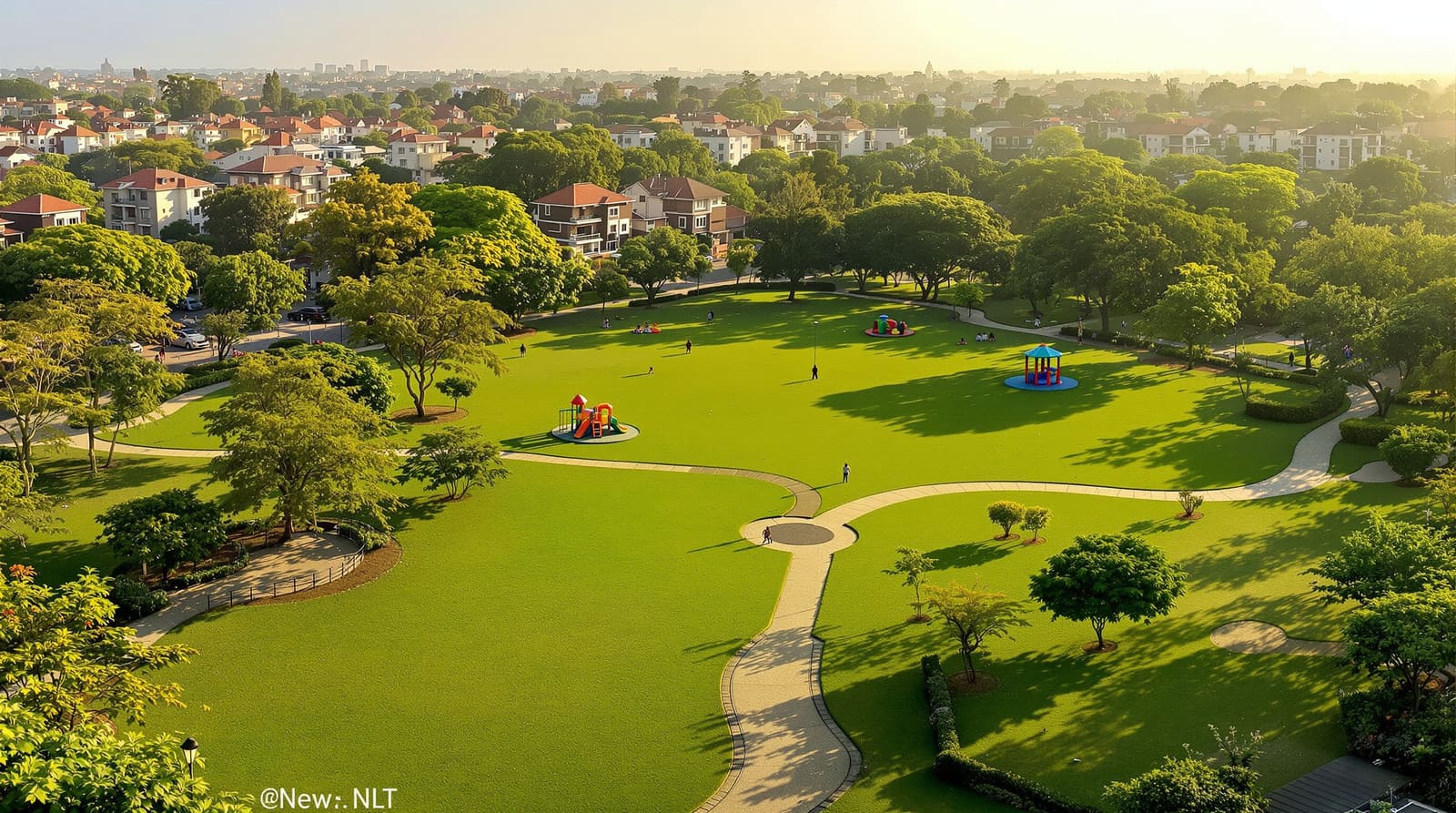 Open space07
Open Space Planning
Planning the public open space of a residential layout — the hierarchy from doorstep tot-lot to community park and their catchments, the mandated reservation, equitable distribution, the types of open space, and weaving parks and streets into a connected green network, for India.
 Utilities08
Utility Planning in Layouts
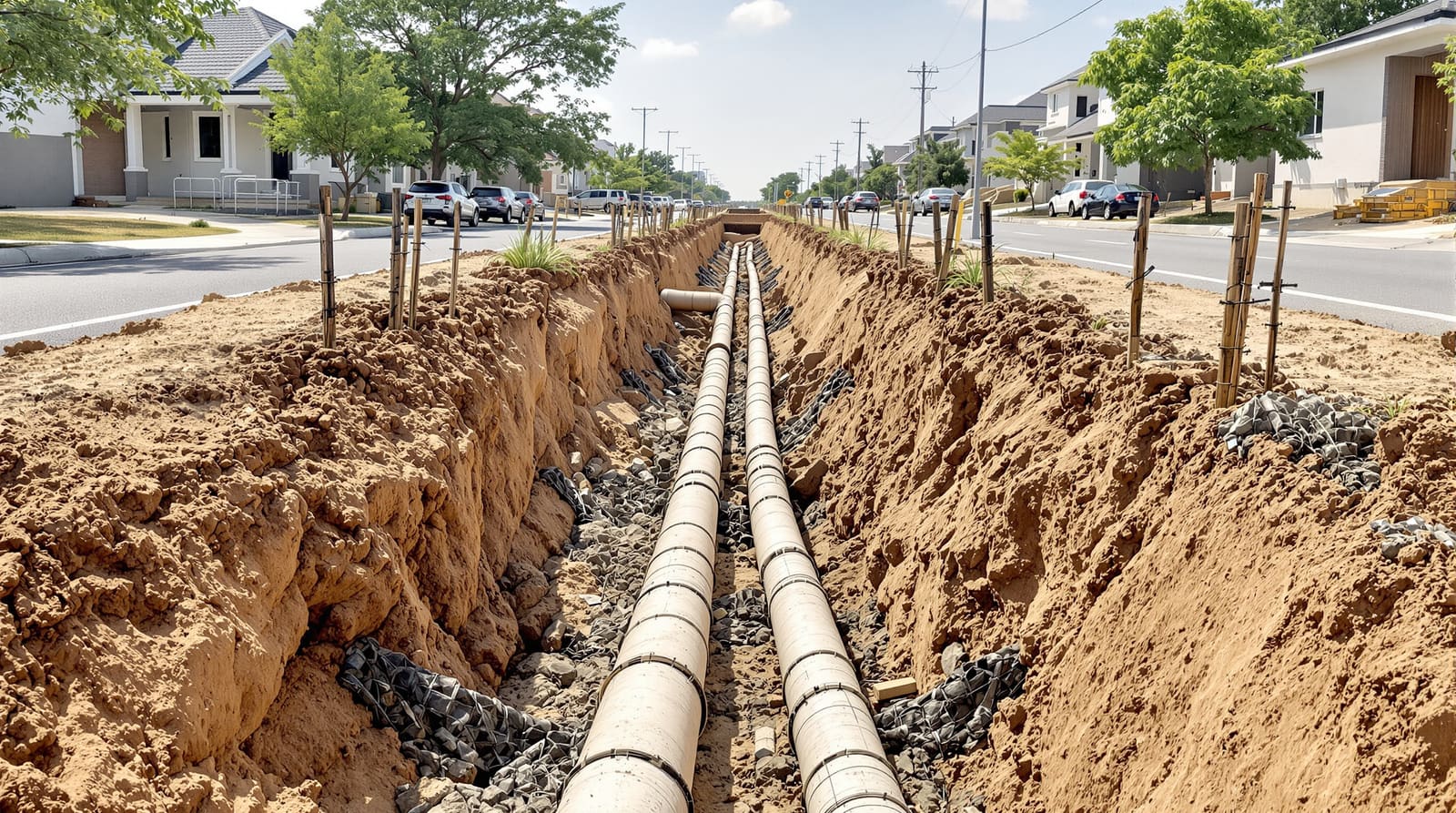
The invisible infrastructure that makes a residential layout work — water supply, sewerage and the STP, stormwater drainage, power, lighting, telecom and gas; how they share the road cross-section, the layout's water cycle, capacity sizing, and why services must be laid before the roads.
 Future-ready09
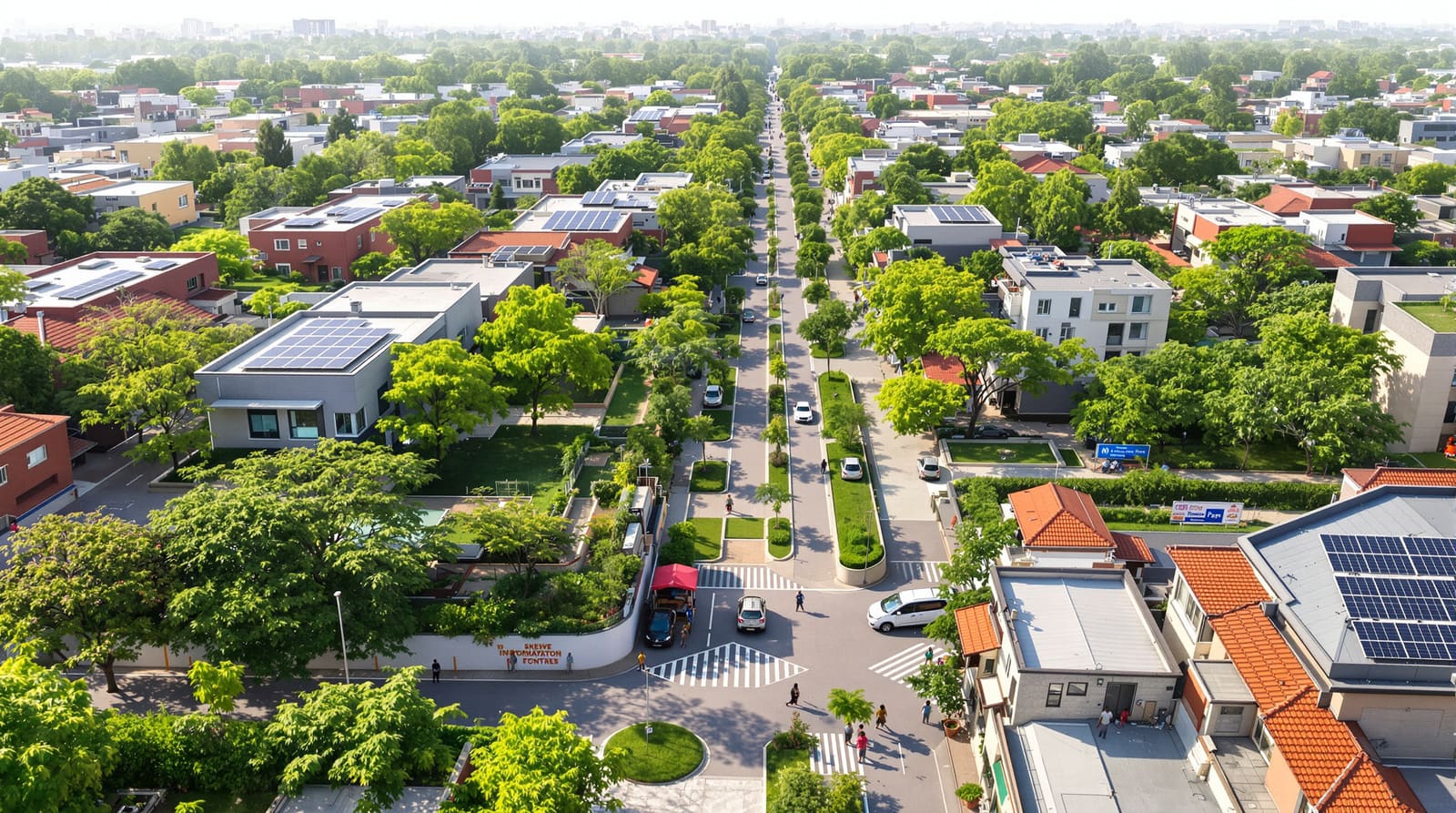
Future-Ready Residential Layouts
How to design a residential layout that stays good for decades — climate resilience and blue-green drainage, EV-charging and solar readiness, water-sensitive design, mixed use, honest digital readiness and adaptability over time — with good bones mattering more than smart branding, for India.