
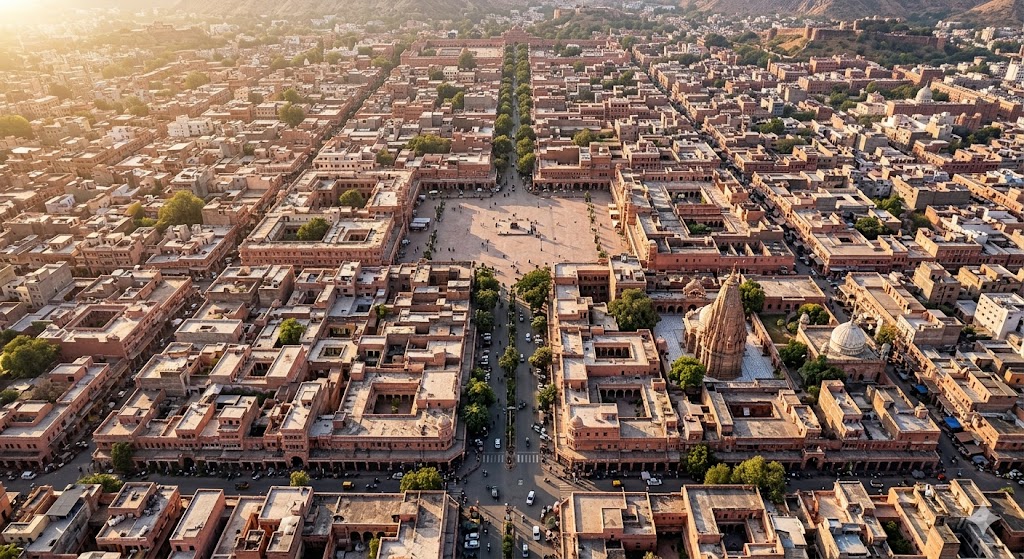
Urban Design — A Student's Working Reference
Between Architecture and Planning · Five Foundational Concepts · Indian Exemplars · Career Pathways
Urban design sits between architecture and planning. Architecture designs individual buildings. Urban planning designs policy for entire cities. Urban design designs the SPACES BETWEEN buildings — the public realm, the streets, the plazas, the connections that make a collection of buildings into a city.
This guide is the working reference for Indian B.Arch students considering urban design as a specialisation. It covers what UD is, the five foundational concepts, eight Indian exemplars to study, six career pathways, typical project deliverables, and the foundational reading list.
If you find yourself more interested in how a building meets the street than how its facade looks, more interested in the plaza than the lobby, more interested in the city than the site — urban design is your discipline. India is in the middle of the biggest urban transformation in human history, and there are perhaps 500-1000 qualified urban designers serving 1.4 billion people. The market is wide open for the right student.
For complementary depth see Architecture Thesis Topics (Family 5 = urban + infrastructure), Site Analysis, Career Pathways After B.Arch.
This is an evergreen guide — foundational theory is stable. Last verified: May 2026 · Next verify: May 2028.
What Urban Design Is — and Isn't
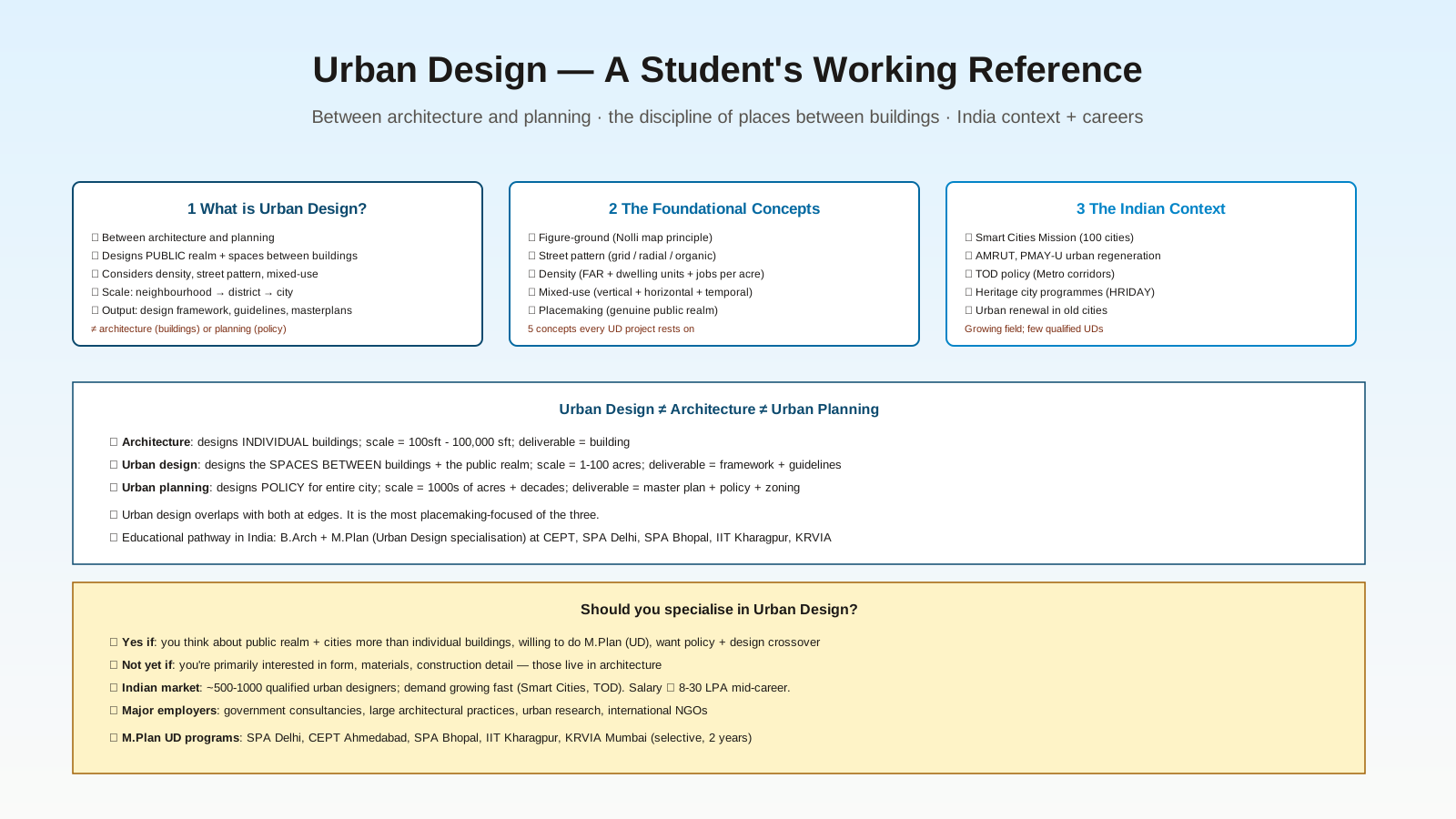
| Discipline | Designs | Scale | Deliverable |
|---|---|---|---|
| Architecture | Individual buildings | 100 sft - 100,000 sft | Building |
| Urban Design | Spaces between buildings; public realm | 1 - 100 acres | Framework + guidelines |
| Urban Planning | Policy for entire cities | 1000s of acres + decades | Master plan + policy + zoning |
Urban design overlaps with both at the edges. It is the most placemaking-focused of the three.
Educational pathway in India
B.Arch (5 years) → M.Plan (Urban Design) at CEPT Ahmedabad / SPA Delhi or Bhopal / IIT Kharagpur / KRVIA Mumbai (2 years).
International alternatives: M.UD at Harvard GSD, MIT, Penn, AA London, TU Delft, ETH Zurich, Cardiff. ₹ 30-80 L for 1-2 years + visa.
Should you specialise?
- Yes if: you think about public realm + cities more than individual buildings; willing to do M.Plan (UD); want policy + design crossover; energised by Indian urbanisation challenges.
- Not yet if: you're primarily interested in form, materials, construction detail — those live in architecture.
Five Foundational Concepts
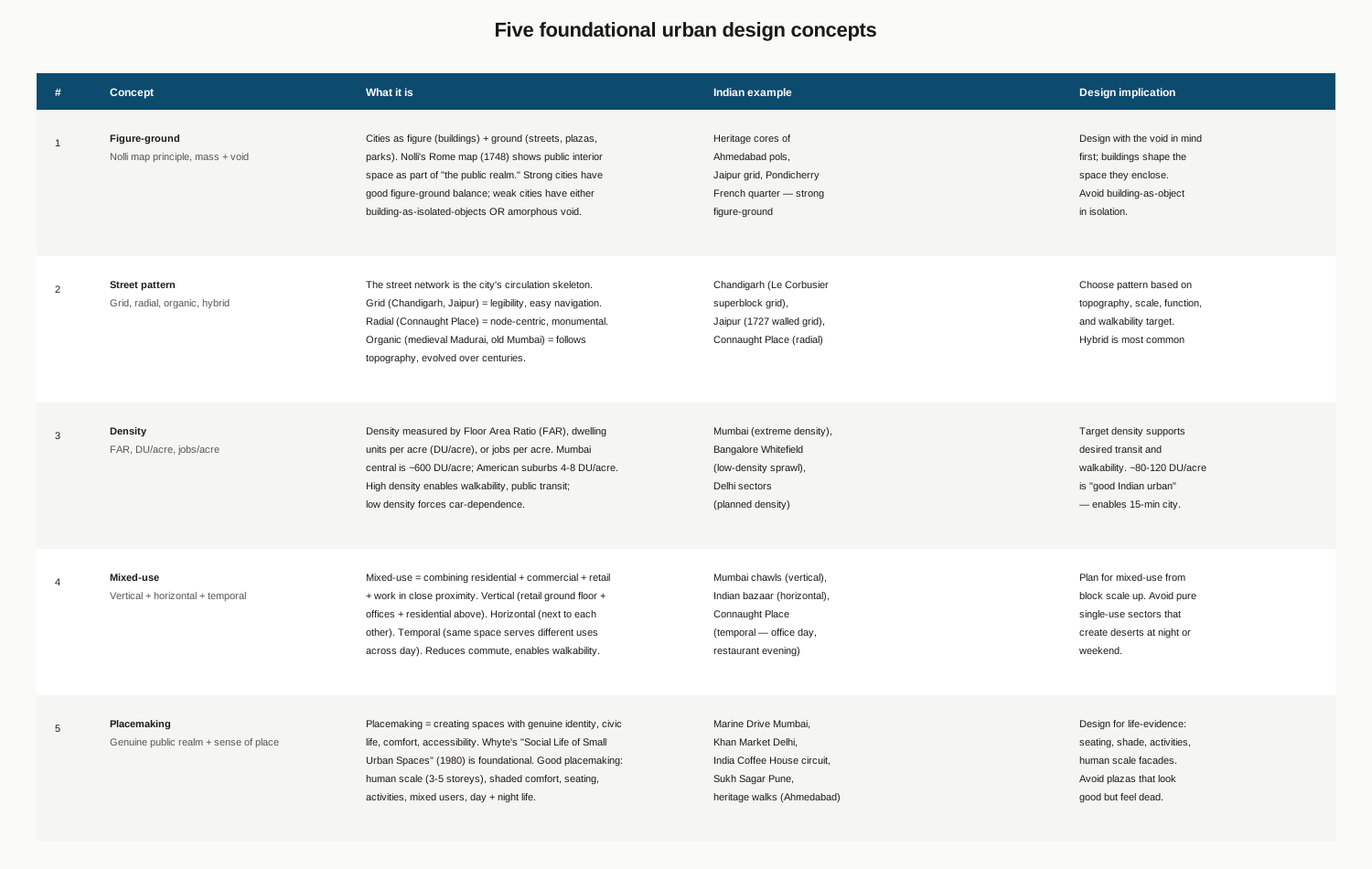
1. Figure-Ground (Nolli map principle)
Cities as figure (buildings) and ground (streets, plazas, parks). Nolli's Rome map (1748) is the canonical reference. Strong cities have good figure-ground balance; weak cities have either building-as-isolated-objects OR amorphous void.
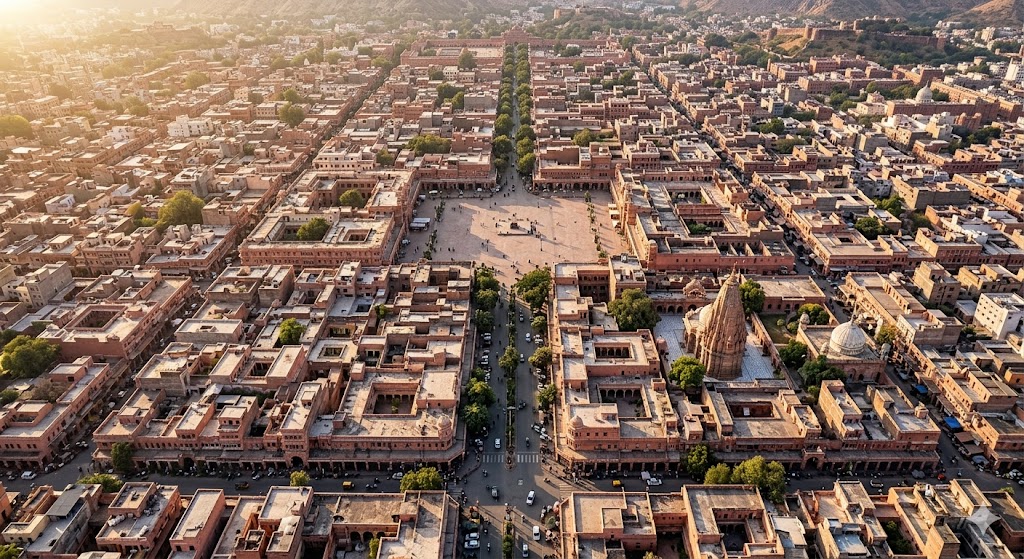
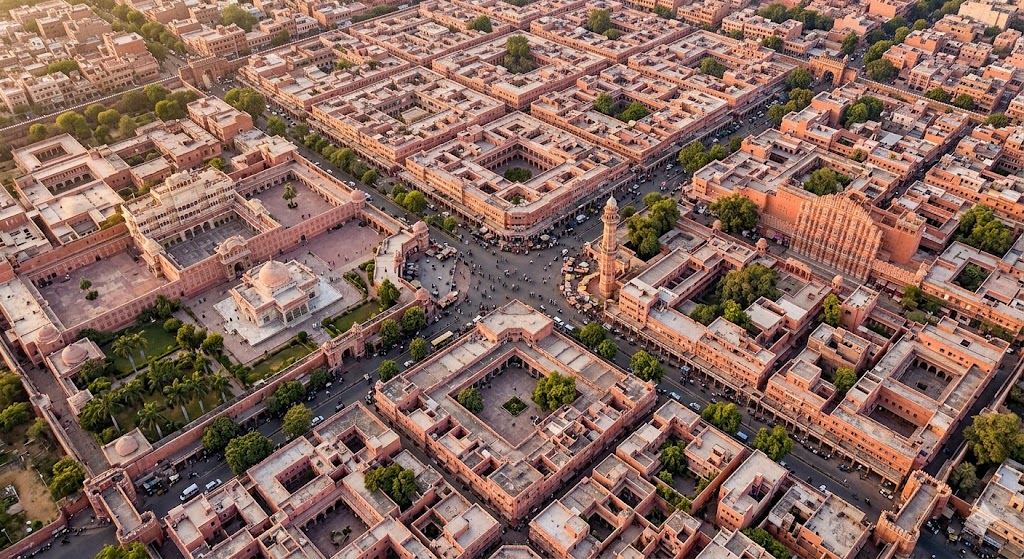
Indian examples: Heritage cores of Ahmedabad pols, Jaipur grid, Pondicherry French quarter all show strong figure-ground.
Design implication: Design with the void in mind first; buildings shape the space they enclose.
2. Street Pattern
The street network is the city's circulation skeleton. Grid (Chandigarh, Jaipur) = legibility. Radial (Connaught Place) = node-centric, monumental. Organic (medieval Madurai, old Mumbai) = follows topography.
Design implication: Choose pattern based on topography, scale, function, and walkability target. Hybrid is most common.
3. Density
Measured by FAR, dwelling units per acre (DU/acre), or jobs per acre. Mumbai central is ~600 DU/acre; American suburbs 4-8 DU/acre. High density enables walkability + public transit; low density forces car-dependence.
Design implication: Target density supports desired transit and walkability. ~80-120 DU/acre is "good Indian urban" — enables 15-min city.
4. Mixed-Use
Combining residential + commercial + retail + work in close proximity. Vertical (retail ground + offices + residential above). Horizontal (next to each other). Temporal (same space serves different uses across day).
Indian examples: Mumbai chawls (vertical), Indian bazaar (horizontal), Connaught Place (temporal).
Design implication: Plan for mixed-use from block scale up. Avoid pure single-use sectors that create deserts at night or weekend.
5. Placemaking
Creating spaces with genuine identity, civic life, comfort, accessibility. Whyte's "Social Life of Small Urban Spaces" (1980) is foundational. Good placemaking: human scale (3-5 storeys), shaded comfort, seating, activities, mixed users, day + night life.
Indian exemplars: Marine Drive Mumbai, Khan Market Delhi, India Coffee House circuit, Sukh Sagar Pune, heritage walks (Ahmedabad).
Design implication: Design for life-evidence: seating, shade, activities, human scale facades. Avoid plazas that look good but feel dead.
Eight Indian Urban Design Exemplars
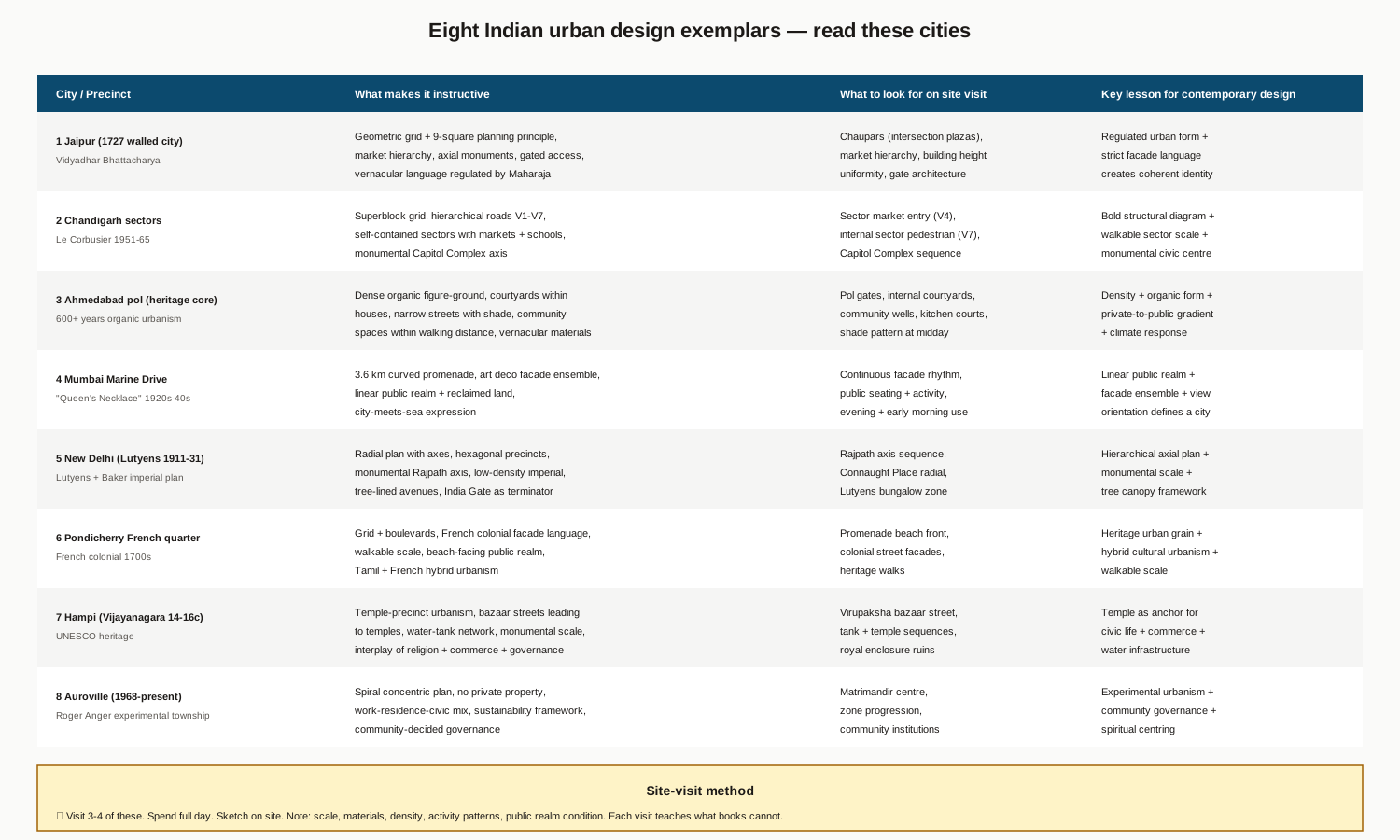
1. Jaipur (1727 walled city, Vidyadhar Bhattacharya) — Geometric grid + 9-square planning, market hierarchy, axial monuments, regulated vernacular. Lesson: Regulated urban form + strict facade language creates coherent identity.
2. Chandigarh sectors (Le Corbusier 1951-65) — Superblock grid, hierarchical roads V1-V7, self-contained sectors, monumental Capitol Complex axis. Lesson: Bold structural diagram + walkable sector scale + monumental civic centre.
3. Ahmedabad pol (heritage core) — Dense organic figure-ground, courtyards, narrow shaded streets, community spaces. Lesson: Density + organic form + private-to-public gradient + climate response.
4. Mumbai Marine Drive ("Queen's Necklace") — 3.6 km curved promenade, art deco facade ensemble, linear public realm. Lesson: Linear public realm + facade ensemble + view orientation defines a city.
5. New Delhi (Lutyens 1911-31) — Radial plan with axes, hexagonal precincts, Rajpath monumental axis, tree-lined avenues, India Gate as terminator. Lesson: Hierarchical axial plan + monumental scale + tree canopy framework.
6. Pondicherry French quarter — Grid + boulevards, French colonial facade language, walkable scale, beach-facing public realm. Lesson: Heritage urban grain + hybrid cultural urbanism + walkable scale.
7. Hampi (Vijayanagara 14-16c) — Temple-precinct urbanism, bazaar streets leading to temples, water-tank network, monumental scale. Lesson: Temple as anchor for civic life + commerce + water infrastructure.
8. Auroville (1968-present, Roger Anger) — Spiral concentric plan, no private property, work-residence-civic mix, community governance. Lesson: Experimental urbanism + community governance + spiritual centring.
Site-visit method: Visit 3-4 of these. Spend full day each. Sketch on site. Note scale, materials, density, activity patterns, public realm condition. Each visit teaches what books cannot.
Six Career Pathways
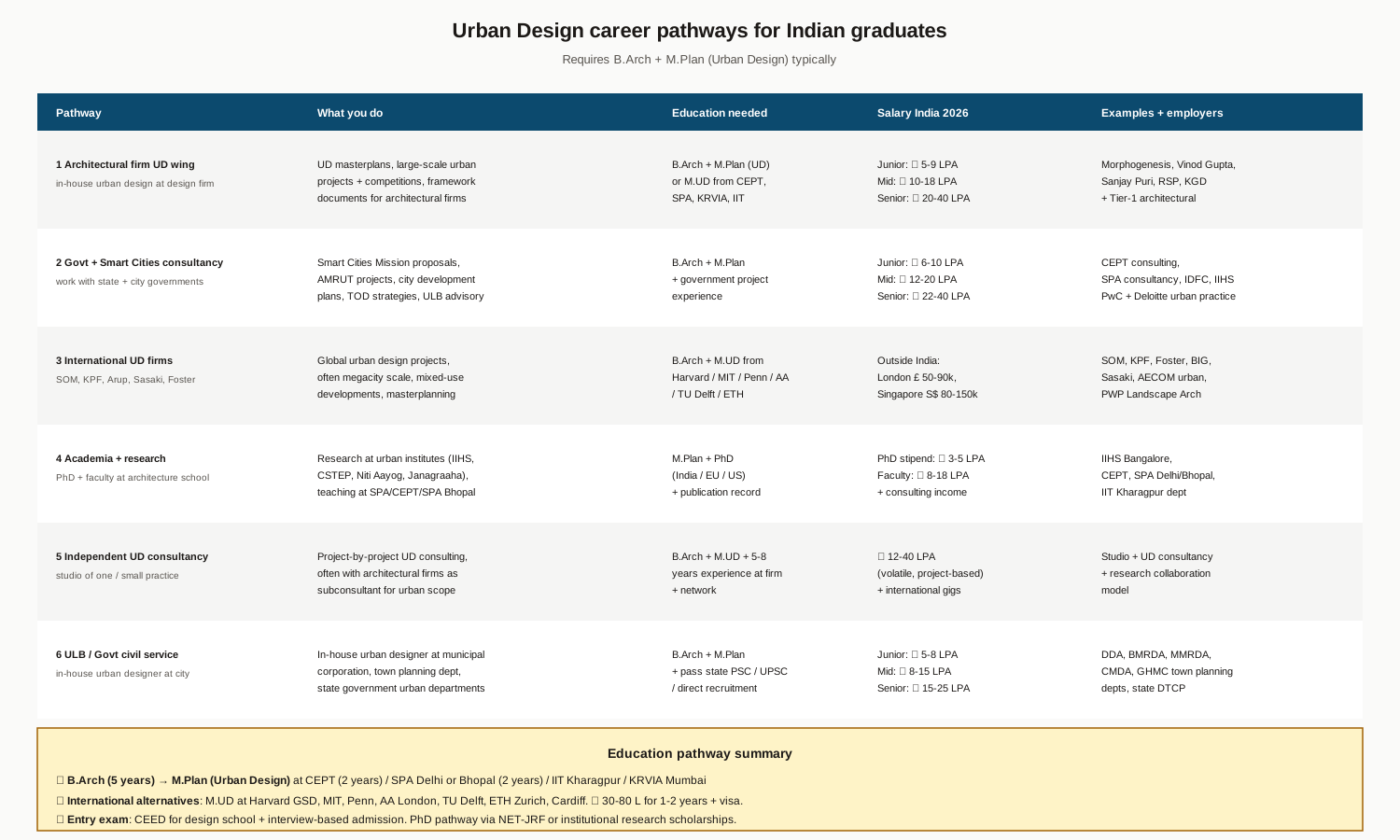
| Pathway | India salary (2026) | Examples |
|---|---|---|
| 1 Architectural firm UD wing | ₹ 5-40 LPA | Morphogenesis, RSP, Sanjay Puri, Tier-1 firms |
| 2 Govt + Smart Cities consultancy | ₹ 6-40 LPA | CEPT consulting, SPA consultancy, IIHS, PwC Urban |
| 3 International UD firms | Outside India: London £50-90k, Singapore S$80-150k | SOM, KPF, Foster, BIG, Sasaki, AECOM Urban |
| 4 Academia + research | PhD ₹3-5L + Faculty ₹8-18 LPA + consulting | IIHS Bangalore, CEPT, SPA, IIT Kharagpur |
| 5 Independent UD consultancy | ₹ 12-40 LPA + intl. gigs | Studio + UD consultancy + research model |
| 6 ULB / Govt civil service | ₹ 5-25 LPA | DDA, BMRDA, MMRDA, CMDA, state DTCP |
Education investment
CEPT/SPA M.Plan (UD) tuition: ₹ 4-10 L for 2 years. International M.UD: ₹ 30-80 L for 1-2 years.
ROI: Mid-career UD specialist earns ~25-50% more than equivalent-experience architect. International route pays 2-3× Indian rates.
Project Deliverables
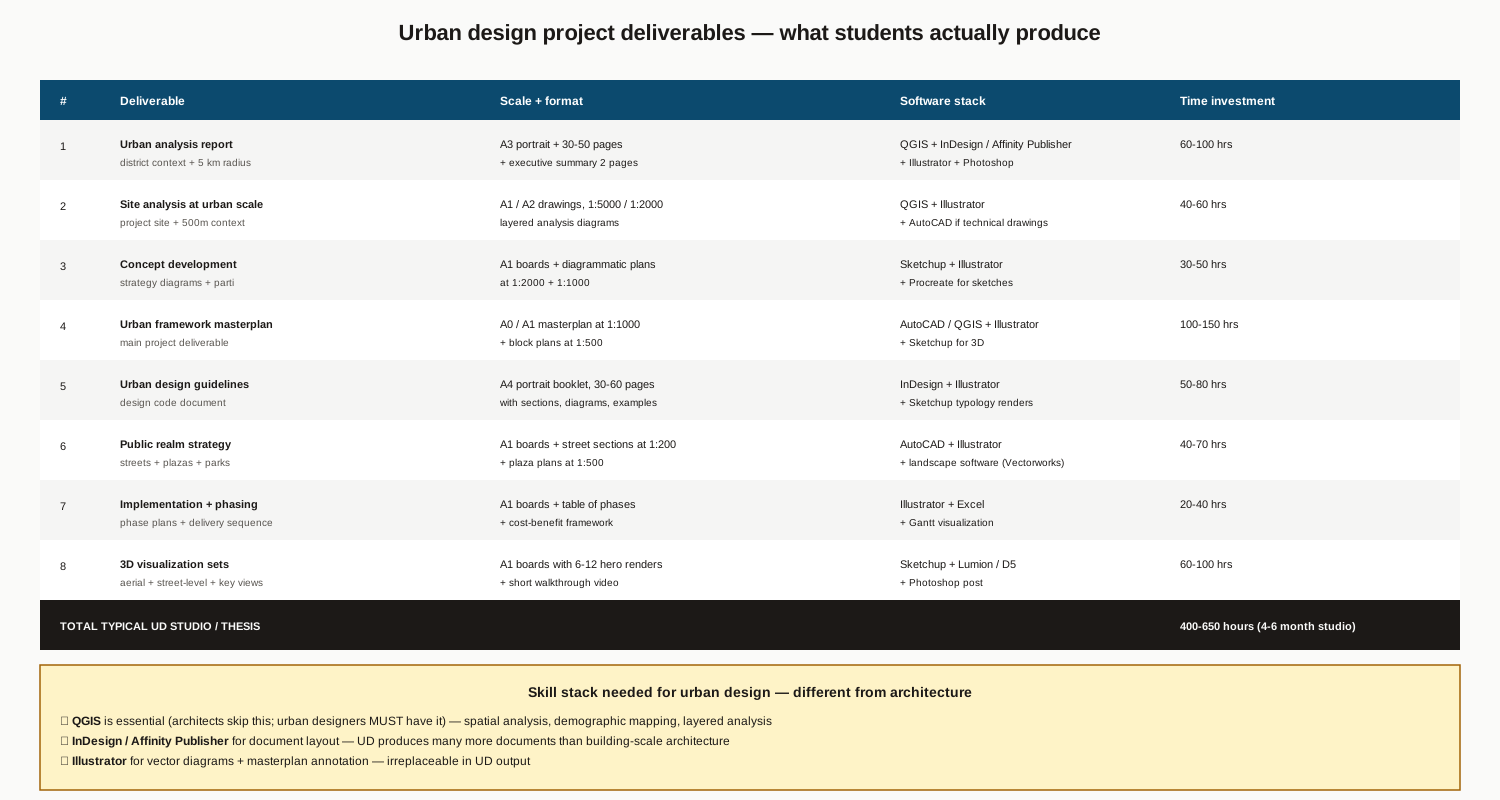
Eight deliverables typical of a UD studio or thesis. Total 400-650 hours over a 4-6 month studio.
1. Urban analysis report (60-100 hrs)
2. Site analysis at urban scale (40-60 hrs)
3. Concept development (30-50 hrs)
4. Urban framework masterplan (100-150 hrs) — main deliverable
5. Urban design guidelines / code (50-80 hrs)
6. Public realm strategy (40-70 hrs)
7. Implementation + phasing (20-40 hrs)
8. 3D visualization sets (60-100 hrs)
Skill stack different from architecture
- QGIS is essential (architects skip this; urban designers MUST have it) — spatial analysis, demographic mapping, layered analysis
- InDesign / Affinity Publisher for document layout — UD produces many more documents than building-scale architecture
- Illustrator for vector diagrams + masterplan annotation — irreplaceable in UD output
Foundational Reading List
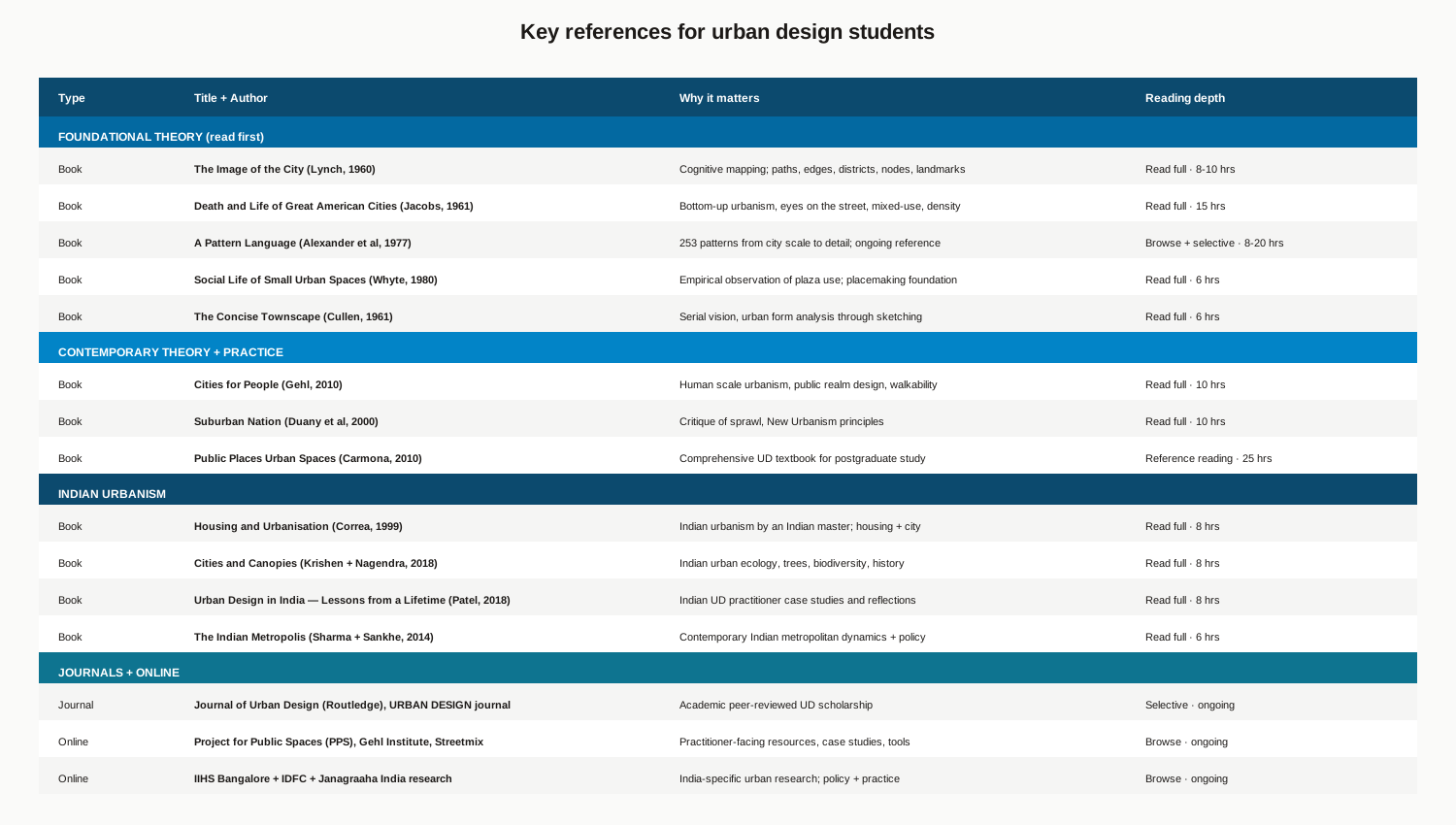
Read first (foundational theory)
1. The Image of the City (Lynch, 1960) — Cognitive mapping; paths, edges, districts, nodes, landmarks. 8-10 hrs.
2. Death and Life of Great American Cities (Jacobs, 1961) — Bottom-up urbanism, eyes on the street, mixed-use. 15 hrs.
3. A Pattern Language (Alexander et al, 1977) — 253 patterns from city to detail; ongoing reference.
4. Social Life of Small Urban Spaces (Whyte, 1980) — Empirical observation of plaza use. 6 hrs.
5. The Concise Townscape (Cullen, 1961) — Serial vision through sketching. 6 hrs.
Contemporary theory + practice
6. Cities for People (Gehl, 2010) — Human scale urbanism, walkability. 10 hrs.
7. Suburban Nation (Duany et al, 2000) — New Urbanism critique of sprawl. 10 hrs.
8. Public Places Urban Spaces (Carmona, 2010) — Comprehensive UD textbook. Reference.
Indian urbanism
9. Housing and Urbanisation (Correa, 1999) — Indian master on housing + city. 8 hrs.
10. Cities and Canopies (Krishen + Nagendra, 2018) — Indian urban ecology. 8 hrs.
11. Urban Design in India — Lessons from a Lifetime (Patel, 2018) — Indian UD case studies. 8 hrs.
12. The Indian Metropolis (Sharma + Sankhe, 2014) — Contemporary metropolitan dynamics.
Ongoing reading
- Journals: Journal of Urban Design (Routledge), URBAN DESIGN
- Online: Project for Public Spaces (PPS), Gehl Institute, Streetmix
- Indian research: IIHS Bangalore, IDFC, Janagraaha
Pre-Specialisation Checklist
1. Studio thesis in urban scope (Family 5 from thesis topics) demonstrating UD aptitude
2. 3-4 site visits to Indian urban exemplars with sketches + observations
3. Read 5-7 foundational books (Lynch + Jacobs + Whyte minimum)
4. QGIS basic proficiency (40+ hrs practice)
5. InDesign + Illustrator competence for document production
6. Internship at UD firm for 4-6 months — confirm fit before committing to M.Plan
7. GATE / CEED entrance exam preparation for M.Plan admission
8. Portfolio with urban scope projects (2-3 of 8-12 portfolio pieces should be urban scale)
Where to Go Next
- For thesis topics in urban scope: Architecture Thesis Topics Family 5
- For methodology depth: Architecture Thesis Methodology
- For site analysis at urban scale: Site Analysis for Architecture
- For landscape architecture (adjacent discipline): Landscape Architecture in India
- For career pathways: Career Pathways After B.Arch
- For portfolio building: Architecture Portfolio Building
References
1. Lynch, K. (1960). The Image of the City. MIT Press.
2. Jacobs, J. (1961). Death and Life of Great American Cities. Random House.
3. Cullen, G. (1961). The Concise Townscape. Architectural Press.
4. Alexander, C. et al. (1977). A Pattern Language. Oxford University Press.
5. Whyte, W. H. (1980). Social Life of Small Urban Spaces. Conservation Foundation.
6. Gehl, J. (2010). Cities for People. Island Press.
7. Carmona, M. (2010). Public Places Urban Spaces. Architectural Press.
8. Correa, C. (1999). Housing and Urbanisation. Urban Design Research Institute.
9. Patel, S. B. (2018). Urban Design in India — Lessons from a Lifetime of Practice. IIA.
10. Krishen, P. & Nagendra, H. (2018). Cities and Canopies — Trees in Indian Cities. Penguin.
Author's note: Urban design is the discipline India needs most and has fewest practitioners in. ~500-1000 qualified urban designers serve 1.4 billion people; demand is growing fast with Smart Cities Mission, TOD policy, metro corridors, and Indian urbanisation. If you have aptitude — if you think about cities more than buildings — pursue it. The educational route (B.Arch + M.Plan UD) takes 7 years total but opens a career trajectory that is more strategic, more policy-aware, and more durable than building-scale architecture alone.
Disclaimer: Urban design methodology is largely stable; this guide refreshes every 24 months. Indian education programmes (CEPT, SPA, IIT Kharagpur, KRVIA) update curriculum periodically — verify current programme structure directly with institutions. Career salary benchmarks are 2026 indicative. Studio Matrx, its authors and contributors are not responsible for educational or career decisions based on this guide; consult M.Plan programme advisors and practising urban designers for individual guidance.
Export this guide
Related Guides — Deep-dive reading
B.Des Interior Design — The Student Track
The 2026 Reference for the Indian B.Des Interior Aspirant — How It Differs from B.Arch, the Top Schools (NID · Pearl · Symbiosis · NIFT · Sushant), the Four-Year Curriculum, the Software Stack, FF&E and Materials Vocabulary, Studio Discipline, Portfolio Building, Internship Pathways, Career Trajectories, and the Long-Horizon Practice Map
Student FoundationsCase-Study Analysis — How to Read an Architectural Project
Module 7 of the Student Foundations Track — Selecting Case Studies that Match Your Design Problem, Five-Layer Analysis Framework (Site, Programme, Form, Material, Detail), Data Collection Methods, How to Apply Findings to Your Own Studio Project, the Citation Discipline, and a Twelve-Test Pre-Submission Diagnostic for Indian B.Arch Students
Student FoundationsHow to Plan a Functional House Layout
A Workflow Guide — From Brief to Construction Drawings
Room PlanningRelated Tools — Try Free
Cross-Ventilation Analyzer
Estimate airflow and air changes per hour (ACH) from room size, window areas, layout, and local wind — with NBC 2016 Part 8 compliance check.
Ventilation CalculatorBrise-Soleil Visualizer
Interactive horizontal-louvre cut-off angle calculator — sun altitude, louvre depth, and spacing inputs with a live shadow preview. Computes θ = arctan(spacing/depth) for façade shading, ECBC envelope compliance, hospital daylight design, and tropical sun-control detailing.
Sun Shading ToolConcept Generator
Get 3 AI-generated design concepts for any room with style, materials, and cost estimate.
DesignAI