
Religious Building Security in India (2026): Crowd Safety and Protecting a Place of Worship
How temples, mosques, churches, gurudwaras and other places of worship keep people, donations and sacred items safe while staying open, welcoming and unpoliced — with crowd and life-safety first, and never a locked or bottlenecked exit during a gathering.
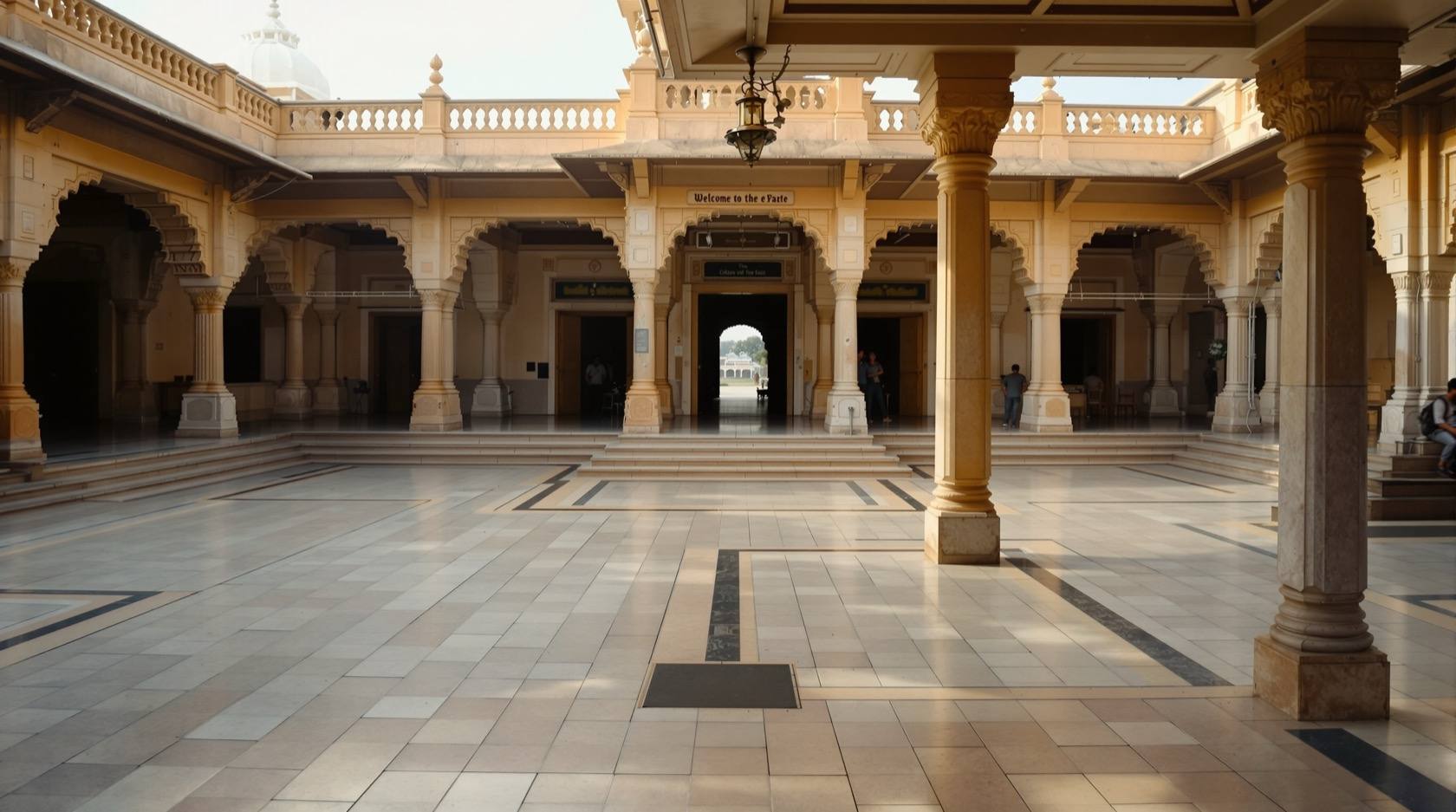
A place of worship is unlike any other building this hub covers. Its defining quality is not a wall or a gate but an open door: a temple, mosque, church, gurudwara, dargah, monastery or shrine exists to welcome anyone, at any hour, without questioning who they are or why they came. That openness is the whole point — and it sits alongside three hard security realities. These buildings hold donations and offerings in cash and kind. They hold valuables, idols, artefacts and heritage items that are irreplaceable and, for some, tempting to steal. And on festival days they gather crowds far larger than they were ever built for.
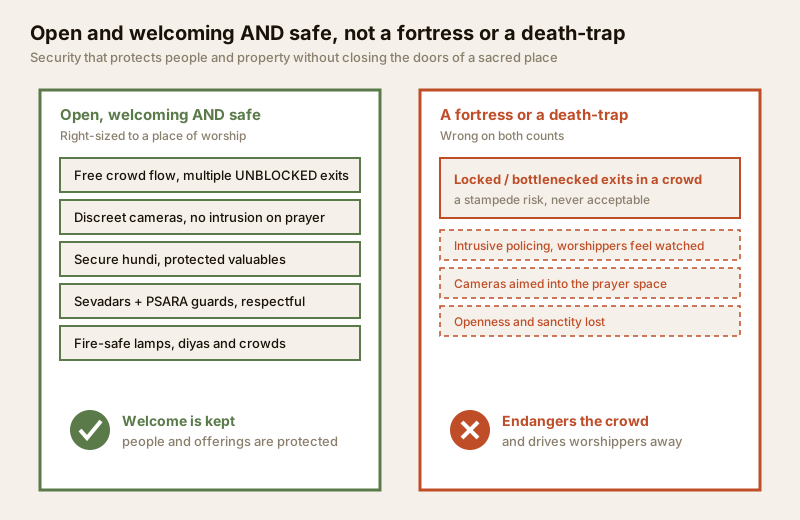
The central tension of this guide is therefore sharp, and it must be stated plainly: security must protect people and property WITHOUT compromising the openness, sanctity and welcome of the place — and above all without ever endangering a crowd. A place of worship turned into a fortress has failed at its purpose; a place of worship whose exits are locked or bottlenecked during a gathering has failed at something far graver. This guide is written to hold both truths at once, with respect for every faith and every worshipper.
Scope & safety. This is a planning, decision and coordination guide for architects, trustees, committee/board/waqf members and consultants — not an installation manual, and strictly defensive. Right-size to the real threat and to the dignity of a sacred space; do not build a fortress or make worshippers feel policed. Crowd and life-safety come before every security measure: at a gathering, controlled flow and multiple clear, unlocked, unblocked exits are governed by the National Building Code assembly-occupancy rules (NBC = SP 7:2026) and take priority over any lock, camera, barrier or gate. For large events, coordinate with the local authority and police in advance. CCTV and any visitor data are personal data under the DPDP Act 2023; any deployed guards must come through a PSARA 2005-registered agency. Verify all standards current, and engage a security consultant and licensed installer for anything at scale.
First, right-size to what a place of worship actually is
Match the security to the building's real profile. A place of worship is an assembly building with an open-access culture, periodic crowd surges, cash and precious items on site, and heritage and religious significance. That combination is specific: it rules out both the under-secured "we trust everyone, nothing will happen" posture and the over-secured "search everyone at the door" posture. Neither serves the sangat, the congregation or the devotees.
The right frame is layered and proportionate. Crowd and life-safety are the foundation everything else stands on. Above that sit the genuine, everyday risks — donation theft, idol and artefact theft, opportunist crime after hours. And above that, for a small number of high-profile sites, sits a sober threat picture handled with the police. The figure below shows the two ways this can go wrong, and the one way it goes right.
Crowd safety is the first priority
Crowd safety is the first priority, above everything else in this guide. On an ordinary day a place of worship is calm. On a festival, a special darshan, a major service, an urs or a large gathering, it can hold many times its usual number — and it is then, not in a quiet burglary, that lives are most at risk. The gravest danger to a place of worship is a stampede or crush, far deadlier than any theft. India's own painful history of gathering tragedies at pilgrimage sites and festivals is the reason this section comes first and governs everything after it.
Crowd safety is a discipline of flow and exits, not of locks. The core principles:
- Controlled, mostly one-way flow. People should enter, move through darshan or prayer, and leave along a planned route that does not force crowds head-on into each other. Narrow choke points — a single stair, a doorway that everyone must reverse through, a corridor that pinches — are where crushes begin. Design and manage the route so the crowd keeps moving.
- Multiple clear exits, always UNBLOCKED and never locked during a gathering. This is the single non-negotiable rule of the whole guide. Every exit a crowd might need must be open, unobstructed by stalls or storage, and openable without a key while people are inside. Locking or bottlenecking an exit during a gathering is a fatal error, never a security measure. Assembly-occupancy exit width, number of exits and travel distance are governed by NBC (SP 7:2026); treat them as the floor, not the ceiling.
- Marshals and controlled entry rate. Trained marshals and sevadars managing the pace of entry — holding the crowd back before it overloads a space, watching for crush points, keeping lanes clear — prevent the build-up that causes disasters. Barricading that channels flow must always leave escape open.
- Coordinate with the authorities for large events. For any major gathering, engage the local authority and police in advance on crowd limits, routes, medical and emergency access, and a plan for the worst case. This is a coordination duty, not an optional courtesy.
- Emergency vehicle access stays clear. Fire tenders and ambulances must be able to reach the site even at peak crowd; parked vehicles, stalls and barricades must never block that path. See fire-tender access.
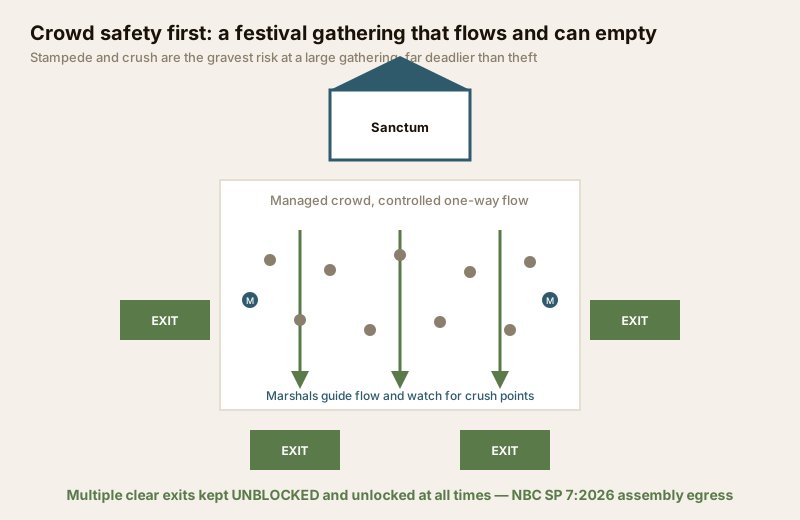
Crowd safety is inseparable from fire safety, because a fire in a crowd is the classic route to a crush. Read this section alongside the fire-safety hub, fire-egress compatibility and fire-tender access — the same exits serve both.
Donation and hundi security
Donations are the second reality. The hundi, offering box, collection tray, donation counter or online-plus-cash mix is a genuine and recurring theft point — and often an internal one — so it deserves careful, honest handling that also respects the devotees who give.
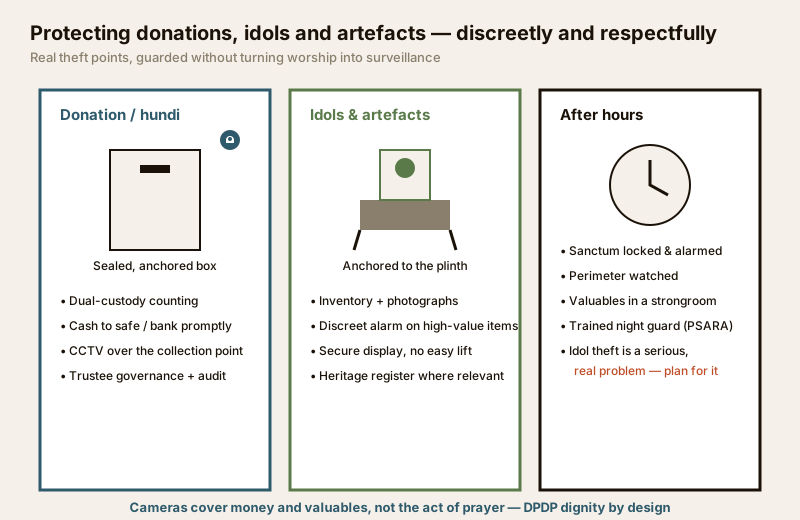
- Secure collection boxes. Hundis and offering boxes should be sealed, firmly anchored and hard to tamper with or lift, sited where they are naturally overlooked rather than in a quiet corner.
- Dual-custody counting. Cash should be opened and counted under more than one pair of hands — never a single person alone — following a written procedure the committee has agreed. Dual custody protects both the funds and the honest volunteers who handle them.
- Prompt cash handling to a safe or bank. Counted cash should move promptly to a safe or strongroom and then to the bank, not accumulate on site. The less cash sitting in the building, the smaller the target.
- CCTV over the donation area. A camera watching the collection point and the counting room is one of the few places where surveillance clearly earns its place — it protects the funds and clears honest handlers of suspicion. Cover the money, not the act of prayer.
- Trustee governance and audit. Ultimately, donation security is a governance matter — transparent accounting, an audit trail, and a committee that can show where offerings went. Hardware supports honest process; it does not replace it.
Protecting valuables, idols and artefacts
Idol and artefact theft is a real and serious problem in India — heritage idols, temple ornaments, ritual silver and antiquities have genuine value to thieves and traffickers, and their loss is cultural as much as financial. Protection here is about making theft hard and slow, and making recovery possible, without caging the sacred.
- Secure display and anchoring. High-value idols, ornaments and artefacts should be anchored to their plinth or mount and displayed so they cannot be quickly lifted or prised loose. Physical difficulty is the first deterrent.
- Inventory and photographs. A written inventory with photographs and identifying marks of every significant idol and artefact is one of the highest-value, lowest-cost measures a committee can adopt — it is what makes a stolen item identifiable and recoverable, and heritage items may warrant registration where a scheme applies.
- Discreet alarms on high-value items. For the most precious items, a discreet contact or movement alarm — invisible to worshippers, active especially after hours — raises the cost of theft without turning the shrine into a museum vault.
- After-hours protection. Most idol theft happens when the building is empty. The sanctum should be locked and alarmed after hours, the most precious items secured in a strongroom where practice allows, the perimeter watched, and a trained night guard on site. See the after-hours section below.
Discreet, respectful CCTV
Cameras have a real role at a place of worship — but only where they are discreet, purposeful and respectful of worship, never intrusive. The DPDP Act treats footage as personal data, and dignity in a sacred space is a duty beyond the law.
- Cover what matters, not the act of prayer. Site cameras on entrances, the donation and valuables areas, and the perimeter — the points where theft actually happens. Do not aim cameras into the prayer hall, the sanctum, the ablution area or anywhere the act of worship or a worshipper's privacy would be intruded upon.
- Discreet placement. Cameras should be present without dominating; a place of worship should not feel like it is watching its devotees. Well-sited, unobtrusive units serve their purpose without breaking the atmosphere.
- DPDP and dignity by design. Agree in writing who may view footage, how long it is kept and how it is protected, restrict access, and post reasonable notice. Treat congregants' images with the same respect the space itself commands. The CCTV hub covers placement and the discipline of few well-sited cameras over many intrusive ones.
Sevadars, trustees and trained guards working together
The human layer is the heart of security at a place of worship, and it is where sensitivity matters most. The people who keep the space safe are largely its own — volunteers, sevadars, khidmatgars, wardens and trustees — working alongside trained, PSARA-verified guards for scale and for events.
- Volunteers and staff as the first eyes. Regular sevadars and volunteers who know the space, know the regulars and notice what is out of place are the most effective and least intrusive security a place of worship has. Much of the safety here is social, not technical.
- Trained guards for scale and after hours. Larger sites, valuable collections and big events need trained guards through a PSARA-registered agency — for the perimeter, the strongroom, the night watch and crowd support. A modest, well-sited guard post helps them do the job; see guardhouse design.
- Respectful screening at large events, never a feeling of being policed. Where a high-profile site or a large event calls for screening, it must be done calmly, respectfully and proportionately — coordinated with police where the scale warrants — so worshippers are kept safe without being made to feel suspected. See visitor-access management for doing entry management with dignity. The goal is a welcome that is also safe, not a checkpoint.
Fire safety for lamps, diyas, candles, incense — and crowds
Places of worship carry a fire risk few other buildings do: open flame is part of the ritual. Oil lamps, diyas, candles, camphor, incense, havan and yagna fires, and heavy decorative and electrical loads at festivals all raise the risk exactly when the building is most crowded — and a fire in a crowd is the classic trigger for a crush.
- Manage open flame. Lamps, diyas and candles need non-combustible surrounds, clearance from cloth, decorations and canopies, and someone responsible for them, especially at festivals when they multiply.
- Festival electrical loads. Temporary lighting, sound and decorative rigs at festivals overload wiring and are a common fire cause; they should be planned, rated and inspected, not improvised.
- Fire safety with crowds. Clear exits, a way to raise the alarm, extinguishers and, at scale, detection and suppression per code — with the exits that serve fire escape being the very same exits crowd safety depends on. Read the fire-safety hub with the crowd-safety section above; they are one subject here.
The terror and attack-threat reality, handled soberly
A small number of high-profile places of worship face a credible attack or terror threat, and it must be acknowledged rather than ignored — but soberly, generically and without alarm. The correct posture is coordination, not fortification.
- Coordinate with the police. Threat assessment and any protective measures for a high-profile site are a matter for the police and security agencies, who hold the intelligence and the mandate. A committee's job is to engage them, follow their advice, and plan jointly — not to improvise.
- Layered, proportionate, and never at the cost of egress. Any protective measure — screening, standoff, vehicle control — must still leave the crowd able to flow and to escape. Anti-terror hardening that blocks an exit recreates the stampede risk it was meant to prevent. Life-safety wins every time.
- No fabricated specifics. This guide gives no threat numbers, methods or site-specific claims; those belong with the authorities. The principle is preparedness through coordination, handled with calm.
After-hours, and the trust that governs it all
When the building empties, the security posture changes: the open-door welcome gives way to a locked, alarmed, watched night. And underneath every measure in this guide sits the body that owns it — the temple committee, trust, waqf, church board, gurudwara management or mosque committee — whose governance is the real security system.
- After-hours lock-down. The sanctum and valuables secured and alarmed, the perimeter watched, a trained night guard on duty, and any monitoring understood honestly for what it does and does not guarantee — see alarm monitoring and remote security monitoring.
- Governance as security. Who holds the keys, who counts the cash, who maintains the cameras and alarms, who keeps the inventory, who funds it all — these decisions, written down and audited, are what keep a place of worship safe year after year. A managing body with transparent process and shared responsibility is worth more than any single device.
- Community-managed parallels. A large temple complex or a place of worship inside a residential enclave shares much with community-managed security; the gated-communities security guide covers how a managing body organises shared perimeter, gate and watch measures.
| Aspect | The risk | The safe, respectful response | Governs / cross-link |
|---|---|---|---|
| Festival crowd | Stampede / crush (gravest risk) | One-way flow, multiple unblocked exits, marshals, police coordination | NBC SP 7:2026 assembly egress |
| Exits during a gathering | Locking / bottlenecking = fatal | Never locked, never blocked, openable from inside | Life-safety, always first |
| Donations / hundi | Cash theft, internal loss | Sealed anchored box, dual-custody count, cash to safe/bank, CCTV over it | Trustee governance, audit |
| Idols / artefacts | Idol and heritage theft | Anchoring, inventory + photos, discreet alarms, strongroom after hours | Heritage protection |
| CCTV | Intrusion on worship, DPDP | Cover entries/donations/perimeter, not the prayer act; access limited | DPDP Act 2023 |
| People at the door | Feeling policed vs unsafe | Sevadars + PSARA guards, respectful proportionate screening | PSARA 2005 |
| Open flame + loads | Fire, then crush | Managed lamps, inspected festival wiring, clear exits, detection | Fire-safety hub |
| High-profile threat | Attack (sober, generic) | Coordinate with police; measures that never block egress | Police-led, life-safety first |
| After hours | Theft, idol theft | Locked, alarmed, watched sanctum and perimeter; night guard | Alarm / remote monitoring |
Putting it together
A place of worship that has done this well feels no less open than before — that is the measure of success. The doors are welcoming, the prayer space is undisturbed, and yet the crowd on a festival day flows and can empty in seconds through exits that are always clear; the hundi is secure and honestly counted; the idols are anchored, inventoried and quietly alarmed; a few discreet cameras watch the money and the gate, not the devotees; sevadars and trained guards work together with a light hand; the lamps are managed and the wiring inspected; and the committee that governs it all keeps the plan alive. Nothing about it says fortress. Everything about it says a sacred place that is also safe.
Two Studio Matrx tools help a committee work concretely: the home security risk scorecard surfaces the gaps that matter most so effort goes to the right place, and the site perimeter security assessment checks the wall, gate and approach that everything else builds on.
Key takeaways
- A place of worship is defined by openness and welcome — right-size security to protect people and property without ever building a fortress or making worshippers feel policed.
- Crowd safety is the first priority, above all else — a stampede or crush at a festival is far deadlier than theft; controlled flow, marshals and multiple clear exits that are never locked or bottlenecked are life-safety-critical and governed by NBC (SP 7:2026).
- Never lock or block an exit during a gathering — this is the one non-negotiable rule; coordinate large events with the local authority and police, and keep emergency-vehicle access clear.
- Donations are a real theft point — sealed anchored hundis, dual-custody counting, prompt cash-to-bank, CCTV over the collection area, and transparent trustee governance.
- Idol and artefact theft is serious — anchor and inventory valuables, add discreet alarms on the most precious items, and protect the sanctum after hours.
- CCTV must be discreet and respectful — cover entries, donations and the perimeter, never the act of prayer; treat footage as personal data under the DPDP Act.
- People are the heart of it — sevadars, trustees and PSARA-verified guards working together, with respectful, proportionate screening at large events.
- Manage open flame and festival loads, handle any high-profile threat soberly by coordinating with police, and let a transparent managing body govern it all.
Where to go next
- Fire-safety, fire-egress compatibility and fire-tender access — crowd, fire and escape are one subject at a place of worship.
- CCTV and visitor-access management — discreet cameras and dignified entry management.
- Guardhouse design, alarm monitoring and remote security monitoring — the human and after-hours layers.
- Gated-communities security — community-managed shared security for large complexes.
- The building-type security pillar and the building-types sub-hub, plus the main security hub.
References
- National Building Code of India (SP 7), Bureau of Indian Standards — assembly-occupancy classification, means of egress, number and width of exits, and travel distance that govern crowd and fire safety in places of worship and gathering spaces. Verify the current edition (SP 7:2026) via the BIS catalogue: https://www.services.bis.gov.in/
- Digital Personal Data Protection Act, 2023 — CCTV footage and any visitor or donor records are personal data; a managing body should agree in writing who may view footage, how long it is kept, and how worshippers' data and dignity are protected.
- Private Security Agencies (Regulation) Act, 2005 (PSARA) — any guard deployed at a place of worship, event or strongroom must be supplied through a PSARA-registered agency; verify licensing before contracting.
- Crime Prevention Through Environmental Design (CPTED) — the named design approach behind natural surveillance, sightlines and lighting used to overlook donation and valuables areas without intruding on worship; apply its principles rather than any single product.
- Local authority and police coordination — for large gatherings and any high-profile threat, crowd limits, routes, emergency access and protective measures should be planned with the local administration and police, who hold the mandate and intelligence.
This is an educational, right-sizing overview for architects, trustees and managing committees of places of worship — not legal advice or an installation manual, and it is written with respect for all faiths. Crowd safety, egress and fire provisions take priority over every security measure; never lock or block an exit during a gathering; deploy guards only through PSARA-registered agencies; treat footage under the DPDP Act; coordinate large events and any threat with the local authority and police; and verify any standard's current status via the BIS catalogue before relying on it.
Export this guide
Related Guides — Deep-dive reading
Complete Guide to Building Type Security in India (2026): Right-Sizing Protection to Homes, Schools, Hospitals, Warehouses and Temples
The same security building blocks — perimeter, gate and access, CCTV, alarms, lighting, fire, guards and cyber — are composed very differently for a villa, a school, a hospital, a warehouse or a temple. This pillar maps the whole library of building-type guides and gives you the framework to tailor security to each kind of building.
SecurityEntry and Exit Assessment for Indian Homes
How to audit every way IN and OUT of your home or building — a complete inventory of doors, gates, windows, balconies and forgotten access points, rated for how easily each could be used to get in and how well it serves escape in an emergency, turned into a hardening priority list.
SecurityThe Complete Guide to Parking and Garage Security in India (2026): Access, CCTV, Lighting, People-Safety & Vehicle Protection
The pillar overview of parking and garage security for Indian apartments, offices and homes — how to control who enters, watch every corner, light and de-isolate the space, and protect the vehicles, without ever blocking the escape route or the fire tender.
SecurityRelated Tools — Try Free
Electrical Safety & Load Audit
Home electrical audit — 10 categories, 65+ checkpoints across earthing, RCCB, MCB, wiring, switchboards, appliance circuits, DG/inverter backup.
Safety AuditCCTV Camera Coverage & Count Calculator
Estimate how many CCTV cameras you need, the NVR channels, storage in TB for your retention period, and an indicative all-in cost with GST.
CCTV CalculatorHome Security Risk Scorecard
Score your home across six security layers — perimeter, entry points, lighting, detection, alarm and habits — and get a prioritised action plan.
Security Scorecard