
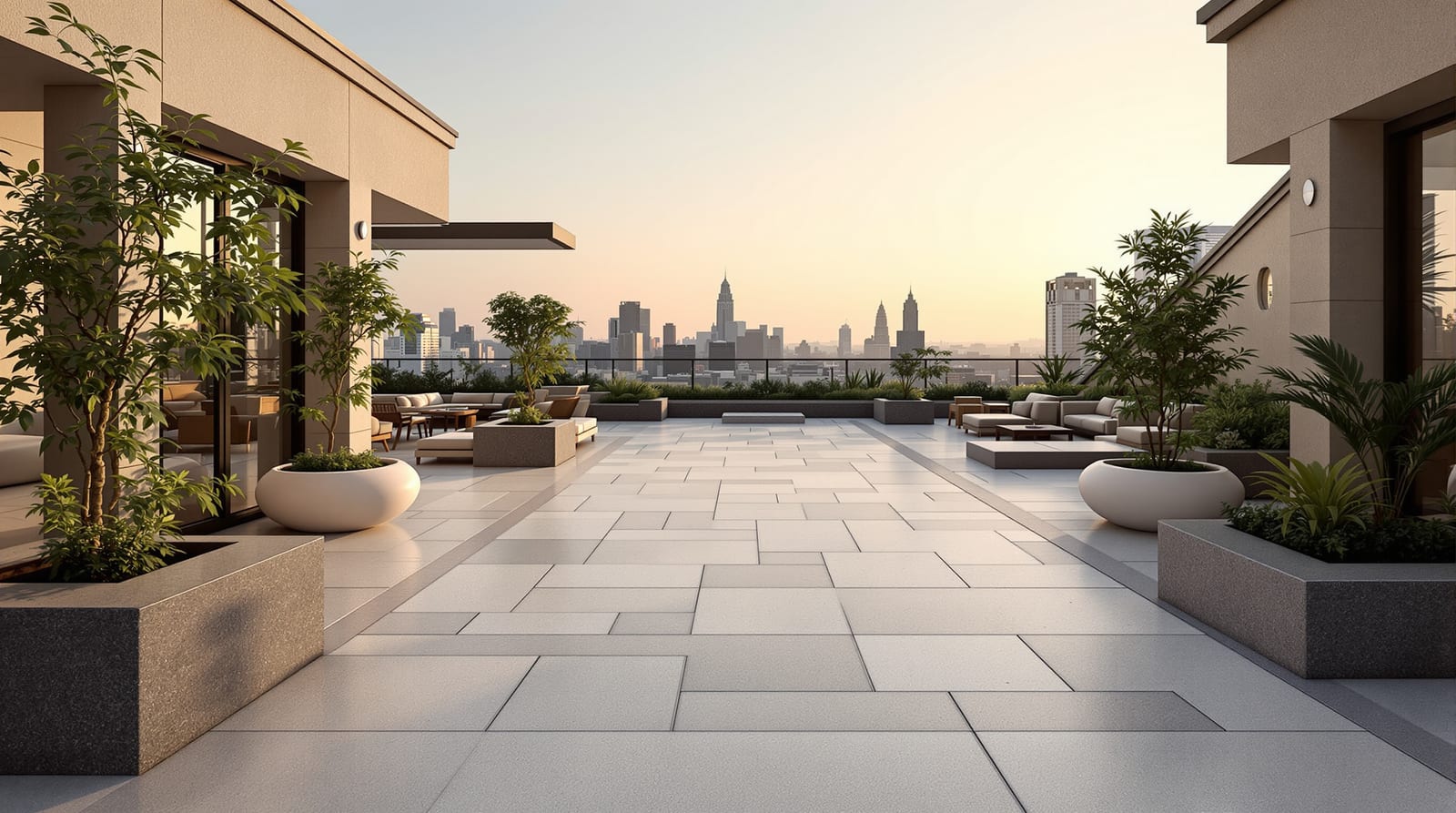
Patio Flooring in India: Best Decks & Outdoor-Seating Floors for Weather, Grip & Looks
How to floor a patio, deck or outdoor lounge in India so it shrugs off UV and monsoon, grips wet feet, stays barefoot-friendly and still looks like a place you want to entertain.
A patio is your open-air living room — the floor where you have your evening chai, host a weekend dinner, let the kids sprawl and barefoot guests walk straight in from the lawn. So it has to do two jobs at once: survive everything Indian weather throws at it — blazing UV, lashing monsoon, swelling humidity — and still look good enough to entertain on. That rules out most indoor floors. This guide ranks the surfaces that actually thrive on a patio, deck, rooftop or garden-seating area in India, explains the pedestal-deck trick that protects your terrace waterproofing, and tells you what each costs per square foot.
What a patio floor really has to handle
Before you fall for a finish, be honest about the seven demands an outdoor lounge floor faces:
- Weather, UV and fade. Sun bleaches colour and embrittles cheap materials; monsoon and freeze-thaw (in hill stations) crack porous surfaces. You want a fade-proof, weather-stable material that looks the same in year five as on day one.
- Wet grip. A patio gets rained on and washed down, and people walk it in slippers or barefoot. Aim for a textured, anti-slip finish in DIN 51130 R10-R11 territory — never a polished, mirror surface outdoors. Our anti-slip flooring standards guide explains the R-ratings.
- Looks. This is a social space. Wood and stone looks, warm tones, large clean formats — the floor sets the mood for the whole patio.
- Barefoot comfort. People sit, lie and pad around with no shoes. Dark dense stone and tile get scorching in afternoon sun; lighter tones, timber and WPC stay friendlier underfoot. Heat matters — see heat-reflective terrace flooring.
- Drainage and slope. Water must run off, not pond. Give the finished floor a fall of roughly 1 in 80 to 1 in 100 toward a drain or edge, and choose surfaces with open joints or gaps that let rain drain through.
- Waterproofing protection (terraces and rooftops). On a slab over living space, the floor must not trap water against the waterproofing membrane. This is where pedestal-mounted decks change everything (below).
- Cost per sq ft. A patio is usually a modest area, so you can afford a nicer finish than a whole house — but the range is wide, so budget deliberately.
A ground-level garden patio, a rooftop terrace and a first-floor balcony-deck are different problems. The garden patio can be laid on a sand or mortar bed like any path; the terrace and rooftop sit over waterproofing and benefit hugely from a raised, removable deck.
The top picks, ranked
1. 20mm porcelain pavers — the modern favourite
Thick 20 mm outdoor porcelain pavers are the surface most contemporary Indian patios are now built with, and deservedly so. They are frost-, stain- and fade-proof, near-zero water absorption, come with anti-slip (R11) textured surfaces, and are made in convincing wood-plank, stone, concrete and travertine looks — so you get the warmth of timber or the gravitas of stone with none of the maintenance. Best of all, a 20 mm paver can be dry-laid on grass, gravel or a sand bed, set in mortar, or dropped onto adjustable pedestals over a terrace (see below) — the most flexible patio surface there is. They wipe clean, never need sealing and shrug off planter stains and barbecue grease. The premium is the only catch. See the full porcelain tile flooring guide.
2. WPC / wood deck tiles — warm, clickable, terrace-friendly
For barefoot warmth and a real-deck feel, WPC (wood-plastic composite) and timber deck tiles are hard to beat. Clickable interlocking tiles sit on a built-in grid that lifts the wear surface off the slab, so water drains through the gaps and the tiles can be laid by hand over a terrace, balcony or rooftop in an afternoon — no wet trades, and they lift off if you need to reach the waterproofing. WPC resists rot, termites and warping far better than solid timber and barely needs maintenance; natural-wood deck tiles look gorgeous but want periodic oiling. Either reads instantly as an outdoor lounge. See outdoor deck tiles.
3. Natural stone — sandstone, kota, granite
For a patio that feels rooted and traditional, natural stone is the classic Indian answer. Sandstone (Dholpur, Kota-region beige, grey) is the go-to outdoor stone — naturally non-slip, cool-ish, and beautiful in riven or sawn finishes. Kota stone is tough, cheap and fine outdoors in a leather/honed (not mirror-polished) finish. Granite — flamed or leathered — is the most durable and near stain-proof, ideal for a high-traffic or premium patio. Keep every outdoor stone matt/textured, never mirror-polished. See sandstone flooring and the broader natural stone pavers guide.
4. Exposed aggregate — grippy, monolithic, low-maintenance
Exposed aggregate concrete (cement washed back to reveal stone chips) gives a hard-wearing, naturally anti-skid, jointless patio surface that ages gracefully and hides marks. The pebbly texture grips wet feet and disguises the odd spill, and it suits a contemporary garden patio or pool-adjacent lounge beautifully. Being a poured slab it needs control joints and a sound base, and it is a fixed surface (no lifting it later). See exposed aggregate flooring.
5. Anti-slip vitrified — the value option
If budget is tight, heavy-traffic anti-skid (matt/structured, R10-R11) vitrified tiles laid on a full, well-compacted bed give a serviceable patio floor at a friendly price — best for a covered or partly sheltered patio. Use only textured outdoor-rated tiles on a solid bed with no voids; standard glossy vitrified gets slippery and crazes outdoors. See vitrified tile flooring and anti-skid floor treatment.
Comparison: surface vs weather, grip, comfort, cost
The table ranks the realistic patio choices. Cost is indicative installed 2026 ₹/sq ft and shifts with city, base prep, finish and whether you use pedestals.
| Surface | Best for | UV / fade resistance | Wet grip | Barefoot comfort | Drainage / terrace fit | Cost (₹/sq ft) |
|---|---|---|---|---|---|---|
| 20mm porcelain pavers | Any patio, rooftop, terrace | Excellent (fade-proof) | High (R11 textured) | Good (lighter tones) | Excellent (pedestal-ready) | 120-300 |
| WPC deck tiles | Terrace, balcony, rooftop deck | Good (UV-stabilised) | High (grooved) | Excellent (warm) | Excellent (clip-on, drains) | 150-400 |
| Wood deck tiles | Premium warm deck | Medium (needs oiling) | High (grooved) | Excellent (warm) | Excellent (raised grid) | 250-800 |
| Sandstone / kota | Traditional garden patio | High | High (riven/honed) | Medium-Good | Good (mortar bed, sloped) | 90-220 |
| Granite (flamed) | High-traffic premium patio | Excellent | High (flamed) | Medium (can heat up) | Good (mortar bed, sloped) | 130-350 |
| Exposed aggregate | Contemporary garden patio | Excellent | High | Medium | Good (sloped slab) | 120-220 |
| Anti-slip vitrified | Budget / covered patio | High | High (R10-R11 matt) | Medium | Needs slope + full bed | 90-220 |
For a wider view of outdoor surfaces and the wet-area side, our terrace flooring guide and pool deck flooring guide go deeper, and the room-by-room flooring guide helps you choose by space.
The pedestal-deck trick for terraces and rooftops
The single most useful idea for a rooftop or first-floor patio is the raised pedestal floor. Instead of bonding tiles in mortar directly onto your waterproofing — which traps water and means destroying the floor to fix a leak — you sit 20 mm porcelain pavers (or deck tiles) on adjustable plastic pedestals. The result: a perfectly level walking surface, a ventilated drainage cavity beneath it, and a floor you can lift tile-by-tile to inspect or repair the membrane. The diagram shows the two approaches side by side.
On a garden patio at ground level, the simpler mortar-bedded (or sand-bedded) stone or paver build is perfect — just give it a clear drainage fall. On a terrace or rooftop over living space, prefer pedestals: they protect the waterproofing, drain freely, and stay cool because air circulates underneath. Always slope the structural slab and the finished floor away from the house, never toward it.
Design tips for a patio you actually use
- Match the look to the room it extends. A wood-look porcelain or WPC deck flows from a living room; sandstone or kota suits a traditional or villa aesthetic; flamed granite reads premium.
- Go large and calm. Big-format pavers and clean plank deck tiles make a small patio feel bigger and read as a designed lounge, not a leftover gap.
- Mind the heat. Lighter tones, timber and WPC stay barefoot-friendly in afternoon sun; reserve dark dense stone for shaded or evening-use patios.
- Zone with the floor. A change of material or laying direction can separate the dining area from the lounge or the planter border.
- Keep a continuous threshold. Match indoor and outdoor floor levels and tones at the door so the patio reads as an extension of the home — Vastu-friendly and visually seamless.
Do and don't
- Do choose anti-slip, textured finishes (R10-R11) for any rain-exposed patio; never lay polished tiles or mirror-polished stone outdoors.
- Do use 20 mm pavers or a raised deck on terraces and rooftops to protect the waterproofing and drain freely.
- Do give every patio a clear drainage fall away from the house, and provide control/movement joints in poured slabs.
- Don't lay standard indoor glossy vitrified outside — it crazes, fades at the grout and turns slippery when wet.
- Don't bond tiles directly in mortar onto rooftop waterproofing if you can pedestal instead — a future leak becomes a demolition job.
- Don't pick scorching dark dense stone for a sun-blasted barefoot lounge; comfort underfoot matters.
Care and upkeep
Porcelain pavers and WPC need almost nothing — sweep, hose and the odd wash; they never need sealing. Natural stone and exposed aggregate benefit from periodic resealing for stain resistance — see our floor resealing guide and floor cleaning guide. Wood deck tiles want oiling once or twice a year to hold colour and water resistance. After a few monsoons, top up sand joints on dry-laid pavers and check pedestal levels on a raised deck. Plan and price the job with the patio deck cost calculator.
Frequently asked questions
What is the best flooring for a patio in India?
For most homes, 20 mm outdoor porcelain pavers are the best all-rounder — fade-, stain- and frost-proof, anti-slip (R11), low-maintenance and available in wood and stone looks. For a warm, barefoot deck feel, WPC or wood deck tiles win; for a traditional look, sandstone or flamed granite. Match the choice to your patio's sun exposure and whether it sits over a terrace.
Can I lay patio flooring on a rooftop or terrace?
Yes, and the smart way is a raised pedestal deck: 20 mm porcelain pavers or WPC/wood deck tiles sit on adjustable pedestals or a clip-grid over the waterproofing, draining freely and lifting off for membrane repairs. Avoid bonding tiles directly in mortar onto rooftop waterproofing where you can pedestal instead. See terrace flooring.
Is porcelain or WPC better for a patio?
Porcelain pavers are tougher, fully fade- and stain-proof and zero-maintenance, but can heat up and feel hard. WPC deck tiles are warmer and more comfortable barefoot, click together in an afternoon and drain through gaps, but are softer and less scratch-resistant. Many patios mix both — porcelain for the dining zone, a WPC deck for the lounge.
How do I stop my patio floor getting slippery in the monsoon?
Specify a textured, anti-slip finish — DIN 51130 R10-R11 porcelain, riven sandstone, flamed granite, exposed aggregate or grooved deck tiles — and give the floor a drainage fall so water never stands. Never use polished tiles or mirror-polished stone outdoors. The anti-slip flooring standards guide covers the ratings.
How much does patio flooring cost per sq ft in India?
Indicatively in 2026: anti-slip vitrified ₹90-220, sandstone/kota ₹90-220, exposed aggregate ₹120-220, 20 mm porcelain pavers ₹120-300, flamed granite ₹130-350, WPC deck tiles ₹150-400 and natural wood deck tiles ₹250-800 per sq ft installed. Pedestal systems, base prep and city rates shift these; verify current quotes and size the job with the patio deck cost calculator.
Export this guide
Related Guides — Deep-dive reading
Anti Slip Flooring for Bathroom and Wet Areas in India: R-Ratings, Finishes and Genuinely Safe Tile Choices
How to choose genuinely safe flooring for bathrooms, kitchens, balconies, pools, entrances and elderly- or child-friendly homes — the R-rating system, finishes that grip wet feet, anti-skid natural stone, slope to drains and the tiles to avoid.
Flooring & SurfacesTerrace Flooring in India: Best Heat-Reflective, Waterproof Rooftop Options (2026)
An Indian terrace takes full sun, heavy monsoon and daily thermal expansion, so the floor is the second line of defence over a sound waterproofing layer and slope: cool-roof china mosaic, heat-reflective and anti-skid vitrified pavers, Kota and Tandur, deck and WPC tiles, pedestal pavers and artificial grass, with ₹/sq ft, expansion joints and the waterproofing-first rule.
Flooring & SurfacesPool Deck Flooring in India: Anti-Slip, Cool, Barefoot-Safe Poolside Floors
Wet, barefoot and sunbaked, a pool deck is the one floor where anti-slip is non-negotiable — here is how to pick R11-R12 stone, porcelain pavers, WPC deck tiles and more, with ₹/sq ft costs.
Flooring & SurfacesRelated Tools — Try Free
Monsoon-Readiness Checklist
Pre-rain home audit across 9 categories — terrace, drains, waterproofing, electrical, HVAC, pest, vehicles, documents.
Seasonal AuditFlooring Cost Calculator
Estimate the all-in cost of a floor — material, laying, wastage, skirting and GST — by area and material.
Flooring CalculatorFlooring Material Selector
Get the best flooring material for your room, budget and climate, with anti-slip checks for wet areas.
Flooring Tool