
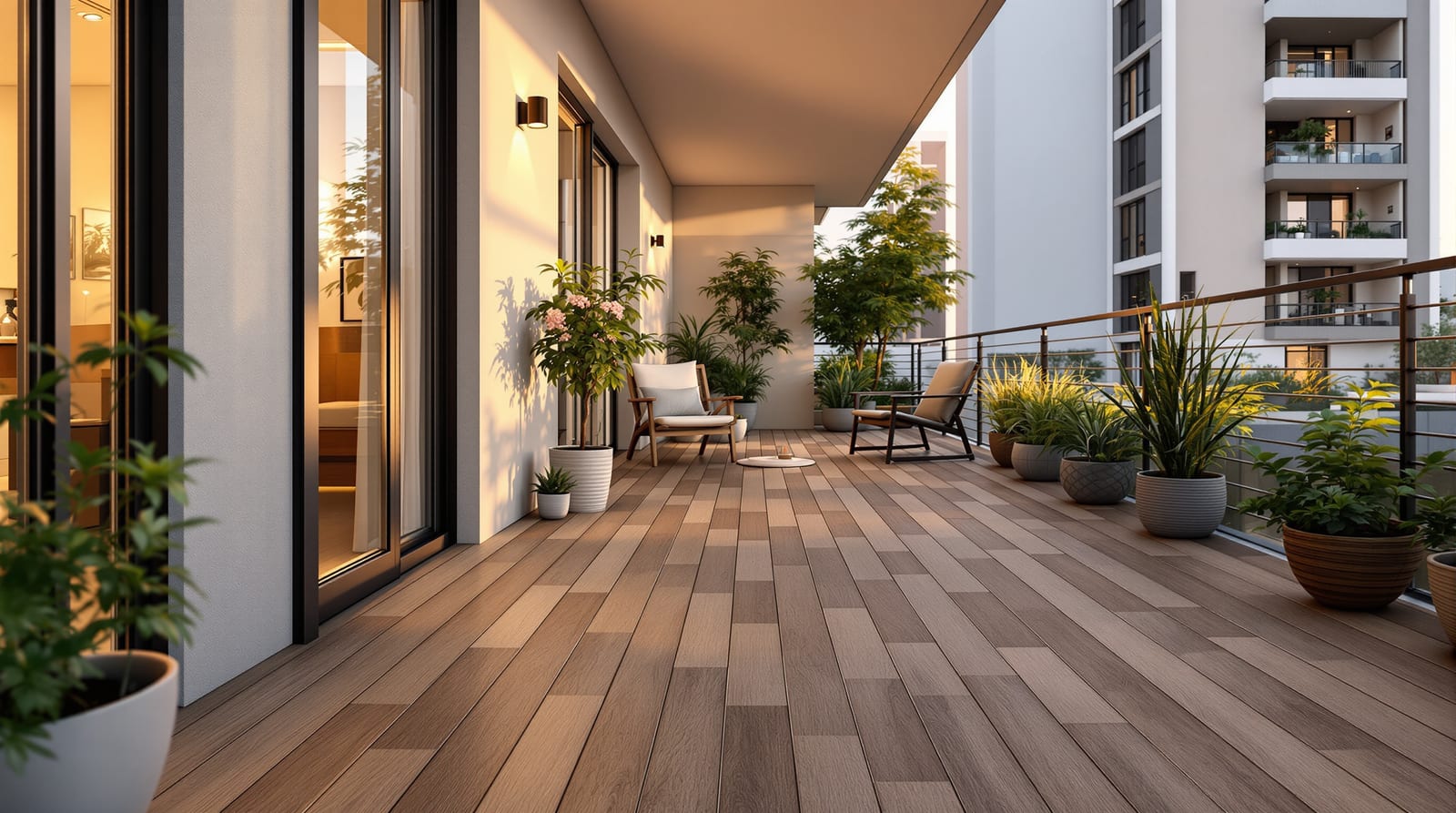
Deck Tiles in India: Click-Together Outdoor Floor Tiles for Terraces, Balconies, Rooftops & Pool Decks — Materials, Cost & How They Work
Deck tiles are the click-together outdoor floor tiles — WPC and wood-look composite, real teak, 20 mm porcelain pavers or stone on a backing tray — that snap onto a terrace, balcony, rooftop or pool deck over the existing waterproofing, giving an instant, removable, no-demolition makeover at ₹100–400 per sq ft.
Deck tiles are the quickest, least messy way to turn a bare, hot, ugly terrace or balcony into a usable outdoor room. They are square modular tiles — wood-look WPC and composite, real teak or eucalyptus, 20 mm porcelain pavers or stone — that clip onto a plastic backing tray or sit on adjustable pedestals and simply snap together over your existing floor, no demolition, no mortar, no wet work. At ₹100–400 per sq ft you can lay a whole terrace in a weekend, and lift it again whenever you want.
This guide explains the materials and the looks they give, how the click-together tray and pedestal systems actually work, why a raised deck protects your waterproofing instead of risking it, where deck tiles suit (and where they do not), what they cost in India, how to care for them, and how they compare with interlocking paver tiles and loose-lay WPC flooring.
What deck tiles are
A deck tile is a finished outdoor floor unit, usually 300 x 300 mm (some 600 x 600 mm or 300 x 600 mm), built in two parts: a wearing surface on top and a structural base underneath. The base is the clever bit. On most consumer tiles it is a rigid plastic grid or "tray" with interlocking lugs and loops along the edges, so tiles snap to their neighbours and lock into a continuous mat. The tray raises the wearing surface a few millimetres off the floor and is open underneath, so rainwater drains straight through and away rather than pooling on the surface.
The wearing surface is where the choices live — narrow slats of WPC or composite, strips of oiled teak, a single thick porcelain paver or a slab of stone. Because every tile is the same module, you lay them like a giant click-fit jigsaw, cut the edge pieces with a hand saw or angle grinder, and you have a deck. The whole assembly floats: it is not glued or fixed to the structure, which is exactly why it is removable and why renters love it.
A second, more serious version of the same idea drops the tray and instead lays the tiles — usually 20 mm porcelain pavers or stone — on adjustable plastic pedestals. The pedestals lift the deck higher (anywhere from ~15 mm to several hundred millimetres), let you create a dead-level deck over a sloping or uneven terrace, and leave a full ventilated, drained void underneath. This is the system you see on hotel rooftops and pool decks, and it is covered in detail below.
Deck tile materials, the look they give and what they cost
The material decides the look, the cost, the heat underfoot and the maintenance. Here is how the common Indian options compare.
| Material | Look & feel | Indicative cost (₹/sq ft) | Best for | Watch-outs |
|---|---|---|---|---|
| WPC / composite (wood-look) | Realistic wood-grain slats, grey/brown/teak tones, low maintenance | ₹100–250 | Terraces, balconies, rentals, most homes | Cheaper grades fade and warp in harsh sun; buy UV-stabilised |
| Real wood (teak / eucalyptus / acacia) | Genuine timber warmth, silvers gracefully | ₹200–400 | Premium decks, covered balconies, pool surrounds | Needs oiling 1–2x a year; goes grey if neglected |
| Porcelain pavers (20 mm) | Stone/wood/concrete-look, very hard, fade-proof | ₹150–400 | Pool decks, sunny rooftops, heavy use | Heavier; best on pedestals; edge cuts need a tile blade |
| Natural stone on tray | Granite/sandstone/slate, premium and cool | ₹200–400+ | Luxury terraces, courtyards | Heavy; porous stone needs sealing |
| Plastic / resin grid tiles | Utility drainage tiles, ribbed top | ₹100–180 | Wet utility zones, washdown areas, balcony floors | Functional, not decorative |
These are indicative for 2026 and vary by city, brand, finish and whether you buy the tiles alone or a full pedestal kit. WPC and composite tiles dominate the Indian DIY market because they hit the sweet spot of looking like wood, surviving the monsoon and costing far less than teak. Twenty-millimetre porcelain pavers are the choice where you want zero fading and zero maintenance and are happy to spend more and lay them on pedestals.
How deck tiles work: the tray and pedestal systems
There are two construction systems, and choosing the right one is most of the decision.
Click-together trays (the DIY makeover)
This is the system most homeowners and renters buy. Each tile has a plastic base grid with male and female interlocking tabs on all four edges. You start in one corner, lay tiles loosely, press the edges together until the tabs click, and work across the floor. The grid raises the surface 3–5 mm off the existing floor, so water drains through the gaps between slats, runs into the void and flows to your existing terrace drain. No adhesive, no levelling compound, no curing — you walk on it the moment it is down.
Trays suit floors that are already reasonably flat and already draining, because the tile sits almost directly on the existing surface and follows its slope. A balcony or terrace that already has a proper fall to the drain is ideal. The big limitation is that trays cannot correct an uneven or back-falling floor — for that you need pedestals.
Adjustable pedestals (the raised deck)
A pedestal deck lifts the tiles clear of the structural floor on small adjustable plastic supports placed under each tile corner. Each pedestal has a threaded collar you turn to set the exact height, plus self-levelling heads and spacer tabs that set a neat, even joint between tiles. By dialling each pedestal you build a perfectly flat, level deck over a floor that slopes, dishes or has obstacles — while the floor below keeps its own slope to the drain.
The void this creates is the whole point of a serious raised deck. The diagram below shows the build-up: the structural slab and its waterproofing stay put and keep their fall; the pedestals stand on top; the deck tiles sit level on the pedestal heads; and a ventilated, drained cavity runs underneath, carrying away rainwater and, if you wish, hiding pipes, drip lines and lighting cables.
A pedestal deck costs more and stands taller, but it solves problems a tray cannot: it levels a bad floor, it drains and ventilates the waterproofing so it dries and lasts longer, and it gives you a clean service void. It is the right answer for rooftops, pool decks and any terrace where the existing fall is poor.
Why a raised deck protects your waterproofing
This is the single best argument for deck tiles, and it is worth understanding. On a typical Indian terrace the most failure-prone, most expensive thing is the waterproofing — the membrane or brickbat-coba layer that keeps water out of the slab below. Two things destroy it: standing water and ultraviolet sun. A bare terrace bakes the membrane all day and ponds water in every dip after rain.
A deck tile system, especially a pedestal deck, fixes both. The tiles shade the waterproofing from direct sun, dropping its surface temperature and slowing UV ageing. The open void underneath means rain drains straight through the tile joints, runs across the still-sloping waterproofing and out to the drain, so water never sits on the membrane. The membrane stays cool, dry and protected — and because the deck is removable, you can lift a few tiles to inspect or repair the waterproofing without demolishing a floor. Compared with screeding and tiling a terrace solid (which buries and bakes the membrane), a floating deck is genuinely kinder to the structure. Pair it with the terrace flooring guide and the heat-reflective terrace flooring guide when planning a rooftop.
Where deck tiles suit
Deck tiles shine wherever you want an outdoor floor fast, reversibly and without wet work.
| Space | Why deck tiles work |
|---|---|
| Rented flats & terraces | No demolition, no permanent change; lift and take them with you |
| Owned terraces & rooftops | Instant makeover that also shades and drains the waterproofing |
| Balconies | Warm wood-look floor over dull builder tiles; drains through |
| Pool decks & surrounds | Anti-slip, cool porcelain or composite; water drains away fast |
| Garden seating & courtyards | Pedestal decks level a sloping garden into a usable platform |
| Roof gardens & café terraces | Service void hides drip irrigation and lighting cables |
They suit you especially well if you rent, if your terrace waterproofing is fine and you do not want to disturb it, or if you want to test a layout before committing to a permanent floor. They suit you less if you need a very low floor height (a pedestal deck eats headroom and creates a step at doors) or if your budget is tight enough that bare anti-skid tiles make more sense.
Cost of deck tiles in India
Deck tiles are priced per square foot of finished tile, with the pedestals or trays usually included in consumer kits and priced separately for engineered pedestal systems. The figures below are indicative for 2026 and vary by city, brand, finish and import content; add 18% GST and any edge-cutting or pedestal extras.
| Item | Indicative cost (₹/sq ft) | Notes |
|---|---|---|
| WPC / composite click tiles | ₹100–250 | The mainstream DIY choice; UV-stabilised grades cost more |
| Real teak / acacia click tiles | ₹200–400 | Premium look; budget annual oiling |
| 20 mm porcelain pavers (tile only) | ₹150–400 | Add pedestals; fade-proof, very low maintenance |
| Adjustable pedestals (kit) | +₹30–120 | Per sq ft of deck, depends on height and density |
| Stone-on-tray tiles | ₹200–400+ | Granite/sandstone; heavy, seal porous stone |
Against laying a permanent terrace floor — screed plus anti-skid vitrified tiles at roughly ₹80–200 per sq ft applied, plus the cost and disruption of disturbing the waterproofing — a click tray deck is in the same ballpark while being instant and removable, and a full pedestal-and-porcelain deck sits at the premium end. For a project-wide number use the Studio Matrx flooring cost calculator and the tile quantity calculator, and read the flooring cost per square foot in India guide for context.
Caring for deck tiles
Maintenance depends on the surface:
- WPC / composite and porcelain: sweep off leaves and grit, hose or mop occasionally. They do not need sealing or oiling. Lift and clear debris from the void once or twice a year so drainage stays clear.
- Real wood: sweep, wash gently, and re-oil once or twice a year (more in harsh sun) to keep the colour; let it silver gracefully if you prefer the weathered look. Never let leaves rot on timber.
- All systems: the recurring chore unique to deck tiles is the void underneath. Leaves, dust and silt collect under the tiles and can block drainage or harbour insects, so periodically lift a section, sweep the floor beneath and clear the drain. Click-tray decks lift easily by hand; pedestal decks lift tile by tile.
Choose UV-stabilised composite and anti-skid surfaces from the start, and a deck will run for years with little more than a hose-down. For grip in the wet, see the anti-slip flooring for wet areas guide.
Deck tiles vs interlocking paver tiles vs WPC flooring
These three options are easy to confuse, so here is the honest separation.
| System | What it is | Where it wins | Where it loses |
|---|---|---|---|
| Deck tiles | Finished modular tiles on a tray or pedestals, floating | Removable, drains, protects waterproofing, levels via pedestals, premium looks | Costs more; raises floor height; void needs clearing |
| Interlocking paver tiles | Rubber/plastic/composite interlocking utility tiles | Cheap, tough, simple wet-and-utility floors, temporary cover | Utilitarian look; no raised void; less refined |
| WPC flooring (planks) | WPC click planks, usually loose-laid indoors/covered | Seamless wood-look floor for rooms and covered balconies | Not made to drain or sit in open sun and rain like deck tiles |
Use deck tiles when you want a good-looking, draining, liftable outdoor floor — especially over waterproofing you want to protect. Use interlocking paver tiles when you want a cheap, rugged utility or temporary outdoor surface. Use WPC flooring when you want a continuous wood-look plank floor indoors or under cover. For balconies specifically, weigh all three in the balcony flooring guide, and see the specialty flooring guide for where deck tiles fit among all the alternative floors.
Pros and cons of deck tiles
| Pros | Cons |
|---|---|
| Instant, no-demolition makeover — laid in a day | Costs more than bare anti-skid tiles |
| Removable — ideal for renters; lift and reuse | Raises the floor; creates a step at doors and a height loss |
| Water drains through; no ponding | Debris collects in the void and must be cleared |
| Shades and protects the waterproofing below | Cheap composite fades and warps in harsh sun |
| Pedestals level a sloping or uneven floor | Pedestal decks are taller and cost more |
| DIY click-fit; no mortar or curing | Real wood needs regular oiling |
| Wide choice of looks — wood, porcelain, stone | Edge tiles need cutting; very high pedestals need engineering |
Frequently asked questions
Can I lay deck tiles over my existing terrace tiles or waterproofing?
Yes — that is the whole idea. Click-tray deck tiles float directly over an existing tiled or screeded terrace as long as it is reasonably flat and already drains; you do not glue or fix them to the floor, so the surface below is undisturbed. Over a poorly-draining or sloping floor, use adjustable pedestals to build a level deck while the original floor keeps its fall to the drain. Either way the existing waterproofing stays in place and is protected, not broken into.
Do deck tiles damage the waterproofing underneath?
A floating deck does not penetrate or load the membrane in any harmful way — there are no fixings into the slab. In fact a raised deck usually protects the waterproofing by shading it from the sun and letting rain drain away instead of ponding. The one care point is debris in the void: clear leaves and silt periodically so water keeps draining freely and nothing rots against the membrane.
Are deck tiles slippery when wet?
Good-quality WPC, composite and porcelain deck tiles are textured or grooved for grip, and because water drains straight through the joints rather than sitting on top, they are usually safer than a smooth wet floor. For pool decks and rainy terraces choose tiles with a defined anti-slip rating, and avoid polished or smooth surfaces in wet zones.
How long do deck tiles last in India?
UV-stabilised WPC and composite tiles typically last several years to a decade outdoors; 20 mm porcelain pavers effectively last indefinitely and never fade; real teak lasts decades if oiled. Cheap, non-UV-stabilised composite is where disappointment comes from — it can fade, chalk or warp within a couple of harsh summers, so buy a grade rated for outdoor sun and pay for the warranty.
Can I take deck tiles with me when I move?
Yes — that is one of their biggest advantages for renters. Click-tray decks unclip by hand, stack flat and re-lay in your next home. Pedestal decks lift tile by tile and the pedestals are reusable. Nothing is glued down, so you leave the original floor exactly as you found it.
Export this guide
Related Guides — Deep-dive reading
Patio Flooring in India: Best Decks & Outdoor-Seating Floors for Weather, Grip & Looks
How to floor a patio, deck or outdoor lounge in India so it shrugs off UV and monsoon, grips wet feet, stays barefoot-friendly and still looks like a place you want to entertain.
Flooring & SurfacesTerrace Flooring in India: Best Heat-Reflective, Waterproof Rooftop Options (2026)
An Indian terrace takes full sun, heavy monsoon and daily thermal expansion, so the floor is the second line of defence over a sound waterproofing layer and slope: cool-roof china mosaic, heat-reflective and anti-skid vitrified pavers, Kota and Tandur, deck and WPC tiles, pedestal pavers and artificial grass, with ₹/sq ft, expansion joints and the waterproofing-first rule.
Flooring & SurfacesInterlocking Tiles in India: Click-Together Floor Tiles for Terraces, Balconies, Garages & Rented Homes — Types, Cost & DIY Install
Interlocking tiles are the loose-lay, click-together floor tiles you snap down over any flat surface with no glue, no grout and no demolition — at ₹40–150 per sq ft, fully DIY, removable and reusable, ideal for terraces, balconies, utility areas, garages, gyms and rented homes.
Flooring & SurfacesRelated Tools — Try Free
Flooring Cost Calculator
Estimate the all-in cost of a floor — material, laying, wastage, skirting and GST — by area and material.
Flooring CalculatorMonsoon-Readiness Checklist
Pre-rain home audit across 9 categories — terrace, drains, waterproofing, electrical, HVAC, pest, vehicles, documents.
Seasonal AuditRainwater Tank Sizer
How big should your rainwater tank be? Computes annual harvest, recommended tank capacity in litres, water-bill savings, and payback — for 10 Indian cities.
RWH Calculator