
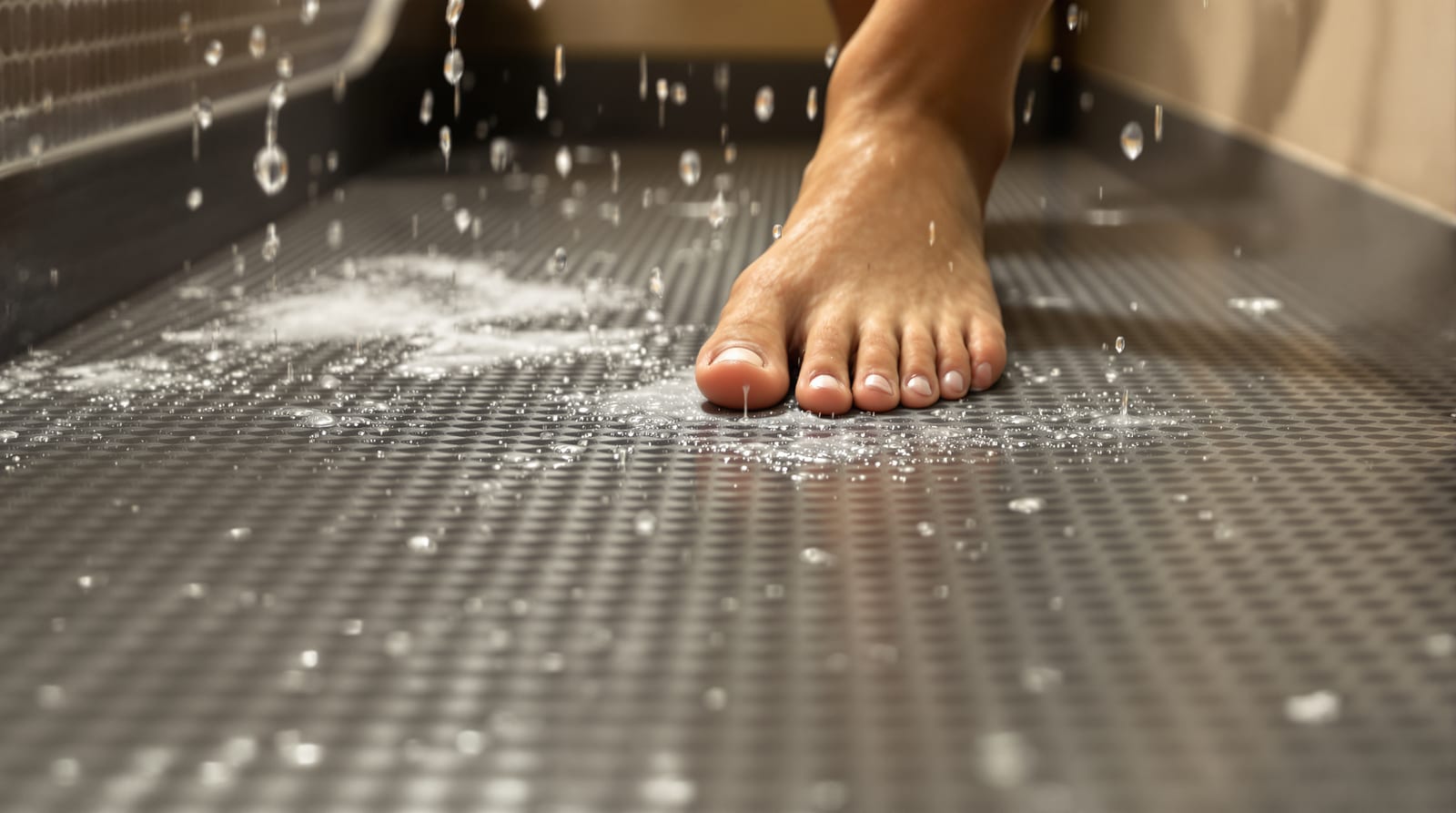
Anti Skid Floor Treatment India: Make Slippery Tiles Safe Without Replacing Them, R-Ratings, Acid-Etch and Anti-Slip Coatings
How to make slippery polished floors safe in Indian homes: where slips happen, what R-ratings and the wet pendulum test mean, how anti-slip acid-etch treatment raises grip on existing tiles at ₹15-40 per sq ft, plus coatings, mats, strips, choosing anti-skid tiles upfront and accessibility rules.
A wet, glossy floor is one of the most common and most preventable causes of injury in the Indian home. The good news is that you almost never have to rip up and re-lay a slippery floor to fix it. A handful of treatments, from a chemical acid-etch that micro-roughens the tile surface to grippy coatings, mats and strips, can turn a skating-rink bathroom or a monsoon-soaked entrance into a safe floor for a fraction of the cost of replacement. This guide explains where slips actually happen, what the R-rating and wet-pendulum numbers on a tile box really mean, and which treatment to choose for each situation.
Where slips actually happen
Slips are not random. They cluster in a few predictable wet zones, and if you treat those zones you have solved most of the danger in a typical home.
- Bathrooms and shower areas are the worst offenders: soap, shampoo and water on a polished tile drop grip to almost nothing. This is where most household slip injuries happen, especially to children and elderly residents.
- Entrances, lobbies and foyers in the monsoon become lethal when people walk in with wet feet and dripping umbrellas onto a glossy vitrified floor. The first two metres inside the door are the danger band.
- Kitchens see oil splatter, water at the sink and dropped food, a combination that defeats most smooth floors.
- Balconies, utility areas and open terraces get rain-wet and stay damp, and are often laid with the same glossy tiles as the rest of the house.
- Staircases and ramps are dangerous because a slip there causes a fall, not just a stumble.
- Homes with elderly people or anyone with reduced mobility need every wet zone treated, because the consequences of a fall are far more serious.
A simple rule: any floor that gets wet, soapy or oily in normal use is a candidate for anti-skid treatment, however good it looks dry.
What R-ratings and slip numbers actually mean
When you read that a tile is "R10" or "anti-skid," there is a real test behind it, and understanding the scale lets you buy and treat sensibly.
The most quoted system in India and Europe is the DIN 51130 ramp test, which gives an R-rating from R9 to R13. A tester walks an oil-coated tile mounted on a ramp that tilts up until they start to slip; the steeper the angle they can hold, the higher the R-number. R9 is the lowest (smooth, dry-area only) and R13 is the highest (heavy industrial wet grip).
| R-rating | Slip resistance | Where it suits |
|---|---|---|
| R9 | Low | Dry indoor rooms only: bedrooms, living rooms, dry lobbies |
| R10 | Moderate | Kitchens, entrances, balconies, general wet-prone domestic areas |
| R11 | Good | Bathrooms, shower zones, covered outdoor areas, utility |
| R12 | High | Open terraces, pool surrounds, commercial wet areas |
| R13 | Very high | Industrial kitchens, factory wet floors |
For an Indian home, the practical target is simple: aim for R10 or higher in any area that gets wet, and R11 in bathrooms, shower floors and around pools. Dry bedrooms and living rooms can stay at R9 because grip there barely matters and a smoother finish is easier to keep clean.
A second test you may see, especially in commercial or accessibility contexts, is the wet pendulum test (the PTV or Pendulum Test Value), used in British and Australian standards. A swinging rubber foot drags across a wetted floor; a PTV of 36 or above is classed as low slip risk, while below about 25 is high risk. The two systems measure slightly different things, an R-rating tests barefoot-on-oil ramp grip, the pendulum tests a shod or barefoot wet drag, but both point the same way: smooth polished floors score badly when wet, and texture or treatment raises the score.
How acid-etch anti-slip treatment works
This is the treatment most homeowners have never heard of and the one that solves the most problems. An anti-slip acid-etch treatment is a chemical solution, mildly acidic, that you apply to an existing smooth, polished or glazed tile. It reacts with the tile surface and opens up microscopic pores and tracks in the glaze, far too small to see or feel as roughness when dry, but enough to break the thin film of water that causes slipping. When the floor is wet, those micro-pores grip the foot and channel water away, raising the wet slip resistance dramatically without changing how the floor looks.
The diagram below shows the difference between a smooth glaze, where a water film floats the foot, and a micro-etched surface, where the tiny pores break that film and grip.
The process is quick and non-destructive. The floor is cleaned and degreased, the solution is spread and left for a few minutes (the dwell time depends on the tile and the product), then it is scrubbed and rinsed off thoroughly. The result is a floor that looks essentially unchanged but is markedly less slippery when wet. It is best done by a trained applicator because the chemical must be matched to the tile, glazed ceramic, vitrified, natural stone and terrazzo all react differently, and over-dwelling can dull a polished surface. Done right, the appearance change is minimal; done carelessly on glossy marble it can leave a slight haze, so always insist on a test patch first.
A typical acid-etch anti-slip treatment costs around ₹15-40 per sq ft in India (indicative, varies by city, tile type and area), making it a fraction of the cost of stripping and re-laying a floor. The grip improvement usually lasts several years and can be re-applied; on heavy-traffic commercial floors it is topped up more often.
Treatment options compared
There is no single best answer, the right choice depends on whether you can change the floor, how much grip you need and how the area looks. This table compares the realistic options for an Indian home.
| Method | How it works | Grip gain | Indicative cost | Durability |
|---|---|---|---|---|
| Acid-etch anti-slip treatment | Chemically micro-etches existing tile so wet pores grip the foot; look barely changes | High, raises wet R-rating on smooth tiles | ₹15-40 per sq ft | Several years, re-applicable |
| Anti-slip clear coating / sealer | A textured invisible-grit or matte coating brushed/rolled on top | Moderate to high | ₹25-70 per sq ft | 1-3 years, wears in traffic, recoatable |
| Anti-slip adhesive strips / tape | Gritted strips stuck on stairs, ramps, shower edges | High, but only where stuck | ₹20-60 per running ft | 6 months-2 years, peel and replace |
| Rubber / PVC anti-slip mats | Loose-laid grippy mats in shower, kitchen, entrance | High where placed | ₹150-800 per mat | 2-5 years, easy to swap |
| Choosing anti-skid (R10-R11) tiles upfront | Buy textured matte tiles for wet areas at the design stage | Built-in, permanent | Similar to normal tile price | Lifetime of the tile |
| Honing / micro-abrasion (stone) | Mechanically grinding a polished stone to a matte, grippier finish | Moderate to high | ₹30-80 per sq ft | Long, but changes the look |
For an existing slippery floor you cannot replace, the acid-etch treatment is usually the best value: it works on most tiles, costs little and leaves the floor looking the same. Coatings are useful where the tile will not etch well or you want extra grit, but they wear and need recoating. Strips and mats are the cheapest quick fix for a specific hazard, a slippery step or a shower tray, but they look utilitarian and collect dirt at the edges. Choosing the right tile upfront is always the cleanest solution if you are building or renovating.
Anti-slip coatings, mats and strips in detail
Anti-slip coatings are clear or tinted liquids, often water-based, that dry to a textured, lightly gritted film over the existing floor. They suit floors that do not etch well, such as some fully vitrified or coated PGVT tiles, and surfaces like concrete, epoxy and metal ramps. They are easy for a homeowner to apply with a roller, but they sit on top of the floor, so they slowly wear in high-traffic lines and need recoating every one to three years. Choose a low-VOC, water-based product for indoor use.
Anti-slip strips and tape are gritted self-adhesive strips you stick on the nose of each stair tread, on ramps and along the edge of a shower or wet kitchen zone. They give instant, strong grip exactly where it is needed and cost very little, but they are visible and the adhesive lets go over time, especially in constantly wet areas, so plan to replace them.
Mats are the simplest of all: a rubber or PVC anti-slip mat in the shower, a runner at the entrance to catch monsoon water, a gel mat at the kitchen sink. They are cheap, instantly effective and removable for cleaning, which matters because a mat that traps water underneath can itself breed mould. For an elderly relative's bathroom, a good suction-backed shower mat plus grab bars is often the fastest safety upgrade you can make.
Choosing anti-skid tiles upfront for wet areas
If you are building or renovating, the smartest move is to specify the right tile before anything is laid, so you never need a retro-treatment. For wet zones, ask for tiles rated R10 minimum, R11 for bathrooms and shower floors, and look for matte, structured, lappato or "anti-skid" finishes rather than full-gloss polished. Many Morbi manufacturers make dedicated anti-skid ranges for bathrooms, balconies, parking and terraces; tell your dealer the room and ask for the slip rating in writing.
A common and sensible design is to use smaller tiles or mosaic in the shower floor, because the extra grout lines themselves add grip and the small tiles let the floor slope to the drain. Keep glossy, easy-clean tiles for dry bedrooms and living rooms where grip does not matter, and reserve textured anti-skid tiles for the wet band: bathrooms, kitchen, utility, balcony, entrance and terrace. For more on selecting bathroom and balcony surfaces, see Studio Matrx on bathroom flooring and balcony flooring, and for porcelain options that come in grippy matte finishes, porcelain tile flooring.
Accessibility and the rules: NBC and RPwD
Slip resistance is not just comfort, it is part of India's building and accessibility rules. The National Building Code (NBC 2016) calls for floors in wet and circulation areas to be slip-resistant, and the Rights of Persons with Disabilities Act and rules (RPwD 2021) along with the Harmonised Accessibility Guidelines require accessible buildings to have firm, stable, slip-resistant floors, level surfaces, and thresholds no higher than about 12 mm so there is nothing to trip over. Ramps and accessible toilets specifically must use anti-slip surfaces.
For a home, the practical takeaways are: keep wet-area floors slip-resistant (treated or anti-skid tile), avoid raised lips and steps between rooms where you can, and where a level change is unavoidable keep it under roughly 12 mm or ramp it. If you are designing for an ageing parent or someone with limited mobility, treat every wet floor, add grab bars, and keep transitions flush, this is exactly the kind of detail an accessible, age-friendly home gets right. These same wet-grip priorities run through Studio Matrx's guidance on anti-slip flooring for wet areas and monsoon-ready flooring.
A practical plan for a slippery existing floor
If you already live with a floor that scares you when it is wet, here is the sensible order of action. First, identify the wet danger zones, usually the bathrooms, the monsoon entrance, the kitchen and any balcony. Second, get a professional acid-etch anti-slip treatment quoted for those areas, insisting on a test patch so you see the appearance and grip result before committing to the whole floor. Third, add mats and strips at point hazards, the shower tray, the top stair, the entrance, as cheap immediate insurance. Finally, if you are renovating any wet area anyway, swap in R10-R11 anti-skid tiles so the fix is permanent. Treating, not replacing, will solve the problem in most homes at a tenth of the cost and within a day or two of work.
Frequently asked questions
Will anti-slip acid-etch treatment ruin the look of my polished tiles?
Done correctly, no. The treatment opens microscopic pores you cannot see or feel when dry, so the floor looks essentially the same. The risk is on high-gloss polished marble or some glossy PGVT, where over-dwelling can leave a faint haze. Always insist on a test patch on a hidden area first, and use a trained applicator who matches the chemical to your specific tile.
How long does anti-skid treatment last?
A professional acid-etch treatment typically holds its grip for several years in a home and can be re-applied when it fades. Coatings wear faster, usually one to three years, because they sit on top of the floor and abrade in traffic. Strips and mats are the shortest-lived and are meant to be replaced periodically.
What R-rating should I ask for in a bathroom?
Aim for R11 in bathroom and shower floors, and R10 as a minimum for kitchens, entrances and balconies. Dry bedrooms and living rooms can stay at R9 because grip does not matter there and a smoother finish is easier to keep clean. Ask your dealer for the slip rating in writing when buying.
Is treating a floor cheaper than replacing it?
Almost always. Acid-etch anti-slip treatment runs about ₹15-40 per sq ft, a fraction of the cost of stripping, disposing and re-laying a floor with new tiles, adhesive and labour, plus the disruption of living through a re-tiling job. Treatment is usually completed in a day or two with no demolition.
Can I make my floor non-slip myself?
You can apply some products yourself, water-based anti-slip coatings, adhesive grit strips on stairs, and mats are all DIY-friendly. Acid-etch treatments are best left to professionals because the chemical is mildly acidic, the dwell time must be controlled, and a wrong match can dull a glossy floor. For DIY routes, work in a ventilated space, wear gloves and eye protection, and test a small area first.
Export this guide
Related Guides — Deep-dive reading
Anti Slip Flooring for Bathroom and Wet Areas in India: R-Ratings, Finishes and Genuinely Safe Tile Choices
How to choose genuinely safe flooring for bathrooms, kitchens, balconies, pools, entrances and elderly- or child-friendly homes — the R-rating system, finishes that grip wet feet, anti-skid natural stone, slope to drains and the tiles to avoid.
Flooring & SurfacesBathroom Flooring Guide India: Anti-Skid Tiles, Stone, Vinyl & Epoxy Compared
Every bathroom floor material for Indian homes in one place — anti-skid ceramic and vitrified tiles, natural stone, mosaic, vinyl (SPC/LVT) and epoxy — with a full comparison table, slip ratings, ₹/sq ft costs and the safety and slope rules that keep a wet floor from becoming a hazard.
BathroomsAnti Skid Bathroom Tiles India: R-Rating, DCOF & Where to Use Them (2026)
How slip resistance is really measured — the R9–R13 ramp scale, DCOF ≥ 0.42, and the wet barefoot A/B/C test — plus matte vs glossy, textured surfaces, grout and maintenance, rupee ranges and the Indian standards that back it all.
BathroomsRelated Tools — Try Free
Child & Elder Home-Safety Audit
Room-by-room safety audit for households with children or seniors — 10 categories, 70+ checkpoints tagged by audience.
Safety AuditFull-Room BOQ — Living, Bedroom, Kitchen, Bath
Room-wise BOQ across living, bedrooms, kitchen, utility, and bathrooms with line-item pricing.
Full-Room BOQPool Tile Calculator
Floor, wall and waterline area and the total number of tiles for your pool, with a wastage allowance.
Pool Calculator