
Laterite Stone in Construction: A Guide to India's Red Vernacular Stone (2026)
What laterite stone is, where it is quarried and used across Kerala, Karnataka, Goa, the Konkan and the east, how it is cut into blocks for load-bearing walls, facades, compound walls and plinths, its thermal-mass and breathability strengths, its porosity limits and how to protect it. A specify-and-select guide.
Travel the western coast of India - Kerala, coastal Karnataka, Goa, the Konkan - and you keep meeting the same warm red-brown stone: in temple compound walls, in the plinths of old homes, in whole load-bearing houses and, increasingly, in the exposed facades of new architect-designed buildings. This is laterite, the region's own vernacular stone. Quarried a few kilometres from where it is used, it keeps interiors cool in a hot-humid climate and carries a rustic character no factory block can imitate. It is one of the most genuinely sustainable materials an Indian home can be built from - and one of the most misunderstood.
This guide helps you choose and specify laterite stone: what it actually is, where it comes from, how it is cut and used, its real strengths and limits, how to protect it against the monsoon, and how it fits a low-carbon building. It does not tell you how to design or build a load-bearing laterite wall - that belongs with a qualified structural engineer and an experienced local mason.
Scope and safety: This is a selection guide. Strengths, densities and prices here are indicative only - laterite varies enormously by grade, quarry and depth, so always test the specific stone and get local quotes. Load-bearing masonry design, wall thickness, foundation and lintel detailing, and the choice and application of any sealer or plaster are engineering and site decisions - hand them to a qualified structural engineer and an experienced laterite mason. Nothing here replaces the IS codes, the National Building Code or a licensed professional.
What laterite stone actually is
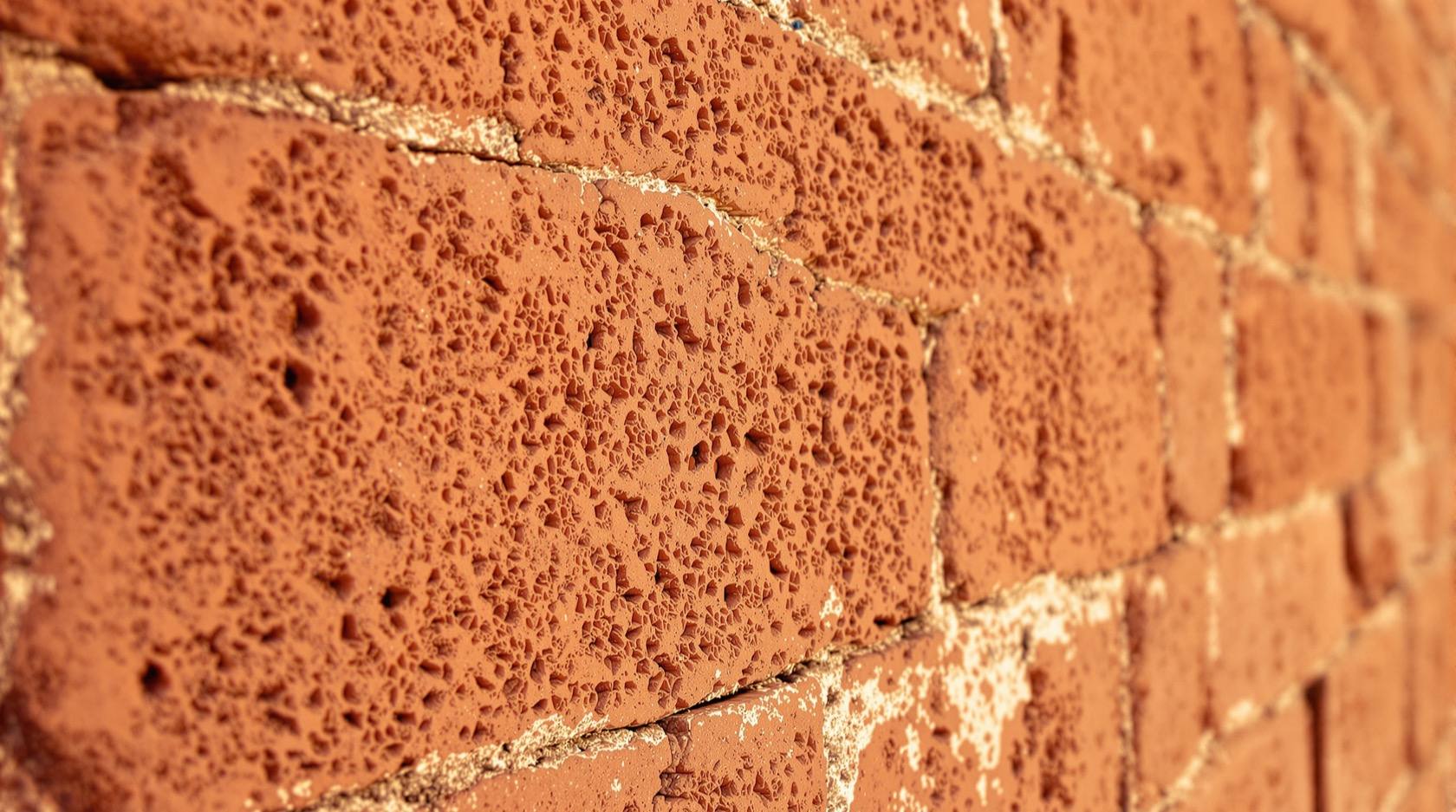
Laterite is not a quarried "hard rock" like granite. It is a soil rock - an iron- and aluminium-rich residual earth formed over long ages by the intense weathering of parent rock in a hot, wet, tropical climate. Rain leaches away the silica and soluble minerals and leaves behind a soft, porous material heavy in iron and aluminium oxides. Those iron oxides give laterite its signature rust-red to red-brown colour.
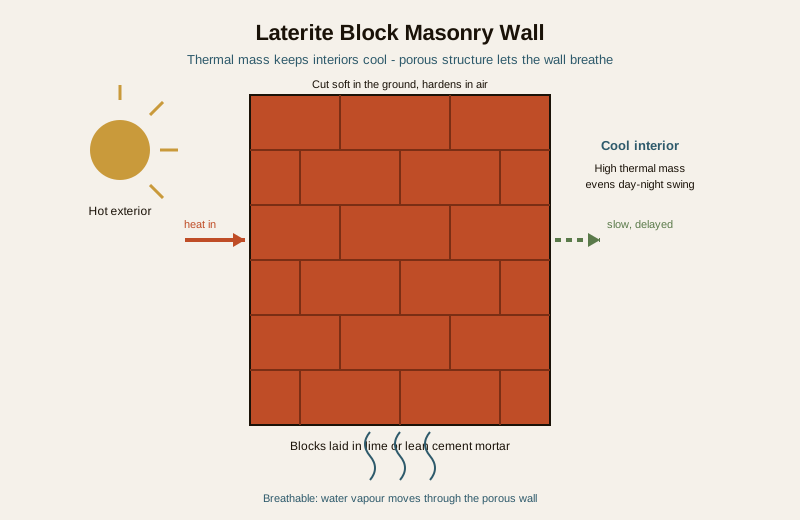
Its defining trick is what makes it a building material at all: laterite is soft and moist in the ground and hardens on exposure to air. Freshly quarried, it can be cut like a firm cheese with a pickaxe or a cutting machine. Left to dry in the sun and air, the iron oxides cure and the block hardens into a durable building unit. This "cut soft, cure hard" behaviour is why laterite has been a coastal building stone for centuries - the quarry is also the block factory.
Because it is a residual earth rather than a manufactured product, no two quarries give identical stone. Iron content, density, hardness and porosity all vary with the source and even with the depth of the cut - deeper, more compact laterite is generally stronger than the softer upper layers. This variability is the single most important thing to understand before you specify it.
Where laterite is quarried and used in India
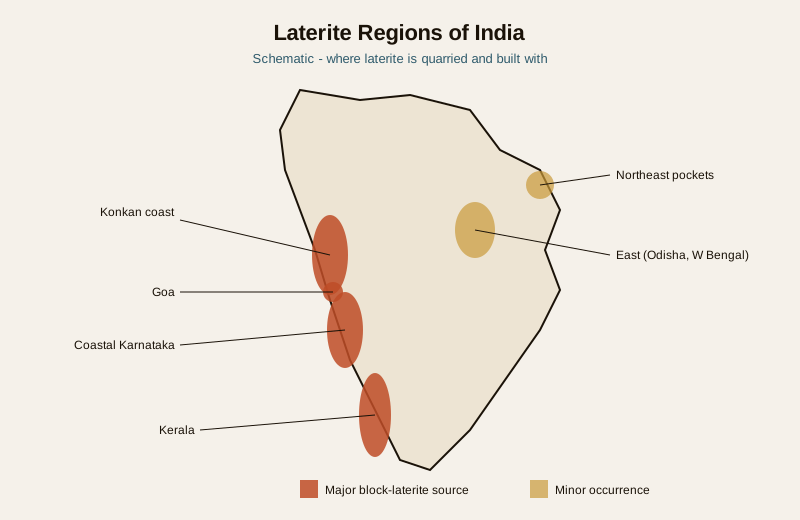
Laterite is a climate product, so it is found where the hot-humid weathering that forms it has been most intense - overwhelmingly the western coastal belt and pockets of the east and northeast:
- Kerala - the classic laterite country, where exposed and plastered laterite homes, walls and public buildings are everywhere.
- Coastal Karnataka and the Malnad - the Mangaluru, Udupi and Western Ghats belt, a major source and heavy user of block laterite.
- Goa - laterite is the traditional building stone of Goan homes, churches and compound walls.
- The Konkan coast of Maharashtra - Ratnagiri, Sindhudurg and the coastal strip.
- Parts of the east and northeast - Odisha, West Bengal and pockets of the northeastern states, where laterite plateaus occur.
Within these regions laterite goes into a well-defined set of applications: load-bearing masonry walls for houses up to two or three storeys, exposed laterite facades as a deliberate architectural finish, compound and boundary walls, plinths and retaining walls, and infill or partition walls in framed buildings. For the wider decorative-stone picture beyond laterite, see stone masonry facades and the building facades hub.
How laterite is cut and used
Laterite is worked in a way no other Indian building stone is. At the quarry, still-soft stone is cut directly out of the ground into rectangular blocks by machine or, traditionally, by hand. Common block sizes run around 300-400 mm long by 150-200 mm wide by 200 mm high - considerably larger than a clay brick - so a mason lays fewer, bigger units and walls go up faster. The cut blocks are then air-dried to harden before use.
On site the blocks are laid in courses in a lime mortar (the traditional, more breathable choice) or a lean cement-sand mortar, much like brickwork at a larger module. Because the blocks are heavy and the stone is variable, laying laterite well is skilled work. The finished wall is then either left exposed as a facade, its pitted red-brown texture becoming the finish, or plastered for extra weather protection.
The properties that define laterite
Laterite earns its place for a specific bundle of qualities, not for raw strength:
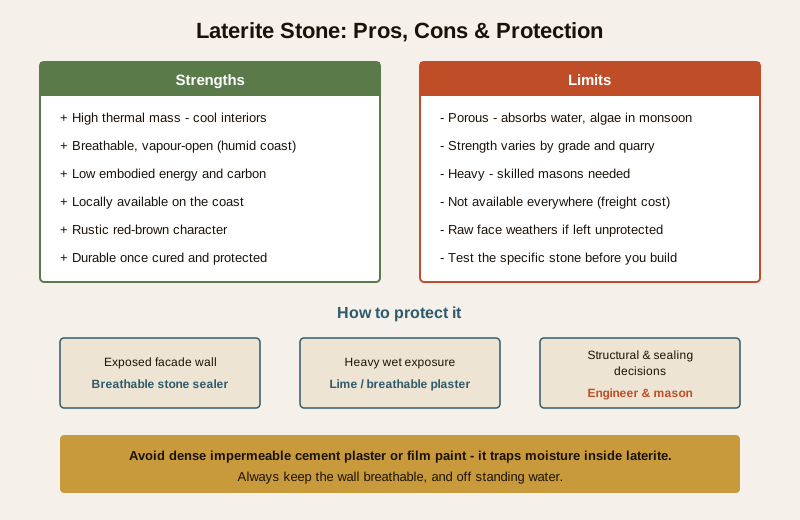
- Good thermal mass and breathability. A laterite wall is dense and thick, so it absorbs daytime heat slowly and releases it at night, keeping interiors noticeably cooler in a hot climate. The porous structure also lets the wall "breathe" - water vapour moves through it rather than being trapped - which suits humid coastal air.
- Locally available, low embodied energy and carbon. Laterite is cut, not fired or manufactured. There is no kiln, no cement-heavy production, and the quarry is usually close to the site, so transport is short. Its embodied energy and carbon are far lower than fired brick, concrete block or steel.
- Characterful rustic appearance. The warm red-brown colour and hand-cut texture give exposed laterite a distinctive regional beauty that architects prize - it reads as honest, local and timeless.
- Reasonable durability once cured and protected. Properly cured and kept off standing water, laterite lasts for generations, as centuries-old Goan and Kerala buildings show.
For how laterite compares with the walling materials most homes actually choose between, read AAC blocks vs red bricks and fly-ash bricks vs clay bricks.
| Property | Typical behaviour of laterite | What it means for you |
|---|---|---|
| Colour and look | Rust-red to red-brown, pitted texture | Characterful exposed facade; strong regional identity |
| Thermal mass | High - thick, dense wall | Cooler interiors; evens out day-night temperature swing |
| Breathability | Porous, vapour-open | Suits humid coastal air; pairs best with lime mortar and plaster |
| Embodied energy / carbon | Low - cut not fired, local | Genuinely sustainable regional choice |
| Compressive strength | Moderate and variable by grade | Fine for low-rise load-bearing; must be tested per quarry |
| Water absorption | High - porous stone | Needs surface protection against monsoon and algae |
| Weight | Heavy | Skilled handling; robust foundations needed |
| Availability | Regional (western coast, east) | Cheap where local; costly to freight elsewhere |
The limits - and how to protect laterite
Laterite's weaknesses are the mirror image of its strengths, and none of them are disqualifying if you specify and detail the stone properly:
- It is porous and absorbs water. This is the big one. In heavy monsoon rain an unprotected laterite wall soaks up water and can grow algae and moss, staining and slowly weathering the face. The answer is surface protection: a good breathable stone sealer / water repellent on exposed walls, or a plaster (traditionally lime) on walls you do not want left raw. Crucially, whatever you use must let the wall breathe - a dense impermeable cement plaster or film-forming paint can trap moisture inside and do more harm than good.
- Strength varies by grade and quarry. Because it is a residual earth, one block can be markedly stronger than another. You cannot assume a strength - the specific stone must be tested, and a structural engineer must set wall thickness and storey height accordingly.
- It is heavy and needs skilled masons. The blocks are large and dense, so handling, lifting and laying is real labour, and a poor mason produces a poor wall. Good laterite work depends on experienced local craftsmen.
- It is not available everywhere. Laterite is cheap and green in its home regions but expensive and carbon-heavy to truck long distances, so outside the laterite belt it usually stops making sense.
Sealing, waterproofing and plaster choice are execution decisions - get them detailed and applied by a professional. For the wider principles, see the waterproofing guide and waterproofing chemicals explained, and for the plaster decision read gypsum plaster vs cement plaster - noting that on breathable laterite a lime or breathable plaster is usually the right call.
Where to use laterite, and where to think twice
| Where to use it | Why laterite fits | How to protect it |
|---|---|---|
| Load-bearing walls (low-rise) | Cool, breathable, local, low-carbon | Engineer sets thickness; seal or plaster the exterior |
| Exposed laterite facade | Rustic red-brown character | Breathable stone sealer / water repellent; reapply periodically |
| Compound and boundary walls | Robust, characterful, cheap where local | Coping stone on top; sealer on exposed faces |
| Plinth and retaining walls | Mass and durability | Keep off standing water; damp-proof course above |
| Infill / partition in framed buildings | Thermal mass, breathability | Plaster or seal as the design requires |
| Long-distance-freight sites | Usually not - high transport carbon and cost | Prefer a local material instead |
| Constant-wet or submerged zones | Risky - high water absorption | Defer to engineer; often better material exists |
Read this alongside best materials for moisture-prone homes if damp is a leading concern on your site.
Cost and sustainability
In its home regions laterite is one of the more economical walling materials, precisely because it is local and barely processed - indicative block rates commonly fall around Rs 25 to Rs 60 per block depending on size, grade and quarry distance, plus laying. Treat these as ballpark only: grade, block size, region and freight move the number sharply, and away from the laterite belt transport can double the delivered cost. Always get current local quotes.
Where laterite really shines is sustainability. Cut rather than fired, quarried close to site, needing no cement-intensive manufacture, and passively cooling through its thermal mass, it is a textbook low-embodied-carbon regional material - explore that logic further in the sustainability and green buildings hub. For the sand and mortar that go with it, see sand for construction and the complete building materials guide.
Standards and testing
Laterite building blocks in India are broadly covered by the relevant Bureau of Indian Standards (BIS) specifications for laterite stone blocks and by the general masonry provisions of the National Building Code of India (SP 7:2026); test methods for water absorption, density and compressive strength follow the standard stone-testing procedures (named generally here - consult the current editions). Because laterite varies so much, the decisive step is not a generic table but testing the specific stone from your chosen quarry for compressive strength and water absorption, and having a structural engineer size the wall from those results. Green-building frameworks such as GRIHA, IGBC and LEED may award credit for local, low-embodied-energy materials like laterite. Standards and editions are revised periodically - verify against current sources rather than relying on memory.
Key takeaways
- Laterite is a soft, iron- and aluminium-rich soil rock that is cut into blocks in the ground and hardens on exposure to air - the quarry doubles as the block factory.
- It is the vernacular stone of Kerala, coastal Karnataka, Goa, the Konkan and parts of the east and northeast, used for load-bearing walls, exposed facades, compound walls and plinths.
- Its strengths are good thermal mass and breathability (cool interiors), low embodied energy and carbon, and a characterful rustic red-brown look - making it a genuinely sustainable regional choice.
- Its limits are that it is porous (needs a breathable sealer or lime plaster against monsoon water and algae), variable in strength by grade and quarry, heavy, needs skilled masons, and is not available everywhere.
- Specify and select laterite for the right situation, then hand load-bearing design, wall sizing and sealing to a qualified structural engineer and an experienced laterite mason - and always test the specific stone.
References
- Bureau of Indian Standards - specifications for laterite stone blocks and general masonry, plus standard test methods for stone water absorption, density and compressive strength; consult the current editions.
- National Building Code of India (SP 7:2026) - masonry and structural provisions relevant to load-bearing laterite walls.
- Quarry / supplier test data - the authoritative source for a specific laterite's tested compressive strength and water absorption; laterite varies by quarry and depth, so test the stone you will actually build with.
- Studio Matrx guides: complete building materials guide, stone masonry facades, AAC blocks vs red bricks and the sustainability and green buildings hub.
Export this guide
Related Guides — Deep-dive reading
Compressed Stabilised Earth Blocks (CSEB): A Specify-and-Select Guide for India (2026)
What CSEB is - local soil plus a small percentage of cement or lime, compressed in a press and cured, never kiln-fired - its low-carbon and thermal-mass strengths, its real limits around soil, quality control and water, and how it compares with fired clay brick and fly-ash brick. A specify-and-select guide.
Building MaterialsRammed Earth Construction in India: A Guide to Compacted Earth Walls (2026)
What rammed earth is, its deep Indian and global tradition, and why architects are reviving it - superb thermal mass, low embodied carbon, a beautiful stratified natural finish, and honest limits around labour, formwork, wall thickness and erosion. A specify-and-select guide.
Building MaterialsSustainable Compound Walls in India: Fly Ash, Recycled and Green Materials (2026)
An honest, India-grounded guide to building a lower-impact compound wall — lower-carbon masonry (fly-ash bricks, AAC, reduced-clinker cement), using less material by right-sizing the wall, recycled and local stone and reclaimed brick, a green or living boundary instead of a tall solid wall, a permeable base that lets water recharge, and durable finishes that need fewer repaints.
Compound WallsRelated Tools — Try Free
Material Decision Framework (M-Score)
Score 30+ Indian construction materials across cost, durability, climate fit, maintenance, and sustainability.
MaterialsRainwater Tank Sizer
How big should your rainwater tank be? Computes annual harvest, recommended tank capacity in litres, water-bill savings, and payback — for 10 Indian cities.
RWH CalculatorBrise-Soleil Visualizer
Interactive horizontal-louvre cut-off angle calculator — sun altitude, louvre depth, and spacing inputs with a live shadow preview. Computes θ = arctan(spacing/depth) for façade shading, ECBC envelope compliance, hospital daylight design, and tropical sun-control detailing.
Sun Shading Tool