
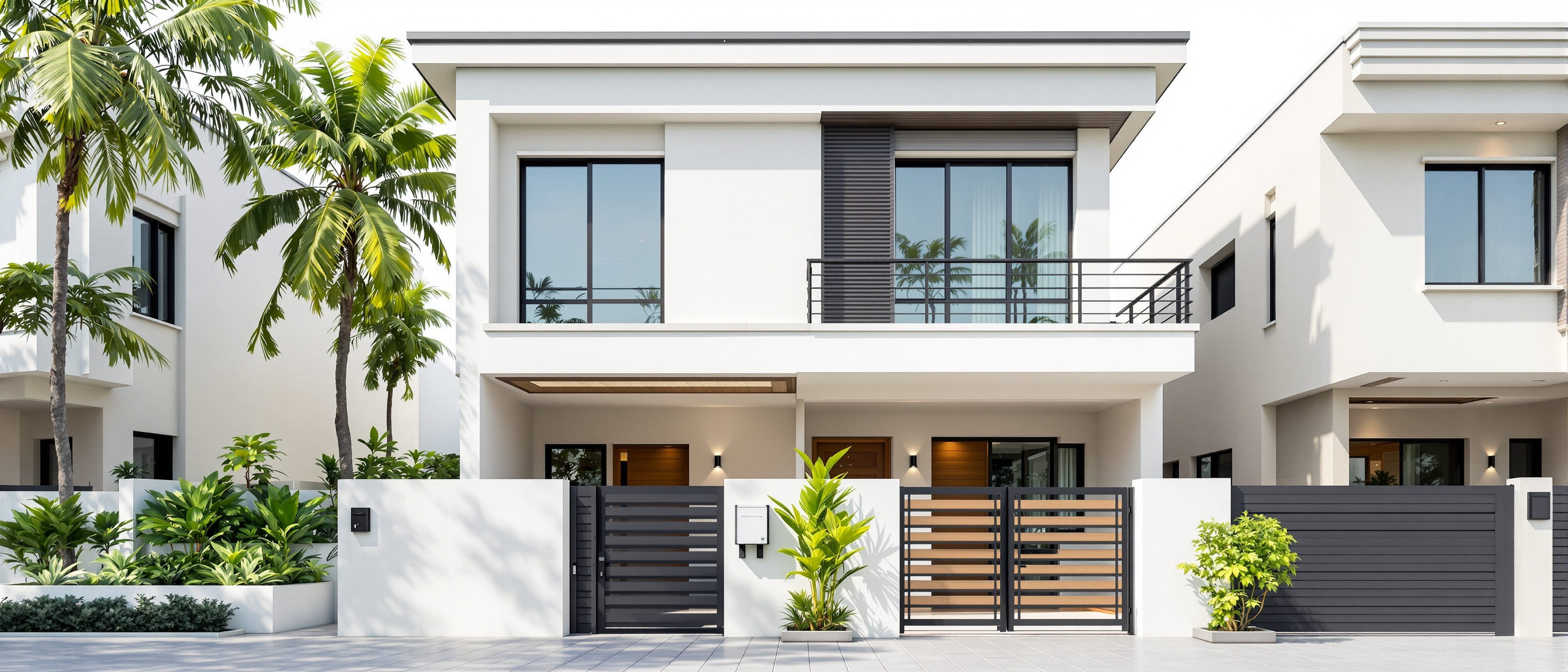
The Home That Earns: Income-Ready Design
Build a separable, rentable unit that helps pay your own EMI.
Walk down any street in Bengaluru, Pune or Kochi and you will pass dozens of houses quietly earning their keep. The ground floor is let to a young couple; the family lives above. A 1RK at the back goes to a working professional on a one-year lease. A top-floor studio is on a long let to a hospital nurse. None of these owners are landlords by trade. They simply built a home that could also pay part of its own mortgage — and most of them decided that, by accident, somewhere late in construction, when it was already half as cheap as it could have been.
Indian families have always understood that property should work. What is new is the discipline of designing the income in from the first drawing, rather than carving a tenant's room out of a finished home five years later with a hammer and a fight with the society. Land is the most expensive thing you will ever buy. If a slice of it can return ₹12,000–20,000 a month while you still own the whole asset, that changes what you can afford to build, how fast you clear the loan, and how secure you feel if a job goes wrong.
This is not about renting out a spare bedroom and sharing your kitchen. It is about a genuinely separable unit — its own front door, its own bathroom, its own meter — that a stranger can live in without ever crossing into your family's life. Done well, it is invisible to your daily routine and visible only on your bank statement.
The income-ready home is one where a self-contained, separately-entered unit is either built now or fully provisioned now — so that letting it is a financial decision, never a construction project.
1. What an income-ready home actually is (and is not)
The defining feature is separability. A tenant must be able to enter, live, cook, bathe and sleep entirely within their unit, and you must be able to lock it off from your home with a single door. If a tenant has to walk through your living room to reach their room, or share your kitchen, you do not have a rental unit — you have a paying guest, and that is a different, more intrusive arrangement with weaker legal and tax footing.
There are four typologies that work in the Indian context:
- A ground-floor flat under the family home — the classic stilt-or-podium let, common in independent houses.
- A top-floor unit — a self-contained flat on the upper floor, reached by an external or separately-gated stair.
- A lock-and-leave 1RK or studio — a compact 18–28 sq m unit you can let long-term or, where rules allow, run as a short-stay.
- A portion on long lease — a wing or a barsati let on an 11-month rent agreement or a longer commercial lease.
It is worth being precise about what this guide is not about, because the boundaries matter. A room that converts from study to nursery to grandparent suite is spatial flexibility, covered in flexible homes for changing families. Several generations sharing one home without anyone paying rent is the subject of multi-generational home design. And if you are the tenant fitting out a place you do not own, see rental apartment interiors. This guide is about one specific thing: an owner building a unit that produces income.
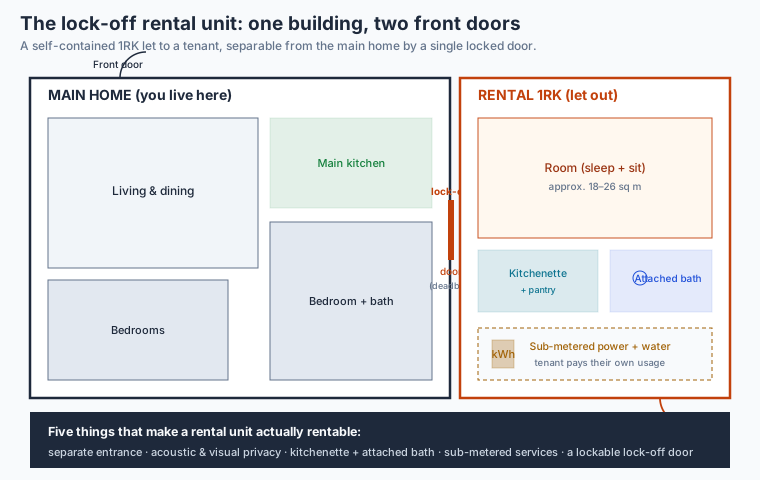
Figure 1: The same building, two front doors. The main home and the rental share a structure but never a circulation path — the only connection is one lockable door.
2. The six design essentials that make a unit rentable
A unit either has these six things or it does not let well. They are non-negotiable, and every one of them is far cheaper to build than to add.
A separate entrance and circulation. This is the single most important feature. The tenant's door should open to the street, a side path, or a private stair landing — never into your home's shared space. Plan the approach so a tenant arriving at 11 pm does not trigger your dog, your gate light or your sense of intrusion.
Acoustic and visual privacy. The party wall between the unit and your home should be a 200 mm masonry wall or a double-leaf partition with a 50 mm air gap and mineral wool — not a single 115 mm brick wall through which you will hear every phone call. Stagger windows so the tenant cannot see into your courtyard and you cannot see into their room. Privacy is what lets you forget the tenant exists.
A kitchenette or pantry. Even a 1RK needs the means to cook. A 1.8–2.4 m run with a two-burner point, a sink, a small counter and space for a fridge is enough. Provide a chimney or at least an exhaust point; cooking smells that drift into your home break the separation instantly.
An attached bathroom. Non-negotiable. A 1.2 m × 1.8 m wet room with a WC, a wash basin and a shutoff is the minimum. No tenant will take a unit where the bathroom is shared or reached through a common passage.
Independent or sub-metered services. The tenant must pay for what they use. Either a separate DISCOM connection (cleanest, but involves a fresh application and sanctioned load) or a sub-meter on your supply (simpler, but you bill them and absorb the slab-rate difference). Water should be sub-metered too where the municipal connection allows, or apportioned by a fair fixed charge.
The ability to lock off. A single robust, deadbolted door between the unit and your home means that when the unit is empty you can absorb it back into the house, and when it is let you simply lock it. This one door is what makes the design reversible.
A unit that shares a meter, a bathroom or an entrance is not a rental — it is a lodger arrangement. The whole financial and legal case for an income-ready home rests on genuine separation. Design for the locked door first; everything else follows.
3. Provision now, even if you let it in 2032
This is the cluster's signature move, and nowhere does it pay better than here. You may not want a tenant on day one — perhaps you will use the unit as a home office, a guest suite or your parents' room for the first few years. That is fine. The point is to lay the bones of a lettable unit during construction, when each provision costs a few thousand rupees, rather than retrofitting them later, when each becomes a demolition job.
Four provisions matter most: a capped plumbing stub-out for the kitchenette and bath, a reserved position and looped supply for a second meter, a separate distribution board on a spare way, and a knock-out door panel — a doorway built into the wall as a lintel plus a light, removable infill, ready to be cut open the day you separate the unit.
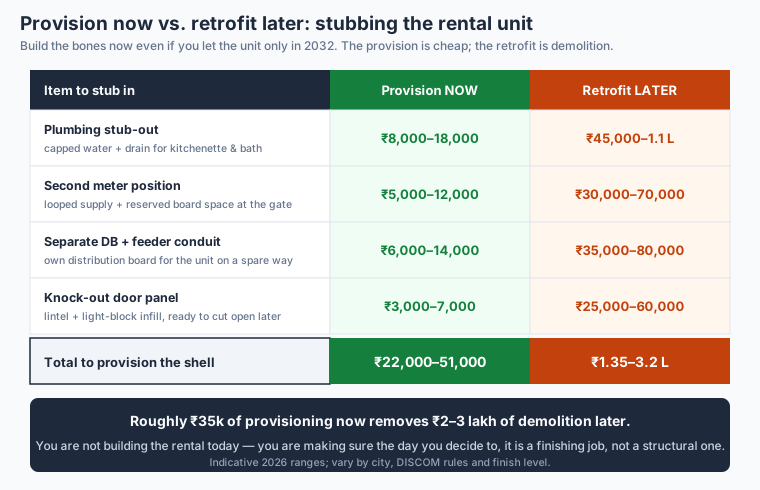
Figure 2: Stubbing the unit during the build costs roughly ₹22,000–51,000. The same four items chased into a finished home cost ₹1.35–3.2 lakh and weeks of mess.
| Provision | Do it now (during build) | Retrofit later (finished home) | Why the gap is so large |
|---|---|---|---|
| Plumbing stub-out (kitchenette + bath) | ₹8,000–18,000 | ₹45,000–1.1 lakh | Later means breaking floors, re-screeding, re-waterproofing |
| Second meter position + looped supply | ₹5,000–12,000 | ₹30,000–70,000 | Fresh cabling, board cut-in, DISCOM rework |
| Separate distribution board + feeder | ₹6,000–14,000 | ₹35,000–80,000 | Chasing feeder runs through finished walls |
| Knock-out door panel + lintel | ₹3,000–7,000 | ₹25,000–60,000 | A new opening in a load-bearing wall needs a lintel + making good |
The logic is the same one that runs through smart infrastructure planning and future-proof wiring: the empty conduit, the stubbed pipe and the spare circuit are the cheapest insurance in the house. For the wider 15–20 year frame this fits into, the pillar guide on designing homes for 2040 sets out the whole provisioning philosophy.
4. The Indian financial logic: rental yield and EMI offset
Here is where the design pays you back. The two numbers that matter are gross rental yield — annual rent divided by the cost of the unit — and the EMI offset, how much of your monthly loan instalment the rent covers.
Residential yields in India are modest by global standards: 2.5–4.5% gross in most metros, a little higher in tier-2 cities and for compact, well-located units. A 1RK is often the highest-yielding thing you can build, because small units rent at a premium per square foot and cost little to fit out.
A worked example. Say you take a ₹60 lakh home loan over 20 years at 8.5%. Your EMI is roughly ₹52,000 a month. You spend an extra ₹6–9 lakh building out a 1RK that you let at ₹14,000 a month.
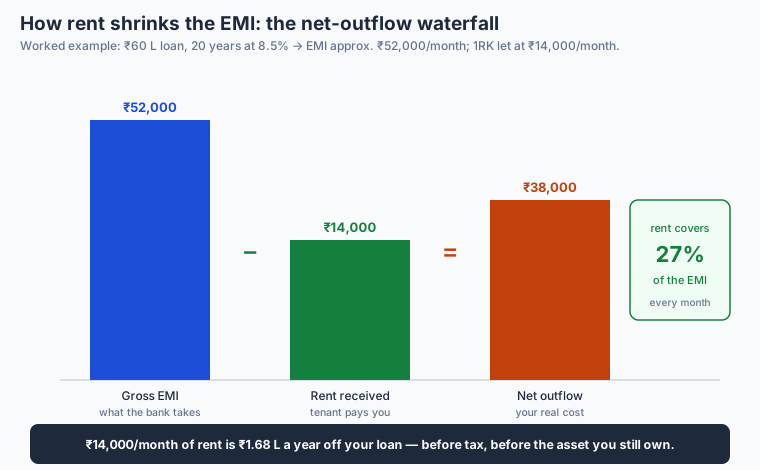
Figure 3: The ₹14,000 rent covers about 27% of a ₹52,000 EMI — turning your real monthly housing cost into ₹38,000 while you still own the whole asset.
| Figure | Value | Note |
|---|---|---|
| Home loan | ₹60,00,000 | 20 years, 8.5% |
| Monthly EMI (gross) | ~₹52,000 | What the bank takes |
| Extra build-out for the unit | ₹6–9 lakh | Fit-out over the provisioned shell |
| Monthly rent received | ₹14,000 | 1RK, metro fringe / tier-2 |
| Net monthly outflow | ~₹38,000 | EMI minus rent |
| Annual rent | ₹1,68,000 | ~27% of the year's EMI |
| Gross yield on the unit | ~22–28% | Rent ÷ marginal build cost, not total home cost |
That last line is the quiet magic. Because you are renting out a unit that cost you only the marginal build-out — the land and structure were going up anyway — the yield against your actual extra spend is extraordinary. Run your own numbers with the EMI calculator and the rental yield calculator before you finalise the unit size; sometimes a slightly larger unit lets for materially more.
There is a resale dimension too. A home with a legitimate, separable income unit appeals to a wider pool of buyers — investors, joint families, anyone who values the offset. That overlaps with future resale value, which treats the broader question of what holds value in 2040.
5. The rules you must respect
Income changes your legal position, and India's rules are specific. Get these wrong and a profitable unit becomes a liability.
RERA and your sanctioned plan. The unit must appear in your sanctioned building plan with the correct use. You cannot quietly convert a sanctioned single-dwelling into two tenancies; the FSI, setbacks and parking were approved for the building you declared. For apartments, the RERA guide explains how registration and disclosure work — and why an unauthorised partition can void approvals and complicate any future sale.
Society and RWA bylaws. In an apartment or a gated layout, the society's bylaws govern whether and how you may let. Many permit long-term leasing with intimation and a deposit; some restrict short-stay or bachelor tenants; a few require a no-objection certificate. Read the bylaws before you build, not after a tenant moves in.
Local rental and short-stay regulation. A long lease (the standard 11-month leave-and-licence) is straightforward almost everywhere. Short-stay — running the unit as a serviced studio or holiday let — is regulated differently city by city, and several municipalities and societies restrict or prohibit it. Police tenant verification is mandatory in most states; budget the time.
GST and tax, at a high level. Rent from a residential unit let for residential use is generally outside GST. Let it to a business, or run it as commercial short-stay above the threshold, and GST can apply. Rental income is taxable as income from house property, but you get a flat 30% standard deduction and can set home-loan interest against it — which often makes the let unit very tax-efficient. This is the high-level shape; confirm the specifics with a chartered accountant for your situation, because thresholds and rules change.
Note (NBC 2016, Part 3): habitable rooms require minimum dimensions, natural light and ventilation, and a separate dwelling unit must meet means-of-egress and sanitation provisions in its own right. A lettable unit is a dwelling unit — design it to the code, not as an afterthought.
6. Designing the unit so a stranger will actually pay for it
Provisioning makes a unit possible; design makes it desirable. The difference between a unit that lets in a week and one that sits empty for two months is almost always light, storage and the bathroom.
Get daylight into the unit — a north or east window, ideally two aspects, so the room never feels like a converted store. Give it real storage: a built-in wardrobe and some kitchenette cupboards, because a tenant with nowhere to put things will not stay. Make the bathroom genuinely good — good tiling, a proper shower, an exhaust fan, a geyser point — because the bathroom is what tenants judge a unit by. And keep the finishes durable and neutral: vitrified tile floors, washable paint, hardware that survives turnover. The low-maintenance kitchen design principles apply doubly to a kitchenette someone else will use hard.
If you want the unit to feel contemporary and command a premium, a few smart touches — a video door phone shared across both entrances, a smart lock on the lock-off door so you can grant and revoke access cleanly — fit naturally; see smart home design. And design the unit to be comfortable without heavy running costs, drawing on naturally energy-efficient and climate-adaptive principles, so the tenant's bills stay low and the unit stays attractive.
7. The honest downsides
An income unit is not free money, and it is not for everyone. Be clear-eyed before you commit.
You become a landlord. That means tenant management — finding, vetting, agreements, deposits, the occasional difficult conversation about a late payment or a leaking tap at 9 pm. Some people find this trivial; others find it genuinely stressful and would rather forgo the income.
You lose some privacy. However good the separation, there is a stranger living against your wall. A noisy tenant, a tenant who entertains, a tenant whose schedule clashes with yours — these are real frictions that no party wall fully removes.
Resale can cut both ways. To an investor or a joint family, the income unit is a feature. To a buyer who wants the whole house for themselves, it can read as wasted space they will pay to absorb. In a strong market this is a non-issue; in a soft one it narrows your buyer pool slightly.
And vacancy is real. A unit empty for three months a year yields 25% less than the headline figure. Build your numbers on 9–10 let months, not 12, and the unit still pays — but plan for the gap.
The provisioning argument cuts cleanly through all of this. Because you can lock off the unit and reabsorb it into your home whenever you choose, none of these downsides is permanent. If being a landlord stops suiting you, you unlock the door, open the knock-out panel, and you simply have a larger house — with all the bones already there.
Sources & further reading
- Bureau of Indian Standards, National Building Code of India 2016 (NBC), Part 3 (Development control rules and general building requirements) and Part 9 (Plumbing services) — dwelling-unit, light, ventilation and sanitation provisions.
- The Real Estate (Regulation and Development) Act, 2016 (RERA) and your state RERA authority — registration, sanctioned-plan and disclosure rules.
- Income-tax Act, 1961 — "Income from house property", Section 24 (standard deduction and interest set-off). Confirm current thresholds with a chartered accountant.
- Central Goods and Services Tax Act, 2017 — treatment of residential vs. commercial letting; CBIC clarifications on residential dwelling exemption.
- Your municipal corporation building bylaws and DISCOM tariff schedule — separate-connection and sub-metering provisions, sanctioned load.
- Ernst Neufert, Architects' Data — minimum dimensions for compact dwellings, kitchenettes and bathrooms.
Pairs with the pillar designing homes for 2040, and with future resale value and flexible homes for changing families.
Export this guide
Related Guides — Deep-dive reading
Bathroom Planning for New Homes in India: Get It Right Before You Build
The bathroom decisions you cannot undo once the slab is cast — location and stacking, sunken vs non-sunken slabs, waterproofing, and the plumbing, electrical and ventilation you must coordinate with the civil work, stage by stage.
BathroomsDesigning Adaptable & Universal-Design Homes
Accessibility, Aging-in-Place, and the Multi-Stage Family — Code, Anthropometrics, and Plan-Stage Discipline for Indian Residential Architects
Room PlanningHow to Plan a Home for Multi-Generational Living
Designing for grandparents, parents and children under one roof — privacy, accessibility and harmony
Home PlanningRelated Tools — Try Free
Cross-Ventilation Analyzer
Estimate airflow and air changes per hour (ACH) from room size, window areas, layout, and local wind — with NBC 2016 Part 8 compliance check.
Ventilation CalculatorAcoustic Privacy (STC) Visualizer
Indian healthcare acoustic visualizer — compare wall assemblies and noise sources, see received SPL after STC attenuation, and check FGI 2018 / IS 1950 / NABH speech-privacy compliance with live dual-canvas waveform.
Acoustic ToolWindow Size Calculator
Get the right window size, glazing area and openable area for any room using NBC daylight rules.
Window Tool