
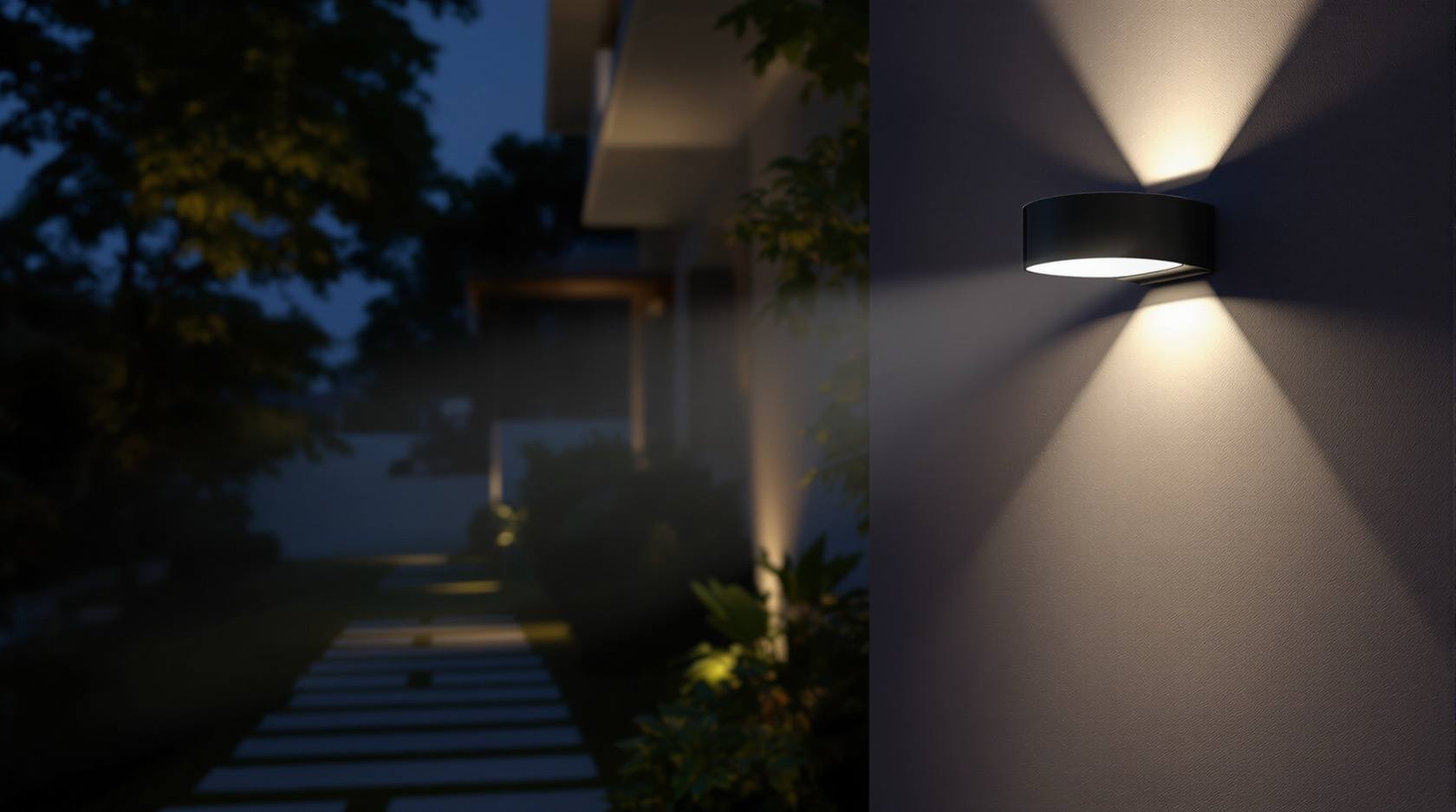
Glare-Free Security Lighting in India (2026): Why the Bright Light You Bought Is Hiding the Intruder
Glare is the enemy of security light. A source in the eye or the lens blinds you to the dark just behind it, where the intruder stands. This guide shows how to shield, aim and mount light so it reveals instead of dazzles.
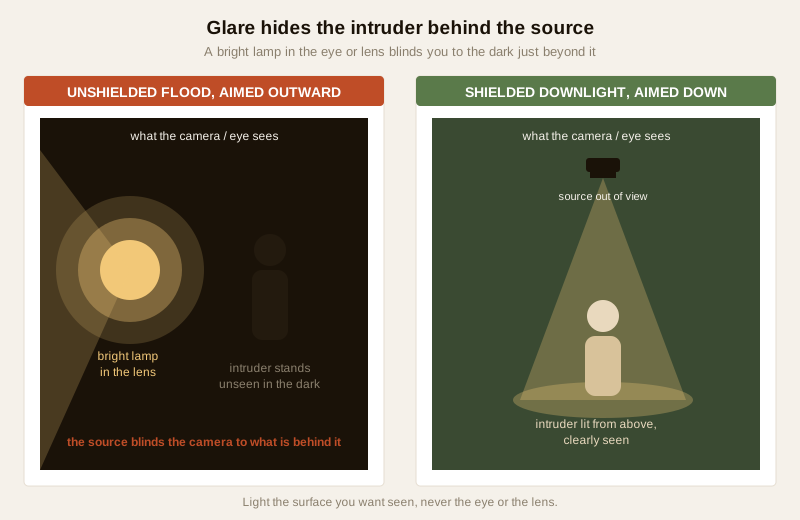
There is a scene that repeats across India every night. A homeowner, worried about the back lane, bolts the biggest floodlight the shop had onto the compound wall and aims it out at the street. It is blindingly bright. It feels like security. And it is quietly doing the opposite of what it promised: the person standing just beyond that dazzling glare is now harder to see, not easier, because the eye and the camera cannot look at a bright source and into the dark behind it at the same time. That failure has a name. It is glare, and it is the single enemy that turns a well-meant security light into a gift to the intruder.
This guide is about designing glare-free security lighting — light that reveals the scene instead of blinding the person or the camera meant to watch it. It sits in the Studio Matrx security lighting library under the security lighting design pillar, and it pairs closely with the boundary-focused security lighting guide. Everything here is qualitative and about design decisions you make; the wiring and the fixtures at height are for a licensed electrician.
Scope & safety. This guide helps you plan, decide and coordinate lighting so it deters intrusion and lets cameras and people see — strictly a defensive use of light, never how to defeat anyone else's lighting. You do the design thinking; a licensed electrician installs all mains wiring, circuits and any fixture mounted at height to the wiring rules (see the electrical hub), and a lighting designer sets any actual illuminance levels. Never let a fixture, its cable or its pole block an escape route or a gate. Standards move — verify the current edition and your local bye-laws before relying on anything. This is educational guidance, not legal or engineering advice.
What glare actually is, and why it defeats security light
Glare is simply light that is too bright, in the wrong place, relative to what surrounds it — a strong source sitting where an eye or a lens is trying to see. It matters here because a camera and a human eye work the same way: they adjust their sensitivity to the brightest thing in the frame. Put a bright bulb in that frame and everything dimmer than the bulb collapses into black. The intruder does not need to hide. Your own light hides him for you, by forcing the eye or the sensor to stop down for the glare while he stands in the darkness immediately behind it.
It is worth separating the two ways glare hurts, because the fixes differ slightly:
- Disability glare genuinely reduces what you can see. A bright floodlight aimed toward your gate camera, or toward the eyes of a resident coming home, physically prevents them from resolving the darker scene beyond. This is the dangerous one for security: it blinds the very eyes you installed the light for.
- Discomfort glare does not blind you but makes light unpleasant to look at, so people instinctively look away or squint. A boundary that is uncomfortable to look toward is a boundary nobody watches — and a neighbour who is dazzled every night is a dispute waiting to happen.
The counter-intuitive truth that runs through this whole guide: a floodlight aimed outward blinds your own CCTV, dazzles your neighbours and drivers, and leaves the intruder in the one dark patch you created — the shadow directly behind the glare. The brightness that felt like security is the security hole.
The five fixes: shield, aim, mount, diffuse, and light the background
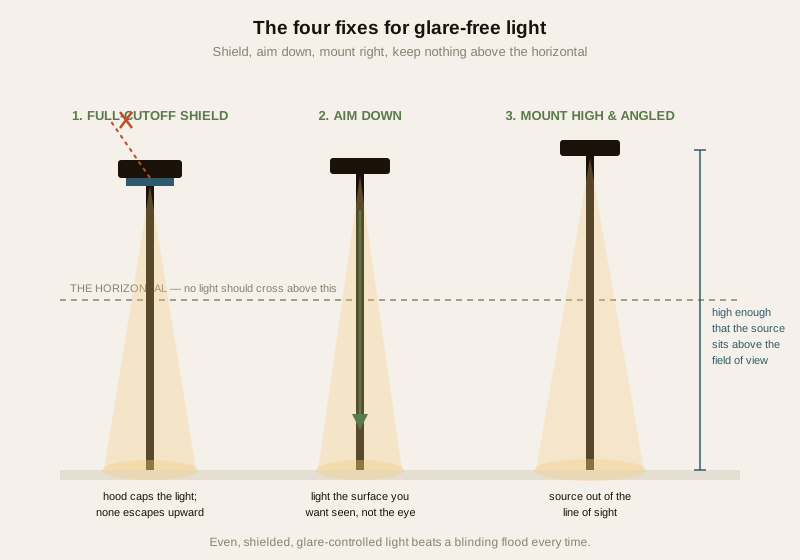
Every cure for glare is about the same thing — controlling where the light goes and where the source sits relative to the eye and the lens. None of it is about buying a brighter lamp. Here are the five levers, all qualitative.
1. Shielding and cut-off optics
The most important habit is to aim light down onto the target and let nothing escape above the horizontal. Fixtures described as full-cutoff or shielded have a hood or an internal optic that caps the beam so the source is not visible from the side or above — the light lands on the ground you want lit and does not spray into eyes, lenses, windows or the sky. An exposed bulb or a bare floodlight throws light in every direction, most of it wasted and much of it as glare. A shielded fixture is the difference between a lamp that lights your driveway and one that lights the whole street's eyeballs.
2. Aim — light the surface, not the eye or the lens
Point the light at the thing you want to see, not at the person or camera looking. Light should arrive on the subject — the wall, the driveway, the approaching figure — from behind or beside the camera, so the scene is bright but the source never enters the lens's field of view. The single most common own-goal on Indian boundaries is a floodlight and a camera mounted facing each other, each blinding the other. Aim is free; it costs nothing to reposition a fixture so it lights the scene the camera watches rather than the camera itself.
3. Mounting height and angle
Where the source sits decides whether it glares. Mounted low and level, a fixture puts its bright face right in the line of sight. Mounted higher and angled down, the same fixture keeps its source above the field of view and casts light onto the ground where it is useful. Height also softens the hard shadow a low, harsh light throws beside every object — shadows an intruder hides in. The right height and downward tilt are a design decision for your site; the actual mounting is a job for the electrician.
4. Diffusion and lower-glare optics
A bare, hard point-source is the harshest glare of all. Diffused or frosted optics spread the same light over a larger, softer emitting area, which lowers the peak brightness the eye or lens sees while still lighting the scene. Softer, wider, lower-glare light is kinder to a camera's sensor and to a resident's eyes than a raw, staring LED chip. This is why an even wash of light reads better on camera than a single fierce beam.
5. Light the background — reveal in context, not in silhouette
If you light only a subject against a dark backdrop, or worse, light the backdrop behind a subject, you get a silhouette — a black shape with no detail, useless for identification. Lighting the surrounding surfaces gently so a person is seen in context, lit from the front and above, gives a face and a description rather than an outline. Even, contextual light beats a dramatic single beam every time — a lesson explored further in the facial identification lighting guide.
| Glare failure (India reality) | What it does | The glare-free fix |
|---|---|---|
| Bare flood aimed outward at the street | Blinds the camera and the resident; hides the figure behind it | Full-cutoff shielded fixture, aimed down onto your own ground |
| Fixture and camera mounted facing each other | Lens flare and bloom; scene drops to black | Light from behind or beside the camera; keep the source out of frame |
| Low, level mounting | Source sits in the line of sight; hard shadows beside objects | Mount higher, angle down; source above the field of view |
| One fierce beam, dark all around | Eye and camera go blind to the dark ring; silhouettes | Diffused, even wash; light the background too |
| Ever-brighter lamp to "fix" a dark corner | More glare, more contrast, more hiding shadow | Even, moderate, uniform coverage — not more lumens |
What glare does specifically to your CCTV
A camera is even less forgiving of glare than the eye, and a security light bought to help the camera routinely wrecks its footage instead. Three failures show up again and again:
- Lens flare — a bright source in or near the frame scatters inside the lens, throwing veiling streaks and halos across the image that wash out exactly the area you needed to see.
- Bloom — an over-bright patch bleeds into neighbouring pixels, so a licence plate, a face or a doorway next to the glare smears into an unreadable white blob.
- Wide-dynamic-range failure — a scene with both a glaring light and deep shadow exceeds what the sensor can capture at once. The camera exposes for the bright source and everything else goes black, or exposes for the dark and the source blows out. Either way the intruder, in the mid-tones, is lost. Good WDR cameras help, but no camera beats a scene that is evenly lit with the source kept out of frame.
The design answer is the same as for the eye: keep the source out of the lens's field of view, light the scene evenly, and avoid extreme bright-to-dark contrast. Colour matters too — very cool, blue-heavy light many cameras render harshly and unnaturally; a neutral white usually reads best, without chasing a specific colour-temperature number. For the full treatment of matching light to the sensor, read the companion guides on CCTV-compatible lighting and low-light camera illumination, and on how cameras cope in the dark, low-light CCTV cameras and CCTV low-light performance.
Light trespass, the neighbour dispute, and dark-sky courtesy
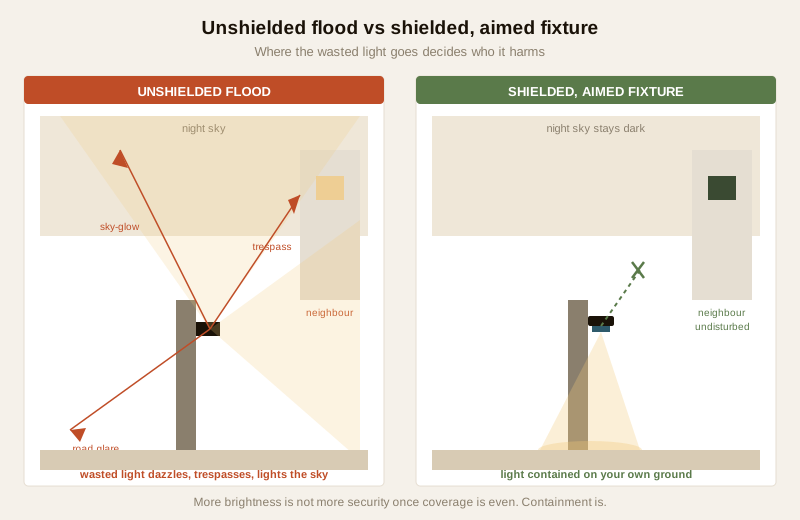
Glare rarely stops at your boundary. A flood that dazzles your camera is usually also spilling across the wall into a neighbour's bedroom window and up into the night sky. Light trespass — unwanted light crossing onto someone else's property — is one of the most common triggers of an RWA or neighbour dispute in Indian residential streets, and municipal and community bye-laws increasingly recognise it as a nuisance. The same shielding and aiming that fixes camera glare also fixes this: contain the light on your own ground and it neither annoys the neighbour nor lights the sky.
Dark-sky courtesy is the wider version of the same discipline — capping light at the horizontal so none is wasted upward as sky-glow. It costs you nothing (upward light lit nothing useful anyway) and it makes you a good neighbour on the street and in the city. A boundary that is well-lit and considerate is far less likely to become the subject of a complaint than one blazing light in every direction.
There is an India-specific hazard worth calling out: glare on wet roads. During the monsoon, or on any wet night, a badly aimed boundary flood reflects off the road surface and standing water straight into the eyes of passing drivers and two-wheeler riders — a genuine road-safety hazard as well as a nuisance. Shielded, downward light aimed onto your own ground does not create that mirror-glare on the street.
More brightness is not more security
If there is one idea to carry away, it is this. Past the point where your coverage is even, adding brightness does not add security — it subtracts it. A blinding flood creates the very contrast that hides people; a raw source creates the glare that blinds your camera; extra lumens spilling over the wall create the dispute and the road hazard. Even, shielded, glare-controlled light beats a blinding flood every time.
| The instinct | Why it backfires | The better move |
|---|---|---|
| "It's too dark, buy a brighter light" | More brightness = more glare + more contrast = more hiding shadow | Add even, shielded coverage to fill the dark, not more lumens on one spot |
| "Aim it at the trouble spot / the street" | Glares the camera and dazzles the road; hides the figure | Aim down onto your own ground; light the scene the camera watches |
| "One big flood covers everything" | One bright pool, a dark ring, silhouettes | Several modest, overlapping, shielded fixtures for uniform cover |
Uniformity, not intensity, is the goal. To check where your own boundary is dark, uneven or glaring, the lighting and visibility assessment and the home security risk scorecard are useful starting points; for the wider power question — not flood-lighting everything all night — see security lighting energy use.
A note on glare standards
Lighting standards do treat glare as a measurable quantity. The National Lighting Code of India (SP 72) and the interior code of practice IS 3646 (Part 1) both frame comfortable, glare-limited lighting in terms of concepts like a unified glare rating — a way of quantifying how much a lighting arrangement is likely to cause discomfort glare. This guide deliberately gives you no glare-rating figure, because the right limit for a given space is a design value a qualified lighting designer sets to the current standard — not a number to copy from an article. Treat the principle — limit glare, keep the source out of the eye and the lens, light the surface not the observer — as the durable takeaway, and verify the current edition of any standard and your local bye-laws before relying on it.
Key takeaways
- Glare is the enemy of security light. A bright source in the eye or the lens blinds you to the dark just behind it — where the intruder stands. Disability glare blinds; discomfort glare makes people look away. Both defeat the point of the light.
- The fixes are qualitative, not brighter lamps: shield with full-cutoff optics so nothing escapes above the horizontal; aim light onto the surface you want seen, never at the eye or lens; mount high and angled so the source is out of the field of view; diffuse to soften the source; and light the background so subjects are seen in context, not silhouette.
- Glare wrecks CCTV specifically — lens flare, bloom and wide-dynamic-range failure all come from a bright source in or near the frame and extreme bright-to-dark contrast. Keep the source out of frame and light evenly.
- Contain the light on your own ground — shielding and aiming that fix camera glare also stop light trespass into a neighbour's window (a real RWA dispute), sky-glow, and the monsoon-wet-road glare that dazzles passing drivers. Dark-sky courtesy costs nothing.
- More brightness is not more security past uniformity. Even, shielded, glare-controlled light beats a blinding flood. Route all mains wiring and work at height to a licensed electrician, and let a lighting designer set actual levels.
Where to go next
- Security lighting design guide — the pillar that ties glare control into the whole lighting plan.
- Security lighting in India — lighting the boundary well, with the same shielding and no-trespass discipline.
- CCTV-compatible lighting and low-light camera illumination — matching light to the sensor so the camera sees.
- Lighting for facial identification — lighting faces in context so people are recognisable, not silhouettes.
- Security lighting energy use — even, zoned, motion-and-dusk-controlled light that saves power without flood-lighting all night.
- Perimeter CCTV — the camera layer that a glare-free lighting plan is designed around.
- Home security risk scorecard — map where your own lighting is dark, uneven or glaring.
References
- SP 72 : 2025 — National Lighting Code of India, Bureau of Indian Standards — the primary reference for lighting design, including glare limitation concepts such as the unified glare rating. Verify the current edition and any local bye-laws via the BIS catalogue: https://www.services.bis.gov.in/
- IS 3646 (Part 1) : 2025 — Code of Practice for Interior Illumination, Bureau of Indian Standards — for the treatment of glare and glare rating in working interiors; treat any specific limit as a designer's value to the current standard. Verify via the BIS catalogue: https://www.services.bis.gov.in/
- National Building Code of India, SP 7 : 2026, Part 8 Section 1 (Lighting and Ventilation), Bureau of Indian Standards — together with local municipal bye-laws and any light-nuisance or light-pollution provisions for the outdoor and neighbour-amenity aspects of an install. Verify the current edition via the BIS catalogue: https://www.services.bis.gov.in/
This is an educational overview, not legal or engineering advice. It is strictly about using light defensively to deter intrusion and help cameras and people see, never about defeating any security measure. Mains wiring, circuit work, work at height, and the setting of actual illuminance and glare levels are qualified professional tasks — engage a licensed electrician and a lighting designer, and verify any standard's current status via the BIS catalogue before relying on it.
Export this guide
Related Guides — Deep-dive reading
CCTV-Compatible Lighting for Indian Homes (2026): How to Light a Scene So the Camera Actually Sees It
The bridge between your lighting and your cameras — why a scene that looks fine to your eye can still be useless footage, and how uniformity, no light in the lens, the right white and flicker-free drivers make the difference.
SecurityParking Security Lighting in India (2026): Lighting Basement, Stilt and Open Parking So Nothing Hides in the Dark
How to light apartment and commercial parking so vehicles, people and number plates are clearly seen, cameras can actually read the scene, and the space stops being a soft spot for theft and lurking, without ever compromising the emergency lighting on the escape route.
SecuritySecurity Lighting Design for the Whole Property (India 2026): The Principles, the Zones and the Library Map
How to light an entire property as a security layer that deters and lets cameras see — the four design principles, the zones to cover, and where every deeper guide fits, done without dazzling your own CCTV or the neighbour.
SecurityRelated Tools — Try Free
Cross-Ventilation Analyzer
Estimate airflow and air changes per hour (ACH) from room size, window areas, layout, and local wind — with NBC 2016 Part 8 compliance check.
Ventilation CalculatorCCTV Camera Coverage & Count Calculator
Estimate how many CCTV cameras you need, the NVR channels, storage in TB for your retention period, and an indicative all-in cost with GST.
CCTV CalculatorCCTV Camera Quantity Calculator
How many cameras a site needs from boundary length, coverage width per lens and key points — plus the recorder channel count.
Camera Count