
Flooring Trends 2026 for Indian Homes: 10 Looks Worth Knowing
The flooring trends shaping Indian homes in 2026 — large-format porcelain, marble-look PGVT, microcement, wood-look SPC, terrazzo, statement patterns and matte anti-skid finishes — with ₹/sq ft reality and where each belongs.
Flooring trends move slowly, and that is exactly why they matter: the floor you choose in 2026 will still be underfoot in 2040. The good news is that this year's directions are unusually practical for Indian homes — fewer fragile statement materials, more engineered surfaces that look luxurious but survive monsoons, hard water, joint-family traffic and a maid with a wet pocha. Below are the ten trends actually showing up in Indian showrooms and architects' spec sheets in 2026, with what each one is, why it is rising here, the rough ₹/sq ft hit, and where it belongs.
This guide is a roundup, not a deep dive. Where a trend deserves its own manual, we link the sibling guide. For the full decision framework start with the complete home flooring guide for India, and price anything with the flooring cost calculator.
The 2026 trends at a glance
All costs are indicative material-only ₹/sq ft, before 18% GST and before laying, adhesive, grout and skirting. Large-format and pattern work add meaningfully to labour.
| Trend | The look | Material cost ₹/sq ft | Best rooms |
|---|---|---|---|
| Large-format & slim porcelain slabs | Few/no grout lines, seamless expanse | 60-200 (large-format), slabs higher | Living, lobby, feature walls |
| Marble-look GVT/PGVT | Veined marble effect, tile durability | 40-150 (PGVT premium higher) | Living, dining, bedrooms |
| Microcement & seamless | Hand-troweled, mineral, jointless | 250-800 applied | Living, accent walls, boutique baths |
| Wood-look SPC / LVT | Warm plank, 100% waterproof core | SPC 90-250, LVT 120-350 | Bedrooms, study, kids' rooms |
| Terrazzo revival | Aggregate chips in a binder | 60-200 (tile/precast) | Living, dining, balconies |
| Statement patterns | Herringbone, chevron, mixed laying | tile cost + 30-50% labour | Living, dining, entry |
| Matte & anti-skid finishes | Low-sheen, R10+ grip | nil-to-small premium | Wet areas, kitchen, balcony |
| Warm neutrals & natural stone | Beige, greige, sand, honey | varies by base material | Whole-home base palette |
| Sustainable / low-VOC | Recycled content, low-emission | varies; cork 200-500 | Bedrooms, kids', whole home |
| Mixed-material zoning | Different floors per zone | blended | Open-plan homes |
1. Large-format and slim porcelain slabs
What it is: porcelain tiles and slabs in sizes like 800x1600, 1200x1200, even 1600x3200 mm, often only 6-9 mm thick. The point is the near-absence of grout lines, which reads as one continuous, expensive-looking plane.
Why it is rising in India: grout lines are where Indian floors get dirty, stained and dated. Fewer joints means less cleaning and a calmer, larger-feeling room — a real draw in compact city apartments. Porcelain is also vitrified-grade (water absorption under 0.5%, IS 15622 group BIa), so it is stain- and water-resistant and tough enough for high traffic.
Cost: 60-200/sq ft for large-format porcelain; full slabs run higher. The hidden cost is laying — big tiles need a perfectly flat screed, a notched trowel with back-buttering, levelling clips, often two installers and ₹40-60/sq ft labour. Budget extra for breakage and a skilled mason; this is not a job for the cheapest contractor.
Where to use: living rooms, entrance lobbies, open-plan dining, and as seamless feature walls behind the TV. See porcelain tile flooring in India.
2. Marble-look GVT and PGVT tiles replacing real marble
What it is: glazed and polished glazed vitrified tiles (GVT/PGVT) printed with realistic marble veining — Statuario, Carrara, Onyx, Botticino looks — on a tough vitrified body.
Why it is rising in India: real Italian marble costs 250-1,500+/sq ft, stains and etches with lemon, turmeric and acidic cleaners, and needs periodic polishing — a genuine pain in Indian kitchens and pooja areas. Marble-look PGVT tiles deliver the same veined drama at 40-150/sq ft, with no sealing, no etching and high gloss. This is arguably the single biggest flooring shift in Indian homes: the marble look without the marble maintenance.
Cost: 40-150/sq ft; double-charged 45-90; full-body higher. A fraction of Italian marble.
Where to use: living, dining, bedrooms, and budget-luxury whole-home schemes. Compare the look-alike against the real thing in marble vs vitrified tiles.
3. Microcement and seamless mineral floors
What it is: a hand-troweled cement-polymer coating, only 2-3 mm thick, applied over existing floors or screed to give a continuous, jointless, matte-to-satin surface with subtle cloudy movement.
Why it is rising in India: it suits the warm-minimal, Wabi-Sabi and "quiet luxury" aesthetic now dominating Indian interiors, and it can go over old tiles without demolition — a big deal in renovations. It is seamless, so no grout to scrub.
Cost: 250-800/sq ft applied — it is labour and skill, not material. Get a specialist applicator and a proper sealer; a bad job cracks or shows trowel marks. Full method in microcement flooring in India.
Where to use: living rooms, accent walls, and boutique-style bathrooms (well-sealed). Be cautious in hard-use Indian kitchens unless the topcoat is robust.
4. Wood-look SPC and LVT
What it is: rigid SPC (stone-polymer core) and flexible LVT planks printed and embossed to mimic oak, teak or walnut, with a 100% waterproof core that clicks together over the existing floor.
Why it is rising in India: real wood swells and warps in monsoon humidity and is wrong for most Indian climates. SPC flooring gives the warm wood look while being waterproof, termite-proof, scratch-resistant and DIY-friendly — and far cheaper than hardwood at 90-250/sq ft (LVT 120-350). It is the practical answer to "I want wood but I live in Mumbai."
Cost: SPC 90-250, LVT 120-350/sq ft.
Where to use: bedrooms, study, kids' and media rooms. See how it stacks up in SPC vs laminate.
5. The terrazzo revival
What it is: marble, granite and glass chips suspended in cement or resin, available now as precast tiles and large-format slabs rather than only poured in-situ. The 2026 version uses bolder, larger chips and warmer binders.
Why it is rising in India: terrazzo is having a global design moment, and it speaks to Indian nostalgia — many of us grew up on mosaic and terrazzo floors. It hides dirt, is extremely durable, and adds personality without pattern fatigue.
Cost: 60-200/sq ft for tile and precast formats. In-situ poured terrazzo costs more in labour but gives a true seamless field.
Where to use: living, dining, balconies and entryways. Deep dive in terrazzo flooring in India.
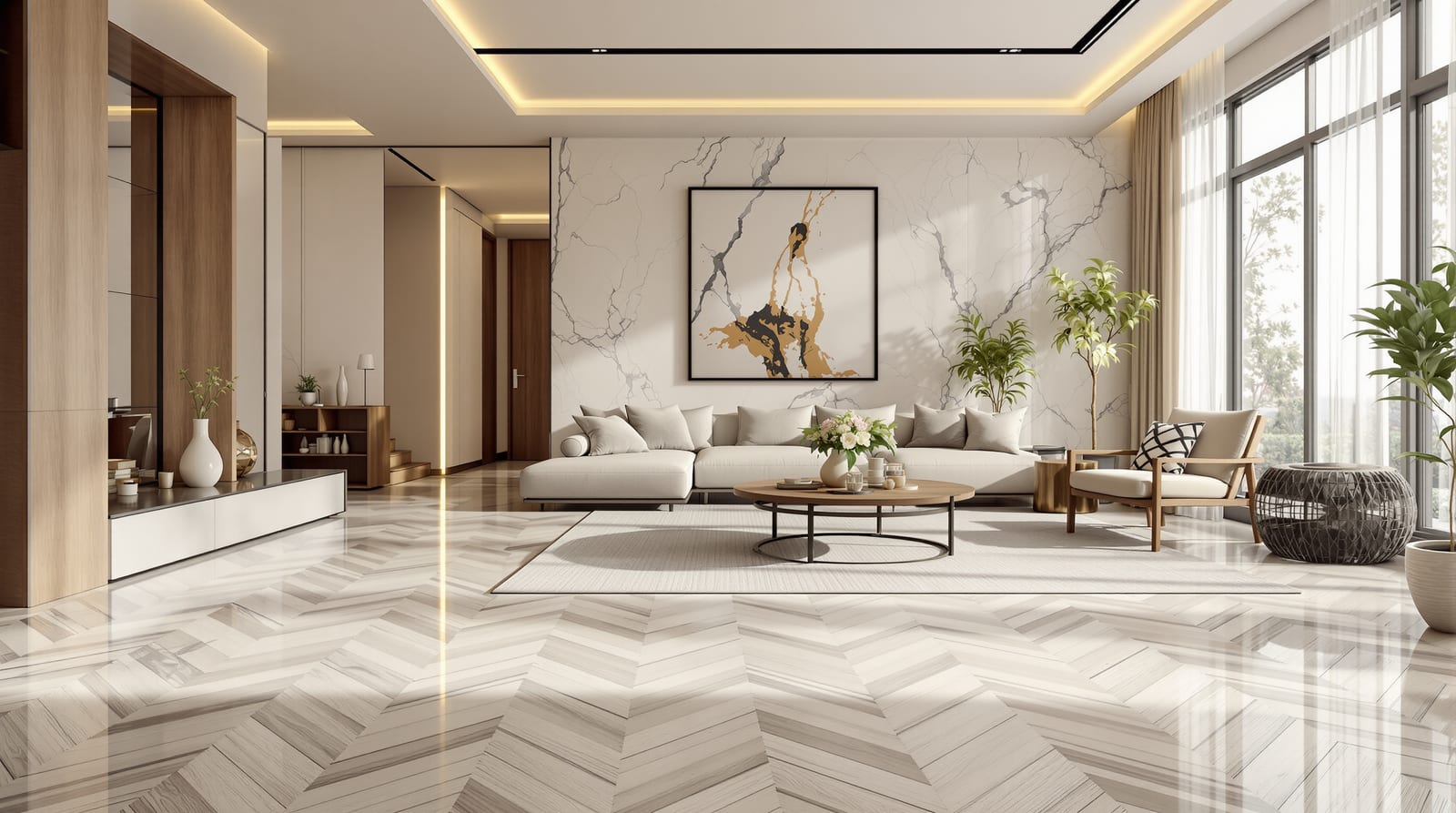
6. Statement patterns: herringbone and chevron
What it is: planks or rectangular tiles laid in herringbone (90-degree zig-zag) or chevron (mitred V) rather than straight grids, turning the floor itself into the design feature.
Why it is rising in India: with marble-look PGVT and wood-look SPC now affordable, homeowners want a richer layout, not just a richer material. Herringbone reads as bespoke and high-end at a modest material premium.
The trade-off is labour and wastage. Diagonal and herringbone laying needs precise setting-out and adds roughly 30-50% to laying cost and 10-15% wastage versus a straight grid. The diagram shows why the angled cuts at every edge drive that up.
Where to use: living rooms, dining, entry foyers — anywhere you want one hero surface. Estimate quantities with the tile pattern calculator.
7. Matte and anti-skid finishes
What it is: a clear move away from high-gloss mirror floors toward matte, satin and textured surfaces — partly aesthetic, partly safety.
Why it is rising in India: glossy floors are slippery when wet (a real hazard with elderly parents and young children) and show every footprint and water spot in our dusty, humid conditions. Matte and structured finishes hide smudges and grip better. For wet zones, specify slip ratings: aim for DIN 51130 R10 or higher (R11-R13 for bathrooms, balconies and outdoor steps), in line with NBC 2016 and the RPwD accessibility guidance.
Cost: usually little or no premium over the glossy version of the same tile — this is a specification choice, not a budget one.
Where to use: bathrooms, kitchens, balconies, utility and entrance — everywhere water reaches. More in how to choose flooring for Indian weather.
8. Warm neutrals and natural stone tones
What it is: the palette has shifted from cool greys to warm neutrals — sand, beige, greige, honey, oat and travertine tones — alongside a renewed taste for genuine Indian stone like Kota, Tandur and granite.
Why it is rising in India: warm tones flatter Indian light and skin, hide dust between mops, and pair with the wood, cane and terracotta in current interiors. Honest Indian stone is also being re-appreciated for its durability and value — Kota and Tandur at 30-80/sq ft are budget-proof workhorses, while granite (50-250) remains the joint-family default. Marble-look surfaces in warm cream read as luxurious without going stark white.
Cost: depends entirely on the base material; the tone is free.
Where to use: as the whole-home base palette. See granite flooring in India and Kota stone flooring.
9. Sustainable and low-VOC options
What it is: flooring chosen for its environmental and indoor-air credentials — recycled-content tiles, bamboo, cork, low-emission adhesives and finishes, and reclaimed terrazzo aggregate.
Why it is rising in India: green-building awareness (IGBC, GRIHA) is filtering into homes, and parents increasingly ask about off-gassing in kids' and bedrooms. Look for low-VOC adhesives and sealers, and prefer click-lock systems that need little or no glue. Bamboo (150-450/sq ft) and cork (200-500) bring warmth with renewable credentials, though both need humidity care in Indian conditions.
Cost: varies widely; the bigger lever is choosing low-VOC adhesives and finishes, which cost little extra.
Where to use: bedrooms, children's rooms and any home prioritising indoor air quality.
10. Mixed-material zoning
What it is: instead of one floor everywhere, using different but coordinated materials to define zones in open-plan layouts — say marble-look PGVT in the living-dining, wood-look SPC in bedrooms, anti-skid stone on the balcony, microcement in a feature nook.
Why it is rising in India: open-plan homes need visual definition without walls, and each Indian zone has different demands — wet balconies, high-traffic living, cosy bedrooms. Zoning lets you spend where it shows and save where it doesn't. The craft is in transitions: align tile thicknesses, use a clean threshold or metal trim strip, and keep tones in one warm family so the joins feel intentional.
Cost: a blended budget — the win is putting premium material only where it earns its keep.
Where to use: open-plan apartments and villas. The room-by-room flooring guides help you assign each zone.
How to use these trends without regret
Trends are direction, not instruction. Three rules keep you safe: pick durability first and looks second (a floor lives for decades); match the finish to the room's water and traffic, not to a Pinterest board; and remember that laying skill makes or breaks large-format and pattern work — budget for a good mason, not just a good tile. If you only adopt one trend, make it marble-look PGVT or wood-look SPC: both give you 2026's aesthetic with the toughness Indian homes demand.
Frequently asked questions
What is the biggest flooring trend in India for 2026?
Marble-look PGVT tiles replacing real marble, and large-format porcelain with minimal grout lines. Both chase a seamless, luxurious look while being far cheaper and lower-maintenance than natural marble — a combination that fits Indian homes' need for durability and easy cleaning.
Is real marble out of fashion in 2026?
Not exactly, but it is increasingly reserved for showpiece spaces. Many homeowners now choose marble-look PGVT for the same veined effect without staining, etching or polishing. If you love genuine stone, weigh it honestly in marble vs vitrified tiles.
Are large-format tiles worth the extra cost?
For living rooms and lobbies, often yes — fewer grout lines look premium and clean faster. But they need a flat screed and a skilled installer; laying can cost ₹40-60/sq ft. On uneven or budget jobs, standard 600x600 or 800x800 vitrified is the safer call.
Which 2026 trend is best for wet areas and balconies?
Matte, anti-skid finishes — specify DIN 51130 R10 or higher (R11-R13 for bathrooms and outdoor steps). Anti-skid vitrified, porcelain or natural stone keeps wet zones safe for children and elders, in line with NBC 2016 guidance.
Is microcement a good idea for Indian homes?
For the right space and with a skilled applicator, yes — it gives a seamless, on-trend mineral look and can go over old floors without demolition. Be cautious in heavy-use kitchens, and always use a robust sealer. Read microcement flooring in India before committing.
Export this guide
Related Guides — Deep-dive reading
Anti Slip Flooring for Bathroom and Wet Areas in India: R-Ratings, Finishes and Genuinely Safe Tile Choices
How to choose genuinely safe flooring for bathrooms, kitchens, balconies, pools, entrances and elderly- or child-friendly homes — the R-rating system, finishes that grip wet feet, anti-skid natural stone, slope to drains and the tiles to avoid.
Flooring & SurfacesEpoxy Grout vs Cement Grout for Tiles in India: Which to Specify (2026)
A plain-English guide to tile grouts for Indian homes: what grout does, how cementitious grout compares with epoxy grout on cost, stain and water resistance, hygiene and durability, and exactly where each one belongs - kitchens, bathrooms, pools, dry rooms and more.
Building MaterialsHow to Choose Flooring for an Indian Home: A Step-by-Step Framework (2026)
A decision framework to pick the right floor for any room — weighing traffic, water, comfort, budget, maintenance, look, climate, durability and resale, with the key natural-stone vs tile vs wood vs resilient trade-offs.
Flooring & SurfacesRelated Tools — Try Free
Flooring Cost Calculator
Estimate the all-in cost of a floor — material, laying, wastage, skirting and GST — by area and material.
Flooring CalculatorCross-Ventilation Analyzer
Estimate airflow and air changes per hour (ACH) from room size, window areas, layout, and local wind — with NBC 2016 Part 8 compliance check.
Ventilation CalculatorBathroom Renovation Cost Calculator
Cost to renovate an existing bathroom with a replace-vs-keep model — demolition, re-waterproofing, tiles, fittings and the money saved by keeping items.
Bathroom Calculator