
PGVT Tiles in India: Polished Glazed Vitrified Tiles Buyer's Guide (2026)
The high-gloss, marble-look vitrified tile explained — how PGVT differs from matte GVT and double-charged, why it is glossy, where it slips, nano-coating, sizes and ₹/sq ft.
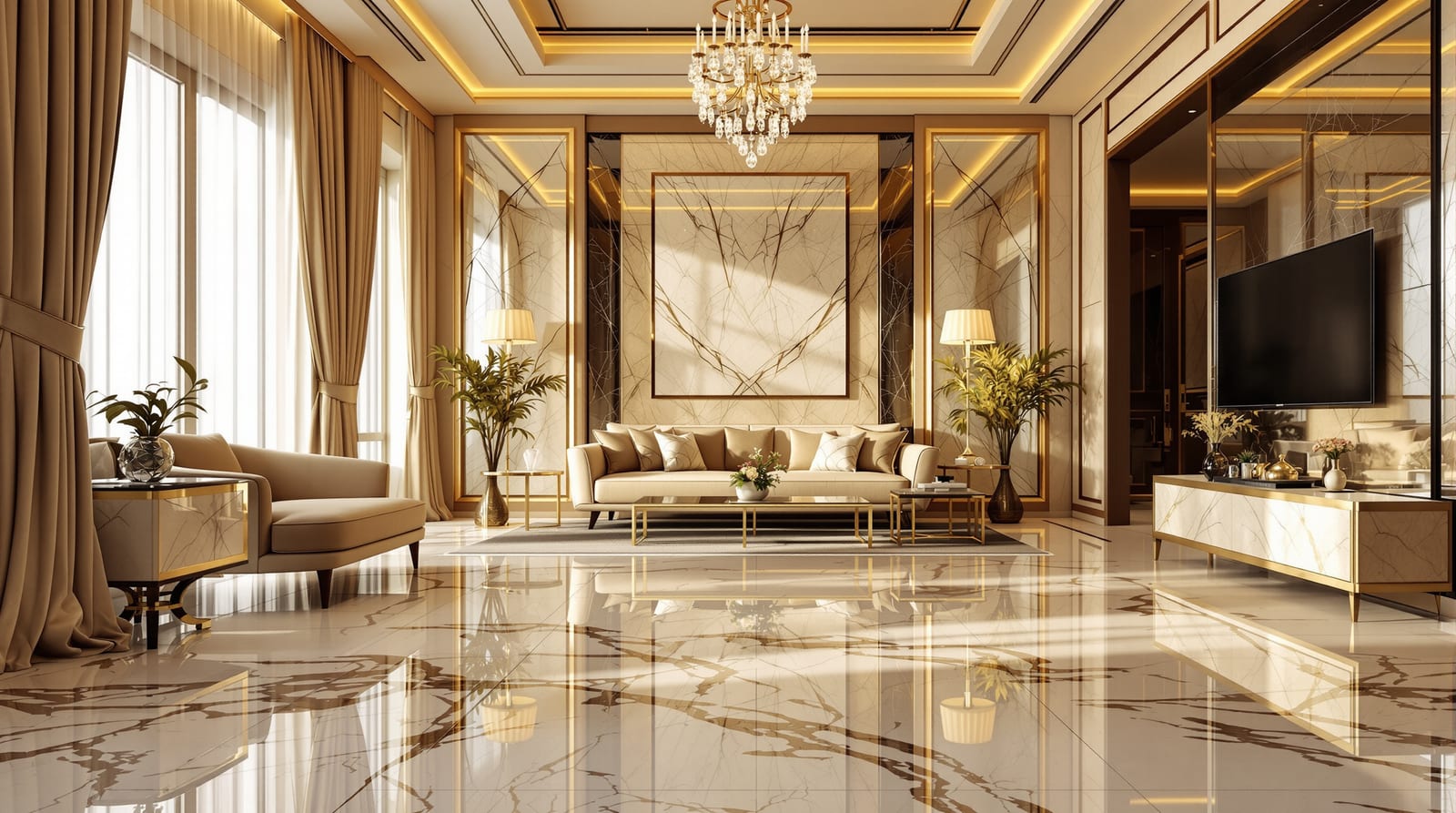
Walk into almost any new Indian apartment with a mirror-bright, marble-look floor and you are most likely standing on PGVT — Polished Glazed Vitrified Tile. It is the single most popular reason families now skip real marble: a printed, glass-glazed vitrified tile that is then mechanically polished to a high-gloss, reflective finish, delivering the luxury "marble look" for a fraction of marble's price and upkeep. But that same gloss is exactly why PGVT belongs in your living room and bedrooms — and almost never in your bathroom.
This guide explains what PGVT actually is, how it differs from matte GVT and double-charged tiles, why it reflects light the way it does, where it gets dangerously slippery, what nano-coating really buys you, and the sizes, prices and care that matter in Indian homes.
What "PGVT" actually means
A vitrified tile is a ceramic body fired so hot that the clay-and-feldspar mix partly turns to glass (vitrifies), giving very low water absorption — under 0.5% for the BIa group under IS 15622 — and high strength. That is the "VT" in every variant.
The differences are all about the surface:
- GVT (Glazed Vitrified Tile): a thin layer of liquid glass glaze carrying a high-resolution digital print is fused onto the body. This is what lets a tile mimic marble veining, wood grain, concrete or fabric. GVT is usually finished matte, satin or "carving" texture.
- PGVT (Polished Glazed Vitrified Tile): it is a GVT — same printed glaze layer — that is then mechanically polished with abrasive heads after firing, grinding the glaze to a flat, high-gloss, mirror-like sheen. So PGVT is simply GVT plus a polishing step.
In short: all PGVT is GVT, but only the polished ones earn the extra "P". If you want the deeper detail on the glaze layer itself, see our guide to glazed vitrified tiles (GVT), and for the head-to-head, GVT vs PGVT.
How it differs from double-charged
People often lump PGVT with double-charged tiles, but they are made differently. A double-charged tile pushes two layers of pigmented powder (about 3-4 mm deep) into the body before pressing, so the colour runs through the wearing surface — but the design is limited to simple salt-and-pepper or soft patterns and there is no glaze. PGVT carries its design only in a thin top glaze, so it offers vastly richer, photo-realistic marble and stone looks, but a shallower design depth. The practical rule: choose double-charged for very high-traffic commercial floors where deep wear-resistance beats looks, and PGVT for homes where the marble look matters most. See double-charged vitrified tiles for that trade-off in full.
PGVT vs GVT vs marble — the comparison that matters
This is the decision most Indian homeowners are really making: the glossy marble look. Here is how the three stack up.
| Factor | PGVT (polished GVT) | GVT (matte/satin) | Real marble |
|---|---|---|---|
| Look | High-gloss, mirror-like, marble-look | Soft matte/satin, natural-stone look | Genuine veining, depth, varies slab to slab |
| Reflectivity | Very high (bright, "expands" space) | Low to medium | Medium-high after polishing |
| Slip when wet | High — slippery; avoid wet areas | Lower — safer underfoot | High when polished; etches with acid |
| Water absorption | Under 0.5% (vitrified) | Under 0.5% (vitrified) | Porous; stains, needs sealing |
| Stain resistance | High (glazed + nano-coat) | High (glazed) | Low — wine, turmeric, lemon stain/etch |
| Maintenance | Mop only; avoid scratches | Mop only; hides marks/dust | Periodic sealing + diamond polishing |
| Scratch visibility | Scratches show on the gloss | Scratches less visible | Scratches/etches show |
| Cost (material) | ₹60-150/sq ft | ₹40-120/sq ft | Indian ₹80-350; Italian ₹250-1,500+ |
| Best use | Living room, bedrooms, lobby | Most rooms incl. semi-wet | Premium living areas (with upkeep) |
The takeaway: PGVT gives you 90% of the marble look at a fraction of marble's price, with none of marble's staining, sealing or etching headaches. What you trade away versus matte GVT is wet-area safety and scratch-hiding. For the full marble comparison, see marble vs vitrified tiles.
Why PGVT is glossy — and why that is the catch
The polishing process flattens and smooths the glaze to a near-optical surface. That high reflectivity is genuinely useful: it bounces daylight around, makes small Indian flats feel larger and brighter, and reads as "premium". But a smooth, wet glossy surface has very low friction.
In slip-resistance terms (DIN 51130 R-ratings), PGVT typically sits around R9 — fine for dry indoor floors, but well below the R10-R11 you want for any area that gets wet. The NBC 2016 and the RPwD Harmonised Guidelines 2021 both push for anti-slip surfaces in wet and circulation zones for good reason.
So the hard rule for Indian homes:
- Use PGVT in: living room, drawing/dining room, bedrooms, study, lobby and showroom-style spaces — dry, high-visibility areas.
- Do NOT use PGVT in: bathrooms, balconies, terraces, kitchen wet zones, pooja-room washing areas, porches and any outdoor or coastal splash zone. A wet polished floor with elderly parents or toddlers in a joint family is a genuine fall hazard.
For those wet and outdoor areas, switch to anti-skid GVT, matte porcelain, or natural stone — exactly the logic in our siblings bathroom flooring coverage and the broader vitrified tile flooring guide.
Nano-coating: what it really does
Most reputable PGVT today is sold with a nano-coating (nano-polish / nano-tech finish). After polishing, the open micro-pores created by grinding the glaze are sealed with a nano-particle treatment. This matters because polishing can otherwise leave the surface slightly more absorbent of dirt and stains in those micro-pores.
What nano-coating buys you:
- Stain resistance: tea, coffee, turmeric, oil and ink wipe off instead of seeping in.
- Lower dirt pickup: less grime trapped in micro-pores, easier mopping.
- Sustained shine: the gloss lasts longer before it needs re-buffing.
What it does not do: it does not make the tile non-slip, and it is not permanent — heavy abrasive cleaning slowly wears it. Avoid acidic and harsh abrasive cleaners that strip the nano layer. When buying, confirm the tile is nano-polished, not just polished, and check the brand's stain-resistance class.
Sizes and large-format PGVT
PGVT is where the large-format trend lives, because big glossy marble-look slabs with minimal joints look the most luxurious. Common sizes:
| Size (mm) | Typical use |
|---|---|
| 600 x 600 | Bedrooms, smaller rooms, budget jobs |
| 800 x 800 | The default for Indian living rooms |
| 600 x 1200 | Living/dining, fewer grout lines |
| 800 x 1600 | Large-format feature floors and walls |
| 1200 x 1200 / larger slabs | Premium, "seamless marble" look |
Bigger formats mean fewer grout joints (cleaner marble illusion) but demand a dead-flat, level subfloor, tile adhesive (not the traditional cement-sand bed, which cannot hold large-format tiles reliably) and skilled labour. Always order about 5-10% extra for wastage, and more for diagonal layouts. Our tile quantity calculator and tile adhesive calculator help you size the order.
What PGVT costs in India (2026)
Indicative material-only prices, varies by city, brand and design; add 18% GST and laying:
| Item | Indicative rate |
|---|---|
| PGVT tile (material) | ₹60-150/sq ft |
| Premium/large-format/designer PGVT | ₹150-250+/sq ft |
| Tile adhesive | ₹12-30/sq ft |
| Laying labour (large-format) | ₹25-60/sq ft |
| Grout, skirting, polishing | Extra |
So a typical installed living-room PGVT floor lands roughly ₹110-220/sq ft all-in for mid-range tiles. That is dramatically cheaper than installed Italian marble (which also carries lifelong sealing and polishing costs). For the bigger budgeting picture, see flooring cost per square foot, or use the flooring cost calculator.
Caring for PGVT (and avoiding scratches)
The gloss is the whole point, so protect it:
- Scratches are the enemy. On a mirror surface, fine scratches catch light and dull the shine. Use felt pads under furniture legs, never drag sofas or beds, and place doormats at entries to trap grit (sand and dust act like sandpaper).
- Mop with a soft cloth and a mild pH-neutral cleaner. Avoid acids, harsh scouring powders and steel wool — they strip the nano layer and dull the gloss.
- Wipe spills promptly, though nano-coated PGVT is forgiving of turmeric, tea and oil.
- Dust frequently; grit on a glossy floor is the main cause of micro-scratching in high-traffic, joint-family homes.
- Do not wax generic floor wax over PGVT; it can leave a slippery, hazy film.
Done right, a PGVT floor holds its showroom shine for years with nothing more than regular mopping — no sealing, no diamond polishing, no etching worries. That low-effort luxury is exactly why it has overtaken marble in mainstream Indian homes.
Frequently asked questions
Is PGVT better than marble?
For most Indian homes, yes on value and upkeep: PGVT gives the glossy marble look at a fraction of the cost, with no staining, sealing or acid-etching, and water absorption under 0.5%. Marble still wins on genuine natural depth and a cool-underfoot feel, but it demands ongoing sealing and polishing. See marble vs vitrified tiles.
Can I use PGVT in the bathroom?
No. PGVT's polished gloss becomes very slippery when wet (around R9 slip rating). Use anti-skid matte GVT, porcelain or natural stone in bathrooms, balconies, terraces and other wet or outdoor areas, and keep PGVT for dry living rooms and bedrooms.
What is the difference between GVT and PGVT?
Both are glazed vitrified tiles with a printed glaze design. PGVT is simply a GVT that has been mechanically polished to a high-gloss, mirror finish; GVT is left matte or satin. PGVT looks more luxurious but is glossier and more slippery; matte GVT is safer and hides scratches and dust. Full detail in GVT vs PGVT.
Does PGVT scratch easily?
The vitrified body is hard, but the polished gloss shows fine scratches more than a matte finish does. Trapped grit and dragged furniture are the usual culprits. Use felt pads, doormats and regular dusting, and PGVT will keep its shine for years.
What size PGVT should I buy?
800 x 800 mm is the default for Indian living rooms; 600 x 1200 mm and 800 x 1600 mm give a more seamless, marble-like look with fewer joints but need a flat subfloor and skilled large-format laying. Order 5-10% extra for wastage.
Export this guide
Related Guides — Deep-dive reading
Glazed Vitrified Tiles (GVT) for Indian Homes: HD Designs, Finishes & Cost (2026)
How GVT puts an HD printed glaze on a vitrified body to deliver marble, wood, stone and concrete looks double-charged tiles can't — with matte vs glossy, the wear-layer limit, sizes and ₹/sq ft.
Flooring & SurfacesVitrified Tile Flooring in India: Types, Sizes, Cost & Buying Guide (2026)
India's most popular floor decoded — what vitrified really means, the four main types, sizes and finishes, ₹/sq ft costs, laying methods and how it stacks up against ceramic and stone.
Flooring & SurfacesVitrified Tile Maintenance: How to Care for Vitrified & PGVT Floors in India
Vitrified and PGVT tiles are India's most common, near maintenance-free floor; the real weak point is the cement grout, not the tile, so this guide shows the simple routine, post-construction haze and stain removal, and how to keep the gloss.
Flooring & SurfacesRelated Tools — Try Free
Flooring Cost Calculator
Estimate the all-in cost of a floor — material, laying, wastage, skirting and GST — by area and material.
Flooring CalculatorApartment Furniture Size Chart
Standard furniture dimensions for Indian apartments — sofas, beds, tables, dining, storage.
Reference ChartTile Quantity Calculator
Work out how many tiles and boxes to buy for a floor, by tile size and area, with wastage and skirting.
Flooring Tool