
Facade & Exterior Lighting Design: Light Your Home's Face (2026)
The design guide to lighting a home's facade, entrance and exterior for beauty and welcome — grazing, uplighting, silhouetting, soffit downlights, cove and a warm doorstep — done with restraint, without glare or skyglow, and always wired by a licensed electrician.
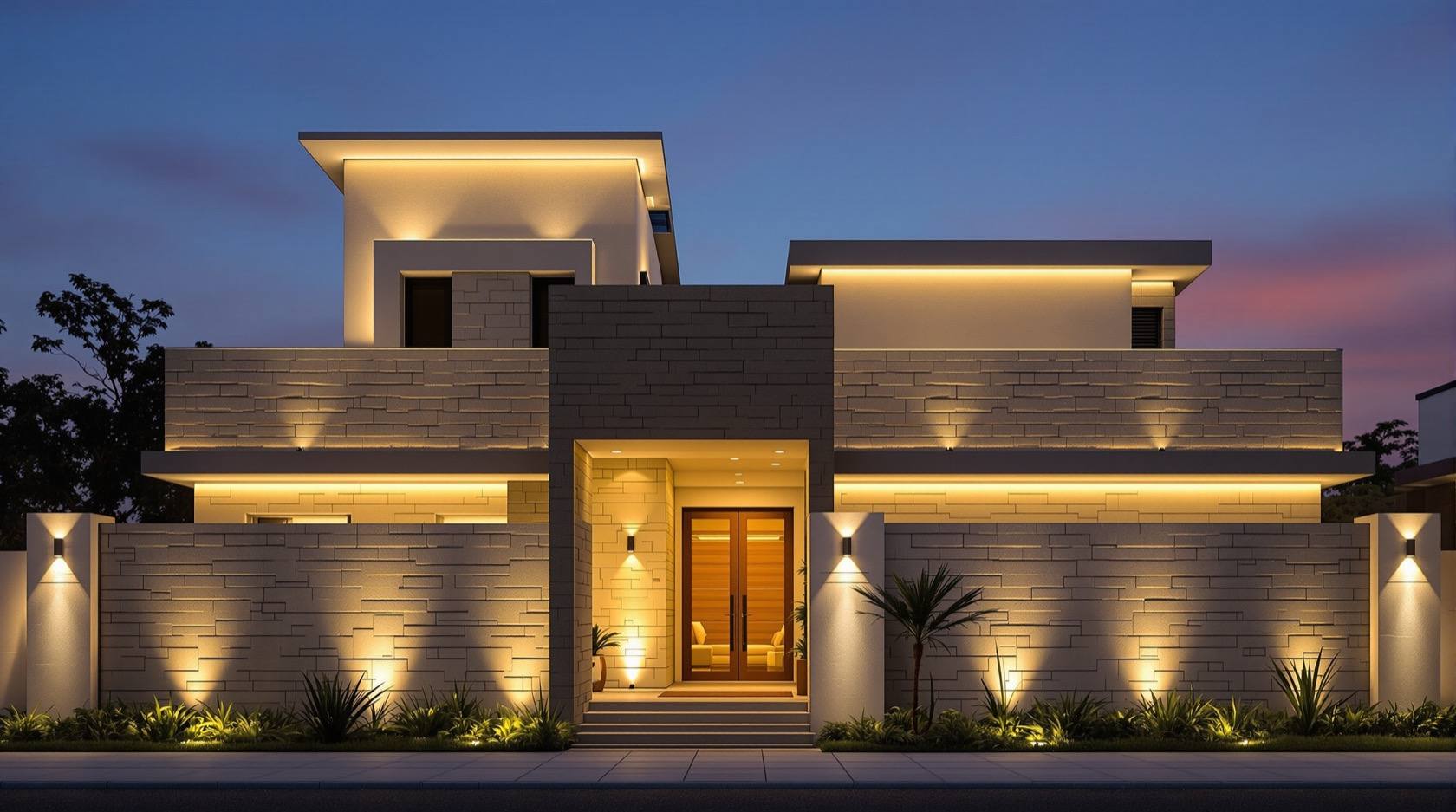
Your facade is your home's face, and for half of every day it is dark. Get the exterior lighting right and the house has a second life after sunset — a warm, composed, welcoming presence that reveals the architecture, guides you safely to the door, and quietly says someone thoughtful lives here. Get it wrong and you have either a black box with one harsh bulkhead over the gate, or a floodlit spectacle that blinds the neighbours and washes out the very texture it was meant to show. This guide is about doing it beautifully.
This is the design guide to lighting a home's exterior for beauty and welcome — the aesthetic craft of it. It is deliberately distinct from two neighbours it hands off to: the deep garden and pathway wiring in outdoor and landscape lighting and the landscape lighting guide, and the security floodlights, sensors and CCTV that live in the security lighting sub-hub. Here we light the face of the house — the walls, columns, entrance and edges — for how it looks and how it feels to arrive.
Scope & how to read this. This is a design-led guide: it helps you plan the look, choose techniques and specify fittings for a facade that is elegant and welcoming at night. It is not a wiring manual. Every outdoor light involves water, weather and mains power together — a genuinely life-safety combination. All outdoor wiring, weatherproof junctions, earthing, RCD protection and fixture installation must be designed and done by a licensed electrician to the National Electrical Code and relevant IS/IEC standards; treat this as non-negotiable. Costs are indicative bands only — get local quotes. Deep wiring and garden circuits are cross-linked to the outdoor/landscape guides; security floods and cameras to the security lighting sub-hub.
What good facade lighting is trying to do
Before you place a single fitting, be clear on the three goals — because they pull in slightly different directions and a good scheme balances all three.
- A welcoming, elegant night-time face. The house should look composed and inviting from the gate and the street — warm, layered, unmistakably "home", not a security compound.
- Reveal the architecture. Light exists here to show something worth showing: the texture of stone or brick, the rhythm of columns, the depth of a jaali screen, the line of a cornice. Light the good features; leave the clutter dark.
- Safe, easy arrival. Steps, level changes, the path to the door and the door itself must be legible so guests arrive without stumbling — but with gentle, shielded light, never a blinding beam.
And one overriding discipline sits above all three: restraint, no glare, no skyglow. The best facade schemes use less light, aimed precisely, warm in tone, with every source shielded so you see the lit surface and not the bulb. More on that below — it is what separates a designed facade from a lit-up one.
Facade lighting techniques — the toolkit
These are the moves that professional exterior schemes are built from. You will use two or three of them, not all — a facade lit by every technique at once is noise, not design.
| Technique | What it does | Best for |
|---|---|---|
| Grazing | Fitting placed very close to the wall (a few inches out), throwing light steeply up or down the surface so every bump casts a shadow | Revealing texture — natural stone, exposed brick, rough plaster, timber, fluted concrete |
| Wall-washing | Fitting set further out, throwing an even, flat wash across a broad surface | Smooth, calm walls, large plain planes, a name/feature wall you want evenly bright |
| Uplighting | Narrow beam from ground level up a vertical element | Columns, pillars, a tall tree, a corner, a sculptural feature — drama and height |
| Silhouetting | Light a wall behind an object, leaving the object itself dark | A shapely tree, a jaali, a screen or gate — reads as a graphic outline |
| Soffit downlighting | Recessed or surface downlights tucked into the porch/overhang soffit | Even, glare-free wash down the entrance zone and door; grazes a wall from above |
| Cornice / edge cove | Hidden LED strip in a cornice, parapet edge or under a chajja | A soft, floating "halo" that traces the building's roofline or edge |
| Step & path lights | Low, shielded markers or recessed riser lights along the approach | Safe, legible arrival — the sequence from gate to door |
| Entrance / porch light | The welcoming fixture(s) at the door — a lantern, wall pair or overhead | The emotional heart: a warm, glowing doorstep that says "come in" |
| House-number & nameplate | A small dedicated downlight or backlight | Legibility and a designed, cared-for finishing touch |
| Accent | A tight spot on one worthy object | A single feature — an urn, a relief panel, a piece of art or a tree |
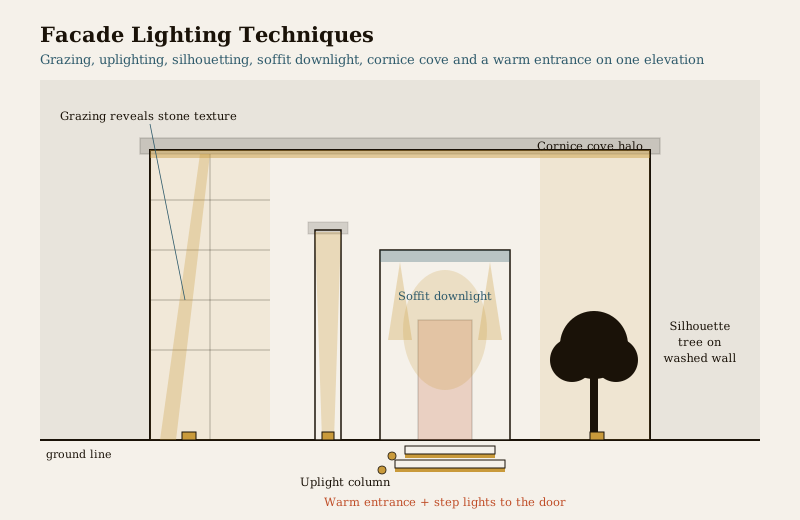
A few pairings that work on Indian homes. Grazing plus a lit doorway flatters a stone or brick villa. Column uplights plus cornice cove suits a classical or portico entrance. Silhouetting a jaali or a frangipani against a washed wall is quietly spectacular and very Indian. Downlighting from a deep chajja or porch soffit is the safest, glare-free way to light an entrance in our sun-and-monsoon climate because the fitting sits sheltered.
Restraint and good practice — the part that makes it elegant
This is the difference between "designed" and "lit up". Discipline here matters more than the number of fittings.
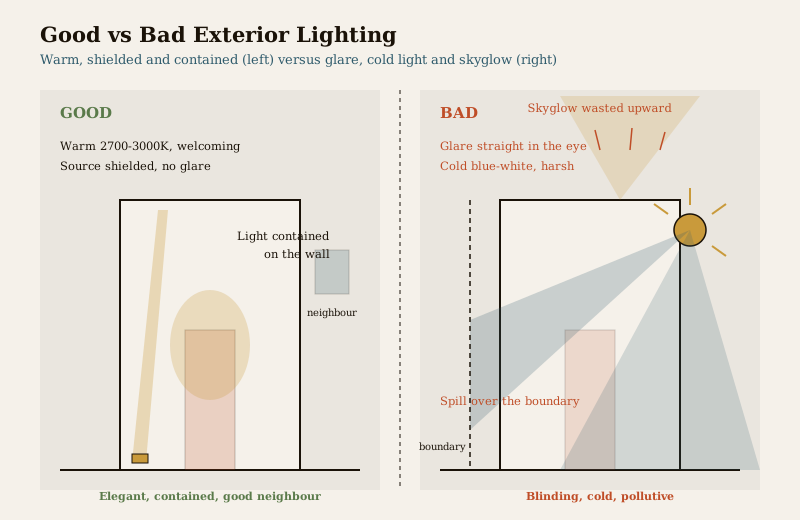
- Warm, not cold. For a home, choose warm white, 2700K to 3000K. It reads as welcoming, flatters skin, warm stone, brick, wood and terracotta, and looks residential rather than commercial. Cool 4000K+ light on a house facade looks like a car park. Pin down the number with the colour temperature selector; the deeper theory is in the colour temperature and CRI guide.
- Less is more. Light a few worthy things well and leave the rest in shadow. Contrast — lit against unlit — is what creates drama and depth. A uniformly bright facade is flat and forgettable.
- No glare, ever. You should see the lit surface, not the source. Any fitting a person can look into from the street, the gate or a window is a failure. Use shielded, recessed, louvred or well-glare fittings, and keep bright sources out of sightlines.
- Aim precisely; contain the light. Every beam should land on the thing it is lighting and stop there. Light spilling sideways into a neighbour's window, or up past the roofline into the sky, is wasted, rude and pollutive.
- Respect the night — avoid light pollution. Light aimed up into the sky is skyglow; light crossing your boundary is light trespass. Both are avoidable with downward aim, shielding, snoots and honest restraint. A well-behaved facade is dark-sky friendly and a good neighbour — the National Building Code and lighting codes increasingly frame outdoor lighting this way.
- Use only what you need, when you need it. Facade lighting is decorative; put it on a timer or dusk-to-dawn sensor and switch it off late at night. This saves energy and cuts skyglow — see the automation note below.
The critical technical bits — outdoors is not indoors
Here is the part to take seriously. Water plus power plus weather is a life-safety combination. An indoor fitting used outside, an unrated junction, or a DIY connection to the mains can and does kill. Everything on the exterior must be rated, weatherproof and installed by a professional.
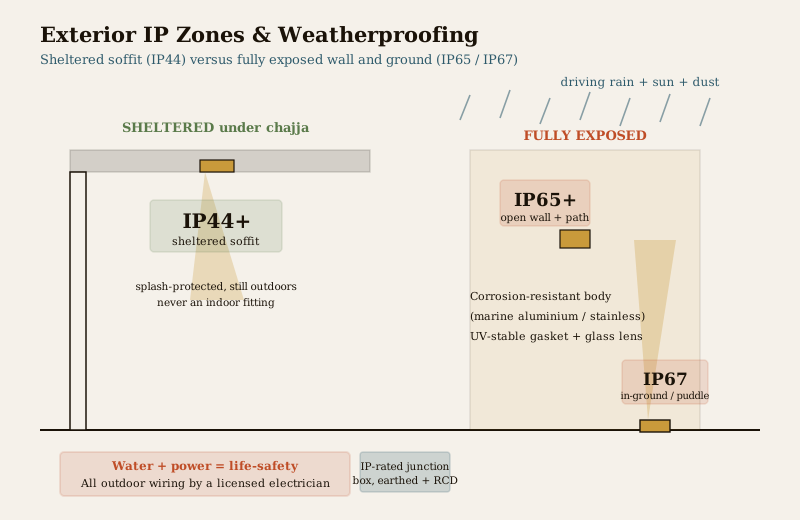
- IP-rated for the position. Outdoor fittings carry an IP rating (IS/IEC 60529 — first digit dust, second water). Use IP65 or higher for anything fully exposed to rain and washdown (ground uplights, wall fittings on open faces, path lights), and IP44 or higher for genuinely sheltered spots (deep under a porch soffit or covered verandah). In-ground uplights that can sit in a puddle need higher ingress protection still. When unsure, go one grade up.
- Weatherproof and corrosion-resistant. Coastal salt air, monsoon humidity and dust are brutal. Specify marine-grade or powder-coated aluminium, stainless steel or quality die-cast bodies with UV-stable gaskets and glass lenses — not painted mild steel that will rust and streak your wall in one season.
- Wired by a licensed electrician. Outdoor circuits need proper earthing, RCD/RCBO protection, weatherproof (IP-rated) junction boxes, correctly rated cable and glands, and safe cable routing — designed and installed to the National Electrical Code and IS practice. This is not a homeowner job. The design (where lights go, what look you want) is yours; the wiring is the electrician's, full stop. The deep how-to lives in outdoor and landscape lighting.
- Low-voltage where it helps. Many garden and step systems run at safe extra-low voltage (12V/24V) via an outdoor transformer, which is safer around planting and water — still installed by a professional. That wiring detail belongs in the landscape lighting guide.
| Zone / position | Exposure | Minimum IP | Notes |
|---|---|---|---|
| In-ground / recessed uplight | Rain, puddles, washdown, foot traffic | IP67 (or IP68 if submersible) | Drainage below, walk-over glass, hottest to run — check heat |
| Open wall fitting, path light | Full rain and sun | IP65 | Corrosion-resistant body; UV-stable seals |
| Under deep chajja / porch soffit | Sheltered, some blown rain/dust | IP44 to IP54 | Sheltered but still outdoors — never an indoor fitting |
| Covered verandah / balcony ceiling | Largely protected | IP44 | Warm dimmable source; glare-shielded |
| Coastal / heavy-monsoon site | Salt, humidity, driving rain | IP65+ and marine-grade | Stainless/marine aluminium; budget for replacement cycle |
| Any outdoor junction / driver | Water + power | IP-rated enclosure | Electrician-installed, RCD-protected, properly earthed |
Timers, sensors and automation
Facade lighting should not blaze all night. The simplest, most elegant control is a dusk-to-dawn photocell or an astronomical timer that switches the decorative facade on at sunset and off at a sensible hour, with a separate, longer schedule for the low safety and step lights. Motion-triggered security floods are a different layer — keep them separate from the mood scheme so a passing cat does not blast your beautiful facade to full white. If your home is already on a smart system, exterior scenes ("Arriving", "Late night", "Festival") can be automated cleanly — see the smart lighting guide. The controls themselves, being outdoors and mains-connected, are again the electrician's install.
Balcony, terrace and festive facade
The exterior is not only the front wall. A balcony or terrace wants soft, warm, low-glare ambience — a shielded wall light or two, a warm strip tucked under the railing or coping, and a portable lantern for flexibility — enough to sit out on a pleasant evening, never a stadium. Wall fittings here overlap with the choices in wall lights and sconces, specified in weatherproof form.
And then there is festive lighting. Diwali, weddings and pooja occasions are when the Indian home dresses up, and done tastefully it is gorgeous: warm string lights and diyas tracing the parapet and balcony, a lit rangoli zone, warm accents on the entrance — layered onto the permanent scheme, not replacing it. The taste rule is the same as always — warm, contained, not a chaotic multicolour blink. Use outdoor-rated (IP-rated) string lights and, for anything plugged into the mains outdoors, the same electrician-grade safety. A permanent facade scheme designed with a spare festive circuit makes Diwali setup effortless every year.
How it connects
- Start from the complete guide to lighting — the pillar — for the whole-home layered approach this facade scheme plugs into.
- For the architectural craft of lighting to reveal form and texture, see architectural lighting design; to settle the overall look first, use how to choose a lighting style and, for a showpiece entrance, luxury and statement lighting.
- Hand the wiring, garden circuits and pathway runs to outdoor and landscape lighting and the landscape lighting guide; for the wider grounds, the landscape hub.
- Hand security floodlights, sensors and CCTV to the security lighting sub-hub — keep that layer separate from the mood scheme.
- Fine-tune the fittings and controls with wall lights and sconces, smart lighting and the colour temperature selector.
Key takeaways
- Facade lighting has three jobs — a welcoming face, revealing the architecture, and safe arrival — balanced by one discipline: restraint.
- Build the scheme from a small toolkit — grazing, wall-washing, uplighting, silhouetting, soffit downlighting, cornice cove, step lights and a warm entrance — and use two or three, not all.
- Choose warm white 2700K to 3000K, light a few things well, and let contrast do the work; a uniformly bright facade is flat.
- No glare, no light trespass, no skyglow — shield every source, aim precisely, contain the beam, and switch off late via a timer or dusk-to-dawn sensor.
- Outdoors is life-safety: use IP65+ fittings on exposed faces and IP44+ in sheltered spots, corrosion-resistant bodies, and have all wiring done by a licensed electrician.
- Defer to the cross-links: garden and pathway wiring to the outdoor/landscape guides; security floods and cameras to the security lighting sub-hub.
- Extend the idea to balconies, terraces and a tasteful festive layer — warm, contained and outdoor-rated for Diwali and celebrations.
References
- National Building Code of India, NBC (SP 7:2026), Bureau of Indian Standards — general provisions for illumination and outdoor/site lighting.
- National Lighting Code and IS 3646 — codes of practice for illumination and good lighting practice (named generally).
- IS/IEC 60529 — degrees of protection provided by enclosures (IP ratings) for the ingress protection of outdoor luminaires.
- IS 10322 / IEC 60598 and IS 16107 — luminaire safety and LED luminaire performance (named generally).
- National Electrical Code / IS wiring practice and a licensed electrician — outdoor circuits, earthing, RCD protection, weatherproof junctions and safe installation.
- ECBC and BEE star ratings — energy-efficient outdoor lighting and controls, and dark-sky-friendly guidance on limiting light trespass and skyglow.
All techniques, IP grades, colour-temperature and cost notes here are indicative design aids only; confirm the governing values against IS codes, NBC (SP 7:2026) and product datasheets, get local quotes, and have every outdoor circuit and fitting designed and installed by a licensed electrician — outdoor lighting combines water and mains power and is life-safety work.
Export this guide
Related Guides — Deep-dive reading
Compound Wall Lighting in India: Wall Lights, Bollards and Solar (2026)
A plain, India-grounded planning guide to lighting your compound wall and gate — entrance and pillar-top lights so guests find the door, wall-wash and grazing to show off texture, path and bollard lights, step lighting, and no-wiring solar fixtures — with warm-vs-cool colour, glare courtesy to neighbours, IP ratings for rain, and honest hand-offs to a licensed electrician and the Security hub.
Compound WallsLighting Safety & IP Ratings: Choose the Right Fixture for the Spot (2026)
The homeowner's safety-literacy guide to lighting — how to read the two-digit IP rating, pick the correctly-rated fixture for bathrooms, gardens and wet zones, and know exactly where selecting a light ends and a licensed electrician's wiring begins.
LightingLighting Controls & Dimming Design: Zones, Scenes & Switches (2026)
How to plan lighting control so an Indian home's light is flexible — split each room's layers onto separate switches, choose dimmers that actually work with LEDs, add two-way switching where you need it, and layer scenes on top. The design decisions you must settle before the electrician wires.
LightingRelated Tools — Try Free
Cross-Ventilation Analyzer
Estimate airflow and air changes per hour (ACH) from room size, window areas, layout, and local wind — with NBC 2016 Part 8 compliance check.
Ventilation CalculatorBrise-Soleil Visualizer
Interactive horizontal-louvre cut-off angle calculator — sun altitude, louvre depth, and spacing inputs with a live shadow preview. Computes θ = arctan(spacing/depth) for façade shading, ECBC envelope compliance, hospital daylight design, and tropical sun-control detailing.
Sun Shading ToolCircadian Light Meter
Patient-centric circadian lighting visualizer for Indian healthcare design — time-of-day × intensity → CCT, melanopic lux (EML / mEDI), melatonin suppression, and an alertness curve. Calibrated against WELL v2 L03 Circadian Lighting Design, CIE S 026:2018, Brainard 2001, and Lucas et al. 2014.
Circadian Tool