
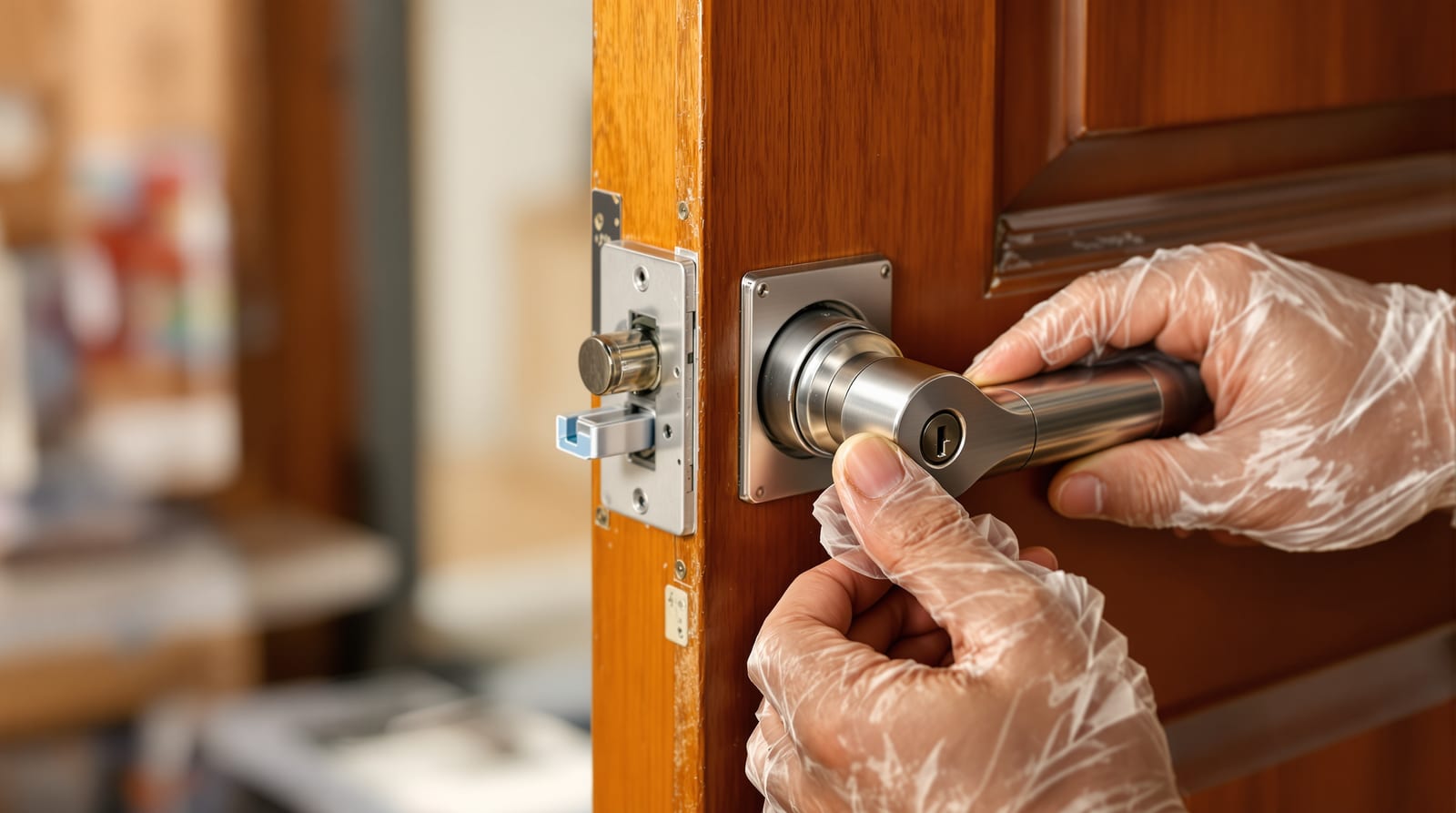
Door Lock Replacement: DIY Step-by-Step Guide India 2026
Identify your lock type, measure backset and door thickness, then remove, fit and align a new lock yourself — with tools and ₹ costs.
A worn, sticky or insecure lock is one of the most satisfying DIY jobs to tackle — and door lock replacement is well within reach if you measure carefully before you buy. The single mistake that defeats most homeowners is grabbing any lock off the shelf without checking the hole spacing, backset and door thickness, then finding it won't fit the existing cut-out. Get those numbers right and the rest is mostly screwdriver work. This guide walks you through identifying your lock type, buying a matching one, removing the old and fitting the new, with India 2026 ₹ ranges throughout.
Difficulty: easy to moderate for like-for-like swaps; moderate to pro if you're changing lock type or upgrading to smart. Time: 30-90 minutes. If your door is warped, the frame is split, or you're fitting a brand-new mortise pocket from scratch, that's carpenter territory — say so and call one.
Step 1: Identify your door lock type
Before anything else, know what you have. The door lock replacement part you buy must match the cut-out already in your door, or you'll be enlarging mortises with a chisel — a different, harder job.
| Lock type | How to spot it | Typical India use |
|---|---|---|
| Mortise lock | Rectangular lock body buried inside the door edge; lever handles on a long plate | Main doors, bedrooms — the Indian standard |
| Cylindrical / tubular | Round bore through the door face; knob or lever with a round rose | Internal/budget doors, some flats |
| Rim lock | Box lock screwed onto the inside face of the door (surface-mounted) | Old houses, store rooms, gates |
| Pin-cylinder (Euro/pin) | A separate brass cylinder that slots into a mortise body | Common as the keyed core in mortise sets |
| Smart lock | Keypad, fingerprint, or app — usually retrofits a mortise or cylindrical cut-out | Upgrades; main doors |
Most Indian homes have a mortise lock with a separate pin cylinder core. Often you don't need to replace the whole body — just the cylinder (if a key is lost or worn) or the lever set (if a handle is loose). Replacing only the cylinder is the cheapest, fastest fix.
Step 2: Measure before you buy
This is the make-or-break step. Take three measurements and write them down before you visit the hardware shop.
- Backset — the distance from the door edge to the centre of the knob/keyhole. Indian mortise locks are commonly 45mm, 55mm, 60mm or 85mm; cylindrical locks are usually 60mm or 70mm.
- Door thickness — measure the door edge. Most flush and panel doors are 30-45mm. Cylinders and spindles come in lengths to suit; too short and the lock won't reach, too long and it sits proud.
- Lock body / faceplate dimensions — for a mortise lock, measure the length and width of the metal faceplate on the door edge so the new body drops into the same pocket.
Not sure of your numbers? Our door problem diagnoser helps you narrow down the lock type, and how to measure a door covers the full measuring drill.
Tools & materials you'll need
- Phillips and flat screwdrivers (a powered screwdriver speeds it up)
- Tape measure and a pencil
- A small chisel and mallet (only if widening a mortise — try to avoid)
- The new lock set with matching backset and thickness
- New screws if the old ones are stripped — see stripped hinge screw fix for rescuing loose holes
- Wood filler/putty for old screw holes, sandpaper, a touch-up marker
- Optional: graphite or silicone spray to lubricate the new mechanism
Step 3: Remove the old lock
1. Unscrew the handle/lever plates on both faces. Lift them off; the spindle (square bar) usually pulls out.
2. Remove the cylinder (if separate): undo the single retaining screw on the faceplate edge, turn the key slightly to align the cam, and slide the cylinder out.
3. Unscrew the faceplate on the door edge. For a mortise body, this exposes the two screws holding the body in the pocket.
4. Slide the lock body out of the mortise. Wiggle gently; don't lever against the wood and split it. For a cylindrical lock, withdraw the latch from the edge and the two halves from the faces.
5. Inspect the cavity. Clear sawdust and old grease. If the wood around screw holes is chewed up, fill and let it set before fitting the new lock.
If the lock won't budge because it's seized, don't hammer it — see fix stuck door lock first. If your key snapped off in the cylinder, deal with that before removal using broken key in lock.
Step 4: Fit and align the new lock
1. Slide the new body into the mortise (or feed the new latch and halves for a cylindrical lock). It should drop in without forcing.
2. Fit the cylinder and spindle, then loosely screw the handle plates on both faces. Don't tighten fully yet.
3. Check the latch and bolt throw smoothly with the handle and key before final tightening.
4. Screw the faceplate flush to the door edge — it shouldn't sit proud or the door won't close.
5. Tighten everything evenly. Over-tightening one side can bind the mechanism.
6. Align the strike plate on the frame so the latch and deadbolt drop cleanly into it. This is the most common alignment headache — our door strike plate alignment guide covers filing or repositioning it. If the door won't latch at all afterwards, check door not latching.
Test the door open and closed a dozen times, with and without the key, before you call it done.
Costs: DIY parts vs carpenter
| Item | DIY part (₹, +18% GST) | Carpenter to fit |
|---|---|---|
| Pin/cylinder core only | 300-1,500 | ₹300-600 visit |
| Mortise lock body | 800-4,000 | ₹400-800 half-day |
| Handle/lever set | 300-2,500 | included in visit |
| Rim lock | 400-2,000 | ₹300-600 |
| Smart lock retrofit | 4,000-25,000+ | often free fitting from brand |
A like-for-like cylinder swap is the cheapest path — often under ₹1,000 and 20 minutes. Estimate your own job with the door repair cost estimator. For a full picture of door spends, see door cost India 2026.
When to upgrade — better grade or smart lock
If you're replacing anyway, it's the moment to upgrade. A higher-grade brass mortise with a pin-cylinder core resists picking and bumping far better than a basic builder's lock. For main doors, consider a deadbolt with at least a 60mm backset and hardened anti-drill pins.
Going smart? A keypad or fingerprint lock removes the lost-key problem entirely, but check: it must match your door thickness and existing cut-out, and battery models need recharging or AA swaps every few months. Read smart door locks before buying, and browse the full door hardware guide for grades, finishes and security ratings. For overall entry security, door security is worth a read.
India realities to plan for: hard water and humidity corrode cheap zinc-alloy locks — choose brass or stainless on bathroom and external doors. Monsoon swelling can make a door bind so the bolt no longer lines up with the strike; that's an alignment fix, not a lock fault. Coastal homes should expect faster corrosion and favour marine-grade hardware.
For the bigger picture of door care and faults, see the complete door guide and the phase pillar on door troubleshooting.
When to stop and call a carpenter
Stop and call a professional if: the mortise pocket needs enlarging or re-cutting (a slip ruins the door edge); the door is warped or sagging so the lock never lines up — fix that first via fix sagging door; the frame is split around the strike; or you're fitting an automatic / sensor / glass door lock (isolate power first; toughened-glass fittings are specialist work). A botched lock cut weakens the door and the security it provides — when in doubt, a half-day carpenter at ₹400-800 is cheap insurance.
Frequently asked questions
Can I replace just the cylinder instead of the whole lock?
Yes — and it's the cheapest fix. If the lock body works but a key is lost, worn, or you want a fresh keyset, swap only the pin cylinder. Undo the one retaining screw on the faceplate, turn the key to free the cam, and slide it out. A new cylinder is ₹300-1,500.
What is backset and why does it matter?
Backset is the distance from the door edge to the centre of the keyhole or knob. If you buy a lock with a different backset, the handle won't line up with the existing hole and you'll be re-cutting the door. Always measure it before buying — common Indian sizes are 45, 55, 60 and 85mm.
How do I know if my door is thick enough for a smart lock?
Measure the door edge. Most smart locks suit 35-55mm doors, but check the spec — too thin and the unit won't clamp securely; too thick and the spindle won't reach. Hollow flush doors may also need reinforcement for a heavy smart unit.
My new lock fits but the door won't latch — what's wrong?
Usually the strike plate on the frame is slightly out of line with the new latch. File the strike opening or reposition it a few millimetres. If the door itself has dropped or swollen, fix the alignment first. See door strike plate alignment.
Is replacing a main-door lock a DIY job?
A like-for-like swap, yes — moderate difficulty, 30-90 minutes. But for main doors, security matters: if you're cutting a new mortise, upgrading grade, or unsure, a carpenter at ₹400-800 ensures the bolt seats deeply and the door stays secure.
How often should I replace a door lock?
Only when it fails, sticks badly despite cleaning, or after a security event (lost keys, a break-in attempt, moving into a resale home). A good brass lock lasts 8-15 years; cheap zinc-alloy ones in humid bathrooms may corrode in 2-4. Lubricate yearly to extend life.
Export this guide
Related Guides — Deep-dive reading
Door Repair Guide India: Fix Holes, Dents, Swelling, Hinges & Locks (2026)
A fix-it reference for Indian homes: every common door problem with a quick fix, a proper repair, a replace verdict, the materials needed, and indicative rupee costs.
Home Doors & EntrancesDoor Lock Repair: Fix Stiff & Sticky Locks (India 2026)
A stiff, sticky or hard-to-turn lock is usually a clean, lubricate and realign job, not a replacement. Here is the full DIY fix-it guide.
Home Doors & EntrancesDoor Hinge Replacement: DIY Step-by-Step Guide (India 2026)
Match the size, type and finish, then swap a worn or rusted hinge yourself without taking the whole door off its frame.
Home Doors & EntrancesRelated Tools — Try Free
Smart Lock Door Compatibility Checker
Tell us your door build, existing lock or prep, thickness and location and find out which smart-lock form factor fits — mortise, deadbolt, rim, gate or a special case — plus the measurements to take.
CompatibilityDoor Security Rating Calculator
Score your main door out of 100 across leaf, frame, lock and hardware — and see the top upgrades.
Security ToolDoor Cost Calculator
Estimate the all-in cost of a door — leaf, frame, hardware, fitting and GST — by type, material and size.
Door Calculator