
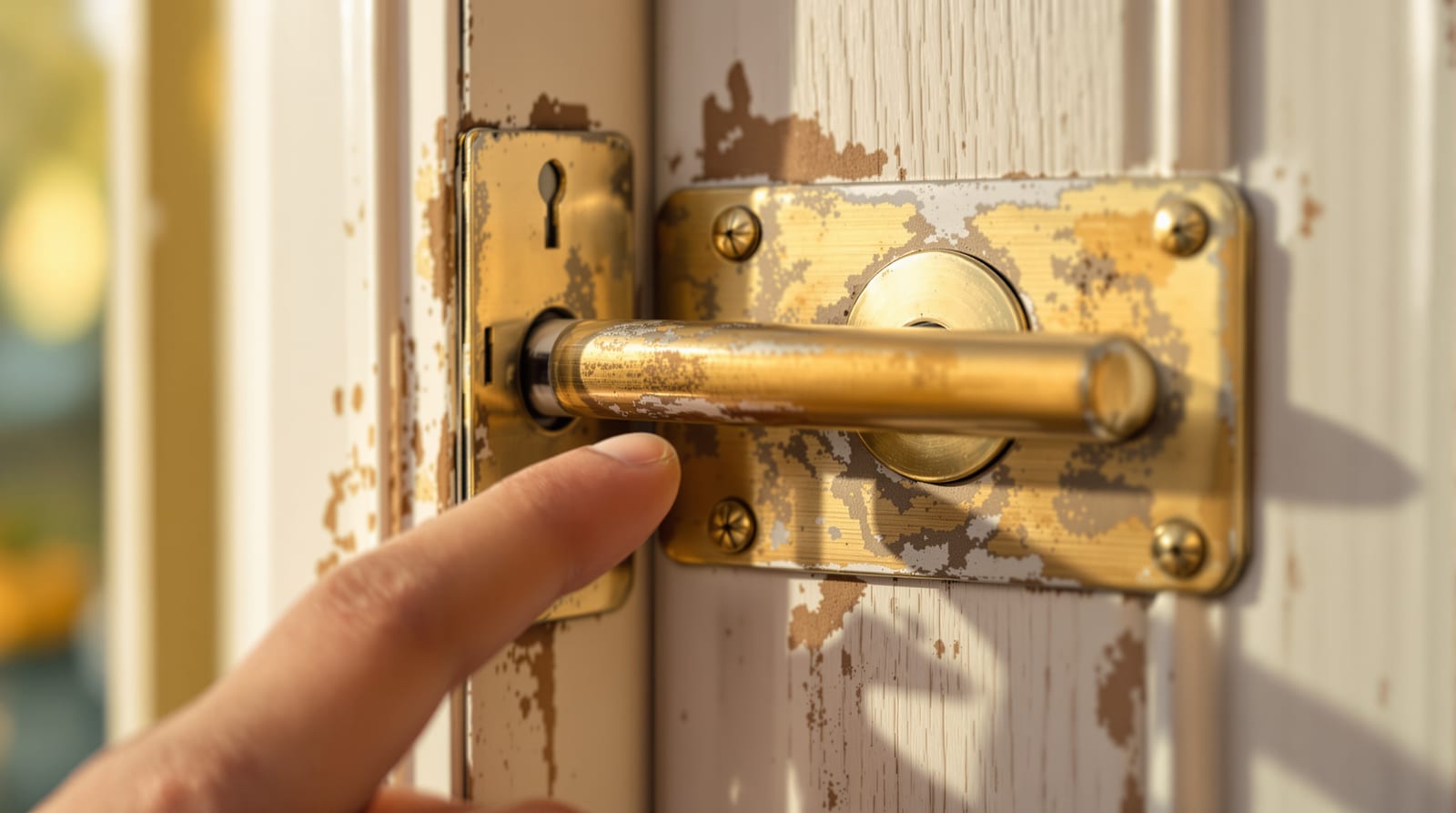
Door Not Latching? Fix the Strike & Latch (India 2026)
Your door shuts but pops back open — here's how to find the misalignment and get the latch clicking into the strike again.
There is a special kind of irritation in a door that almost closes. You push it shut, hear a half-hearted bump instead of a clean click, and a second later it drifts open again. A door not latching is one of the most common — and most fixable — door faults in Indian homes. The good news: nineteen times out of twenty the door, the hinges and the lock are all fine. The latch bolt is simply not landing in the hole in the strike plate. Find that gap, close it, and the satisfying click comes back.
This is a genuinely DIY-friendly job. Most fixes need nothing more than a screwdriver, a flat file and ten patient minutes. Below we'll diagnose exactly where the latch is missing, then walk through each fix from easiest to most involved.
What a door not latching really means
A door not latching almost always comes down to a tiny alignment gap rather than a broken lock. Before any fix, it helps to understand the moving parts.
How a latch is supposed to work
When you close the door, the spring-loaded latch bolt (the angled tongue that sticks out of the door edge) glides over the curved face of the strike plate on the frame, gets pushed in, then springs out into the rectangular strike hole behind the plate. That spring action is what holds the door shut. For it to work, three things must line up: the bolt must arrive at the right height, the right depth, and the right horizontal position relative to the hole.
When a door not latching happens, one of those three is off by a few millimetres. Your whole job is to find which one.
Common causes at a glance
| Symptom | Likely cause | Fix |
|---|---|---|
| Latch hits above or below the hole | Door has sagged (loose/worn hinges) or strike fitted wrong | Tighten/shim hinges, or move strike plate |
| Latch hits the face of the plate, won't go in | Door not closing far enough; strike too far out | Adjust strike position, check for paint build-up |
| Latch enters but door rattles / pops back | Strike hole too far back; worn latch | Move strike forward, add packing, or replace latch |
| Latch tongue barely pokes out | Worn/sticky latch mechanism | Lubricate or replace the latch |
| Worked fine until monsoon | Swollen door/frame shifting alignment | See fix swollen door monsoon |
Difficulty: easy to moderate. Time: 10-30 minutes. Cost: ₹0-300 in DIY parts; a carpenter visit runs ₹400-800 for a strike adjustment, more if hinges or the latch need replacing.
Step 1 — Find exactly where the latch is missing
Don't guess. Two quick tests tell you precisely.
The lipstick test (the classic)
1. Smear a little lipstick, kajal or a dab of grease on the tip of the latch bolt.
2. Slowly close the door until the latch touches the strike plate, then pull it back open.
3. Look at the mark left on the strike plate. That mark tells you where the bolt is hitting:
- Mark above the hole → the door/latch is sitting too high, or has sagged so the frame hole is now too low. You need the latch to come down (or the hole to move up).
- Mark below the hole → latch sitting too low; usually a sagged door.
- Mark on the strike face, beside the hole → horizontal misalignment.
The paper test (for depth)
Slide a strip of paper between the door edge and the frame at the latch when the door is held shut. If the door wobbles or the paper slides freely even when "closed," the strike hole sits too far back and the bolt isn't seating fully — the door won't stay shut even though it technically latches.
Step 2 — Tools & materials you'll need
| Item | Use | Approx ₹ |
|---|---|---|
| Star & flat screwdriver | Strike/hinge screws | 100-300 |
| Flat metal file (bastard cut) | Enlarging the strike hole | 150-400 |
| Lipstick / grease + paper | Diagnosis | nil |
| Cardboard / thin metal shims | Packing hinges | 20-50 |
| Pencil & small ruler | Marking | 50 |
| Wood filler + matching screws | If moving the plate | 100-300 |
| Chisel (sharp) | Deepening the mortise | 200-500 |
| Silicone / graphite spray | Freeing a sticky latch | 150-300 |
GST 18% applies on goods; most of this you may already own.
Step 3 — Pick your fix
Fix A: Tighten or shim the hinges (door has sagged)
If the lipstick mark sits below the hole, the door has dropped. Before touching the strike, fix the cause.
1. Open the door and try wiggling it at the handle. Movement = loose hinges.
2. Tighten every hinge screw. If a screw spins uselessly, the hole is stripped — see stripped hinge screw fix.
3. Still sagging? Place a thin cardboard shim behind the bottom hinge leaf (or the top, depending on the sag direction) to nudge the door back up. Details in fix loose door hinges and fix sagging door.
4. Re-test with lipstick. Often this alone realigns the latch.
Fix B: File or enlarge the strike hole (small offset)
If the mark is only 1-3 mm off the hole and the door is otherwise solid, the fastest fix is to open up the strike hole.
1. Unscrew and remove the strike plate.
2. Using the file, enlarge the metal hole in the direction the latch is missing — file the edge towards the lipstick mark.
3. The plate often has a lip; you may need to file the lip and a little of the wood mortise behind it with a chisel so the bolt has somewhere to go.
4. Re-fit the plate, close the door, listen for the click. File a touch more if needed.
This is the most common professional fix and is very forgiving.
Fix C: Move the strike plate (large offset)
If the latch misses by more than ~4 mm, filing won't reach. Reposition the plate.
1. Remove the plate and hold it against the frame where the latch actually lands (use the lipstick mark).
2. Mark new screw positions. Pre-fill the old screw holes with wood filler or matchsticks + adhesive so new screws bite.
3. Chisel the mortise so the new position sits flush, drill pilot holes, and screw the plate in its new spot.
4. Touch up any exposed wood — see door painting guide.
Fix D: Replace a worn latch
If the latch tongue barely pokes out, won't spring back, or sticks halfway, the mechanism is worn.
1. Spray silicone or graphite into the latch and work the handle — sometimes that's all it needs.
2. If not, unscrew the latch/mortise from the door edge and take it to the hardware shop to match. A tubular latch is ₹150-500; a full mortise lock body ₹800-4,000.
3. See door lock repair and fix stuck door lock for the lock side.
When to stop and call a carpenter
DIY handles strike and hinge alignment beautifully. Step back and call a pro (₹400-1,500) when:
- The door itself is warped or twisted — no strike fiddling fixes a banana-shaped door; see warped door fix.
- The frame has rotted or pulled loose from the wall — that needs door frame repair.
- It's an automatic or sensor door — isolate power first and call the operator's service technician; never DIY the electronics.
- A toughened-glass door latch — handle glass carefully; leave hardware swaps to a glazier.
Not sure if it's worth fixing? Run the repair vs replace door calculator, and use the door problem diagnoser to confirm the fault before you start.
India realities to keep in mind
During the monsoon, timber doors and frames swell, shifting the latch by a millimetre or two — a door that latched in April may miss in July. Resist filing the strike for a problem that disappears in the dry season; tackle the swelling instead. Hard-water-prone homes can see latches stiffen with grime; a yearly squirt of silicone keeps them springy. And in borer- or termite-affected woodwork, a strike that suddenly loosens may signal damage behind the plate — check before re-screwing. Stay ahead of all of this with the wooden door maintenance routine.
For the bigger picture, see the complete door guide and the door troubleshooting hub.
Frequently asked questions
Why does my door close but not stay shut?
The latch bolt is touching the strike plate but not springing into the hole behind it. It's missing by a few millimetres — high, low or sideways. Do the lipstick test to see the offset, then file the hole or move the strike plate.
My door latched fine before the rains — what changed?
Monsoon humidity swells timber doors and frames, shifting the latch out of line. It will often correct itself once things dry out, so avoid permanent filing; address the swelling instead via the swollen-door fix.
Is it the lock or the latch that's the problem?
If the bolt extends and retracts smoothly with the handle but misses the hole, it's an alignment issue (strike/hinges). If the bolt is sluggish, sticks, or barely pokes out, the latch mechanism is worn and needs lubricating or replacing.
How much does a carpenter charge to fix a non-latching door?
A simple strike or hinge adjustment is typically a ₹400-800 visit. If the latch body needs replacing add ₹150-4,000 for the part depending on type; moving a strike and re-finishing the frame may push it to a half-day rate.
Can I fix this myself without removing the door?
Yes — almost always. Tightening hinges, shimming, filing the strike hole and lubricating the latch are all done with the door in place. You only remove the door for serious sag or warp repairs.
Export this guide
Related Guides — Deep-dive reading
Door Not Closing Properly? Fix It Step-by-Step (India 2026)
A clear decision tree for a door that won't shut — latch, hinge-bind, swelling, sag, warp or a moved frame — with DIY fixes and ₹ costs.
Home Doors & EntrancesDoor Repair Guide India: Fix Holes, Dents, Swelling, Hinges & Locks (2026)
A fix-it reference for Indian homes: every common door problem with a quick fix, a proper repair, a replace verdict, the materials needed, and indicative rupee costs.
Home Doors & EntrancesDoor Troubleshooting Guide: Fix Any Door Fault (India 2026)
Symptom to cause to fix for every common door problem in Indian homes, with difficulty, time, cost and when to call a carpenter.
Home Doors & EntrancesRelated Tools — Try Free
Window Hardware Cost Calculator
Estimate window hardware cost — hinges, handles, locks, rollers and multipoint gears.
Window CalculatorDoor Paint Calculator
Estimate paint and primer litres and cost to paint your doors by size, number of doors, coats and paint type.
Door CalculatorDoor Problem Diagnoser
Tell us the symptom and get the likely cause, the fix, DIY difficulty and indicative cost for any door fault.
Diagnostic Tool