
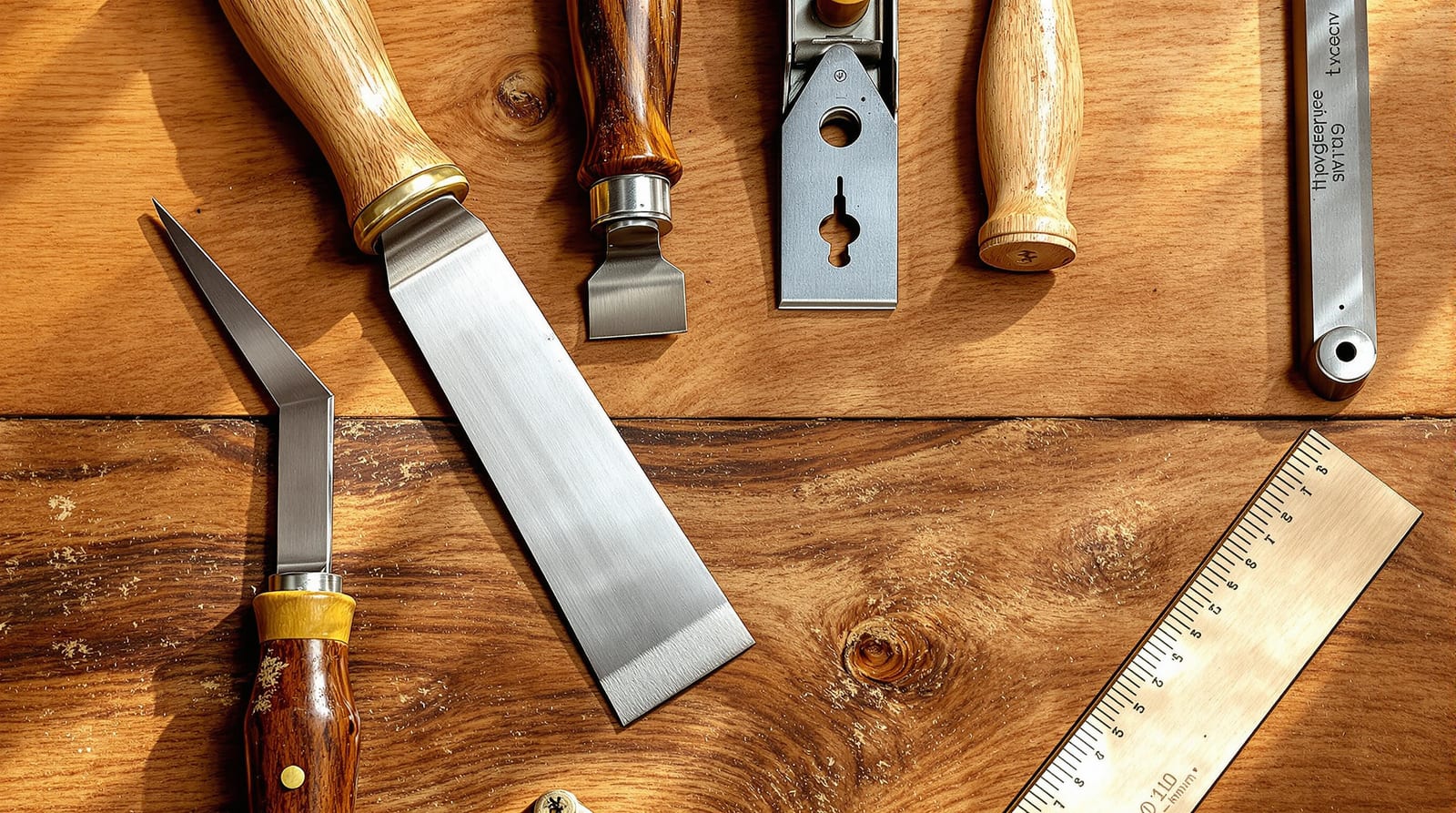
Door Fitting Hand Tools: Chisels, Planes, Gauges (India 2026)
A trade guide to the hand tools every door fitter needs in India — chisels, planes, marking gauges, squares and rasps — how to choose them, why sharp matters, and what they cost.
Power tools and jigs get the headlines, but a door is finished by hand. The door fitting hand tools in a carpenter's roll — chisels, planes, gauges, a square and a knife — are what turn a roughly hung leaf into a door that swings true, latches first time and shows clean, even reveals. On an Indian site, where labour is mixed-skill, power is intermittent and a flush-door veneer is unforgiving, the quality and sharpness of these hand tools often decides whether the job looks crafted or hacked. This guide walks each tool, how it is used in new-fit door work, how to judge a good one, and what to budget — and it pairs with door-fitting tools for the full kit and the power-tool side in door fitting power tools.
The core door fitting hand tools at a glance
These are the tools that do real cutting, marking and paring on a door — distinct from measuring instruments, which the measuring tools guide covers, and from the workshop bench and support gear in workshop setup.
| Tool | Door-fitting job | Indicative price (₹) |
|---|---|---|
| Bevel-edge chisels (12, 18, 25mm) | Pare hinge recesses, lock face-plate mortises, lipping | 250-700 each / 1,200-3,000 set |
| Mortise chisel (heavy) | Chop lock-body mortise, deep waste | 400-1,200 |
| Jack plane (No. 5, ~350mm) | Shoot the long lock/hinge stiles to width | 1,500-4,500 |
| Block plane | Trim lippings, ease arrises, end grain | 800-2,500 |
| Marking gauge | Scribe hinge-leaf depth, lipping lines | 200-700 |
| Mortise gauge (twin pin) | Mark both walls of a lock mortise at once | 350-1,000 |
| Marking knife | Crisp severed line across veneer | 200-800 |
| Combination / try square | Square hinge and lock set-out lines | 350-1,500 |
| Sliding bevel | Transfer rebate / cill angles | 300-900 |
| Surform / cabinet rasp | Fast shaping of timber, easing tight edges | 250-900 |
GST of 18% usually applies on top of these hardware bands. A serviceable hand-tool nucleus for door work sits around ₹4,000-9,000; brand-name forged tools push it higher but hold an edge and stay true far longer.
Chisels: the door fitter's first instrument
Bevel-edge chisels (12-25mm)
The bevel-edge chisel is the everyday door tool. Its ground side bevels let you pare cleanly into the corners of a hinge recess and a lock face-plate mortise, where a flat-sided firmer chisel would foul. Keep at least three widths — a 12mm for tight recess corners, an 18mm for general paring, and a 25mm to clean the floor of a hinge housing or flush a lipping. Buy them with a hooped or shatterproof handle so they survive light mallet taps; cabinet sets sold for fine paring should not be hammered hard.
Mortise chisel
For the lock body mortise in a stile, a stout mortise chisel removes deep waste that a router or chain morticer started, or does the whole job by hand on a small contract. Its thick, square-sided blade levers out chips without flexing. Choose 12-13mm to suit common mortise-lock case thicknesses.
Why edge quality matters: a flush-door face is a thin veneer over a hollow or particle core. A blunt or chipped chisel crushes and tears that veneer instead of severing it, leaving ragged hinge and lock cut-outs that show through paint and polish. Hone chisels to a keen, square edge before every door and strop between cuts — this single habit separates a clean fit from a callback. The product side of locks lives in mortise locks; the craft of cutting their housing is covered in fitting mortise locks.
Planes: shooting the leaf to fit
Jack plane
When a leaf is a few millimetres oversize for its frame, you shoot the stiles — plane the long edges down to an even, square fit with a 2-3mm reveal. A No. 5 jack plane (around 350mm) has the length to ride over high spots and leave a straight edge, where a short plane follows every bump. Always plane the hinge and lock stiles, not the rails, and work into the leaf at the ends to avoid spelching (breakout) of the corners.
Block plane
The small block plane, used one-handed, is for easing lippings, softening arrises and trimming end grain on a flush or panelled door. Its low blade angle cuts cleanly across grain. A sharp, finely-set block plane removes the saw-fuzz a power planer leaves and is the tool that makes an edge feel finished.
A plane is only as good as its iron: a nicked or dull blade chatters and tears. Sole flatness and a tight mouth matter on a budget casting — check the sole against a known-flat surface before you commit. Once a leaf is shot, confirm the gaps against door clearances and tolerances.
Marking tools: cut lines, not pencil smudges
Accurate, repeatable marking is what makes hardware sit flush and square — and most defects trace back to sloppy set-out. The detailed routine is in marking out door hardware; here are the instruments.
| Tool | What it marks | Why it beats a pencil |
|---|---|---|
| Marking gauge | Depth of hinge leaf, lipping line | Single fixed line, repeatable on every door |
| Mortise gauge | Both walls of a lock mortise together | Twin pins set to the lock case width exactly |
| Marking knife | Severed line across the grain/veneer | Crisp wall the chisel drops into; no fuzz |
| Combination / try square | 90-degree set-out across face and edge | True right angles for hinge and lock lines |
| Sliding bevel | Transfers any angle (rebate, splay) | Copies a non-square angle off the frame |
The marking gauge sets the consistent depth of a hinge housing so all three hinges sit at the same leaf reveal. The mortise gauge, with two pins set to the exact lock-case thickness, scribes both mortise walls in one pass — far more accurate than measuring twice. A marking knife severs the timber fibres so the chisel wall is clean; on veneered flush doors this prevents the surface from chipping out along the cut. The combination or try square squares those lines across the face and edge, and a sliding bevel copies any awkward angle off a rebated or splayed frame.
A door fitter's hand-tool layout
Shaping tools: rasps and Surform
A cabinet rasp or a Surform removes timber fast where a plane cannot reach — easing a binding edge near a hinge, relieving a tight lock-stile high spot, or rough-shaping a curved meeting rail. The Surform's perforated blade clears swarf and will not clog on the moisture-laden timber common in Indian monsoon conditions. Treat these as roughing tools: follow with a block plane and abrasive so no tooth marks remain under the finish. They are also handy for trimming the foot of a leaf for floor clearance before the final undercut.
Choosing quality and keeping it sharp
What to look for when buying
- Steel that holds an edge — forged carbon or alloy steel chisels and plane irons over pressed budget steel that dulls in a day.
- A flat plane sole and tight mouth — sight along the sole; a hollow or wind means it will never plane true.
- A square, registered handle on chisels, hooped if you will strike them.
- Crisp gauge pins and a firm thumb-screw so settings do not drift.
- A true square — test it by scribing a line, flipping the stock and re-scribing; the two lines must coincide.
Prefer reputable brands and, where available, IS-marked tools; a cheap square that is not square will throw every hinge and lock out by the same hidden error.
Sharpening — the non-negotiable habit
No door fitting hand tool earns its keep blunt. Keep an oilstone or diamond plate and a strop in the kit, and hone chisels and plane irons to a keen, polished edge before every door and whenever the cut tears rather than slices. A sharp edge severs the flush-door veneer cleanly; a dull one crushes and chips it, ruining the finish and the hardware fit. This same discipline — sharpening, oiling, storing dry against monsoon rust — is set out in door fitting tool maintenance, and the heights and set-out these tools cut to come from marking out door hardware.
For budgeting a full kit before you buy, the door fitting tool kit builder lists hand and power tools with running costs, and the door fitting cost estimator prices the labour. The whole subject of new-fit ironmongery craft sits under fitting door hardware, and the cluster overview is the complete door guide.
Frequently asked questions
What are the absolute minimum hand tools to hang and fit a door?
Three bevel-edge chisels (12, 18, 25mm), a jack plane, a block plane, a marking gauge, a combination or try square and a marking knife will hang most flush and panelled doors. Add a mortise gauge for lock work and a Surform for fast shaping. Keep them all sharp — that matters more than how many you own.
Why is a sharp chisel so important on a flush door?
A flush door is a thin veneer over a light core. A sharp chisel and knife sever the veneer cleanly so hinge and lock cut-outs have crisp edges. A blunt tool crushes and tears the veneer, leaving ragged housings that show through paint and polish and can stop hardware sitting flush. Hone before every door.
Mortise chisel or router for the lock mortise?
On volume work a plunge router or chain morticer is faster and more consistent, but a heavy mortise chisel does the job by hand on small jobs and cleans up where a power tool cannot reach. Many fitters rough the mortise with power and finish the corners and floor by hand with a chisel. See fitting mortise locks for the full method.
How much should a door fitter's hand-tool kit cost in India?
As a rule of thumb, a serviceable hand-tool nucleus for door work runs about ₹4,000-9,000, plus 18% GST on the hardware. Forged brand-name chisels, a quality jack plane and a true square push it higher but hold their edge and stay accurate far longer, which pays back over many doors.
Do I still need hand tools if I have power tools and jigs?
Yes. Jigs and routers set out and rough the work, but the final paring of recesses, easing of a binding edge, shooting a stile to an exact fit and cleaning end grain are all hand-tool jobs. Power cuts on Indian sites also mean the hand tools are sometimes all you can use, so a fitter keeps both.
Export this guide
Related Guides — Deep-dive reading
Lock Mortising Jig: Cut Lock Pockets Fast (India 2026)
How a chain morticer or plunge-router lock jig cuts a clean mortise-lock pocket faster and straighter than hand chisel and drill.
Home Doors & EntrancesDoor Fitting Tool Maintenance: Sharpening & Care India 2026
A trade-practical routine for sharpening chisels and plane irons, caring for router bits and blades, beating monsoon rust and keeping cordless batteries alive.
Home Doors & EntrancesHow to Fit a Door Leaf: Hang, Trim & Hinge (India 2026)
A practical India guide to hanging a door slab — measuring, scribing and planing to the frame, the lock-edge bevel, mortising three hinges, and checking the swing.
Home Doors & EntrancesRelated Tools — Try Free
Door Hardware Cost Estimator
Estimate the all-in hardware cost for a door — hinges, lock, handle, closer, bolts, stopper and fitting — with GST.
Door CalculatorMonsoon-Readiness Checklist
Pre-rain home audit across 9 categories — terrace, drains, waterproofing, electrical, HVAC, pest, vehicles, documents.
Seasonal AuditWindow Cleaning Cost Calculator
Estimate professional window cleaning cost per visit and per year by access and frequency.
Window Calculator