
Fitting Mortise Locks: New-Fit Craft Guide India 2026
The on-site craft of fitting a mortise lock to a new door — marking, mortising the pocket, boring cylinder and handle holes, and testing the throw.
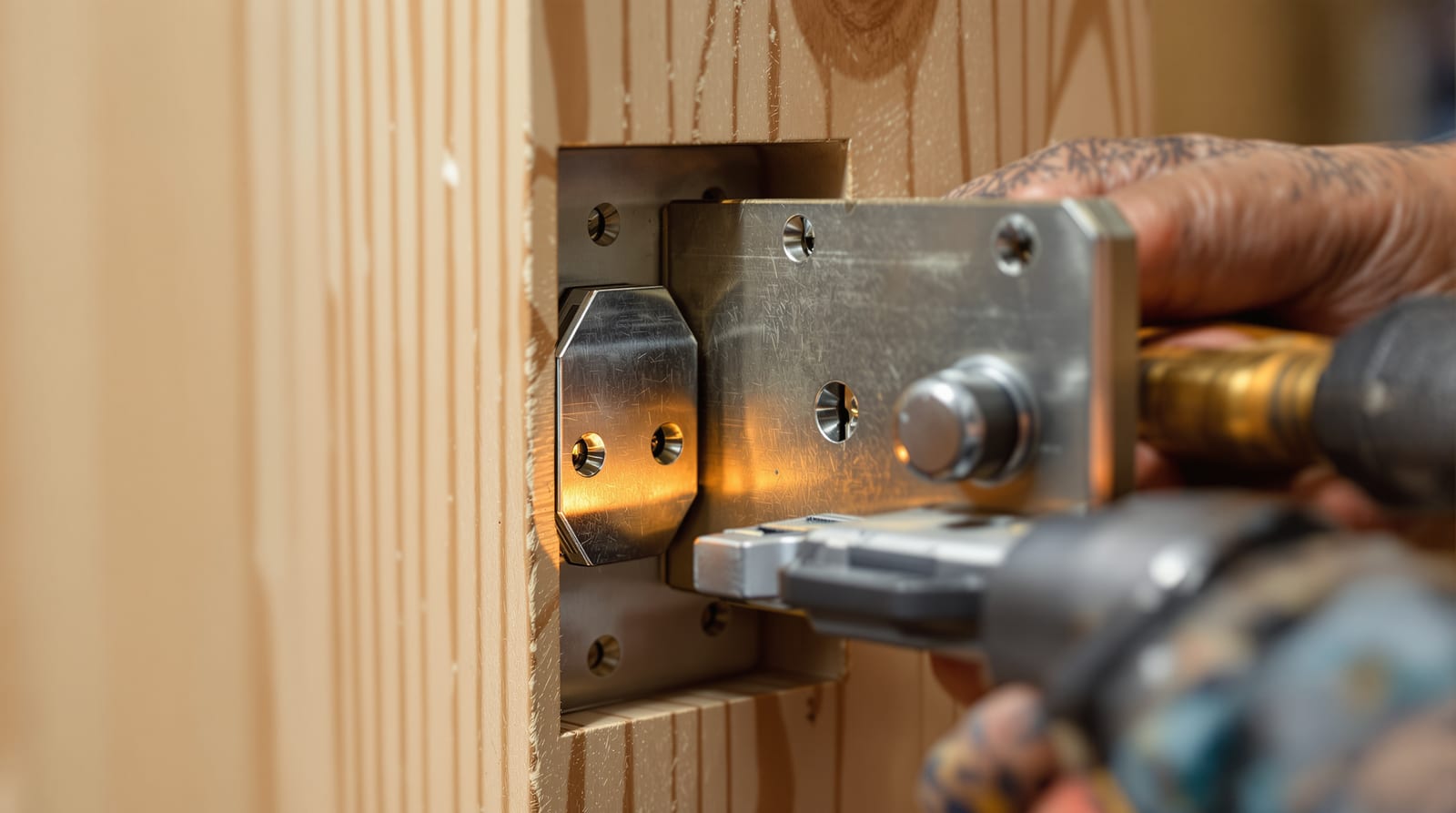
There is a clear line between knowing what a mortise lock is and being able to fit one cleanly on site. Fitting mortise locks is one of the more exacting carpentry jobs on a fit-out: a pocket cut in the wrong place, a backset that doesn't match the lever, or a faceplate that proud-stands by a millimetre will haunt the door for its whole life. This guide is the new-fit craft — marking out, cutting the mortise pocket, boring the cylinder and handle bores, mounting the lock body and faceplate, fitting the keep on the frame, and testing the throw. If you want the product anatomy (case, follower, cylinder types, lever sets, what to buy), read mortise locks first; this piece assumes you have the right lock in hand and a new leaf to cut. For the wider picture see the complete door guide and the Act pillar on fitting door hardware.
Before you cut: set-out and heights
Get the geometry right before any blade touches the leaf. The lever or knob centre sits at roughly 900–1050mm from finished floor level (≈1000mm is the common Indian standard); the lock case is positioned so the follower (handle spindle) lands at that height. The backset — horizontal distance from the leaf edge to the centre of the follower/cylinder — is almost always 60mm in India (some imported and narrow-stile locks are 57mm or less). Mark the backset off the face of the leaf, never the centreline, so it agrees with the lever rose.
Accessibility matters at this stage. The RPwD Act and the Harmonised Guidelines require lever handles, not knobs, operable one-handed without tight grasping, with the lever centre in the 800–1100mm band. If you are fitting on an accessible route, confirm the height with the door schedule and the accessible doors requirements before you set out. On a fire door, the lock must be part of the tested door-set — never improvise a cut-out on a fire leaf, as an oversize pocket can breach the core; see fire-door installation compliance.
Handle the marking-out the same way every time so set-out is repeatable across a schedule of doors. The dedicated discipline of transferring schedule references onto each leaf is covered in marking out door hardware.
| Set-out dimension | Rule of thumb (India 2026) | Notes |
|---|---|---|
| Lever / handle centre | 900–1050mm (≈1000mm) | From finished floor; confirm against schedule |
| Backset | 60mm (some 57mm) | Measured off leaf face, matches lever rose |
| Accessible lever band | 800–1100mm | RPwD / Harmonised Guidelines; lever not knob |
| Cylinder bore (Euro / mortise) | 22–25mm | Forstner or auger bit |
| Follower / spindle bore | 22–25mm | Matches lever spindle size |
| Mortise pocket clearance | Lock case depth + 2–3mm | So the case seats fully, faceplate flush |
Step 1 — mark the pocket and bores
Hold the lock case against the leaf edge at the set-out height and scribe round it with a marking knife to get the pocket outline; mark the faceplate (forend) recess separately, since the faceplate is wider than the case. Square the lines across the edge with a try square. Using a mortise gauge set to the case thickness, gauge two parallel lines centred on the leaf edge — this keeps the pocket from wandering and stops you over-cutting toward either face. Then transfer the follower and cylinder centres onto the leaf face at the 60mm backset, using the case as a template so the bores line up exactly with the internal mechanism.
For any volume of doors, a lock-mortising jig earns its cost immediately: it indexes the router for a clean, repeatable pocket and removes the hand-chopping error. The hand method is fine for one or two doors; the jig is for a schedule.
Step 2 — cut the mortise pocket
Two accepted methods:
- Drill-and-chop. Bore a row of overlapping holes down the gauged centreline with an auger or Forstner bit (set a depth stop to the case depth plus 2–3mm), then pare the walls square and clean the corners with sharp bevel-edge and mortise chisels (12–25mm). Keep the back wall plumb so the case sits true. Blunt chisels tear flush-door veneer — sharpen to a keen edge first.
- Router / lock morticer. A plunge router in a jig, or a dedicated chain/chisel morticer, cuts a fast clean pocket. Square the rounded ends left by a router bit with a chisel. This is the pro route for speed and consistency.
Test-fit the case dry: it should slide fully home with the faceplate sitting slightly proud. Now chisel the shallow faceplate (forend) recess so the faceplate finishes flush or a whisker below the leaf edge — proud faceplates catch the keep and stop the door closing.
Step 3 — bore the cylinder and handle holes
With the pocket cut, bore the follower (spindle) hole and the cylinder hole from the face at the marked centres. Use a Forstner or auger bit (typically 22–25mm) and bore from both faces toward the middle, or back the leaf with a sacrificial board, to avoid blowing out the veneer on exit. Check the bores intersect the pocket cleanly so the spindle turns the follower and the cylinder cam engages the bolt without binding. For a Euro-cylinder mortise lock, drill the cylinder hole and the fixing-screw hole exactly to the case's cylinder position. Dry-assemble the lever, spindle and cylinder and confirm the latch withdraws smoothly before final fixing.
Step 4 — fix the body, faceplate and keep
Seat the case, drive the case-fixing screws (don't over-tighten into a tear-out), then screw the faceplate down into its recess. Fit the cylinder and tighten the cylinder retaining screw through the leaf edge; fit the lever roses, spindle and levers, checking the handle returns under its own spring and the latch follows.
Now the keep (strike plate) on the frame. Close the leaf with the latch held back, mark where the latch and deadbolt meet the frame, and transfer those positions to the jamb. Mortise the keep box into the frame so the latch and bolt enter freely, then recess and screw the strike plate flush with the jamb. A keep that's even 1–2mm out is the single most common reason a lock "won't latch first time." This is a craft in itself — see fitting strike plates and keeps for the deep method and box-keep cutting. While the hardware is open, this is also the natural sequence point to set the fitting door hinges and any fitting door closers so the leaf hangs and self-closes onto a correctly aligned keep.
Step 5 — test the throw and operate
A fitted lock is only finished when it operates with one hand and latches first time. Run through the test below before you call it done.
| Test | Acceptance (rule of thumb) | If it fails |
|---|---|---|
| Latch withdraws on lever | Smooth, lever returns fully | Check spindle bind / faceplate proud |
| Latches first time on closing | Snaps in without lifting / pushing | Re-align keep, deepen keep box |
| Deadbolt throws fully | Full throw, key turns freely both sides | Keep mortise too shallow — recut |
| Lever centre height | 900–1050mm (or accessible band) | Set-out error — confirm before next door |
| Faceplate / keep flush | No proud edge catching | Deepen recess |
| One-hand operation (accessible) | Lever, no tight grasp needed | Wrong handle type — swap to lever |
The inline set-out below shows the pocket and bores in section so you can transfer the geometry to the leaf.
IS 1003 (panelled and glazed wooden doors) and IS 1003 Part 2 / IS 1003 Part 1 govern timber door-set quality, and NBC 2016 sets the life-safety frame — free egress, lever operation and fire-door integrity. On contract work, IS 1200 governs measurement and workmanship of the joinery. None of this replaces a clean cut: a mortise lock is only as good as the pocket it sits in and the keep it shuts into.
Skill, cost and when to call a joiner
Fitting a mortise lock by hand is a skilled job; a flush veneer leaf is unforgiving and a torn-out pocket cannot be undone. As a rule of thumb, a skilled carpenter fits a lock in 30–60 minutes by hand, faster with a jig. Indicative labour bands run with the leaf — see door fitting cost breakdown — and remember GST at 18% applies to the hardware, not the labour. On site, dust and monsoon damp slow power tools and power cuts kill cordless routers mid-pocket, so keep sharp hand chisels as backup. For premium veneered or fire-rated leaves, or a long schedule, bring in a joiner with a lock morticer and jig rather than risk hand-chopping veneer. You can plan the lever heights across a schedule with the door hardware height calculator and price the work with the door fitting cost estimator.
Frequently asked questions
What height should I fit a mortise lock at?
Set the lever or handle centre at roughly 900–1050mm from finished floor (≈1000mm is the common Indian standard). On an accessible route, keep the lever within 800–1100mm and use a lever handle, never a knob, per the RPwD Act and Harmonised Guidelines. The lock case is positioned so the follower lands at that height.
What is the standard backset for an Indian mortise lock?
60mm for most Indian mortise locks, measured from the leaf face to the centre of the follower and cylinder. Some imported and narrow-stile locks are 57mm or less — always check the case before you mark, and set the backset off the leaf face so it agrees with the lever rose.
Hand chisels or a lock morticer — which should I use?
For one or two doors, drill-and-chop with sharp chisels is fine. For a schedule of doors, a router with a lock-mortising jig or a dedicated morticer is faster and far more consistent. Blunt tools tear flush-door veneer, so sharpen to a keen edge whichever route you take.
Why won't my lock latch first time after fitting?
Usually the keep (strike plate) is misaligned — even 1–2mm out stops the latch entering cleanly. Re-mark where the latch and bolt meet the frame, deepen or shift the keep box, and recess the strike flush. A proud faceplate on the leaf can also catch; see fitting strike plates and keeps.
Can I cut a mortise lock into a fire door?
Only if the lock is part of the tested fire-door set. An oversize or off-position cut-out can breach the door core and void the rating. Follow the fire-door installation compliance requirements, use the certified ironmongery specified, and never improvise a pocket on a fire leaf.
Export this guide
Related Guides — Deep-dive reading
Door Operation Testing at QA: Functional Checks India 2026
The functional tests on a fitted door at handover — smooth swing, first-time latching, lock and key throw, self-closing, one-hand operation and a slam-cycle check, with clear pass criteria.
Home Doors & EntrancesMarking Out Door Hardware Positions: Set-Out (India 2026)
Standard fitting heights, story rods and templates for setting out hinges, locks, viewers and bolts consistently across an Indian project.
Home Doors & EntrancesFitting Door Hardware: Ironmongery Install Guide India 2026
The new-fit craft of mounting hinges, locks, levers, closers, bolts, stops and seals onto a door and frame — in the right order, at the right heights.
Home Doors & EntrancesRelated Tools — Try Free
Window Hardware Cost Calculator
Estimate window hardware cost — hinges, handles, locks, rollers and multipoint gears.
Window CalculatorDoor Hardware Cost Estimator
Estimate the all-in hardware cost for a door — hinges, lock, handle, closer, bolts, stopper and fitting — with GST.
Door CalculatorDoor Security Rating Calculator
Score your main door out of 100 across leaf, frame, lock and hardware — and see the top upgrades.
Security Tool