
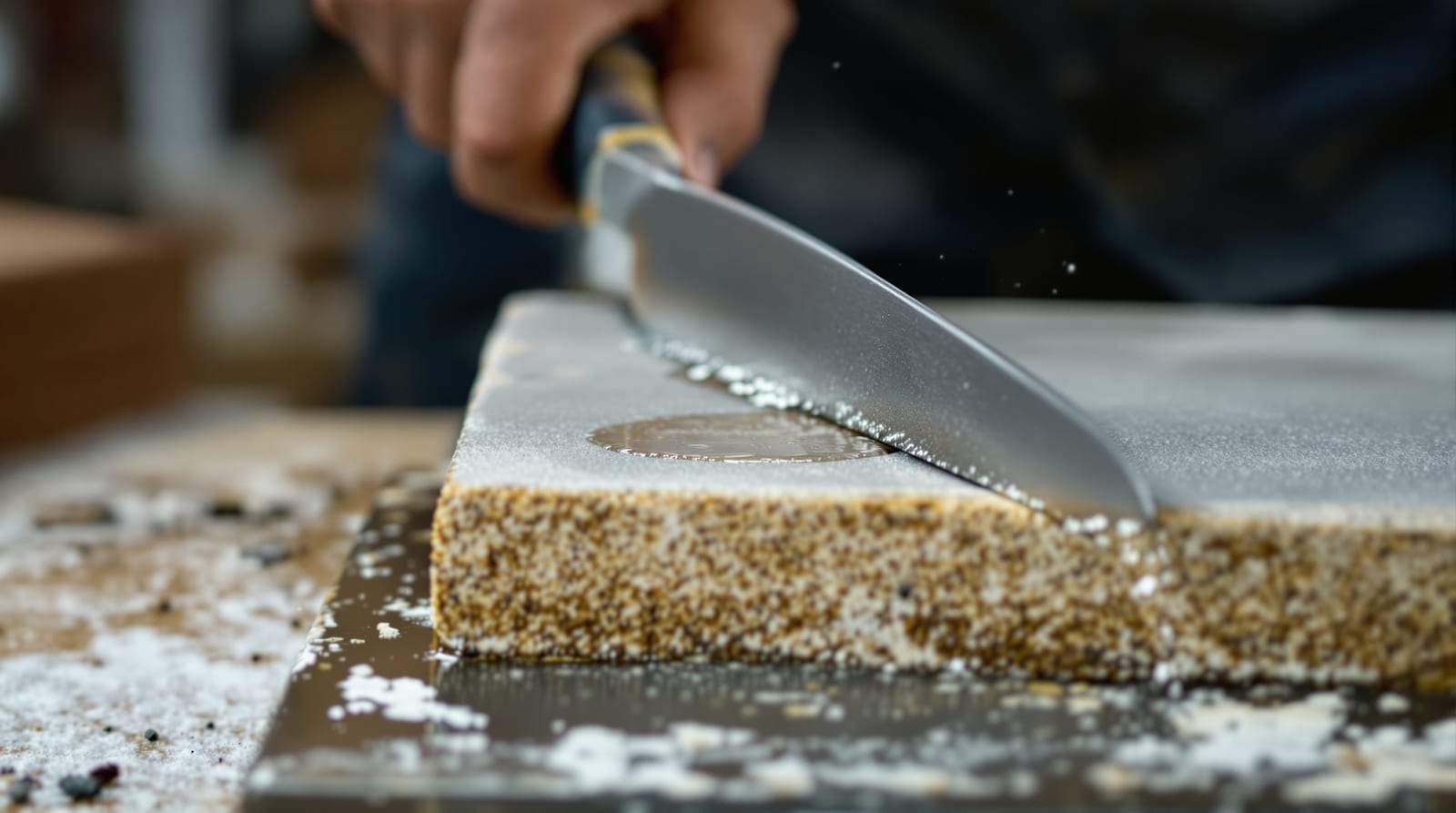
Door Fitting Tool Maintenance: Sharpening & Care India 2026
A trade-practical routine for sharpening chisels and plane irons, caring for router bits and blades, beating monsoon rust and keeping cordless batteries alive.
Good door fitting tool maintenance is the cheapest quality control you will ever do on a site. A keen chisel pares a clean hinge gain; a blunt one crushes and tears the flush-door veneer at the very edge a homeowner inspects first. A square plane iron flushes a lipping in two passes; a chipped one chatters and leaves you sanding. On Indian sites — mixed-skill labour, monsoon damp, dust, and power cuts that flatten cordless batteries — tools degrade fast unless upkeep is a habit, not an afterthought. This guide is the maintenance discipline that sits behind every clean fit: sharpening geometry, blade and bit care, rust prevention, and battery health. It complements the kit itself, covered in door-fitting hand tools and door-fitting power tools.
Why a keen edge protects the work
The single biggest reason to obsess over door fitting tool maintenance is veneer. A modern Indian flush door is a thin face veneer (often 0.5mm or less) over a hollow or particleboard core. A sharp chisel slices the wood fibres ahead of the bevel; a blunt one wedges them apart, lifting and tearing the veneer along the hinge gain or lock mortise. Once torn, no amount of polish hides it. The same physics governs your plane: a keen iron severs the grain on a lipping, while a dull one tears out chips that telegraph through the finish.
Sharpness also protects you. A blunt tool needs force, force slips, and slips cut hands. And it protects the timber's edges and your schedule — sharp tools mean fewer reworks, fewer snags at handover, and faster cycle times (see door-fitting productivity). IS 1003 and CPWD workmanship specs judge joinery on clean, tight, splinter-free joints; that standard is unachievable with dull steel.
Sharpening chisels and plane irons
Sharpening is two operations: grinding (re-establishing the primary bevel, occasional) and honing (refreshing the cutting edge, frequent). For door work you hone many times for every grind.
The angles that matter
Most bevel-edge chisels and plane irons grind a primary bevel of 25° and hone a small secondary (micro) bevel at 30°. The 30° edge is tougher and resists chipping in hardwoods like teak, sal and meranti common in India; the 25° primary keeps the wedge thin so honing is quick. Paring chisels used for fine fitting can run a lower 20-25° for slicing ease; mortise chisels take 30-35° to survive levering. The diagram below shows the geometry — get the honing angle consistent and your edge stays keen for far longer.
Stones and the honing routine
You hone on stones, working coarse to fine. The options on the Indian market:
| Sharpening medium | Typical grit | Feel / use | Indicative ₹ |
|---|---|---|---|
| Coarse oilstone (India stone) | ~120-240 | Repair chips, fast steel removal | 300-700 |
| Combination oilstone (coarse/fine) | 120 / 320-600 | All-round site stone | 400-1,000 |
| Waterstone (medium) | 800-1,000 | Sets the honed bevel | 800-2,000 |
| Waterstone (fine/finishing) | 4,000-8,000 | Polishes to a keen edge | 1,500-4,000 |
| Diamond plate (mono/dual) | 300 / 1,000 | Fast, flat, low-maintenance | 1,500-4,500 |
| Honing guide (roller jig) | — | Holds a repeatable angle | 400-1,200 |
| Leather strop + compound | — | Final polish, deburring | 300-800 |
Routine: register the bevel on a medium stone (a honing guide locks the angle if your freehand is unreliable — recommended for mixed-skill teams), work until a faint burr forms across the full width, then progress to the fine stone. Flip and lap the flat back to remove the burr — never round the back. Finish on a strop. A re-hone takes two to three minutes; do it the moment the edge stops slicing newspaper or paring end-grain cleanly. Keep oilstones oiled and waterstones flat (lap them on a diamond plate or wet-and-dry on glass), because a dished stone rounds your bevel.
Power-tool blades and bits
Router bits and hinge/lock jigs
Router cutters for hinge mortising jigs and lock work dull and gum up fast. Maintenance: brush off pitch and resin with a dedicated resin remover or kerosene (never harsh oven cleaner on carbide brazing), keep the carbide tips chip-free, and replace rather than re-grind a bit whose tips are nicked — a chipped cutter tears the gain edge exactly like a blunt chisel. Check that template guide bushes are tight and the jig faces are clean; a resin-fouled jig wanders and the mortise comes out oversize, which on a fire door is a compliance failure.
Saw blades, planer knives, drill bits
Circular-saw and jigsaw blades cut cleaner and cooler when clean; burnt resin on a blade is friction, heat and tearout. Soak and brush the blade, then a light oil wipe. Replace TCT blades when teeth chip. Electric-planer knives must be sharp, level and matched (re-sharpen or swap as a pair) or you get steps in a lipping. Forstner and auger bits for lock bores (22-25mm) should have crisp rims and spurs — touch up the rim with a fine slipstone, keep the brad point intact. Blunt bits overheat, scorch the bore and wander.
Rust prevention through the monsoon
India's monsoon is the enemy of every bright-steel edge. Humidity plus a steel chisel left in a damp toolbox equals surface rust overnight, and rust is the opposite of a keen edge — it pits the cutting line.
| Threat | Where it bites | Routine defence |
|---|---|---|
| Atmospheric humidity (monsoon) | Chisel/plane backs, blade faces | Wipe a film of camellia or light machine oil after every use |
| Hand sweat / salt | Tool tangs, sockets, sole plates | Wipe down at day's end; don't store tools sweaty |
| Condensation in a sealed box | All bright steel | Add silica-gel sachets; store in a ventilated, dry place |
| Site dust + damp | Router collets, drill chucks | Blow out, brush, light oil on bright parts |
| Wet timber / lime plaster | Edge tools used near wet trades | Fit after wet trades dry; clean alkali off blades same day |
A practical drill: keep a rag lightly charged with camellia oil (or 3-in-1) in a bag and wipe every edge tool before it goes back in the roll. Store plane soles on their side, never flat on a steel benchtop. For longer storage, a wax or VCI (vapour-corrosion-inhibitor) paper protects the steel. If light rust appears, lift it with fine wet-and-dry and oil before it pits.
Cordless battery care
Power cuts and long days make cordless drills and drivers indispensable, but lithium-ion packs are consumables. To stretch their life:
- Don't deep-discharge. Recharge at around 20-30% rather than running flat; full 0% cycles age a pack faster.
- Avoid heat. Never leave packs in a parked vehicle or in direct sun in an Indian summer; charge in shade. Let a hot pack cool before charging.
- Store at partial charge. For weeks of storage, keep packs around 40-60%, in a cool dry place, not fully flat or fully full.
- Use the matched charger. Cheap fast-chargers cook cells.
- Rotate two packs so one charges while one works, and so neither sits dead between jobs.
A healthy battery culture means the morning power cut doesn't stop your hinge jig. Plan a UPS or inverter charging point on bigger fit-outs.
A maintenance schedule you can pin up
| Interval | Task |
|---|---|
| Every use | Wipe edge tools with oily rag; brush dust off power tools; blow out chucks/collets |
| Daily (end of day) | Hone any chisel/iron that lost its edge; charge/rotate batteries; cover tools |
| Weekly | Lap stones flat; clean resin off blades/bits; check jig bushes and clamps; oil bright steel |
| Monthly | Full sharpen of plane irons and chisels; inspect cords/switches; replace nicked TCT teeth/bits; lubricate moving parts of planes and morticers |
| Seasonal (pre-monsoon) | Deep rust-proof: VCI paper, silica gel, service power tools, check insulation |
When to send tools out
Most honing is in-house. Send work out when: a primary bevel needs re-grinding and you have no slow-speed grinder (high-speed grinders blue and ruin the temper — keep the edge cool); TCT saw blades and router cutters need professional re-tipping; or a power tool's brushes, bearings or switch are failing. Budget a small revenue line for tooling: a pro fitter's stones, jigs and blades are working capital, not a one-off.
For the wider craft these maintained tools serve, see door-fitting measuring tools for keeping squares and levels true, the door-fitting workshop setup for a sharpening station and dust control, and the cluster's complete door guide. To stock or audit a kit, the Act pillar on door-fitting tools is the master list, and the door-fitting tool kit builder helps you spec one; estimate a job with the door fitting time estimator.
Frequently asked questions
What honing angle should I use for door-fitting chisels?
Grind a 25° primary bevel and hone a 30° secondary (micro) bevel for general bevel-edge chisels and plane irons. The 30° edge resists chipping in Indian hardwoods like teak and sal; paring chisels can run 20-25° for cleaner slicing, mortise chisels 30-35° to survive levering. A honing guide keeps the angle repeatable across a mixed-skill team.
Oilstone or waterstone for site work?
Oilstones (India stones) and diamond plates are tougher and lower-maintenance for a site bag — they tolerate dust and don't need soaking. Waterstones cut faster and finish keener but dish quickly and need flattening. Many fitters carry a combination oilstone or dual diamond plate for the field and keep fine waterstones in the workshop for a final polish.
How do I stop my tools rusting in the monsoon?
Wipe every bright-steel edge with a light film of camellia or machine oil after each use, store tools dry and ventilated with silica-gel sachets, and keep them away from wet trades and lime plaster. For longer storage use VCI paper or a wax film. Lift any early surface rust with fine wet-and-dry, then oil before it pits the edge.
Why does a blunt tool tear flush-door veneer?
A flush door's face veneer is often under 0.5mm thick. A keen edge slices the fibres cleanly; a blunt one wedges and lifts them, tearing the veneer along the hinge gain or lock mortise where it shows. Torn veneer cannot be polished out, so sharpness is the cheapest defence against a handover snag.
How should I look after cordless drill batteries on site?
Don't run lithium packs fully flat — recharge at 20-30%. Keep them out of heat (never a parked car or direct sun), let hot packs cool before charging, use the matched charger, and store at 40-60% charge for long breaks. Rotate two packs so the next morning's power cut never leaves you without a charged drill.
Export this guide
Related Guides — Deep-dive reading
Door Fitting Hand Tools: Chisels, Planes, Gauges (India 2026)
A trade guide to the hand tools every door fitter needs in India — chisels, planes, marking gauges, squares and rasps — how to choose them, why sharp matters, and what they cost.
Home Doors & EntrancesDoor Fitting Power Tools: Pro Buyer's Guide (India 2026)
Cordless drills, planers, routers, jigsaws, multi-tools and the right bits for fast, clean door fitting on Indian sites.
Home Doors & EntrancesDoor Delivery & Storage on Site: A Fitter's Guide (India 2026)
Receive, check and store doors flat, dry and acclimatised on an Indian site so leaves never warp, swell or arrive damaged before fitting.
Home Doors & EntrancesRelated Tools — Try Free
Monsoon-Readiness Checklist
Pre-rain home audit across 9 categories — terrace, drains, waterproofing, electrical, HVAC, pest, vehicles, documents.
Seasonal AuditAccess-Control Battery-Backup Calculator
Size the standby battery so an access system keeps running through a power cut, with an egress life-safety note.
Battery BackupDoor Material Comparison Tool
Compare 2–4 door materials on cost, durability, maintenance, security and moisture resistance.
Comparison Tool