
Box CCTV Cameras in India: The Interchangeable-Lens Camera for Exact Framing
What a box camera is, why its C/CS-mount interchangeable lens lets you pick the exact field of view and identification range for a spot, when a weatherproof housing is worth the extra cost, and how it compares to fixed-lens dome, bullet and turret cameras.
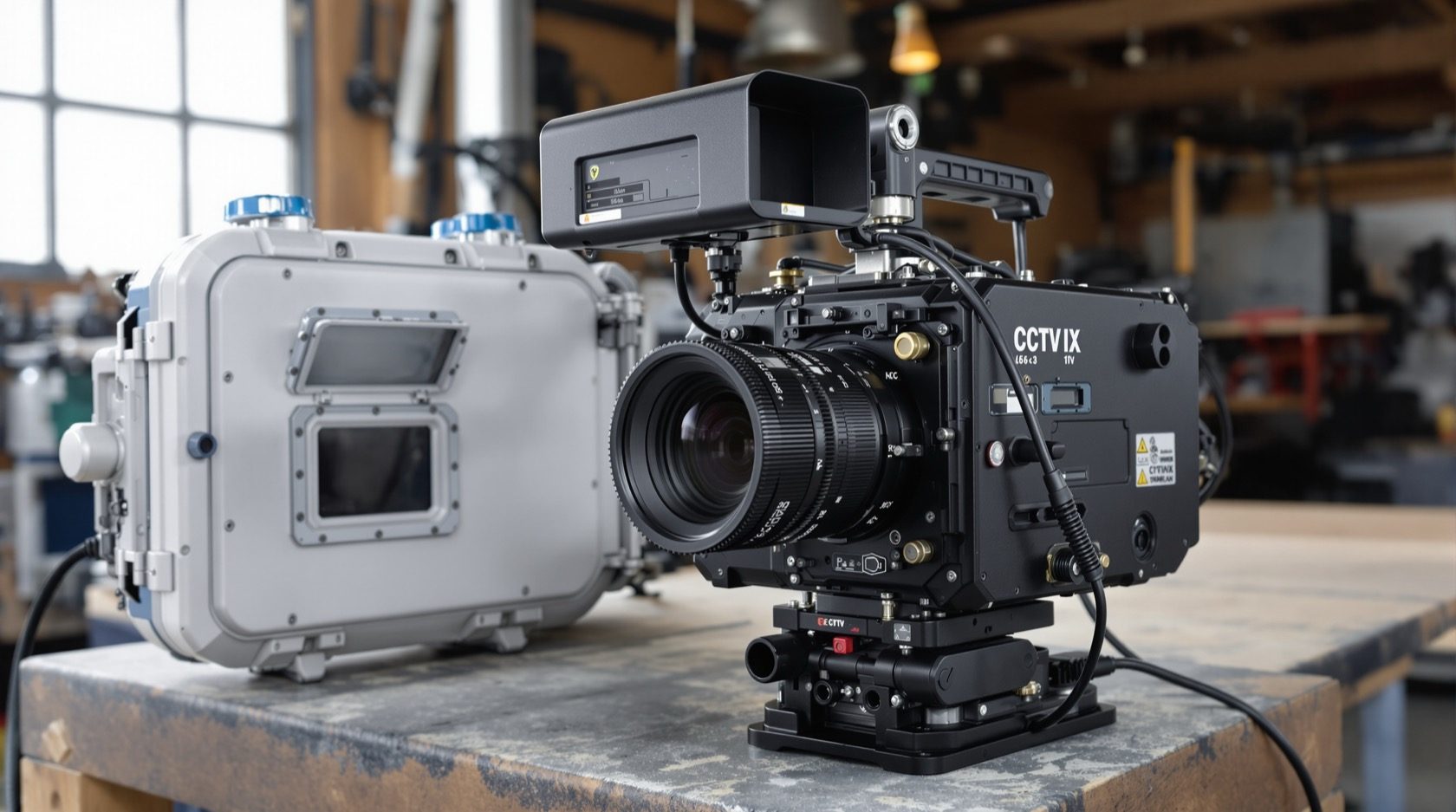
Most cameras you see on Indian buildings arrive with the lens already fixed in place. A box camera is the exception, and that is exactly the point. It is the classic rectangular professional camera body with a threaded mount on the front that takes a separate, interchangeable lens — screw on a wide lens for a shop floor today, swap in a long telephoto to read a number plate at the far end of a driveway tomorrow. The body stays; the lens is your decision, and you can change it later.
This guide is the focused explainer on the box form factor in Studio Matrx's CCTV hub. It is not about how recording or networks work — for that, read how CCTV systems work and the complete guide to CCTV systems first. Here we answer one practical question: when is the interchangeable-lens flexibility of a box camera worth its bulk and cost, and when is a simpler fixed-lens dome, bullet or turret the smarter buy?
Scope & safety. This guide helps you choose and coordinate. Picking the lens and the housing is a decision you can make; the mounting, working at height, mains power and cabling are a licensed installer's job. A camera must never be positioned to cover a bathroom, bedroom or changing area, and must never block a door, window or fire-escape route. Cover only your own property and shared areas, respecting neighbours, staff and the Digital Personal Data Protection Act, 2023.
What a box camera actually is
A box camera is a camera module in a plain rectangular body — no dome, no barrel, no built-in weather sealing on the classic models — with a lens mount on the front instead of a permanently attached lens. That mount is almost always a C or CS mount: a standard screw thread that lets you fit any matching lens, from a fat wide-angle to a long telephoto. Many box bodies work with both, using a small adapter ring for C-mount lenses on a CS-mount body.
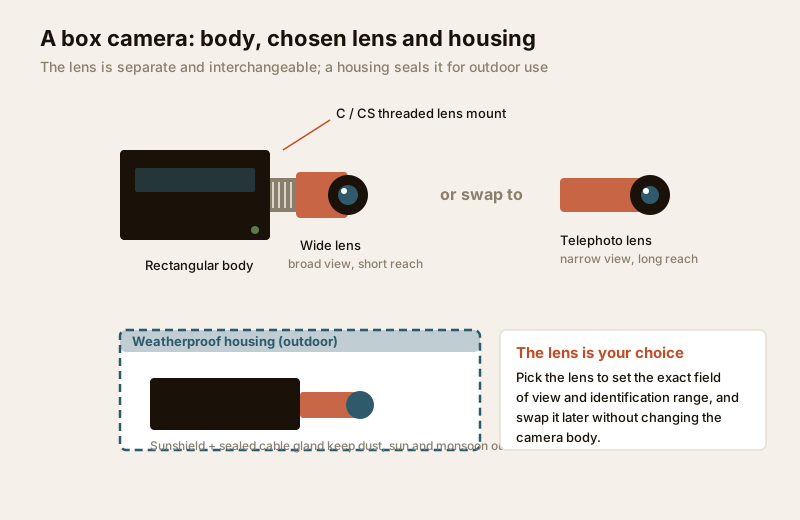
The lens is where the magic — and the homework — lives. Because you choose it, you set the field of view and the identification range yourself rather than accepting whatever the manufacturer bundled. Need to identify a face or a plate at 25 metres? Fit a longer lens. Need to watch a whole shop floor from one corner? Fit a wide one. That freedom is the box camera's whole reason to exist.
Box cameras come in the same technology families as any camera — an analogue box body or an IP (network) box body, wired or PoE. The shape and the swappable lens are independent of the system type; see the IP CCTV guide.
Why the interchangeable lens still matters
Fixed-lens dome, bullet and turret cameras are excellent, and for most homes they are the right answer. But they hand you a compromise: the lens is chosen for you, and if it turns out too wide (a distant plate becomes an unreadable smudge) or too narrow (you miss the sides), your only fix is a different camera. A box camera turns that into a swap.
- You pick the exact shot. A telephoto lens narrows the view and reaches far — it can read a number plate or a face at the end of a long driveway, gate approach or car park where a normal camera would show only a blur. A wide lens spreads the view for a shop floor or a hall. You match the lens to the job instead of the job to the camera.
- You can change it later. Move the camera, or discover the frame is wrong, and you swap the lens — not the whole unit. On a long-life perimeter camera, that pays for itself.
- It is a visible, professional deterrent. The unmistakable rectangular body in its housing reads as serious security kit. On an entrance or perimeter where you want to be seen, that presence works like a bullet camera's — obvious and businesslike.
- It suits specialist, long-range and exact-framing jobs. Perimeters, gate approaches, entrances where you must identify rather than merely detect, and retail lanes that need machine-vision-like precise framing are where a box camera earns its keep. See outdoor CCTV and commercial CCTV for those settings.
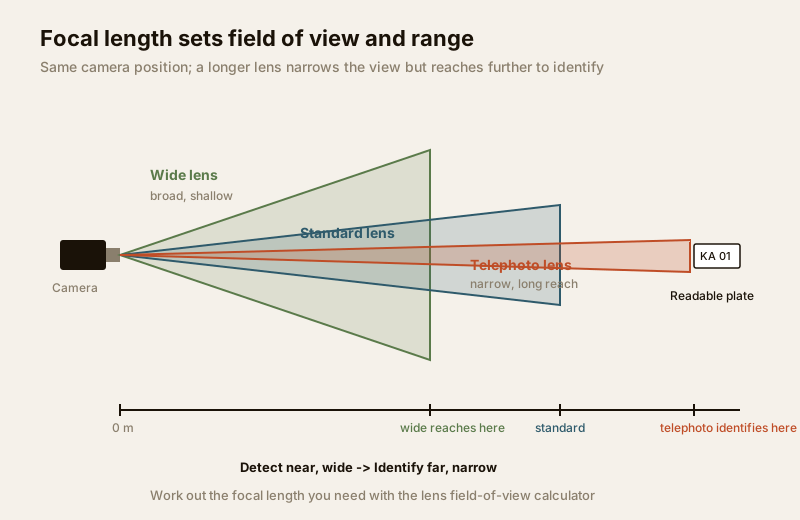
The single most useful step before buying is to work out the lens you actually need. The focal length of the lens sets both the field of view and how far away you can still identify someone. A longer focal length narrows the view but pushes the identification range further out; a shorter one widens the view but shortens the reach. Do not guess — run the numbers on the lens field-of-view calculator with your distance and the detail you need, and buy the lens it points you to.
The trade-offs to plan around
A box camera's flexibility is not free. Weigh these before you commit.
- It is bulkier. A rectangular body plus a protruding lens plus, outdoors, a housing is a much larger object than a tidy dome or turret. Where a discreet, low-profile look matters — a living room, a boutique — a dome is the better shape.
- It needs lens-selection know-how. The freedom to choose the lens is also the burden of choosing it. Get the focal length wrong and the whole point is lost — too wide and your distant subject is a smudge, too narrow and you miss the action at the sides. This is why the lens field-of-view calculator matters so much.
- The housing and lens add cost. The classic box body is not weatherproof on its own. For any outdoor spot it needs a separate weatherproof housing (with a sunshield, a heater or blower in harsh climates, and a sealed cable gland) — and the lens is a separate purchase too. Add the body, the lens and the housing and a box setup often costs more than a sealed all-in-one bullet.
- More parts, more setup. Body, lens, adapter ring, housing, bracket — more items to source, match and mount than a single fixed-lens camera. For a straightforward home run, that complexity is rarely worth it.
When to bring in a professional. You can decide the lens focal length, the housing and the rough positions yourself using this guide and the lens field-of-view calculator. Hand the fitting the lens and setting focus/back-focus, sealing the camera into its housing, drilling, working at height, cable pulling, mains power and the final aiming to a licensed installer. Setting a varifocal or manual-iris lens sharp at the target distance is a skilled step — a good installer checks the live and night image before they leave. Any work at the electrical board is a licensed electrician's job; see the electrical hub.
Box camera: pros, cons and best-fit
| Aspect | What you get | Watch-out | Best fit |
|---|---|---|---|
| Lens choice | Pick exact FoV + identification range | You must choose right | Long-range, plate/face ID spots |
| Flexibility | Swap the lens later, keep the body | Extra parts to match | Long-life perimeter cameras |
| Look | Big, visible, professional deterrent | Bulky, not discreet | Entrances, perimeters, gates |
| Weather | Body needs a housing outdoors | Housing adds cost + size | Sheltered indoor, or housed outdoor |
| Precision | Exact framing, machine-vision-like | Needs skilled focus setting | Retail lanes, gate approaches |
| Cost | Body + lens + housing separate | Total often exceeds a bullet | Where the shot justifies it |
Lens-choice quick guide
The lens does the work. This is the shape of the decision; the exact focal length in millimetres comes from your camera's sensor size and target distance, which the lens field-of-view calculator computes for you.
| Lens type | View | Reach / identification | Best used for |
|---|---|---|---|
| Wide (short focal length) | Broad, takes in a whole room | Short — good for detecting nearby | Shop floors, halls, wide entrances, indoor rooms |
| Standard (medium focal length) | Natural, room-scale | Medium — recognise people at moderate range | Corridors, forecourts, general coverage |
| Telephoto (long focal length) | Narrow, magnified | Long — identify faces/plates far off | Driveways, gate approaches, car parks, perimeters |
| Varifocal (adjustable zoom lens) | Dial the angle you want | You set it on install | Spots where the exact frame is uncertain |
The rule of thumb: the further away the thing you must identify, the longer the lens — but a longer lens sees a narrower slice, so you trade width for reach. If you need both a wide overview and a distant plate, that is usually two cameras (or a PTZ that zooms on demand), not one lens.
How a box camera compares to fixed-lens cameras
The box camera sits apart from the four common fixed-lens shapes: it trades their all-in-one simplicity for lens control. The camera type selector walks you through the choice for each spot.
- Dome — discreet, flush, fixed lens. The opposite of a box camera in looks: low-profile and unobtrusive where the box is big and businesslike. Best indoors and in shops.
- Bullet — a visible, sealed, weatherproof barrel with a fixed (often varifocal) lens. It shares the box camera's deterrent presence and outdoor reach, but arrives ready-sealed and needs no separate housing — simpler and cheaper for most outdoor runs.
- Turret — a compact glare-free ball with a fixed lens; a popular all-rounder for eaves and mixed use.
- PTZ — motorised pan, tilt and optical zoom. It gives you variable framing like a box camera's lens choice, but on demand and from one moving unit — at a higher price, and it can only look one way at a time. Best where someone actively monitors a large area.
Quick comparison
| Factor | Box | Bullet | Dome | PTZ |
|---|---|---|---|---|
| Lens | Interchangeable (C/CS) | Fixed / varifocal | Fixed / varifocal | Motorised zoom |
| Best placed | Perimeters, ID entrances | Outdoor walls, gates | Indoors, lobbies | Monitored large areas |
| Look | Big, professional | Visible, deterrent | Discreet, flush | Large, obvious |
| Weatherproof alone | No (needs housing) | Yes (sealed) | Yes (sealed) | Yes (sealed) |
| Framing control | Exact, your choice | Limited | Limited | On demand |
| Typical price (India) | ₹6,000 – ₹30,000+ (body+lens+housing) | ₹1,500 – ₹6,500 | ₹1,500 – ₹6,000 | ₹12,000 – ₹80,000+ |
For most Indian homes, a fixed-lens bullet or turret covers the job at lower cost and less fuss. Reach for a box camera when a specific, demanding shot — a plate at the far gate, a face at a controlled entrance, a precisely framed retail lane — justifies the lens control.
When a box camera is worth it
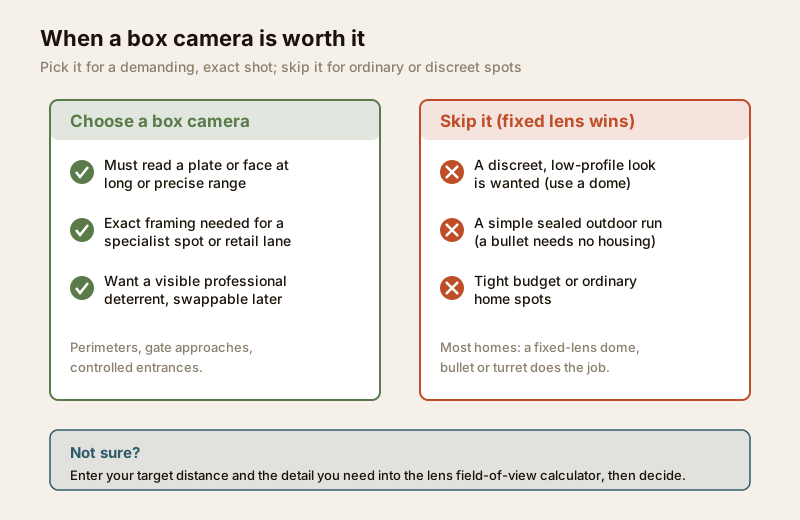
Choose a box camera when:
- You must identify — read a number plate, a face, a delivery — at a long or precise range where a normal lens blurs.
- You need exact framing for a specialist spot: a gate approach, a controlled entrance, a machine-vision-like retail lane.
- You want a visible, professional deterrent on a perimeter or entrance, and you value being able to swap the lens later.
Skip it (a fixed-lens camera is better) when:
- You want a discreet, low-profile look — pick a dome.
- You want a simple, sealed, ready-to-mount outdoor camera — a bullet needs no separate housing.
- You are on a tight budget or covering ordinary home spots where a fixed lens is plenty.
If you are unsure, decide with the numbers, not a hunch: enter your target distance and the detail you need into the lens field-of-view calculator. If it shows a standard camera's fixed lens can do the job, save the money; if only a long or specific focal length works, a box camera (or a PTZ) is your tool.
India price bands and buying notes
Prices move with brand, resolution, lens quality and the housing spec; treat these as ballparks to sanity-check a quote, not fixed rates.
| Item | Typical range (₹) | Notes |
|---|---|---|
| 2MP box body (analogue) | ₹3,000 – ₹7,000 | Body only; lens and housing extra |
| 4MP / higher IP box body | ₹7,000 – ₹18,000 | The network workhorse; lens extra |
| C/CS-mount lens (wide to standard) | ₹1,000 – ₹4,000 | Choose focal length by target distance |
| Telephoto / long C/CS lens | ₹3,000 – ₹12,000+ | For long-range plate/face identification |
| Weatherproof housing + sunshield | ₹1,500 – ₹6,000 | Required for any outdoor box camera |
| Heater/blower housing (harsh sites) | ₹4,000 – ₹10,000 | Dust, monsoon, extreme heat sites |
| Professional install + lens setup / camera | ₹800 – ₹2,500 | Mount, seal, focus, aim, test |
When buying, match the lens focal length to your target distance first (use the lens field-of-view calculator), then pick a housing rated for the weather (a sealed enclosure with a sunshield outdoors), and for network box cameras follow the usual IP CCTV cautions — change default passwords and keep firmware updated. Price the whole layout with the security system cost estimator, and match cameras to your building type in the residential and commercial CCTV guides.
Key takeaways
- A box camera is the classic rectangular professional body that takes an interchangeable C/CS-mount lens — you choose the exact field of view and identification range, and you can swap the lens later.
- Its strengths are precise, chosen framing, long-range identification, a visible professional deterrent and future flexibility — ideal for perimeters, gate approaches, controlled entrances and machine-vision-like retail lanes.
- Its trade-offs are bulk, the need for lens-selection know-how, and added cost — the classic body is not weatherproof alone and needs a separate housing outdoors, plus a separately bought lens.
- The lens focal length sets both the field of view and the identification range — do not guess; use the lens field-of-view calculator to pick it.
- For ordinary home spots, a fixed-lens bullet, dome or turret is simpler and cheaper; reserve the box camera for the demanding, exact shot it is built for — the camera type selector helps you decide.
- Choose the lens and housing yourself; leave fitting, focusing, sealing, mounting, height work, cabling and mains power to a licensed professional.
References
- Digital Personal Data Protection Act, 2023 — position cameras to cover only your own property and shared areas with a legitimate purpose; never bathrooms, bedrooms or changing areas, and avoid capturing neighbours' private spaces. A long telephoto lens can reach into a neighbour's window from a distance — frame it responsibly.
- IEC 60529 (IP ingress rating) — the internationally recognised mark for a weatherproof housing's dust and water sealing; verify a housing's stated rating on its datasheet before outdoor use.
- National Building Code of India (SP 7), Bureau of Indian Standards, and local municipal bye-laws for any structural, electrical or life-safety aspect of an install; verify the current edition via the BIS catalogue: https://www.services.bis.gov.in/
This is an educational overview. Fitting and focusing lenses, sealing housings, mounting, working at height, structured cabling and any electrical work are qualified professional tasks — engage licensed installers and verify any standard's current status via the BIS catalogue before relying on it.
Export this guide
Related Guides — Deep-dive reading
How to Choose a CCTV Camera (2026): The Homeowner's Decision Guide for India
Cut through the spec-sheet noise and choose the right CCTV camera for each spot around an Indian home. What actually matters — sensor and low-light performance, lens and field of view, form factor, IP and IK ratings, honest smart features — and the marketing claims to ignore.
SecurityCCTV Varifocal vs Fixed Lens (India 2026): Choosing the Right Angle of View
Focal length sets how wide and how far a camera sees. What a fixed 2.8mm or 3.6mm lens gives you, when an adjustable varifocal earns its higher price, manual versus motorised, and how to pick the right angle for each spot on an Indian plot.
SecurityBullet CCTV Cameras in India: The Visible-Deterrent Camera, Explained
What a bullet camera is, why its long cylindrical shape works as a visible deterrent for gates and driveways, where it beats a dome or turret, and how to plan one for an Indian home.
SecurityRelated Tools — Try Free
CCTV Camera Type Selector
Answer five questions and get the right camera form factor — dome, vandal dome, bullet, turret or PTZ — with reasons.
Camera SelectorCCTV Lens & Field-of-View Calculator
Focal length, sensor and resolution to field-of-view angle, scene width and DORI detect/observe/recognise/identify distances.
Lens & FoVCCTV System Type Selector
Answer five questions and get the right CCTV setup — analog / IP / hybrid, wired / wireless, local / cloud — with reasons.
CCTV Selector