
CCTV Varifocal vs Fixed Lens (India 2026): Choosing the Right Angle of View
Focal length sets how wide and how far a camera sees. What a fixed 2.8mm or 3.6mm lens gives you, when an adjustable varifocal earns its higher price, manual versus motorised, and how to pick the right angle for each spot on an Indian plot.
Two cameras with the same 4MP sensor can produce completely different footage of the same gate. One shows the whole frontage but faces at the far end are tiny. The other reads a number plate at the gate but misses the pedestrian who slips in at the side. The difference is not the sensor or the megapixels — it is the lens, and specifically its focal length. Getting this one spec-sheet line right is the difference between footage that identifies someone and footage that merely proves "something happened".
This guide sits in the Image Quality & Optics set of Studio Matrx's CCTV hub. It stays in its lane: the choice between a fixed lens and a varifocal lens, and how focal length maps to the angle of view. Resolution is a separate lever — covered in the CCTV resolution guide — and so is the difference between real optical zoom and marketing "digital zoom", covered in optical vs digital zoom. Here we are only talking about how wide, and how far, the glass lets the camera see.
Scope & safety. This guide helps you plan and decide so you can brief an installer. Mounting at height, running cabling and any mains-electrical work belong to licensed professionals. A camera must never block a window, door or fire-escape route. Cameras belong only on your own property and shared areas — never bathrooms, bedrooms or changing areas. Because a well-framed lens produces sharper, more identifiable footage, it also carries more responsibility: position and store it in the spirit of the Digital Personal Data Protection Act, 2023, and respect neighbours, staff and passers-by.
Focal length: the one number that sets the view
The focal length of a lens is printed in millimetres (mm) on the spec sheet. It decides two things at once, and they trade against each other:
- Angle of view — how wide a slice of the world the camera takes in. A short focal length (2.8mm) is wide; a long focal length (12mm) is narrow.
- Reach and detail at distance — how many pixels land on a face or a plate far away. A longer lens concentrates the same pixels onto a smaller area, so it reads detail further off, at the cost of seeing less width.
You cannot have both wide and far from one fixed lens. A 2.8mm lens might cover a roughly 100-degree spread — a whole courtyard — but a person at 12 metres is just a smudge. A 12mm lens might read a face at 20 metres, but only in a narrow 20-degree corridor. Everything about lens choice is negotiating this trade.
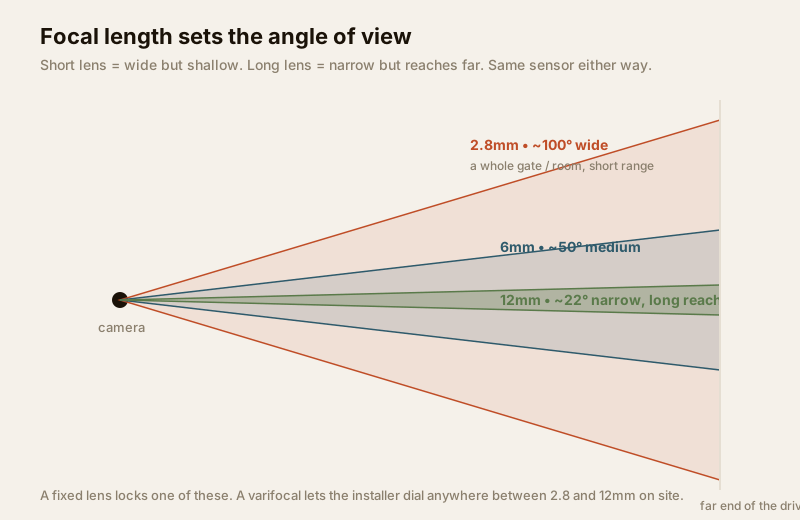
Roughly, for a standard camera sensor:
| Focal length | Angle of view (approx.) | Reads a face to about | Typical job |
|---|---|---|---|
| 2.8mm | ~95-105° (very wide) | 5-6 m | Whole room, wide gate, courtyard |
| 3.6mm | ~70-80° (wide) | 7-9 m | Porch, short driveway, shopfront |
| 6mm | ~45-55° (medium) | 12-14 m | Medium driveway, side approach |
| 8mm | ~35-40° | 16-18 m | Long driveway, parking bay |
| 12mm | ~20-25° (narrow) | 20-25 m | Far gate, long boundary, end of a lane |
These are indicative — the exact numbers depend on the sensor size and how much detail you demand (a rough silhouette carries further than a legible face). Work out the real figures for your plot with the CCTV lens and field-of-view calculator, which turns a distance and a target width into the focal length you actually need.
Fixed lens: one angle, locked in the factory
A fixed lens camera has its focal length set at manufacture and it never changes. When you buy a "2.8mm dome" or a "3.6mm bullet", that number is permanent. What you point it at, at the distance you mount it, is what you get — for the life of the camera.
Fixed is the default for most home cameras, and for good reasons:
- Cheaper. A fixed-lens camera typically runs ₹1,200 to ₹6,000 depending on resolution and build, with no zoom mechanism to pay for.
- Simpler and more robust. Nothing to slip out of focus, no ring to loosen in the monsoon, no motor to fail. Point it and forget it.
- Predictable. A 2.8mm always sees wide; a 3.6mm always a touch tighter. Once you know the spot, the choice is easy.
The catch is committal. If you order a 2.8mm for a driveway and discover on install day that faces at the gate are unreadable, your only fix is to re-order a longer lens — a different camera. That is the single biggest reason installs go wrong: a fixed lens bought for a view that was guessed rather than measured. Before ordering fixed, measure the distance and the width you must cover, and check it against the field-of-view calculator and the camera coverage calculator.
Where fixed shines: rooms, porches, short and predictable gates, shop interiors — any view where the distance is short, known, and unlikely to change. For most indoor and near-field positions on an Indian home, a good fixed 2.8mm or 3.6mm is exactly right and a varifocal would be wasted money.
Varifocal lens: dial the exact framing on site
A varifocal lens has an adjustable focal length — a range printed as, say, 2.8-12mm. The installer sets the actual angle during installation by turning a zoom ring (and a focus ring) or, on newer cameras, by tapping buttons in the app. Once set, it holds that view until someone changes it.
The power of varifocal is that the same camera can be a wide 2.8mm at one spot and a tight 12mm at another. The installer stands at the mount, watches the live view, and dials the framing until it covers exactly the driveway, the gate, or the bay — no more, no less. Nothing is wasted on empty sky or a neighbour's wall, and every pixel lands where it earns its keep.
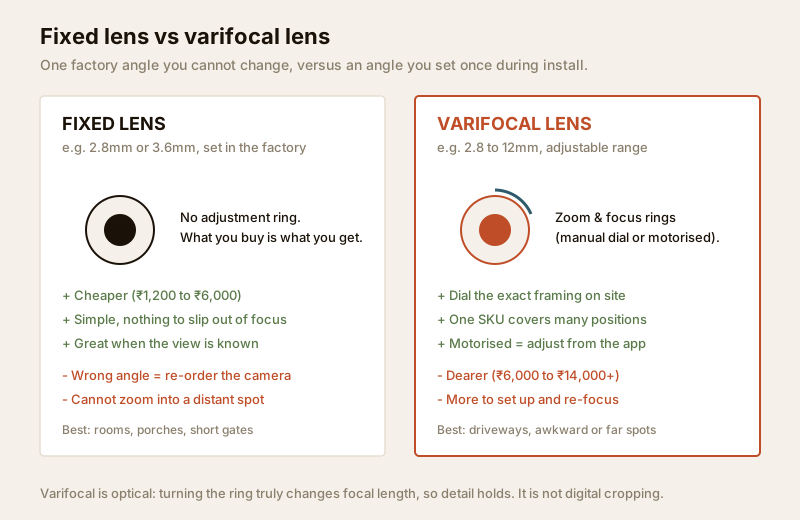
Crucially, varifocal zoom is optical — turning the ring genuinely changes the focal length of the glass, so detail is truly gained, not faked. That is completely different from the "10x digital zoom" printed on cheap camera boxes, which merely crops and enlarges an existing image and loses detail as it goes. The distinction matters enough to have its own guide: optical vs digital zoom.
Manual vs motorised varifocal
Varifocal comes in two flavours, and the difference is about who adjusts it and how often you can:
- Manual varifocal. The installer physically turns the zoom and focus rings on the lens, then locks them with tiny screws. Cheaper. But to change the view later, someone has to climb back up to the camera — so you set it once and leave it.
- Motorised varifocal (sometimes "motorised zoom" or MFZ). Little motors move the lens elements; the installer — and often you, from the app — adjusts zoom and focus remotely. It usually auto-focuses too, which removes the fiddliest part of setup. Dearer, but you can re-frame a high, hard-to-reach camera from the ground whenever the scene changes.
A motorised varifocal is not a PTZ camera. PTZ pans and tilts to follow action across a wide area and is a different, pricier tool for large compounds. A motorised varifocal stays pointed at one fixed scene — you only adjust how tightly it frames that scene. For a typical home, motorised varifocal gives you flexibility without PTZ complexity or cost.
Why installers love varifocal
Ask an installer and most will quietly prefer varifocal cameras for the tricky positions, for three practical reasons:
1. One SKU covers many jobs. Instead of stocking 2.8mm, 3.6mm, 6mm and 8mm fixed cameras, an installer carries one 2.8-12mm varifocal and adapts it to whatever the site needs. Fewer wrong-lens returns.
2. No guessing before the visit. With fixed, you must know the exact angle before ordering. With varifocal, the installer decides on the day, standing at the mount looking at the real view — which is far more reliable than a plan drawn from memory.
3. Awkward and far spots become easy. A long driveway, a plot that reaches deep back, a gate 18 metres from the only good mounting wall — these are precisely where a fixed lens gambles and a varifocal wins, by dialling in the reach without you ordering a specialist long lens.
The flip side, and the reason varifocal is not the default everywhere: it costs more (typically ₹6,000 to ₹14,000+), has more to set up, and its focus can drift on a cheap manual unit if the locking screws loosen. For a simple porch, that is complexity you do not need.
Choosing the lens for each spot
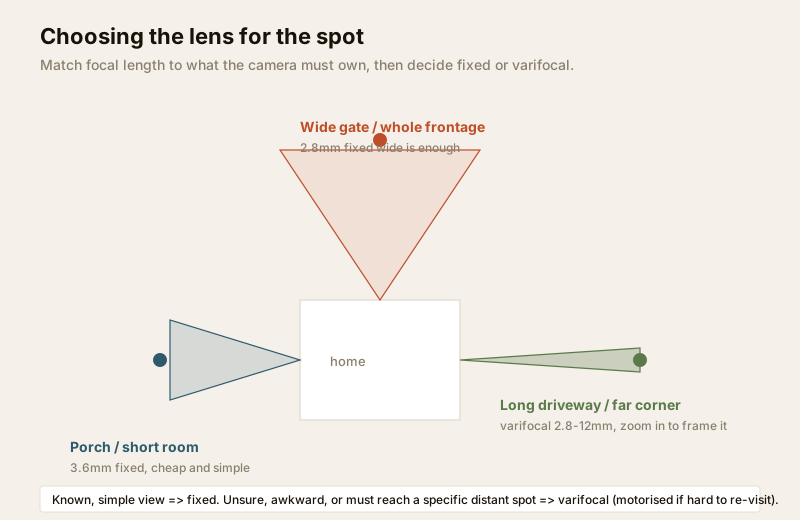
The honest method is spot by spot, not one lens for the whole house. Walk the plot, and for each camera position ask: what must this view own, and how far away is it?
| Position | Distance / need | Sensible lens choice |
|---|---|---|
| Living room / hall | Short, wide, known | Fixed 2.8mm |
| Porch / short driveway | Up to ~8 m | Fixed 3.6mm |
| Wide gate / whole frontage | Wide but near | Fixed 2.8mm |
| Medium driveway or side approach | 10-14 m | Varifocal (set ~6mm) or fixed 6mm |
| Long driveway to a far gate | 15-22 m | Motorised varifocal 2.8-12mm |
| Far boundary corner / end of lane | 20 m+ | Varifocal, zoomed in, or a long fixed 8-12mm |
| Awkward mount, view may change | Unknown | Varifocal (motorised if hard to reach) |
The rule of thumb: known, simple, near view = fixed. Unsure, awkward, or must reach a specific distant spot = varifocal — and motorised if the camera will be high or hard to revisit. A common Indian-home mix is fixed wide lenses indoors and at the gate, with one or two varifocals reserved for the long driveway and the deep corners.
Remember the privacy corollary: a varifocal zoomed tight onto a distant spot produces very identifiable footage, and a wide lens at a gate can easily overshoot into the street or a neighbour's window. Frame only what you have a legitimate reason to watch, and mask or angle away the rest. The security and privacy assessment guide covers how to keep coverage proportionate.
Lens choice and night vision
Focal length interacts with night performance. A narrow, long lens gathers light from a small patch, and a camera's infrared (IR) LEDs must throw far enough to light that patch — many long-reach and varifocal cameras pair a longer lens with stronger, sometimes zooming IR for this reason. A wide fixed lens, by contrast, needs IR spread across a broad near-field rather than a long throw. If a spot is both far and dark, the lens is only half the problem — the low-light and IR side is covered in low-light CCTV cameras and night-vision CCTV cameras. And no lens compensates for a genuinely unlit approach: pair the camera with sensible lighting, as set out in the lighting and visibility assessment.
Cost and India-specific notes
Indicative camera-only price bands to sanity-check a quote (they move with brand, sensor, resolution and season):
| Lens type | Typical range (₹) | Notes |
|---|---|---|
| Fixed 2.8mm / 3.6mm (2-4MP) | ₹1,200 - ₹6,000 | The home workhorse; most positions |
| Fixed long lens (6-12mm) | ₹3,000 - ₹8,000 | For a known distant view on a budget |
| Manual varifocal 2.8-12mm | ₹5,000 - ₹10,000 | Set once at install, cheaper than motorised |
| Motorised varifocal (MFZ) | ₹7,000 - ₹14,000+ | Re-frame and auto-focus from the app |
For India specifically: heat and monsoon can loosen the tiny lock screws on a cheap manual varifocal over a couple of seasons, nudging it out of focus — a motorised unit with electronic locking avoids this, and either way insist on at least IP66 weatherproofing outdoors, as covered for the housing in the bullet CCTV cameras guide. Dust on the glass hurts a tightly-zoomed long lens more than a wide one, so a varifocal on a far corner wants an occasional wipe. And remember that a tighter, higher-resolution frame means bigger files: sizing storage and upload for a Jio or Airtel connection is a separate exercise, helped by the CCTV storage and bitrate calculator.
When to bring in a professional. Decide the positions, distances and lens type yourself — that planning is exactly what this guide is for. Then hand the mounting at height, aiming and focusing the lens, cable pulling and weatherproof terminations to a licensed installer, who will dial a varifocal to the live view far better than a guess from the ground. Any work at the mains board is a licensed electrician's task; see the electrical hub. A correctly framed, in-focus lens on a modest camera beats an expensive camera pointed at the wrong slice of the world.
Key takeaways
- Focal length (mm) sets the angle of view: short (2.8mm) is wide but short-range; long (12mm) is narrow but reaches far. You trade width for reach.
- A fixed lens locks one angle at the factory — cheaper, simpler, ideal for known near views like rooms, porches and short gates; the risk is committing to a guessed angle.
- A varifocal lens (e.g. 2.8-12mm) lets the installer dial the exact framing on site — flexible, one SKU for many spots, and its zoom is real optical detail, not digital cropping.
- Motorised varifocal adds remote, auto-focusing adjustment — worth it for high, hard-to-reach, or changeable views; it is not a PTZ, which follows action.
- Choose spot by spot: fixed for the simple near views, varifocal for the long driveway and awkward corners. Confirm every angle with the lens field-of-view calculator, and remember sharper framing means more privacy duty.
References
- Digital Personal Data Protection Act, 2023 — frame cameras to cover only your own property and shared areas with a legitimate purpose; a tightly-zoomed lens producing identifiable footage carries greater responsibility.
- Ingress Protection (IP) ratings — verify weatherproofing (IP66 or higher outdoors) on the manufacturer's specification sheet before ordering a varifocal or fixed camera.
- Manufacturer lens specifications — confirm the focal length or varifocal range, sensor size and angle of view for any specific model before relying on the indicative figures in this guide.
- National Building Code of India (SP 7), Bureau of Indian Standards, and local municipal bye-laws for any structural, electrical or life-safety aspect of an install; verify the current edition via the BIS catalogue: https://www.services.bis.gov.in/
This is an educational overview. Mounting at height, aiming, cabling and any electrical work are qualified professional tasks — engage licensed installers and verify any standard's current status via the BIS catalogue before relying on it.
Export this guide
Related Guides — Deep-dive reading
How to Choose a CCTV Camera (2026): The Homeowner's Decision Guide for India
Cut through the spec-sheet noise and choose the right CCTV camera for each spot around an Indian home. What actually matters — sensor and low-light performance, lens and field of view, form factor, IP and IK ratings, honest smart features — and the marketing claims to ignore.
SecurityCCTV Optical vs Digital Zoom (India 2026): Which Actually Sees Detail
Optical zoom uses a real lens to add genuine detail; digital zoom just crops and interpolates pixels you already have. Why big digital-zoom numbers on the box are marketing, and when a varifocal or PTZ optical lens is worth paying for.
SecurityBox CCTV Cameras in India: The Interchangeable-Lens Camera for Exact Framing
What a box camera is, why its C/CS-mount interchangeable lens lets you pick the exact field of view and identification range for a spot, when a weatherproof housing is worth the extra cost, and how it compares to fixed-lens dome, bullet and turret cameras.
SecurityRelated Tools — Try Free
CCTV Camera Coverage & Count Calculator
Estimate how many CCTV cameras you need, the NVR channels, storage in TB for your retention period, and an indicative all-in cost with GST.
CCTV CalculatorCCTV Lens & Field-of-View Calculator
Focal length, sensor and resolution to field-of-view angle, scene width and DORI detect/observe/recognise/identify distances.
Lens & FoVCCTV Cable-Length Calculator
Total cable to buy for a CCTV job and a warning when a run exceeds the cable's maximum length.
Cable Length