
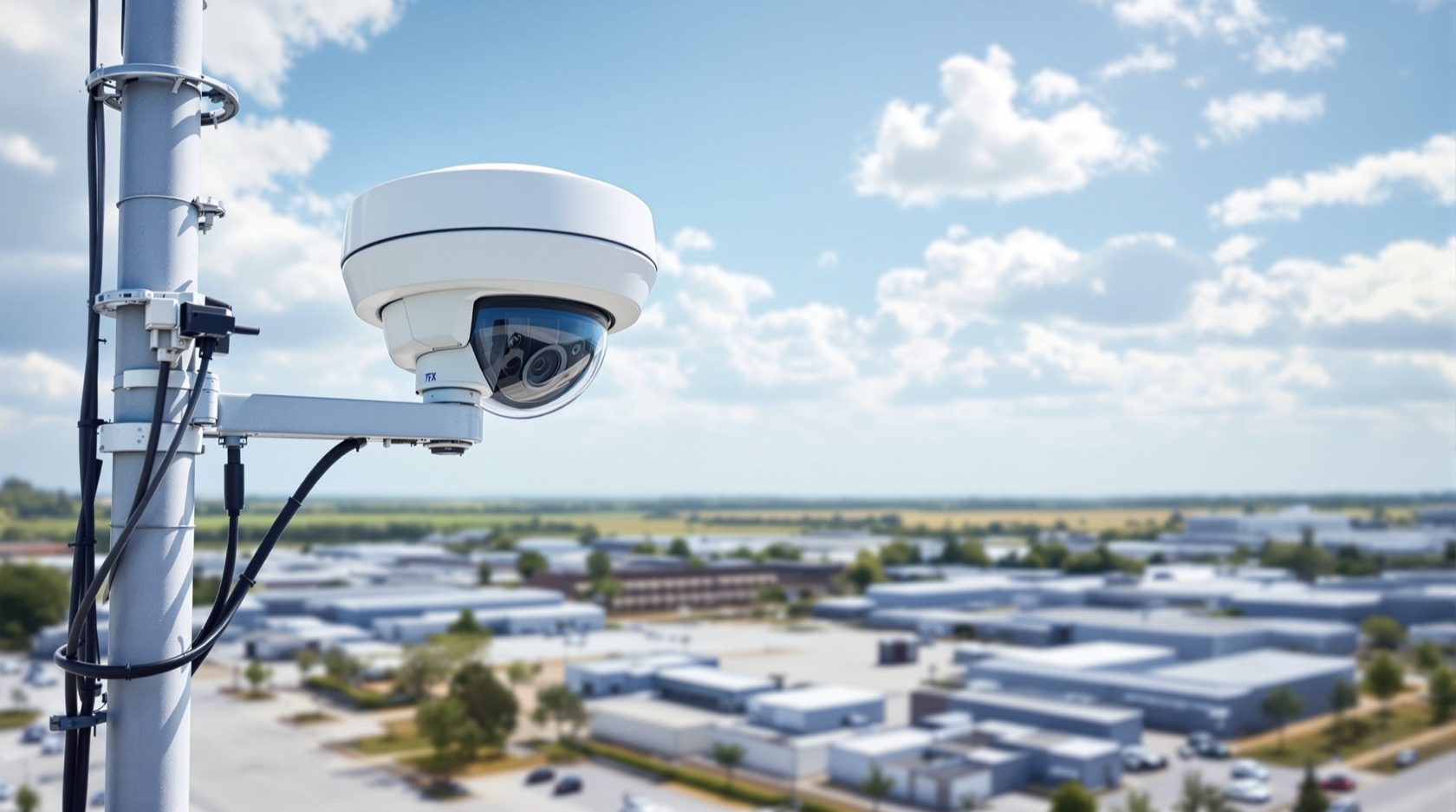
PTZ Cameras: When One Moving Camera Is Worth It in India
What a PTZ (pan-tilt-zoom) camera really does, the blind-spot catch every homeowner must understand, and where a motorised zoom camera earns its keep versus plain fixed cameras.
Most CCTV cameras stare at one fixed scene forever. A PTZ camera is different: it is a motorised camera that can pan (swing left and right), tilt (angle up and down) and optically zoom (magnify a distant scene with real lens glass, not blurry digital cropping) — all driven remotely from an app or joystick, or automatically by presets and tracking. One PTZ can watch a whole yard and then punch in to read a number plate two hundred metres away.
That reach is genuinely impressive, and it seduces a lot of homeowners into buying one for a small house where it makes no sense. This guide, part of Studio Matrx's CCTV hub, explains what a PTZ actually does well, the one catch that trips people up, and how to tell whether you are the rare homeowner who should own one. For the fixed alternatives it is measured against, read the dome camera guide and the bullet camera guide alongside this.
Scope & safety. This guide helps you understand, choose and coordinate. Mounting a PTZ (they are heavy), running structured cabling, and any mains-electrical work belong to licensed professionals — plan them here, but have them installed and certified. A camera and its cabling must never block a door, window or fire-escape route, and cameras must never point into bathrooms, bedrooms or a neighbour's private space.
What a PTZ camera actually is
Picture a camera sitting inside a motorised turret. Send it a command — from the recorder software, a phone app or a physical joystick — and small motors physically rotate and angle the lens, while a motorised zoom lens magnifies the view optically. Because the zoom is optical (real glass moving), a 20x or 30x PTZ can read fine detail far away that a fixed camera would only capture as a smudge.
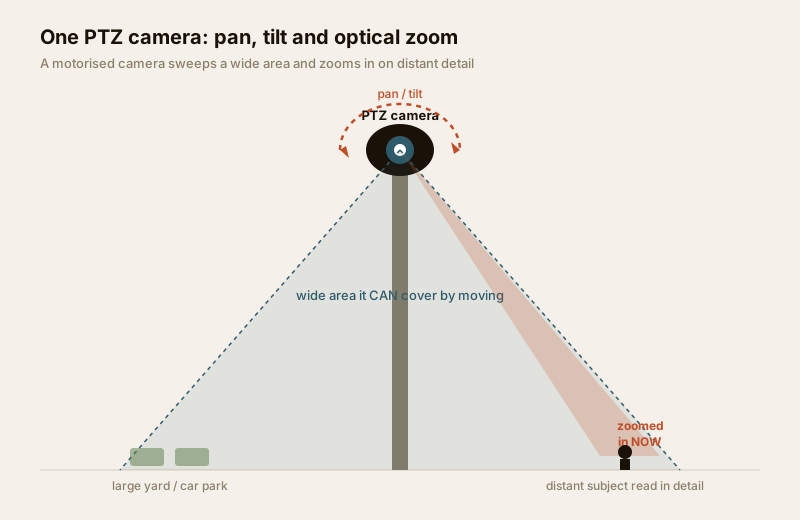
Three ways a PTZ gets pointed:
- Manually. A person in a control room drives it in real time to follow something — the classic staffed-security use.
- Presets and patrols. You save fixed positions ("gate", "far corner", "parking row") and the camera auto-patrols between them on a loop, or jumps to a preset when an alarm fires.
- Auto-tracking. Smarter PTZs detect a moving person or vehicle and automatically follow it across the scene, zooming to keep it framed — hands-free, though it can be fooled by multiple movers or busy scenes.
The strengths — why big sites love them
A PTZ shines wherever a scene is large, open and worth watching actively:
- One camera covers a lot of ground. Instead of four or five fixed cameras across a wide compound, a well-placed PTZ can sweep the whole area — useful over car parks, farms, factory yards and large open plots.
- Reach and detail at distance. Optical zoom reads a face, a plate or an intruder far beyond a fixed lens's useful range.
- Follow the action. Presets, patrols and auto-tracking let it stay on a moving subject rather than watching an empty gate all night.
- Great in a staffed setup. In a control room with a guard, a PTZ becomes an active tool — investigate a noise, follow a vehicle, zoom on a delivery — not just a passive recorder.
The catch every homeowner must understand
Here is the sentence that should decide your whole purchase: a PTZ is only looking one way at a time. While it is turned toward the front gate, it sees nothing at the back wall, the side lane or the parking. While it is zoomed in on a distant car, the wide scene it just left is unrecorded. If a PTZ is on patrol facing north when someone slips in from the south, that entry is simply not on camera.
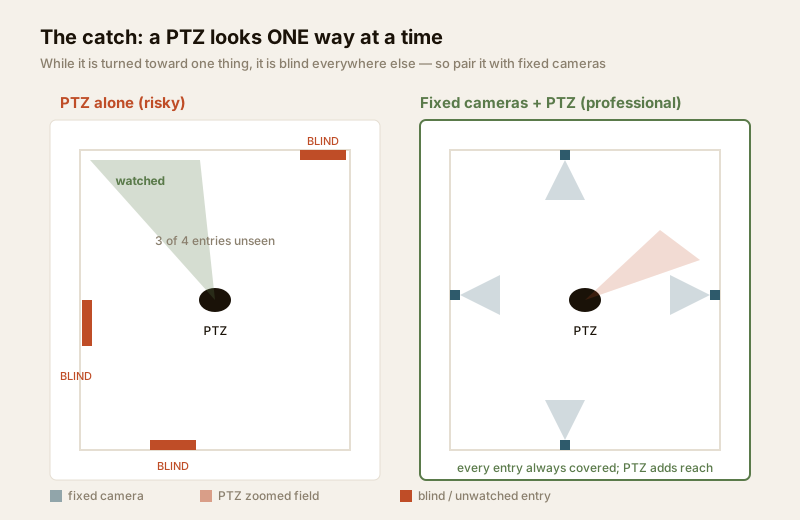
This is why a single PTZ is a poor primary camera for guaranteed coverage. A fixed dome or bullet at your gate is watching that gate every second of every day. A PTZ "covering" the gate is only watching it when it happens to be pointed there. Motion, evidence, the moment you actually need — none of it waits for the camera to swing around.
The professional approach is not PTZ instead of fixed cameras — it is fixed cameras PLUS a PTZ. Fixed cameras (dome, bullet or turret) at every entry and blind corner guarantee that each critical spot is always recorded. The PTZ sits on top of that base as a reach-and-detail tool — to zoom, follow and investigate across the wide middle ground. It complements guaranteed coverage; it never replaces it. If you are still mapping where your uncovered spots are, the blind-spot identification guide is the place to start.
PTZ: pros, cons and best fit
| PTZ camera | |
|---|---|
| Strengths | One camera sweeps a large area; real optical zoom for distant detail; presets, patrols and auto-tracking; a powerful active tool in a staffed control room |
| Weaknesses | Looks only one way at a time — blind everywhere else; much pricier; needs someone or automation to drive it; heavy mount; moving parts wear and need maintenance |
| Best fit | Large open sites: farms, factory yards, commercial car parks, wide compounds, gated communities — as an ADDITION to fixed cameras, ideally with someone watching |
| Poor fit | A small home or shop where a couple of fixed cameras already see every entry — a PTZ is overkill and leaves blind spots when it turns away |
Fixed vs PTZ vs the combo
The honest comparison is not "which is better" but "what does each job need". For most homes, fixed cameras win outright; the PTZ only pulls ahead on big active sites, and the real best-practice answer is usually the combination.
| Factor | Fixed cameras only | PTZ only | Fixed + PTZ (recommended for big sites) |
|---|---|---|---|
| Guaranteed coverage | Yes — every entry, always recorded | No — blind whenever it faces away | Yes — fixed cameras hold every entry |
| Reach / distant detail | Limited to the fixed lens | Excellent optical zoom | Excellent — PTZ adds the reach |
| Follow a moving subject | No | Yes (patrol / auto-track) | Yes — PTZ follows over a covered base |
| Cost | Lowest | High per camera | Highest — but coverage plus reach |
| Who drives it | Nobody — it just records | Needs a person or good automation | Fixed run themselves; PTZ driven when needed |
| Moving-part maintenance | None | Motors and gears wear | Only the one PTZ to service |
| Right for a small home? | Usually yes | No | Overkill |
Not sure which form factor belongs at each spot? The CCTV camera type selector walks you through dome versus bullet versus turret versus PTZ for each view, and the camera coverage calculator helps you count how many fixed cameras your layout actually needs.
Cost, driving, mounting and upkeep — the real-world burdens
A PTZ is not just a pricier camera; it brings ongoing demands a fixed camera does not.
- Cost. A decent outdoor PTZ costs many times a good fixed camera. It only makes sense when the reach it buys is genuinely needed.
- Someone has to drive it. Its value is highest when a person actively controls it, or when presets, patrols and auto-tracking are properly configured. Left parked on one view, an expensive PTZ is just a costly fixed camera with blind spots.
- Mounting. PTZs are heavy and often go high on a pole or wall for the best sweep. That is real weight at height on a bracket rated for it — a professional mounting and fall-safety job, not a DIY drill-and-hope.
- Maintenance of moving parts. Motors, gears and slip-rings wear out; dust, heat and monsoon damp — everyday India conditions — shorten their life. A PTZ needs periodic checking and eventual servicing that a sealed fixed camera never does.
When to bring in a professional. Decide the coverage plan yourself — fixed cameras at every entry, and whether a PTZ's reach is worth it — then hand the PTZ mounting (weight at height), the structured cabling, mains power and the recorder commissioning to a licensed installer. They will fit a bracket rated for the load, pull and terminate cable correctly, set up presets and tracking, and hand over a system you can actually operate. Any work at the mains board is a licensed electrician's job — see the electrical hub.
Where a PTZ fits in India — and where it is overkill
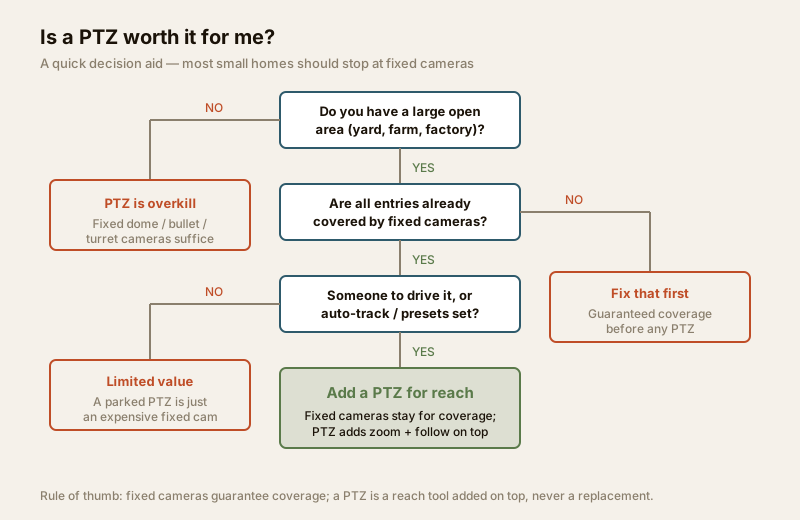
Worth it: large independent plots and farmhouses with long boundaries, agricultural land, factory and warehouse yards, commercial parking, construction sites, and larger commercial premises with a staffed guard room. In all of these there is a wide area to sweep, distance where zoom matters, and — crucially — usually someone to watch or a genuine need to follow movement. Even here, the PTZ rides on top of fixed cameras that hold the fixed entries.
Overkill: a typical urban home, a flat, a small shop. Here two to four well-placed fixed cameras already see every door, gate and blind corner all the time — cheaper, simpler, no moving parts, and no blind spot the moment the camera turns. Spend the PTZ money on more fixed cameras and better night vision instead; you will get more real security per rupee. The villa and independent-house security guide and the apartment security guide cover sensible fixed-camera layouts for homes.
India price bands (indicative)
Prices move with brand, zoom range, resolution and season — treat these as ballparks to sanity-check a quote, not fixed rates.
| Item | Typical range (₹) | Notes |
|---|---|---|
| Entry outdoor PTZ (4MP, ~4x–12x zoom) | ₹12,000 – ₹30,000 | Small yards; modest reach |
| Mid-range PTZ (4–8MP, ~20x–25x optical) | ₹30,000 – ₹70,000 | Large compounds, real distance detail |
| High-end / auto-tracking PTZ (~30x+, IR) | ₹70,000 – ₹2,00,000+ | Farms, factories, staffed control rooms |
| Heavy-duty pole mount + bracket | ₹2,000 – ₹8,000 | Rated for PTZ weight; professional fit |
| Good fixed camera (for comparison) | ₹2,500 – ₹12,000 | What most homes should buy instead |
| Annual PTZ servicing (moving parts) | ₹1,500 – ₹5,000 | Fixed cameras need none of this |
Notice the gap: one mid-range PTZ can cost as much as an entire home's worth of fixed cameras and a recorder. That is exactly why it is a big-site tool, not a home default. Price your whole system with the security system cost estimator, and if you are choosing between wired and wireless for the run, see the wired CCTV guide.
Key takeaways
- A PTZ camera pans, tilts and optically zooms so one camera can sweep a large area and read distant detail — remotely, or automatically via presets, patrols and auto-tracking.
- The decisive catch: a PTZ looks only one way at a time, so it is blind everywhere else. It is a poor primary camera for guaranteed coverage.
- The professional approach is fixed cameras for guaranteed coverage PLUS a PTZ for reach — never a PTZ instead of fixed cameras.
- PTZs cost far more, need someone or automation to drive them, are heavy to mount, and have moving parts that wear — real burdens in India's dust, heat and monsoon.
- Worth it on farms, factory yards, car parks and wide compounds, ideally staffed; overkill for a small home, where a few fixed cameras see every entry all the time for less money.
References
- Digital Personal Data Protection Act, 2023 — a movable PTZ makes over-reach easy: keep presets, patrols and tracking bounded to your own property and legitimate shared areas, and never let it swing onto a neighbour's private space.
- Bureau of Indian Standards catalogue for any electrical, structural or mounting standard relevant to a pole or high-level camera install — verify the current edition via the BIS catalogue: https://www.services.bis.gov.in/
- Manufacturer load and mounting specifications — a PTZ's weight demands a bracket and fixing rated for it; follow the maker's figures and have a professional confirm the mount.
This is an educational overview. PTZ mounting (weight at height), structured cabling and any electrical work are qualified professional tasks — engage licensed installers and verify any standard's current status via the BIS catalogue before relying on it.
Export this guide
Related Guides — Deep-dive reading
How to Choose a CCTV Camera (2026): The Homeowner's Decision Guide for India
Cut through the spec-sheet noise and choose the right CCTV camera for each spot around an Indian home. What actually matters — sensor and low-light performance, lens and field of view, form factor, IP and IK ratings, honest smart features — and the marketing claims to ignore.
SecurityCCTV Object Tracking Explained (India 2026): When Auto-Tracking PTZ Helps
How a PTZ camera's auto-tracking follows a moving person or vehicle, where it genuinely helps on a large open plot or yard, and the blind spots that mean a tracking PTZ can never replace fixed cameras.
SecurityCCTV vs Physical Guarding in India (2026): Cameras, Guards or Both?
An honest head-to-head between electronic CCTV surveillance and manned physical guarding for a home, villa, gated community, shop or small site in India — what each really does, where each wins, and why the best answer is almost always a layered combination rather than one or the other.
SecurityRelated Tools — Try Free
CCTV Camera Type Selector
Answer five questions and get the right camera form factor — dome, vandal dome, bullet, turret or PTZ — with reasons.
Camera SelectorCCTV Camera Coverage & Count Calculator
Estimate how many CCTV cameras you need, the NVR channels, storage in TB for your retention period, and an indicative all-in cost with GST.
CCTV CalculatorCCTV System Type Selector
Answer five questions and get the right CCTV setup — analog / IP / hybrid, wired / wireless, local / cloud — with reasons.
CCTV Selector