
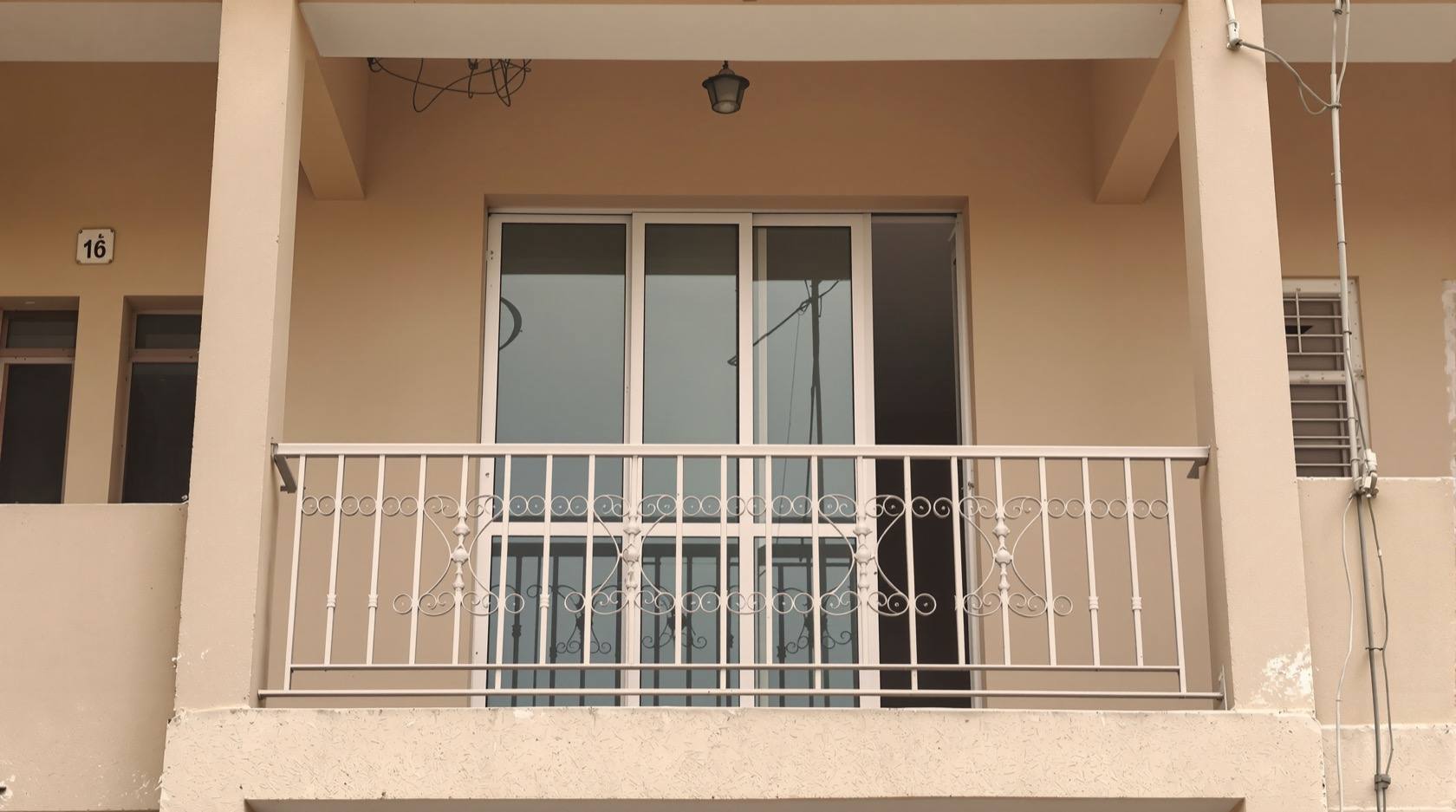
Balcony Door Security in India (2026): The Upstairs Opening Thieves Actually Use
A homeowner's guide to the balcony and French door most families treat as safe because it is upstairs, showing why drainpipes, scaffolding and ledges make upper-floor balconies a real entry route, and how to secure the door without ever caging your fire escape.
There is one door in most Indian homes that nobody bothers to lock properly, and everybody has a reason. It is the balcony door. The French door onto the first-floor balcony, the sliding door out to the terrace-facing sit-out, the glazed leaf the family opens for the morning air and closes with a flick of a flimsy latch at night. It feels safe. It is upstairs, after all, and who is going to climb up to a balcony?
The honest answer is: people do, and they choose the balcony precisely because you have decided it is safe. A great many break-ins that families later describe as impossible ("but we were on the first floor") happened through a balcony door left on a latch a child could open, reached by a route that was hiding in plain sight the whole time — a drainpipe running up the wall, a rear scaffold left standing after painting work, a neighbour's sunshade, an air-conditioner unit that makes a perfect step. This guide is the capstone of our door-and-window security series, and it deliberately ties the two threads together, because the balcony is where the door and the window become the same problem: an opening, above ground, that you trust more than it deserves.
Scope & safety. This guide helps you assess and harden your own balcony door and the approach to it, and it points you to the right professionals. It never explains how to defeat, force or bypass anyone's door, grille or lock. One rule overrides everything on this page and it matters more here than anywhere else in the series: a balcony is very often a family's refuge or secondary escape in a fire, so whatever you fit to secure it must still let people out fast, by hand, without hunting for a key. Never fit fixed welded bars or a padlocked grille across the only balcony a room can escape to. Where a strength or rating matters we say "specify it to the standard with your vendor" rather than quote a number as a guarantee; life-safety egress and fire compliance are professional matters under the National Building Code of India (SP 7) and your local bye-laws.
First, the myth: "nobody climbs to the first floor"
The belief that height equals safety is the single reason balcony doors stay soft. It is worth dismantling plainly, because the assumption is doing real damage.
Thieves climb. It is not exotic, it needs no equipment, and it is often easier than forcing a well-locked ground-floor door under a streetlight. An upper balcony offers an intruder two things a front door never does: it is out of sight from the street and the neighbours, and it is usually less defended because the household never took it seriously. Height, far from being a deterrent, is cover.
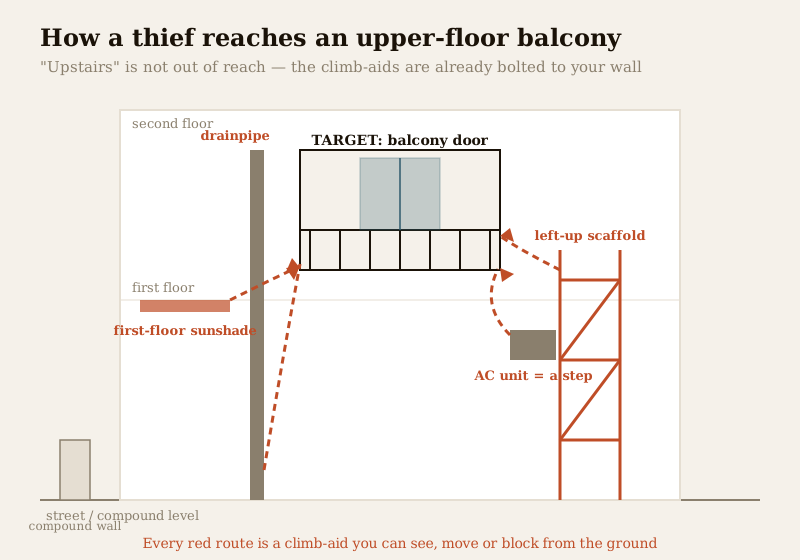
And the climb is rarely a climb up a bare wall. It is a climb up the things you have bolted to the wall yourself. Look honestly at the outside of your own building and you will usually find at least one of these:
| The climb-aid | Why it works | The softest cases |
|---|---|---|
| A rainwater drainpipe | A ready-made vertical ladder up to the balcony line | Cast-iron or thick uPVC pipes right beside a balcony |
| Rear or side scaffolding | Left standing after painting or repair work, a clear staircase up | Any building mid-renovation or freshly painted |
| A neighbour's ledge or sunshade | A stepping-stone across from an adjacent opening | Balconies close to a neighbour's chhajja or parapet |
| An air-conditioner outdoor unit | A solid platform bolted at head height, a step up to the rail | Split-AC units mounted directly below a balcony |
| The compound wall to a sunshade | Wall, then first-floor sunshade, then rail — three short moves | Low buildings where the boundary wall runs close |
The two softest balconies of all deserve naming outright, because they undo the height argument completely: a ground-floor balcony or sit-out is simply another door at street level with the added weakness that everyone treats it as an afterthought; and a terrace-access balcony — one reachable from a shared or open terrace, a common feature of Indian apartment blocks — can be walked up to on the level, no climbing at all. If your balcony is either of these, treat its door with exactly the seriousness you would give your main door.
The balcony door itself: usually the weakest leaf in the house
Once an intruder is on the balcony, out of sight, the only thing left is the door — and here is the uncomfortable truth: the balcony door is very often the flimsiest opening in the whole home. The front door gets a heavy lock and a family's full attention. The balcony door gets a decorative handle, a thin glazed leaf, and a latch chosen for looks. It is common to find a beautiful main door protecting a home that anyone could enter in seconds through the sliding door at the back.
The balcony door usually takes one of two forms, and each has its own companion guide in this series:
- A sliding door. Aluminium or uPVC sliders are the default on Indian balconies, and they carry all the sliding-door weaknesses: a light latch rather than a real lock, a leaf that can be lifted out of its track if it is not anti-lift, and a bottom rail that is easy to shim. Everything in the sliding door security guide applies directly to a balcony slider — read it as the companion to this page for the slider case.
- A hinged French or framed door. A pair of glazed French doors, or a single framed leaf, onto the balcony. Here the security lives in the leaf, the frame and the lock exactly as it does on a main door: a solid leaf, a well-anchored frame, and a lock that throws a real bolt into strong timber. The reinforced wooden doors guide and the door frame security guide cover the framed case in full — a French door is only as strong as the frame it hangs in and the wall that frame is fixed to.
Whichever you have, one weakness recurs on almost every balcony door and deserves calling out on its own: the glass beside the latch. A balcony door is mostly glass by design — that is the point of it. But if there is a breakable pane within arm's reach of the handle or thumbturn, the strongest latch in the world protects nothing, because the door can be opened by breaking a small pane and simply reaching in to turn the handle. On a balcony door this is not a rare detail; it is the norm. We deal with it under glazing below.
The grille and mesh combo — genuinely useful, and genuinely dangerous
Walk down any Indian street and you will see the balcony answer everyone already trusts: a grille. A welded or cast metal grille across the balcony opening, often with an insect mesh behind it, is the traditional Indian second layer, and it deserves real credit. A well-made, well-fixed grille genuinely helps. It puts a physical barrier in the path of an intruder who has reached the balcony, it slows and discourages, and it lets the family keep the door open for air behind a locked screen. For a balcony this is a sensible layer, and it is one of the few security measures that also earns its keep every ordinary day.
But the grille is exactly where the life-safety honesty of this series has to come to the front, because the grille is also where Indian homes make their most dangerous mistake. Here is the trap:
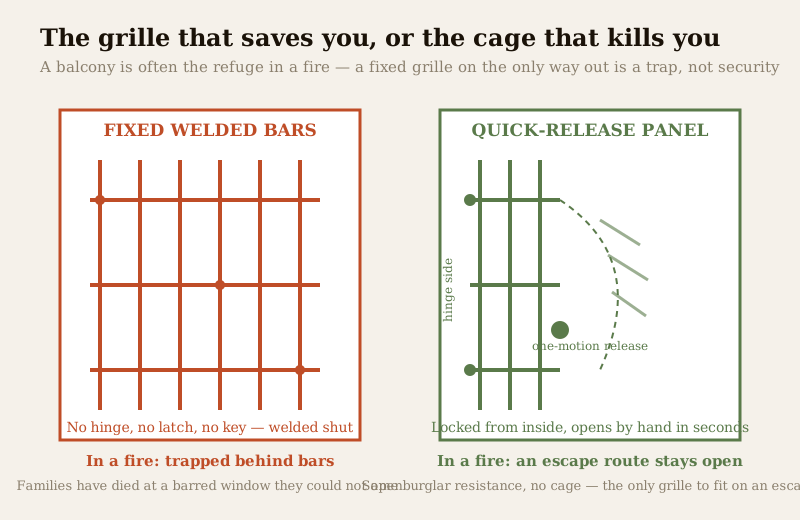
A balcony is very often the escape route. When a fire blocks the internal doorway of a bedroom, the balcony is where the family goes — out onto the open air to wait for help or to reach a neighbour. That is what a balcony is for in an emergency. Now put a fixed, welded, immovable grille across it, and you have taken the one refuge the room had and turned it into a sealed cage. This is not a hypothetical: people in India have died at barred windows and grilled balconies they could not open while smoke filled the room behind them.
The resolution is simple and it is non-negotiable on any balcony that a room escapes to:
- Never fit fixed welded bars or a permanently padlocked grille across the only balcony an interior room can escape to. However secure it looks, it is a fire trap, and it fails the one test that matters.
- Fit a quick-release, openable grille panel instead. A grille that is hinged and secured from the inside with a quick-release catch — no key, or a key kept permanently in the lock on the inside within reach — gives you the burglar resistance of a grille and an escape that opens by hand in seconds. It is the only kind of grille that belongs on an escape.
- Everyone in the household must know how to open it in the dark. A quick-release that nobody has ever operated is barely better than a welded bar. Show the children. Keep the catch clear of clutter and paint.
The window grilles design guide covers the openable-panel detailing in full, and the emergency escape window requirements guide sets out the egress principle that governs every grille, bar and shutter in the home. Read them together; on a balcony they are two halves of one decision.
Glazing: the exposed pane wants to be laminated
A balcony door is a wall of glass, and on a balcony that glass is exposed — to the weather, to a fall, and to an intruder who has reached the balcony unseen and has time and privacy to work on it. That combination is the argument for choosing the right glass here more than anywhere else in the home.
The distinction worth understanding is between glass that resists shattering and glass that stays in one piece when it does break:
- Toughened (tempered) glass is much stronger than ordinary glass and, when it finally breaks, crumbles into small blunt granules rather than daggers — a genuine safety benefit against injury and a good default for a balcony where a fall is possible.
- Laminated glass is two or more panes bonded to a tough interlayer, so that when the outer pane cracks the fragments stay stuck to the interlayer and the sheet holds together as a barrier. For a security-exposed balcony pane, this holding-together is the property you want: a broken laminated pane is still, briefly, a wall, and reaching through it is a slow, noisy, obvious job rather than a quiet one.
For the balcony door, the honest recommendation is laminated glass for the exposed pane where security is the concern, and to treat the glass beside the latch as the priority: either move any opening handle out of arm's reach of a breakable pane, or make that pane laminated so it cannot be quietly broken to reach the catch. No glass makes a door burglar-proof, so treat this as raising the effort and the noise, not as a guarantee. The deeper treatment lives in the safety glass for homes guide, and the burglar-resistant windows guide puts the balcony glazing choice in the wider window-security picture.
Lock the door — and clear the approach
Here is the idea that makes the balcony different from every other opening, and it is the reason this guide exists as its own page: on a balcony you defend the approach as well as the door. A balcony breach happens in two moves — the climb, then the door — and you can break the chain at either point. Most homeowners only ever think about the door. Clearing the approach is free, it is fast, and it removes the intruder's easiest route before they ever reach the leaf.
Walk around the outside of your home and take away the climb-aids you put there:
- Do not leave a ladder standing. A ladder left against the wall after cleaning or repair work is an open invitation; store it flat and out of reach.
- Do not store scaffold, drums or stacked material below a balcony. Anything that can be stood on or climbed is a step; keep the ground below a balcony clear.
- Rethink the AC unit and pipework. A split-AC outdoor unit or a fat drainpipe mounted directly below a balcony rail is a ready-made staircase. Where you can, position new units away from balconies, or add anti-climb detailing (a smooth guard, a spiked or sloped cap) so the unit and pipe cannot be used as a step.
- Trim the tree that reaches the rail. A branch that touches the balcony is a bridge; keep it cut back.
- Fix the security lighting. A balcony that is out of sight in the dark is the intruder's friend; a light on the approach removes the cover that makes the balcony attractive in the first place.
Then lock the door properly: a real lock on the slider (not just the builder's latch) or a proper deadbolt on the French door, an anti-lift device on a sliding leaf so it cannot be raised out of its track, and the glass-beside-the-latch problem dealt with. The two moves together — a cleared approach and a locked door — are worth far more than either alone.
Alarm it, because a balcony breach is out of sight
Every other opening in the home has a witness: the front door faces the street, the living-room window faces the road, someone might see or hear. The balcony has none of that. Its whole appeal to an intruder is that a breach there happens out of sight and out of earshot — around the back, above the ground, behind a wall. That is exactly why the balcony door is the opening that most rewards a sensor.
A simple, inexpensive contact sensor on the balcony door does the one thing the location denies you: it tells you the moment the door is opened, whether you are asleep in the next room or away from home. Because a balcony breach is silent by nature, the alarm is not a luxury here — it is what replaces the witness the balcony does not have.
- A magnetic contact sensor on the balcony door or its grille panel triggers the instant the leaf is opened. See the door sensors guide for the framed-door case and the window sensors guide for the sliding or glazed leaf — a balcony door sits between the two, and either sensor type suits it.
- Because so much of a balcony door is glass, a glass-break sensor is a natural companion, listening for the specific sound of breaking glass so a smashed pane is caught even if the frame never opens.
- Position the sounder so an alarm is heard inside the home, where it wakes and warns the family, not only outside where the intruder is.
The point of the alarm on a balcony is not to catch a thief in the act so much as to remove the one advantage the balcony gives them — invisibility. A breach that sets off an alarm is no longer silent, and a no-longer-silent balcony is a far less attractive one.
Putting it together: the balcony as one decision
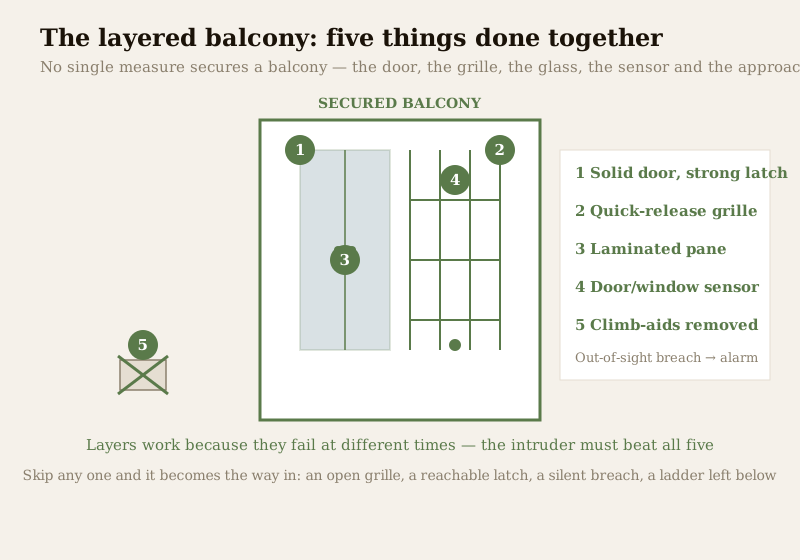
The balcony is where this whole series converges, so it is worth stating the layered answer as one picture. No single measure secures a balcony; they work because they fail at different moments, and the intruder has to beat all of them.
| Layer | What it does | The honest caveat |
|---|---|---|
| Cleared approach | Removes the climb-aids so the balcony is hard to reach | Free and fast, but needs checking after every repair job |
| A real lock on the door | Turns the flimsiest leaf in the house into a proper one | The builder's latch is not a lock; upgrade it |
| Laminated glass by the latch | Stops the quiet reach-through that defeats the lock | Raises effort and noise; not a guarantee |
| A quick-release grille | A genuine physical barrier that still opens for escape | Never fixed or padlocked on an escape — that is a fire trap |
| A door / window sensor | Gives the out-of-sight breach a witness | Needs the sounder heard inside, and working batteries |
Do all five and the balcony stops being the soft underbelly of the home. Skip any one and it becomes the way in: an open grille, a reachable latch, a silent breach, or a ladder left below. For the whole-home view of how the balcony fits alongside every other door and window, the pillar — the complete guide to door and window security — is the map, and the home security risk scorecard will put a number on where your balcony currently stands. If you live in an upper-floor apartment, the gated communities security guide covers the shared-terrace and common-area context that makes some apartment balconies softer than others.
Key takeaways
- Height is cover, not safety. Thieves climb drainpipes, standing scaffold, a neighbour's ledge, an AC unit and the compound wall; a balcony is chosen precisely because it is out of sight and under-defended. Ground-floor and terrace-access balconies are the softest of all.
- The balcony door is usually the flimsiest leaf in the house. A beautiful main door means nothing if the sliding or French door at the back is on a builder's latch with breakable glass beside it — secure it like a main door, using the sliding door or French door companion guides.
- A grille helps, but a fixed grille on an escape can kill. A well-fixed grille is a genuine second layer; a welded or padlocked grille across the only balcony a room can escape to is a fire trap. Fit a quick-release openable panel and make sure everyone can open it in the dark.
- Laminate the exposed pane and defend the approach. Choose laminated glass by the latch so it cannot be quietly broken, and clear the climb-aids below — no stored ladder, no scaffold, no climbable pipe or AC unit beside the rail.
- Alarm it, because a balcony breach is silent. A contact or glass-break sensor gives the out-of-sight balcony the witness the location denies it, with the sounder heard inside where it wakes the family. Egress always wins: never trade your fire escape for a lock.
Where to go next
- Complete guide to door and window security — the pillar this balcony guide sits under, and the map to the whole series.
- Sliding door security — the companion for a balcony slider: anti-lift, real locks and the track weakness.
- Reinforced wooden doors and door frame security — the companions for a hinged French or framed balcony door.
- Window grilles design guide and emergency escape window requirements — the openable-panel detailing and the egress rule that governs every grille.
- Burglar-resistant windows and safety glass for homes — the glazing choice for the exposed balcony pane.
- Door sensors and window sensors — the alarm that gives the out-of-sight balcony a witness.
- Main-door security checklist and the gated communities security guide — the front-door and apartment context.
- The home security risk scorecard — put a number on where your balcony stands.
- The openings sub-hub and the security hub.
References
- EN 1627 and its resistance classes RC1 to RC6 — the European standard framework for the burglar resistance of doors, windows and shutters, referenced in India by suppliers of graded balcony doors, grilles and shutters for specification; it is a European specification, not an Indian code. Confirm any quoted class against the maker's actual test certificate.
- National Building Code of India (SP 7, Bureau of Indian Standards) and your local municipal bye-laws — for means of egress and life-safety, including the principle that an escape route, balcony included, must open freely from inside without a key; always verify the current edition. Confirm the current status of any standard via the BIS catalogue: https://www.services.bis.gov.in/
- Manufacturer and vendor specifications — ask any door, grille or glazing supplier to confirm in writing the leaf construction, the lock and anti-lift hardware, the grille's quick-release mechanism, and the glass type (toughened or laminated) before you buy or upgrade.
This is an educational overview for homeowners, not legal, fire-safety or engineering advice. Fitting a balcony door, grille or shutter, and ensuring your balcony remains a usable fire escape, are qualified professional tasks — engage a competent installer and, for egress and fire compliance, a licensed consultant, and verify any standard's current status via the BIS catalogue before relying on it.
Export this guide
Related Guides — Deep-dive reading
Window Security Guide
The layered-defence model for Indian homes — frame, glass, locks, grille and sensors working together
Windows & GlazingDoor and Window Security Assessment for Indian Homes
Go opening by opening and rate the hardware itself — leaf and frame, hinges and locks, strike plates, grilles, glazing and latches — so you can grade each door and window's real resistance while never trapping anyone behind it.
SecuritySliding Door Security in India (2026): Anti-Lift, Secondary Locks and Glass for the Patio Slider
Why the patio and balcony slider is the most-forgotten break-in point in Indian homes, and how to close every gap - the liftable panel, the flimsy crescent latch, the plain glass and the silent large pane - without turning an escape route into a fire trap.
SecurityRelated Tools — Try Free
Window Material Comparison Tool
Compare uPVC, aluminium, wood, steel and composite windows on cost, life, upkeep and insulation.
CompareDoor Security Rating Calculator
Score your main door out of 100 across leaf, frame, lock and hardware — and see the top upgrades.
Security ToolCross-Ventilation Analyzer
Estimate airflow and air changes per hour (ACH) from room size, window areas, layout, and local wind — with NBC 2016 Part 8 compliance check.
Ventilation Calculator