
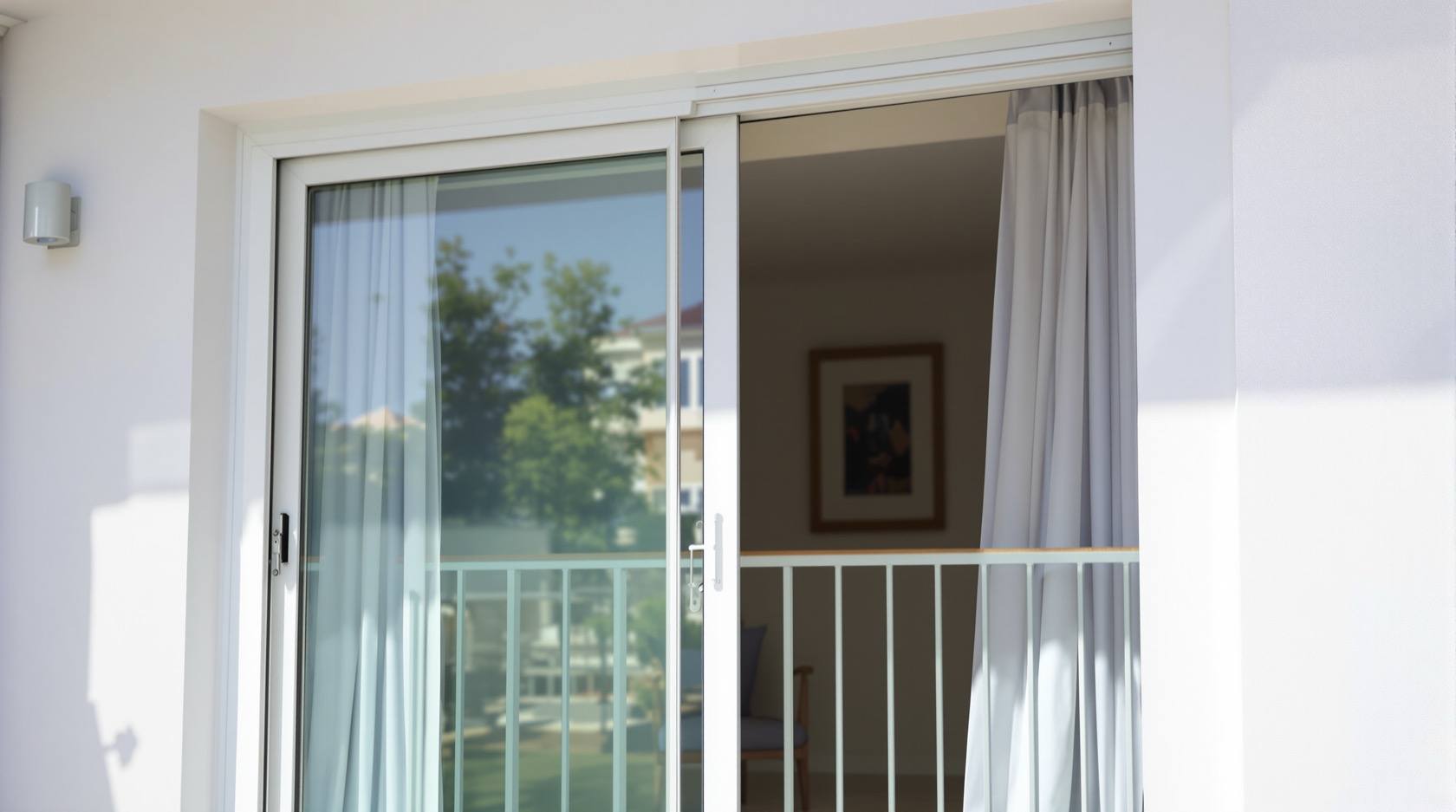
Sliding Door Security in India (2026): Anti-Lift, Secondary Locks and Glass for the Patio Slider
Why the patio and balcony slider is the most-forgotten break-in point in Indian homes, and how to close every gap - the liftable panel, the flimsy crescent latch, the plain glass and the silent large pane - without turning an escape route into a fire trap.
Walk any Indian home from a burglar's point of view and the front door is the last thing they look at. It faces the street, it has a grille, a good lock, a peephole, often a camera and always a neighbour. The way in is almost always around the back: the patio or balcony sliding door. It is large, it is glass, it faces a garden or a rear setback that nobody overlooks, and it is closed with a latch that a thumb can defeat. Worse, on most sliders the whole panel can be lifted straight up and out of its track from outside - the lock never even gets tested.
This guide is about sliding door security: the specific, well-understood weaknesses of the sliding patio and balcony door, and the layered fixes that close each one. It is part of Studio Matrx's door and window security pillar and sits in the openings sub-hub alongside its close neighbours - balcony door security and the wider window security guide. Get the slider right and you close the single softest point in most homes.
Scope and safety. This guide helps you choose and harden your own sliding door. It is strictly defensive - it never explains how to defeat, lift or bypass anyone else's door. Two life-safety rules run through everything below: a sliding door is often also a fire-escape and ventilation route, so it must always open easily from inside without a hunted key; and any work at height, on mains-connected alarm wiring, or on a heavy panel is a job for a qualified professional. This is educational guidance, not legal advice. Verify the National Building Code of India (SP 7:2026, BIS) egress rules and your local bye-laws before fixing anything that limits how a door opens.
Why the slider is the weak point
Four things stack up to make the sliding door the favourite:
- The primary latch is defeatable. The standard crescent (cam) latch or the simple hook latch found on aluminium and many uPVC sliders is a convenience catch, not a security lock. It holds the panel against the wind. It does very little against someone who wants in.
- The panel lifts out of the track. This is the big one, and most owners have never heard of it. A slider hangs in a top channel that is deeper than the bottom rail it rests on - that clearance is what lets you fit and remove the panel during installation. From outside, an intruder pushes the panel up into that deep top channel until the bottom edge clears the lower rail, then swings the bottom out. The whole glazed panel comes off in seconds, latch still "locked". No glass broken, no lock forced.
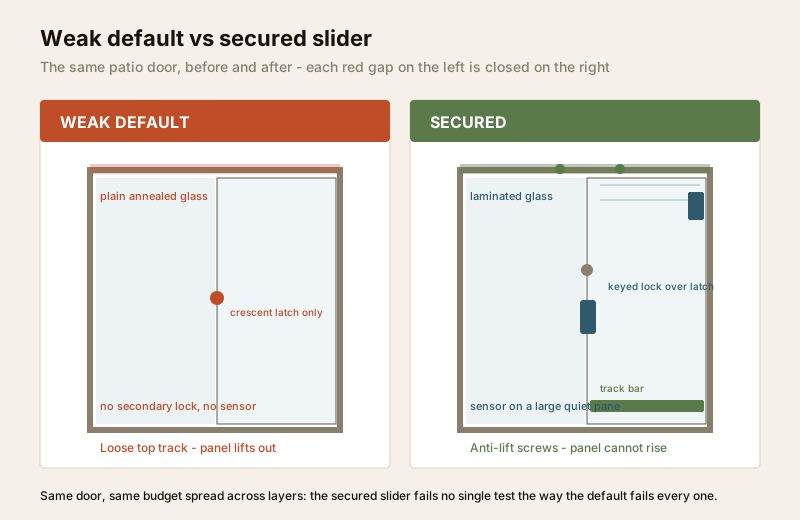
- The glass is often plain. Many sliders are glazed with plain annealed glass - the cheapest, and the easiest to break quietly by taping and pressing rather than smashing. A pane right beside the latch means even a good lock is pointless: reach through and flip it.
- It is out of sight. Sliders open onto gardens, rear yards, terraces and balconies - the sides of the house no street or neighbour watches. An intruder has time to work slowly and quietly, which is exactly what the lift-off move needs.
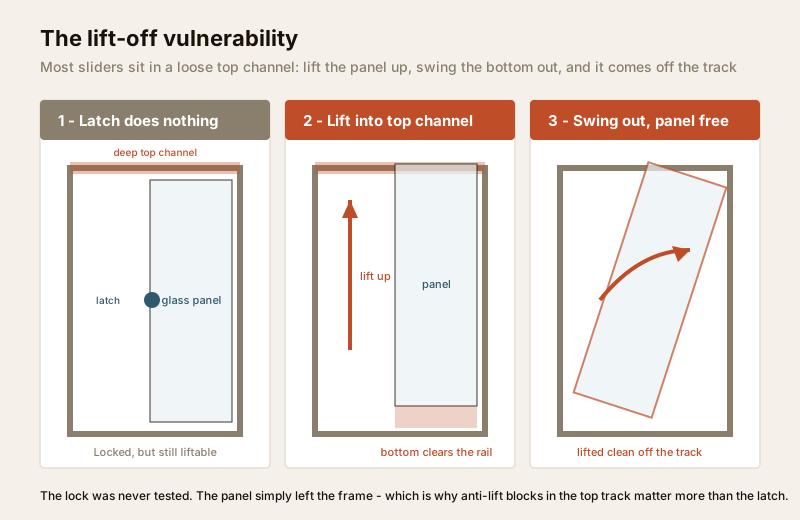
None of these is a reason to panic - each has a cheap, well-proven fix. The rest of this guide is those fixes, in the order they matter.
Fix one: stop the lift-off (this comes first)
Before any lock, close the lift-off gap - because a panel that comes off the track makes every lock irrelevant. The fix is to remove the vertical clearance so the panel cannot rise far enough to clear the bottom rail.
- Anti-lift blocks or screws in the top track. Drive short screws (or fit purpose-made plastic/metal anti-lift blocks) into the upper channel above the sliding panel, leaving just enough gap for the panel to run freely but not enough to lift it out. Space a few along the track. This is the single highest-value thing you can do to a slider, and it costs almost nothing.
- Adjust the anti-lift the maker built in. Better uPVC and premium aluminium systems already include anti-lift lugs or a security keep on the frame - often they are simply not engaged or adjusted. Ask your fabricator to set them.
- Test it honestly. With the door closed, try to lift the panel yourself. If it rises more than a few millimetres, the gap is still exploitable - add more blocks. Then confirm the door still slides smoothly and, crucially, still opens easily from inside.
This one fix converts the slider from "lift it off in seconds" to "you now have to actually attack the lock or the glass" - which is where the remaining layers come in.
Fix two: secondary locks over the weak latch
The primary crescent latch stays (it aligns the panel and stops rattling), but you never rely on it. Add one or more secondary locks as real security. Each works differently, and layering two beats relying on one.
| Secondary lock | How it works | Best for | Egress note |
|---|---|---|---|
| Foot bolt | A spring-loaded bolt at the bottom of the panel drops into a hole in the sill, pinning the panel down | Quick, cheap, effective against both sliding and lifting | Flick up with a foot from inside - fast to release |
| Track bar / charley bar | A rigid bar that folds down or drops into the track behind the panel, physically blocking it from sliding | A strong visible deterrent on the exposed panel | Lifts away by hand from inside - keep it reachable |
| Keyed patio lock | A dedicated slider lock with a bolt into the frame, opened with a key | A proper lock where the crescent latch is weak | Use a thumb-turn on the inside, key outside only |
| Pin lock | A pin driven through the inner frame into the outer frame, locking the panels together (and often at a partly-open ventilation position) | Cheapest positive lock; lets you lock a slider slightly open for air | Pull the pin by hand from inside |
The rule that ties this table together is the egress rule: on a sliding door that is also an escape route, every lock must release from the inside without a key you have to hunt for. A keyed patio lock is fine outside; inside it should be a thumb-turn or a simple bolt. Never fit a slider with a lock that needs a key from both sides on the only way out of a room - that is the sliding-door version of the double-cylinder deadbolt fire trap, and it kills people.
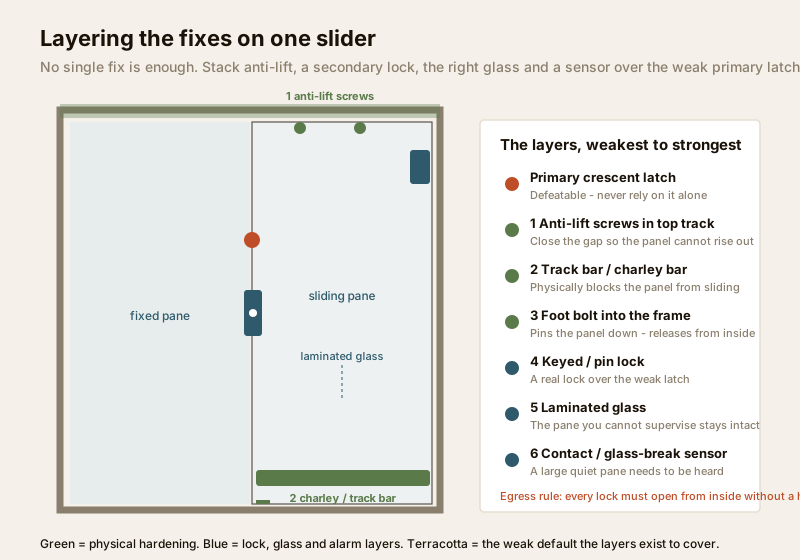
Fix three: the glass itself
A lock is only as strong as the pane beside it. If an intruder can quietly break the glass and reach the latch - or simply step through the hole - the whole lock stack is bypassed. On a slider you cannot supervise (a rear or side door, or any door you leave while out), the glass is a security decision, not just a safety one.
- Plain annealed glass is the easy route. It breaks with a sharp tap and, taped first, breaks quietly. Treat a plain-glass slider on a hidden elevation as effectively unlocked.
- Laminated glass is the security answer. A laminated pane has a tough interlayer bonded between two sheets: break it and the fragments stay stuck to the interlayer, so the pane holds together and keeps its shape. It resists being punched through and buys time and noise. For a slider you cannot watch, laminated glass is the specification that actually resists entry.
- Toughened glass is safety, not security. This is the honest note owners most often get wrong. Toughened (tempered) glass is about four to five times stronger than annealed and, when it does fail, crumbles into small blunt granules instead of shards - which is why it is a safety glass for a door people walk into. But once it does break, it clears the opening completely. It does not resist a determined intruder the way laminated does. For pure security, laminated beats toughened; where you want both strength-in-use and hold-together security, specify a laminated-toughened build with your vendor.
Do not state exact glass thicknesses or minute-ratings as guarantees - the right build depends on the pane size, the frame and the exposure. Specify the outcome you want (hold-together, entry-resistant, safety-compliant) to the glazier and to the relevant standard, and let them size it.
Fix four: alarm the pane - it is large and quiet
A sliding door is a big, quiet sheet of glass. Someone easing it open, or working the glass slowly, makes almost no sound - and it is on the side of the house nobody hears. Detection matters here more than on a small window.
- A window/contact sensor on the moving panel catches the door being slid open. Fit the sensor unit on the fixed frame and the magnet on the leading edge of the sliding panel - the same magnetic principle covered in the window sensors guide. This catches the "open it" attack, including after the latch is defeated.
- A glass-break sensor catches the pane being broken without the door ever opening - the attack a contact sensor cannot see. Because a slider is a large single pane, it is exactly the case for a glass-break sensor that hears the shatter signature.
- On your most exposed slider, use both. The contact sensor for the lift-and-slide, the glass-break for the smash-and-step-through. Belt and braces on the one door a burglar most wants.
Slider hardware, frames and the Indian grille combo
The frame system and the hardware quality decide how much of the above you can actually rely on.
| System | Security notes |
|---|---|
| Aluminium sliders | The Indian default. Strong frames, but stock hardware is often the weak crescent latch and a loose top track - so anti-lift blocks and a secondary lock matter most here. Ask specifically about anti-lift and a keyed lock at order stage. |
| uPVC sliders | Better systems offer multi-point locking, built-in anti-lift lugs and a proper security keep - but only if you specify and engage them. A cheap uPVC slider with a single latch is no safer than aluminium. Insist the fabricator sets the anti-lift and hands over a keyed lock. |
| Grille or mesh-track combo | Very common in India: a slider paired with a sliding grille or mosquito/security mesh in the same or an adjacent track. A locked grille adds a real physical barrier and lets you keep the glass open for air. Two honest cautions follow. |
Two honest cautions on the grille combo. First, a grille is only as good as the door it opens onto - if it is left unlocked (as they usually are, because they are opened daily for air), it protects nothing; the glass door behind it still needs its own locks and anti-lift. Second, the grille must never trap the household. A fixed security grille across the only balcony or patio escape route, with a padlock and no quick inside release, is the reason people die in flat fires unable to reach the balcony. If a grille sits on an escape route it needs a quick-release from inside and a key kept in a known, fixed place - never a hunted padlock. This is the same life-safety principle as an emergency escape opening, and it is non-negotiable.
Egress honesty: do not lock the household in
It bears repeating on its own, because sliding-door security is the place people get it most dangerously wrong. A sliding door onto a balcony, terrace or garden is very often the second way out of a bedroom or living room - the route you take when the front is on fire or blocked.
- Every lock on that door must open from the inside without a key you have to search for. Thumb-turns, foot bolts and hand-released bars are fine. A key-both-sides lock on an escape route is not.
- If you fit a grille, give it a quick inside release and a fixed, known key location.
- Do not over-fortify a single room's only two exits. If both the door and the slider onto the balcony are locked with hunted keys, you have built a cell, not a bedroom.
Security that costs a life in a fire is not security. Standards frameworks make this explicit: the burglar-resistance classes people quote for openings - EN 1627 / RC1 to RC6 (a European standard, referenced in India for specification, not an Indian one - always say so to your vendor) - describe resistance to forced entry from outside, never the opposite of trapping people inside. Egress always wins. Verify the current egress requirements in SP 7:2026 (the National Building Code of India, BIS) and your local bye-laws.
Putting it in order
If you do nothing else, do these in this order on your most exposed slider:
1. Anti-lift blocks in the top track - closes the lift-off, the fix nothing else can substitute for.
2. One secondary lock - a foot bolt or track bar over the weak crescent latch (thumb-release inside).
3. The right glass - laminated on any slider you cannot supervise; know that toughened is safety, not security.
4. A sensor - contact for slide-open, glass-break for the large quiet pane; both on the worst door.
5. Check egress - confirm every lock and any grille opens instantly from inside.
To see how your slider scores against the rest of your openings and where to spend first, run the door security rating tool and the home security risk scorecard.
Key takeaways
- The patio slider is the softest point in most Indian homes - big glass, a flimsy crescent latch, a liftable panel, and it faces the side no neighbour watches.
- Anti-lift comes first. A panel that lifts off the track makes every lock pointless; blocks or screws in the top track are the cheapest, highest-value fix on a slider.
- Layer secondary locks over the weak latch - foot bolt, track/charley bar, keyed patio lock or pin lock - and never rely on the crescent latch alone.
- Specify the glass honestly: laminated resists entry on a door you cannot supervise; toughened is safety, not security.
- Alarm the large quiet pane with a contact sensor for slide-open and a glass-break sensor for the smash - both on your most exposed slider.
- Egress always wins. A slider that is also an escape route must open from inside without a hunted key; a padlocked grille on the only balcony exit is a fire trap, not security.
Where to go next
- Complete guide to door and window security in India - the pillar this slider guide sits under.
- Balcony door security - the slider's closest neighbour, with balcony-specific risks.
- Window security guide and burglar-resistant windows - hardening the rest of your openings.
- Laminated glass and toughened glass - choosing the pane for a slider.
- Window sensors and glass-break sensors - detecting an attack on a large quiet pane.
- Emergency escape window requirements - the egress rule that overrides every lock.
- Tools: door security rating and home security risk scorecard.
- Hubs: the security hub and the openings sub-hub.
References
- Manufacturer specifications - confirm the anti-lift provision, secondary-lock options, keyed-lock inside release, and the glass build (laminated, toughened or laminated-toughened) on the fabricator's own datasheet before ordering a specific slider; do not accept a stated glass thickness or resistance minute as a guarantee.
- EN 1627 and the RC1 to RC6 burglar-resistance classes - a European standard referenced in India for specifying forced-entry resistance of doors, windows and shutters. Treat it as a specification reference, not an Indian code, and say so to your vendor.
- National Building Code of India (SP 7:2026), Bureau of Indian Standards - for the life-safety rule that a security fitting must never obstruct a door, window or balcony used as an escape or ventilation opening. Verify the current edition and your local bye-laws via the BIS catalogue: https://www.services.bis.gov.in/
This is an educational overview, not legal advice. Work at height, heavy-panel handling, mains-connected alarm wiring and any electrical task are qualified professional jobs - engage a licensed installer and verify any standard's current status and your local bye-laws via the BIS catalogue before relying on it. Never fit a lock or grille that prevents a sliding door on an escape route from opening quickly from inside.
Export this guide
Related Guides — Deep-dive reading
Door and Window Security Assessment for Indian Homes
Go opening by opening and rate the hardware itself — leaf and frame, hinges and locks, strike plates, grilles, glazing and latches — so you can grade each door and window's real resistance while never trapping anyone behind it.
SecurityWindow Security Guide
The layered-defence model for Indian homes — frame, glass, locks, grille and sensors working together
Windows & GlazingThe Complete Guide to Door and Window Security in India (2026)
The pillar reference for every opening in your home — how to think about doors, windows and glazing as a system, why the weakest opening decides your safety, and where each part of the library takes the detail further.
SecurityRelated Tools — Try Free
Cross-Ventilation Analyzer
Estimate airflow and air changes per hour (ACH) from room size, window areas, layout, and local wind — with NBC 2016 Part 8 compliance check.
Ventilation CalculatorDoor Security Rating Calculator
Score your main door out of 100 across leaf, frame, lock and hardware — and see the top upgrades.
Security ToolHome Security Risk Scorecard
Score your home across six security layers — perimeter, entry points, lighting, detection, alarm and habits — and get a prioritised action plan.
Security Scorecard