
Affordable Housing Security in India (2026): Maximum Safety per Rupee
How EWS/LIG apartments, government-scheme housing, budget builder flats and chawls can get real, dependable safety on a tight, shared budget — by fixing the cheap high-impact fundamentals first, spreading cost across many households, and never trading away life-safety.
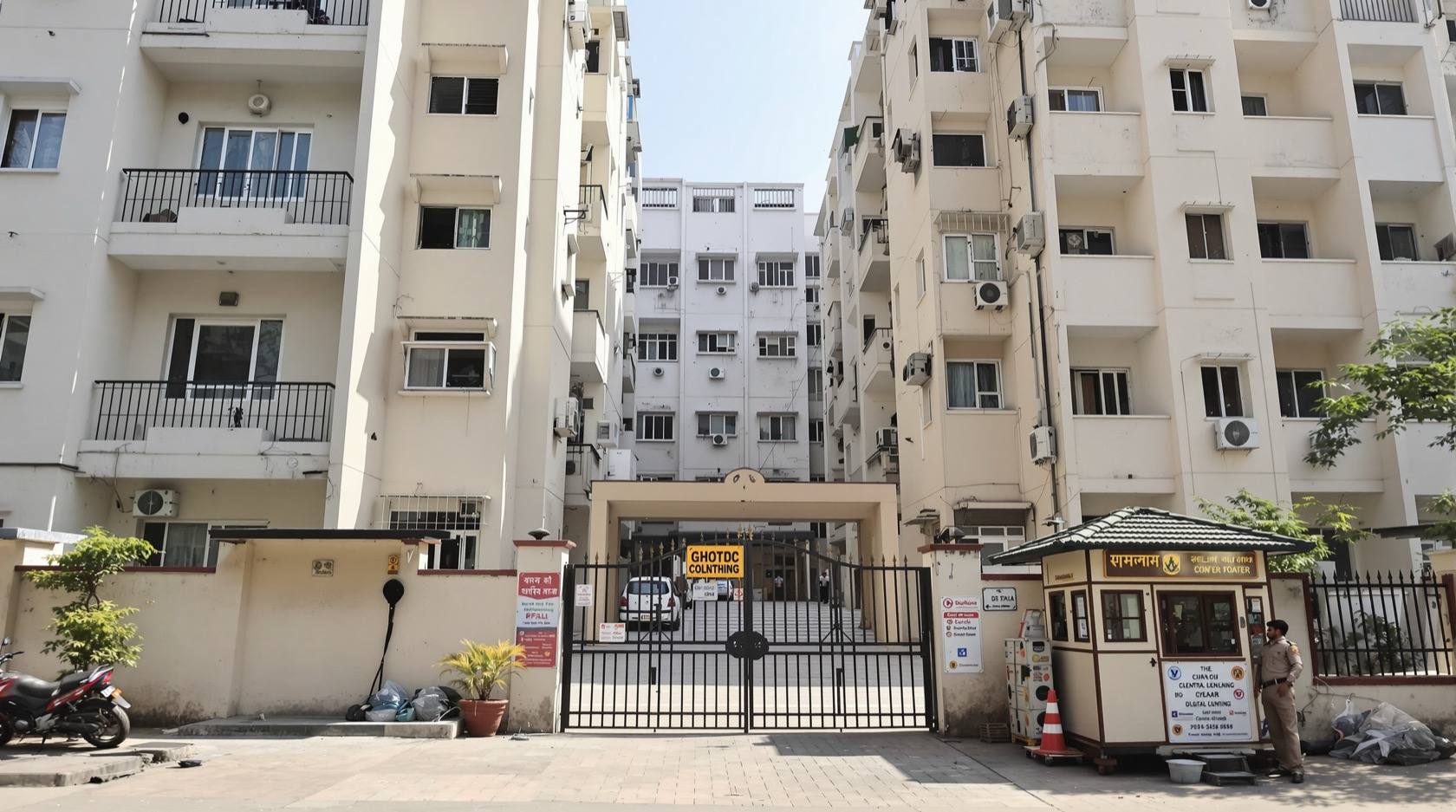
Walk into a typical EWS or LIG housing block, a state-scheme colony, a budget builder apartment or an older chawl, and the security story is usually the same: a boundary wall with three convenient gaps, a gate nobody mans after dark, a stair that loses its bulb and never gets a new one, and a WhatsApp group where the only alert system is neighbours shouting. The residents are not careless. They are working with tight, shared money and no obvious plan for spending it well.
The premise of this guide is simple and non-negotiable: affordable does not mean less-deserving. A family in a two-lakh-rupee-a-year flat has exactly the same right to a safe home as a family in a gated villa. What changes is not the goal but the method. The luxury playbook — dense camera coverage, guarded lobbies, per-unit access control, monitored alarms — assumes money and a management company most affordable housing does not have. Copy it and you get an expensive system that is half-finished, unmaintained and abandoned within two years. Right-sized affordable housing security is a different craft: maximum value per rupee, cost shared across many households, and life-safety protected first.
Scope & safety. This is a planning and coordination guide for architects, RWA/committee members, builders and residents' groups — not an installation manual, and strictly defensive. Right-size to the real threat: opportunist entry, an unmanaged gate, dark common areas — not a fortress. Life-safety comes before security spend: egress, basic fire safety and never-locked escape routes are governed by the National Building Code (NBC = SP 7:2026) and take priority over any lock, camera or gate. CCTV and visitor registers hold personal data under the DPDP Act 2023; any deployed guards must come through a PSARA 2005-registered agency. Verify all standards current, and engage a licensed installer or security consultant for anything at scale.
Start with the threat that actually exists
Affordable housing does not face a sophisticated threat. It faces an opportunist one: someone who walks in through an open gate, tries an unlocked or flimsy door, lifts an unattended cycle or cylinder, or slips into a dark stairwell. Almost none of this requires clever tools to defeat — and almost all of it is stopped by cheap, boring fundamentals rather than gadgets.
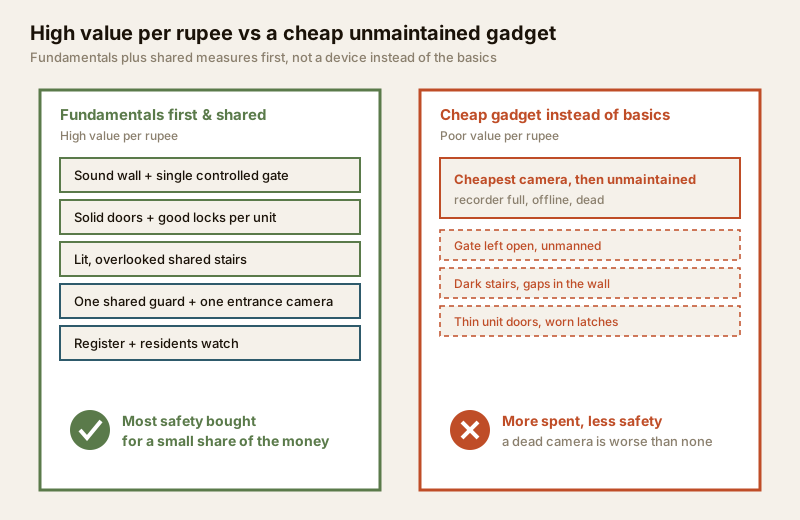
That is the single most useful insight for a tight budget. The measures that stop opportunist crime are the least expensive ones. Spend on those first and you buy most of your safety for a small fraction of the money; skip them to buy a camera and you have spent more for less. The composition below moves deliberately from the cheapest, highest-impact basics outward to modest technology — never the other way around.
Layer 1 — get the fundamentals right first
These are the cheap, high-impact basics. On a tight budget they are not the starting point to economise on; they are the part you must not skip.
- A sound compound wall and one controlled gate. A continuous boundary with no convenient gaps, and a single controlled entry rather than three casual openings, does more for an affordable block than any device. It channels everyone — resident, visitor, stranger — past one point that can be watched. This is the foundation the whole perimeter security discipline is built on; see the perimeter security pillar for how a wall, gate and lighting compose into one line.
- Solid doors and real locks on each unit. The last line of defence is the flat's own door. A solid-core door in a firmly fixed frame, with a good deadlock, defeats the casual push-in that thin doors and worn latches invite — and it costs a fraction of any electronic system. Windows and grilles on the ground floor matter for the same reason. This is per-household spend, but it is the highest-value rupee a family can lay out; the openings and door/window security hub covers doing it right.
- Basic lighting on the shared approach and stairs. A dark stairwell, a black gate, an unlit parking strip — these are where opportunist crime lives. Reliable, plain shared lighting (with someone responsible for replacing bulbs) removes the cover a thief needs, and costs little to run. The security lighting hub shows how to light entries, paths and common areas without over-doing it.
Get these three right and the block is already safer than most — before a single camera or guard is discussed.
Layer 2 — shared and community security spreads the cost
This is the heart of the affordable-housing method. The systems that feel out of reach per household become affordable the moment one system serves many households. A camera, a guard, a register, a watch — divide any of them across fifty flats and the monthly cost per family is small. Density, usually a security headache, is here the greatest asset.
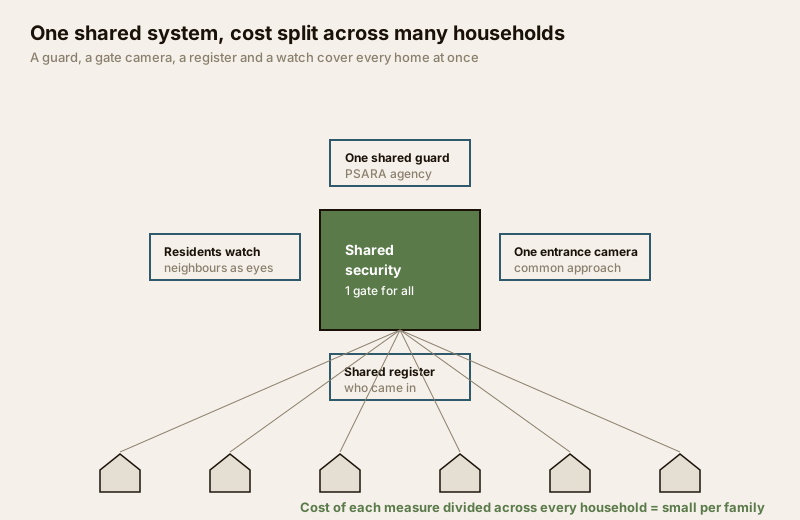
- A shared guard on a shared gate. One person controlling the single entry — even for the busy hours rather than round the clock — is often the best rupee a community can pool. Any deployed guard must come through a PSARA 2005-registered agency. Even a modest lodge helps them do the job; see guardhouse design and, for how a manned gate composes with barriers and screening, the gated-communities security guide.
- One entrance camera covering the common approach. Not a camera per corner — one well-placed camera watching the gate and the common approach, recording locally, catches the arrivals and departures that matter and deters far more than it costs. The CCTV hub covers placement; the discipline for affordable housing is few cameras, well sited over many cameras, half-working.
- A shared visitor register or simple log. A single visitor-access record at the gate — even a well-kept paper register to start — closes the biggest gap in most affordable blocks: nobody knowing who came in. It costs almost nothing and is one of the highest-value habits a committee can build.
- A residents' watch and committee. The cheapest and most powerful measure of all. A watch group, a functioning committee and neighbours who know each other turn every window into an informal camera. Much of what makes a block feel safe is this social layer, not hardware. The apartments security guide covers how a residents' body organises shared measures.
Layer 3 — low-cost effective measures: design and habits
Some of the most effective security in affordable housing costs almost nothing because it is designed and behavioural rather than bought. This is CPTED (Crime Prevention Through Environmental Design) — a named approach, not a product — applied to a tight budget.
- Natural surveillance. Arrange common space so people can see it. Windows and balconies that overlook the entry and play area, an unobstructed line of sight from homes to the gate, and doorways placed where neighbours pass all mean more eyes on more space for free.
- Remove blind spots and dark corners. A recessed nook behind the stairs, an overgrown corner of the compound, an unlit passage between blocks — these give an intruder cover. Trimming planting, opening sightlines and lighting the gaps costs little and removes the hiding places.
- Well-lit, open shared stairs and corridors. In multi-storey affordable blocks the shared stair is the most-used and most-neglected space. Keeping it lit, clear and overlooked — not a dumping ground, not a dark shaft — is both a security and a life-safety measure. See lift and staircase security for doing this without ever compromising escape.
- Good neighbours as the primary sensor. A community where residents notice and greet strangers is the hardest target of all, and it is free. Every measure above works better when the social fabric is strong.
Layer 4 — affordable tech done right, not cheap tech done badly
Technology has a place in affordable housing — but only after the fundamentals and shared measures are in place, and only if it will be maintained. The classic, expensive failure is a block that skips the basics, buys the cheapest camera kit online, and lets it die: a dead camera is worse than none, because it breeds false confidence.
The affordable rule is: fewer, well-chosen, maintained devices beat many cheap unmaintained ones.
- A few well-placed cameras rather than a showroom wall. The gate and the common approach, recording reliably, is the whole brief. Buy from a source with local service support and budget for the recorder's storage and upkeep, not just the camera. The CCTV hub covers siting; the mistake to avoid is coverage on paper that is offline in practice.
- A basic alarm where it earns its keep. A simple alarm — on a shared store, a pump room, a common entrance — that actually sounds and is checked beats an elaborate one nobody arms. If a community wants alerting beyond a local siren, understand honestly what alarm monitoring does and does not guarantee before paying for it; automatic police dispatch is not a given in India.
- Match the device to who will run it. The best affordable-housing tech is the tech the committee can actually operate and repair with local help. An elaborate system dependent on one enthusiast who then moves away is a stranded asset. Right-size to the community's real capacity.
Layer 5 — maintenance and governance: the honest failure mode
Here is the truth every affordable-housing security plan must face: the common failure mode is not being attacked — it is systems installed and then abandoned. The camera whose recorder fills up and is never cleared. The gate light that stays dark for a year. The guard contract that lapses. The register that stops being filled. Security in affordable housing is defeated far more often by neglect than by burglars.
That makes governance the real security system. Hardware is a one-time decision; upkeep is forever. Before buying anything, a committee should answer three questions in writing:
- Who pays? A small, agreed RWA or committee fund — a modest recurring contribution per household — is what keeps guards paid, bulbs replaced and recorders working. Without a funding line, every measure decays.
- Who maintains? A named person or rotating role responsible for each measure — the gate light, the camera, the register, the guard contract — so upkeep is somebody's job, not nobody's.
- What is the plan when it breaks? Local service support and a small reserve, so a failed device is fixed in a week, not written off.
A cheaper plan that is funded and maintained beats an ambitious one that is not. This is the single most important decision in the whole exercise, and it is free.
| Best-value measure | Cost level | Impact | Who runs it |
|---|---|---|---|
| Sound wall + single controlled gate | Low (build/repair) | Very high | Committee / builder |
| Solid doors + good locks per unit | Low (per household) | Very high | Each household |
| Reliable shared lighting (gate, stairs, paths) | Low | High | Committee fund |
| Natural surveillance + remove blind spots | Very low (design/habit) | High | Committee / residents |
| Residents' watch + committee + register | Very low | High | Residents |
| Shared guard on the single gate | Medium (shared) | High | PSARA agency, funded |
| One entrance camera on common approach | Low-medium (shared) | Medium-high | Committee, maintained |
| Basic alarm on shared points | Low-medium | Medium | Committee, maintained |
| Elaborate per-unit electronic systems | High | Low value here | Usually unmaintained |
Life-safety is never compromised by budget
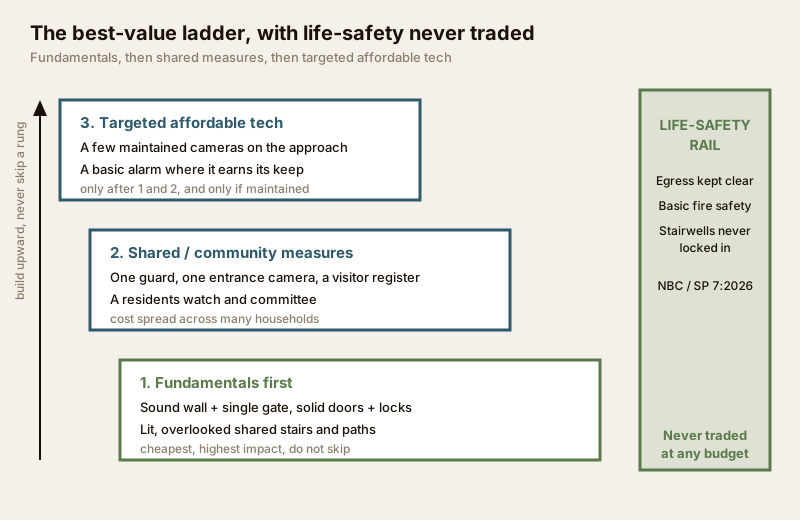
A tight budget can right-size security. It can never right-size safety. This is the one line in this guide that does not bend.
Whatever the community spends or saves, the following are not optional and must come before any security purchase:
- Egress is sacred. Every escape route — the stair, the corridor, the final exit — must stay usable and never be chained, padlocked or blocked in the name of security. A gate that keeps burglars out but traps residents in a fire is a fatal mistake, not a saving. NBC (SP 7:2026) governs occupancy loads, exit width and travel distance.
- No locked-in stairwells. In the crowded, single-stair reality of many affordable blocks, the escape stair must be clear, lit and openable from the inside without a key at all times. Never trade a fire escape for a security barrier — see lift and staircase security.
- Basic fire safety in place. Clear exits, a way to raise the alarm, extinguishers where the code requires, and stairs kept free of storage. This is the floor, not the ceiling. The fire-safety hub covers the minimums that apply even to the tightest budget.
Density makes this sharper, not softer. In high-density and shared-wall housing — chawls, tenements, close-packed blocks — a single stair, common corridors and shared walls mean one household's fire, gas leak or blocked exit is everyone's emergency. The same shared-cost logic that funds a guard should fund kept-clear exits, a working common alarm and maintained escape lighting. Crowd and egress safety are a community asset exactly like the gate.
Putting it together
An affordable block that has done this well looks unremarkable, which is the point. A continuous wall and one gate. Solid doors behind good locks. Stairs and paths that are lit and overlooked. A shared guard for the busy hours, one camera on the approach, a register at the gate, and neighbours who know each other. A basic alarm where it earns its place. A small fund and named people who keep it all working. And escape routes that are never, ever locked. None of it is luxurious; all of it is real safety, bought cleverly.
Two Studio Matrx tools help a committee do this concretely: the home security risk scorecard surfaces the gaps that matter most so a limited budget goes to the right place first, and the site perimeter security assessment checks the wall-and-gate fundamentals this whole approach is built on.
Key takeaways
- Affordable housing deserves real safety, and the method is value per rupee, not a cut-down luxury system. Right-size to the opportunist threat that actually exists; do not build a fortress.
- Get the cheap fundamentals right first — a sound wall and single gate, solid doors and locks per unit, and reliable shared lighting buy most of your safety for a small fraction of the money.
- Shared and community security spreads the cost — one guard, one entrance camera, one visitor register and a residents' watch divide across many households, and are the affordable-housing core.
- Low-cost design and habits do heavy lifting — natural surveillance, no blind spots, lit shared stairs and good neighbours (CPTED) cost little and work.
- Affordable tech means fewer maintained devices, never many cheap dead ones — a dead camera is worse than none.
- Governance is the real security system — who pays, who maintains, and the plan when it breaks; the honest failure mode is systems abandoned, not attacked.
- Life-safety is never traded for budget — egress, basic fire safety and unlocked stairwells come before every security purchase, per NBC (SP 7:2026).
Where to go next
- Perimeter security and the perimeter pillar — the wall-and-gate fundamentals.
- Openings: doors and windows and security lighting — the per-unit and shared basics.
- Gated-communities security, apartments security, guardhouse design and visitor-access management — shared-measure how-to.
- CCTV, lift and staircase security and fire-safety — tech done right, and life-safety.
- The building-type security pillar and the building-types sub-hub, plus the main security hub.
References
- National Building Code of India (SP 7), Bureau of Indian Standards — occupancy classification, means of egress, exit width and travel distance, and fire-safety minimums that apply to affordable and high-density housing regardless of budget. Verify the current edition (SP 7:2026) via the BIS catalogue: https://www.services.bis.gov.in/
- Digital Personal Data Protection Act, 2023 — any shared CCTV, visitor register or resident log holds personal data; a committee should agree in writing who may view footage or records, for how long they are kept, and how residents' data is protected.
- Private Security Agencies (Regulation) Act, 2005 (PSARA) — any guard deployed at a shared gate must be supplied through a PSARA-registered agency; verify licensing before contracting.
- Crime Prevention Through Environmental Design (CPTED) — the named design approach behind natural surveillance, sightlines and lighting; apply its principles rather than any single product.
This is an educational, right-sizing overview for planners, committees and residents' groups — not legal advice or an installation manual. Life-safety, egress and fire provisions take priority over any security measure; engage a licensed installer or security consultant for anything at scale, deploy guards only through PSARA-registered agencies, and verify any standard's current status via the BIS catalogue before relying on it.
Export this guide
Related Guides — Deep-dive reading
Complete Guide to Building Type Security in India (2026): Right-Sizing Protection to Homes, Schools, Hospitals, Warehouses and Temples
The same security building blocks — perimeter, gate and access, CCTV, alarms, lighting, fire, guards and cyber — are composed very differently for a villa, a school, a hospital, a warehouse or a temple. This pillar maps the whole library of building-type guides and gives you the framework to tailor security to each kind of building.
SecurityLift and Staircase Security in India (2026): The Complete Guide to Securing Vertical Circulation
A pillar guide to securing the lift and the staircase together: how to control who reaches which floor, watch the pinch points, keep help reachable and design out blind spots, without ever locking anyone in or blocking escape.
SecurityCCTV vs Physical Guarding in India (2026): Cameras, Guards or Both?
An honest head-to-head between electronic CCTV surveillance and manned physical guarding for a home, villa, gated community, shop or small site in India — what each really does, where each wins, and why the best answer is almost always a layered combination rather than one or the other.
SecurityRelated Tools — Try Free
CCTV Camera Coverage & Count Calculator
Estimate how many CCTV cameras you need, the NVR channels, storage in TB for your retention period, and an indicative all-in cost with GST.
CCTV CalculatorHome Security Risk Scorecard
Score your home across six security layers — perimeter, entry points, lighting, detection, alarm and habits — and get a prioritised action plan.
Security ScorecardApartment vs Villa Interior Planning Guide
Compare ceiling height, structural flexibility, lighting, storage, and services between apartments and villas.
Planning Guide