
Wooden Door Frames in India: Species, Cost & Care (India 2026)
How to choose, season and treat a timber chowkhat that survives India's termites, monsoon and heat — and what it costs per running foot.
Well-chosen wooden door frames are still the gold standard for the main entrance and most internal doors in Indian homes — warm, repairable, screw-friendly and able to carry a heavy leaf for decades. But timber is also the material India's termites and monsoon punish hardest, so the difference between a frame that lasts thirty years and one that warps in two monsoons comes down to species, seasoning and treatment. This guide walks a homeowner through choosing the right timber, getting the moisture content right, specifying the section, treating against termites, and comparing the honest cost and durability of a wooden chowkhat against WPC and RCC alternatives. For the wider picture see the complete door guide and the dedicated pillar on door frames.
What a wooden chowkhat actually is
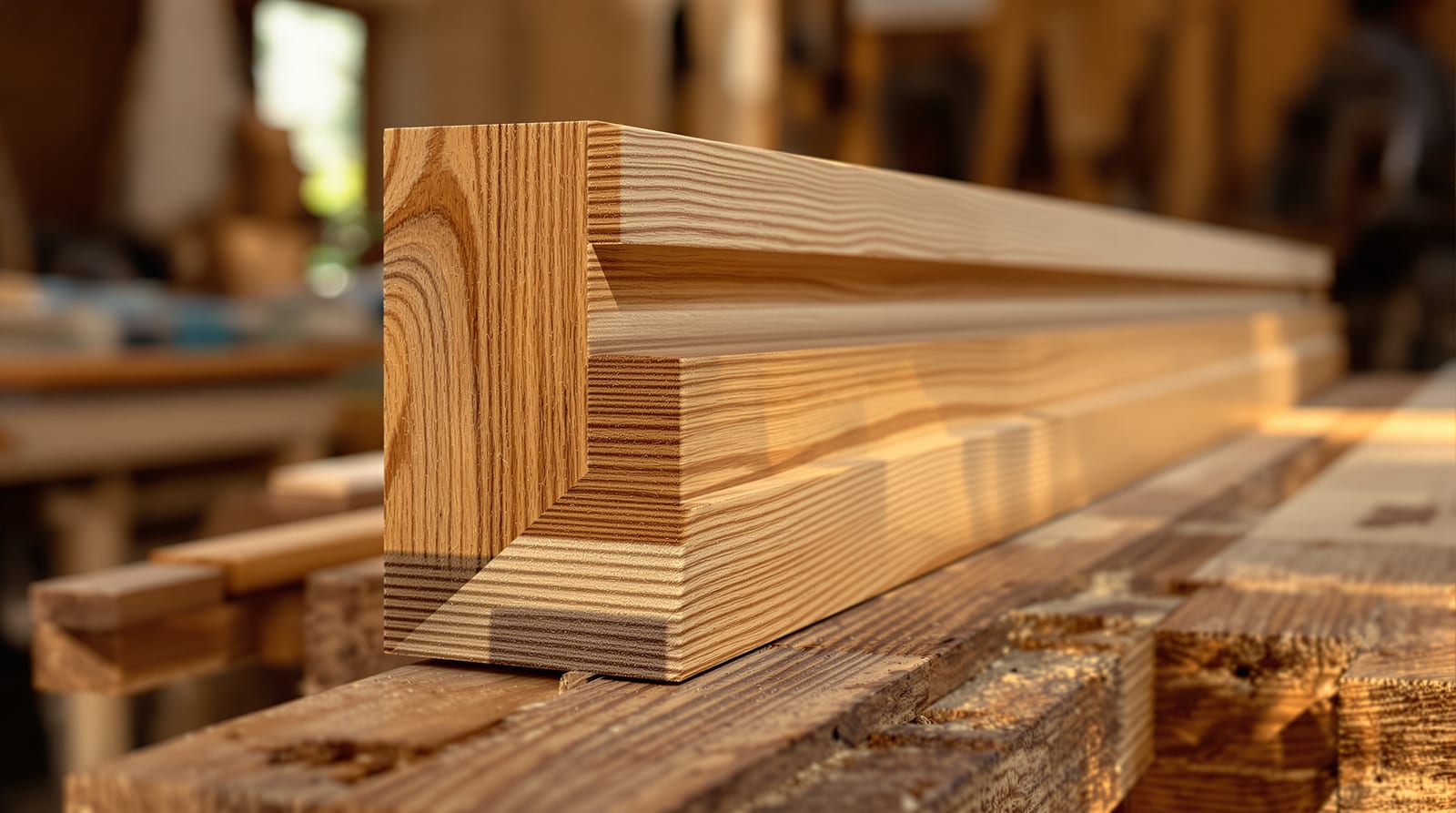
"Chowkhat" is the local name for the door frame — the timber lining fixed into the wall that the leaf (shutter) shuts against. Its parts are simple but worth knowing when you brief a carpenter: the head is the top horizontal; the jambs (or posts) are the two verticals; the sill is the bottom member, usually omitted on internal doors so the floor finish runs through. The rebate (or check) is the L-shaped recess the leaf closes into — its depth equals the leaf thickness and its width is about 12-15mm. The horn is a short projection of the jamb (10-15cm) that gets built into the floor or wall for grip, then cut off for internal frames. Indian timber frames are governed by IS 4021 (timber door, window and ventilator frames), and a quality frame uses mortise-and-tenon joints at the corners — traditionally haunched and dowel-pinned at the head-to-jamb junction — not just glued butt joints.
For the full breakdown of every member, see door frame anatomy, and for how the leaf seats into the frame, door frame rebate.
Choosing the species
Timber choice is the single biggest decision. In India, frames are almost always made from hardwoods because softwoods are too prone to denting and insect attack. The realistic options range from value sal to premium teak.
| Species | Character | Termite / damp resistance | Typical use | Cost band (₹/rft of section) |
|---|---|---|---|---|
| Sal | Hard, heavy, strong, dense grain | Good once seasoned & treated | Main doors, structural frames | ₹250-450 |
| Sheesham (Indian rosewood) | Hard, attractive grain, stable | Good when seasoned | Main & internal doors | ₹350-600 |
| Teak (Burma/CP/plantation) | Dimensionally very stable, natural oils | Naturally termite & water resistant | Premium main doors, wet-adjacent | ₹700-1,200 |
| Rubberwood (treated) | Lighter, uniform, eco/plantation | Only if pressure-treated | Internal frames, budget builds | ₹180-350 |
| "Hardwood" (mixed/local) | Variable — ask the species | Variable; insist on treatment | Internal frames | ₹200-400 |
As a rule of thumb: teak for the main door where budget allows and longevity matters; sal or sheesham for a strong, value main door; treated rubberwood or mixed hardwood for internal frames in dry rooms. Avoid untreated, generically-sold "hardwood" — insist the carpenter name the species. Never put untreated timber in a bathroom; choose WPC door frames or concrete door frames there instead. For a structured comparison of all materials, read door frame materials.
Seasoning and moisture content — the make-or-break step
More wooden frames fail from poor seasoning than from the wrong species. Green (freshly sawn) timber is full of water; as it dries in your home it shrinks, twists, opens joints and pulls away from the wall. Properly seasoned timber has been dried — air-seasoned over months or kiln-dried in days — to a stable moisture content.
| Moisture content | State | What happens in the wall |
|---|---|---|
| Above 20% | Green / under-seasoned | Severe shrinkage, warping, joint gaps, paint failure |
| 12-15% | Acceptable for interiors (most of India) | Minor movement; the practical target |
| 8-12% | Well kiln-dried | Most stable; ideal for AC/dry climates |
For most Indian interiors, aim for roughly 12-15% moisture content. Ask the supplier whether the timber is kiln-dried, and if you are buying a lot, a carpenter's moisture meter reading is cheap insurance. Seasoned timber also holds its anti-termite treatment and finish far better. Tell-tale signs of green timber: it feels heavy and damp, the cut end is pale and moist, and saw cuts clog. The door frame finishing of a poorly-seasoned frame will crack within months whatever polish you use.
Standard sections and sizes
Frames are sold by the running foot (rft) of timber section. The two common sections are roughly 100×62mm (4"×2.5") for main and heavier doors and 75×62mm for lighter internal doors. The rebate is cut single (one leaf) or double (double doors or weatherproofing).
Standard opening sizes (width × height): a main door is usually 900-1200 × 2100mm, an internal door 750-825 × 2000-2100mm, and a bathroom door 600-750 × 1980-2100mm. Modular IS designation uses 1M = 100mm, so a "10×21" frame is 1000×2100mm. Your carpenter should fabricate the frame about 10-12mm smaller than the structural opening each side to leave a packing gap. See door frame sizes for the full chart and measuring for a door before you order.
Anti-termite treatment and damp-proofing
This is where Indian conditions bite. Termites and monsoon damp will destroy an untreated wooden frame, especially at the foot where the jamb meets the floor. Three defences matter:
1. Treat the timber. Even naturally durable species benefit from boron or approved wood preservative; less durable species (rubberwood, mixed hardwood) must be pressure-treated. Pay special attention to the jamb foot in ground contact — see termite-proofing doors.
2. Keep timber off wet floors. The frame base must sit on a DPC (damp-proof course) or a stone/RCC base block — never directly on a floor that can get wet. Detail this in door frame damp-proofing.
3. Seal the junctions. Prime and finish all faces (including hidden ones), and seal the frame-wall junction so water can't wick in behind the frame.
In bathrooms, balconies and other wet zones, do not fight physics — switch the material rather than over-treating timber.
Fixing, finishing and gap filling
Timber frames are fixed into masonry with M.S. holdfasts (hold-fast clamps), typically 3 per jamb for a 2.1m frame, embedded in cement concrete; modern jobs sometimes use screws with heavy fasteners and rawl plugs. Pack behind the hinge and lock points so the frame doesn't bow under use. The packing gap is filled with low-expansion PU foam or packers — see door frame gap filling. Finally, a wooden frame can be primed and enamel-painted, melamine/PU polished, or veneered/laminated to match the leaf.
Use the door frame timber calculator to estimate running feet for your sizes, and the door frame material selector to sanity-check timber against WPC or RCC for each opening.
Wooden vs WPC vs RCC: the honest comparison
| Factor | Seasoned hardwood timber | WPC frame | RCC / precast cement frame |
|---|---|---|---|
| Cost (indicative) | ₹250-1,200/rft (teak top) | ₹180-400/rft | ₹600-1,500 per frame |
| Termite / water proof | Only if treated; vulnerable at foot | Fully termite & water proof | Fully proof |
| Strength / screw-hold | Excellent; easy to re-screw | Good; needs correct fasteners | Brittle; hard to re-screw |
| Repairability | Excellent (plane, fill, re-hinge) | Moderate | Poor |
| Look & warmth | Premium, natural | Synthetic but improving | Utilitarian |
| Best for | Main door, dry internal | Bathrooms, balconies, wet areas | Budget builds, wet areas |
Timber wins on warmth, strength and repairability and is the natural choice for the main door and dry internal rooms. WPC and RCC win in wet zones where untreated timber simply rots. A common, sensible mix in Indian homes is a teak or sal main door, treated-hardwood internal frames, and WPC for the bathrooms.
Frequently asked questions
Which wood is best for a door frame in India?
For the main door, teak is the most durable and stable if budget allows; sal and sheesham are excellent value alternatives. For internal frames in dry rooms, treated rubberwood or named mixed hardwood is fine. Always insist the seller names the actual species and confirms it is seasoned.
How do I know the timber is properly seasoned?
Ask whether it is kiln-dried and request a moisture-content reading — aim for roughly 12-15% for Indian interiors. Green timber feels heavy and damp, has a moist pale cut end, and clogs the saw. Under-seasoned frames warp and open at the joints within months.
How much does a wooden door frame cost?
As a rule of thumb, seasoned hardwood (sal/sheesham) runs about ₹250-600 per running foot of section, and teak ₹700-1,200/rft. A full frame's timber cost depends on the section and door height; add carpentry, holdfasts, finishing and 18% GST on hardware. See door frame cost.
Can I use a wooden frame in a bathroom?
It is best avoided. Even treated timber is at constant risk from standing water at the jamb foot. Use a WPC, PVC, RCC or aluminium frame in bathrooms and wet balconies, and keep timber for dry rooms and the main door.
How is a wooden frame fixed to the wall?
With M.S. holdfasts (about three per jamb for a 2.1m frame) set in cement concrete in the masonry, or with heavy screws and fasteners. The base must sit on a DPC or stone block, and the packing gap is filled with low-expansion PU foam, with packers behind hinge and lock points.
Export this guide
Related Guides — Deep-dive reading
Door Frame Rebate Explained: Depth, Width & Seal (India 2026)
What the rebate (check) in a chowkhat actually is, how deep and wide it should be, and why it decides whether your door draught-proofs, sound-proofs and locks securely.
Home Doors & EntrancesConcrete Door Frames in India: RCC Chowkhat Guide (India 2026)
Why precast cement-concrete door frames win on cost and durability in budget housing and wet areas, and where they fall short.
Home Doors & EntrancesDoor Frame Damp Proofing in India (India 2026)
Stopping rising damp and rot at the chowkhat foot with a DPC under the frame, a stone or RCC base block, and termite-treated ground contact.
Home Doors & EntrancesRelated Tools — Try Free
Door Frame Cost Calculator
Estimate door frame (chowkat) cost from the opening size and frame material — sal, teak, WPC, steel, RCC or granite.
Door CalculatorBathroom Door Material Selector
Get the best wet-area door material — WPC, FRP, PVC, marine ply or aluminium — ranked for your bathroom or utility.
Material SelectorCross-Ventilation Analyzer
Estimate airflow and air changes per hour (ACH) from room size, window areas, layout, and local wind — with NBC 2016 Part 8 compliance check.
Ventilation Calculator