
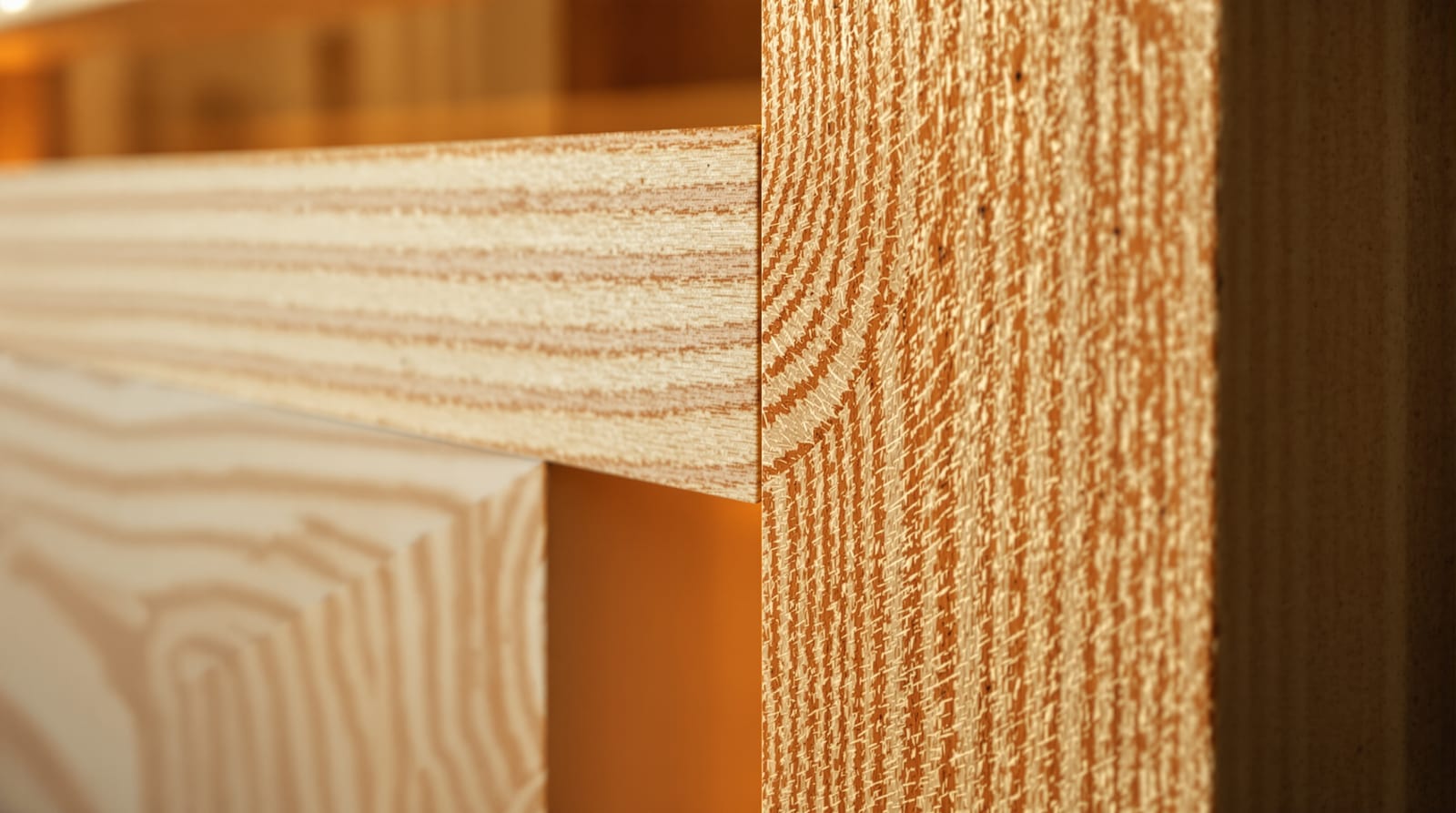
Door Frame Rebate Explained: Depth, Width & Seal (India 2026)
What the rebate (check) in a chowkhat actually is, how deep and wide it should be, and why it decides whether your door draught-proofs, sound-proofs and locks securely.
The door frame rebate is the single detail that most carpenters get casually wrong and most homeowners never notice until the door whistles in the monsoon wind or refuses to latch square. A rebate (also called the check) is simply the stepped recess machined or planted along the inside face of the chowkhat (frame) that the door leaf closes into. It is the L-shaped shoulder the leaf comes to rest against. Get its depth and width right and the leaf sits flush, the seal compresses evenly, the lock bolt throws square, and draught, dust and sound stay outside. Get it wrong by even 3-4mm and the door either binds, rattles, or leaves a light-gap you can read a newspaper through. This guide explains what a rebate is, how India sizes it, single versus double rebates, planted stops versus integral rebates, and why this tiny step controls draught, sound and security sealing.
What a rebate actually is
Look at a frame section end-on and you see an L. The long arm sits against the wall; the short upstand is the stop. The corner between them — the seat the leaf shuts onto — is the rebate. The leaf does not pass through the frame; it stops against this shoulder, the same way a drawer front stops against a cabinet face. Two dimensions define it:
- Rebate depth — how far the step is set back from the frame face. This must equal the leaf thickness so the closed leaf finishes flush (or very slightly proud) of the frame, with no awkward step. A 35mm flush door wants a 35mm rebate depth; a 30mm internal leaf wants 30mm.
- Rebate width — the width of the stop face the leaf actually beds against, measured across the frame. In India this is conventionally ~12-15mm for a single internal door. Too narrow and the stop is fragile and gives little bearing for a seal; too wide and it eats frame timber and looks clumsy.
In a standard Indian seasoned-timber chowkhat of roughly 100x62mm or 75x62mm section, the rebate is cut along the inner edge of the head and both jambs (the sill is usually omitted on internal doors). It is described in IS 4021 (timber door, window and ventilator frames) as part of the frame profile.
Why the rebate matters: draught, sound and security
The rebate is not decoration. It is the sealing line of the entire door.
Draught and dust
The stop is where you mount the weatherseal — an EPDM or rubber gasket, a brush strip, or a foam tape. The leaf compresses against the seal as it closes. If the rebate is shallow or uneven, the seal never reaches even compression, and you get the classic monsoon draught and the fine dust line on the floor every Indian home knows. A clean, square rebate with a continuous stop is the prerequisite for any seal working at all.
Sound
Sound leaks through air gaps. The rebate closes the perimeter air path; a deeper, sealed rebate (or a double rebate, below) gives a longer, more tortuous gap and measurably better acoustic separation — worth doing on bedroom, study and clinic doors.
Security
The lock bolt and strike plate live on the rebate. A well-formed rebate of full leaf-thickness depth gives the bolt proper engagement into the keep, and resists the leaf being kicked or sprung past the stop. A shallow or split rebate (common when a stop is planted flimsily) lets a forced leaf jump the stop. Pack solid timber behind the lock point so the rebate does not flex.
Rebate sizing chart
| Application | Leaf thickness | Rebate depth | Rebate (stop) width | Notes |
|---|---|---|---|---|
| Internal flush door | 30-35mm | 30-35mm | 12-15mm | Single rebate, planted or integral |
| Main / external door | 40-45mm | 40-45mm | 15-18mm | Often deeper stop + weatherseal |
| Bathroom (WPC/PVC frame) | 28-32mm | 28-32mm | 12-15mm | Moisture-resistant frame, no untreated timber |
| Double / French doors | 35-40mm each | 35-40mm | 12-15mm + meeting rebate | Double rebate at meeting stiles |
| Fire-rated door | 44-54mm | 44-54mm | 15-20mm + intumescent | Tighter ≤3mm gaps; intumescent in the rebate |
As a rule of thumb: rebate depth tracks the leaf, rebate width sits at 12-15mm for ordinary doors and a touch wider for heavy or external leaves that carry a weatherseal.
Single rebate vs double rebate
| Feature | Single rebate | Double rebate |
|---|---|---|
| Stops formed | One shoulder | Two stepped shoulders |
| Typical use | Most single internal doors | Double/French doors, weatherproof external, sound doors |
| Seal line | One gasket line | Two seal lines (better draught/acoustic) |
| Swing | One direction against stop | Can suit each leaf / weather check |
| Cost & timber | Lower | More timber, more machining |
| Indian context | Default for bedrooms/internal | External main doors, AC rooms, double doors |
A single rebate has one step — the leaf shuts against one stop. It is the default for the great majority of single internal doors. A double rebate has two stepped shoulders. You meet it in two situations: on double-leaf / French doors, where the meeting stiles of the two leaves carry rebates that overlap (one leaf's rebate laps the other, closing the central gap); and on weatherproof external frames, where the second step forms a deeper labyrinth that defeats wind-driven monsoon rain and draught. The double rebate gives two seal lines and a longer air path — better draught-proofing and better sound, at the cost of more timber and machining. For an AC bedroom or a clinic consulting room the upgrade is usually worth it.
Planted stops vs integral rebate
There are two ways to create the rebate, and the choice affects durability, cost and how easily you can adjust the door later.
Integral (machined / solid) rebate
The rebate is cut from the solid frame timber itself — the stop is part of the same piece of wood, formed on a spindle moulder or by the carpenter. This is the stronger, more durable option: there is no joint to work loose, it resists a forced leaf, and it looks cleanest. IS-grade factory frames and good site-made teak/sal chowkhats use integral rebates. The trade-off is that the stop position is fixed at manufacture — you cannot move it if the door warps.
Planted stop (applied bead)
Here the frame is a plain rectangular section and the stop is a separate bead nailed or pinned on after the leaf is hung, to suit the actual closed position of that leaf. This is cheaper, faster, and adjustable — invaluable when a leaf is slightly bowed and you want the stop to follow it for an even seal. The downsides: the pinned bead can work loose, split, or be levered off (a security weakness on external doors), and a careless job leaves a visible joint line. Steel and many WPC/uPVC frames effectively use an integral rebate by extrusion; planted stops belong mainly to budget timber work and to adjustable internal doors.
| Integral rebate | Planted stop | |
|---|---|---|
| Strength | High (solid) | Lower (pinned bead) |
| Cost | Higher | Lower |
| Adjustable to warped leaf | No | Yes |
| Security | Better | Weaker if levered |
| Best for | External, main, fire doors | Budget internal, adjustable fits |
Rebate cross-section
Cutting and fitting the rebate well
Whether machined or planted, the rebate has to be continuous, square and at full leaf-thickness depth all round the head and both jambs. A few field rules:
- Set the depth to the actual leaf, not the nominal size — a 35mm flush door often measures 34-36mm; match it.
- Keep the stop continuous at the corners; a gap at the head-jamb mitre is a draught and light leak.
- Plant the stop after hanging when using applied beads, so it follows the leaf's real closed line — this fixes a slightly bowed door without planing.
- Pack solid behind the lock and hinge points so the rebate does not flex and spring the leaf past the stop.
- In wet areas form the rebate in WPC, PVC, RCC or aluminium frames, never untreated timber, and keep the frame foot off the wet floor on a stone/RCC base with a DPC.
- Seal the rebate line — paintable acrylic caulk internal, silicone external, EPDM gasket on the stop face — only after the rebate geometry is true.
For heavy main doors and fire doors, treat the rebate as a structural seal: deeper stop, intumescent strip housed in the rebate for fire leaves, and tight ≤3mm perimeter gaps. This is skilled carpentry — on a main door or a fire door, use an experienced fitter rather than a general mason.
For the wider frame picture see the door frames guide and the door frame anatomy breakdown; size the section in door frame sizes; and align the seal choice with sealing around door frames. The rebate also sets your leaf gaps — read it alongside door clearances & tolerances and the door frame joinery that forms the corners. The full picture lives in the complete door guide. To size the section quickly, try the door frame timber calculator and the door clearance checker.
Frequently asked questions
How deep should a door frame rebate be?
The rebate depth should equal the door leaf thickness so the closed leaf finishes flush with the frame face. A 35mm flush door wants a 35mm rebate; a 40-45mm external leaf wants a matching 40-45mm rebate. Measure the actual leaf, not the nominal size.
How wide is a standard rebate stop in India?
The stop face is conventionally about 12-15mm wide for a single internal door, widening to 15-18mm on heavy main or external doors that carry a weatherseal. Too narrow and the stop is fragile with little seal bearing; too wide wastes timber and looks clumsy.
What is the difference between a single and double rebate?
A single rebate has one stepped shoulder and is the default for single internal doors. A double rebate has two steps, used on double/French doors (the meeting stiles overlap) and on weatherproof external frames, giving two seal lines and better draught and sound performance at the cost of more timber.
Is a planted stop or an integral rebate better?
An integral (machined) rebate is cut from the solid frame and is stronger, more secure and cleaner — best for external, main and fire doors. A planted stop is a pinned bead added after hanging; it is cheaper and adjustable to a warped leaf but can work loose, so reserve it for budget or adjustable internal doors.
Why does the rebate affect draught and sound sealing?
The rebate stop is where the weatherseal mounts and the leaf compresses against it. A shallow or uneven rebate stops the seal reaching even compression, leaving the air gaps through which draught, dust and sound leak. A true, continuous, full-depth rebate is the prerequisite for any seal working.
Can I form a rebate in a WPC or steel frame?
Yes. WPC, uPVC, aluminium and steel frames carry the rebate as part of the extruded or pressed profile, effectively an integral rebate. These moisture- and termite-proof frames are the right choice for Indian bathrooms and external openings, where untreated timber rebates rot at the foot.
Export this guide
Related Guides — Deep-dive reading
Sealing Around Door Frames: Caulk vs Silicone (India 2026)
Which sealant goes on the frame-to-wall junction — paintable acrylic inside, silicone outside and wet — plus rebate gaskets, threshold seals and monsoon-proofing.
Home Doors & EntrancesBest Door Material in India (2026): The Right Choice for Every Room & Climate
A situation-by-situation verdict on the best door material for Indian homes - teak or steel for the main entrance, WPC or uPVC for bathrooms and coasts, engineered flush for bedrooms - with a by-location decision table and budget-vs-premium picks.
Home Doors & EntrancesConcrete Door Frames in India: RCC Chowkhat Guide (India 2026)
Why precast cement-concrete door frames win on cost and durability in budget housing and wet areas, and where they fall short.
Home Doors & EntrancesRelated Tools — Try Free
Door Material Comparison Tool
Compare 2–4 door materials on cost, durability, maintenance, security and moisture resistance.
Comparison ToolWindow Cost Calculator
Estimate window price plus installation by type, frame material, size, glass and quantity.
Window CalculatorWindow Maintenance Cost Calculator
Estimate annual window upkeep by frame material — yearly, per-window and 5-year cost.
Window Calculator