
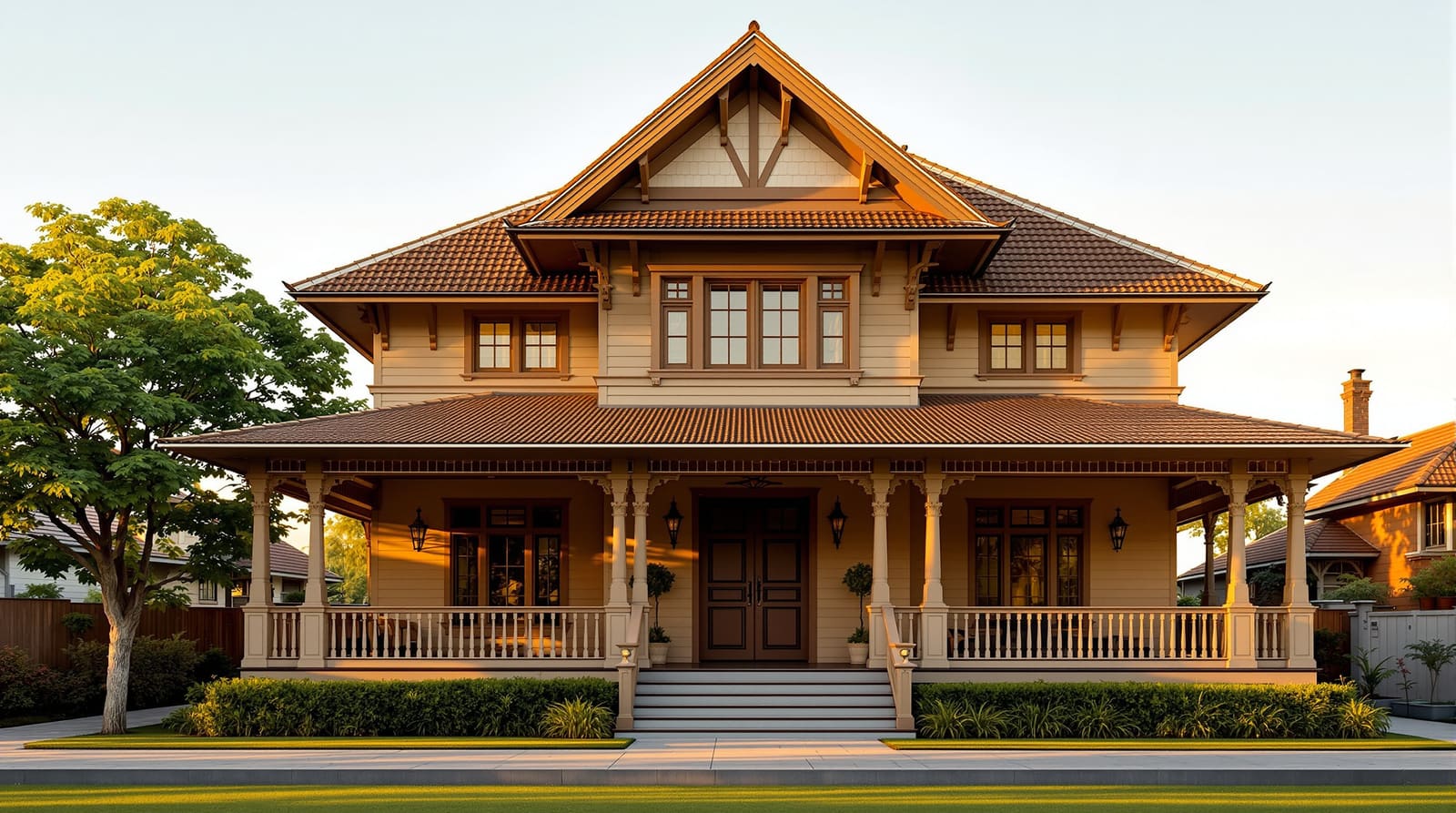
West-Facing House Design in India
Designing a west-facing home well — taming the harsh evening sun with verandahs, fins and a service-room buffer, the real upsides, ideal room placement, and a calm, practical take on the Vastu myth
The agent had walked away from two west-facing plots before he found the courage to ask why. They were a touch cheaper than the east-facing ones across the lane, the corner one had a wide tar road and a generous frontage, and the seller — sensing the hesitation — kept repeating that "west is not good, sir." By the third visit the buyer, a schoolteacher named Revathi, decided to test the claim with her own eyes. She came back at four in the afternoon. The compound wall threw a long shadow, the unfinished neighbour's west room was an oven, and yet the street itself was alive — children cycling, the orange wash of the evening sun making the whole row of houses glow. She stood there and thought: the only thing wrong with this plot is a sun I can see coming, from a fixed direction, every single day.
That is the quiet truth most people miss. A west-facing plot has exactly one real adversary — the low, hot afternoon and evening sun on its street face — and unlike monsoon flooding or a disputed boundary, that adversary is utterly predictable. You know which wall it strikes, at what hour, for which months. Anything that predictable can be designed around. A west-facing house is not a compromise to be tolerated; it is a perfectly good home the moment you decide to spend your design effort on taming the western heat rather than apologising for the direction.
What "west-facing" actually means
A house is called west-facing when its main entrance and the road it addresses lie to the west. Your front gate, your porch, your formal facade — the side the postman and your guests approach — all open towards the setting sun. This is purely about the public face of the plot; it says nothing yet about where your bedrooms or kitchen must go, which is where most of the worry quietly evaporates.
It is worth separating two things people tend to fuse: orientation as a planning fact, and the sun as a physical force. For the broad logic of how any plot's facing shapes a design, site orientation explained covers the general ground, and this guide deliberately stays in the west lane. The one thing unique to west is the behaviour of the sun on that face, so let us look at it honestly.
The real issue — the harsh evening sun
The sun rises roughly in the east, climbs high overhead by noon, and descends in the west. Morning eastern sun arrives at a steep, gentle angle and is mild; by mid-afternoon to sunset the western sun is low, near-horizontal, and has been baking the air all day. That low angle is the whole problem. A high noon sun is easy to block — a modest overhang shades a south or overhead opening. A low evening sun comes in almost sideways, sliding under overhangs and straight through west windows deep into your rooms, carrying the accumulated heat of the day with it.
In most of India — hot-dry Rajasthan and the Deccan, warm-humid coasts, even the composite climate of the plains — the western wall is the single hardest-working surface of any house. It absorbs heat through the afternoon and then radiates it inward through the evening, so the rooms behind it stay uncomfortably warm well past sunset, exactly when a family gathers. Understanding precisely when and how that sun lands on your specific plot is the homework, and understanding sun path analysis shows how to map it for your latitude. Once you have that picture, every remedy below has a clear target.
How to tame the west sun
The good news is that west-sun control is one of the most well-understood problems in Indian building, and the tools are cheap, traditional, and effective. The strategy is layered: stop the heat before it reaches the wall, then before it reaches the room, then before it reaches you.
Shade the facade itself. A deep verandah, a covered porch, or a generous balcony along the west creates a buffer of shade so the actual wall behind it never takes the direct hit. This is the single most powerful move and, happily, it also gives you the gracious street presence a west plot is good at.
Use vertical fins, not just horizontal overhangs. Because the evening sun is low and sideways, a horizontal chajja alone cannot block it — you need vertical fins, louvres, jaalis, or pergola screens that intercept a near-horizontal ray. A combination of a deep overhang plus vertical fins on west openings is the textbook answer.
Make west windows fewer, smaller, and shaded. Resist the urge to put your largest picture window on the dramatic sunset side unless it is heavily protected. Keep west glazing modest, set it deep into the wall, and shade it with fins, screens, or a planted pergola.
Build a buffer of service rooms along the west edge. This is the cleverest planning trick of all: place the rooms you do not sit in for long — toilets, the staircase, stores, the utility and wash area, perhaps a guest toilet or a stair landing — against the hot western wall. They absorb the heat so your living spaces don't. You are using rooms as insulation.
Insulate and reflect the west wall. A lighter exterior colour, a cavity wall, AAC blocks, or external insulation on the west face dramatically cuts heat transfer. A thicker west wall, or a double-skin with a ventilated air gap, is a worthwhile investment here even if you build standard walls elsewhere.
Let trees and greenery do the heavy lifting. A deciduous tree or a tall hedge on the west-southwest is a living sunshade — it blocks the worst summer evenings yet, if deciduous, drops its leaves to let the gentle winter sun through. A pergola with a creeper does the same on a smaller footprint.
The upside nobody mentions
For all the heat talk, a west plot has genuine, underrated virtues. The evening light is glorious — that warm, golden wash is the most photogenic, emotionally rich light of the day, and a well-shaded west room enjoys it without the glare. In winter, when the low western sun is welcome rather than punishing, west rooms stay warm into the evening — a real comfort in north and central India. West plots often command strong street presence, and because of the very superstition that scares buyers off, they frequently sell at a small discount to comparable east plots — a quiet bargain for the informed. None of this should be overlooked when you weigh a plot; the wider trade-off discipline is the subject of how to evaluate a residential plot.
Ideal room placement on a west plot
Here is the layout logic. Because you want your living spaces shielded from the west and enjoying gentler light, the broad arrangement on a typical west-facing plot runs like this: the entrance and porch sit on the west street face, screened by a verandah; immediately behind that western edge you stack the buffer — stairs, toilets, store, utility — to soak up heat. The kitchen is often comfortable towards the south-east or east, where the morning sun is hygienic and mild and the worst evening heat is kept away from the cooking. The living and dining rooms are best pulled towards the east and north of the plot, away from the western wall, so they stay cool through the evening gathering hours. Bedrooms, especially the master, sit towards the south-west or west only when properly buffered and shaded, or otherwise towards the cooler north and east. Setbacks, ground coverage and the permissible FSI vary by your local Development Control Regulations, so this logic must always bend to what your plot and municipal sanction actually allow — setbacks across India and FSI and FAR computation are the references for those limits.
The Vastu view — calm and practical
Now the question everyone is really asking. In Vastu Shastra, a west-facing house is commonly held to be perfectly acceptable — it is one of the four standard orientations, and traditional texts associate the west with stability, gains, and the planet Saturn's disciplined energy. The notion that west-facing is "inauspicious" is a modern market myth, not a scriptural verdict, and it is worth busting plainly: countless prosperous homes face west.
The practical Vastu prescriptions for a west plot align neatly with the climate logic, which is the reassuring part. Heavier, taller built mass towards the south-west; the main entrance in an auspicious western pada; kitchen favoured towards the south-east; the pooja and lighter, open spaces towards the north-east; toilets and stores kept out of the north-east and tucked elsewhere. Notice how much of this simply restates good sun design. If a particular practice matters to your family, follow it where it does no harm; where Vastu and comfort point the same way — as they largely do for west plots — you lose nothing. For choosing the plot itself in this spirit, Vastu for plot selection takes the same calm, non-fearful line.
A sample west-facing layout logic
Picture a standard 30 by 40 ft plot facing west. The gate and a 5 ft front setback open to a porch under a deep verandah. Step in and the staircase, a powder toilet and a store form a thick western spine — your heat buffer. The living-dining runs back into the cooler eastern half, opening to a small rear court that pulls the prevailing breeze through. The kitchen sits south-east with a morning-lit utility yard. Upstairs, bedrooms favour the north and east, with the west-facing bedroom — if any — getting a shaded balcony and a jaali screen. The west wall throughout is AAC block, light-coloured, with a deciduous tree at the south-west corner. Nothing exotic; just every west remedy applied in its right place. How this assembles into a buildable plan is the broader subject of how to design a residential layout.
West-facing challenge to design remedy
| West-facing challenge | Practical design remedy |
|---|---|
| Low evening sun slides past overhangs | Vertical fins, louvres & jaali screens on west openings |
| West wall absorbs & radiates heat at night | Light colour, AAC blocks, cavity or insulated west wall |
| Living spaces overheat in the gathering hours | Pull living & dining to the cooler east & north |
| Large west window glare & heat gain | Fewer, smaller, deep-set & shaded west windows |
| Hot western edge wastes good floor area | Buffer with toilets, stairs, stores & utility |
| Harsh facade with little relief | Deep verandah, covered porch & planted pergola |
| Summer heat vs. welcome winter sun | Deciduous tree or hedge on the west & south-west |
| The "inauspicious west" fear | Sound Vastu & sound climate design largely agree |
What to actually do
Visit the plot in the late afternoon, not the morning, and feel the west sun for yourself. Map the sun path for your latitude before you finalise a single window. Treat the west wall as a heat problem to be engineered — choose its material, colour and thickness deliberately. Plan from the inside out: decide which low-occupancy rooms will shield your living spaces, then arrange the rest. And run your scheme against the local building bye-laws, the sanction setbacks, and the permissible coverage early, so a clever layout is also a legal one. When you want to test orientations and room placements quickly against your own plot, DesignAI lets you explore west-facing layouts and shading ideas before you commit to a single line on paper.
References
- Bureau of Indian Standards, National Building Code of India 2016 (orientation, ventilation & daylighting provisions).
- Local Development Control Regulations / municipal building bye-laws (setbacks, ground coverage & permissible FSI — vary by city).
- Energy Conservation Building Code (ECBC) for Residential Buildings — Eco Niwas Samhita, Bureau of Energy Efficiency (envelope & west-wall heat-gain guidance).
- Kevin Lynch & Gary Hack, "Site Planning" (sun, climate & built-form arrangement).
- Joseph De Chiara & Lee Koppelman, "Site Planning Standards" (orientation & room placement principles).
- Vastu Shastra traditional texts (Mayamata, Manasara) for orientation-and-mass guidance.
For the rest of the orientation set, see the sibling guides on the east-facing house plan, the south-facing house design and the north-facing house Vastu — and try your own west scheme with DesignAI.

Export this guide
Related Guides — Deep-dive reading
Understanding Sun Path Analysis for Your Home
How the sun actually moves over an Indian site through the day and the year — and why that single fact quietly decides where your kitchen, bedroom and living room should sit.
Site PlanningWest-Facing Window Design (India): Taming the Harsh Afternoon Sun
Why the west wall is the hardest orientation to glaze, and how to minimise, shade and layer the defences against the low afternoon sun.
Windows & GlazingOrientation, Light & Views: Designing With Your Space, Not Against It
How reading your plot's sun, breeze and views — and placing each room on the right face — gives an Indian home that is cooler, brighter and quietly right, instead of one that fights its site forever.
Design PrinciplesRelated Tools — Try Free
Brise-Soleil Visualizer
Interactive horizontal-louvre cut-off angle calculator — sun altitude, louvre depth, and spacing inputs with a live shadow preview. Computes θ = arctan(spacing/depth) for façade shading, ECBC envelope compliance, hospital daylight design, and tropical sun-control detailing.
Sun Shading ToolCross-Ventilation Analyzer
Estimate airflow and air changes per hour (ACH) from room size, window areas, layout, and local wind — with NBC 2016 Part 8 compliance check.
Ventilation CalculatorVastu Window Planner
Vastu guidance for window placement and size by wall direction and room — rating and remedies.
Vastu