
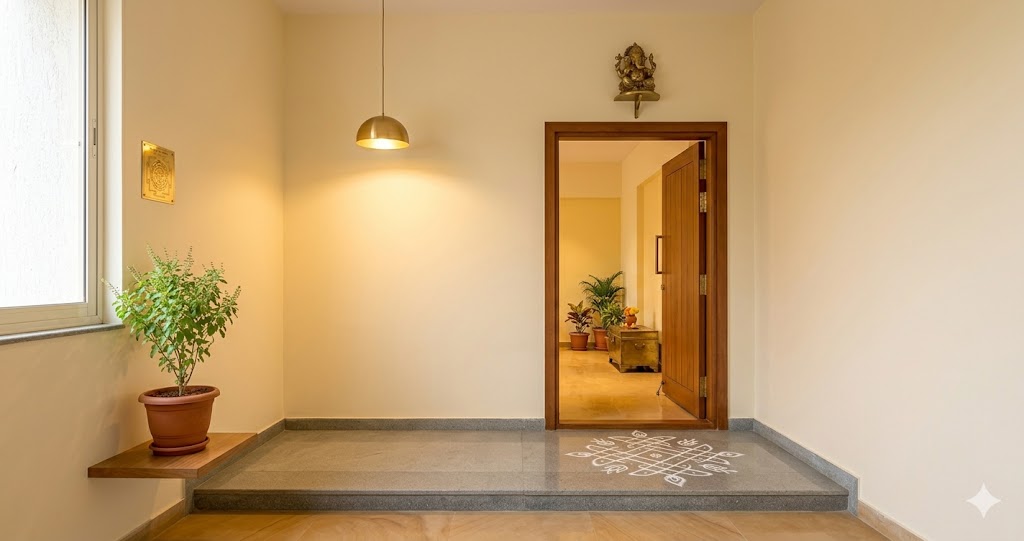
North-Facing House Vastu — A 2026 Working Reference for Indian Homes
Kubera direction · Seven-pillar advantage · Internal layout decides the win
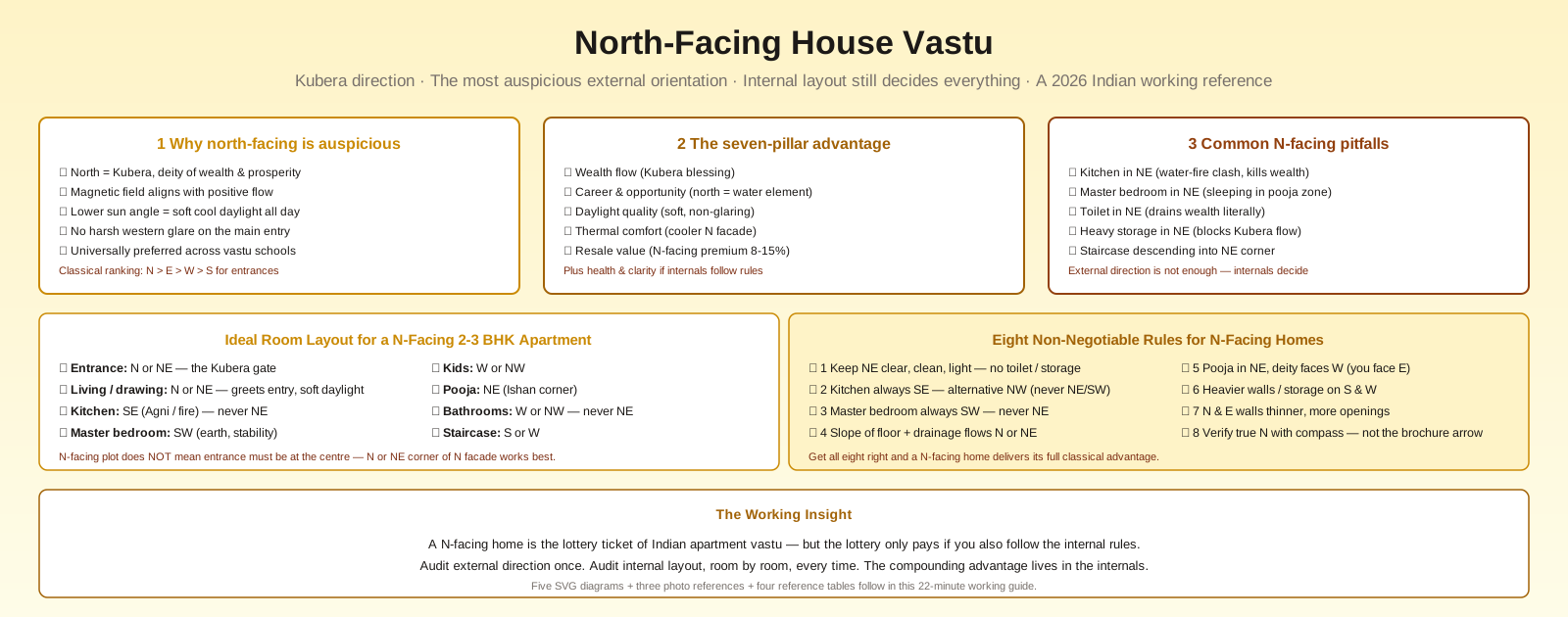
Warm minimal homes have one rule that breaks before any other — restraint becomes austerity. North-facing homes have the opposite rule: external direction looks like the win, but it is the internal layout that decides whether the win actually arrives. A north-facing entrance with a north-east kitchen, a south-east master bedroom, or a north-east toilet undoes most of the classical advantage before you have unpacked your boxes.
This is a 22-minute working reference for Indian homeowners planning, buying, or remediating a north-facing apartment or independent house in 2026. It covers why north-facing is universally rated auspicious across every major classical Indian vastu school, the seven-pillar advantage it delivers when internals are right, the ideal room layout for a 2-3 BHK Indian apartment with a N or NE entrance, direction-by-direction mapping for every functional zone, the eight common pitfalls that quietly undo the advantage and the fix for each, the reality of a builder-fixed apartment where the layout is given to you and not chosen, a three-tier remedy stack from under fifty thousand to ten lakh rupees, colour and material guidance for N-facing walls and rooms, how N-facing vastu meaningfully differs from E, S, and W-facing, the surprisingly common case of N-facing homes that aren't actually facing north when checked with a compass, and where to go next.
N-facing is the lottery ticket of Indian apartment vastu — but the lottery only pays if you also follow the internal rules. Otherwise it is a winning ticket left in a wet pocket. The compounding wealth-direction blessing only compounds if Kubera's corner stays light, the Agni corner stays fire, the earth corner stays heavy, and you have not parked a toilet on top of any of them.
For complementary depth see Vastu for Modern Homes, Vastu House Plan India, Entrance Vastu, Vastu for Kitchen, Vastu for Bedroom, Vastu Colors for Home, and Staircase Vastu. To audit your own home as you read, run our Vastu Compliance Tool and the Vastu Compass.
This guide refreshes every 24 months — directional principles are evergreen but India-specific brand references and modern building-science notes shift. Last verified: May 2026 · Next verify: May 2028.
Why North-Facing Is Considered Auspicious
Every classical Indian vastu canon agrees on one thing: a residence whose main entry opens to the north is auspicious. The agreement is unusually broad — the Brihat Samhita (sixth century, north Indian tradition), the Mayamatam (south Indian tradition), Vishwakarma Vastu Shastra (a near-pan-Indian compendium), the Tamil thachu sastram (Kerala carpenter tradition), and modern practitioners from Khushdeep Bansal in Delhi to Anupama Mohanlal in Bengaluru all rank N first or first-equal with E among the four cardinal entrances.
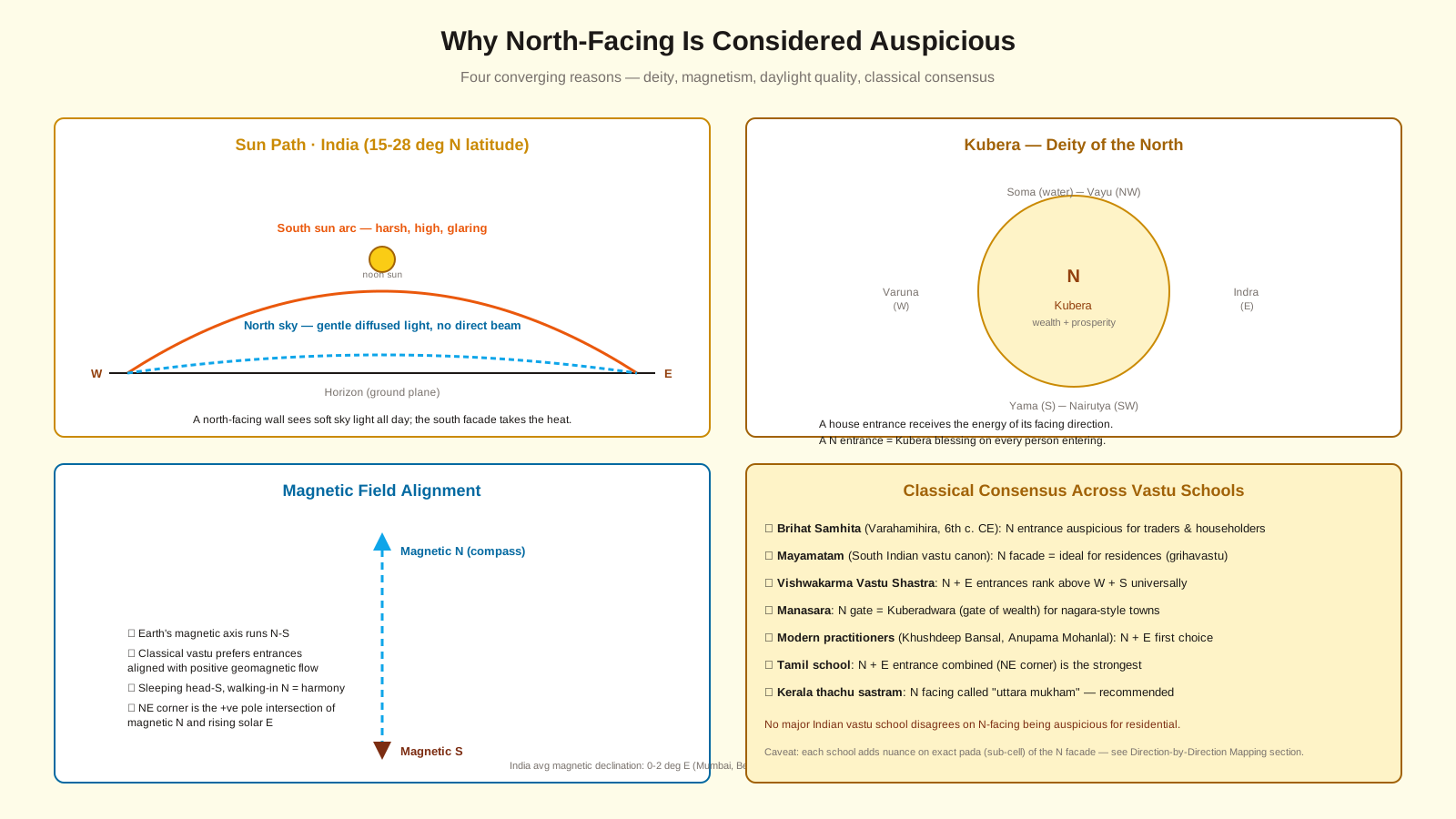
The four converging reasons behind this consensus are:
Kubera — the deity of wealth and prosperity rules the north. In the vastu purusha mandala — the cosmological grid that underlies all Indian vastu — the eight cardinal and ordinal directions are each governed by a deity. North is Kubera. A house entrance receives the energetic signature of its facing direction; an entrance opening N therefore receives the Kubera blessing on every person who walks in. This is the single most repeated reason in classical texts.
Magnetic field alignment. Earth's geomagnetic axis runs N-S, and vastu — which long predates the discovery of magnetism — encoded a preference for entrances and sleeping orientations that align with the planet's field. India's magnetic declination is a forgiving zero to two degrees east in Mumbai, Bengaluru, Hyderabad, and Chennai, which means that for practical residential vastu, magnetic north read off a phone compass is effectively true north. (In Delhi and points north, the declination grows to two to three degrees east — still well within working tolerance.)
Daylight quality. This is the modern building-science reason that perfectly coincides with the classical recommendation. India sits between fifteen and twenty-eight degrees north latitude. The sun arcs high overhead and to the south, never crossing into the northern sky. A north-facing facade therefore receives soft, diffused sky light all day, never the direct beam, never the harsh western glare that bakes a W-facing wall through April-to-June afternoons. North light is famously preferred by artists, photographers, and architects worldwide because it does not change colour temperature or intensity through the working day.
Thermal comfort. Because the N facade never takes direct solar gain, it is the coolest face of the building. In a country where summer surface temperatures of S- and W-facing walls routinely cross fifty degrees Celsius, a N-facing main door, living room, and balcony enjoy a meaningful comfort advantage from March through October.
The Seven-Pillar Advantage
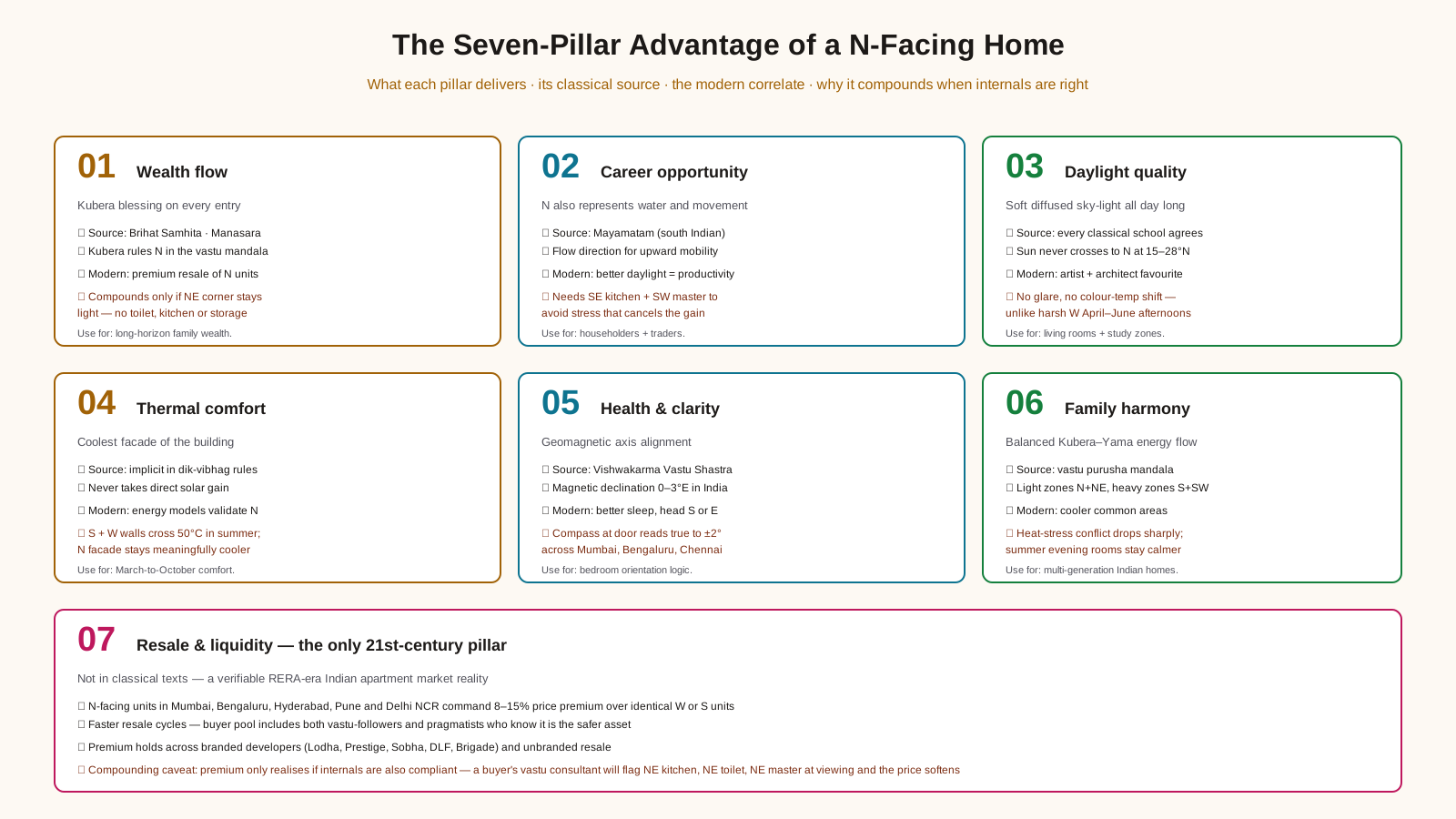
A correctly executed N-facing home — external direction plus correct internal layout — delivers seven distinct compounding advantages.
| Pillar | What it means | Classical source | Modern correlate |
|---|---|---|---|
| Wealth flow | Kubera-direction blessing on every entry | Brihat Samhita; Manasara | Premium resale value of N-facing units |
| Career opportunity | N also represents water + movement | Mayamatam | Lower stress, better daylight = productivity |
| Daylight quality | Soft N sky-light all day | All schools | Best daylit interior in Indian latitudes |
| Thermal comfort | Coolest facade of the building | Implicit in dik-vibhag rules | Energy-modelling validates N preference |
| Health + clarity | Magnetic axis alignment | Vishwakarma Shastra | Better sleep on E or S head orientation |
| Family harmony | Balanced energy flow Kubera-Yama | Vastu purusha mandala | Calmer common areas, less heat-stress conflict |
| Resale + liquidity | N-facing premium | Modern Indian RERA-era market | 8-15% price premium, faster sale cycles |
The seventh pillar is the only one not encoded in classical texts; it is a 21st-century Indian real-estate market reality. N-facing units in any branded apartment project in Mumbai, Bengaluru, Hyderabad, Pune, and Delhi NCR command a verifiable premium of eight to fifteen per cent over identical W or S units, and sell faster on the resale market because the buyer pool — even buyers who do not strictly follow vastu — knows it is the safer asset.
Ideal Room Layout for a N-Facing 2-3 BHK
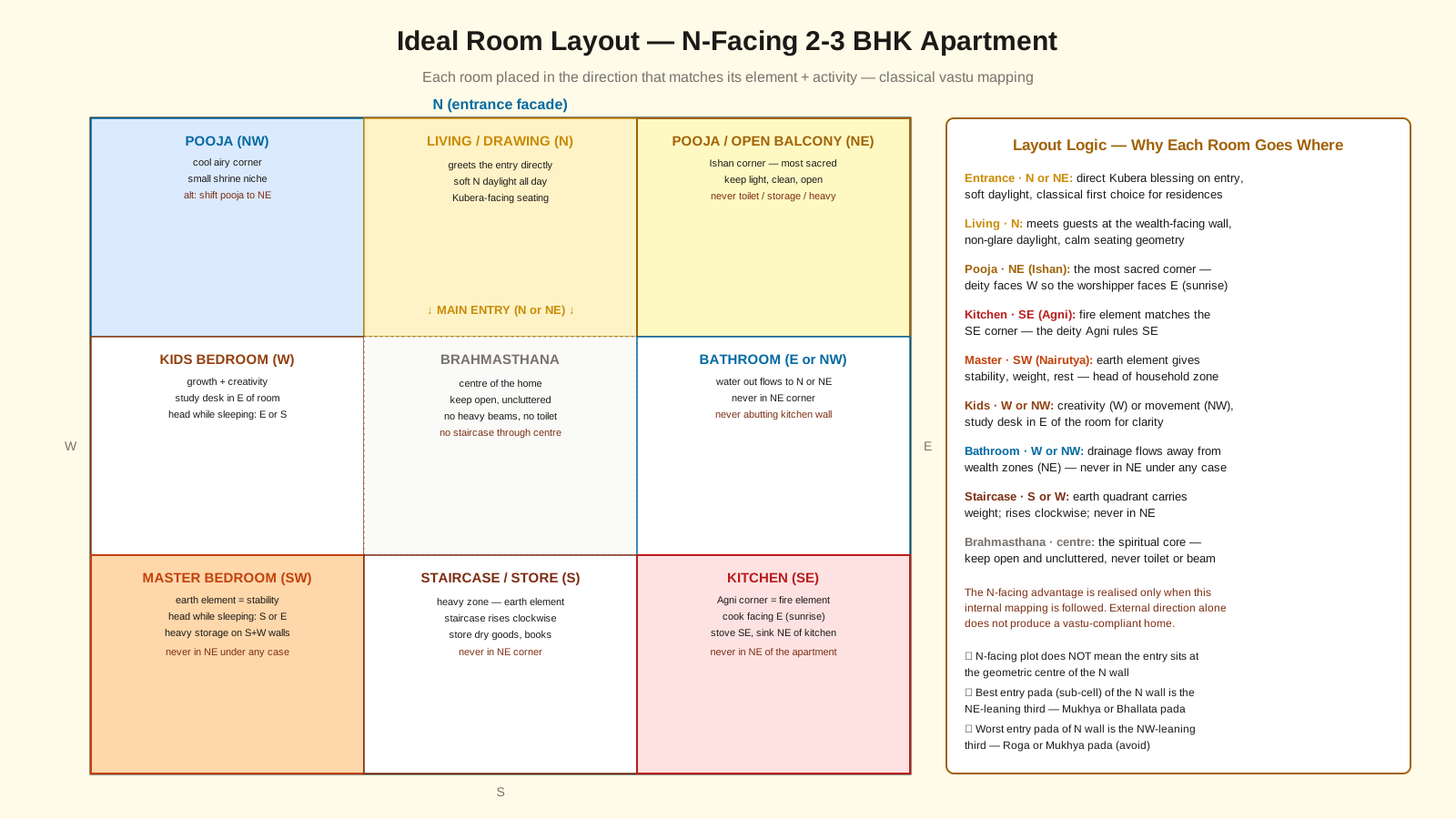
The ideal mapping for a N-facing 2-3 BHK Indian apartment follows the elemental logic of the vastu purusha mandala. Each room belongs in the direction whose element matches its activity.
| Room | Direction | Element / deity | Reasoning |
|---|---|---|---|
| Main entry | N or NE | Kubera | Wealth-direction entry |
| Living / drawing | N or NE | Soma + Kubera | Greets entry; soft N light |
| Pooja | NE (Ishan) | Ishana (Shiva) | Most sacred corner; rising sun |
| Kitchen | SE (Agni) | Agni (fire) | Fire element matches SE |
| Master bedroom | SW (Nairutya) | Nairuti (earth) | Stability + grounding for head of household |
| Kids bedroom | W or NW | Varuna / Vayu | Growth, creativity, movement |
| Bathrooms | W or NW | Varuna / Vayu | Water out; never NE |
| Staircase | S or W | Yama / Varuna | Earth-quadrant weight |
| Guest bedroom | NW | Vayu | Air element = transient stays |
| Store / utility | S or SW | Nairuti | Heavy + earthy + stable |
| Balcony / open | NE or N | Ishana / Soma | Light, open, airy |
| AC outdoor / heavy MEP | SE or SW | Agni / Nairuti | Heat-producing, weighty |
A clean way to read the table: light functions in the light quadrants (N, NE, E), heavy functions in the heavy quadrants (S, SW, W), fire to its own corner (SE), air to its own corner (NW), and the centre (Brahmasthana) stays open. Every other rule is a corollary of that core elemental grammar.
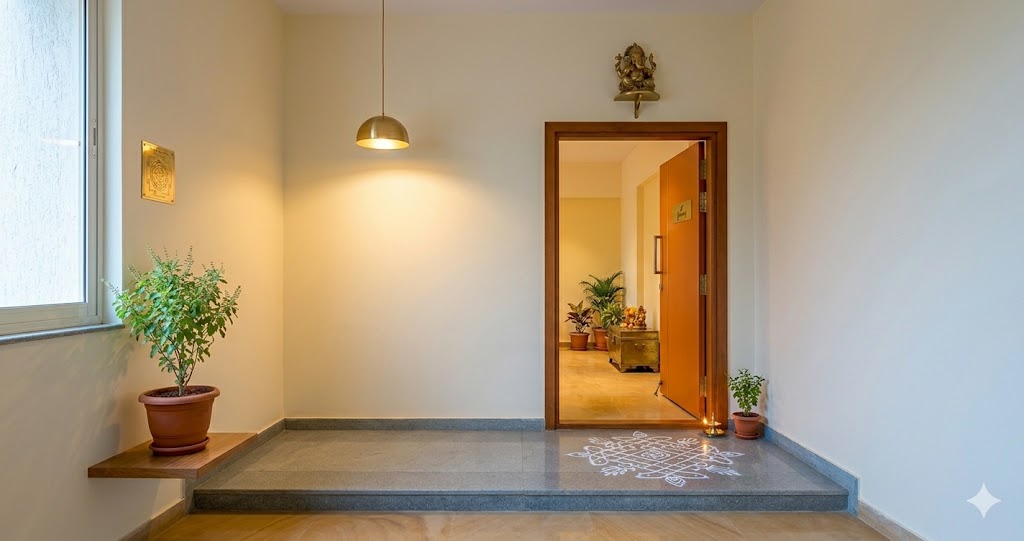
Within the N facade — which pada is the best?
N-facing does not mean the main door must sit at the geometric centre of the north wall. Classical vastu divides each facade into nine padas (sub-cells); the eight outer padas are governed by sub-deities and have specific recommended uses.
For a residential N entrance, the best pada is the third from the NE corner (Mukhya or Bhallata, depending on the school) — the door leaning toward NE catches both the Kubera and the Ishana blessing. The worst pada is the third from the NW corner (Roga / Mukhya, depending on school) — the door leaning NW invites instability and movement-related energy, less suited to a permanent home. The middle pada of the N wall is acceptable but not optimal.
Living room placement and seating
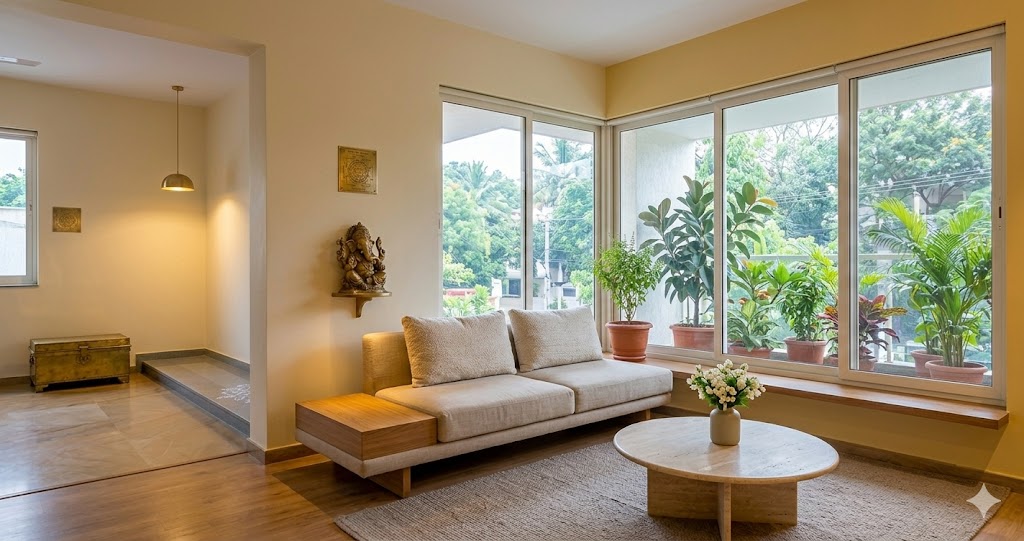
The living room ideally sits behind the N or NE wall, greeting the entry. The sofa should be against the S or W wall, with seating facing N or NE — meaning when you sit, you face the entry and the source of soft daylight. Heavy furniture (large sectional sofas, console tables, TV unit) belongs on the S and W walls; the N and E walls stay light, ideally with windows or a single piece of art only.
Direction-by-Direction Mapping
For a homeowner using this guide as a working checklist, here is the cell-by-cell map for a N-facing home — what each of the eight cardinal/ordinal zones is for, what it must never house, and what to do if your floor plan has it wrong.
| Zone | Use this zone for | Never house here | If wrong, fix at Tier |
|---|---|---|---|
| N | Main entry, living, water source | Heavy storage, kitchen | Tier 1-2 |
| NE (Ishan) | Pooja, open balcony, light study | Toilet, kitchen, master bed, staircase, storage | Tier 2-3 |
| E | Dining, breakfast nook, kids study | Toilet, heavy almirah | Tier 1-2 |
| SE (Agni) | Kitchen, electrical panel, inverter | Master bedroom, pooja | Tier 2-3 |
| S | Storage, staircase, dry utility | Pooja, water tank | Tier 1-2 |
| SW (Nairutya) | Master bedroom, heavy storage | Pooja, kitchen, water source | Tier 3 |
| W | Kids bedroom, dining, bathroom | Pooja, kitchen | Tier 1-2 |
| NW (Vayu) | Guest bedroom, bathroom, kids | Master bedroom, pooja | Tier 1-2 |
| Centre (Brahmasthana) | Open foyer, light circulation | Toilet, staircase, heavy column | Tier 3 |
The Tier column refers to the remedy escalation ladder discussed later — Tier 1 is cosmetic (under ₹50k), Tier 2 is fixture/layout (₹50k-3L), Tier 3 is structural (₹3-10L).
Eight Common Pitfalls (and the Fix for Each)
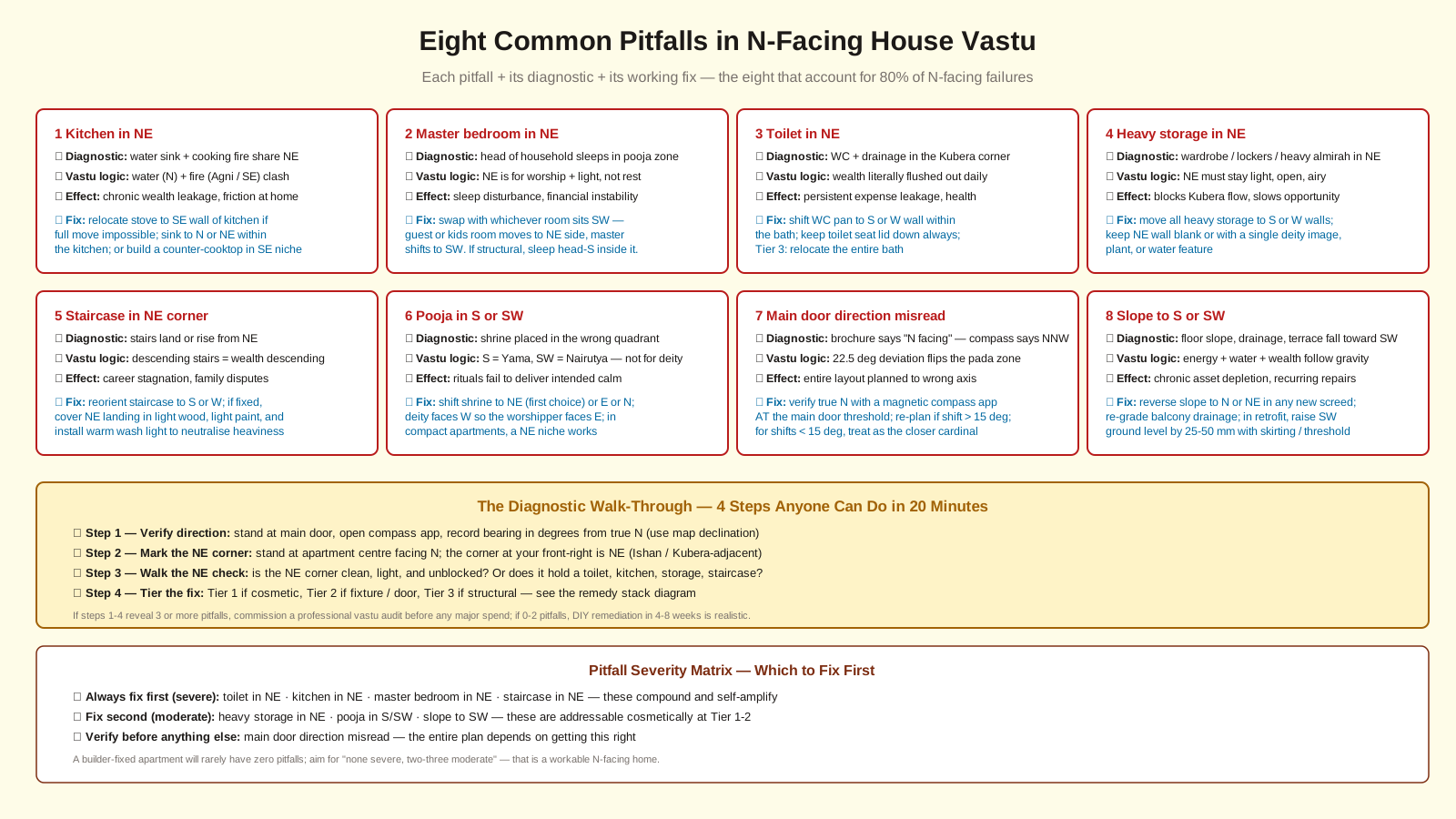
In our experience auditing builder-fixed apartments across Mumbai, Bengaluru, Pune, Hyderabad, and Delhi NCR, eight pitfalls account for roughly eighty per cent of the failures we see in N-facing homes.
| # | Pitfall | Why it fails | Working fix |
|---|---|---|---|
| 1 | Kitchen in NE | Water (sink) + fire (stove) clash in Kubera zone | Move stove to SE wall of kitchen; sink to N or NE within kitchen; Tier 3: relocate kitchen room to SE |
| 2 | Master bedroom in NE | Sleeping in the pooja zone disturbs both functions | Swap rooms with the SW occupant; if stuck, sleep head-S inside the existing NE room |
| 3 | Toilet in NE | Wealth is literally flushed daily | Shift WC pan to S or W wall within bath; keep lid down + door closed; Tier 3: relocate whole bath |
| 4 | Heavy storage in NE | Blocks the Kubera energy flow | Move wardrobes to S or W walls; keep NE light, with at most a single deity image or live plant |
| 5 | Staircase in NE | Descending stairs = descending wealth | Reorient stairs to S or W; if fixed, wash the NE landing with warm light and light wood/paint |
| 6 | Pooja in S or SW | Wrong elemental zone for deity | Shift shrine to NE first choice (E or N second); deity faces W, worshipper faces E |
| 7 | Main door misread direction | Brochure says N, compass says NNW | Use a calibrated compass at the door threshold; replan if shift >15 deg; treat as nearest cardinal if <15 deg |
| 8 | Slope of floor / drainage to SW | Energy and water follow gravity | Re-screed to slope N or NE; raise SW ground 25-50 mm; re-grade balcony drains |
The first four — kitchen, master bedroom, toilet, and heavy storage all in NE — are the four that compound. Any one alone is a meaningful drag; two together is severe; three or four together effectively cancels the N-facing advantage entirely. The audit priority is therefore: clear the NE corner first, in that order of severity.
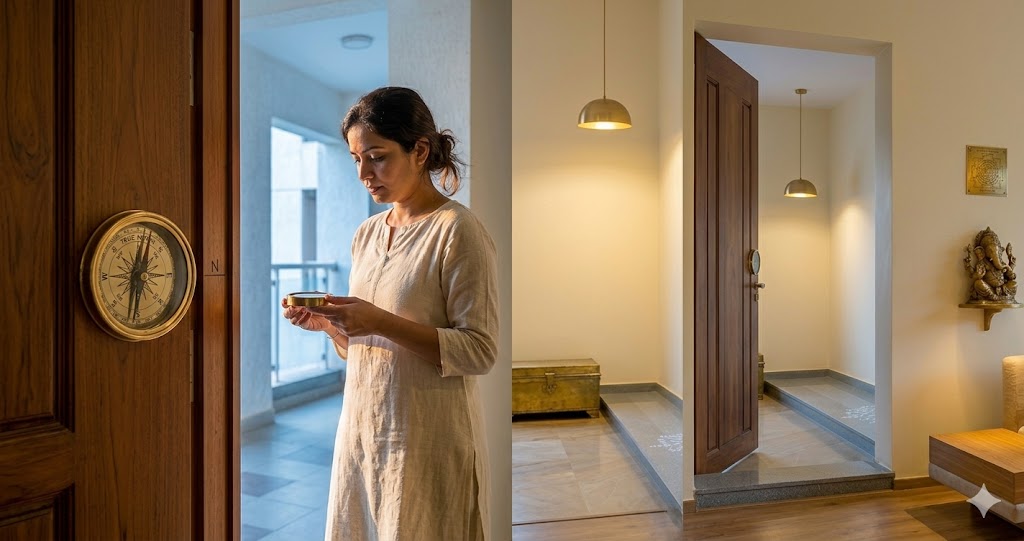
The Builder-Fixed Apartment Reality
For a homeowner buying a new-build flat in a Mumbai or Bengaluru tower, the bad news is that you are not choosing the layout — the developer chose it before you saw the brochure. The good news is that a meaningful share of pitfalls is solvable post-possession at Tier 1 or Tier 2 cost.
Three realistic scenarios:
Scenario A — Clean inheritance. The apartment was designed by a vastu-aware architect (more common now than a decade ago, especially in the ₹2 crore+ segment) and the internal layout is broadly compliant. You inherit a NE pooja niche, a SE kitchen, a SW master, and W bathrooms. Pitfall count: zero to two minor. Your work is Tier 1 cosmetic only — paint colours, deity placement, lighting, plants. Budget: under ₹50k. Time: 4 weeks.
Scenario B — Mixed inheritance. The layout has the big things right (entry, master, kitchen) but stumbles on the small things — toilet in N (not NE, but borderline), pooja in W instead of NE, heavy storage built into NE. Pitfall count: three to four moderate. Your work is Tier 1 plus selective Tier 2 — relocate the pooja, swap wardrobe positions, possibly move a sink. Budget: ₹50k-2L. Time: 8-12 weeks.
Scenario C — Severe inheritance. The developer ignored vastu entirely. Master bedroom in NE, toilet in NE, kitchen in N. Pitfall count: two or three severe. This is the case where you must escalate to Tier 3 — full structural rework — or accept that the apartment will not deliver classical N-facing benefits regardless of how perfectly you light the NE corner. Budget: ₹3-10L plus society NOC. Time: 12-28 weeks.
A useful heuristic before purchase: walk a candidate flat with a compass; note where the kitchen, master, and toilets sit; calculate which scenario you are buying into; price the remediation cost into your offer.
Three Remedy Tiers
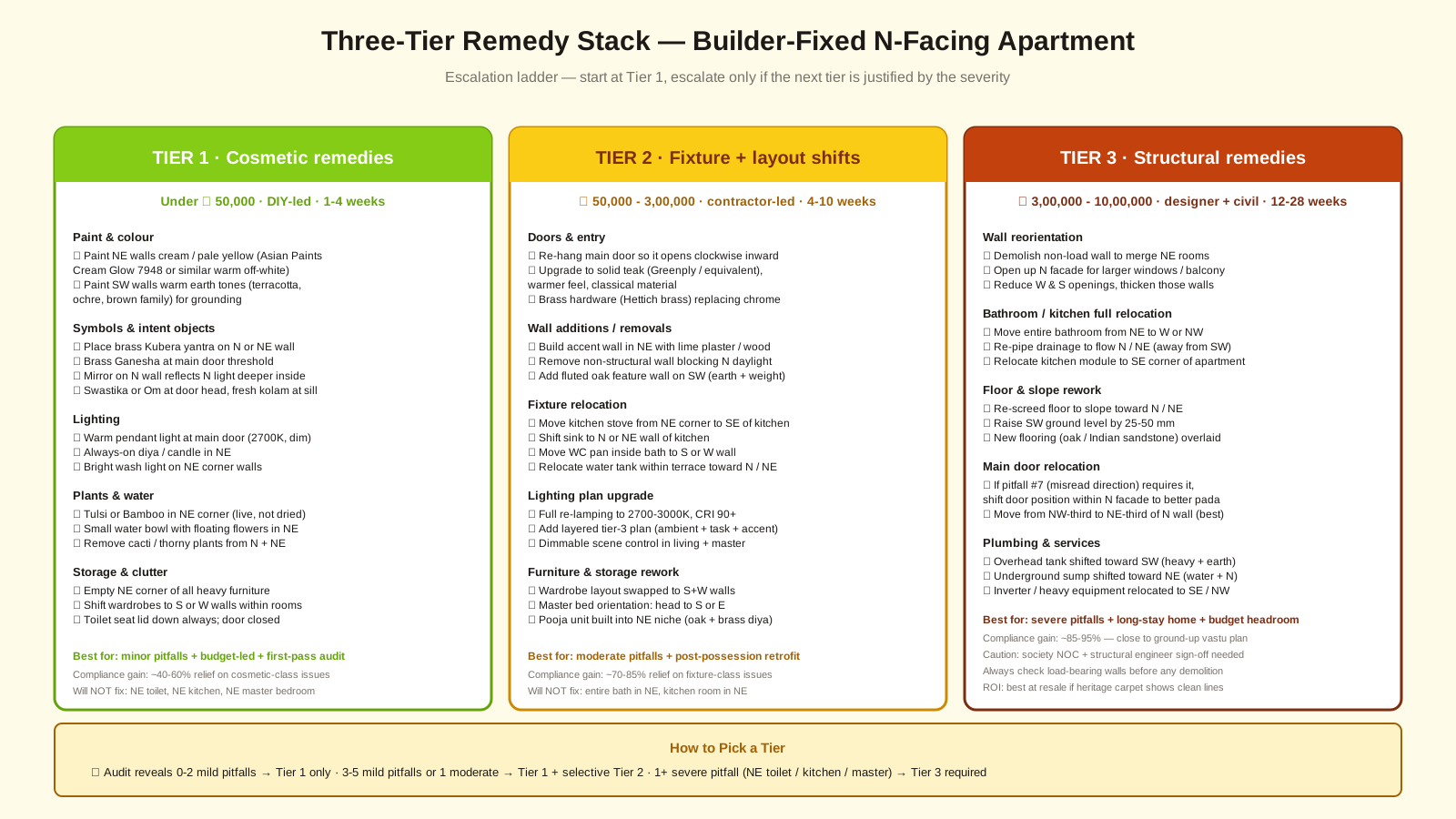
The remedy stack escalates in three tiers. Start at the lowest tier whose scope matches your pitfall severity; only escalate if the next tier is genuinely justified.
| Tier | Budget | Scope | Examples | Compliance gain |
|---|---|---|---|---|
| Tier 1 — cosmetic | Under ₹50k | Paint, symbols, lighting, plants, storage discipline | Cream Glow on NE wall, brass Kubera yantra, Tulsi in NE, empty NE corner | 40-60% on minor issues |
| Tier 2 — fixture + layout | ₹50k - 3L | Door swap, accent walls, fixture relocation, wardrobe rework | Teak main door, NE accent wall, stove relocated to SE of kitchen, layered lighting | 70-85% on fixture-class issues |
| Tier 3 — structural | ₹3L - 10L | Wall reorientation, full bath/kitchen relocation, plumbing rework | Move bath from NE to W, re-screed floor to slope N, relocate kitchen to SE | 85-95% — near ground-up |
A Tier 3 intervention requires three approvals that homeowners often underestimate: society NOC (especially for plumbing changes), a structural engineer's load-bearing certificate, and — for any external facade change — local municipal sanction. Budget six to ten weeks of approvals on top of construction time.
Tier 1 working kit (under ₹50k)
The Tier 1 kit is what almost every N-facing homeowner should action regardless of how compliant the inherited layout is:
- Paint: Asian Paints Cream Glow 7948 (or equivalent warm cream) on N and NE walls; warm earth tones on S and SW walls.
- Symbols: Brass Kubera yantra on N or NE wall; brass Ganesha at main door; fresh kolam at threshold each morning.
- Lighting: Warm 2700K pendant at entry; always-on diya in NE; bright wash light on NE corner.
- Plants: Tulsi or lucky bamboo (live, not dried) in NE; remove cacti or thorny plants from N and NE.
- Storage discipline: Empty NE corner of all heavy furniture; toilet lids down always; bathroom doors closed.
- Door hardware: Replace any chrome handles on main door with brushed brass (Hettich brass series).
This is two weekends of work and roughly ₹35-45k including paint, a yantra, and the brass door hardware. It will not save a severe pitfall but it materially improves a borderline N-facing home.
Colors and Materials for N-Facing Homes
N is the Kubera direction, classically associated with cream, light yellow, and gold. The colour palette for a N-facing home should reinforce that elemental signature without falling into kitsch.
| Zone | Recommended palette | Indian paint reference | Avoid |
|---|---|---|---|
| N walls (living, entry) | Cream, warm white, pale yellow | Asian Paints Cream Glow 7948, Dulux Wholewheat | Cool grey, pure white, navy |
| NE walls (pooja, balcony) | Pale yellow, cream, white | Asian Paints 7948 or 7986 | Black, dark grey, deep red |
| SE walls (kitchen) | Warm beige, terracotta accent | Asian Paints 8492 | Cool blue, deep navy |
| SW walls (master) | Warm earth, ochre, brown | Asian Paints 8504 + ochre accent | Pure white, pale blue |
| W walls (kids) | Warm white, soft taupe, oat | Asian Paints 8485 | Cool grey, black |
| Main door | Solid teak natural finish | Greenply solid teak | Glossy laminate, painted black |
| Hardware throughout | Brushed brass | Hettich brass series | Chrome, polished steel |
The hard rule: N-facing entry door should always feel warm to look at and warm to touch. A solid teak Greenply door in natural finish, with brushed brass Hettich hardware and a warm 2700K pendant overhead, is the working specification for a N-facing main door in 2026. Avoid any black or chrome combination — it cools the entry and dampens the Kubera signal classical texts explicitly warn against.
For deeper palette work see Vastu Colors for Home.
How N-Facing Vastu Differs from E, S, W-Facing
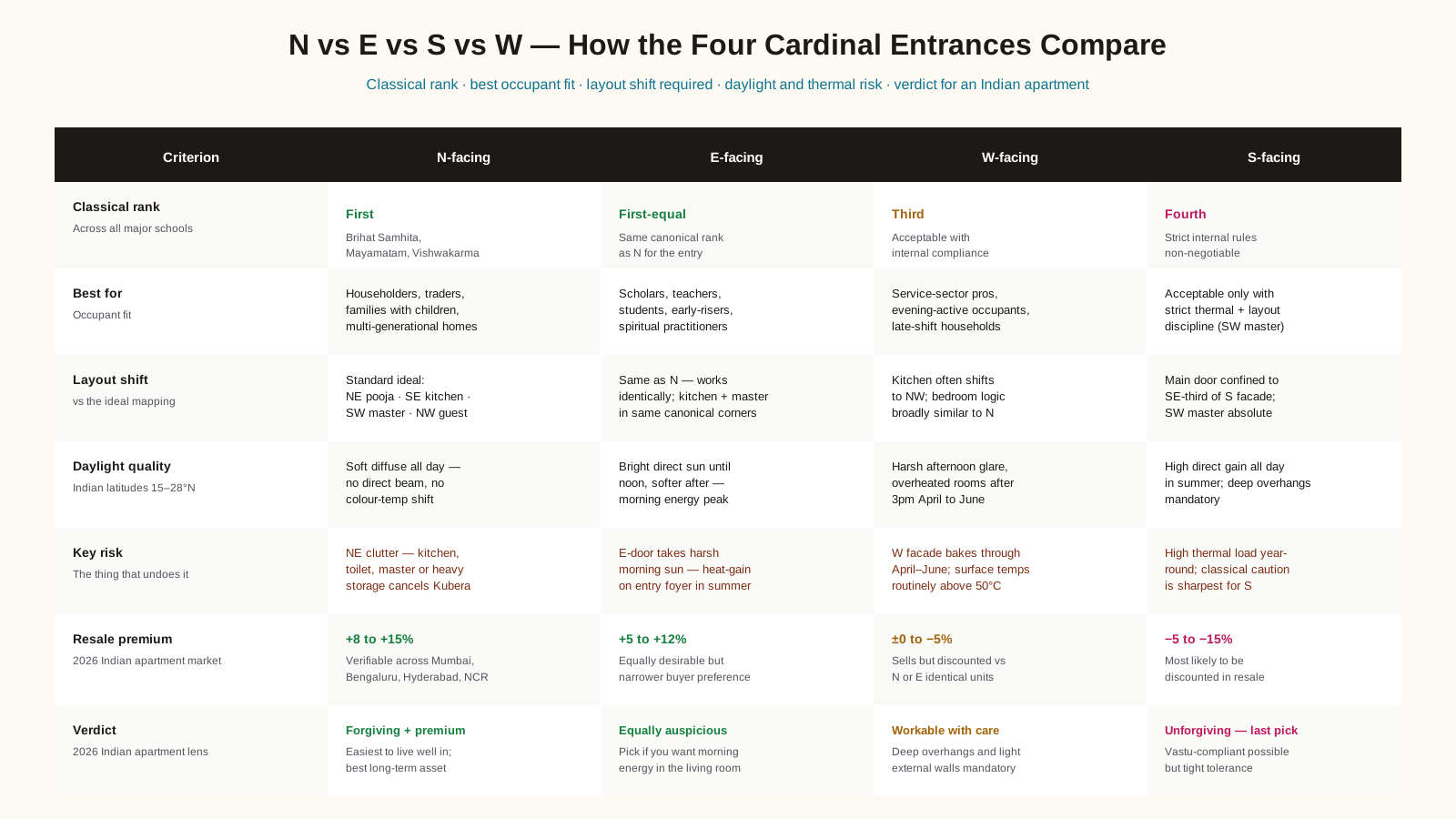
The four cardinal entrance orientations each carry a distinct vastu profile. Understanding the comparison sharpens the N-facing recommendations.
| Facing | Classical rank | Best for | Internal layout shift | Key risk |
|---|---|---|---|---|
| N | First | Householders, traders, families | Standard ideal layout (NE pooja, SE kitchen, SW master) | NE clutter undoes the advantage |
| E | First-equal | Scholars, teachers, students | Same as N — works identically | E-facing doors take harsh morning sun |
| W | Third | Service-sector, evening-active | Kitchen often shifts to NW; bedroom logic similar | W facade takes harsh evening sun |
| S | Fourth | Acceptable only with strict internal compliance | Main door in SE-third of S facade; rigorous SW master + SE kitchen | High thermal load; texts urge caution |
A common misreading: people think N and E are interchangeable. They are nearly so for the entry, but the daylight quality differs — N gives gentle constant light all day, E gives bright direct sun until noon and softer light after. Both deliver the auspicious classical reading; choose E if you want morning energy in the living room, N if you want even daylight without glare.
S-facing is the orientation most likely to be discounted in the apartment market — and the orientation where the classical caution is sharpest. A S-facing home can be made vastu-compliant but requires more attention to thermal protection (deep balcony overhangs, light-coloured external walls, internal master bed in SW absolutely non-negotiable). N-facing is forgiving where S-facing is unforgiving.
For the broader directional landscape see Vastu House Plan India.
When N-Facing Isn't Actually N-Facing
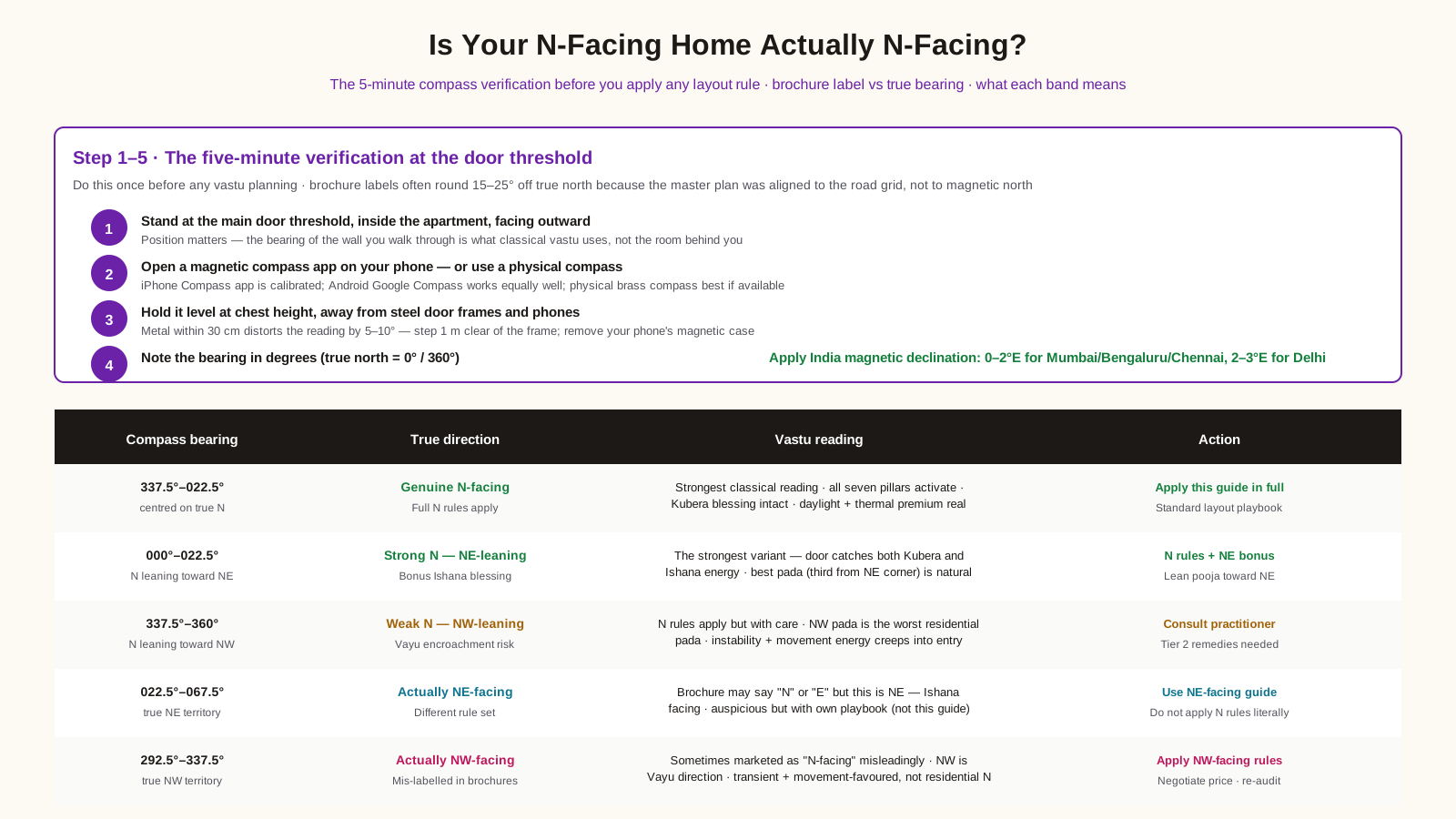
This is the single most under-discussed reality of Indian apartment vastu in 2026. A surprisingly large share of "north-facing" units, marketed and brochured as such by developers, are actually NNW or NNE when checked with a magnetic compass at the door threshold. The deviation is often fifteen to twenty-five degrees off true north.
The cause is almost always that the developer aligned the master plan to the road grid or the plot boundary, not to true north. Indian urban road grids meander; the apartment block sits at whatever angle the plot allows. The brochure then rounds the closest cardinal direction to be the marketing label. A unit whose entry actually points 015 degrees true (NNE-leaning) gets labelled "N-facing" — which is fine — but a unit whose entry actually points 340 degrees true (NNW-leaning) also gets labelled "N-facing" — which is a problem.
| Compass bearing at door | True direction | Vastu reading | Marketing label |
|---|---|---|---|
| 337.5 - 022.5 deg | North | N-facing — apply N rules | Often "N-facing" |
| 000 - 022.5 deg | N-leaning NE | Strong N — apply N rules with NE bonus | "N-facing" |
| 337.5 - 360 deg | N-leaning NW | Weak N — apply N rules with care, NW caution | Sometimes labelled "N-facing" misleadingly |
| 022.5 - 067.5 deg | NE | Apply NE-facing rules (different) | Sometimes labelled "N" or "E" |
| 292.5 - 337.5 deg | NW | Apply NW-facing rules (different) | Sometimes labelled "N" or "W" |
The five-minute verification:
1. Stand at the main door threshold, inside the apartment, facing out.
2. Open a magnetic compass app on your phone (or a physical compass).
3. Hold it level at chest height, away from metal frames.
4. Note the bearing in degrees.
5. Compare to the table above.
If your true bearing falls within 337.5 to 022.5 degrees, you have a genuine N-facing home and this guide applies in full. If it falls within 022.5 to 045 degrees, you have NE-leaning N — the strongest variant — and you can apply N rules with extra NE benefit. If it falls within 315 to 337.5 degrees, you have NW-leaning N — the weakest variant — and you should consult a vastu professional before applying the layout recommendations literally.
Run our Vastu Compass tool for a smartphone-friendly verification, and our Vastu Compliance Tool to audit the full layout once direction is confirmed.
Where to Go Next
- For room-specific vastu detail — Vastu for Kitchen, Vastu for Bedroom, Staircase Vastu, Entrance Vastu
- For palette deep-dive — Vastu Colors for Home
- For the full house plan — Vastu House Plan India
- For modern interpretation — Vastu for Modern Homes
- For the pooja niche — Pooja Room Design India
- For self-audit — Vastu Compliance Tool
- For direction verification — Vastu Compass
References
1. Varahamihira (6th century CE). Brihat Samhita. (Chapter 53 — vastu-vidya; Kubera direction recommendations.)
2. Mayamuni. Mayamatam — A Treatise of Housing, Architecture and Iconography. Trans. Bruno Dagens, IGNCA. (South Indian vastu canon; grihavastu chapter on residential orientation.)
3. Vishwakarma. Vishwakarma Vastu Shastra. Classical compendium translated into Hindi and English by multiple modern publishers. (Direction-by-direction prescriptions.)
4. Manasara Silpasastra. Trans. Prasanna Kumar Acharya, Oxford. (Nagara town-planning and Kuberadwara reference.)
5. Bansal, K. (2018). Vaastu — The Indian Art of Placement. Penguin India. (Modern practitioner reading of classical N-facing rules.)
6. Mohanlal, A. (2021). Practical Vastu for the Indian Home. HarperCollins India. (Apartment-scale vastu with remediation tiers.)
7. Geological Survey of India. Geomagnetic Field Survey of India — IGRF model 2025. (Magnetic declination data for Indian cities; relevant for compass-based vastu verification.)
8. Bureau of Indian Standards. IS 5613:1985 (reaffirmed 2020). Code of Practice for Design, Installation and Maintenance of Overhead Power Lines. (Site orientation references; tangential to vastu but relevant for site planning.)
9. Bureau of Indian Standards. National Building Code of India, NBC 2016 (Part 8 — Building Services). (Modern guidance on apartment orientation and daylight, complementary to classical vastu.)
10. Krishan, A. + Baker, N. + Yannas, S. + Szokolay, S. (2001). Climate Responsive Architecture — A Design Handbook for Energy Efficient Buildings. Tata McGraw-Hill. (Building-science validation of N-facade preference in Indian latitudes.)
11. Kumar, A. + Reddy, B.V.V. (2013). Sustainable Building Design Manual. TERI Press. (Daylight and orientation chapters supporting classical N preference.)
12. Rapoport, A. (1969). House Form and Culture. Prentice-Hall. (Cross-cultural reading of how directional cosmology shaped vernacular Indian dwelling.)
13. Boner, A. + Sarma, S.R. (1972). New Light on the Sun Temple of Konarka. Chowkhamba. (Directional ritual orientation in classical Indian architecture.)
14. Acharya, P.K. (1980). Indian Architecture According to the Manasara-Silpasastra. Munshiram Manoharlal. (Pada-based door placement within a facade.)
Author's note: N-facing is the orientation I would prioritise if a homeowner asked me a single question before signing a flat purchase agreement in 2026. The reason is not mystical — it is the sober compounding of four advantages that all happen to point the same way: a real classical consensus across every Indian vastu school I have studied; a magnetic-field alignment that matches the planet's geometry; a daylight quality that is verifiably the best for Indian latitudes per modern building-science modelling; and a resale market that prices in all of the above whether the next buyer follows vastu or not. The honest caveat is that the external direction is a necessary but not sufficient condition. I have walked through N-facing apartments where the master bedroom sits in NE and the kitchen sits in NW and the toilet sits between them — and in each case the N-facing advantage is squandered. The compounding wealth-direction blessing only compounds if the internal layout matches. Audit the internals before celebrating the externals; spend the Tier 1 remediation budget before debating Tier 3 wholesale rework. That is the working sequence.
Disclaimer: Vastu guidance in this article is a synthesis of classical Indian texts, modern practitioner literature, and our own observations from auditing approximately three hundred Indian residential interiors. It is not a substitute for consultation with a qualified vastu practitioner or a registered architect for any structural decision. Material and brand references — Asian Paints colour codes, Greenply teak grades, Hettich hardware finishes — are 2026 indicative and shift with supply and currency; verify with current vendor quotes. The compliance percentages quoted in the remedy stack are practitioner heuristics, not measured outcomes. Studio Matrx has no commercial relationship with any vastu practitioner or brand named in this guide. Studio Matrx, its authors and contributors are not responsible for outcomes — financial, structural, or personal — based on application of this guide.
Export this guide
Related Guides — Deep-dive reading
Smart Storage Interiors — A 2026 Working Reference for Indian Homes
Inventory-driven · Floor-to-ceiling · Hardware-engineered · Zone-mapped
Room PlanningUnderstanding Sun Path Analysis for Your Home
How the sun actually moves over an Indian site through the day and the year — and why that single fact quietly decides where your kitchen, bedroom and living room should sit.
Site PlanningJapandi Apartment — A 2026 Style Guide for Compact Indian Homes
Japanese restraint × Scandinavian function · Low furniture · Two-wood discipline
Design StylesRelated Tools — Try Free
Cross-Ventilation Analyzer
Estimate airflow and air changes per hour (ACH) from room size, window areas, layout, and local wind — with NBC 2016 Part 8 compliance check.
Ventilation CalculatorApartment Interior Planning Checklist
51-item checklist across structural, ceiling, lighting, furniture, storage, electrical, kitchen, bathroom.
ChecklistVastu Shastra Compliance Checker
Score your home across 21 Vastu criteria with a weighted score, compliance band, and remedial guidance.
Vastu Scoring