
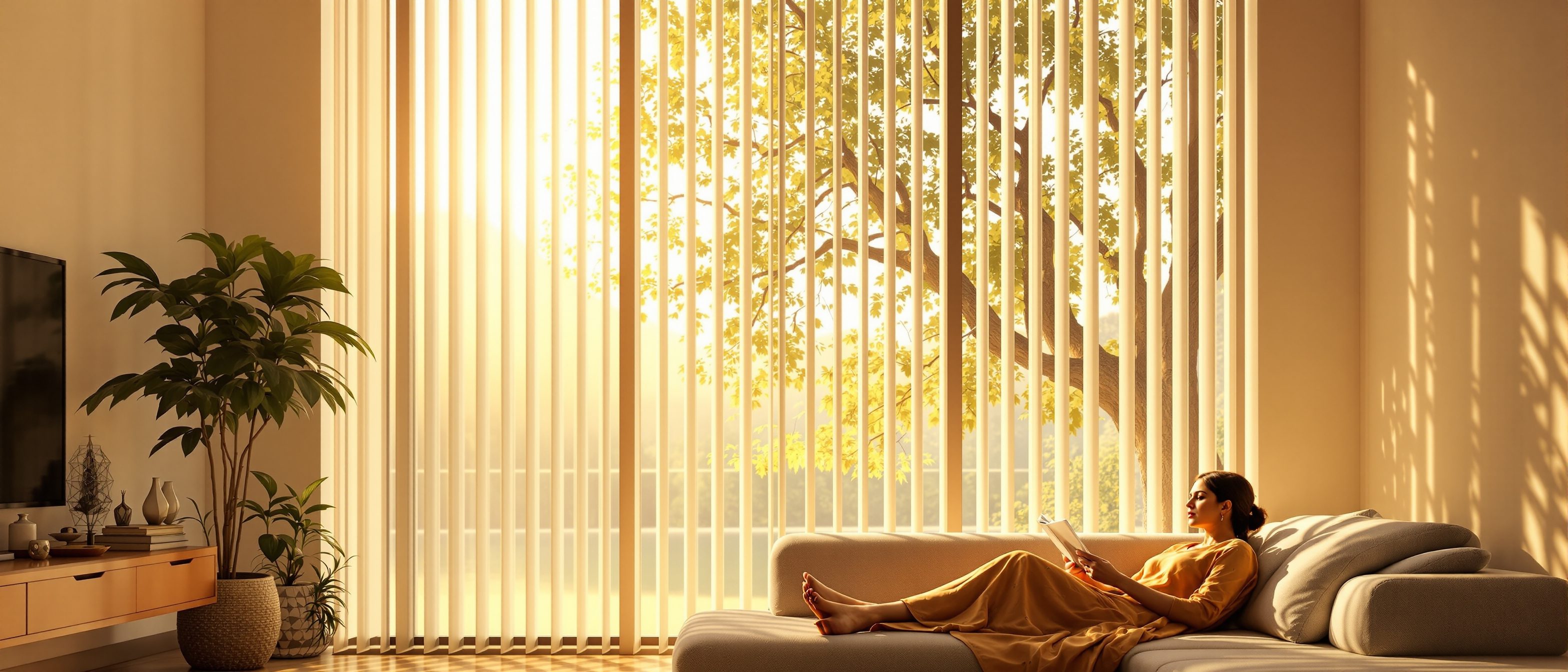
West-Facing Window Design (India): Taming the Harsh Afternoon Sun
Why the west wall is the hardest orientation to glaze, and how to minimise, shade and layer the defences against the low afternoon sun.
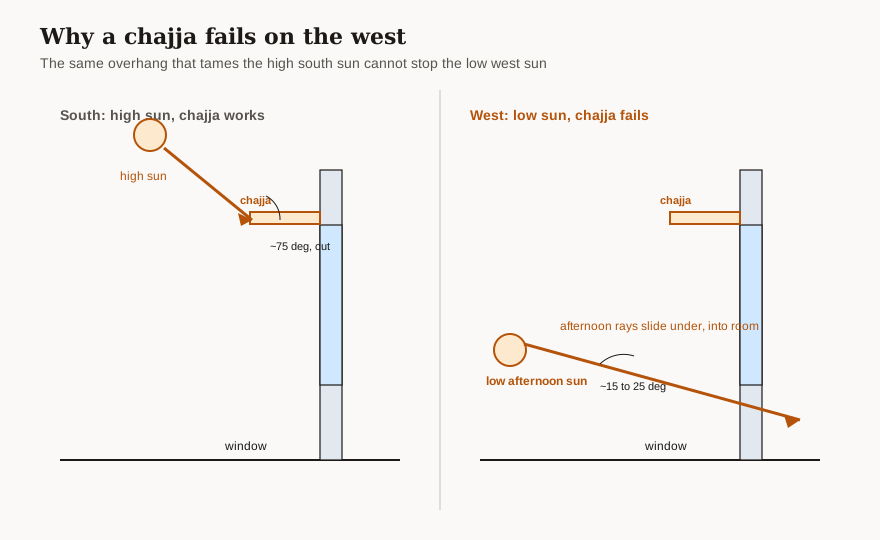
The west wall is where good window design earns its keep. In the Indian afternoon the sun drops low in the western sky exactly when the day is hottest, firing heat and glare almost horizontally through the glass. A horizontal chajja that tames the high south sun does almost nothing here, because the sun is not overhead, it is in your eyes. Get the west wrong and you build a room that is unbearable from 3 pm to sunset for half the year; get it right and you protect comfort, energy bills and your air-conditioner.
This guide is about designing the window on a WEST wall. For where every wall faces and how it ties together, start with our planning pillar, the window placement guide. For the house as a whole rather than the window, the south-facing house design guide covers plot orientation; here we stay zoomed in on the opening itself.
The west window is the only orientation where the default advice is: make it smaller. Everywhere else you optimise; here you also subtract.
Why west is the problem wall
Compare the four walls. The numbers are indicative and depend on latitude, but the pattern holds across India.
| Wall | Sun character | Heat and glare | Shading difficulty |
|---|---|---|---|
| North | Soft, even, almost no direct sun | Lowest | Trivial (little to shade) |
| East | Gentle low morning sun | Moderate, but in the cool morning | Hard (low angle), but heat is low |
| South | High midday sun | Controllable | Easiest (a horizontal chajja works) |
| West | Harsh low AFTERNOON sun | Highest, at the hottest hour | Hardest (low angle plus peak heat) |
West combines the two worst factors: the low sun angle that defeats horizontal overhangs (the same geometry problem as east, covered in the east-facing window design guide) AND the peak air temperature of the day. East shares the awkward angle but gets it at dawn when the air is cool; west gets it at 3 pm to 6 pm over a wall that has already baked all day. That is why west glass is the single biggest avoidable load on a hot-climate home.
The heat math, simply
Solar gain through a window is roughly the glass area, multiplied by how much sun hits it, multiplied by the glass SHGC (Solar Heat Gain Coefficient, where lower lets in less heat). On the west wall every term works against you: the area is the choice you control, the incident sun is at its peak intensity and duration, and ordinary clear glass has a high SHGC of around 0.8.
The practical takeaways:
- Shrink the area. A 5 ft by 4 ft west picture window admits far more afternoon heat than a 4 ft by 3 ft one. On the west, smaller is a feature, not a compromise.
- Cut the SHGC. Swapping clear glass (SHGC near 0.8) for a spectrally selective low-E unit (SHGC around 0.25 to 0.30) removes most of the gain through whatever glass you keep. See the best glass for a hot climate guide for which glass to specify.
- Stop the sun before the glass. External shading is several times more effective than internal blinds, because once the sun is through the pane the heat is already inside.
Under the Eco-Niwas Samhita 2018 (ENS), more glass forces lower-SHGC glazing to keep the wall envelope within RETV of 15 W/m2 or less, and a minimum VLT applies as the window-to-wall ratio rises. The code itself is nudging you to keep the west modest and the glass smart.
Layer the defences
If a view, a balcony or a fixed plan forces glass onto the west, do not rely on one trick. Stack them, outermost first.
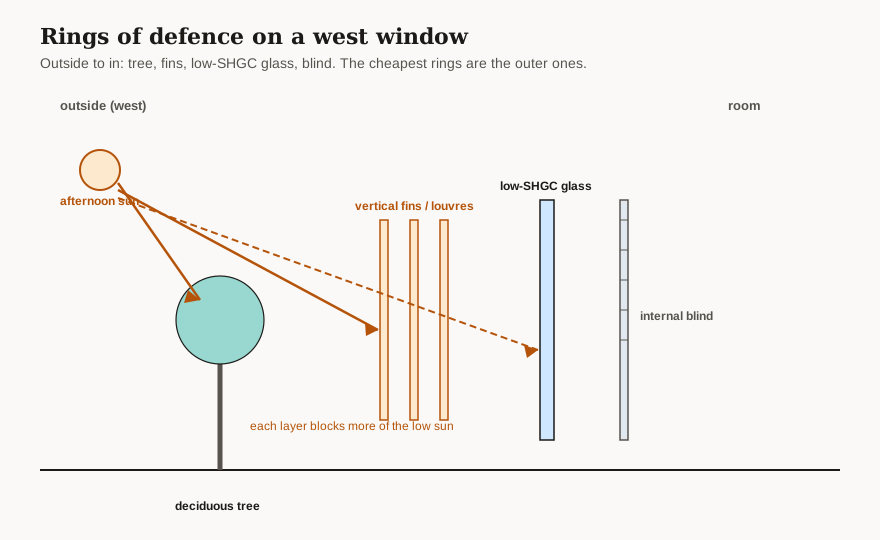
1. Landscape (outermost). A deciduous tree or tall shrub on the west casts shade in summer and drops its leaves to let winter sun through. Even a pergola with creeper or a screen wall helps.
2. External shading sized for a LOW sun. Horizontal chajjas fail here. Use vertical fins or louvres, set at an angle to block the afternoon sun while keeping a sliver of view. Deep verandahs, jali screens and operable external louvres or shutters all work because they intercept the low rays.
3. Solar-control glass. Low-SHGC, spectrally selective or reflective glazing, ideally in a double-glazed (DGU) unit. This is your last line at the plane of the wall.
4. Internal blinds (innermost). Light-coloured blinds or curtains for glare control and late-evening privacy. Useful, but weakest, because the heat is already inside.
Think of the west window as a fortress with rings of defence. The cheapest, most effective rings are the outer ones, the tree and the fin, not the curtain.
The fin geometry matters: a vertical fin to the south side of the opening blocks the late-afternoon western sun while a north-side return catches little. A jali screen (a perforated stone, terracotta or concrete-block screen) is the traditional Indian answer, diffusing the harsh light and accelerating breeze through its holes.
What to put behind a west window
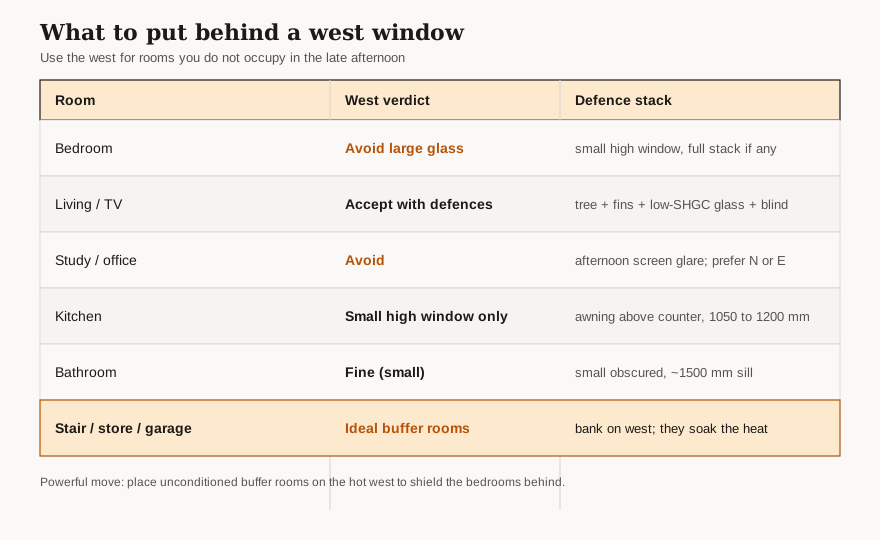
Not every room suffers equally from afternoon heat. Use the west for spaces you do not occupy in the late afternoon.
| Room | West wall verdict | Why |
|---|---|---|
| Master bedroom | Avoid large glass | You want it cool for evening sleep; the wall radiates heat at bedtime |
| Living / TV room | Accept with full defences | Often occupied in the evening; layer fins plus low-SHGC glass plus blinds |
| Study / home office | Avoid | Afternoon glare on screens is brutal; prefer north or east |
| Kitchen | Small high window only | Heat plus cooking heat is a bad combination; a small awning above the counter at 1050 to 1200 mm sill |
| Bathroom | Fine (small) | Small high obscured window at about 1500 mm sill; little glass, privacy preserved |
| Staircase / utility / store | Good place for west glass | Buffer zones you pass through, not dwell in; they shield the rooms behind |
| Garage / parking | Ideal | Put the unconditioned buffer on the hot west and let it absorb the heat |
A powerful planning move is to bank the west wall with the rooms you do not air-condition, the stair, the store, the utility and the garage, so they soak up the afternoon heat before it reaches your bedrooms.
Sizing and sills on the west
Standard sizes and sill heights still apply, just bias toward the smaller end and toward higher sills that admit less low sun.
| Room | Indicative size | Sill height |
|---|---|---|
| Bedroom (west) | 4 ft by 4 ft or smaller | 600 to 750 mm |
| Living (west) | Keep to 5 ft by 4 ft, fully defended | 600 to 750 mm |
| Kitchen (west) | 4 ft by 3 ft or less | 1050 to 1200 mm (above counter) |
| Bathroom (west) | 2 ft by 1.5 ft | about 1500 mm (privacy) |
Remember the NBC 2016 rule of thumb: openable area of at least 10 per cent of the room carpet area for light and ventilation (verify local bye-laws). You can meet this on the west with a modest, well-shaded openable casement rather than a heat-trapping picture window, because casement and louvre windows ventilate their whole opening, unlike sliding windows that open only about half.
Vastu and the west window
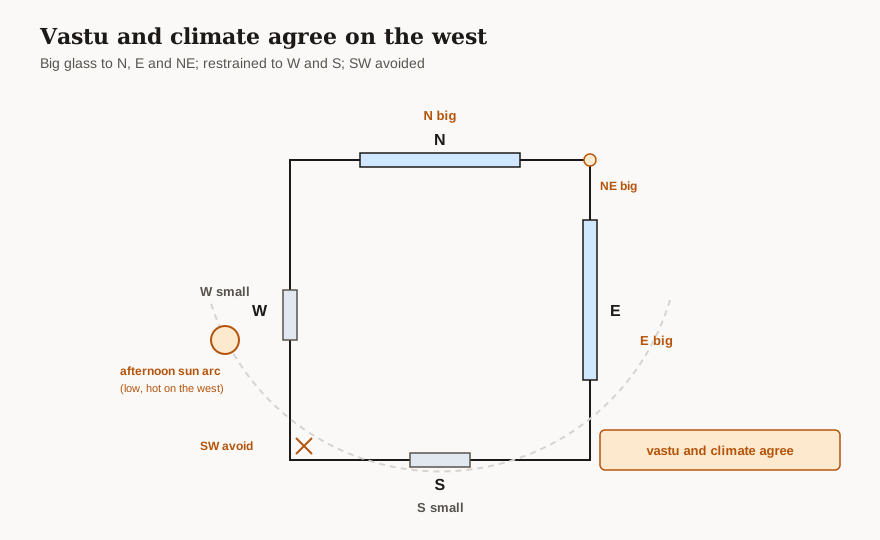
Vastu guidance aligns neatly with the building science here: it recommends big windows to the north, east and northeast; small windows on the west and south; and avoiding the southwest almost entirely. That is exactly what the heat reality demands, keep the west modest. So vastu and passive design agree, which makes the west an easy call. For how to reconcile vastu room-by-room, see vastu for modern homes; this guide stays focused on the window's climate logic. Differentiate the two clearly: vastu gives the directional preference, building science gives the reason and the defence stack.
Frame and glass quick picks
The frame matters less than the glass on the west, but heat-conducting bare aluminium will radiate the absorbed warmth inward. Prefer uPVC, or aluminium with a thermal break, and put the energy into the glazing. Full detail in the best window material for a hot climate guide. For the glass itself, the rule is simple: lowest SHGC you can afford, double-glazed where budget allows, with enough VLT to stay bright, as set out in the hot-climate glass guide.
The west window checklist
- Make it the smallest window the room can live with.
- Specify low-SHGC, spectrally selective or reflective glass, ideally DGU.
- Use vertical fins, louvres, deep verandahs or jali, never a lone horizontal chajja.
- Plant a deciduous tree or grow a creeper screen on the west.
- Add light-coloured internal blinds for evening glare and privacy.
- Park buffer rooms (stair, store, utility, garage) on the west to shield the bedrooms.
- Keep an openable section to meet the NBC 10 per cent rule and allow night purge once the sun is down.
Design the west well and you turn the home's hardest wall into a controlled one. Compare it with the friendlier orientations in the north-facing window guide and the east-facing window guide, and plan the whole set together from the window placement pillar.
References
- BIS Guide for Using NBC 2016: https://www.bis.gov.in/wp-content/uploads/2022/08/Booklet-Guide-for-Using-NBC-2016.pdf
- Eco-Niwas Samhita 2018 (BEE/ECBC): https://ecbc.in/econiwas.html
- IS 3362 natural ventilation of residential buildings: https://law.resource.org/pub/in/bis/S03/is.3362.1977.pdf
- Vastu for doors and windows (Livspace): https://www.livspace.com/in/magazine/vastu-for-house-doors-windows
- Standard window size by room (CiviConcepts): https://civiconcepts.com/blog/standard-window-size
Export this guide
Related Guides — Deep-dive reading
Floor-to-Ceiling Windows (India): Maximum Light, and the Heat Trade-Off
Full-height glazing for Indian homes — how to win the daylight and view without losing the energy code, comfort or safety.
Windows & GlazingNorth-Facing Window Design (India): The Best Light With the Least Heat
Why the north wall gives soft, even, glare-free daylight with almost no heat, and how to design large, high-VLT windows that make the most of it.
Windows & GlazingSouth-Facing Window Design (India): High Sun You Can Actually Shade
Why the south wall's high midday sun is the easiest to block, how to size a chajja by latitude, and how big south glass works with the right shade and glass
Windows & GlazingRelated Tools — Try Free
Cross-Ventilation Analyzer
Estimate airflow and air changes per hour (ACH) from room size, window areas, layout, and local wind — with NBC 2016 Part 8 compliance check.
Ventilation CalculatorBrise-Soleil Visualizer
Interactive horizontal-louvre cut-off angle calculator — sun altitude, louvre depth, and spacing inputs with a live shadow preview. Computes θ = arctan(spacing/depth) for façade shading, ECBC envelope compliance, hospital daylight design, and tropical sun-control detailing.
Sun Shading ToolWindow Orientation Planner
Pick the best window type, glass and shading by wall direction — north, east, south and west.
Window Tool