
HVAC for Warm-Humid Climates: The Battle Is with Moisture
On India's coasts — Mumbai, Chennai, Kolkata, Kerala, Goa — the enemy isn't just heat, it's humidity. Why evaporative cooling fails, why dehumidification and latent capacity matter most, and how to fight mould, corrosion and that permanent stickiness.
On India's warm-humid coasts — Mumbai, Chennai, Kolkata, Kochi, Goa and the coastal belt — the temperature often isn't extreme, yet it feels awful: sticky, oppressive, clammy. That's because the real enemy here isn't heat, it's humidity. Air already heavy with moisture can't take your sweat away, so you never feel cool, and the strategies that work in the dry interior fail on the coast. Cooling a warm-humid home well means understanding that the fight is with water in the air — and everything follows from that. This guide explains how.
It builds on the Climate Zone HVAC Guide, part of the HVAC Knowledge Hub. This is practical homeowner guidance for a coastal/humid home.
Scope. Practical strategy for humid climates; engineered dehumidification and system design are qualified MEP/HVAC work.
Why humidity is the real problem
Moisture, not temperature, defines the warm-humid challenge:
- Humid air stops sweat evaporating — so your body can't shed heat, and a "mild" 30°C at 85% humidity feels far worse than a dry 38°C. Comfort needs the moisture dealt with (see thermal comfort).
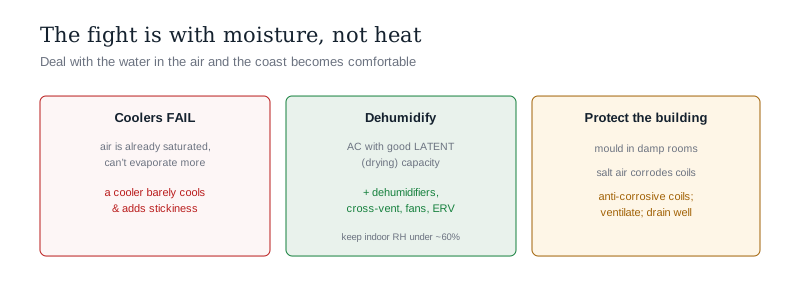
- Evaporative cooling fails — an air cooler works by adding moisture through evaporation, but coastal air is already near-saturated, so it can't evaporate more; the cooler barely cools and just makes the room more clammy. Air coolers are the wrong choice on the humid coast.
- The latent load is large — a big share of any AC's work here is condensing water out of the air, not lowering temperature (see psychrometrics); this shapes equipment choice.
The whole strategy pivots on removing moisture, which changes what works.
The warm-humid toolkit
- Air conditioning with good dehumidification — the mainstay: an AC both cools and dries; on the coast its latent (drying) capacity matters as much as its tonnage. Inverter ACs holding a steady setpoint dehumidify better than short-cycling ones.
- Dedicated dehumidifiers — for basements, monsoon months or damp rooms, a dehumidifier targets moisture directly, often more comfortably than over-cooling.
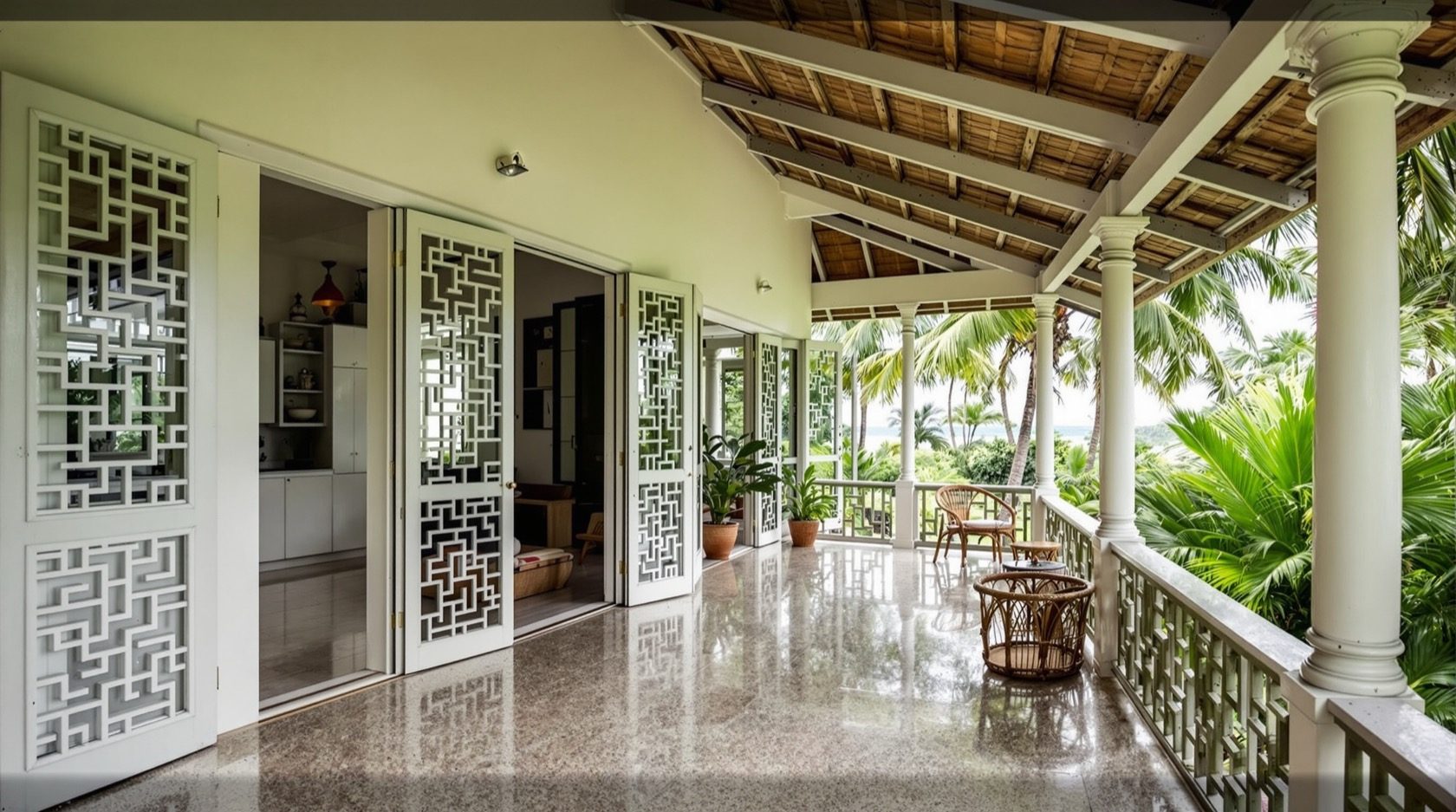
- Cross-ventilation & air movement — when the outdoor air is bearable, generous cross-ventilation and ceiling fans move air over the skin to aid evaporation; traditional coastal architecture (Kerala, Goa) is built around breeze and shade. Fans are essential.
- Shade over mass — unlike the dry interior, heavy thermal mass helps less (nights stay warm and humid); shading, ventilation and light, breathable construction suit better.
- Energy recovery (ERV) — where mechanical fresh air is used, an ERV pre-dries incoming humid air, a real coastal advantage.
Fighting mould, corrosion and damp
Persistent humidity attacks the building itself:
- Mould & mildew thrive in damp, poorly-ventilated coastal homes — control humidity (keep it under ~60% indoors), ventilate, and fix damp; mould is a health issue too (see IAQ).
- Corrosion — salt-laden coastal air corrodes AC coils and outdoor units fast; choose corrosion-protected (blue-fin/anti-corrosive) coils and maintain them (see maintenance).
- Condensation — cold surfaces sweat in humid air; insulate cold pipes and watch for dripping (see dew point).
- Manage AC condensate — coastal ACs pull a lot of water; ensure good drainage.
The one-line answer
On India's warm-humid coasts (Mumbai, Chennai, Kolkata, Kerala, Goa), the real enemy isn't heat but humidity — moisture-heavy air stops your sweat evaporating, so a mild 30°C at 85% RH feels worse than a dry 38°C, and comfort depends on removing the moisture. This flips the strategy: evaporative (air) coolers fail because the near-saturated air can't evaporate more water — they barely cool and make rooms clammier — so the mainstay is air conditioning with strong dehumidification (on the coast an AC's latent drying capacity matters as much as its tonnage; inverter units at a steady setpoint dry best), backed by dedicated dehumidifiers for damp months, generous cross-ventilation and fans when outdoor air is bearable, shade and light breathable construction (thermal mass helps less here), and ERV to pre-dry mechanical fresh air. And because persistent humidity attacks the building, you must fight mould (keep indoor RH under ~60%, ventilate), corrosion (salt air eats coils — choose anti-corrosive/blue-fin units), and condensation (insulate cold surfaces, drain AC condensate well). Deal with the water, and the coast becomes comfortable.
Where to go next
- The zone map: Climate Zone HVAC Guide.
- The core skill: Humidity Control Guide · Psychrometrics Guide.
- Why not a cooler: Air Cooler vs Air Conditioner.
- The opposite zone: Hot-Dry Climate HVAC.
References
- National Building Code of India, SP 7 : 2026 (warm-humid climate design); Bureau of Energy Efficiency (BEE) — Eco Niwas Samhita warm-humid envelope limits: https://beeindia.gov.in/
- ISHRAE — humid-climate & latent-load design; ASHRAE humidity & comfort guidance (Standard 55).
- India Meteorological Department (IMD) coastal climatic data; vernacular coastal architecture references.
Practical guidance for humid climates. Engineered dehumidification and system design are qualified MEP/HVAC work tuned to local conditions.
Export this guide
Related Guides — Deep-dive reading
Designing a Naturally Energy-Efficient Indian Home
Comfort first, gadgets last — passive design, orientation, insulation, ventilation and the climate wisdom that cuts Indian energy bills
SustainabilityHumidity Control at Home: Beating Damp, Mould & Monsoon Stickiness
The comfort factor everyone feels but few manage — why relative humidity matters as much as temperature, the healthy range to aim for, how ACs, dehumidifiers and humidifiers control moisture, and how to beat India's coastal and monsoon damp before it becomes mould.
HVAC & CoolingPassive Cooling Strategies for Indian Homes
How to keep a home cool without (much) air-conditioning — the climate-smart design that cuts bills and heat
Design EducationRelated Tools — Try Free
Monsoon-Readiness Checklist
Pre-rain home audit across 9 categories — terrace, drains, waterproofing, electrical, HVAC, pest, vehicles, documents.
Seasonal AuditArchitect Fee Calculator
Estimate architect fees based on COA guidelines, project scope, and city.
ArchitectAICross-Ventilation Analyzer
Estimate airflow and air changes per hour (ACH) from room size, window areas, layout, and local wind — with NBC 2016 Part 8 compliance check.
Ventilation Calculator